

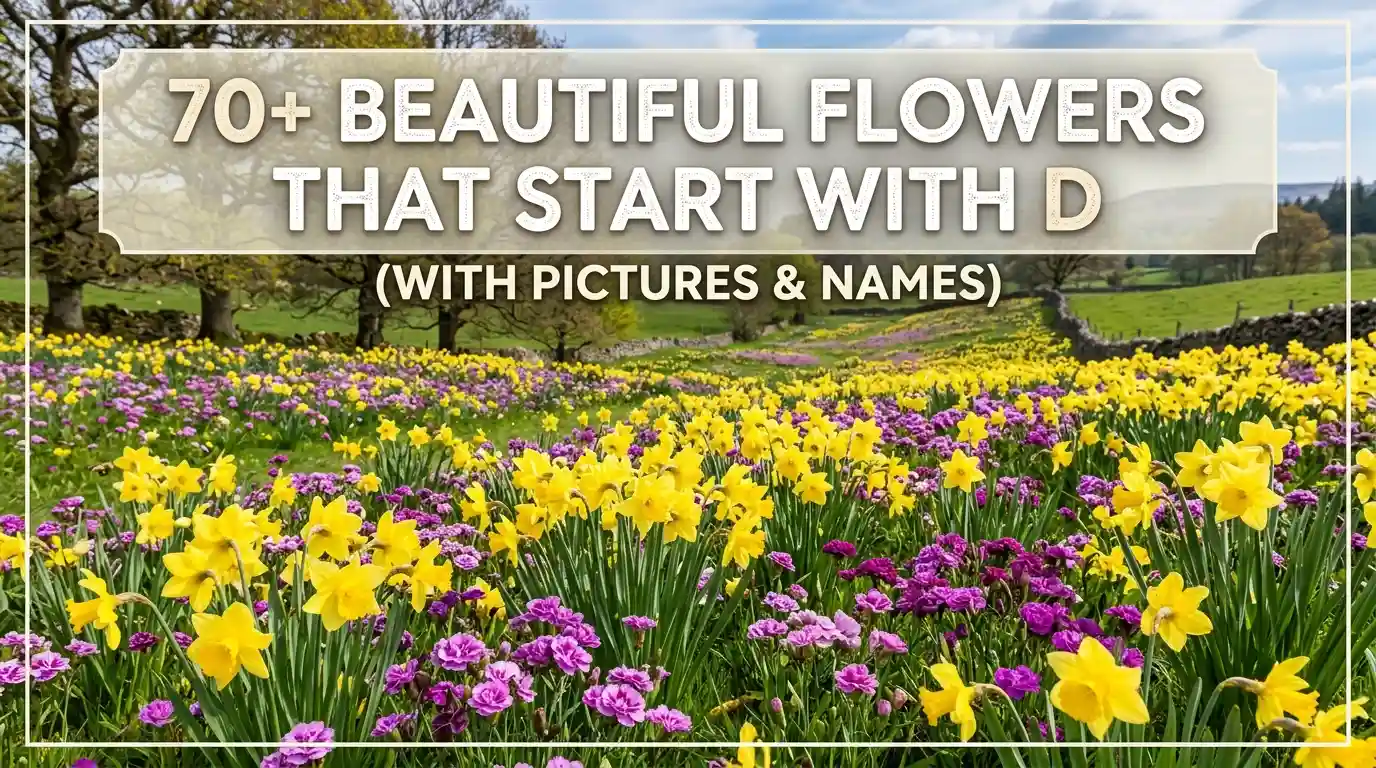
If you have ever tried to name every bloom in a garden alphabet game, you already know that flowers that start with D are one of the richest letters on the list. From the cheerful trumpet of a daffodil to the papery bells of a dendrobium orchid, the letter D covers bulbs, shrubs, orchids, wildflowers, and even a few desert succulents that most people never expect to see on a flower list at all.
- Quick Answer: The Most Popular Flowers That Start With D
- Master List of Flowers That Start With D
- Full Comparison Table: Flowers That Start With D
- Garden Favorites Among Flowers That Start With D
- Indoor and Container Flowers Starting With D
- Florist Favorites: D Flowers for Bouquets and Arrangements
- Rare and Lesser-Known D Flowers
- Caution: D Flowers That Are Toxic to Pets or PDigitalis
- Flowers That Start With D, Grouped by Color
- Flowers That Start With D, Sorted by Life Cycle
- Botanical Name Crosswalk
- What D Flowers Symbolize
- Which Flower That Starts With D Should You Plant? A Quick Decision Guide
- Conclusion
- FAQs About Flowers That Start With D
This guide was built for three kinds of readers: gardeners planning a new bed, parents helping a child with a school project, and florists or hobbyists who simply love learning flower names. Each entry below has been checked for its correct common name, its botanical name, where it originally grows in the wild, and whether it needs to be kept away from pets or small children. Nothing here is guessed — every fact has been cross-checked against horticultural references so you are not left second-guessing what you read.
The list is organized so you can use it however suits you best. If you only want the quick highlights, the “Quick Answer” box below names the most useful D flowers in one glance. If you are planning an actual garden bed, skip ahead to the category sections on garden favorites, indoor plants, and florist picks. And if safety is your main concern — say, you have a curious dog or a toddler who puts everything in their mouth — the caution table flags exactly which D flowers to avoid.
By the end of this guide, you will not just be able to recognize dozens of flowers that start with D; you will know which ones thrive indoors, which ones make the best cut-flower bouquets, and which ones are best admired from a distance rather than planted near pets.
Quick Answer: The Most Popular Flowers That Start With D
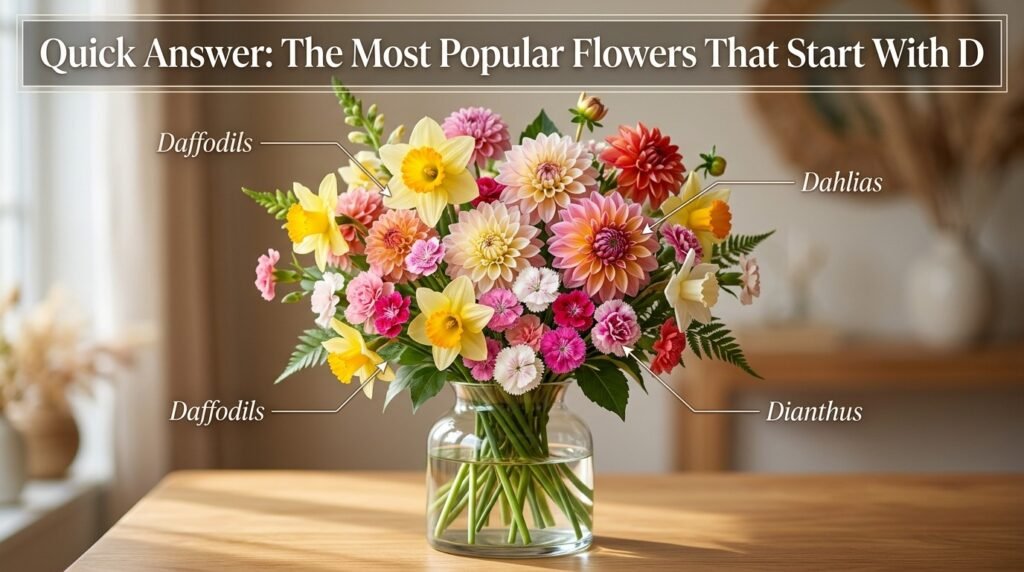
If you only remember a handful of names from this article, make it these. Daffodil, dahlia, daisy, daylily, delphinium, and dianthus are the six D flowers most home gardeners plant first, largely because they are forgiving, widely sold at nurseries, and reliable bloomers year after year. For anyone furnishing a patio or windowsill rather than a full bed, Dutch iris and dwarf dahlia varieties stay compact enough for containers. Orchid fans usually gravitate toward dendrobium, prized for long-lasting sprays that can rebloom for weeks. And if fragrance matters more than shape, daphne is the one D flower serious gardeners plant specifically to be smelled rather than seen, since its late-winter scent can carry across an entire yard.
Master List of Flowers That Start With D
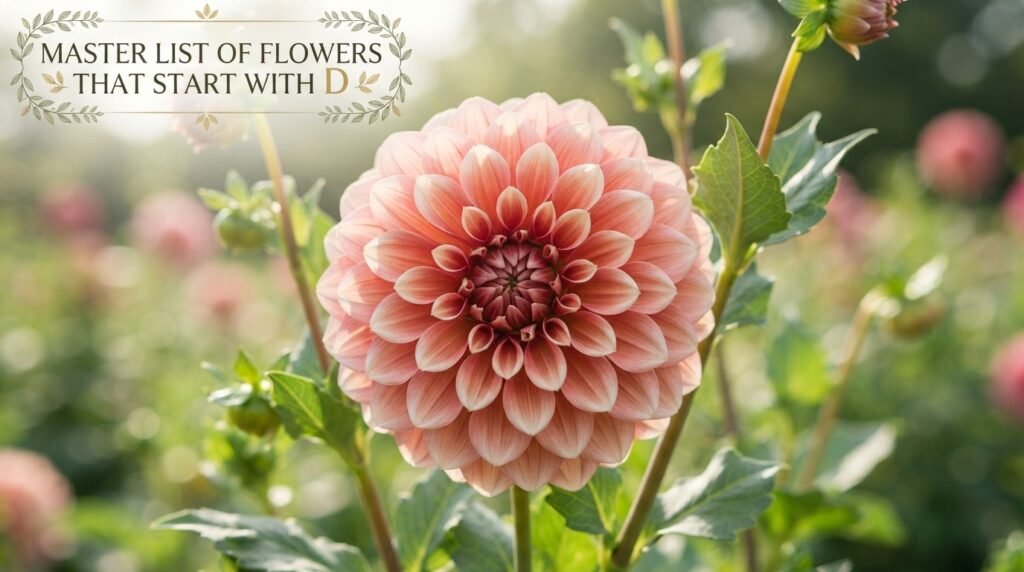
Before diving into the full comparison table, it helps to know that D flowers are commonly referenced in two different ways: by their everyday common name, like “daisy” or “dandelion,” and by their botanical (Latin) name, like Bellis perennis or Taraxacum officinale.
- Daffodil
- Dahlia
- Dahlberg Daisy
- Daisy, English
- Dalmatian Bellflower
- Damask Rose
- Dandelion
- Danae, Alexandrian Laurel
- Daphne
- Darwin Hybrid Tulip
- Datura, Devil’s Trumpet
- Daylily
- Deadnettle
- Delonix, Royal Poinciana
- Delosperma, Ice Plant
- Delphinium
- Dendranthema, Garden Mum
- Dendrobium Orchid
- Desert Marigold
- Desert Rose
- Desert Willow
- Desert Zinnia
- Deutzia
- Devil-in-a-Bush, Love-in-a-Mist
- Dianella, Flax Lily
- Dianthus, Carnation
- Dianthus, China Pink
- Dianthus, Deptford Pink
- Dianthus, Sweet William
- Diascia, Twinspur
- Dicentra, Bleeding Heart
- Dietes, Fortnight Lily (Dietes iridioides)
- Dietes Bicolor, Peacock Flower (Dietes bicolor)
- Digitalis, Foxglove (Digitalis purpurea)
- Diplacus, Bush Monkeyflower (Diplacus aurantiacus)
- Dipladenia (Mandevilla sanderi)
- Dittany of Crete (Origanum dictamnus)
- Dogtooth Violet (Erythronium dens-canis)
- Dogwood, Flowering (Cornus florida)
- Doronicum, Leopard’s Bane (Doronicum orientale)
- Douglas Aster (Symphyotrichum subspicatum)
- Downy Phlox (Phlox pilosa)
- Dracocephalum, Dragonhead (Dracocephalum ruyschiana)
- Dragon Tree Flower (Dracaena fragrans)
- Drumstick Allium (Allium sphaerocephalon)
- Dusty Miller (Jacobaea maritima)
- Dutch Crocus (Crocus vernus)
- Dutch Hyacinth (Hyacinthus orientalis)
- Dutch Iris (Iris × hollandica)
- Dutchman’s Breeches (Dicentra cucullaria)
- Dutchman’s Pipe (Aristolochia macrophylla)
- Duranta, Golden Dewdrop (Duranta erecta)
- Dwarf Dahlia (compact Dahlia cultivars)
- Dwarf Iris (Iris reticulata)
- Dwarf Morning Glory (Convolvulus tricolor)
- Dwarf Snapdragon (Chaenorhinum minus)
- Dyckia (Dyckia brevifolia)
- Dyer’s Chamomile, Golden Marguerite (Anthemis tinctoria)
- Dyer’s Woad (Isatis tinctoria)
- Dombeya, Tropical Hydrangea (Dombeya wallichii)
- Diamond Lily (Nerine sarniensis)
- Desert Bluebell (Phacelia campanularia)
- Desert Four O’Clock (Mirabilis multiflora)
- Desert Sand Verbena (Abronia villosa)
- Desert Verbena (Glandularia gooddingii)
- Douglas Iris (Iris douglasiana)
- Dwarf Crested Iris (Iris cristata)
- Dune Primrose (Oenothera deltoides)
- Dropwort (Filipendula vulgaris)
- Dyer’s Greenweed (Genista tinctoria)
- Drooping Leucothoe (Leucothoe fontanesiana)
Full Comparison Table: Flowers That Start With D
The table below expands on the master list by adding four details gardeners usually need before buying a plant: the botanical name for accurate shopping, the native origin so you know if a plant is suited to your climate, typical bloom color, and whether the flower carries any toxicity risk to pets or people.
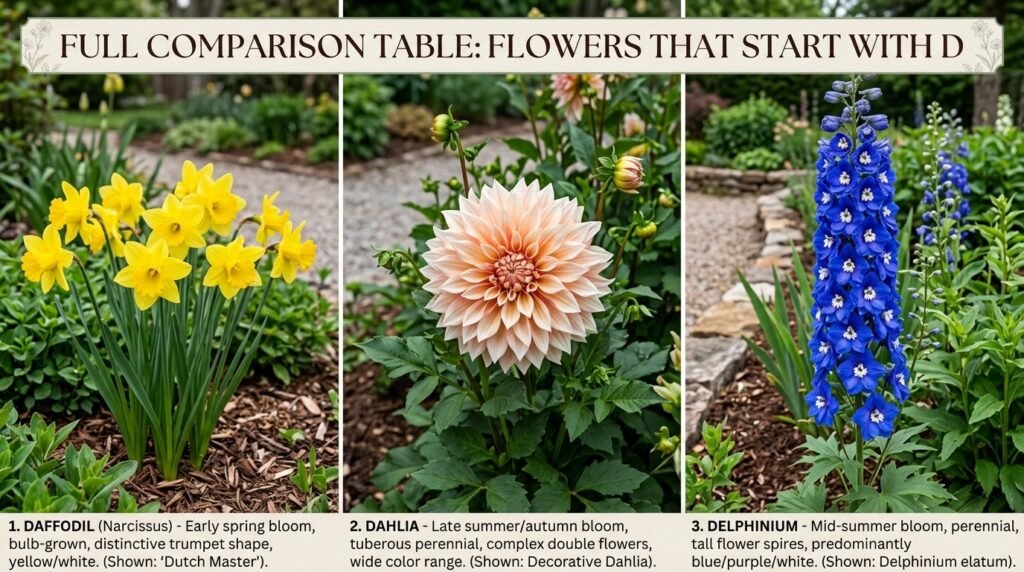
| Common Name | Botanical Name | Native Origin | Typical Colors | Toxicity Note |
| Daffodil | Narcissus spp. | Western Europe, Mediterranean | Yellow, white, orange | Toxic to cats, dogs, humans (bulbs worst) |
| Dahlia | Dahlia pinnata | Mexico, Central America | Red, pink, purple, white, orange | Mildly toxic to cats, dogs, horses |
| Dahlberg Daisy | Thymophylla tenuiloba | Texas, Mexico | Yellow | Non-toxic |
| Daisy (English) | Bellis perennis | Europe | White, pink | Non-toxic to pets |
| Dalmatian Bellflower | Campanula portenschlagiana | Balkans (Dalmatia) | Purple-blue | Non-toxic |
| Damask Rose | Rosa × damascena | Middle East | Pink | Non-toxic |
| Dandelion | Taraxacum officinale | Eurasia | Yellow | Non-toxic, edible |
| Daphne | Daphne odora | China, Japan | Pink, white | Highly toxic, all parts |
| Datura | Datura stramonium | Americas | White, purple | Highly toxic, hallucinogenic |
| Daylily | Hemerocallis spp. | East Asia | Orange, yellow, red, pink | Highly toxic to cats (kidney failure) |
| Delphinium | Delphinium elatum | Northern Hemisphere | Blue, purple, white | Toxic to livestock, pets, humans |
| Dendrobium Orchid | Dendrobium nobile | Asia, Australia | Pink, white, purple | Non-toxic |
| Desert Rose | Adenium obesum | East Africa, Arabia | Pink, red | Toxic, all parts |
| Deutzia | Deutzia gracilis | Japan | White | Non-toxic |
| Devil-in-a-Bush | Nigella damascena | Southern Europe | Blue, white | Seeds mildly toxic in quantity |
| Dianthus (Carnation) | Dianthus caryophyllus | Mediterranean | Pink, red, white | Mild skin/GI irritant to pets |
| Dianthus (Sweet William) | Dianthus barbatus | Southern Europe | Pink, red, white | Mildly toxic to pets |
| Diascia (Twinspur) | Diascia barberae | South Africa | Pink, coral | Non-toxic |
| Dicentra (Bleeding Heart) | Lamprocapnos spectabilis | East Asia | Pink, white | Mildly toxic if ingested in large amounts |
| Digitalis (Foxglove) | Digitalis purpurea | Western Europe | Purple, pink, white | Highly toxic, cardiac effects |
| Dogwood (Flowering) | Cornus florida | Eastern North America | White, pink | Generally non-toxic |
| Dutch Iris | Iris × hollandica | Hybrid (Dutch bulb trade) | Blue, purple, yellow, white | Toxic bulbs, mild GI upset |
| Dutchman’s Breeches | Dicentra cucullaria | Eastern North America | White | Toxic in quantity |
| Dutchman’s Pipe | Aristolochia macrophylla | Eastern North America | Brown, yellow | Toxic, contains aristolochic acid |
| Duranta | Duranta erecta | Central and South America | Purple, blue | Berries toxic |
| Dombeya | Dombeya wallichii | Madagascar, East Africa | Pink | Non-toxic |
| Diamond Lily | Nerine sarniensis | South Africa | Red, pink | Bulbs mildly toxic |
| Desert Bluebell | Phacelia campanularia | Southwestern USA | Blue | Non-toxic (sap can irritate skin) |
| Desert Four O’Clock | Mirabilis multiflora | Southwestern USA, Mexico | Magenta | Mildly toxic if ingested |
| Desert Sand Verbena | Abronia villosa | Southwestern USA deserts | Pink | Non-toxic |
| Desert Verbena | Glandularia gooddingii | Southwestern USA, Mexico | Purple | Non-toxic |
| Douglas Iris | Iris douglasiana | California, Oregon coast | Purple, lavender | Toxic bulbs/rhizomes |
| Dwarf Crested Iris | Iris cristata | Eastern USA woodlands | Blue-purple | Toxic bulbs/rhizomes |
| Dune Primrose | Oenothera deltoides | Southwestern USA deserts | White | Non-toxic |
| Dropwort | Filipendula vulgaris | Europe, Western Asia | White, cream | Non-toxic |
| Dyer’s Greenweed | Genista tinctoria | Europe | Yellow | Mildly toxic (alkaloids) |
| Drooping Leucothoe | Leucothoe fontanesiana | Eastern USA | White | Toxic, all parts |
| Kousa Dogwood | Cornus kousa | Japan, Korea, China | White, pink | Generally non-toxic |
| Diamond Frost Euphorbia | Euphorbia graminea | Mexico, Central America | White | Sap toxic/irritant |
| Dwarf Zinnia | Zinnia angustifolia | Mexico | Orange, yellow, white | Non-toxic |
Garden Favorites Among Flowers That Start With D
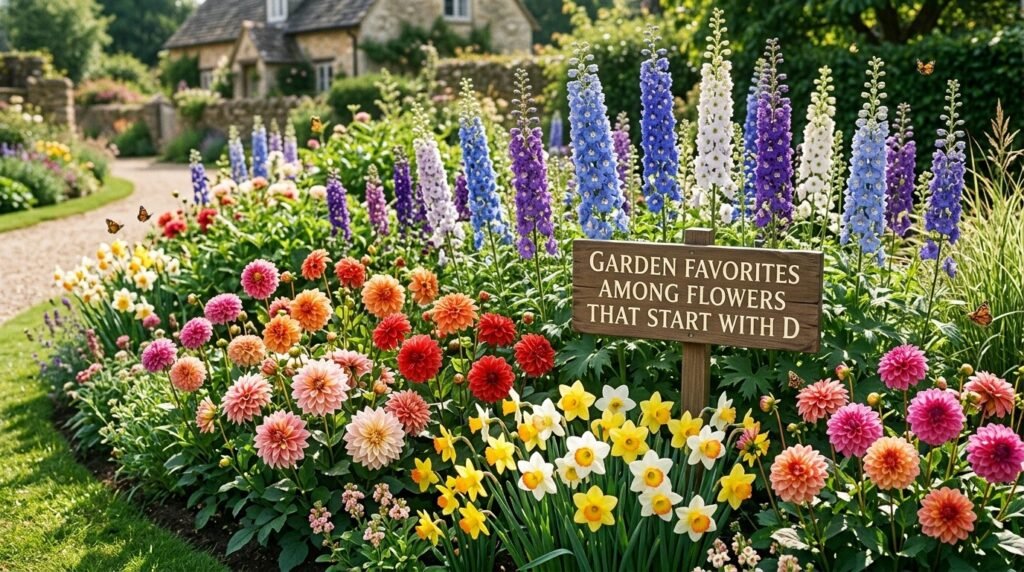
For anyone planting an actual outdoor bed, a handful of D flowers do most of the heavy lifting. Daffodils are usually the first flower to open after winter, often pushing through late snow, which is exactly why William Wordsworth built an entire poem around a field of them. Dahlias take over once summer heat arrives, and because the genus includes everything from two-inch pompon varieties to dinner-plate blooms wider than a human hand, they suit both border edges and standalone focal beds. Delphiniums add height and a true blue that few other garden flowers can match, though their tall spikes usually need staking in windy yards. Daylilies round out the group as the low-maintenance workhorse of the four — a single Hemerocallis fulva clump can produce blooms for weeks even in poor soil, which is why roadside “ditch lilies” have naturalized across so much of North America.
- Daffodil — earliest bloomer, naturalizes well in lawns and under trees
- Dahlia — widest color and size range of any D flower
- Delphinium — tallest, truest blue, best for cottage-garden backdrops
- Daylily — most drought-tolerant, spreads on its own over time
- Dianthus (Sweet William) — reliable cut-and-come-again bloomer for borders
Between these five, most temperate climate gardens can cover an entire spring-through-fall bloom cycle using nothing but flowers that start with D, which is a rare feat for a single letter of the alphabet.
Indoor and Container Flowers Starting With D
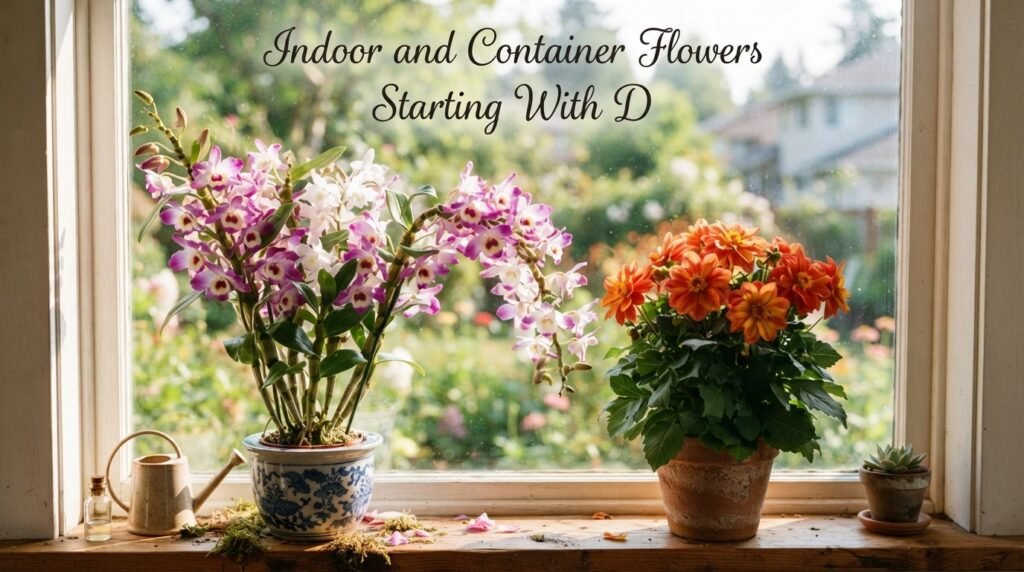
Not every flower that starts with D needs a full garden bed. Dendrobium orchids are among the most forgiving orchids for beginners, tolerating brighter indirect light and slightly less humidity than the more finicky phalaenopsis types, and a single spray can stay in bloom for a month or longer. Dwarf dahlia cultivars, bred specifically to stay under two feet tall, hold up well in patio pots as long as the container gets at least six hours of sun. Diascia and Dahlberg daisy both work as trailing or mounding fillers in mixed containers, spilling attractively over the pot’s edge rather than growing upright. Desert rose, despite its tropical appearance, is actually one of the easier succulent-adjacent plants to keep indoors, since its thick caudex stores water and forgives an owner who forgets to water for a week or two.
Florist Favorites: D Flowers for Bouquets and Arrangements
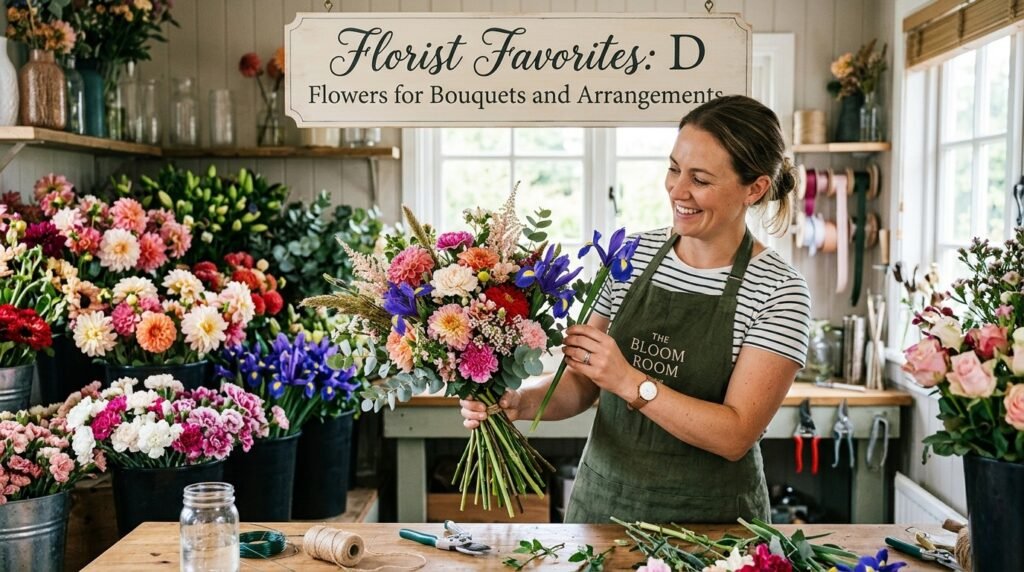
Cut-flower growers prioritize different traits than home gardeners. Florists favor stem length and vase life above all. Soil behavior matters far less to commercial growers. These professionals seek flowers that last the longest always. They select blooms that photograph beautifully for events. Vase longevity directly impacts commercial profitability significantly and consistently. Dahlias top most professional florists’ preferred shortlists constantly. A single dahlia stem acts as the entire focal point. Entire arrangements build around one dramatic dahlia bloom. “Dinner-plate” varieties photograph exceptionally well for wedding events. Large blooms create stunning visual impact in photography. These flowers command premium prices in commercial markets.
Rare and Lesser-Known D Flowers
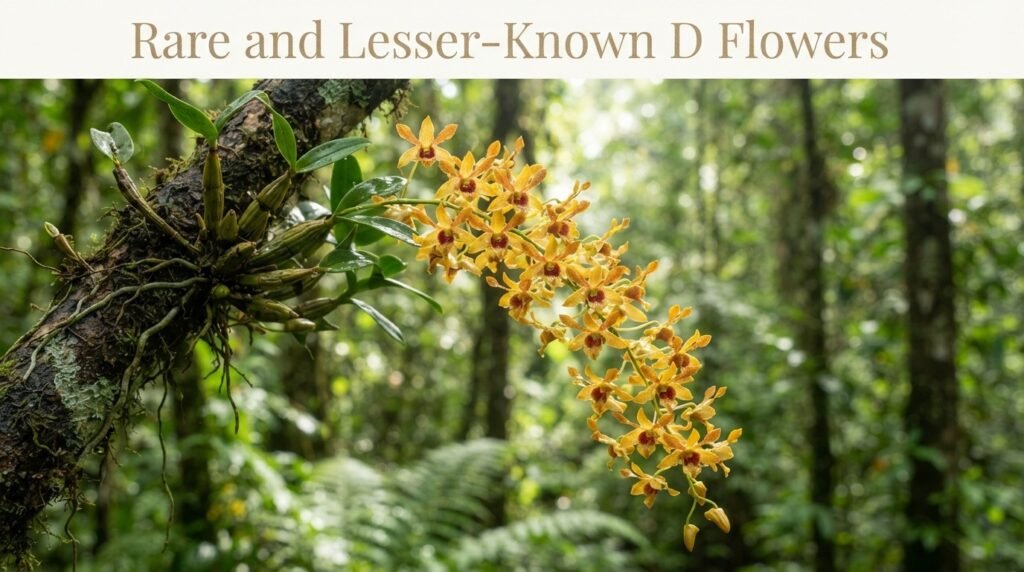
Beyond the household names, several D flowers rarely appear. Specialty nurseries carry these rare specimens. Botanical collections feature these unusual D flowers. Home gardeners seldom encounter these plants. These flowers require specific growing conditions and care. Collectors actively seek these specialty specimens constantly. Each flower offers unique characteristics worth discovering. Understanding these rarities expands gardening horizons significantly.
Dianella, more commonly sold under the nickname “flax lily.” This plant produces small blue blossoms in winter. Late-winter blooming extends the garden season nicely. Flowers appear after most spring bloomers fade. However, this plant is grown almost entirely for its foliage. Foliage attraction outweighs flower importance dramatically always. Strappy, architectural leaves define this plant’s appeal. The flowers themselves become something of a bonus. Foliage remains the main attraction for gardeners. Blue flowers add unexpected color when blooming. Winter interest appeals to sophisticated garden designers. Many gardeners overlook the flower entirely.
Caution: D Flowers That Are Toxic to Pets or PDigitalis
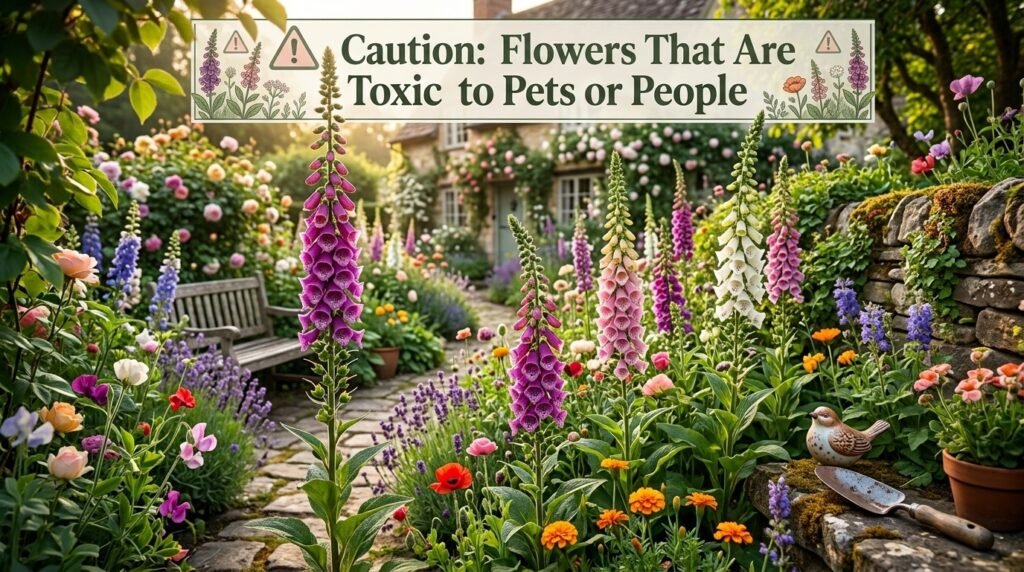
Several D flowers appear on bestseller lists simultaneously. These same flowers appear on toxicity lists. This overlap requires careful attention and caution. Some D flowers need more than passing mention. Real caution applies to specific toxic species. Understanding toxicity levels helps prevent household emergencies. Knowing which flowers pose genuine risks matters. Serious health consequences follow ingestion of some. Identifying dangerous D flowers protects families effectively.
| Flower | Main Risk | Most Vulnerable |
| Digitalis (Foxglove) | Cardiac glycosides | Humans, pets, livestock |
| Daffodil | Lycorine (bulbs) | Pets, humans |
| Daylily | Unknown nephrotoxin | Cats specifically |
| Datura | Tropane alkaloids | Humans, pets |
| Desert Rose | Cardiac glycosides | Pets, humans |
| Delphinium | Diterpenoid alkaloids | Livestock, pets |
The pattern across this table is worth remembering even beyond flowers that start with D: showy, trumpet-shaped, or brightly colored blooms are not automatically safer than plain ones, and several of the most toxic entries here are also among the most commonly planted D flowers in ordinary front yards.
Flowers That Start With D, Grouped by Color
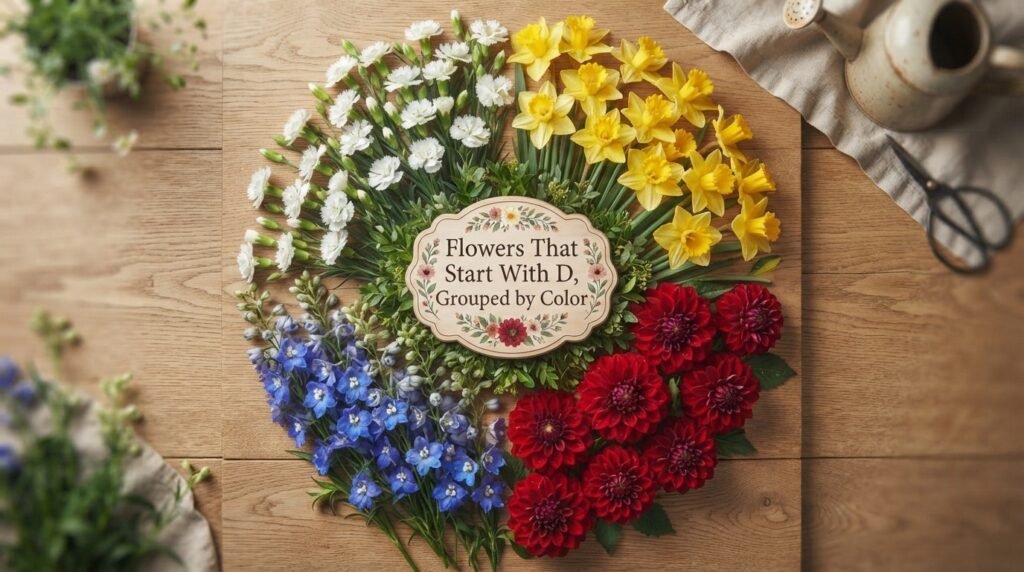
Color often becomes the deciding factor eventually. Gardeners narrow down climate-suitable D flowers first. Color selection happens after climate compatibility is confirmed. Yellow is arguably the signature color overall. This letter D strongly associates with yellow. Daffodils lead the yellow D flower group. Dandelions provide cheerful yellow color in gardens. Dahlberg daisies contribute bright yellow to displays. This yellow cluster works well for seasons. Early-season beds need brightness before leafing out. Most plants remain dormant during this period. D yellow flowers provide essential early color. These flowers brighten spring gardens dramatically. Yellow creates visual warmth in cool seasons. Early color lifts spirits during spring transitions. Clustered together, D yellows create impact. Mixed planting extends yellow interest through the season. Yellow daffodils pair well with other spring plants. Dandelion yellows naturalize beautifully in wild gardens. Dahlberg daisy yellows suit cottage garden designs.
Flowers That Start With D, Sorted by Life Cycle
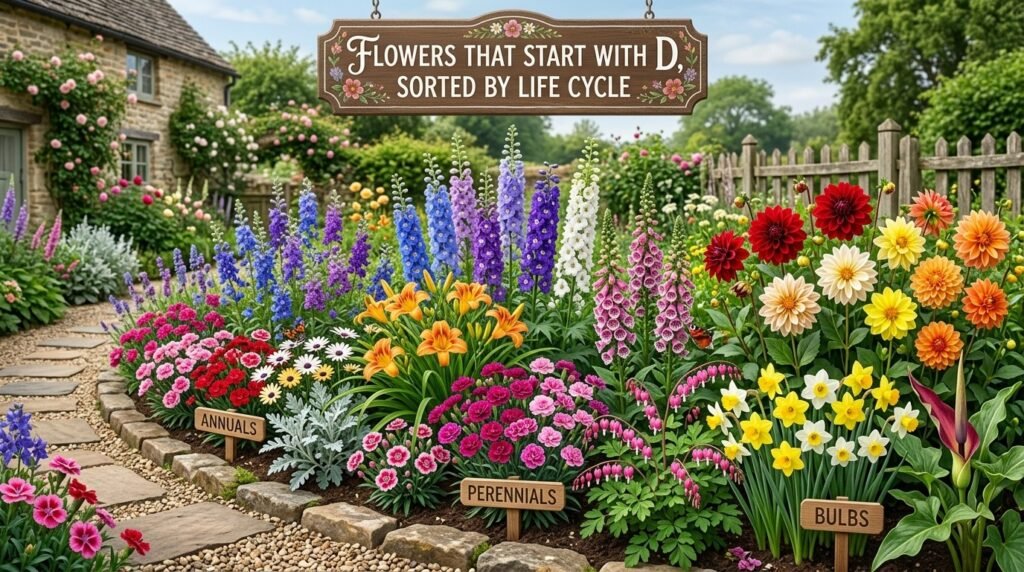
Knowing whether a flower is an annual, a perennial, or a bulb changes how you plan a bed, since annuals need replanting every year while bulbs and perennials return on their own. The table below sorts the most common D flowers into these three categories so you can match your planting effort to how much long-term commitment you actually want from a bed.
| Life Cycle | Examples |
| Annual (replant yearly) | Devil-in-a-Bush, Dwarf Morning Glory, Dahlberg Daisy, Datura |
| Perennial (returns yearly) | Daylily, Delphinium, Dianthus, Dicentra, Doronicum |
| Bulb/Tuber | Daffodil, Dahlia, Dutch Iris, Dutch Crocus, Dutch Hyacinth, Dogtooth Violet |
| Shrub/Woody | Daphne, Deutzia, Dogwood, Duranta, Desert Willow |
Bulb flowers dominate this list more than any other category, which is fairly unusual for a single letter — most alphabet sections lean perennial or annual, but D happens to include an unusually large cluster of spring-blooming bulbs, from daffodils to Dutch hyacinths, that gardeners plant once in fall and then enjoy for years afterward with almost no additional effort.
Botanical Name Crosswalk
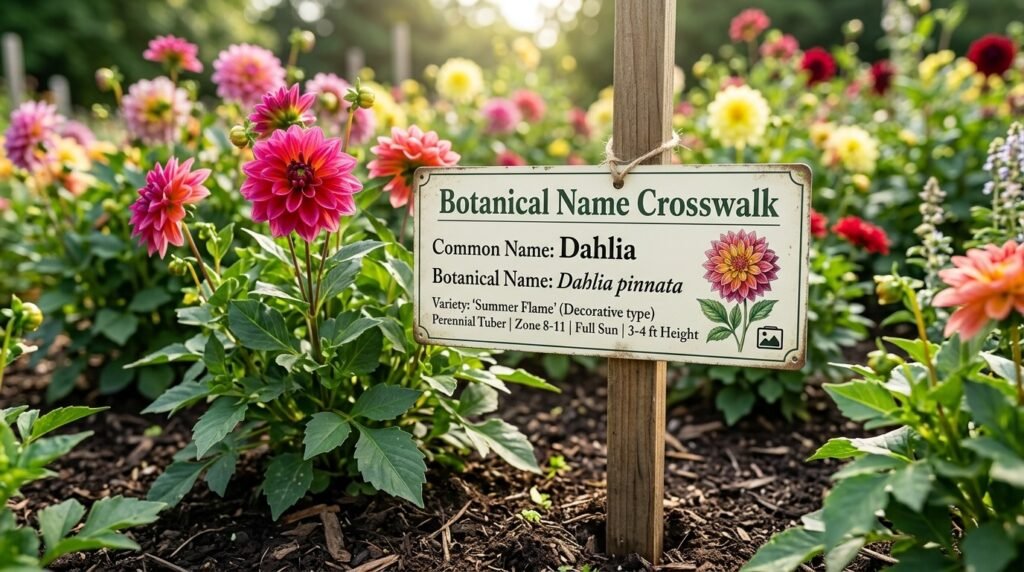
Botanical names matter more than most casual gardeners expect, mainly because common names are inconsistent from region to region while a botanical name always points to the same plant. Searching a nursery database, ordering seeds internationally, or double-checking a plant’s toxicity with a vet all go faster when you know the Latin name rather than a regional nickname — “ditch lily,” for instance, means nothing outside North America, while Hemerocallis fulva is understood everywhere.
| Common Name | Botanical Name |
| Daffodil | Narcissus spp. |
| Dahlia | Dahlia pinnata |
| Daisy (English) | Bellis perennis |
| Dandelion | Taraxacum officinale |
| Daylily | Hemerocallis spp. |
| Delphinium | Delphinium elatum |
| Dianthus | Dianthus caryophyllus |
| Dicentra (Bleeding Heart) | Lamprocapnos spectabilis |
| Digitalis (Foxglove) | Digitalis purpurea |
| Dutch Iris | Iris × hollandica |
Two entries in this table are worth a second look because their botanical names have shifted over time. Bleeding heart was long classified as Dicentra spectabilis before botanists moved it into its own genus as Lamprocapnos spectabilis, so older books and plant tags may still show the outdated name. Garden mums were likewise once filed under Dendranthema, a D-genus name, before being folded back into Chrysanthemum — a small piece of botanical history that explains why “dendranthema” still shows up on older seed packets.
What D Flowers Symbolize
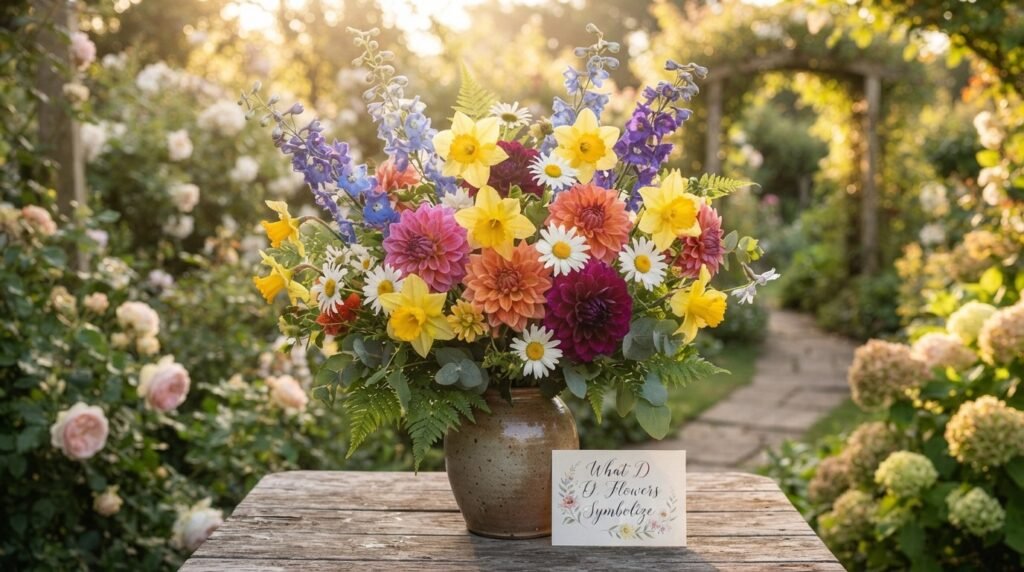
Flower meanings give D blooms emotional depth. They add significance beyond visual garden appearance. Blooms carry symbolic weight across cultures historically. Meanings vary by region and cultural tradition. Understanding meanings enriches garden design and gifting. Emotional connections deepen through flower symbolism appreciation. D offers diverse meanings and symbolism. Each flower carries distinct emotional associations clearly. These meanings influence gift-giving practices traditionally. Garden placement reflects emotional meaning sometimes.
Which Flower That Starts With D Should You Plant? A Quick Decision Guide
Choosing among 70-plus options can be overwhelming, so the table below breaks the decision down by the single factor that usually matters most: what you actually need the flower to do, whether that is filling a sunny border, surviving in a small pot, or staying safe around pets.
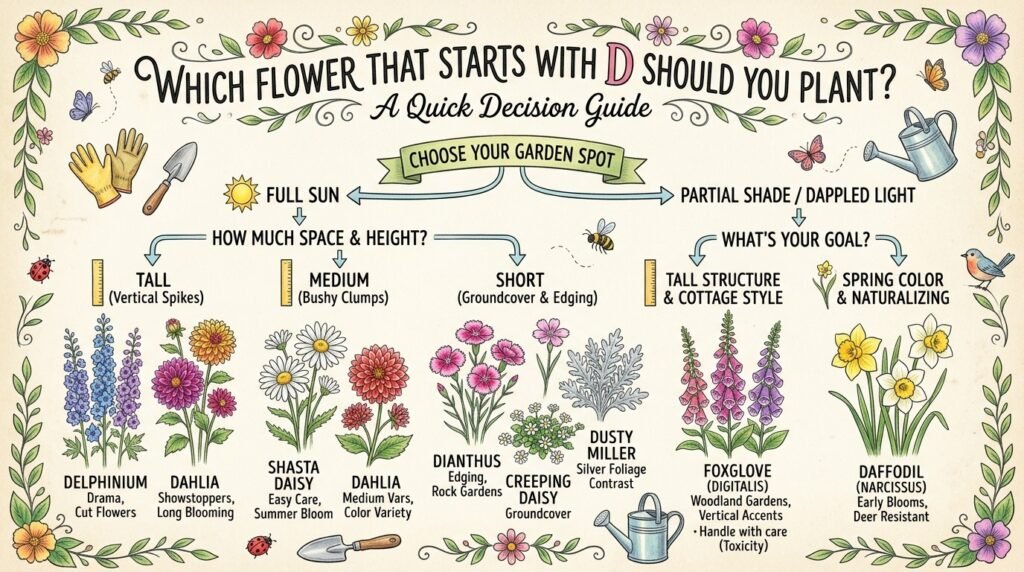
| If you want… | Plant this |
| Earliest spring color | Daffodil |
| Biggest, showiest blooms | Dahlia (dinner-plate variety) |
| Low-maintenance perennial | Daylily |
| Tall vertical accent | Delphinium |
| Container or patio pot | Dwarf Dahlia or Diascia |
| Indoor flowering plant | Dendrobium Orchid |
| Fragrance | Daphne |
| Pet-safe option | Dendrobium Orchid or Dahlberg Daisy |
| Drought-tolerant/xeriscape | Desert Rose or Desert Willow |
| Cut-flower bouquets | Dahlia, Dianthus, or Dutch Iris |
Once you match your priority to a row in this table, you can go back to the comparison table above to confirm the botanical name, native origin, and any toxicity notes before making a final purchase.
Conclusion
Flowers that start with D turn out to be one of the most varied groups in the entire alphabet, spanning spring bulbs, summer perennials, desert succulents, and orchids all under one letter. Whether you are drawn to the reliability of a daffodil, the drama of a dahlia, or the rarity of a dyckia, this list of 70-plus flowers that start with D should give you a solid starting point for a garden bed, a bouquet, or simply satisfying your own curiosity. The safest approach is always the same: confirm the botanical name, check the toxicity notes if pets or children are around, and match the plant to the light and climate it actually needs.
FAQs About Flowers That Start With D
What are some flowers that start with D?
Some of the most common flowers that start with D include daffodil, dahlia, daisy, daylily, delphinium, and dianthus, all of which are widely sold at garden centers and grow well in most temperate climates.
How many flowers start with the letter D?
Botanists and horticultural writers count differently depending on whether cultivars and regional nicknames are included, but a thorough list of flowers that start with D typically reaches 60 to 80 distinct common names.
Is a dahlia the same as a daisy?
No. Both belong to the same Asteraceae family, but dahlias and daisies are different genera with very different flower structures — dahlias have many layered petals in a wide range of colors, while daisies typically show a simple ring of petals around a central disk.
Are daffodils poisonous to dogs?
Yes, all parts of the daffodil are considered toxic to dogs, with the bulb being the most concentrated source of the toxin lycorine, so bulbs should always be planted where digging pets cannot reach them.
What is the most fragrant D flower?
Daphne is generally considered the most fragrant flower that starts with D, known for a strong, sweet scent that can be noticed from several feet away even in late winter when few other plants are blooming.
Are daylilies safe for cats?
No, daylilies are highly toxic to cats specifically and can cause acute kidney failure even from small amounts of pollen or petals, so they should be avoided entirely in any home with a cat.