

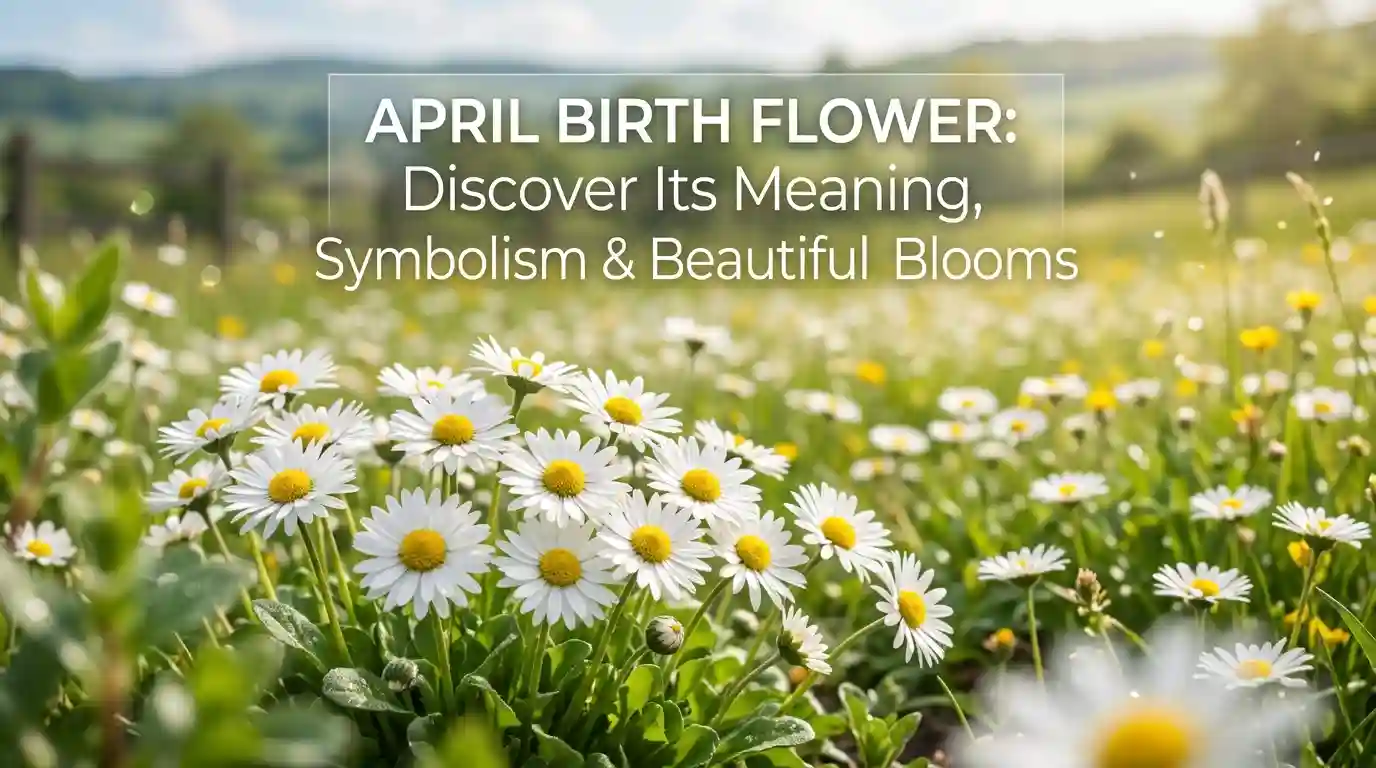
April opens the door to real spring. Rain softens the ground. Color creeps back into the garden. And right at the center of it all, the April birth flower captures that fresh, hopeful feeling perfectly.
- What Is a Birth Flower?
- April’s Birth Flower(s): Overview
- History and Origin of Daisy
- History and Origin of Sweet Pea
- Meaning and Symbolism of Daisy
- Meaning and Symbolism of Sweet Pea
- Color Varieties and Their Meanings (Both Flowers)
- How to Grow Daisy
- How to Grow Sweet Pea
- Gift Ideas Using April’s Birth Flowers
- Famous People Born in April and Their Connection to the Flowers
- April Birthstone (Brief Mention)
- Fun Facts About Daisy and Sweet Pea
- Conclusion
- FAQs
Quick Answer: April actually has two birth flowers. The Daisy is the primary birth flower for April. It stands for innocence, purity, and true love. The Sweet Pea is the secondary April birth flower. It represents blissful pleasure and delicate affection. Together, they capture what April feels like — simple, honest joy paired with a soft, fragrant sweetness.
If you were born in April, both of these blooms belong to you. Here’s everything worth knowing about each one.
What Is a Birth Flower?
A birth flower is a bloom tied to your birth month, working much as a birthstone does. Each month carries its own flower, and quite a few months, April included, carry two.
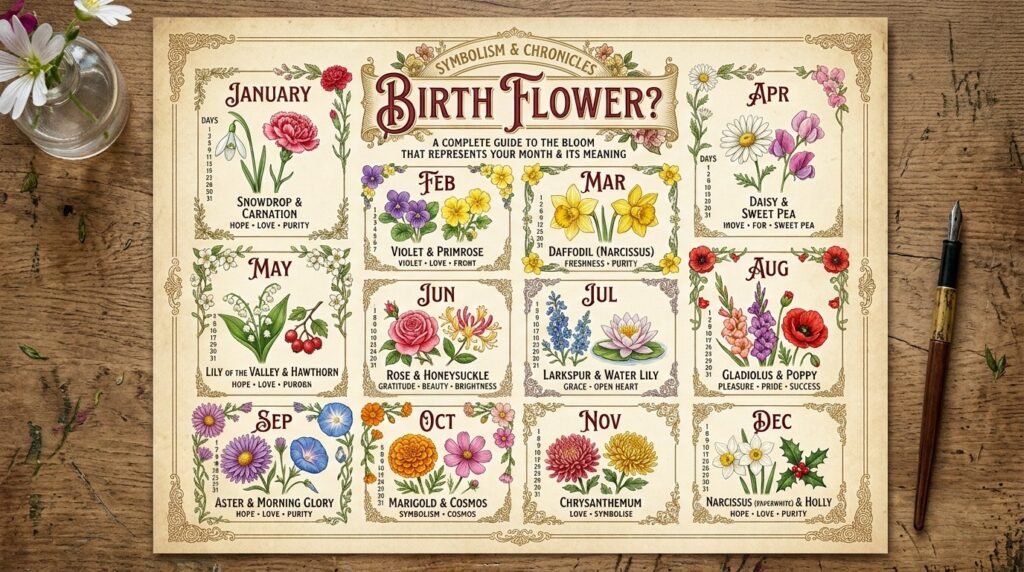
This tradition goes back centuries, growing out of old Roman flower festivals and, later, Victorian-era “flower language.” During that period, people used specific blooms to express feelings that felt too personal for plain words. Every flower carried its own coded meaning, understood by anyone familiar with the custom.
Over time, different regions built their own flower calendars. Many of these separate lists eventually merged into the version most people recognize today, which is exactly why several months ended up with two flowers instead of one. The tradition still holds up now, especially among florists and thoughtful gift-givers. Choosing someone’s birth flower turns a simple gesture into something personal.
April’s Birth Flower(s): Overview
April brings together two blooms with very different characters. One is simple, cheerful, and instantly familiar. The other is delicate, climbing, and famous for its fragrance.
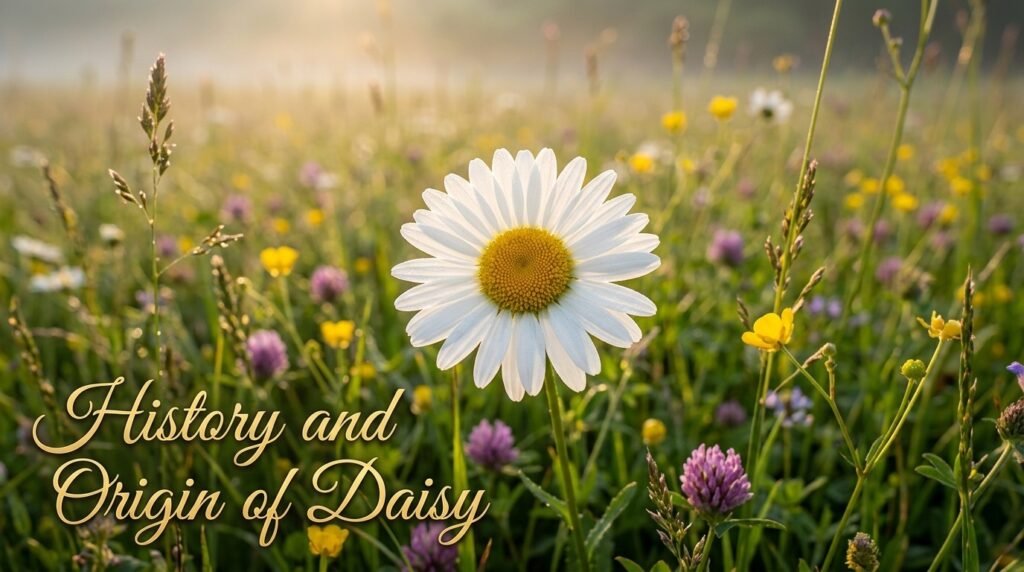
The Daisy (Primary)
The botanical name for the primary April flower is Bellis perennis. Its shape is one of the most recognizable in the entire flower world: a bright yellow center surrounded by a ring of simple white petals. The whole plant stays low and compact, rarely growing more than a few inches tall.
Daisies are native to Western and Central Europe, where they grow wild in meadows, lawns, and roadside patches. They’re hardy, low-maintenance perennials that bloom reliably from spring through early summer. Their cheerful, uncomplicated look has made them a favorite in gardens for centuries.
The Sweet Pea (Secondary)
The botanical name for the secondary April flower is Lathyrus odoratus. Unlike the daisy’s simple form, sweet pea blooms are ruffled and delicate, growing in small clusters along a climbing vine. Its colors range from soft pastels to deep purples and reds, and its fragrance is famously strong and sweet.
Sweet pea is native to Sicily, southern Italy, and the Aegean islands. It’s a climbing annual that uses thin tendrils to grip fences, trellises, and nearby plants as it grows. Its scent alone has made it one of the most beloved cutting-garden flowers in the world.
History and Origin of Daisy
The daisy’s name comes from the Old English phrase “day’s eye,” a description of how the flower opens its petals at sunrise and closes them again at dusk, almost like an eye waking and resting with the day. This simple, poetic origin has stuck with the flower for over a thousand years.
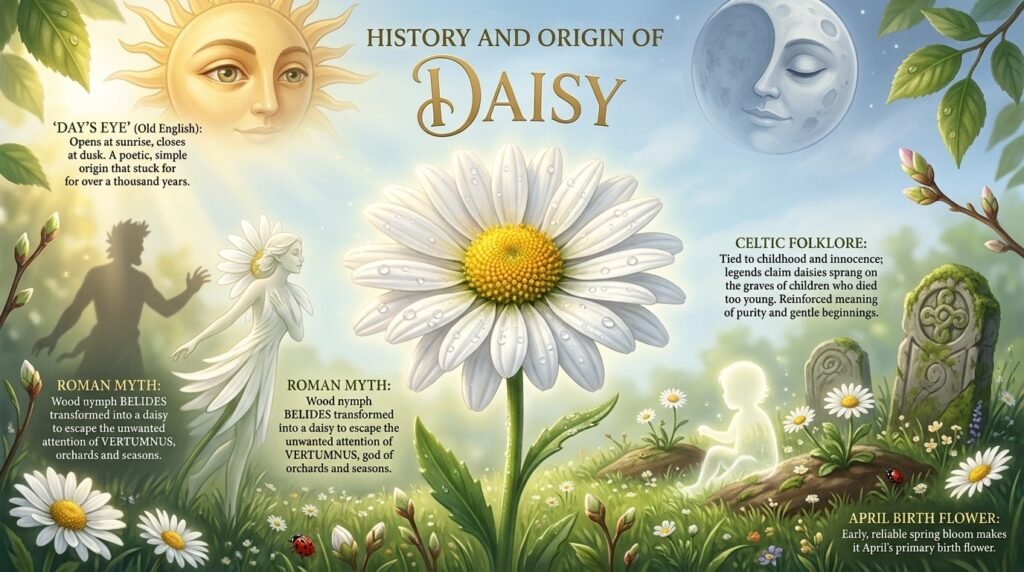
Roman mythology adds another layer to the daisy’s story. According to legend, a wood nymph named Belides transformed herself into a daisy to escape the unwanted attention of Vertumnus, the god of orchards and seasons. The transformation let her stay hidden among the meadow flowers, safe from pursuit.
Celtic folklore ties the daisy to childhood and innocence, with old legends claiming the flowers sprang up on the graves of children who had died too young. This association reinforced the daisy’s long-standing meaning of purity and gentle beginnings.
Its early, reliable bloom time throughout spring, right into April, is exactly why the daisy became the month’s primary birth flower.
History and Origin of Sweet Pea
Sweet pea’s history is far more recent and much better documented than the daisy’s. The flower was first introduced to wider cultivation in 1699, when a Sicilian monk named Francis Cupani sent seeds from his monastery garden to a schoolmaster in England. That single package effectively launched the flower’s popularity across Europe.
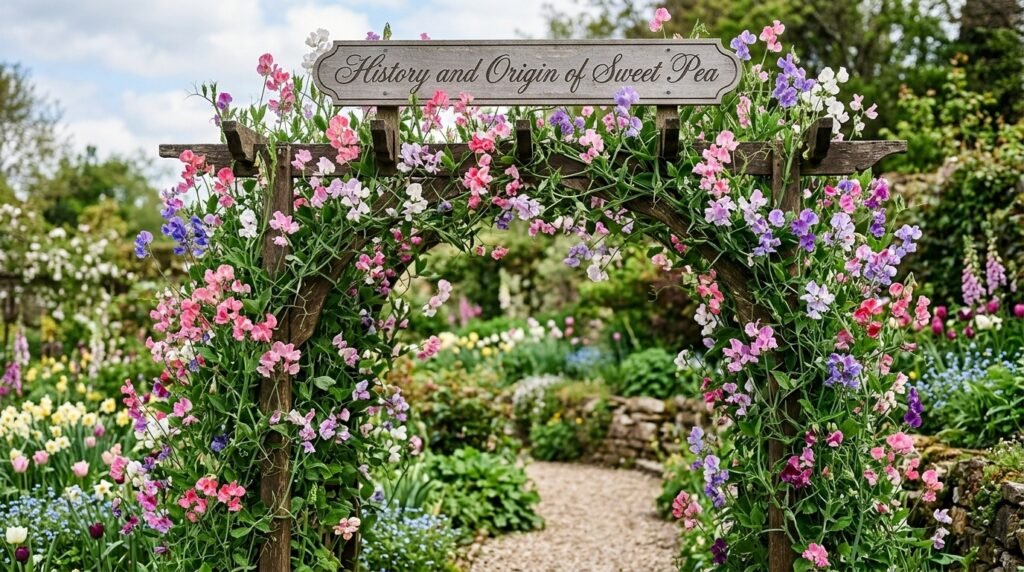
British growers spent the following two centuries breeding sweet pea into an enormous range of colors and forms, particularly during the Victorian era, when the flower became a genuine cutting-garden sensation. Its intense fragrance made it especially prized for indoor bouquets, at a time when many other cut flowers offered little scent at all.
Victorian flower language gave sweet pea a bittersweet meaning tied to farewells, since the flower was often given as a parting gift, a way of saying thank you for a pleasant time together. That same delicate, temporary quality echoed the flower’s fast bloom cycle and short vase life.
Sweet pea’s spring planting and bloom period line up closely with April, which helped secure its place as the month’s secondary birth flower.
Meaning and Symbolism of Daisy
Daisy symbolism stays remarkably consistent across cultures, centered on simplicity and honesty. Here’s what it commonly represents:
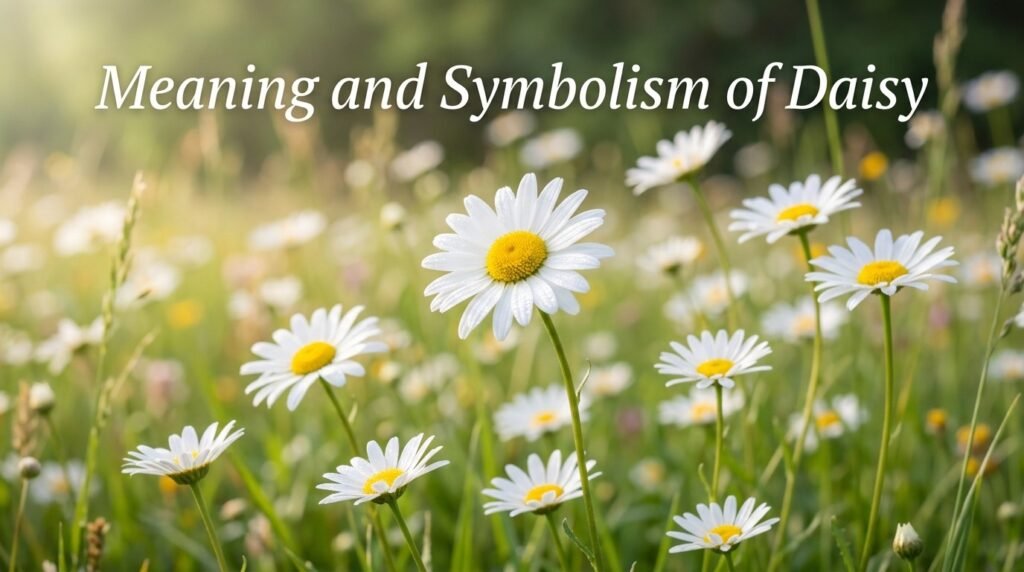
- Innocence — its plain, uncomplicated shape has long stood for a childlike, open nature
- Purity — reinforced by its classic white-and-yellow coloring
- True love — famously tied to the petal-plucking game, “he loves me, he loves me not”
- New beginnings — fitting for a flower that opens fresh with every sunrise
- Loyal love — a quieter, steadier meaning tied to the daisy’s reliable, low-maintenance nature
Meaning and Symbolism of Sweet Pea
Sweet pea symbolism leans softer and more sentimental. Here’s what it commonly represents:
- Blissful pleasure — its Victorian-era meaning, tied to the flower’s delicate beauty and scent
- Gratitude and farewell — commonly given as a parting gift, meaning “thank you for a lovely time”
- Delicate affection — reflecting the flower’s soft, ruffled petals
- Good fortune — a lesser-known meaning found in some folk traditions
- Lasting pleasure — specifically tied to certain purple and lavender sweet pea varieties
Think of these two April flowers as a first laugh and a lingering hug goodbye — the daisy is the bright, easy joy of a new morning, while the sweet pea is the soft, fragrant memory you carry afterward.
Color Varieties and Their Meanings (Both Flowers)
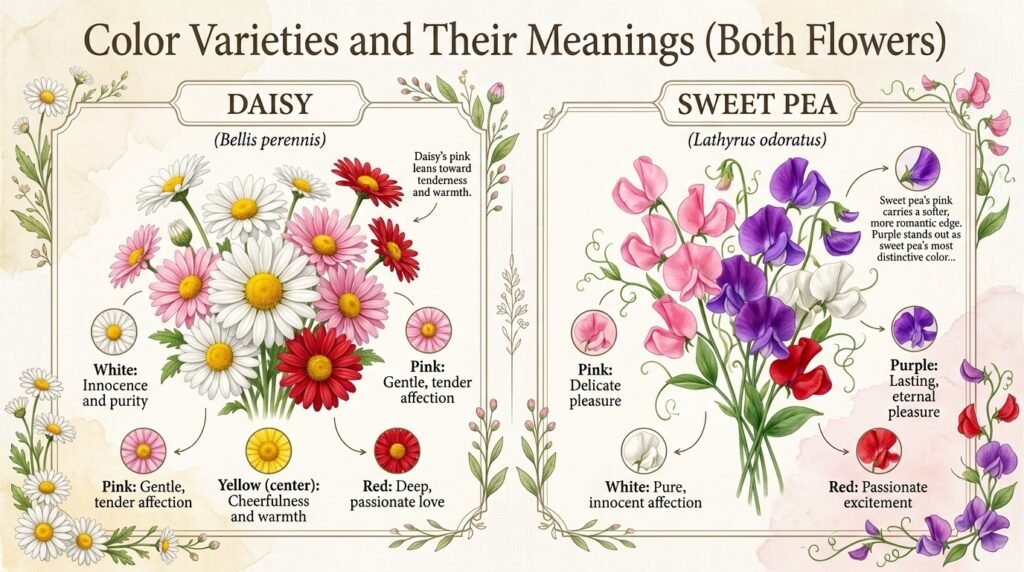
Both April flowers come in a range of soft, spring-appropriate tones, and each shade adds its own layer of meaning. The table below breaks down the most common color varieties for the daisy and the sweet pea side by side.
| Flower | Color | Meaning |
| Daisy | White | Innocence and purity |
| Daisy | Yellow (center) | Cheerfulness and warmth |
| Daisy | Pink | Gentle, tender affection |
| Daisy | Red | Deep, passionate love |
| Sweet Pea | Pink | Delicate pleasure |
| Sweet Pea | Purple | Lasting, eternal pleasure |
| Sweet Pea | White | Pure, innocent affection |
| Sweet Pea | Red | Passionate excitement |
Pink shows up as a gentle, shared thread between both flowers, though the tone feels a little different in each case. Daisy’s pink leans toward tenderness and warmth, while sweet pea’s pink carries a softer, more romantic edge. Purple stands out as sweet pea’s most distinctive color, since it’s rare among daisies but common and especially meaningful among sweet pea varieties.
How to Grow Daisy
Daisies are one of the easiest perennials a beginner gardener can plant.
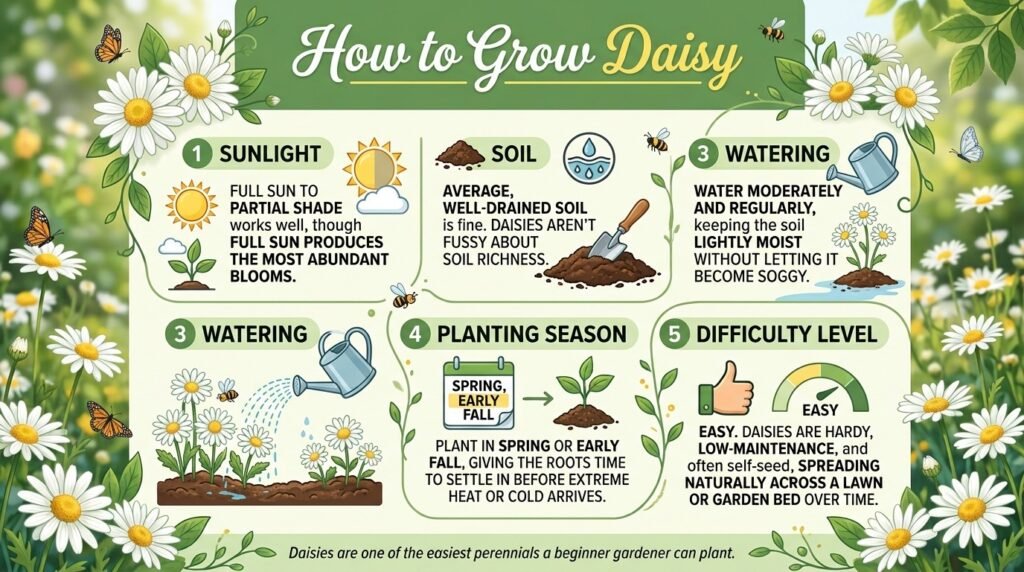
Sunlight: Full sun to partial shade works well, though full sun produces the most abundant blooms.
Soil: Average, well-drained soil is fine. Daisies aren’t fussy about soil richness.
Watering: Water moderately and regularly, keeping the soil lightly moist without letting it become soggy.
Planting season: Plant in spring or early fall, giving the roots time to settle in before extreme heat or cold arrives.
Difficulty level: Easy. Daisies are hardy, low-maintenance, and often self-seed, spreading naturally across a lawn or garden bed over time.
How to Grow Sweet Pea
Sweet pea takes a bit more setup, but it rewards the extra effort with a fragrance few other flowers can match.

Sunlight: Full sun works best in cooler climates. In hotter regions, a little afternoon shade helps prevent the blooms from fading too quickly.
Soil: Rich, well-drained soil, ideally amended with compost before planting.
Watering: Water consistently, since sweet peas don’t tolerate extended dry spells well.
Planting season: Plant seeds in early spring as soon as the soil can be worked, or in fall in milder winter climates.
Difficulty level: Moderate. Sweet pea needs a trellis or support structure to climb, along with regular deadheading to keep new blooms coming throughout the season.
Gift Ideas Using April’s Birth Flowers
Both April birth flowers make thoughtful, well-suited gifts. Here are a few ways to use them well:
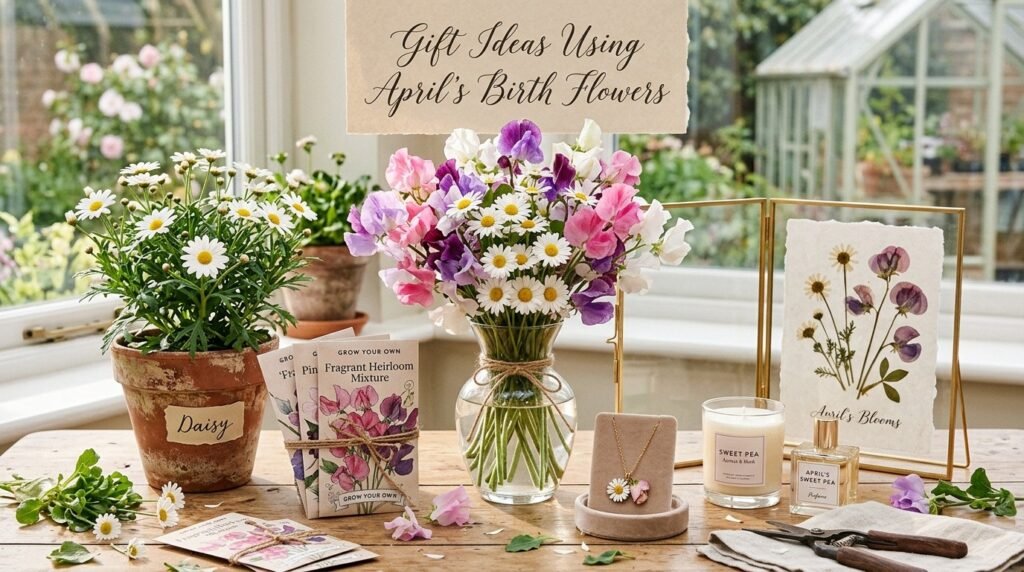
- A mixed bouquet pairing simple white daisies with fragrant, ruffled sweet peas for a soft spring look
- Sweet pea seed packets, a lovely gift for someone who wants to grow their own fragrant cutting garden
- A potted daisy plant, ideal for someone who wants easy, reliable color through spring and early summer
- A pressed flower keepsake, combining sprigs of both blooms in a simple frame
- A birth flower necklace or pin, featuring both the daisy and sweet pea for someone born in April
- A sweet pea-scented candle or perfume, capturing the flower’s signature fragrance year-round
Famous People Born in April and Their Connection to the Flowers
Several well-known figures share an April birthday, and the symbolism of both flowers fits them in fitting ways.
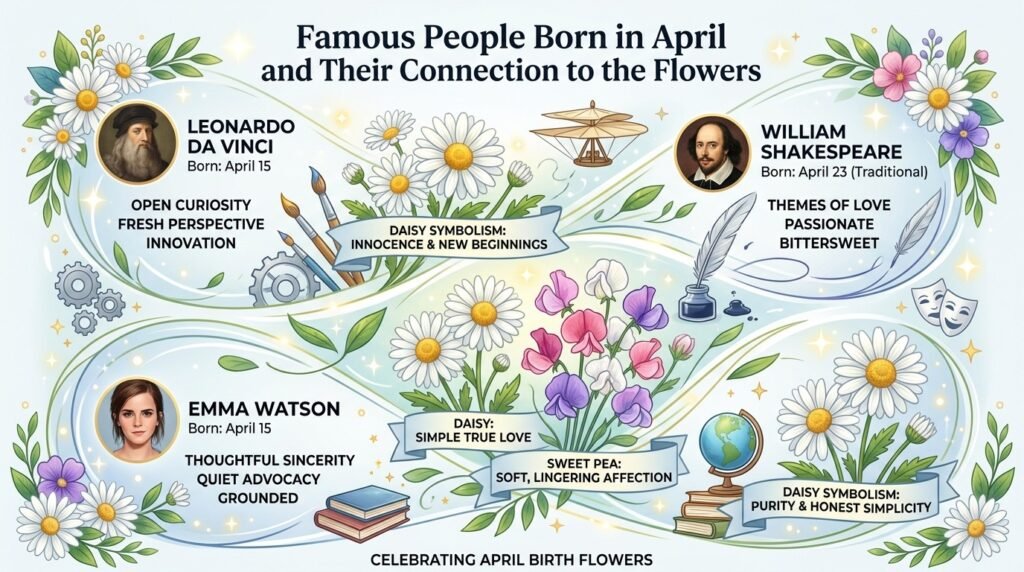
Leonardo da Vinci, born April 15, approached the world with open curiosity and a genuinely fresh perspective on nearly everything he studied. That same sense of openness echoes the daisy’s symbolism of innocence and new beginnings.
William Shakespeare, traditionally celebrated as born on April 23, filled his work with themes of love in every form, tender, passionate, and bittersweet. That range mirrors both flowers well, from the daisy’s simple true love to the sweet pea’s soft, lingering affection.
Emma Watson, born April 15, has built a public image centered on thoughtful sincerity and quiet advocacy. That same grounded, genuine quality lines up naturally with the daisy’s meaning of purity and honest simplicity.
April Birthstone (Brief Mention)
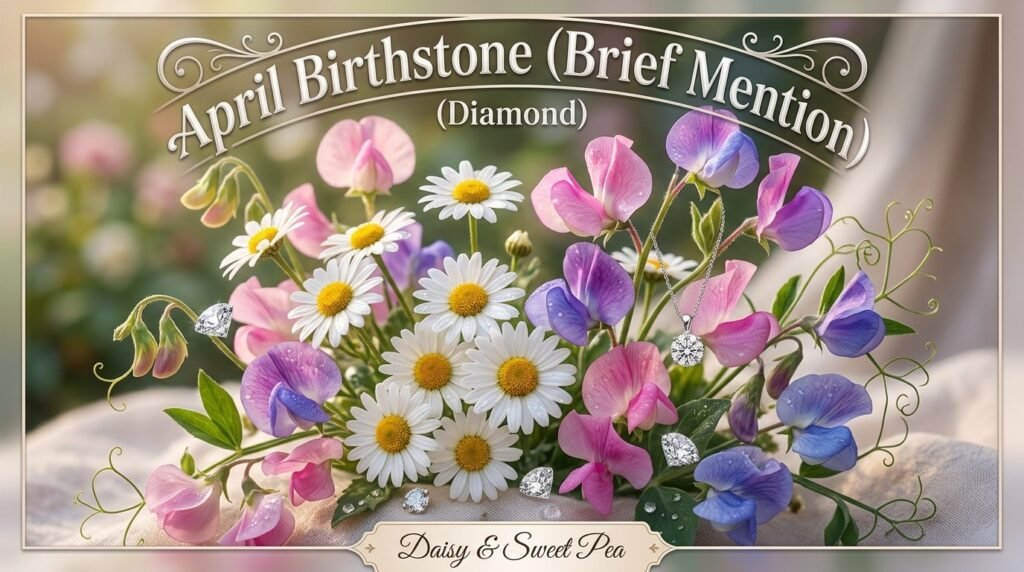
Alongside its two birth flowers, April also has its own birthstone: the Diamond. This clear, brilliant gem is traditionally linked to strength and everlasting love, themes that pair naturally with the daisy’s enduring simplicity and the sweet pea’s delicate, lasting sweetness.
Fun Facts About Daisy and Sweet Pea
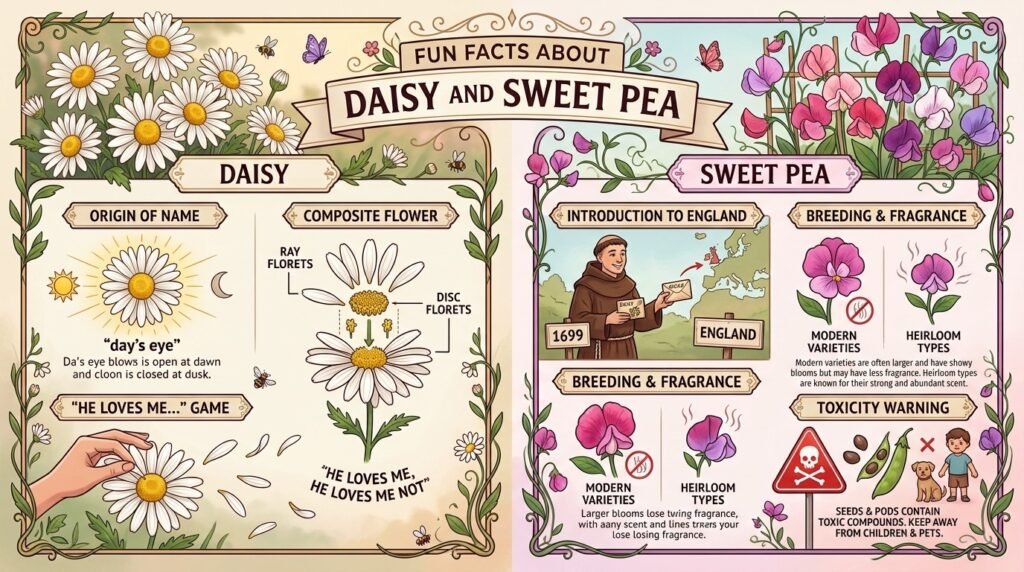
- The word “daisy” comes from the Old English phrase “day’s eye,” describing how the flower opens at dawn and closes at dusk.
- Daisies are technically a composite flower, made up of two different flower types, ray florets and disc florets, packed into a single bloom.
- The classic petal-plucking game “he loves me, he loves me not” has been played with daisies for generations.
- Sweet pea was first popularized in England after Sicilian monk Francis Cupani mailed seeds there in 1699.
- Modern sweet pea varieties bred for larger, showier blooms have actually lost some of their fragrance compared to older heirloom types.
- Sweet pea seeds and pods contain toxic compounds if eaten in large amounts, so they should be kept away from children and pets.
Conclusion
April offers two birth flowers that complement each other beautifully. The daisy brings honest, uncomplicated joy, a flower so familiar it feels like an old friend in every garden. The sweet pea adds something softer: fragrance, delicate color, and a gentle reminder to savor small, sweet moments. Together, these two April birth flowers capture the full spirit of the month, simple happiness paired with tender sentiment. Whether you’re shopping for someone born in April or simply curious about the tradition, either flower makes a genuinely meaningful choice.
FAQs
What is the official April birth flower?
The primary April birth flower is the daisy. Its secondary birth flower is the sweet pea, and both are widely recognized in Western flower traditions.
What does the daisy symbolize?
The daisy symbolizes innocence, purity, and true love, along with a broader meaning of new beginnings. It’s also famously tied to the petal-plucking game used to test feelings of love.
What does the sweet pea flower mean?
The sweet pea symbolizes blissful pleasure and delicate affection, along with a Victorian-era meaning tied to farewells and gratitude. It’s often given as a parting gift, meaning “thank you for a lovely time.”
Is sweet pea easy to grow?
Sweet pea is moderately easy to grow, though it needs a trellis or support to climb and consistent watering to thrive. With regular deadheading, it rewards the extra care with a long, fragrant bloom season.
Are daisies and sweet peas related?
No, the two flowers belong to entirely different plant families. Daisies are part of the Asteraceae family, while sweet peas belong to the pea family, Fabaceae, despite both sharing April as a birth month.
Are sweet peas poisonous?
Yes, sweet pea seeds and pods contain compounds that can be toxic if ingested in large quantities. The flowers themselves are generally safe to handle, but the seeds should be kept away from young children and pets.
Why does April have two birth flowers instead of one?
Several months, including April, ended up with two birth flowers because regional flower calendars from different eras eventually merged into one widely accepted list. The daisy and sweet pea pairing reflects both ancient folklore and Victorian-era flower symbolism.