

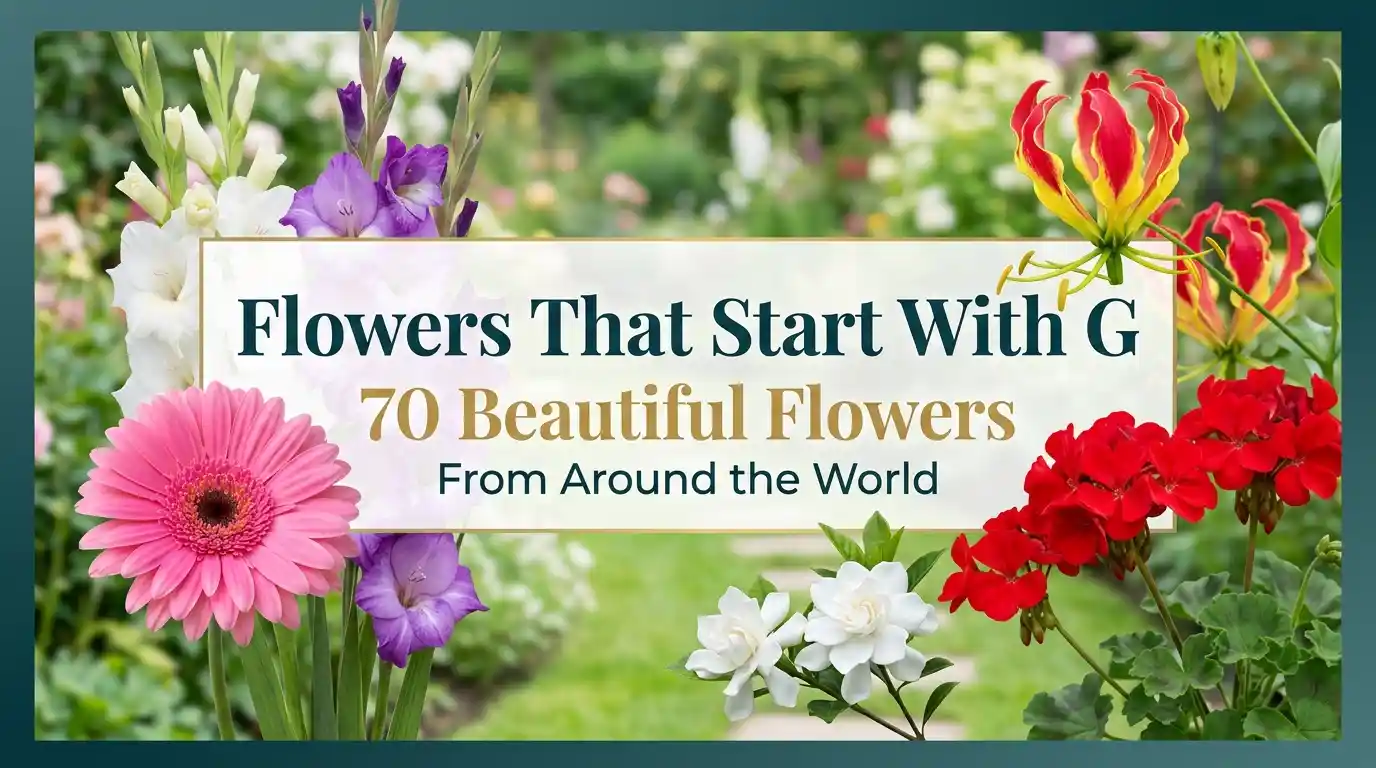
Flowers that start with G make up one of the richest letter groups in the plant world. This letter covers garden staples, rare orchids, and fragrant shrubs. It also covers spring bulbs, indoor bloomers, and flowers used in bouquets. If you love plants, this letter has something for almost every taste.
- Quick Answer: Best Flowers That Start With G
- Master Alphabetical List of Flowers That Start With G
- Full Comparison Table
- Garden Favorites
- Indoor Plants
- Florist Favorites
- Rare Flowers
- Caution and Toxicity
- Color-Based Groupings
- Life-Cycle Groupings
- Botanical Name Crosswalk
- Flower Meanings and Symbolism
- Decision-Flow Table: Which G Flower Should You Choose?
- Conclusion
- Frequently Asked Questions
This guide covers 70 flowers that start with G. Some entries share a common name that starts with G, like Golden Poppy. Others share a botanical genus name that starts with G, like Gaillardia. Both types count, because gardeners search for flowers both ways. We list the botanical name, native range, and any known toxicity for each one.
We built this list for a few kinds of readers. A home gardener might want easy, hardy picks for a flower bed. A florist might want fragrant or long-lasting cut flowers. A pet owner might want to avoid toxic plants near cats and dogs. A curious reader might just want fun facts and photos to look at.
The list is organized by use, color, life cycle, and botanical name. You can jump to whichever section fits your goal. Each section includes real explanations, not just names in a row. By the end, you should have a clear picture of what flowers that start with G can offer your garden, home, or next bouquet.
Quick Answer: Best Flowers That Start With G
If you only have a minute, here are the standout picks. Gardenia leads the pack for fragrance, with creamy white blooms and a rich scent. Geranium and Gerbera Daisy are two of the easiest and most colorful choices for beginners. Gladiolus brings height and drama to any cut-flower arrangement. Grape Hyacinth and Glory-of-the-Snow are small spring bulbs that naturalize well in cold climates.
For something rarer, the Ghost Orchid and Guernsey Lily are true collector flowers. Gypsophila, often called baby’s breath, is the classic filler flower in bouquets worldwide. Gaillardia, or blanket flower, is a tough, drought-tolerant bloomer for hot summer gardens. Together, these ten flowers show just how varied the letter G can be.
Master Alphabetical List of Flowers That Start With G
This list mixes two kinds of names. Some flowers are listed by their common English name, like Golden Poppy or Goat’s Beard. Others are listed by their botanical genus name, like Gaillardia or Gomphrena. We grouped both types here so you can scan the full letter G collection in one place. Detailed facts on each flower appear in the sections and tables further down.
- Gardenia
- Geranium
- Gerbera Daisy
- Gladiolus
- Gazania
- Gaillardia (Blanket Flower)
- Grape Hyacinth
- Gloxinia
- Gypsophila (Baby’s Breath)
- Goldenrod
- Galanthus (Snowdrop)
- Glory-of-the-Snow
- Golden Chain Tree
- Guelder Rose
- Gentian
- Gentianella
- Geum
- Globeflower
- Godetia (Farewell-to-Spring)
- Golden Marguerite
- Grevillea
- Guzmania
- Ginger Lily (Butterfly Ginger)
- Garden Phlox
- Garden Stock (Gillyflower)
- Globe Amaranth
- Glory Lily (Flame Lily)
- Ghost Orchid
- Galax (Wandflower)
- Grass Pink Orchid
- Green Rose
- Guernsey Lily
- Genista (Broom)
- Glaucidium (Japanese Wood Poppy)
- Glaucium (Horned Poppy)
- Gaura (Whirling Butterflies)
- Great Blue Lobelia
- Golden Trumpet Vine
- Goat’s Beard
- Green-and-Gold
- Grecian Windflower
- Golden Poppy
- Gumweed
- Golden Ragwort
- Garland Flower
- Garland Chrysanthemum
- Gentian Sage
- Golden Yarrow
- Gum Blossom
- Golden Rain Tree
- Globe Thistle
- Green Carnation
- Giant Snowdrop
- Garden Verbena
- Guinea-Hen Flower
- Golden Columbine
- Gum Cistus
- Green Hellebore
- Grape Leaf Anemone
- Golden Aster
- Gooseneck Loosestrife
- Garden Balsam
- Grass Widow
- Golden Spider Lily
- Gooseberry Blossom
- Gentian Bellflower
- Golden Lace
- Garden Nasturtium
- Golden Wattle
- Gum Rockrose
As you can see, some names lean formal and Latin, like Glaucidium. Others are casual, like Green-and-Gold. A few, like Golden Poppy, are simply nicknames for flowers whose botanical names start with a different letter. This mix reflects how gardeners actually talk about plants day to day.
Full Comparison Table
The table below compares every flower on this list side by side. It shows the botanical name, native range, main colors, bloom season, and toxicity status for each entry. Use it to quickly compare options if you are choosing plants for a specific climate or a pet-safe garden.
| Flower | Botanical Name | Native Range | Colors | Bloom Season | Toxic to Pets |
| Gardenia | Gardenia jasminoides | China, Japan | White | Summer | Yes, mild |
| Geranium | Pelargonium spp. | South Africa | Red, pink, white | Spring–fall | Yes, mild |
| Gerbera Daisy | Gerbera jamesonii | South Africa | Red, orange, yellow, pink | Spring–summer | No |
| Gladiolus | Gladiolus spp. | South Africa | Red, pink, purple, white | Summer | Yes, moderate |
| Gazania | Gazania rigens | South Africa | Yellow, orange, red | Summer | No |
| Gaillardia | Gaillardia pulchella | North America | Red, orange, yellow | Summer–fall | No |
| Grape Hyacinth | Muscari armeniacum | Mediterranean | Blue, purple | Spring | Yes, mild |
| Gloxinia | Sinningia speciosa | Brazil | Purple, red, white | Summer | Yes, mild |
| Gypsophila | Gypsophila paniculata | Central Europe | White, pink | Summer | Yes, mild |
| Goldenrod | Solidago canadensis | North America | Yellow | Late summer–fall | No |
| Galanthus (Snowdrop) | Galanthus nivalis | Europe | White | Late winter | Yes, moderate |
| Glory-of-the-Snow | Chionodoxa forbesii | Turkey | Blue, white, pink | Early spring | No |
| Golden Chain Tree | Laburnum anagyroides | Southern Europe | Yellow | Late spring | Yes, severe |
| Guelder Rose | Viburnum opulus | Europe, Asia | White | Late spring | Mild, berries only |
| Gentian | Gentiana acaulis | European mountains | Blue | Spring–summer | No |
| Gentianella | Gentianella campestris | Europe | Purple, blue | Summer–fall | No |
| Geum | Geum coccineum | Southeast Europe | Orange, red, yellow | Late spring–summer | No |
| Globeflower | Trollius europaeus | Europe, Asia | Yellow | Spring–summer | Yes, mild |
| Godetia | Clarkia amoena | Western North America | Pink, white, red | Summer | No |
| Golden Marguerite | Cota tinctoria | Europe, Western Asia | Yellow | Summer | No |
| Grevillea | Grevillea spp. | Australia | Red, orange, cream | Year-round in mild zones | No |
| Guzmania | Guzmania lingulata | Central and South America | Red, orange, yellow bracts | Year-round indoors | No |
| Ginger Lily | Hedychium coronarium | South and Southeast Asia | White | Summer–fall | No |
| Garden Phlox | Phlox paniculata | Eastern North America | Pink, purple, white | Summer | No |
| Garden Stock | Matthiola incana | Southern Europe | Purple, pink, white | Spring | No |
| Globe Amaranth | Gomphrena globosa | Central America | Purple, pink, white | Summer–fall | No |
| Glory Lily | Gloriosa superba | Africa, Asia | Red, yellow | Summer | Yes, severe |
| Ghost Orchid | Dendrophylax lindenii | Florida, Cuba | White, green | Summer | No |
| Galax | Galax urceolata | Eastern United States | White | Late spring–summer | No |
| Grass Pink Orchid | Calopogon tuberosus | Eastern North America | Pink | Summer | No |
| Green Rose | Rosa chinensis viridiflora | China | Green | Summer–fall | Mild, thorns only |
| Guernsey Lily | Nerine sarniensis | South Africa | Pink, red | Fall | Yes, mild |
| Genista | Genista tinctoria | Europe | Yellow | Summer | Yes, mild |
| Glaucidium | Glaucidium palmatum | Japan | Lavender, white | Late spring | No |
| Glaucium | Glaucium flavum | Europe, North Africa | Yellow, orange | Summer | Yes, mild |
| Gaura | Oenothera lindheimeri | Southern United States, Mexico | White, pink | Summer–fall | No |
| Great Blue Lobelia | Lobelia siphilitica | Eastern North America | Blue | Late summer–fall | Yes, mild |
| Golden Trumpet Vine | Allamanda cathartica | South America | Yellow | Summer–fall | Yes, moderate |
| Goat’s Beard | Aruncus dioicus | Northern Hemisphere | White, cream | Early summer | No |
| Green-and-Gold | Chrysogonum virginianum | Eastern United States | Yellow | Spring–summer | No |
| Grecian Windflower | Anemone blanda | Greece, Turkey | Blue, pink, white | Early spring | Yes, mild |
| Golden Poppy | Eschscholzia californica | Western United States | Orange, yellow | Spring–summer | No |
| Gumweed | Grindelia squarrosa | North America | Yellow | Summer–fall | No |
| Golden Ragwort | Packera aurea | Eastern North America | Yellow | Spring | Yes, mild |
| Garland Flower | Daphne cneorum | Central and Southern Europe | Pink | Spring | Yes, severe |
| Garland Chrysanthemum | Glebionis coronaria | Mediterranean | Yellow, white | Spring–summer | No |
| Gentian Sage | Salvia patens | Mexico | Blue | Summer–fall | No |
| Golden Yarrow | Eriophyllum confertiflorum | Western United States | Yellow | Spring–summer | No |
| Gum Blossom | Eucalyptus spp. | Australia | Red, cream, pink | Varies by species | No |
| Golden Rain Tree | Koelreuteria paniculata | China, Korea | Yellow | Mid–late summer | Mild seed pods |
| Globe Thistle | Echinops ritro | Southeastern Europe | Blue | Summer | No |
| Green Carnation | Dianthus caryophyllus (dyed) | Mediterranean | Green (dyed) | Year-round in stores | No |
| Giant Snowdrop | Galanthus elwesii | Turkey | White | Late winter | Yes, moderate |
| Garden Verbena | Verbena x hybrida | South America | Purple, pink, red | Summer–fall | No |
| Guinea-Hen Flower | Fritillaria meleagris | Europe | Purple, white checkered | Spring | Yes, mild |
| Golden Columbine | Aquilegia chrysantha | Southwestern United States | Yellow | Spring–summer | No |
| Gum Cistus | Cistus ladanifer | Western Mediterranean | White | Late spring | No |
| Green Hellebore | Helleborus viridis | Europe | Green | Late winter–spring | Yes, severe |
| Grape Leaf Anemone | Anemone tomentosa | China | Pink | Fall | Yes, mild |
| Golden Aster | Chrysopsis villosa | North America | Yellow | Summer–fall | No |
| Gooseneck Loosestrife | Lysimachia clethroides | China, Japan | White | Summer | No |
| Garden Balsam | Impatiens balsamina | South Asia | Pink, red, white, purple | Summer | No |
| Grass Widow | Olsynium douglasii | Western North America | Purple, pink | Early spring | No |
| Golden Spider Lily | Lycoris aurea | China, Southeast Asia | Yellow | Fall | Yes, moderate |
| Gooseberry Blossom | Ribes uva-crispa | Europe, Asia | Green, white | Spring | No |
| Gentian Bellflower | Campanula gentianoides | Caucasus region | Blue, white | Summer | No |
| Golden Lace | Patrinia scabiosifolia | East Asia | Yellow | Summer–fall | No |
| Garden Nasturtium | Tropaeolum majus | South and Central America | Orange, red, yellow | Summer–fall | No |
| Golden Wattle | Acacia pycnantha | Australia | Yellow | Late winter–spring | No |
| Gum Rockrose | Cistus ladanifer var. | Mediterranean | White | Late spring | No |
A few rows stand out from this table. Golden Chain Tree, Glory Lily, and Garland Flower are all rated as severely toxic. These three deserve extra caution around children and pets.
Garden Favorites
Some flowers that start with G have earned a permanent spot in home gardens. Geraniums are a top pick because they bloom for months with little care. Gaillardia thrives in poor, dry soil where other flowers struggle. Garden Phlox fills summer beds with tall, fragrant flower clusters. Golden Marguerite spreads easily and attracts bees and butterflies all season.
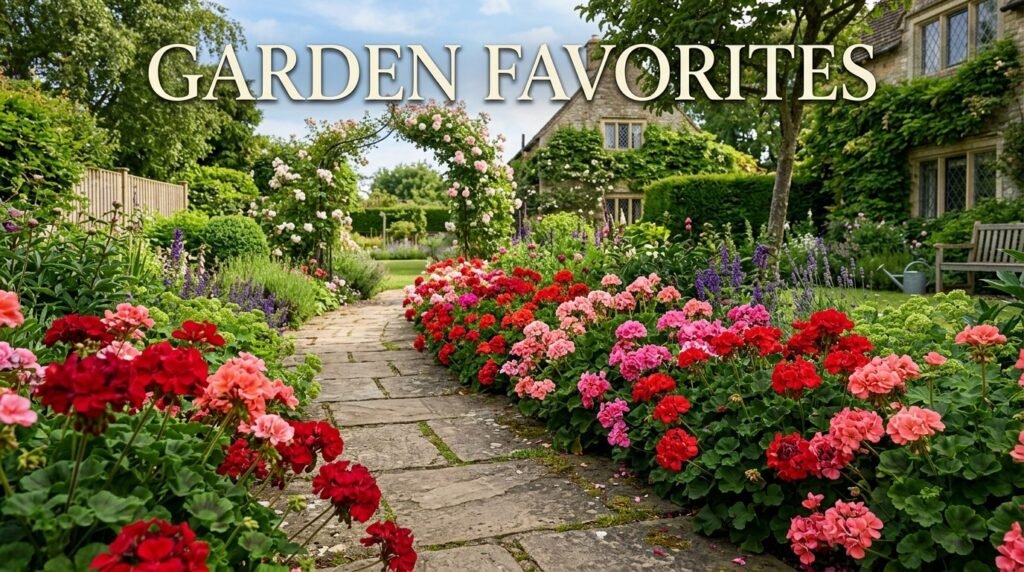
These plants share a few traits that make them garden favorites. Most tolerate heat, drought, or poor soil without much fuss. Many also rebloom for weeks, which keeps color going through summer. Gardeners often pick these first because they forgive beginner mistakes.
- Geranium – reliable bloomer for beds, pots, and borders
- Gaillardia – drought-tolerant, thrives in full sun
- Garden Phlox – tall summer color with a sweet scent
- Golden Marguerite – spreads fast, great for cottage gardens
- Gazania – closes at night, opens wide in full sun
Each of these plants rewards very little effort with a lot of color. That balance of low maintenance and high impact is exactly why gardeners return to them year after year.
Indoor Plants
Several G flowers also do well as houseplants. Gloxinia produces large, velvety blooms in a pot on a bright windowsill. Guzmania is a bromeliad that adds a bold splash of color indoors. Gardenia can grow indoors too, though it needs high humidity and steady warmth. Ginger Lily can be grown in containers and brought indoors in cold climates.
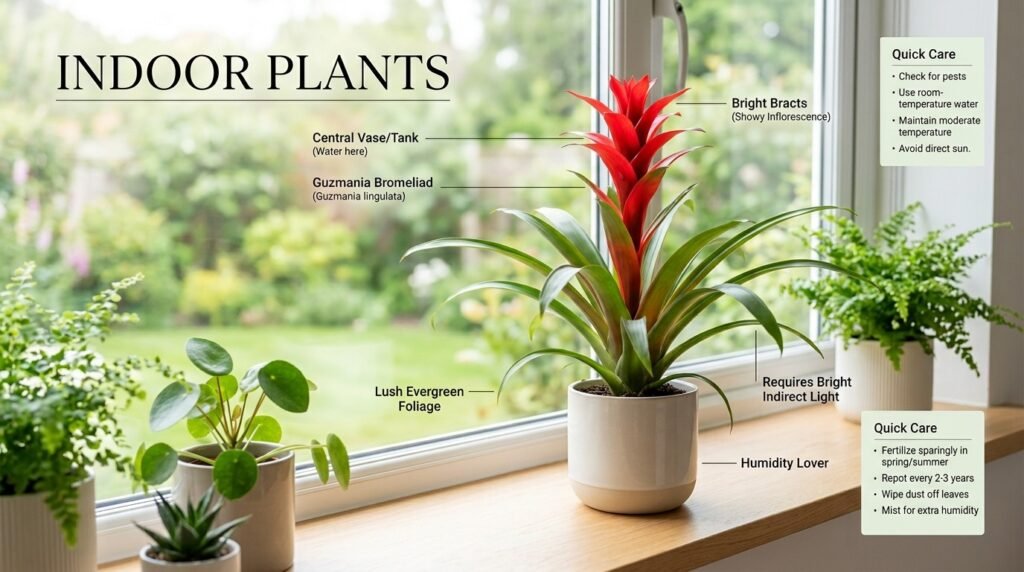
Indoor growing changes what these plants need most. Light matters more indoors, since windows filter out much of the sun’s strength. Humidity often drops too low indoors, especially near heaters in winter. A tray of water or a small humidifier helps flowers like Gardenia and Gloxinia stay healthy.
Indoor gardeners often love this group because it brings color into a home year-round. A well-placed Gloxinia or Guzmania can turn a plain room into something much more vivid.
Florist Favorites
Florists reach for certain G flowers again and again. Gladiolus is prized for its tall, dramatic spikes in arrangements. Gypsophila, or baby’s breath, is the classic filler that softens any bouquet. Gerbera Daisy brings bold, cheerful color and a long vase life. Green Rose is a novelty pick for florists chasing something unusual.
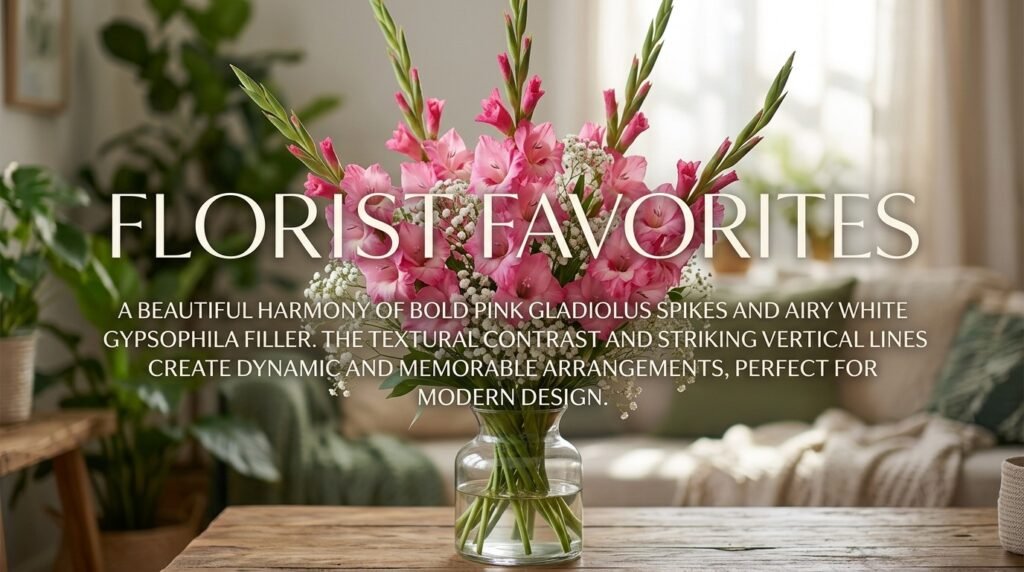
These flowers share traits that matter in the cut-flower trade. Vase life is critical, since a wilting flower ruins an arrangement fast. Stem strength also matters, especially for tall flowers like Gladiolus. Color range is another factor, and Gerbera Daisy wins here with dozens of shades.
Together, these flowers cover height, filler, and bold focal color in one letter. That range is part of why florists rely on the letter G so heavily.
Rare Flowers
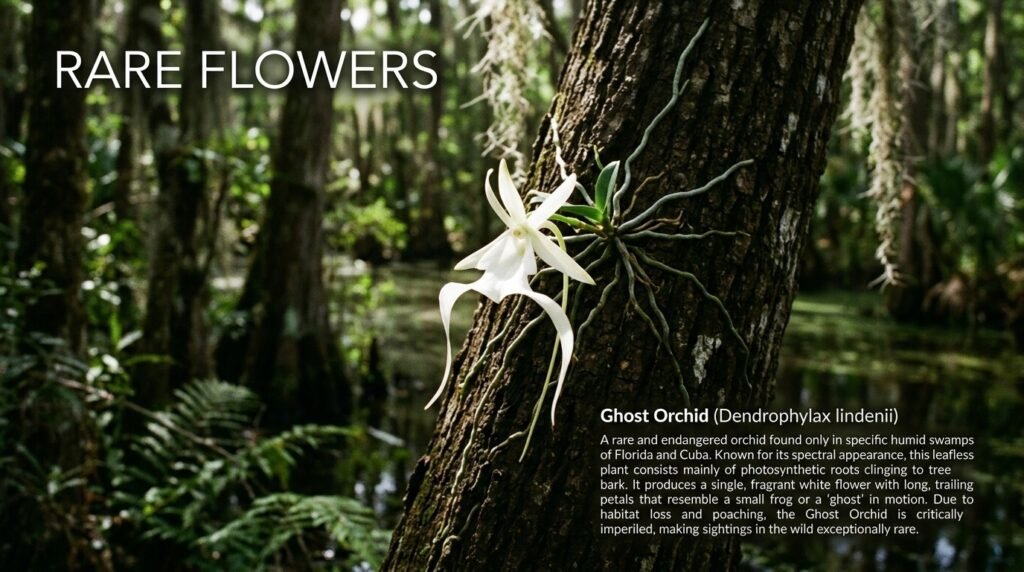
A handful of G flowers are true rarities, prized by collectors. The Ghost Orchid grows without leaves and blooms only briefly each summer. It survives in the swamps of Florida and Cuba, clinging to tree bark. The Guernsey Lily is another rare pick, named after the island where it was first found growing wild. Its pink blooms appear before its leaves, which makes it stand out.
Glaucidium, or Japanese wood poppy, is rare outside its native mountain forests in Japan. It needs cool, shaded, moist soil that mimics its forest home. Grass Pink Orchid is a native wetland orchid found in bogs across eastern North America. Its pink blooms look almost upside down compared to most orchids.
These four flowers show how rarity can come from different causes. Some, like the Ghost Orchid, are rare because of a narrow habitat. Others, like Guernsey Lily, are rare simply because few gardeners grow them.
Caution and Toxicity
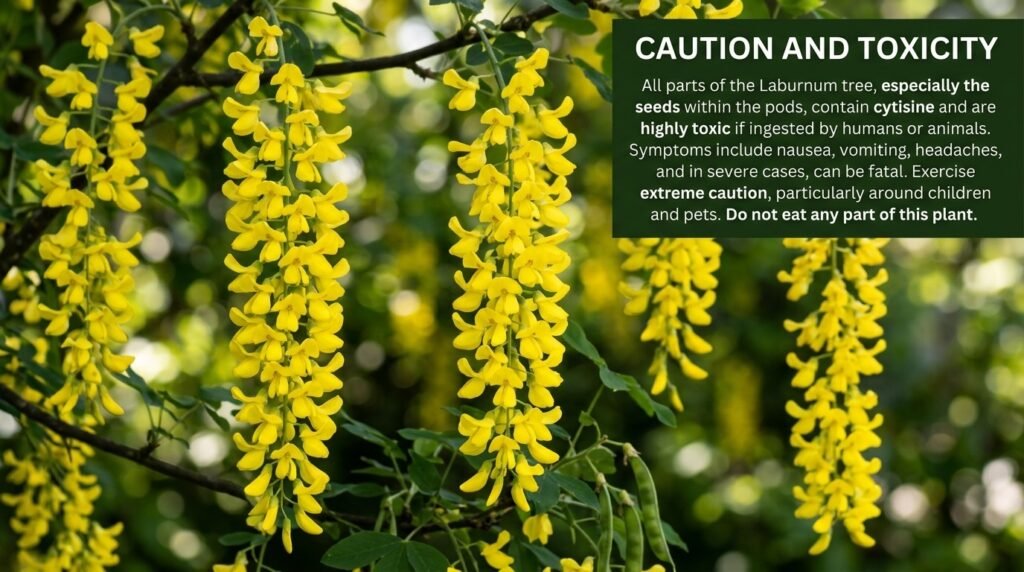
Not every flower that starts with G is safe around pets or small children. Golden Chain Tree is one of the most dangerous, with toxic seeds that resemble peas. Glory Lily contains colchicine, a compound that is toxic if eaten in any amount. Garland Flower, or Daphne, is also rated as severely toxic across its whole plant. Green Hellebore rounds out this group, with toxic compounds in its leaves and roots.
Even milder cases deserve attention around pets. Gladiolus bulbs cause stomach upset in dogs and cats if chewed. Grape Hyacinth bulbs can cause vomiting and drooling if a pet digs them up. Gardenia and Geranium cause milder reactions, usually limited to stomach upset.
- Golden Chain Tree – severe, seeds resemble peas
- Glory Lily – severe, contains colchicine
- Garland Flower (Daphne) – severe, whole plant is toxic
- Green Hellebore – severe, toxic leaves and roots
- Gladiolus – moderate, mainly the bulb
- Grape Hyacinth – mild, mainly the bulb
If you have pets or young kids, it is worth checking any new plant before buying. A quick search of the ASPCA’s toxic plant list can save a stressful vet visit later.
Color-Based Groupings
Color is often the first thing a gardener chooses before a plant name. Grouping G flowers by color makes it easier to plan a bed or bouquet.
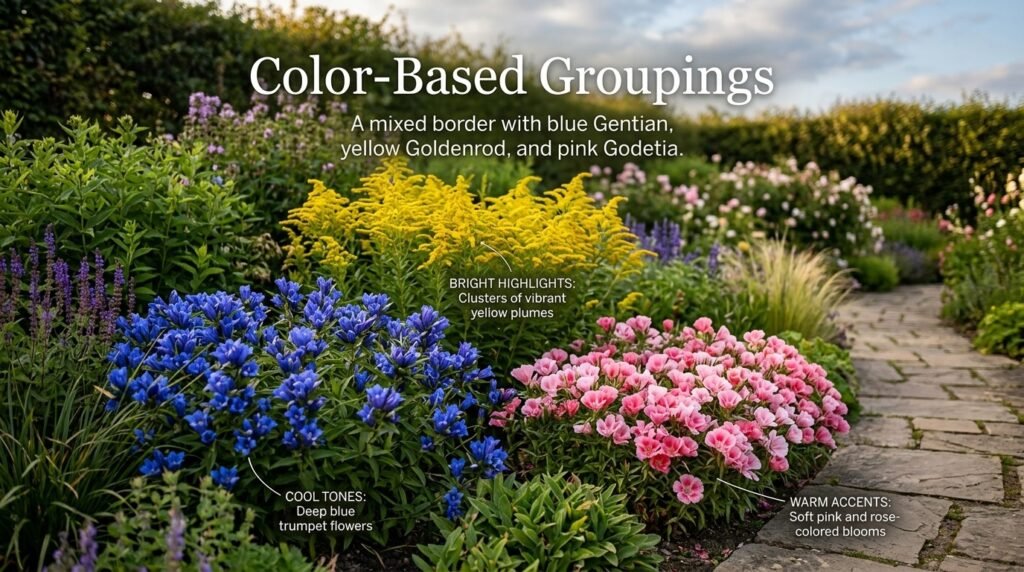
Yellow flowers bring warmth and energy to any space. Golden Poppy, Goldenrod, and Golden Chain Tree all fall into this group. These work well in sunny borders or as a cheerful cut-flower accent.
White flowers suit both formal gardens and casual cottage beds. Gardenia, Gypsophila, and Snowdrop are classic white choices. White flowers also show up beautifully in evening gardens, where pale colors catch the last light.
Pink and red flowers add romance and boldness. Guernsey Lily, Godetia, and many Geranium varieties fall here. These shades work well near entryways or in beds meant to draw the eye.
Blue and purple flowers are rarer in nature and highly prized. Gentian, Grape Hyacinth, and Globe Thistle all offer true blue or purple tones. Gardeners often use these to balance out beds dominated by warmer colors.
Color grouping is a simple way to plan without needing deep botanical knowledge. Once you know which G flowers fall into each shade, building a themed bed becomes much easier.
Life-Cycle Groupings
Life cycle affects how much replanting a garden needs each year. Annuals finish their cycle in one season and must be replanted. Perennials return on their own for several years or more. Bulbs and biennials fall somewhere in between, with their own planting patterns.
This next table sorts several G flowers by life cycle, so you can plan a garden that fits your maintenance style. If you want low upkeep, lean toward the perennial and bulb rows. If you want fast, changeable color, annuals are the better fit.
| Flower | Life Cycle |
| Geranium | Perennial (grown as annual in cold zones) |
| Gaillardia | Perennial |
| Gladiolus | Bulb (corm) |
| Grape Hyacinth | Bulb |
| Godetia | Annual |
| Garden Stock | Annual or biennial |
| Globeflower | Perennial |
| Gypsophila | Perennial |
| Gazania | Perennial (grown as annual in cold zones) |
| Golden Chain Tree | Perennial tree |
| Galanthus | Bulb |
| Garden Balsam | Annual |
| Guinea-Hen Flower | Bulb |
| Goat’s Beard | Perennial |
Bulbs like Grape Hyacinth and Galanthus are especially useful for low-effort spring color. Plant them once, and they return every year without much attention. Annuals like Godetia and Garden Balsam need replanting, but they reward you with fast, bright blooms in a single season.
Botanical Name Crosswalk
Botanical names matter more than most beginners expect. Common names can vary by region, but a botanical name stays the same worldwide. This matters when you order seeds online or search for a specific variety at a nursery. It also helps avoid mix-ups between similar-sounding common names.
The table below matches common G flower names to their botanical names and plant families. Use it if you want to search more accurately or confirm you are buying the right plant.
| Common Name | Botanical Name | Family |
| Gardenia | Gardenia jasminoides | Rubiaceae |
| Geranium | Pelargonium spp. | Geraniaceae |
| Gladiolus | Gladiolus spp. | Iridaceae |
| Gerbera Daisy | Gerbera jamesonii | Asteraceae |
| Grape Hyacinth | Muscari armeniacum | Asparagaceae |
| Gypsophila | Gypsophila paniculata | Caryophyllaceae |
| Gaillardia | Gaillardia pulchella | Asteraceae |
| Snowdrop | Galanthus nivalis | Amaryllidaceae |
| Gentian | Gentiana acaulis | Gentianaceae |
| Glory Lily | Gloriosa superba | Colchicaceae |
| Golden Poppy | Eschscholzia californica | Papaveraceae |
| Globe Amaranth | Gomphrena globosa | Amaranthaceae |
Notice that Golden Poppy is not actually in a genus starting with G. Its botanical name, Eschscholzia, starts with E. This is a good reminder to always double-check the botanical name if precision matters for your project.
Flower Meanings and Symbolism
Flowers have carried symbolic meaning for centuries, and G flowers are no exception. Gardenia often symbolizes purity, secret love, and refinement. It was a popular gift in Victorian times, when flowers carried coded messages between admirers. Geranium symbolizes friendship and positive feelings, which is likely why it remains a common housewarming gift.
Gladiolus carries a bolder meaning tied to strength and moral character. Its name comes from the Latin word for sword, referencing its tall, blade-like leaves. Roman gladiators were sometimes linked to this flower’s symbolism of remembrance and honor. Today it is still a popular choice for graduation gifts and anniversaries.
Gypsophila, or baby’s breath, symbolizes everlasting love and innocence. Its small, delicate blooms are often paired with roses in wedding bouquets. Goldenrod has a mixed history; once blamed for hay fever, it did not actually cause it. Its true symbolism is encouragement and good fortune, especially in North American folklore.
Golden Poppy, California’s state flower, symbolizes success and wealth. Miners during the California Gold Rush associated its golden petals with fortune. Grape Hyacinth symbolizes forgiveness and a gentle new beginning, fitting for its early spring bloom. Each of these meanings adds depth to a flower choice beyond just its color or shape.
Decision-Flow Table: Which G Flower Should You Choose?
Choosing the right flower depends on your goal, not just its looks. The table below matches common goals to specific G flowers that fit well. Start with the row that matches what you need most, then check the earlier sections for full details on that flower.
| Your Goal | Recommended G Flower |
| Fragrant indoor plant | Gardenia |
| Easiest beginner flower | Geranium |
| Tall cut flower for arrangements | Gladiolus |
| Filler flower for bouquets | Gypsophila |
| Drought-tolerant garden flower | Gaillardia |
| Early spring bulb color | Grape Hyacinth or Galanthus |
| Pet-safe colorful bloom | Gerbera Daisy |
| Rare collector plant | Ghost Orchid or Guernsey Lily |
| Fall-blooming bulb | Guernsey Lily or Golden Spider Lily |
| Pollinator-friendly perennial | Goldenrod or Golden Marguerite |
This table is meant as a quick starting point, not a strict rule. Many gardens benefit from mixing several of these flowers. A bed with Gaillardia, Goldenrod, and Grape Hyacinth, for example, covers three different bloom seasons in one space.
Conclusion
Flowers that start with G cover an unusually wide range of colors, sizes, and uses. From the fragrant Gardenia to the rare Ghost Orchid, this letter offers options for nearly every garden goal. Whether you want an easy border plant, a cut-flower favorite, or a pet-safe pick, there is a G flower for it. Use the tables and lists above as a starting point for your next garden or bouquet.
Frequently Asked Questions
What are some common flowers that start with G?
Common picks include Geranium, Gladiolus, Gerbera Daisy, and Gardenia. These four are widely sold at garden centers and florists. They are also easy to find as seeds, bulbs, or potted plants.
Are there any rare flowers that start with G?
Yes, the Ghost Orchid and Guernsey Lily are both considered rare. The Ghost Orchid grows in a narrow range of Florida swamps. Guernsey Lily is uncommon outside collector gardens and specialty nurseries.
Which flowers that start with G are toxic to pets?
Golden Chain Tree, Glory Lily, and Garland Flower are the most toxic. Gladiolus and Grape Hyacinth cause milder reactions, mainly from the bulb. Always check a plant against the ASPCA list before bringing it near pets.
What is the most fragrant flower that starts with G?
Gardenia is widely considered the most fragrant G flower. Its scent is strong, sweet, and often used in perfumes. Ginger Lily is a close second, with a spicy-sweet tropical fragrance.
Which G flowers are best for beginners?
Geranium and Gazania are both forgiving and low-maintenance. They tolerate missed watering and average soil without much trouble. Gaillardia is another strong beginner pick for hot, dry climates.
Can Gladiolus grow back every year?
Yes, in warm climates Gladiolus corms can stay in the ground year-round. In cold climates, gardeners usually dig up the corms each fall. Store them indoors over winter and replant them in spring.