

Flowers that start with Q are some of the rarest in the alphabet, but they are far from boring. This letter covers delicate wildflowers, dramatic night-blooming cacti, and fragrant flowering vines. It also covers a few native Australian trees with striking, unusual blooms. If you enjoy exploring flowers by letter, Q rewards a bit of extra digging.
- Quick Answer: Best Flowers That Start With Q
- Master Alphabetical List of Flowers That Start With Q
- Full Comparison Table
- Garden Favorites
- Indoor Plants
- Florist Favorites
- Rare Flowers
- Caution and Toxicity
- Color-Based Groupings
- Life-Cycle Groupings
- Botanical Name Crosswalk
- Flower Meanings and Symbolism
- Decision-Flow Table: Which Q Flower Should You Choose?
- Conclusion
- Frequently Asked Questions
- What are some common flowers that start with Q?
- Why are there so few flowers that start with Q?
- Are there any rare flowers that start with Q?
- Which flowers that start with Q are toxic to pets?
- What is the most fragrant flower that starts with Q?
- Which Q flowers are best for beginners?
- Is Queen Anne’s Lace safe to grow near children?
- What flower symbolizes fleeting beauty?
- Is Cantuta the same as Qantuta?
- Which Q flowers work well in shade?
- How long does the Queen of the Night stay in bloom?
- Do all flowers that start with Q need full sun?
- What is the difference between Queen’s Tears and Queen’s Wreath?
- Which Q flower attracts the most pollinators?
- Is Quince Blossom the same as the quince fruit?
This guide covers real flowers that start with Q, checked against botanical sources rather than guessed. Some entries use a common name that starts with Q, like Queen Anne’s Lace. Others use a botanical genus name that starts with Q, like Quesnelia or Quisqualis. We include both types, since gardeners search for plants both ways. Each flower lists a botanical name, native range, and toxicity note where one applies.
We built this guide with several readers in mind. A home gardener might want a few unusual, easy picks for a wildflower bed. A florist might want a dramatic night-blooming flower for a special event. A pet owner might want to know which Q flowers to keep out of reach. A curious plant lover might simply want fresh facts and photo ideas from a letter most people overlook.
The list is organized by garden use, color, life cycle, and botanical name. Jump to whichever section fits your goal. Every section includes real explanations, not just a row of names. By the end, you will have a clear picture of what flowers that start with Q can bring to a garden, home, or bouquet.
Quick Answer: Best Flowers That Start With Q
If you only have a minute, here are the standout picks. Queen Anne’s Lace is the most familiar Q flower, known for its flat, lacy white clusters along roadsides. Queen of the Night is the most dramatic, since its huge, fragrant blooms open only after dark. Quince Blossom is a classic spring favorite, appearing on branches before the fruit forms. Quisqualis, or Rangoon Creeper, is prized for flowers that change color as they age.
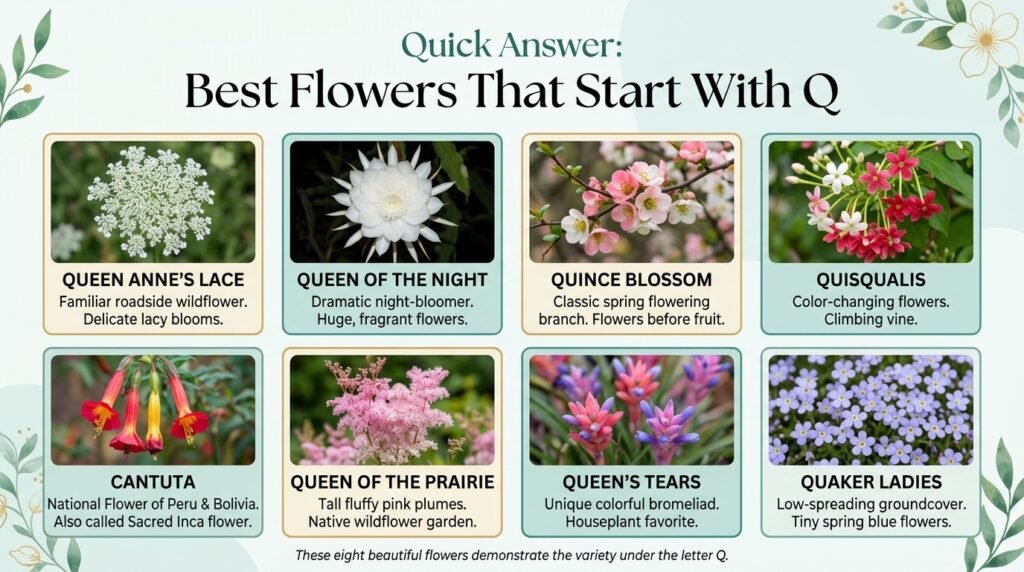
For something more unusual, Cantuta, often called Qantuta, is the national flower of Peru and Bolivia. Queen of the Prairie brings tall, fluffy pink plumes to native wildflower gardens. Queen’s Tears is a small, colorful bromeliad that thrives as a houseplant. Quaker Ladies form a low, spreading carpet of tiny blue spring flowers. Together, these eight flowers show that the letter Q holds real variety, even with a smaller total count.
Read More 85 Flowers That Start With A: With Pictures, Names & Growing Tips
Master Alphabetical List of Flowers That Start With Q
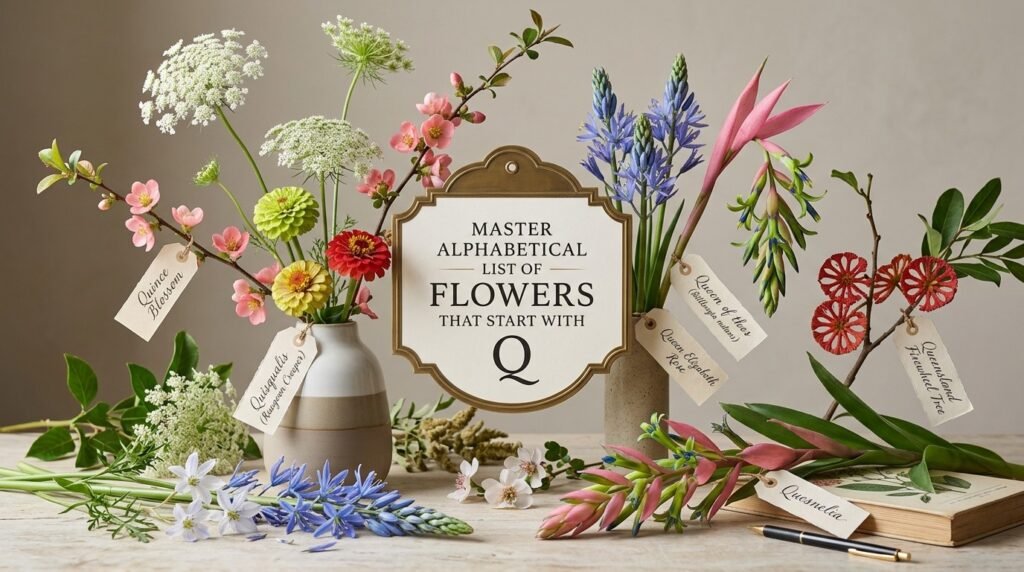
This list mixes two kinds of names. Some flowers use a common English name, like Queen Anne’s Lace or Quince Blossom. Others use a botanical genus name, like Quesnelia or Quararibea. Both types are grouped together here, so you can scan the full letter Q collection at once. Full details on each flower appear in the sections and tables below.
- Queen Anne’s Lace
- Queen’s Wreath
- Queen’s Tears
- Queen of the Night
- Queen of the Prairie
- Queen of the Meadow
- Quamash
- Quaker Ladies
- Queen’s Cup
- Quisqualis (Rangoon Creeper)
- Quince Blossom
- Cantuta (Qantuta)
- Quandong
- Queensland Bottle Tree
- Queensland Firewheel Tree
- Queensland Silver Wattle
- Queen Fabiola
- Queen Lime Zinnia
- Queen Red Lime Zinnia
- Quesnelia
- Quinine Tree
- Queensland Bluebell
- Queen’s Delight
- Queen of Sheba Orchid
- Queen Emma Lily
- Queen’s Necklace
- Quaking Grass
- Quararibea
- Queensland Grasstree
- Queen’s Crown
- Queen of the Andes
- Quamoclit (Cypress Vine)
- Queen Elizabeth Rose
- Queen of Sweden Rose
- Quicksilver Rose
- Queensland Silky Oak
- Queen Lime Blush Zinnia
- Queen Lime Orange Zinnia
- Dwarf Flowering Quince
- Queen of Denmark Rose
Some of these names use “Queen” as a shared prefix, like Queen’s Wreath and Queen’s Tears, though the plants are unrelated. Others, like Quesnelia and Quararibea, are strictly botanical genus names rarely used in casual speech. This mix reflects how limited but genuine the letter Q really is in the plant world.
Full Comparison Table
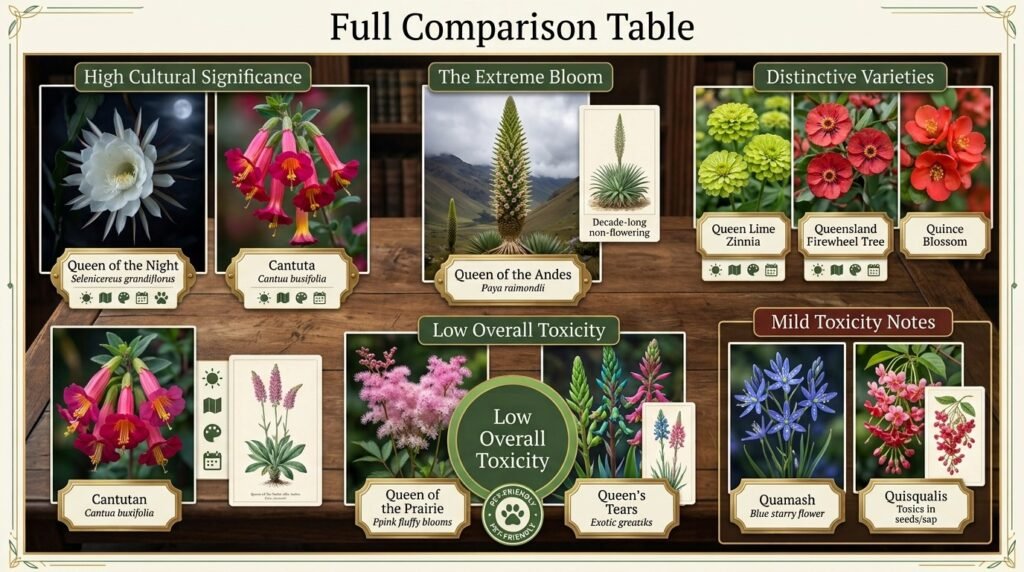
The table below compares every flower on this list side by side. It shows the botanical name, native range, main colors, bloom season, and toxicity status. Use it to quickly compare options if you need a specific climate fit or a pet-safe garden. Toxicity notes reflect general guidance from sources like the ASPCA and are not a substitute for veterinary advice.
| Flower | Botanical Name | Native Range | Colors | Bloom Season | Toxic to Pets |
| Queen Anne’s Lace | Daucus carota | Europe, Asia | White | Summer | No, but sap can irritate skin |
| Queen’s Wreath | Antigonon leptopus | Mexico | Pink, coral | Summer–fall | No |
| Queen’s Tears | Billbergia nutans | South America | Green, pink, blue | Spring | No |
| Queen of the Night | Selenicereus grandiflorus | Central America, Caribbean | White | Summer nights | No |
| Queen of the Prairie | Filipendula rubra | Eastern United States | Pink | Summer | No |
| Queen of the Meadow | Eutrochium purpureum | Eastern North America | Pink, purple | Summer–fall | No |
| Quamash | Camassia quamash | Western North America | Blue, purple | Late spring | Yes, mild |
| Quaker Ladies | Houstonia caerulea | Eastern North America | Blue, white | Spring | No |
| Queen’s Cup | Clintonia uniflora | Western North America | White | Late spring–summer | Mild, berries only |
| Quisqualis (Rangoon Creeper) | Combretum indicum | Southeast Asia | White, pink, red | Summer | Yes, mild (seeds) |
| Quince Blossom | Chaenomeles speciosa | China | Red, pink, white | Early spring | No |
| Cantuta (Qantuta) | Cantua buxifolia | Andes (Peru, Bolivia) | Pink, red, yellow | Spring–summer | No |
| Quandong | Santalum acuminatum | Australia | White, cream | Spring–summer | No |
| Queensland Bottle Tree | Brachychiton rupestris | Australia | Cream, green | Summer | No |
| Queensland Firewheel Tree | Stenocarpus sinuatus | Australia | Red, orange | Late summer–fall | No |
| Queensland Silver Wattle | Acacia podalyriifolia | Australia | Yellow | Winter | No |
| Queen Fabiola | Triteleia laxa ‘Queen Fabiola’ | Western North America | Blue, purple | Late spring | No |
| Queen Lime Zinnia | Zinnia elegans ‘Queen Lime’ | Mexico (species origin) | Green | Summer–fall | No |
| Queen Red Lime Zinnia | Zinnia elegans ‘Queen Red Lime’ | Mexico (species origin) | Red, green | Summer–fall | No |
| Quesnelia | Quesnelia liboniana | Brazil | Pink, purple | Spring | No |
| Quinine Tree | Cinchona officinalis | South America (Andes) | Pink, white | Varies by region | No |
| Queensland Bluebell | Wahlenbergia gracilis | Australia | Blue, purple | Spring–summer | No |
| Queen’s Delight | Stillingia sylvatica | Southern United States | Yellow, green | Summer | Yes, mild |
| Queen of Sheba Orchid | Thelymitra variegata | Western Australia | Purple, pink | Spring | No |
| Queen Emma Lily | Eucharis grandiflora | South America | White | Varies, often fall | Yes, mild |
| Queen’s Necklace | Cassia javanica | Southeast Asia | Pink, white | Summer | Mild, pods only |
| Quaking Grass | Briza media | Europe | Green, purple tint | Summer | No |
| Quararibea | Quararibea funebris | Mexico, Central America | White, pink | Varies by region | No |
| Queensland Grasstree | Xanthorrhoea johnsonii | Australia | White, cream | Spring–summer | No |
| Queen’s Crown | Sedum spurium | Caucasus region | Pink, red | Summer | No |
| Queen of the Andes | Puya raimondii | Peru, Bolivia | White, cream | Once, after decades | Yes, sharp spines |
| Quamoclit (Cypress Vine) | Ipomoea quamoclit | Mexico, Central America | Red, pink, white | Summer–fall | Yes, mild |
| Queen Elizabeth Rose | Rosa ‘Queen Elizabeth’ | Garden hybrid | Pink | Summer–fall | Yes, mild (thorns, mild GI) |
| Queen of Sweden Rose | Rosa ‘Queen of Sweden’ | Garden hybrid | Soft pink | Summer–fall | Yes, mild |
| Quicksilver Rose | Rosa ‘Quicksilver’ | Garden hybrid | Lavender, mauve | Summer–fall | Yes, mild |
| Queensland Silky Oak | Grevillea robusta | Australia | Orange, yellow | Spring–summer | Yes, mild (contact irritant) |
| Queen Lime Blush Zinnia | Zinnia elegans ‘Queen Lime Blush’ | Mexico (species origin) | Pink, green | Summer–fall | No |
| Queen Lime Orange Zinnia | Zinnia elegans ‘Queen Lime Orange’ | Mexico (species origin) | Orange, green | Summer–fall | No |
| Dwarf Flowering Quince | Chaenomeles japonica | Japan | Orange, red | Early spring | No |
| Queen of Denmark Rose | Rosa ‘Königin von Dänemark’ | Garden hybrid | Pink | Early summer | Yes, mild |
A few rows stand out from this table. Queen of the Night and Cantuta both hold real cultural weight, tied to nighttime blooming rituals and Andean tradition. Queen of the Andes is the most extreme entry here, since it can take over 80 years to flower even once before dying. Most Q flowers on this list are non-toxic, which makes this letter unusually pet-friendly compared to others. The main exceptions are Quamash, Quisqualis, and Queen’s Delight, which carry mild toxicity mainly in their seeds or sap.
Love to Read Flowers That Start With I: 25 Beautiful Blooms You Should Know
Garden Favorites
A few Q flowers have earned a lasting place in home gardens. Queen of the Prairie fills damp, sunny beds with tall, fluffy pink plumes. Quince Blossom is a classic choice for early spring color, often trained along a fence or wall. Quaker Ladies spread slowly to form a soft, low carpet in lawns and rock gardens. Queen Anne’s Lace naturalizes easily in wildflower meadows, drawing pollinators all summer.
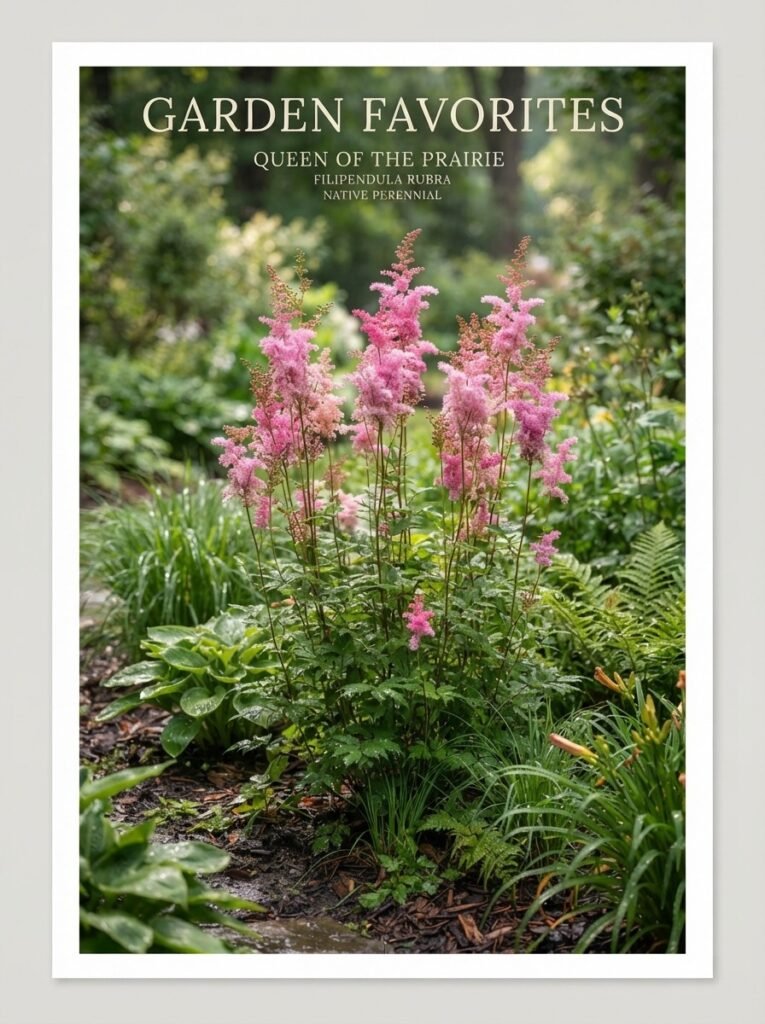
These plants share a few traits that make them dependable choices. Most tolerate average soil without needing constant feeding or care. Many also spread naturally over time, filling in beds with little extra planting. Gardeners often lean on this group because it rewards patience rather than daily attention.
- Queen of the Prairie – tall, fluffy pink plumes for damp beds
- Quince Blossom – early spring color on bare branches
- Quaker Ladies – low, spreading carpet of tiny blue flowers
- Queen Anne’s Lace – easy wildflower for meadows and pollinators
- Queensland Silver Wattle – winter color from silvery-yellow blooms
Each of these plants offers strong seasonal color while asking little in return. That trade-off is part of why they remain popular, even within such a small letter group.
Indoor Plants
A small number of Q flowers also do well indoors. Queen’s Tears is a popular bromeliad houseplant, valued for its unusual drooping, colorful blooms. Queen Emma Lily can be grown in a large pot, producing fragrant white flowers indoors. Both plants tolerate the lower light levels common in most homes better than many flowering species.
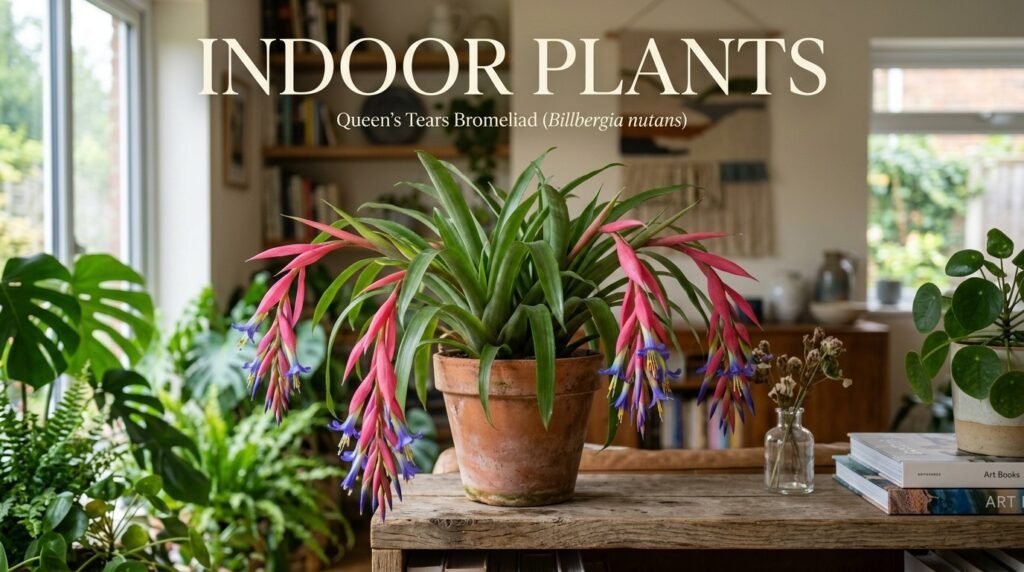
Indoor growing changes what these plants need most. Light still matters, so a bright window away from direct afternoon sun works best. Humidity often drops too low indoors, especially near heating vents in winter. A pebble tray or occasional misting helps plants like Queen’s Tears stay healthy through dry months.
This small group proves that even a letter with few options can still offer real indoor color. A single Queen’s Tears plant adds unusual texture to any houseplant collection.
Florist Favorites
Florists reach for a couple of standout Q flowers when the occasion calls for something unusual. Queen of the Night is prized for special events, since its huge, fragrant bloom only opens for one night. Quince branches, heavy with early spring blossoms, are sometimes cut for seasonal arrangements. Both choices bring a sense of rarity that few other flowers can match.
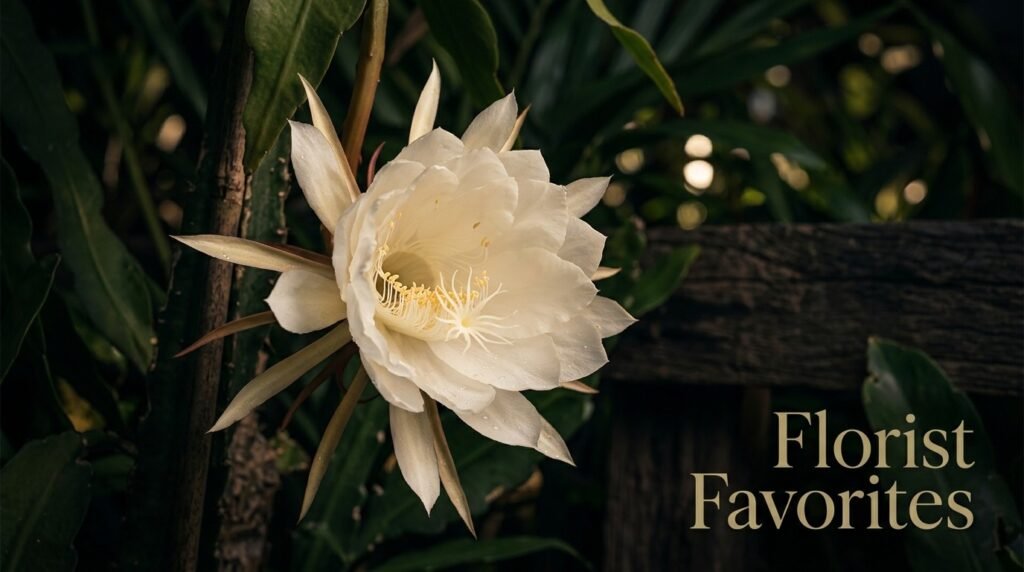
These flowers share a common thread in the cut-flower world: timing matters more than usual. Queen of the Night must be cut and displayed the same night it opens, since the bloom fades by morning. Quince branches, by contrast, last for days once cut, making them easier to work with. Both add a story-driven element that guests tend to remember.
A few named rose cultivars also carry Q names and see real florist use. Queen Elizabeth Rose is a tall, reliable grandiflora prized for its clean pink color and long stems. Queen of Sweden Rose offers a softer, old-fashioned shape popular in romantic bouquets.
Because true Q flowers are limited, florists often treat them as special, occasional features rather than everyday stock. That rarity is part of their appeal in event design.
Read More Flowers That Start With O: 50 Beautiful Flower Names For Garden
Rare Flowers
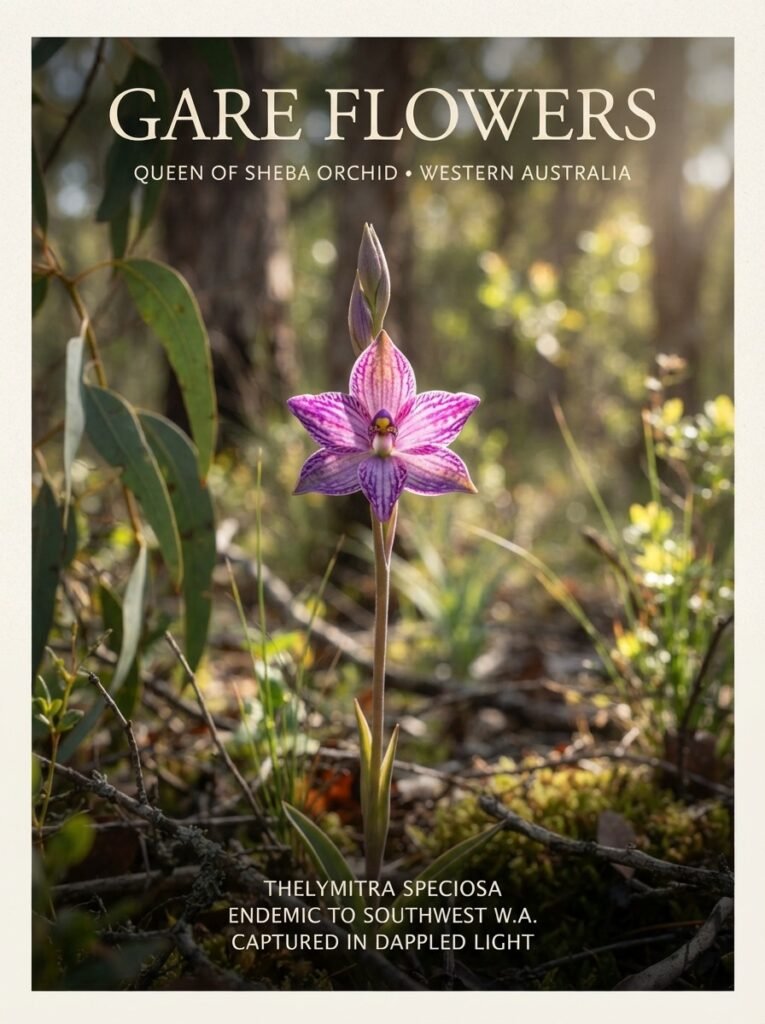
Several Q flowers count as genuinely rare, even among dedicated plant collectors. Queen of Sheba Orchid grows only in a small region of Western Australia, blooming each spring briefly. Its purple, patterned petals make it a favorite among orchid hunters who travel specifically to see it. Cantuta holds deep cultural significance in the Andes, considered sacred by the Inca and still used in Andean ceremonies today.
Quararibea funebris is another rare pick, historically used in traditional Mexican beverages and ceremonies. It remains uncommon outside its native range in Mexico and Central America. Queensland Grasstree is unusual for its slow growth, sometimes taking decades to produce its tall flower spike. Its ancient, sculptural form makes it a striking addition to native Australian gardens.
Queen of the Andes takes rarity to an extreme, since it can take more than 80 years to bloom before dying afterward. It grows only in high-altitude regions of Peru and Bolivia, producing a flower spike taller than most buildings. Quamoclit, or Cypress Vine, is less rare but still uncommon in cultivation, prized for its fine, feathery foliage and star-shaped red flowers.
These entries show that rarity in the letter Q often comes from a narrow native range, a slow growth cycle, or deep cultural roots. Each one rewards a curious traveler or dedicated collector willing to seek it out.
Caution and Toxicity
Most flowers that start with Q are relatively safe, but a few still deserve caution around pets and children. Quamash bulbs can cause mild stomach upset if dug up and eaten by a curious pet. Quisqualis seeds, while used in some traditional medicine practices, can cause hiccups and stomach discomfort in large amounts. Queen’s Delight contains a milky sap that can irritate skin and cause mild digestive upset if ingested.
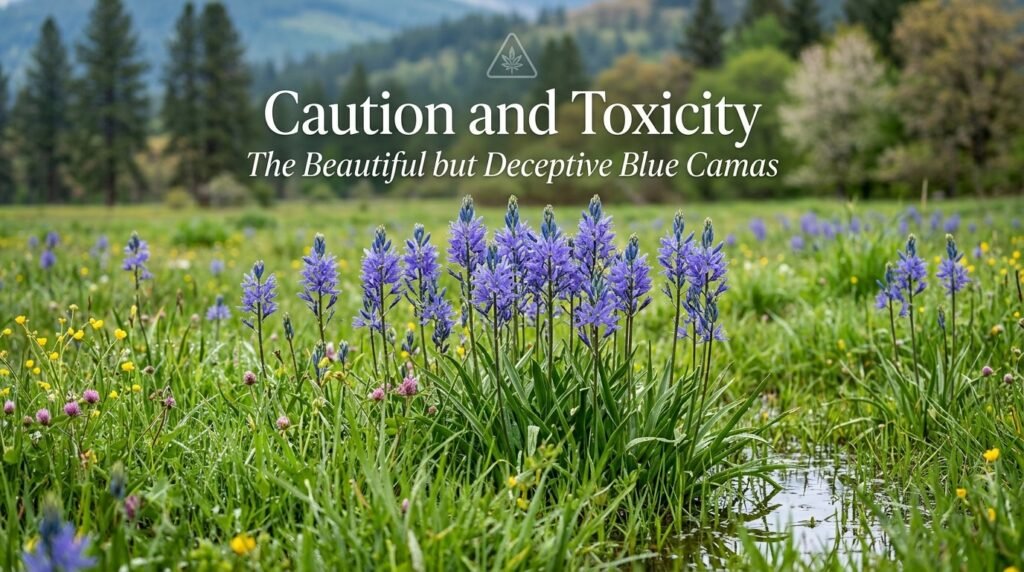
Queen Emma Lily carries a mild toxicity similar to other true lilies, mainly affecting cats. Queen Anne’s Lace is not toxic itself, but its sap can cause skin irritation in sunlight for some people. It is also important to avoid confusing it with poison hemlock, a dangerous look-alike plant.
- Quamash – mild, mainly the bulb
- Quisqualis – mild, mainly the seeds
- Queen’s Delight – mild, irritating sap
- Queen Emma Lily – mild, similar to other lilies
- Queen Anne’s Lace – generally safe, but can cause skin irritation
If pets or young children share your home, it is still worth checking any new plant before bringing it inside. A quick look at the ASPCA’s toxic plant list can prevent unnecessary worry later.
Color-Based Groupings
Color is often the first detail a gardener considers before choosing a plant. Grouping Q flowers by color makes planning a bed or bouquet easier, even with a smaller total list.
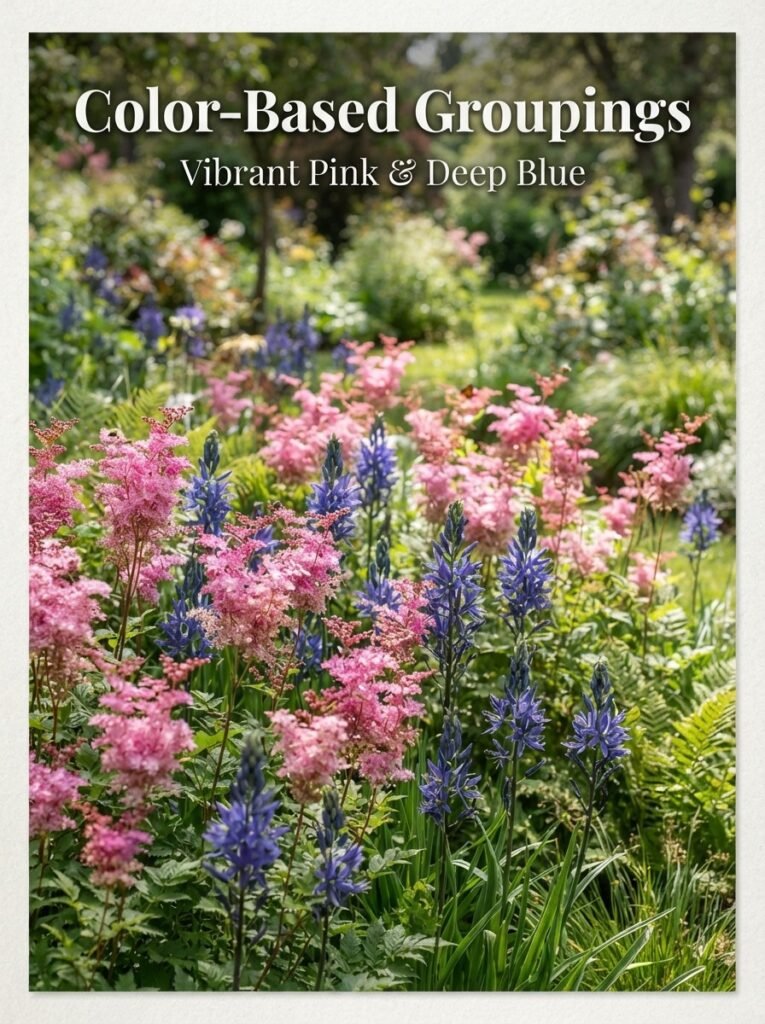
White flowers bring a clean, classic look to gardens and night-blooming displays. Queen Anne’s Lace, Queen of the Night, and Quandong all fall into this group. These work especially well in evening gardens, where pale colors show up clearly after dark.
Pink flowers add softness and warmth to beds and borders. Queen of the Prairie, Queen’s Wreath, and Quince Blossom are strong choices here. These flowers often bring some of the earliest or latest color of the growing season.
Blue and purple flowers feel rare and slightly unexpected within this letter. Quamash, Queensland Bluebell, and Queen Fabiola all offer true blue or purple tones. Gardeners often use these to add depth to a bed dominated by warmer colors.
Yellow and orange flowers bring energy to winter and fall gardens. Queensland Silver Wattle and Queensland Firewheel Tree both fall into this group. These flowers stand out partly because true yellow options are limited within the letter Q.
Color grouping offers a helpful shortcut for planning, even within a smaller letter group like Q. Once you know which flowers fall into each shade, building a themed bed becomes much easier.
Read More Flowers That Start With J: 50 Amazing Blooms You Should Know
Life-Cycle Groupings
The life cycle affects how much replanting a garden needs each year. Annuals complete their cycle in one season and need replanting. Perennials return on their own for several years or longer. Bulbs, trees, and shrubs each follow their own longer-term patterns.
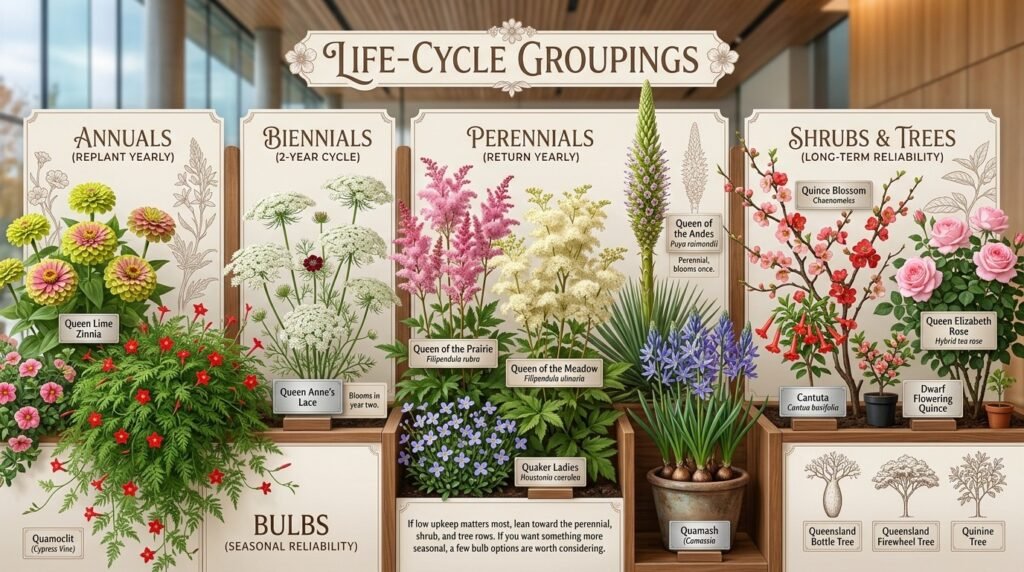
The table below sorts several Q flowers by life cycle, so you can plan around your preferred maintenance level. If low upkeep matters most, lean toward the perennial, shrub, and tree rows. If you want something more seasonal, a few bulb options are worth considering.
| Flower | Life Cycle |
| Quamash | Bulb |
| Queen Anne’s Lace | Biennial |
| Queen of the Prairie | Perennial |
| Queen of the Meadow | Perennial |
| Quaker Ladies | Perennial |
| Quince Blossom | Perennial shrub |
| Cantuta | Perennial shrub |
| Queensland Bottle Tree | Perennial tree |
| Queensland Firewheel Tree | Perennial tree |
| Quinine Tree | Perennial tree |
| Queen’s Tears | Perennial (bromeliad) |
| Queen Lime Zinnia | Annual |
| Dwarf Flowering Quince | Perennial shrub |
| Queen Elizabeth Rose | Perennial shrub |
| Quamoclit (Cypress Vine) | Annual vine |
| Queen of the Andes | Perennial, blooms once |
Shrubs and trees like Quince Blossom and Cantuta reward patience but return reliably for years. Perennials like Queen of the Prairie and Quaker Ladies need only occasional dividing to stay healthy. Queen Lime Zinnia stands out as one of the few true annuals in this letter, needing fresh planting each year.
Botanical Name Crosswalk
Botanical names matter more than most beginners expect. Common names shift by region, but a botanical name stays consistent worldwide. This becomes especially useful within the letter Q, where common names can be inconsistent or overlap. It also helps avoid confusion between plants that share the word “Queen.”
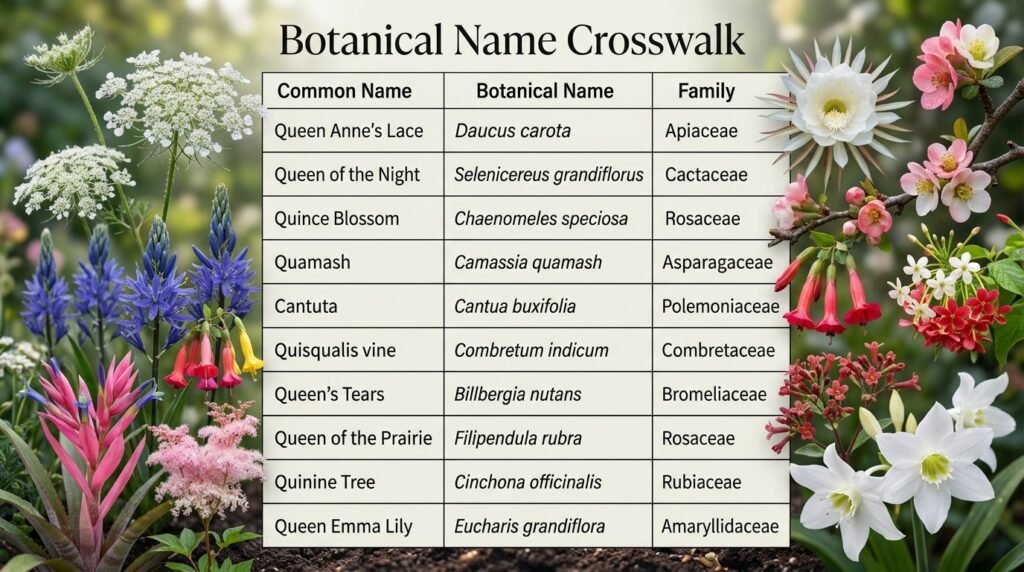
The table below matches common Q flower names to their botanical names and plant families. Use it if you want to search more precisely or confirm you are buying the correct plant.
| Common Name | Botanical Name | Family |
| Queen Anne’s Lace | Daucus carota | Apiaceae |
| Queen of the Night | Selenicereus grandiflorus | Cactaceae |
| Quince Blossom | Chaenomeles speciosa | Rosaceae |
| Quamash | Camassia quamash | Asparagaceae |
| Cantuta | Cantua buxifolia | Polemoniaceae |
| Quisqualis | Combretum indicum | Combretaceae |
| Queen’s Tears | Billbergia nutans | Bromeliaceae |
| Queen of the Prairie | Filipendula rubra | Rosaceae |
| Quinine Tree | Cinchona officinalis | Rubiaceae |
| Queen Emma Lily | Eucharis grandiflora | Amaryllidaceae |
Notice that Queen Anne’s Lace and Queen of the Prairie both share the word “Queen,” yet belong to different plant families. This is a good reminder that common names group plants by appearance or folklore, not always by true botanical relation. Checking the family name helps confirm how closely two plants are actually related.
Flower Meanings and Symbolism
Flowers have carried symbolic meaning for centuries, and Q flowers hold some genuinely rich stories. Queen Anne’s Lace is often linked to a legend about Queen Anne of England pricking her finger while making lace. The small red or purple dot sometimes seen at the flower’s center is said to represent that drop of blood. This gives the flower a symbolism tied to delicate beauty paired with sacrifice.
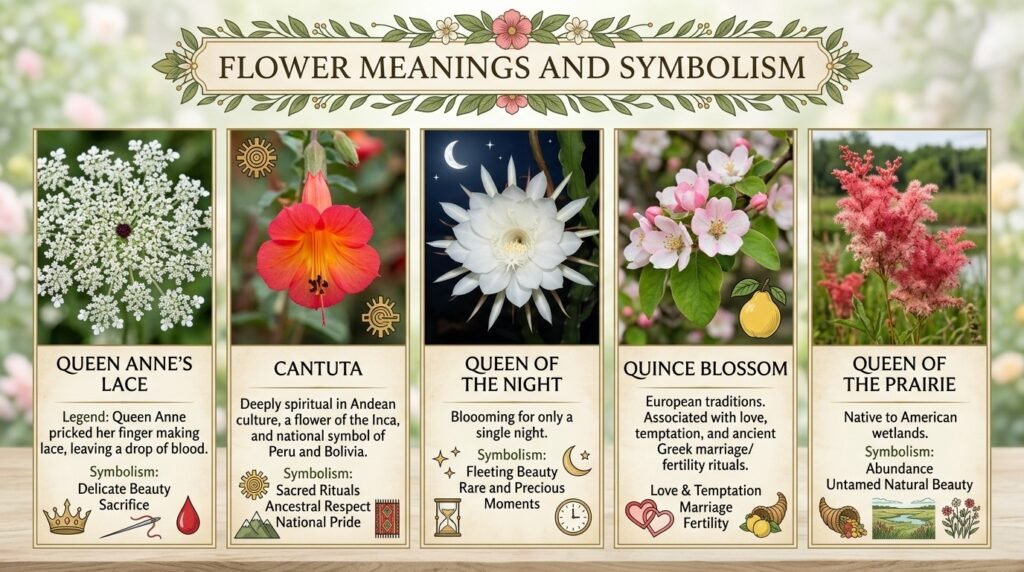
Cantuta carries deep spiritual meaning in Andean culture, tied to sacred rituals and ancestral respect. It was considered a flower of the Inca and remains a national symbol in both Peru and Bolivia today. Queen of the Night carries a symbolism of fleeting beauty, since its bloom lasts only a single night. This short life has made it a popular metaphor for rare, precious moments in literature and art.
Quince Blossom symbolizes love and temptation in several older European traditions. In ancient Greece, the quince fruit was associated with marriage and fertility rituals. Queen of the Prairie, native to American wetlands, carries a simpler symbolism tied to abundance and untamed natural beauty. Each of these meanings adds real depth to a group of flowers that many people overlook.
Decision-Flow Table: Which Q Flower Should You Choose?
Choosing the right flower depends on your specific goal, not just its rarity. The table below matches common goals to Q flowers that fit well. Start with the row closest to your need, then check the earlier sections for full details.
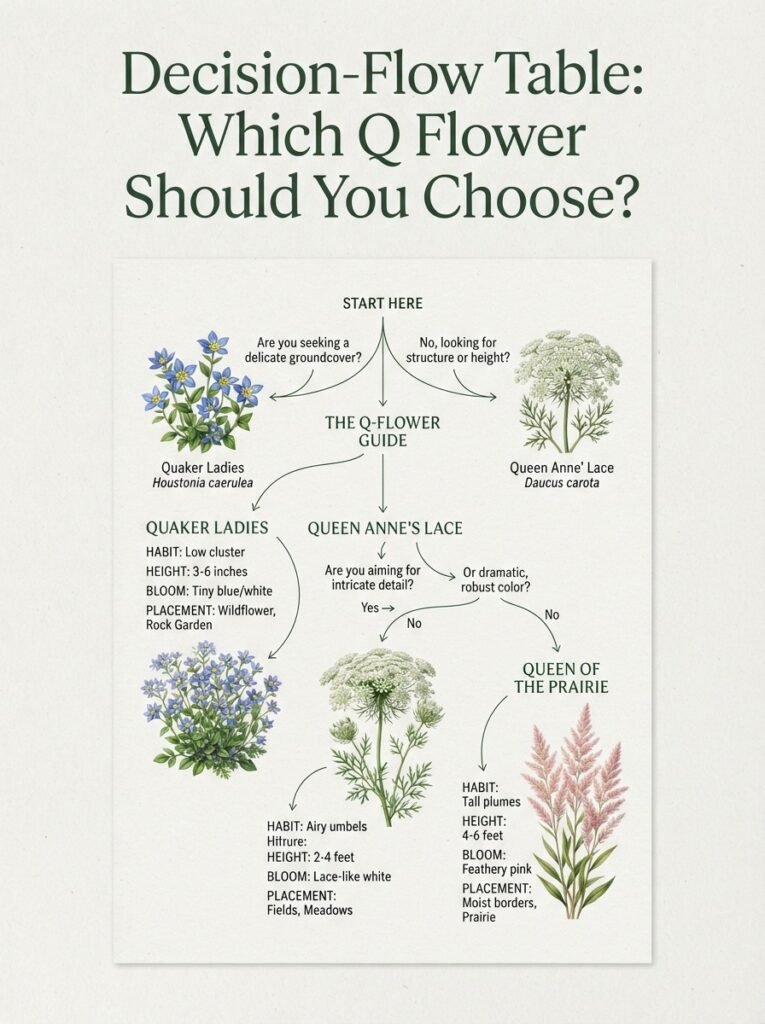
| Your Goal | Recommended Q Flower |
| Easy wildflower for a meadow bed | Queen Anne’s Lace |
| Dramatic night-blooming display | Queen of the Night |
| Early spring flowering shrub | Quince Blossom |
| Low-maintenance ground cover | Quaker Ladies |
| Indoor bromeliad color | Queen’s Tears |
| Culturally significant garden plant | Cantuta |
| Native wetland or prairie planting | Queen of the Prairie |
| Rare collector orchid | Queen of Sheba Orchid |
| Winter-flowering tree or shrub | Queensland Silver Wattle |
| Fragrant flowering vine | Quisqualis |
This table works best as a starting point rather than a strict rule. Even with a smaller letter group, a few Q flowers can be combined for real variety. A bed with Quaker Ladies, Queen Anne’s Lace, and Queen of the Prairie, for example, covers three different textures and bloom times.
Conclusion
Flowers that start with Q may be fewer in number, but they are far from dull. From the familiar Queen Anne’s Lace to the rare Queen of Sheba Orchid, this letter offers real character for those willing to look closely. Whether you want an easy wildflower, a dramatic night bloom, or a culturally rich garden plant, there is a flower that starts with Q worth growing. Use the tables and lists above as a starting point for your next planting project.
Read More Flowers That Start With G: 70 Beautiful Flowers From Around the World
Frequently Asked Questions
What are some common flowers that start with Q?
Common picks include Queen Anne’s Lace, Quince Blossom, and Queen’s Tears. These are widely known and sold at nurseries and garden centers. Queen Anne’s Lace also grows wild across much of North America and Europe.
Why are there so few flowers that start with Q?
Q is one of the least common starting letters in English plant names overall. Most botanical Latin names also rarely begin with Q. This makes the letter naturally smaller compared to letters like R or S.
Are there any rare flowers that start with Q?
Yes, the Queen of Sheba Orchid and Quararibea are both considered rare. Queen of Sheba Orchid grows only in a small part of Western Australia. Quararibea remains uncommon outside parts of Mexico and Central America.
Which flowers that start with Q are toxic to pets?
Quamash, Quisqualis, and Queen’s Delight carry mild toxicity risks. Most other Q flowers are considered non-toxic to dogs and cats. Always check a plant against the ASPCA list before bringing it near pets.
What is the most fragrant flower that starts with Q?
Queen of the Night is widely considered the most fragrant Q flower. Its scent is strong and sweet, released only during its single night of bloom. Quisqualis is a close second, with a fragrance that shifts as its flowers age.
Which Q flowers are best for beginners?
Queen Anne’s Lace and Quaker Ladies are both forgiving and low maintenance. They tolerate average soil and need little regular attention. Quince Blossom is another strong beginner pick for early spring color.
Is Queen Anne’s Lace safe to grow near children?
The plant itself is generally safe, though its sap can irritate skin in sunlight. The bigger concern is confusing it with poison hemlock, a dangerous look-alike. Careful identification is important before letting children handle it.
What flower symbolizes fleeting beauty?
Queen of the Night is the flower most closely tied to this meaning. Its bloom opens and fades within a single night. This short life has made it a lasting symbol of rare, precious moments.
Is Cantuta the same as Qantuta?
Yes, Cantuta and Qantuta refer to the same flower, spelled differently by region. It is the national flower of both Peru and Bolivia. Its botanical name, Cantua buxifolia, stays the same either way.
Which Q flowers work well in shade?
Queen’s Cup and Quaker Ladies both tolerate shaded, woodland conditions well. Queen of the Meadow also does well in partly shaded, moist soil. These three are strong picks for a shaded garden bed.
How long does the Queen of the Night stay in bloom?
The flower typically opens after sunset and closes by early morning. This means the bloom lasts for only a single night. Many growers stay up specifically to watch it open and photograph it.
Do all flowers that start with Q need full sun?
No, several Q flowers actually prefer shade or partial shade. Queen’s Cup and Queen of the Meadow are two clear examples. Most sun-loving types, like Queen Anne’s Lace, prefer full sun instead.
What is the difference between Queen’s Tears and Queen’s Wreath?
Queen’s Tears is a small bromeliad grown mostly as a houseplant. Queen’s Wreath is a climbing vine grown outdoors for its pink flower clusters. The names are similar, but the plants belong to entirely different families.
Which Q flower attracts the most pollinators?
Queen Anne’s Lace is one of the best Q flowers for pollinators. It draws bees, butterflies, and beneficial insects throughout summer. Queen of the Prairie is another strong pollinator plant in native wetland gardens.
Is Quince Blossom the same as the quince fruit?
Yes, Quince Blossom appears on the same plant that later produces quince fruit. The flowers bloom first, usually in early spring. The fruit develops later in the season, once the blossoms have faded.