

Flowers that start with O cover an unusually wide mix of plants. This letter includes fragrant trees, tender houseplants, and tough prairie wildflowers. It also includes a few plants that are famous for being dangerous rather than pretty. If you enjoy exploring flowers letter by letter, O holds more surprises than most people expect.
- Quick Answer: Best Flowers That Start With O
- Master Alphabetical List of Flowers That Start With O
- Full Comparison Table
- Garden Favorites
- Indoor Plants
- Florist Favorites
- Rare Flowers
- Caution and Toxicity
- Color-Based Groupings
- Life-Cycle Groupings
- Botanical Name Crosswalk
- Flower Meanings and Symbolism
- Decision-Flow Table: Which O Flower Should You Choose?
- Conclusion
- Frequently Asked Questions
This guide covers 50 flowers that start with O. Some entries use a common name that starts with O, like Oxeye Daisy or Orange Blossom. Others use a botanical genus name that starts with O, like Oenothera or Osmanthus. We include both types, since gardeners search for plants both ways. Each flower lists a botanical name, native range, and toxicity note where one applies.
We built this guide with several kinds of readers in mind. A home gardener might want tough, reliable picks for a sunny border. A florist might want fragrant blooms for bouquets and events. A pet owner might want to know which O flowers to keep out of reach. A curious plant lover might simply want fresh facts and photo ideas.
The list is organized by garden use, color, life cycle, and botanical name. Jump to whichever section matches your goal. Every section includes real explanations, not just a row of names. By the end, you will have a clear picture of what flowers that start with O can bring to a garden, home, or bouquet.
Quick Answer: Best Flowers That Start With O
If you only have a minute, here are the standout picks. Orchid is the obvious star of this letter, prized worldwide for its striking, long-lasting blooms. Oleander is famous for its tough, drought-proof growth, though it demands real caution around pets and kids. Osteospermum, or African Daisy, is a cheerful, easy-care bedding plant for sunny beds. Orange Blossom is treasured for its heavy fragrance, long used in perfumes and bridal bouquets.
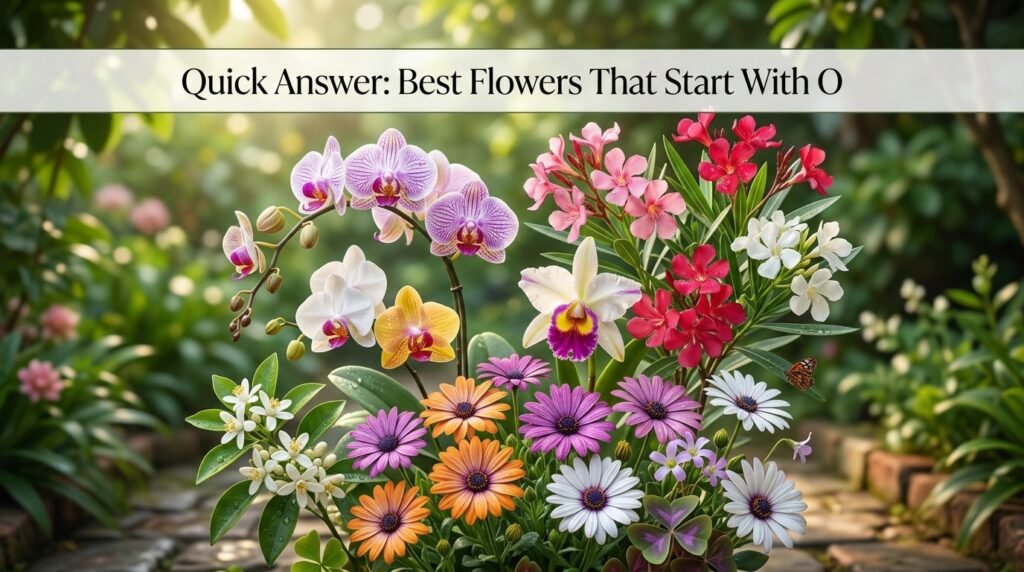
For something more unusual, Orchid Cactus produces huge, showy blooms from a plant that looks nothing like a typical cactus. Oxeye Daisy is a familiar wildflower that thrives with almost no care at all. Oriental Poppy brings bold, papery color to early summer borders. Star of Bethlehem is a charming spring bulb, though its toxicity means it needs a careful spot. Together, these eight flowers show just how varied the letter O really is.
Master Alphabetical List of Flowers That Start With O
This list mixes two kinds of names. Some flowers use a common English name, like Oxeye Daisy or Orange Cosmos. Others use a botanical genus name, like Ophiopogon or Orlaya. Both types are grouped here, so you can scan the full letter O collection in one place. Full details on each flower appear in the sections and tables below.
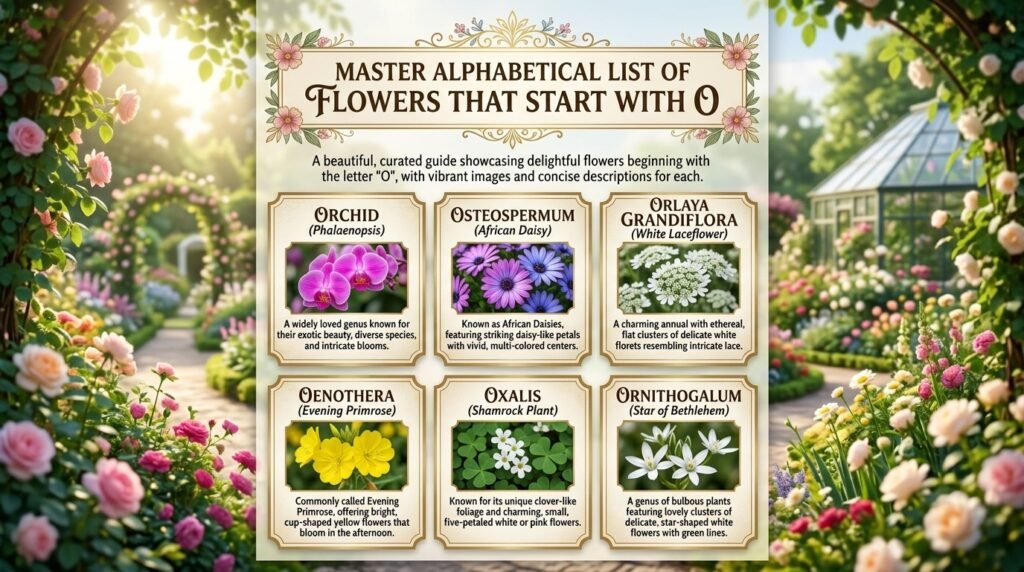
- Orchid
- Oleander
- Orange Blossom
- Osteospermum (African Daisy)
- Oxeye Daisy
- Obedient Plant
- Old Man’s Beard
- Olearia
- Oxalis (Wood Sorrel)
- Orchid Cactus
- Orange Star Flower
- Oregon Grape
- Oregon Fawn Lily
- Omphalodes (Blue-Eyed Mary)
- Onopordum (Scotch Thistle)
- Ophiopogon (Snake’s Beard)
- Orychophragmus (Chinese Violet Cress)
- Oenothera (Evening Primrose)
- Oahu Riverhemp
- Osmanthus (Tea Olive)
- Orange Cosmos
- Ozark Witch Hazel
- Orchid Tree
- Oregano
- Orpine (Live-Forever)
- Orlaya (White Lace Flower)
- Oriental Poppy
- Oriental Lily
- Oriental Hellebore (Lenten Rose)
- Orange Hawkweed
- Oconee Bells
- Owl’s Clover
- Ourisia (Mountain Foxglove)
- Oconee Azalea
- Oxlip
- Star of Bethlehem
- Opium Poppy
- October Daphne
- Olive Blossom
- Oxypetalum (Tweedia)
- Oakleaf Hydrangea
- Orange Coneflower
- Orange Jessamine
- Oxblood Lily
- Ornamental Onion
- Orange Milkweed
- Ozark Sundrops
- Old Maid (Madagascar Periwinkle)
- Oswego Tea (Bee Balm)
- Orange Ice Plant
Some names here sound casual, like Old Maid and Oswego Tea, which are folk nicknames rather than formal titles. Others, like Ophiopogon and Oxypetalum, are strictly botanical and rarely used in daily speech. This mix shows how flower naming often depends on region, history, and local tradition.
Full Comparison Table
The table below compares every flower on this list side by side. It shows the botanical name, native range, main colors, bloom season, and toxicity status. Use it to quickly compare options if you need a specific climate fit or a pet-safe garden. Toxicity notes reflect general guidance from sources like the ASPCA and are not a substitute for veterinary advice.
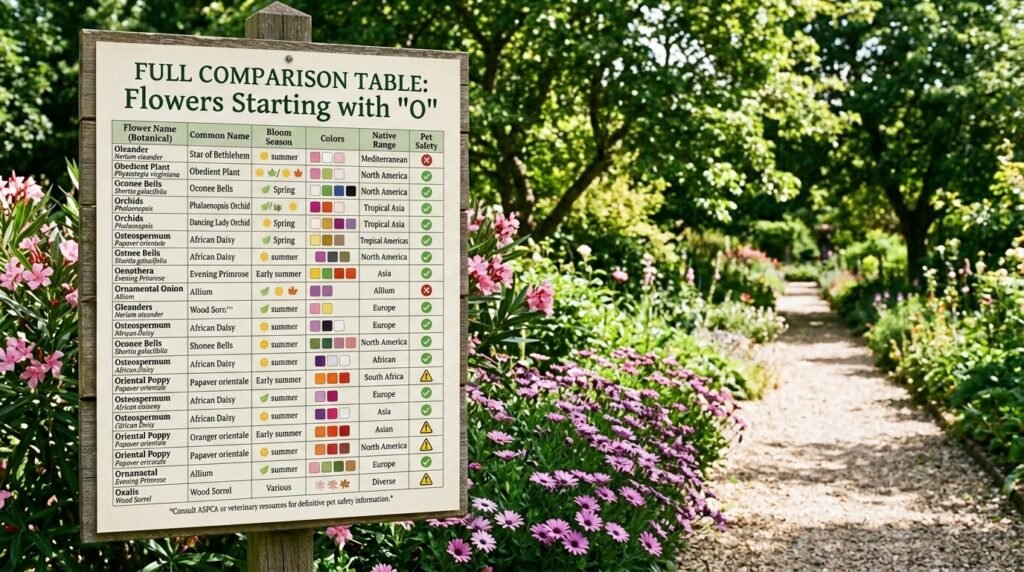
| Flower | Botanical Name | Native Range | Colors | Bloom Season | Toxic to Pets |
| Orchid | Orchidaceae (family) | Worldwide, mostly tropics | Many colors | Varies by species | No |
| Oleander | Nerium oleander | Mediterranean | Pink, red, white | Summer | Yes, severe |
| Orange Blossom | Citrus sinensis | Southeast Asia | White | Spring | No |
| Osteospermum | Osteospermum ecklonis | South Africa | Purple, white, orange | Spring–fall | Yes, mild |
| Oxeye Daisy | Leucanthemum vulgare | Europe, Asia | White, yellow center | Late spring–summer | No |
| Obedient Plant | Physostegia virginiana | North America | Pink, white, lilac | Late summer–fall | No |
| Old Man’s Beard | Clematis vitalba | Europe | White | Summer | Yes, mild |
| Olearia | Olearia spp. | Australia, New Zealand | White | Summer | No |
| Oxalis | Oxalis triangularis | South America | Pink, white | Summer | Yes, moderate |
| Orchid Cactus | Epiphyllum spp. | Central and South America | Red, pink, white | Spring–summer | No |
| Orange Star Flower | Ornithogalum dubium | South Africa | Orange | Spring | Yes, moderate |
| Oregon Grape | Mahonia aquifolium | Western North America | Yellow | Spring | Mild, berries only |
| Oregon Fawn Lily | Erythronium oregonum | Western North America | White | Spring | No |
| Omphalodes | Omphalodes verna | Europe | Blue | Spring | No |
| Onopordum | Onopordum acanthium | Southern Europe, Western Asia | Purple | Summer | No |
| Ophiopogon | Ophiopogon planiscapus | Japan | Pale pink | Summer | Yes, mild |
| Orychophragmus | Orychophragmus violaceus | China | Purple, lavender | Early–mid spring | No |
| Oenothera | Oenothera biennis | North America | Yellow | Summer | No |
| Oahu Riverhemp | Sesbania tomentosa | Hawaii | Red, orange, yellow | Spring–summer | No |
| Osmanthus | Osmanthus fragrans | China, Japan | White, orange | Fall | No |
| Orange Cosmos | Cosmos sulphureus | Mexico | Orange, red, yellow | Summer–fall | No |
| Ozark Witch Hazel | Hamamelis vernalis | Central United States | Orange, red, yellow | Late winter | No |
| Orchid Tree | Bauhinia variegata | South and Southeast Asia | Purple, pink, white | Spring | Yes, mild |
| Oregano | Origanum vulgare | Mediterranean | White, pink | Summer | No |
| Orpine | Hylotelephium telephium | Europe, Asia | Pink, red | Late summer–fall | No |
| Orlaya | Orlaya grandiflora | Mediterranean | White | Summer | No |
| Oriental Poppy | Papaver orientale | Western Asia | Red, orange, pink | Late spring | Yes, mild |
| Oriental Lily | Lilium hybrids | East Asia | White, pink, red | Summer | Yes, severe (cats) |
| Oriental Hellebore | Helleborus orientalis | Greece, Turkey | White, pink, purple | Late winter–spring | Yes, severe |
| Orange Hawkweed | Pilosella aurantiaca | Europe | Orange | Summer | No |
| Oconee Bells | Shortia galacifolia | Southeastern United States | White, pink | Early spring | No |
| Owl’s Clover | Castilleja exserta | Western North America | Purple, pink | Spring | No |
| Ourisia | Ourisia macrophylla | New Zealand | White | Summer | No |
| Oconee Azalea | Rhododendron flammeum | Southeastern United States | Orange, red | Spring | Yes, severe |
| Oxlip | Primula elatior | Europe | Yellow | Spring | No |
| Star of Bethlehem | Ornithogalum umbellatum | Mediterranean | White | Spring | Yes, moderate |
| Opium Poppy | Papaver somniferum | Mediterranean, Western Asia | Purple, red, white | Summer | Yes, severe |
| October Daphne | Sedum sieboldii | Japan | Pink | Fall | Mild |
| Olive Blossom | Olea europaea | Mediterranean | White, cream | Spring | No |
| Oxypetalum (Tweedia) | Oxypetalum caeruleum | Brazil, Uruguay, Argentina | Blue | Summer | Mild, sap irritant |
| Oakleaf Hydrangea | Hydrangea quercifolia | Southeastern United States | White, pink | Summer | Yes, mild |
| Orange Coneflower | Rudbeckia fulgida | Eastern United States | Orange, yellow | Summer–fall | No |
| Orange Jessamine | Murraya paniculata | South and Southeast Asia | White | Year-round in warm zones | Mild |
| Oxblood Lily | Rhodophiala bifida | South America | Red | Late summer–fall | Yes, moderate |
| Ornamental Onion | Allium giganteum | Central Asia | Purple | Late spring–summer | Yes, moderate |
| Orange Milkweed | Asclepias tuberosa | North America | Orange | Summer | Mild |
| Ozark Sundrops | Oenothera macrocarpa | Central United States | Yellow | Summer | No |
| Old Maid | Catharanthus roseus | Madagascar | Pink, white | Year-round in warm zones | Yes, moderate |
| Oswego Tea | Monarda didyma | Eastern North America | Red | Summer | No |
| Orange Ice Plant | Lampranthus aurantiacus | South Africa | Orange | Spring–summer | No |
A few rows deserve extra attention here. Oleander, Opium Poppy, Oriental Hellebore, and Oconee Azalea are all rated as severely toxic. These four should be kept well away from pets and small children. On the safer end, Orchid, Oxeye Daisy, and Orange Blossom are non-toxic and considered beginner-friendly. Oriental Lily deserves a special note, since it is only mildly risky to dogs but severely toxic to cats.
Garden Favorites
Several O flowers have earned a lasting place in home gardens. Osteospermum is a top pick because it blooms nonstop through spring and summer. Oregon Grape thrives in shady, dry spots where many shrubs struggle. Obedient Plant fills late-summer beds with tall, colorful flower spikes. Orange Coneflower brings months of cheerful color to sunny borders.
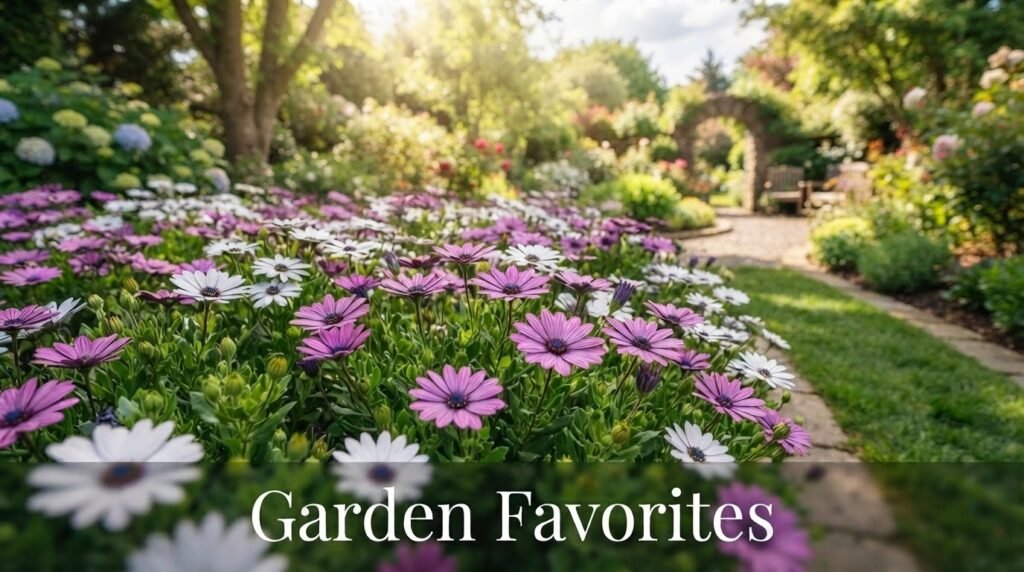
These plants share a few traits that make them garden favorites. Most tolerate heat, drought, or poor soil without much fuss. Many also bloom for weeks at a time, which keeps color going through the season. Gardeners often choose this group first because it forgives beginner mistakes.
- Osteospermum – nearly nonstop spring and summer color
- Oregon Grape – tough shrub for shade and dry soil
- Obedient Plant – tall, upright spikes for late summer
- Orange Coneflower – reliable pollinator magnet
- Oregano – edible herb with bonus pollinator blooms
Each of these plants rewards fairly low effort with strong, lasting color. That balance is exactly why gardeners return to them season after season.
Indoor Plants
Several O flowers also do well as houseplants. Orchid is the obvious leader here, grown indoors worldwide for its elegant, long-lasting blooms. Orchid Cactus can be grown in a hanging basket, producing huge flowers from an unusual, flattened stem. Oxalis is a popular houseplant too, valued for its clover-like leaves and small pink flowers. Osmanthus can be grown in a large pot, filling a room with sweet fragrance in fall.
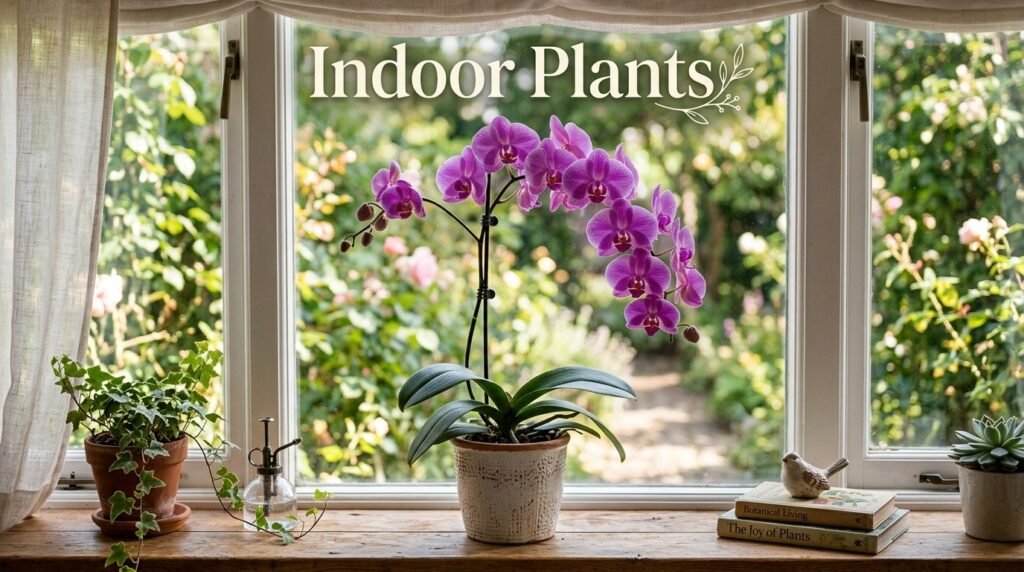
Indoor growing changes what these plants need most. Light matters a great deal indoors, since windows filter out much of the sun’s strength. Humidity often drops too low indoors, especially near heating vents in winter. A pebble tray or occasional misting helps plants like Orchid and Orchid Cactus stay healthy.
This group brings elegant, long-lasting color into a home, well beyond typical houseplant choices. A single well-placed Orchid can change the entire feel of a room.
Florist Favorites
Florists reach for a handful of key O flowers again and again. Orchid is a top choice for weddings, prized for its elegance and long vase life. Orange Blossom is treasured for its heavy, sweet fragrance in bridal bouquets. Oriental Lily brings bold size and a strong scent to large arrangements. Oriental Poppy adds a papery, striking texture, though it is less common in the cut-flower trade.
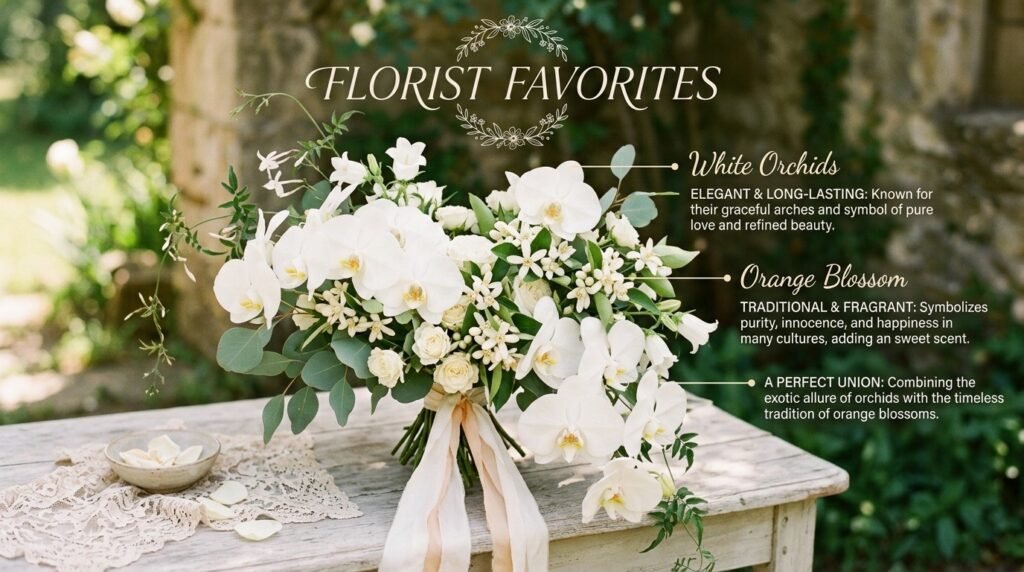
These flowers share traits that matter in floristry. Vase life matters greatly for Orchid, which can last two to three weeks with care. Fragrance matters for Orange Blossom, since scent is central to its appeal. Size matters for Oriental Lily, which anchors a large arrangement on its own.
Together, these flowers cover elegance, fragrance, and bold scale within a single letter. That range explains why florists rely on O flowers for special events.
Rare Flowers
A few O flowers count as true rarities among plant lovers. Oconee Bells is one of the rarest, found only in a small pocket of the southeastern United States. It was lost to science for decades before being rediscovered growing along shaded riverbanks. Oahu Riverhemp is even more limited, surviving only on the Hawaiian island of Oahu. It is now listed as an endangered species due to habitat loss.
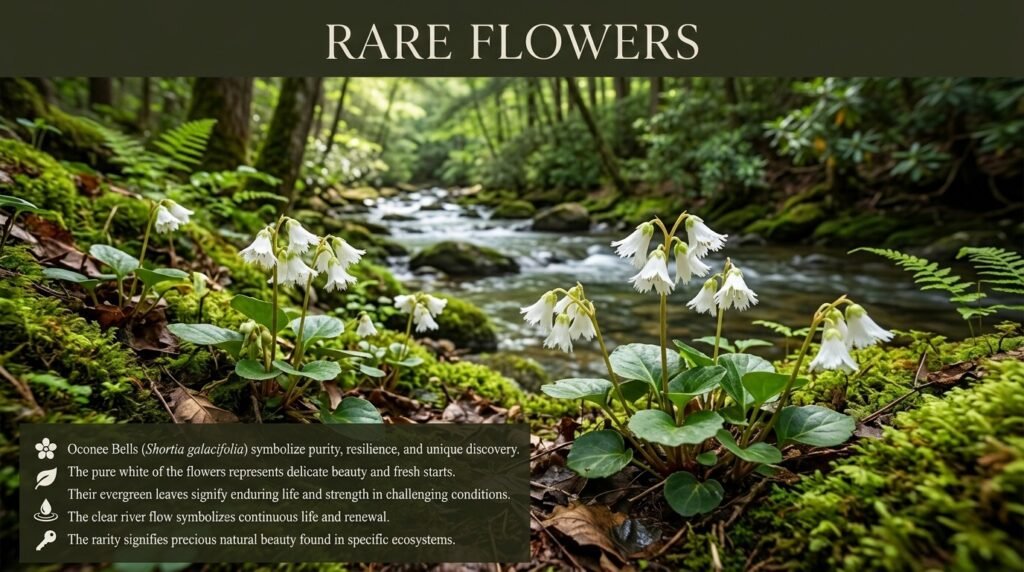
Ourisia, sometimes called mountain foxglove, is rare outside its native New Zealand mountains. It needs cool, moist, well-drained soil that mimics its alpine home. Owl’s Clover is a striking wildflower that appears only in certain wet-spring conditions in the western United States. Its purple, brush-like flowers depend heavily on rainfall timing to bloom well.
These four flowers show how rarity can come from a narrow habitat, past habitat loss, or strict growing conditions. Each one rewards a patient gardener willing to recreate its native environment.
Caution and Toxicity
Not every flower that starts with O is safe around pets or small children. Oleander is one of the most dangerous garden plants in the world, with toxic compounds in every part of the plant. Even smoke from burning oleander branches can cause harm. Opium Poppy is another serious concern, since it contains compounds regulated as controlled substances in many countries. Oriental Hellebore and Oconee Azalea round out the most dangerous entries on this list.
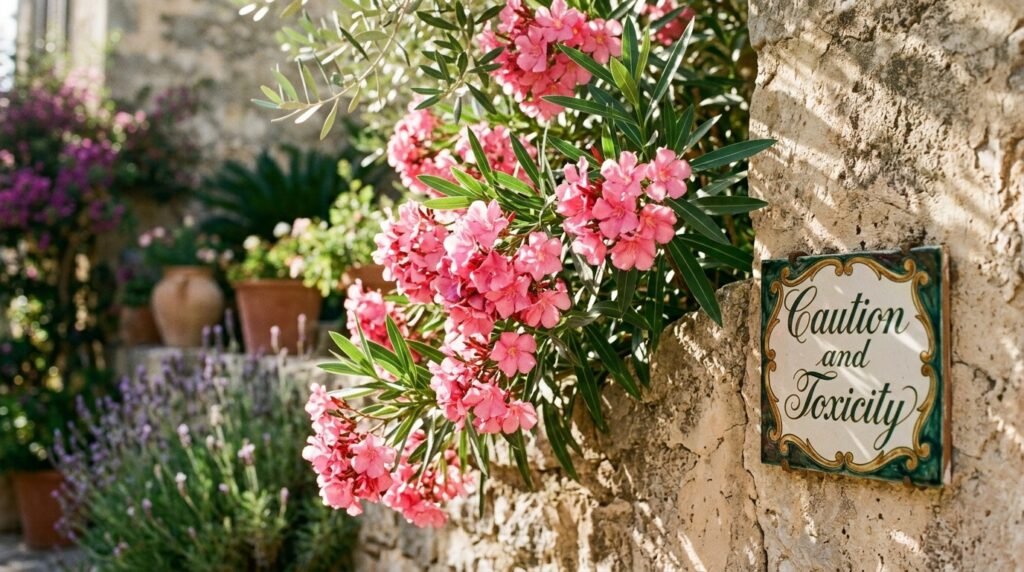
Milder cases still deserve attention around curious pets. Oxalis can cause stomach upset if a pet eats a large amount of the leaves. Star of Bethlehem bulbs can cause vomiting and heart irregularities if dug up and chewed. Ornamental Onion bulbs cause similar stomach upset in dogs and cats.
- Oleander – severe, entire plant is toxic
- Opium Poppy – severe, legally controlled in most regions
- Oriental Hellebore – severe, toxic leaves and roots
- Oconee Azalea – severe, toxic nectar and leaves
- Oxalis – moderate, mainly the leaves
- Star of Bethlehem – moderate, mainly the bulb
If pets or young children share your home, always check a new plant before buying it. A quick look at the ASPCA’s toxic plant list can prevent a stressful emergency later.
Color-Based Groupings
Color is often the first detail a gardener considers before choosing a plant. Grouping O flowers by color makes planning a bed or bouquet much easier.
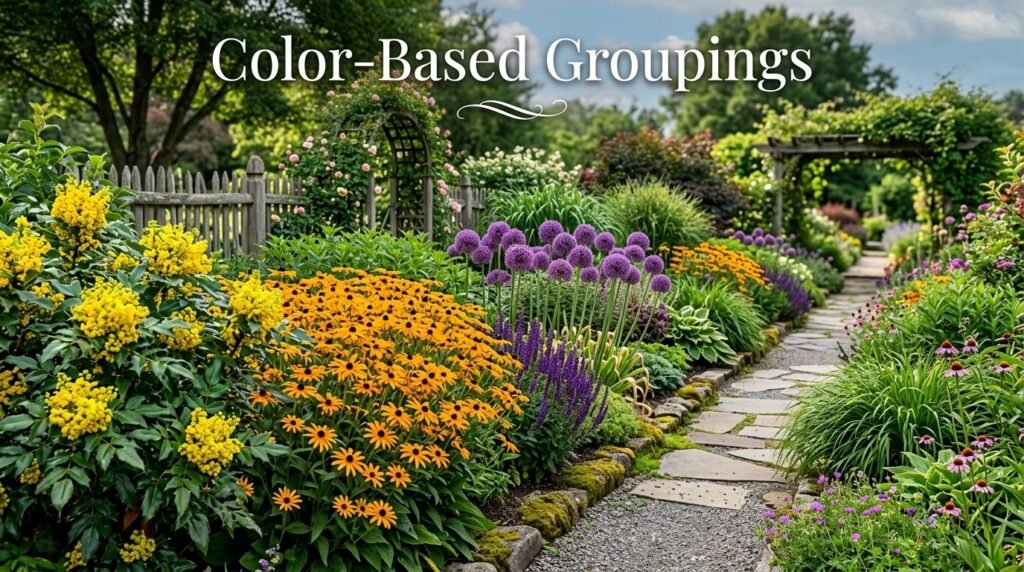
White flowers bring a clean, classic feel to almost any setting. Orange Blossom, Oxeye Daisy, and Olive Blossom all fall into this group. These work well near patios and entryways, where pale colors show up clearly at dusk.
Yellow and orange flowers bring warmth and energy to sunny beds. Oregon Grape, Orange Coneflower, and Orange Cosmos are strong choices here. These flowers often draw the most pollinator activity during summer months.
Purple and blue flowers add a rich, slightly rare tone to a garden. Onopordum, Oxypetalum, and Ornamental Onion all offer true purple or blue shades. Gardeners often use these to balance out beds dominated by warmer colors.
Pink and red flowers bring softness and warmth to beds and bouquets. Oleander, Orpine, and Oswego Tea all fall into this group. These shades work well near seating areas, where their color can be enjoyed up close.
Color grouping offers a simple shortcut for planning, even without deep botanical knowledge. Once you know which O flowers fall into each shade, building a themed bed becomes far easier.
Life-Cycle Groupings
Life cycle affects how much replanting a garden needs each year. Annuals finish their cycle in one season and must be replanted. Perennials return on their own for several years or more. Bulbs, shrubs, and trees each follow their own longer-term patterns.
The table below sorts several O flowers by life cycle, so you can plan a garden around your preferred maintenance level. If low upkeep matters most, lean toward the perennial, shrub, and bulb rows. If you want fast, changeable color, annuals are the better fit.
| Flower | Life Cycle |
| Osteospermum | Perennial (grown as annual in cold zones) |
| Oxeye Daisy | Perennial |
| Obedient Plant | Perennial |
| Oregon Grape | Perennial shrub |
| Orange Cosmos | Annual |
| Orlaya | Annual |
| Orange Star Flower | Bulb |
| Star of Bethlehem | Bulb |
| Ornamental Onion | Bulb |
| Oxblood Lily | Bulb |
| Oriental Poppy | Perennial |
| Oriental Hellebore | Perennial |
| Olive Blossom | Perennial tree |
| Ozark Witch Hazel | Perennial shrub |
Bulbs like Star of Bethlehem and Ornamental Onion are useful for low-effort spring or fall color. Plant them once, and they return year after year with little attention. Annuals like Orange Cosmos and Orlaya need replanting, but they reward gardeners with fast, reliable color in a single season.
Botanical Name Crosswalk
Botanical names matter more than most beginners expect. Common names shift by region, but a botanical name stays consistent worldwide. This becomes important when ordering seeds online or searching for a specific variety at a nursery. It also helps avoid confusion between similarly named plants.
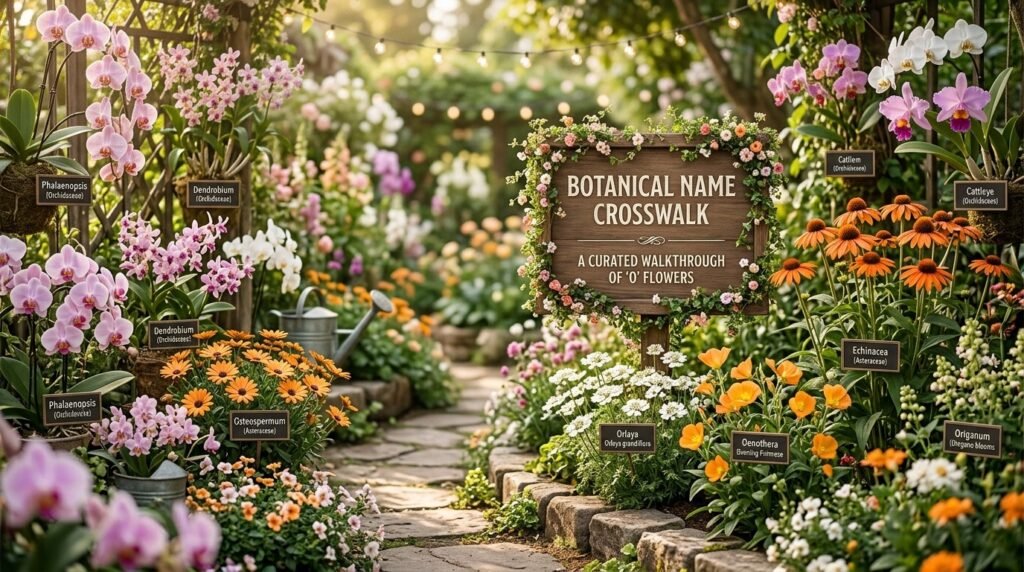
The table below matches common O flower names to their botanical names and plant families. Use it if you want to search more precisely or confirm you are buying the correct plant.
| Common Name | Botanical Name | Family |
| Orchid | Orchidaceae (family) | Orchidaceae |
| Oleander | Nerium oleander | Apocynaceae |
| Orange Blossom | Citrus sinensis | Rutaceae |
| Osteospermum | Osteospermum ecklonis | Asteraceae |
| Oxeye Daisy | Leucanthemum vulgare | Asteraceae |
| Star of Bethlehem | Ornithogalum umbellatum | Asparagaceae |
| Opium Poppy | Papaver somniferum | Papaveraceae |
| Oriental Hellebore | Helleborus orientalis | Ranunculaceae |
| Oregon Grape | Mahonia aquifolium | Berberidaceae |
| Old Maid | Catharanthus roseus | Apocynaceae |
| Orange Coneflower | Rudbeckia fulgida | Asteraceae |
| Ornamental Onion | Allium giganteum | Amaryllidaceae |
Notice how many entries belong to the Asteraceae, or daisy, family. Osteospermum, Oxeye Daisy, and Orange Coneflower are all related through this family. That shared background explains their similar daisy-like flower shape.
Flower Meanings and Symbolism
Flowers have carried symbolic meaning for centuries, and O flowers hold some rich stories. Orange Blossom traditionally symbolizes purity, innocence, and lasting marriage. This is why it has long been used in bridal bouquets and hair wreaths across many cultures. Its fragrance was believed to bring good fortune to a new couple.
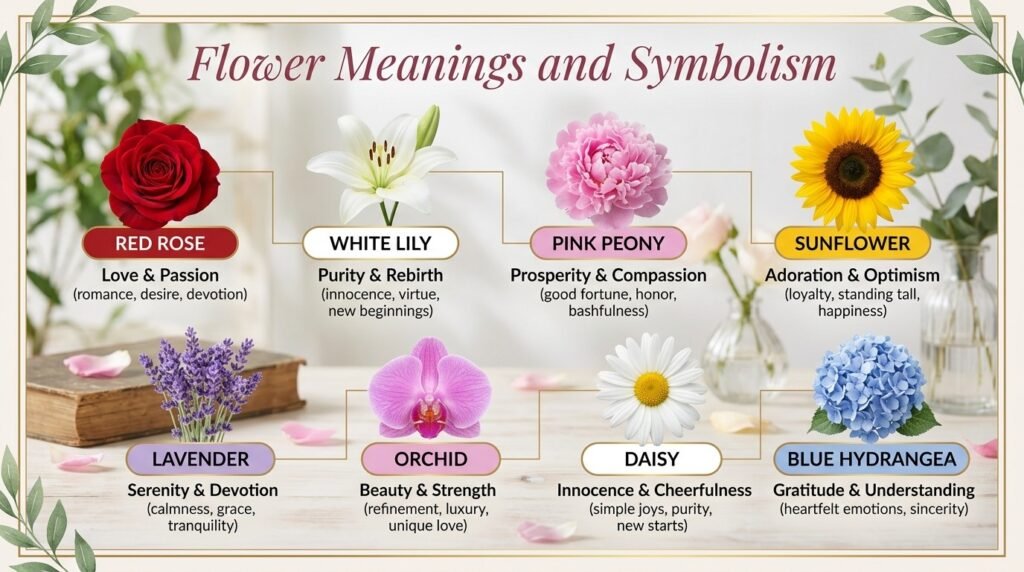
Oleander carries a more complicated symbolism, tied closely to its toxicity. In some cultures, it represents caution and warning, fitting for such a dangerous plant. In others, it symbolizes beauty that requires careful respect and distance. This dual meaning reflects how the flower has been viewed across different regions.
The orchid symbolizes luxury, strength, and refined beauty in most modern traditions. In ancient Greece, it was also linked to fertility and virility. Its rarity and delicate structure have made it a symbol of rare beauty for centuries. Oxeye Daisy carries a simpler, folk meaning tied to patience and simple joy.
Old Man’s Beard earned its name and symbolism from its wispy, silvery seed heads. It often represents wisdom and the passage of time in folklore. Star of Bethlehem carries a spiritual meaning tied to its name, symbolizing hope and guidance. Each of these meanings adds cultural depth beyond a flower’s simple appearance.
Decision-Flow Table: Which O Flower Should You Choose?
Choosing the right flower depends on your specific goal, not just its looks. The table below matches common goals to O flowers that fit well. Start with the row closest to your need, then check the earlier sections for full details.
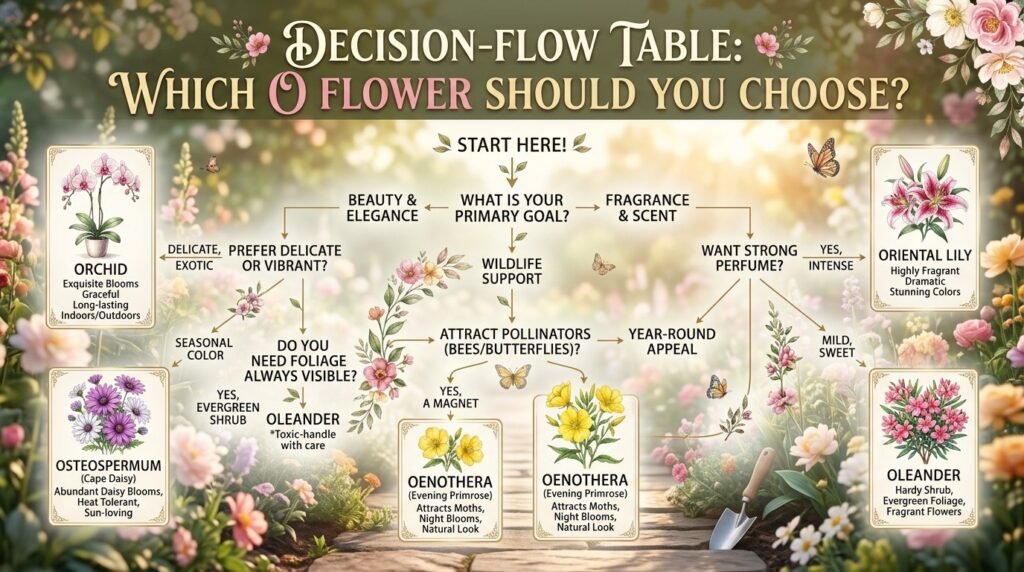
| Your Goal | Recommended O Flower |
| Elegant long-lasting indoor bloom | Orchid |
| Fragrant flower for bridal bouquets | Orange Blossom |
| Easiest beginner bedding flower | Osteospermum |
| Drought-tolerant shrub for shade | Oregon Grape |
| Bold color for a cut-flower vase | Oriental Lily |
| Pet-safe wildflower for a meadow | Oxeye Daisy |
| Rare collector plant | Oconee Bells or Oahu Riverhemp |
| Fall fragrance for a patio | Osmanthus |
| Pollinator-friendly perennial | Orange Coneflower |
| Spring bulb color | Star of Bethlehem or Ornamental Onion |
This table works best as a starting point rather than a strict rule. Many gardens benefit from mixing several of these flowers. A bed with Osteospermum, Orange Coneflower, and Ornamental Onion, for example, covers three different bloom seasons in one space.
Conclusion
Flowers that start with O cover a wide and often surprising range of colors, uses, and habits. From the elegant Orchid to the rare Oconee Bells, this letter offers real variety for gardeners and florists alike. Whether you want a fragrant bridal flower, a tough garden shrub, or a pet-safe wildflower, there is a flower that starts with O for it. Use the tables and lists above as a starting point for your next planting project.
Frequently Asked Questions
What are some common flowers that start with O?
Common picks include Orchid, Oleander, Orange Blossom, and Oxeye Daisy. These four are widely sold at nurseries, florists, and garden centers. They are also easy to find as seeds, bulbs, or potted plants.
Are there any rare flowers that start with O?
Yes, Oconee Bells and Oahu Riverhemp are both considered rare. Oconee Bells grow naturally only in a small part of the southeastern United States. Oahu Riverhemp survives only on the Hawaiian island of Oahu.
Which flowers that start with O are toxic to pets?
Oleander, Opium Poppy, Oriental Hellebore, and Oconee Azalea are the most toxic. Oxalis and Star of Bethlehem cause milder reactions in most cases. Always check a plant against the ASPCA list before bringing it near pets.
What is the most fragrant flower that starts with O?
Orange Blossom is widely considered the most fragrant O flower. Its scent is sweet and heavy, long used in perfumes and teas. Osmanthus is a close second, with a fruity, apricot-like fragrance in fall.
Which O flowers are best for beginners? Osteospermum and Oxeye Daisy are both forgiving and low maintenance. They tolerate average soil and require little regular attention. Oregano is another strong beginner pick, useful for both flowers and cooking.
Is Oleander safe to grow if I have pets?
No, oleander is considered one of the most dangerous common garden plants. Every part of the plant contains toxic compounds. It is best avoided entirely in homes with curious pets or small children.
What flower symbolizes purity and marriage? Orange Blossom is the flower most closely tied to this meaning. It has been used in bridal bouquets and wreaths for centuries