

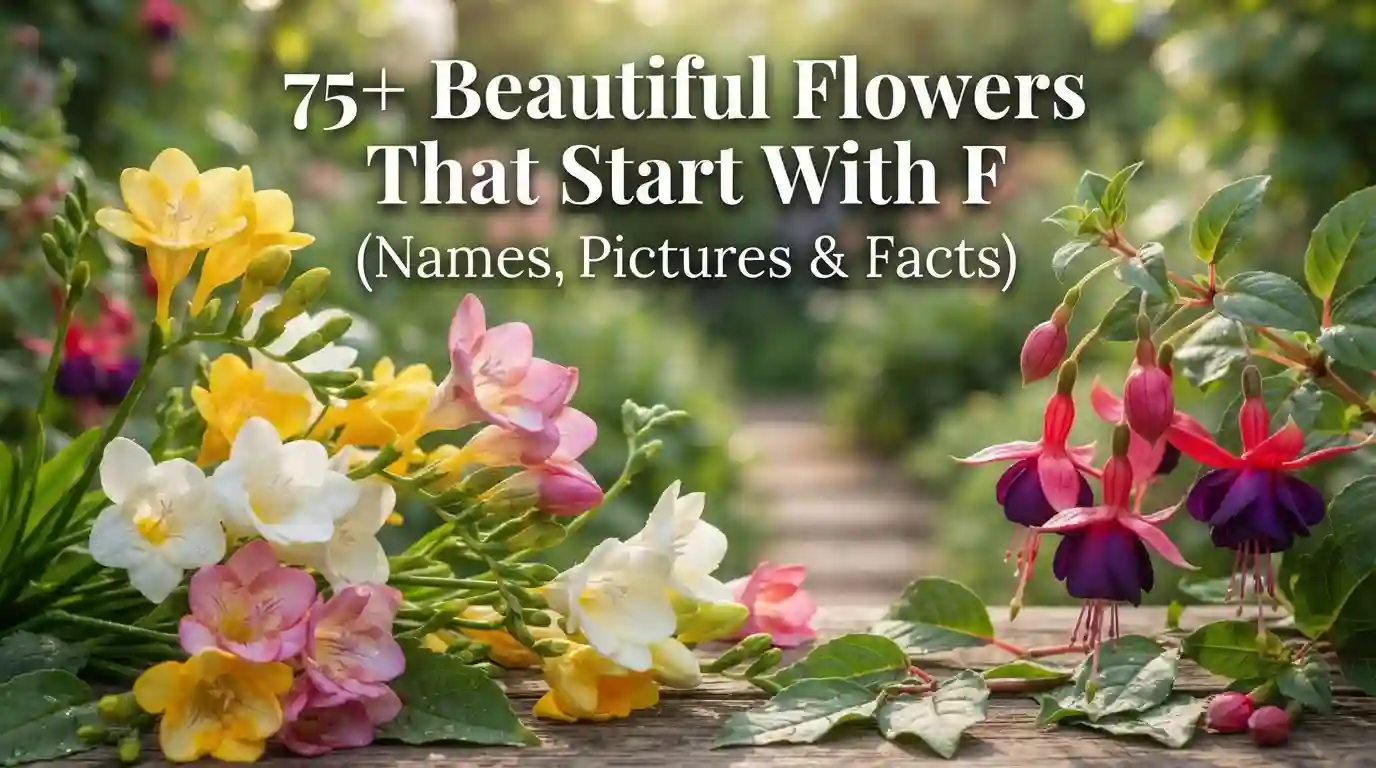
Flowers that start with F cover an unusually wide stretch of the plant kingdom. This single letter holds delicate spring bulbs, towering flowering trees, and a handful of plants that demand real caution around pets. It spans cottage-garden staples like Foxglove and Forget-Me-Not, tropical showstoppers like Frangipani and Flame Lily, and quiet woodland natives like Fringe Tree and False Solomon’s Seal. Few other letters manage to pack in so many distinct growing habits, colors, and climates at once.
- Quick Answer: Best Flowers That Start With F
- Master Alphabetical List of Flowers That Start With F
- Full Comparison Table
- Garden Favorites
- Indoor Plants
- Florist Favorites
- Rare Flowers
- Caution and Toxicity
- Color-Based Groupings
- Life-Cycle Groupings
- Botanical Name Crosswalk
- Flower Meanings and Symbolism
- Decision-Flow Table: Which F Flower Should You Choose?
- Conclusion
- Frequently Asked Questions
This guide organizes 75+ flowers that start with F into categories that actually matter when you’re planning a garden, choosing cut flowers, or trying to identify something you spotted on a walk. You’ll find entries listed by common name and by botanical genus, since gardeners search both ways depending on how familiar they are with a plant. Each flower includes a botanical name, a native range, and a toxicity note where one applies, so the list works as both inspiration and a quick reference.
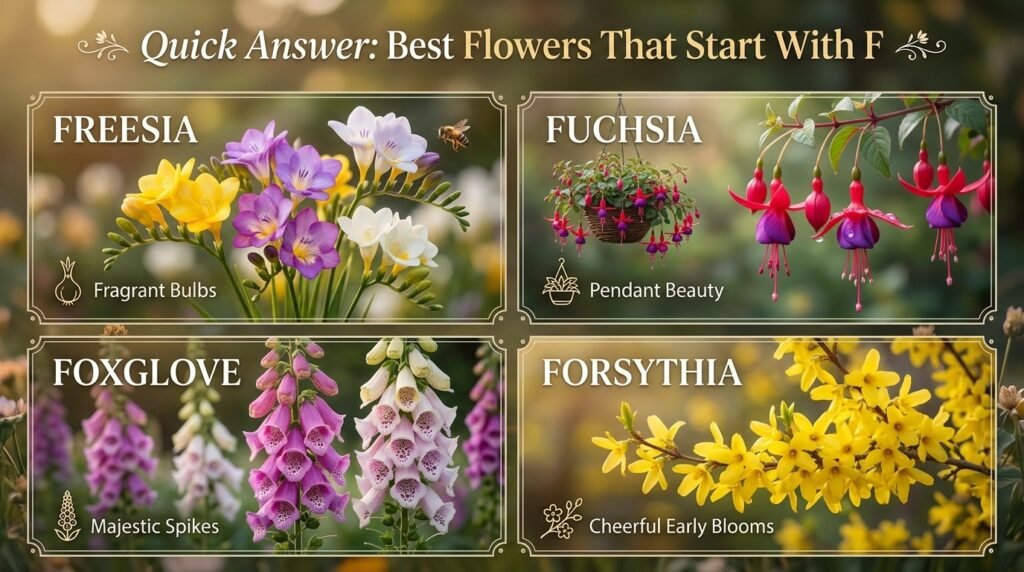
Quick Answer: Best Flowers That Start With F
If you only have a minute, these are the standouts. Freesia leads the letter for fragrance, with funnel-shaped blooms that show up constantly in perfume and cut-flower arrangements. Fuchsia is the go-to choice for hanging baskets, prized for its dangling, two-toned flowers that draw hummingbirds all summer. Foxglove brings dramatic vertical spikes to cottage gardens, though every part of the plant is toxic and needs careful placement. Forsythia is one of the very first shrubs to bloom each year, covering bare branches in yellow before the leaves even open.
For something bolder, Frangipani offers the waxy, intensely fragrant blooms associated with Hawaiian leis and tropical resorts. Flame Lily is a climbing rarity with reflexed red-and-yellow petals that look almost like fire. Flowering Dogwood anchors countless American landscapes each spring with its broad white or pink bracts. Fritillaria, especially the Crown Imperial variety, adds an almost architectural presence to a spring bulb bed. Together, these eight flowers show just how much range hides inside a single letter.
Master Alphabetical List of Flowers That Start With F
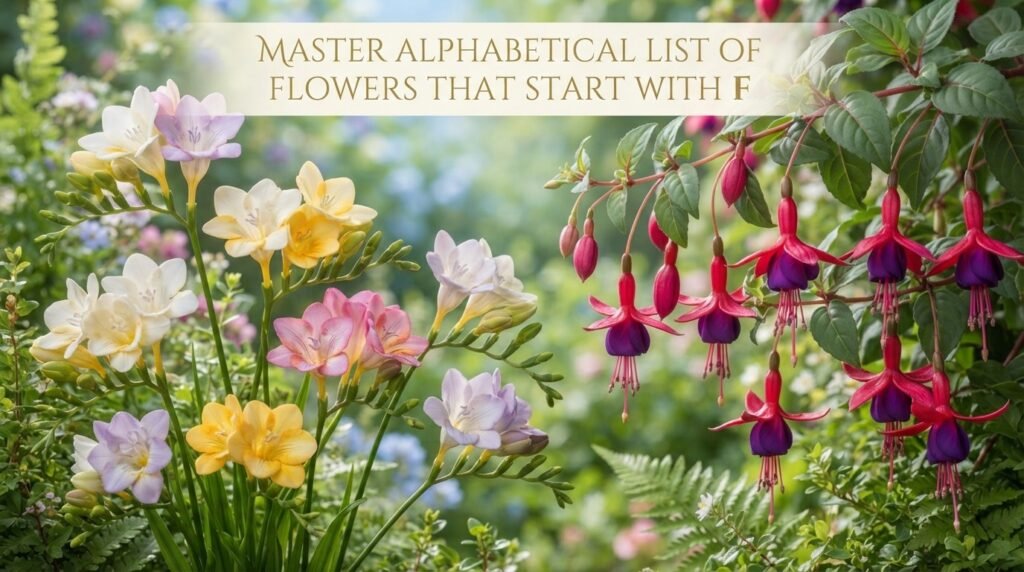
This list mixes two naming styles. Some entries use a common English name that happens to start with F, such as Foxglove or Firecracker Plant. Others lead with a botanical genus name that starts with F, such as Fritillaria or Fothergilla, even when the common name doesn’t begin with the same letter. Both types are included together here, since people search for plants using whichever name they happen to know first. Full growing details, native ranges, and toxicity notes for each entry appear in the tables and category sections that follow.
- Freesia
- Fuchsia
- Foxglove
- Forsythia
- Frangipani (Plumeria)
- French Marigold
- Flax Flower
- Flamingo Flower (Anthurium)
- Four O’Clock
- Fritillaria (Crown Imperial)
- Feverfew
- Firecracker Plant
- Flannel Flower
- Fringe Tree
- Filipendula (Meadowsweet)
- Flame Lily
- Field Poppy
- Forget-Me-Not
- False Indigo
- False Sunflower
- Fireweed
- Flowering Dogwood
- Flowering Quince
- Flowering Maple (Abutilon)
- Fairy Duster
- Fringed Bleeding Heart
- Franklin Tree
- Fothergilla
- Matilija Poppy (Fried Egg Flower)
- Fragrant Water Lily
- Queen of the Prairie (Filipendula rubra)
- Firewheel (Gaillardia)
- Flame Acanthus
- Foxtail Lily
- Fern-Leaf Yarrow
- Fleabane
- Fig Marigold
- Firespike
- Flame Violet
- Flax Lily
- Poached Egg Plant
- False Dragonhead
- Fringed Gentian
- Lesser Celandine (Ficaria)
- Feathered Cockscomb
- Fireball Lily
- Fairy Fan Flower
- Field Marigold
- False Aster
- Fringed Iris
- Firecracker Vine
- Featherbells
- Fringed Orchid
- Fatsia
- Flame Nasturtium
- Flowering Currant
- Flowering Almond
- Flowering Tobacco
- False Solomon’s Seal
- Snake’s Head Fritillary
- Fringed Loosestrife
- Firewheel Tree
- Flannel Bush
- Livingstone Daisy (Fig Marigold)
- Foxtail Orchid
- Fairy Wand (Dierama)
- Fuchsia Fulgens
- Fuchsia Triphylla
- Fringed Campion
- False Rue Anemone
- Fatsia Japonica
- Fireweed Willowherb
- Featherfew Daisy
- Foamflower
- Flowering Cherry (Ornamental Prunus)
- Flame Freesia
A few of these names look like near-duplicates at first glance, and that’s worth pausing on. Fuchsia, Fuchsia Fulgens, and Fuchsia Triphylla are related species within the same genus rather than separate common names for one plant. Fig Marigold and Livingstone Daisy actually describe the same plant, Dorotheanthus bellidiformis, which shows how one species can carry two very different common names depending on the region.
Full Comparison Table
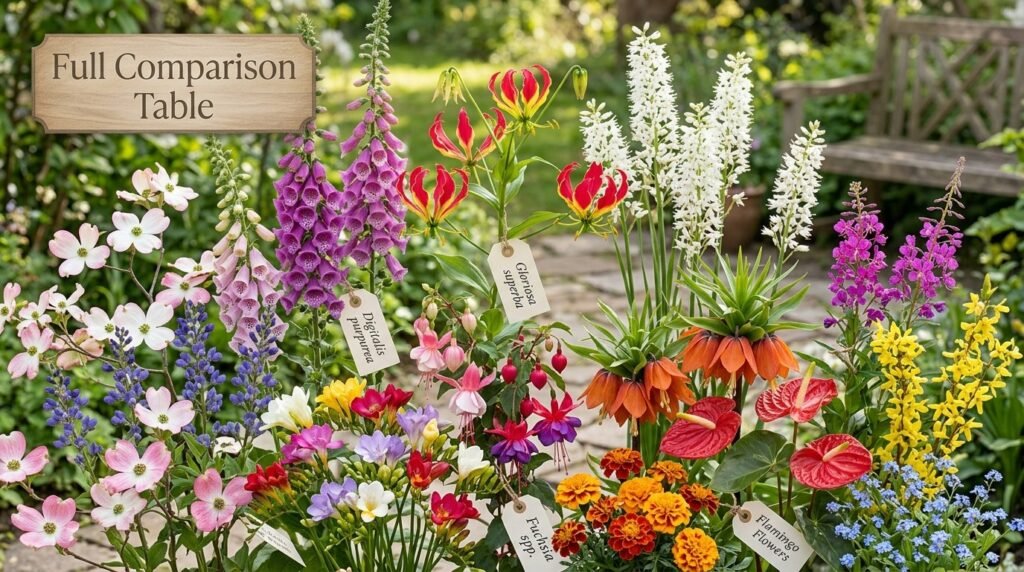
The table below pulls together botanical name, native range, main flower colors, bloom season, and pet toxicity for the flowers covered in the deeper sections of this guide. Use it as a fast reference if you’re trying to match a plant to a specific climate, or if you want to rule out anything risky before bringing it near pets. Toxicity notes here reflect general guidance from sources like the ASPCA plant database and should not replace advice from a veterinarian in an emergency.
| Flower | Botanical Name | Native Range | Colors | Bloom Season | Toxic to Pets |
| Freesia | Freesia spp. | South Africa | White, yellow, pink, purple | Spring | Yes, mild |
| Fuchsia | Fuchsia spp. | Central/South America | Pink, red, purple | Summer–fall | No |
| Foxglove | Digitalis purpurea | Europe | Purple, pink, white | Summer | Yes, severe |
| Forsythia | Forsythia spp. | East Asia | Yellow | Early spring | No |
| Frangipani | Plumeria spp. | Central America, Caribbean | White, pink, yellow | Summer | Mild, sap only |
| French Marigold | Tagetes patula | Mexico | Orange, yellow, red | Summer–fall | Mild |
| Flax Flower | Linum perenne | Europe, Mediterranean | Blue | Early summer | No |
| Flamingo Flower | Anthurium andraeanum | Colombia, Ecuador | Red, pink, white | Year-round indoors | Yes, moderate |
| Four O’Clock | Mirabilis jalapa | Peru | Pink, yellow, red | Summer–fall | Yes, mild |
| Fritillaria (Crown Imperial) | Fritillaria imperialis | Middle East, Himalayas | Orange, red, yellow | Mid-spring | Mild |
| Feverfew | Tanacetum parthenium | Balkans, Eurasia | White, yellow center | Summer | Mild |
| Firecracker Plant | Russelia equisetiformis | Mexico | Red | Year-round in warm zones | No |
| Flannel Flower | Actinotus helianthi | Australia | White | Spring–summer | No |
| Fringe Tree | Chionanthus virginicus | Eastern United States | White | Late spring | No |
| Filipendula (Meadowsweet) | Filipendula ulmaria | Europe, Asia | White, cream | Summer | No |
| Flame Lily | Gloriosa superba | Africa, Asia | Red, yellow | Summer | Yes, severe |
| Field Poppy | Papaver rhoeas | Europe, Asia | Red | Late spring–summer | Mild |
| Forget-Me-Not | Myosotis scorpioides | Europe | Blue | Spring | No |
| False Indigo | Baptisia australis | Eastern United States | Blue, purple | Late spring | No |
| False Sunflower | Heliopsis helianthoides | North America | Yellow | Summer | No |
| Fireweed | Chamerion angustifolium | Northern Hemisphere | Pink, magenta | Summer | No |
| Flowering Dogwood | Cornus florida | Eastern United States | White, pink | Spring | Mild, berries only |
| Flowering Quince | Chaenomeles speciosa | China | Red, pink, orange | Early spring | No |
| Flowering Maple | Abutilon spp. | South America | Orange, red, yellow | Year-round in warm zones | No |
| Fairy Duster | Calliandra eriophylla | Southwestern US, Mexico | Pink | Spring | No |
| Fringed Bleeding Heart | Dicentra eximia | Eastern United States | Pink | Spring–fall | Mild |
| Franklin Tree | Franklinia alatamaha | Georgia, US (historic) | White | Late summer | No |
| Fothergilla | Fothergilla gardenii | Southeastern United States | White | Spring | No |
| Matilija Poppy | Romneya coulteri | California | White with yellow center | Summer | No |
| Fragrant Water Lily | Nymphaea odorata | North America | White, pink | Summer | Mild |
| Queen of the Prairie | Filipendula rubra | Eastern United States | Pink | Summer | No |
| Firewheel | Gaillardia pulchella | North America | Red, yellow | Summer–fall | No |
| Flame Acanthus | Anisacanthus quadrifidus | Texas, Mexico | Orange-red | Summer–fall | No |
| Foxtail Lily | Eremurus spp. | Central Asia | White, pink, orange | Early summer | No |
| Fern-Leaf Yarrow | Achillea filipendulina | Caucasus region | Yellow | Summer | Mild |
| Fleabane | Erigeron speciosus | North America | Purple, pink | Summer | No |
| Fig Marigold | Dorotheanthus bellidiformis | South Africa | Pink, orange, white | Summer | No |
| Firespike | Odontonema strictum | Central America | Red | Fall–winter | No |
| Flame Violet | Episcia cupreata | South America | Orange-red | Year-round indoors | No |
| Flax Lily | Dianella spp. | Australia | Blue, purple | Spring–summer | No |
| Poached Egg Plant | Limnanthes douglasii | California | White, yellow | Spring–summer | No |
| False Dragonhead | Physostegia virginiana | North America | Pink, purple | Late summer | No |
| Fringed Gentian | Gentianopsis crinita | North America | Blue | Fall | No |
| Lesser Celandine | Ficaria verna | Europe | Yellow | Early spring | Yes, mild |
| Feathered Cockscomb | Celosia argentea | Tropical Asia, Africa | Red, orange, pink | Summer–fall | No |
| Fireball Lily | Scadoxus multiflorus | Africa | Red | Summer | Yes, moderate |
| Fairy Fan Flower | Scaevola aemula | Australia | Blue, purple | Spring–fall | No |
| Field Marigold | Calendula arvensis | Mediterranean | Yellow, orange | Spring–fall | No |
| False Aster | Boltonia asteroides | North America | White, pink | Late summer–fall | No |
| Fringed Iris | Iris japonica | China, Japan | Lavender, white | Spring | Yes, mild |
| Firecracker Vine | Manettia luteorubra | South America | Red, yellow | Summer–fall | No |
| Featherbells | Stenanthium gramineum | Eastern United States | White | Summer | Yes, severe |
| Fringed Orchid | Platanthera ciliaris | Eastern United States | Orange | Summer | No |
| Fatsia | Fatsia japonica | Japan, Korea | White | Fall | No |
| Flame Nasturtium | Tropaeolum speciosum | Chile | Red | Summer–fall | Mild |
| Flowering Currant | Ribes sanguineum | Western North America | Pink, red | Spring | Mild, berries only |
| Flowering Almond | Prunus triloba | China | Pink | Early spring | Mild, pits only |
| Flowering Tobacco | Nicotiana alata | South America | White, pink | Summer–fall | Yes, moderate |
| False Solomon’s Seal | Maianthemum racemosum | North America | White | Late spring | Mild |
| Snake’s Head Fritillary | Fritillaria meleagris | Europe | Purple, checkered | Spring | Mild |
| Fringed Loosestrife | Lysimachia ciliata | North America | Yellow | Summer | No |
| Firewheel Tree | Stenocarpus sinuatus | Australia | Red, orange | Summer | No |
| Flannel Bush | Fremontodendron californicum | California | Yellow | Late spring–summer | No |
| Foxtail Orchid | Rhynchostylis retusa | Southeast Asia | Pink, white | Spring | No |
| Fairy Wand | Dierama pulcherrimum | South Africa | Pink, magenta | Summer | No |
| Foamflower | Tiarella cordifolia | Eastern North America | White, pink | Spring | No |
| Flowering Cherry | Prunus serrulata cultivars | Japan, China, Korea | Pink, white | Early spring | Mild, pits only |
A handful of rows deserve extra attention if pets share your home. Foxglove, Flame Lily, and Featherbells are all rated severely toxic, so they’re better kept in a garden bed than a container near a patio door. Fritillaria imperialis, on the other end of the spectrum, is prized precisely because it’s one of the few spring bulbs squirrels and deer tend to avoid, thanks to its skunky scent rather than any real danger to pets.
Garden Favorites
Certain flowers that start with F have earned permanent spots in home gardens because they combine reliable color with low upkeep. Forsythia kicks off the gardening year with an explosion of yellow blooms weeks before most shrubs even bud out, making it one of the clearest signals that spring has arrived. False Indigo builds a sturdy, shrub-like presence in a perennial border, producing spikes of blue-purple flowers that hold their shape through wind and rain. Firewheel thrives in poor, dry soil where fussier plants struggle, which explains why it shows up so often in pollinator gardens and roadside plantings. Flowering Quince brings an old-fashioned charm to early spring beds, with tangled branches of red or coral blossoms that bloom before the leaves fill in.
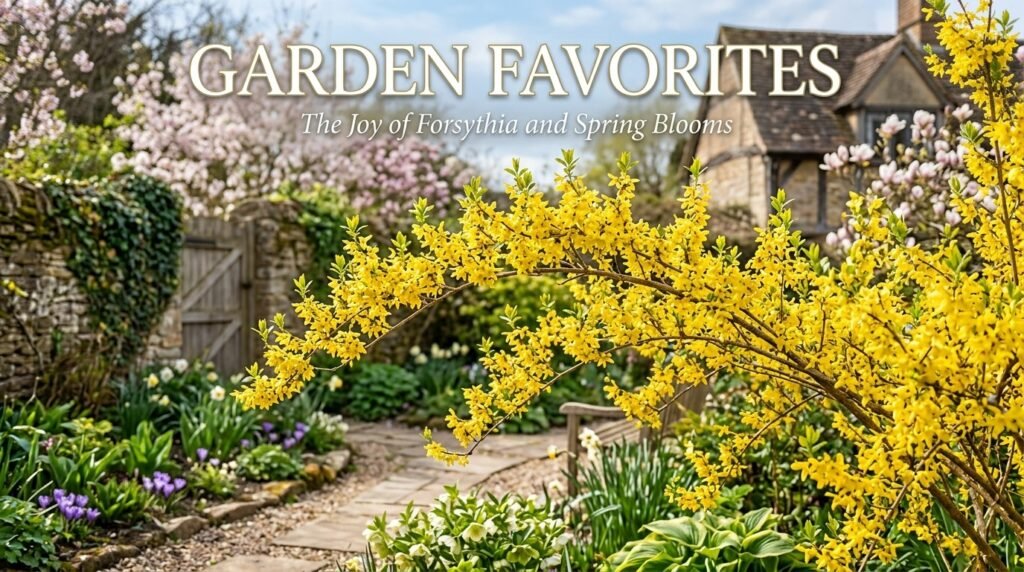
Image Caption: Forsythia branches covered in bright yellow flowers signal the start of spring in gardens across the temperate world.
These plants share a few practical traits that explain their popularity. Most tolerate average garden soil without special amendments or feeding schedules. Several also bloom early in the season, filling a color gap before summer perennials take over. Gardeners lean on this group specifically because the payoff in color rarely requires much ongoing effort.
- Forsythia – earliest, boldest yellow of the spring garden
- False Indigo – sturdy blue-purple spikes that need almost no care
- Firewheel – thrives in dry, poor soil where other plants fail
- Flowering Quince – old-fashioned early color on bare branches
- Fothergilla – bottlebrush white blooms plus strong fall foliage color
Fothergilla in particular deserves a second look, since it offers a rare double benefit: fragrant white spring flowers followed by some of the most vivid orange and red fall foliage in the shrub world. That combination of spring bloom and autumn color is part of why landscape designers keep returning to it for mixed borders.
Indoor Plants
A smaller group of flowers that start with F adapts well to life indoors, where light and humidity behave very differently than they do outside. Flamingo Flower is grown almost as much for its glossy, heart-shaped spathe as for the small true flower at its center, and it tolerates the lower light levels of a typical living room better than most flowering houseplants. Flame Violet is prized for its metallic, patterned leaves as well as its small orange-red blooms, making it a favorite among people who collect Gesneriads. Flowering Maple, despite its name, is a compact tropical shrub that can be kept in a large pot near a bright window, where it produces bell-shaped flowers almost continuously.
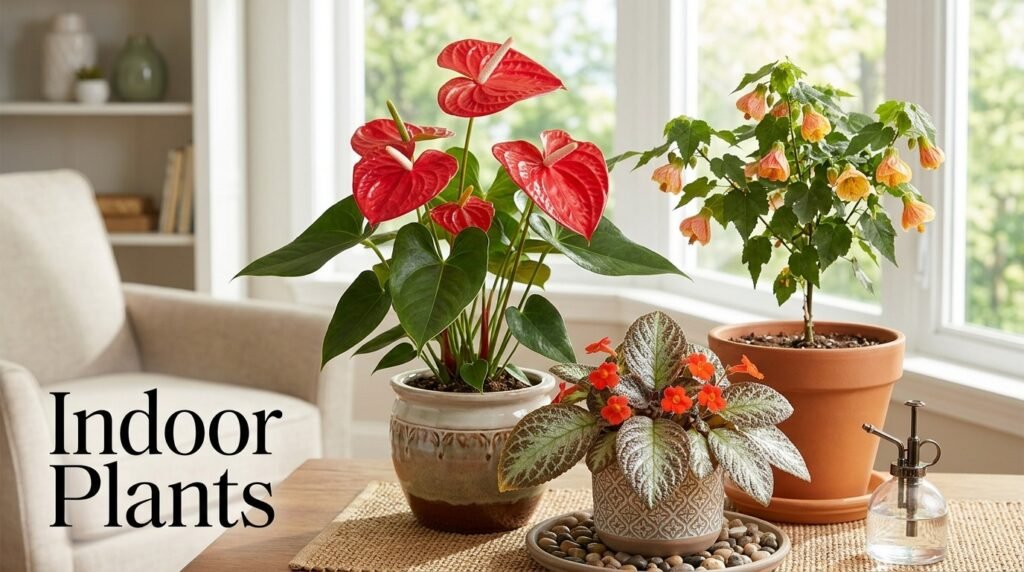
Indoor growing changes what these plants need most. Light indoors is almost always weaker than outdoor sun, so a bright, south- or west-facing window becomes essential rather than optional. Humidity also tends to drop indoors, particularly in winter near heating vents, which is why Flamingo Flower and Flame Violet often benefit from a pebble tray or occasional misting. Overwatering is a more common problem indoors than underwatering, since indoor soil dries out much more slowly than garden beds.
This small group brings unusual texture and near-constant color into a home, well beyond what typical leafy houseplants offer. A single well-placed Flamingo Flower can anchor a room the way a piece of art might, simply because its blooms last for weeks at a time.
Florist Favorites
Florists return to a handful of flowers that start with F again and again for both fragrance and structure. Freesia is one of the most requested stems in the cut-flower trade, valued for a scent that’s often described as a mix of citrus and honey. Frangipani shows up constantly in tropical and destination weddings, where its waxy petals hold up well in humid conditions and leis. Fuchsia adds movement to arrangements with its dangling, bicolor blooms, often used as an accent rather than a focal flower. French Marigold, though less glamorous, brings dependable warm color and a long vase life to rustic or autumn-themed bouquets.
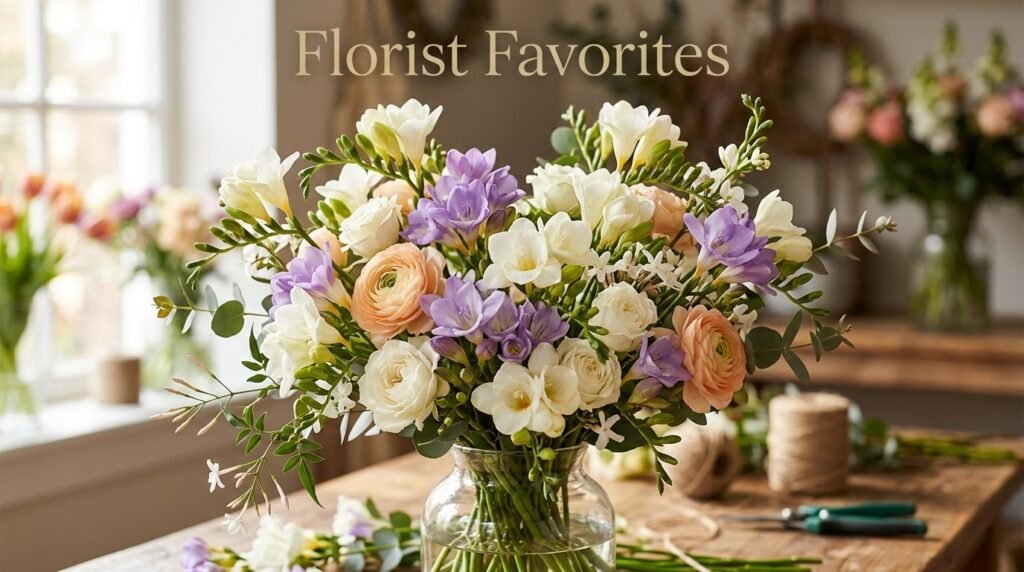
A few practical traits explain why these particular flowers keep showing up in florist coolers. Fragrance matters enormously for Freesia and Frangipani, since scent is often what a bouquet is remembered for after the visual impression fades. Vase life matters for French Marigold, which can hold up for well over a week with clean water and regular trimming. Structure matters for Fuchsia, since its firm, tubular shape resists bruising during transport and arranging.
Together, these four flowers cover fragrance, tropical drama, movement, and dependable color within a single letter of the alphabet. That range is exactly why florists keep coming back to F flowers season after season.
Rare Flowers
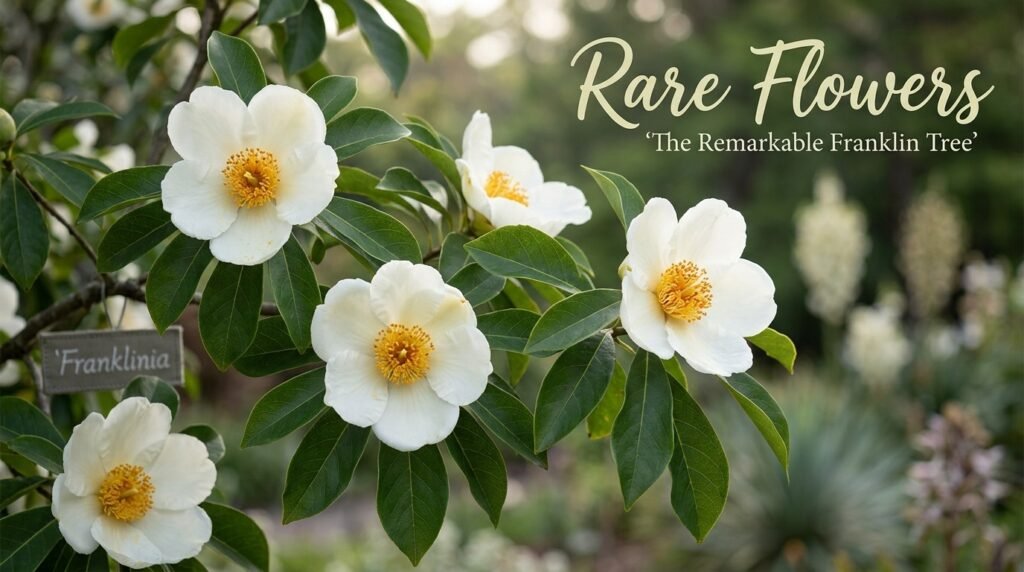
A few flowers that start with F count as genuine rarities among collectors and native-plant enthusiasts. Franklin Tree is perhaps the most striking example, since it no longer exists in the wild at all; every specimen alive today descends from seeds collected by botanist John Bartram in Georgia in the 1700s, before the species vanished from its native habitat. Flame Lily is another unusual pick, a climbing member of the lily family with reflexed, flame-shaped petals that shift from yellow to deep red as they mature, and it’s illegal to pick in parts of its native range due to conservation concerns. Fireball Lily produces a dramatic sphere of red, spidery flowers on a bare stalk before any leaves appear, a trait that makes it stand out in specialty bulb catalogs.
Fairy Wand, a South African native also known as Dierama, is uncommon in cultivation outside specialty nurseries despite its graceful, arching flower stems that sway in the slightest breeze. Its rarity comes less from habitat loss than from the fact that it’s simply slow to establish and rarely mass-produced commercially. These four flowers show that rarity in the plant world can come from a vanished habitat, legal protection, unusual biology, or simple scarcity in the trade, and each one rewards a patient gardener willing to track it down.
Caution and Toxicity
Not every flower that starts with F is safe to have around pets or small children. Foxglove tops the list of concerns, since every part of the plant contains cardiac glycosides that can affect heart rhythm if ingested, and this is the same chemical family that gave rise to the heart medication digoxin. Flame Lily carries colchicine, a compound toxic enough that ingestion can be dangerous for both pets and people, and gloves are recommended when handling the plant’s tubers. Featherbells, though less famous, contains alkaloids that make it one of the more overlooked severe risks on this list.
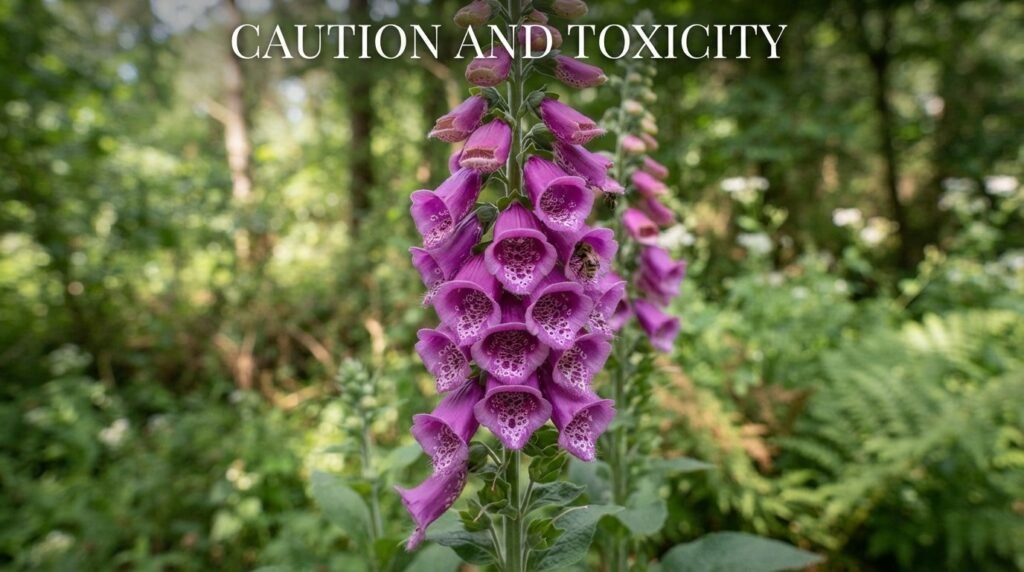
Milder cases still deserve attention around curious pets and children. Freesia bulbs can cause vomiting and drooling if chewed, though serious poisoning is uncommon. Flowering Tobacco contains nicotine-related compounds that can cause stomach upset in moderate amounts. Fringed Iris, like many iris species, can irritate the mouth and digestive tract if the rhizome is disturbed and chewed.
- Foxglove – severe, contains cardiac glycosides
- Flame Lily – severe, tubers contain colchicine
- Featherbells – severe, contains toxic alkaloids
- Fireball Lily – moderate, bulb and sap are irritants
- Flowering Tobacco – moderate, nicotine-related compounds
- Freesia – mild, bulb can cause stomach upset
If pets or young children spend time in your garden, it’s worth checking any new F flower against the ASPCA’s toxic plant database before planting it near a play area or a pet’s favorite napping spot.
Color-Based Groupings
Color is often the very first thing a gardener considers before choosing where a plant should go, and grouping F flowers by color makes that planning noticeably easier.
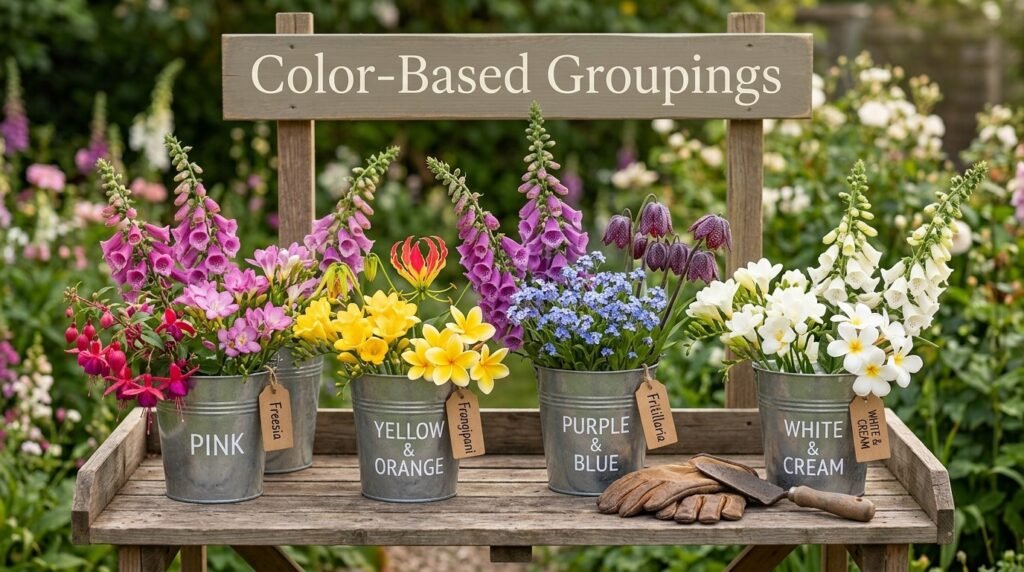
White flowers bring a clean, versatile look that works in almost any setting, from formal borders to shaded woodland edges. Fringe Tree, Foamflower, and Flannel Flower all fall into this category, and each one reads as soft and airy rather than stark. These work particularly well near entryways or evening seating areas, where pale petals stay visible even after the sun goes down.
Yellow flowers add warmth and an almost immediate sense of cheerfulness to early-season gardens. Forsythia, Flannel Bush, and Fern-Leaf Yarrow are strong choices here, and several of them bloom before most other perennials have even emerged. This makes yellow F flowers especially valuable for closing the color gap between winter and the main flush of summer bloom.
Blue and purple flowers feel a little unexpected in a garden, since true blue is rarer in the plant world than most other colors. Flax Flower, Fairy Fan Flower, and Fringed Gentian all offer genuine blue or violet tones rather than the muddier lavender shades common elsewhere. Fringed Gentian in particular is prized by wildflower enthusiasts for a blue so saturated it’s often compared to a clear autumn sky.
Pink and red flowers bring energy and warmth to beds, containers, and cut arrangements alike. Fuchsia, Firespike, and Flowering Almond all belong in this group, spanning everything from delicate spring blossoms to bold, hummingbird-attracting tubular blooms. These shades pair especially well against a white or silver-foliage backdrop, which lets the warmer tones stand out even more.
Life-Cycle Groupings
Life cycle has a direct effect on how much replanting a garden needs from one year to the next, so it’s worth factoring in before you commit to a design. Annuals complete their entire cycle within a single growing season and need to be replanted each year. Perennials, by contrast, return on their own for several years or longer once established. Shrubs, trees, and bulbs each follow their own long-term patterns that fall somewhere between those two extremes.
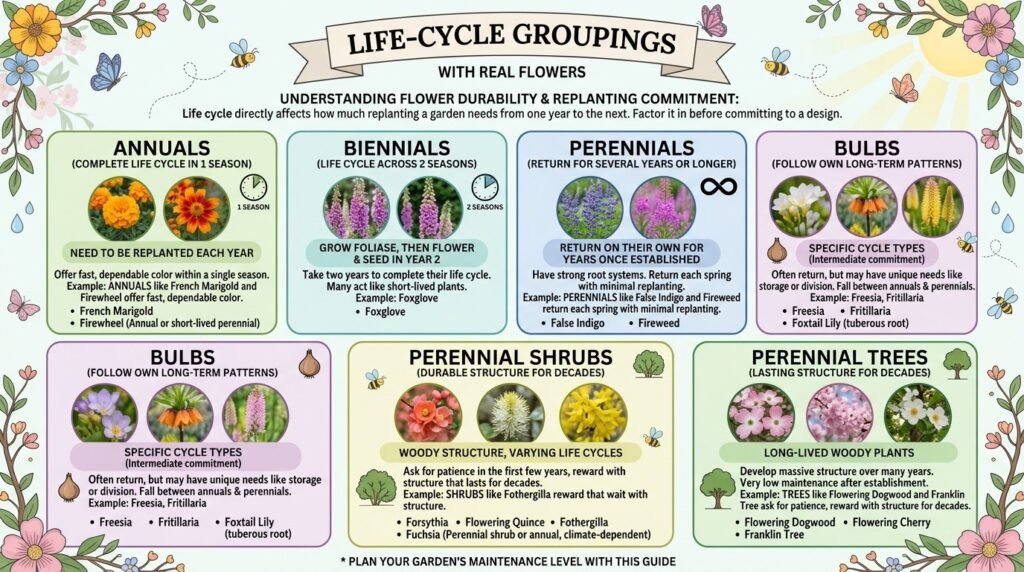
The table below sorts several F flowers by life cycle, which makes it easier to plan around whatever maintenance level suits your schedule. If low upkeep is the priority, the perennial, shrub, and tree rows are the ones to focus on. If you want fast, easily changeable color from one season to the next, the annual entries are the better fit.
| Flower | Life Cycle |
| Freesia | Bulb |
| Fuchsia | Perennial shrub or annual (climate-dependent) |
| Foxglove | Biennial |
| Forsythia | Perennial shrub |
| French Marigold | Annual |
| Fritillaria | Bulb |
| Flowering Dogwood | Perennial tree |
| Flowering Quince | Perennial shrub |
| False Indigo | Perennial |
| Firewheel | Annual or short-lived perennial |
| Fothergilla | Perennial shrub |
| Foxtail Lily | Bulb (tuberous root) |
| Flowering Cherry | Perennial tree |
| Franklin Tree | Perennial tree |
| Fireweed | Perennial |
Trees and shrubs like Flowering Dogwood, Fothergilla, and Franklin Tree ask for patience in the first few years but reward that wait with structure that lasts for decades. Perennials like False Indigo and Fireweed return each spring with minimal replanting once their root systems settle in. Annuals like French Marigold and Firewheel need fresh planting every year, but in exchange they offer fast, dependable color within a single season.
Botanical Name Crosswalk
Botanical names carry more practical weight than most beginner gardeners expect. A common name can shift dramatically from one region to another, or even get applied to two completely unrelated plants, while a botanical name stays consistent no matter where you’re shopping or searching. This distinction becomes especially important when ordering seeds online, since a search for the wrong common name can turn up the wrong species entirely.
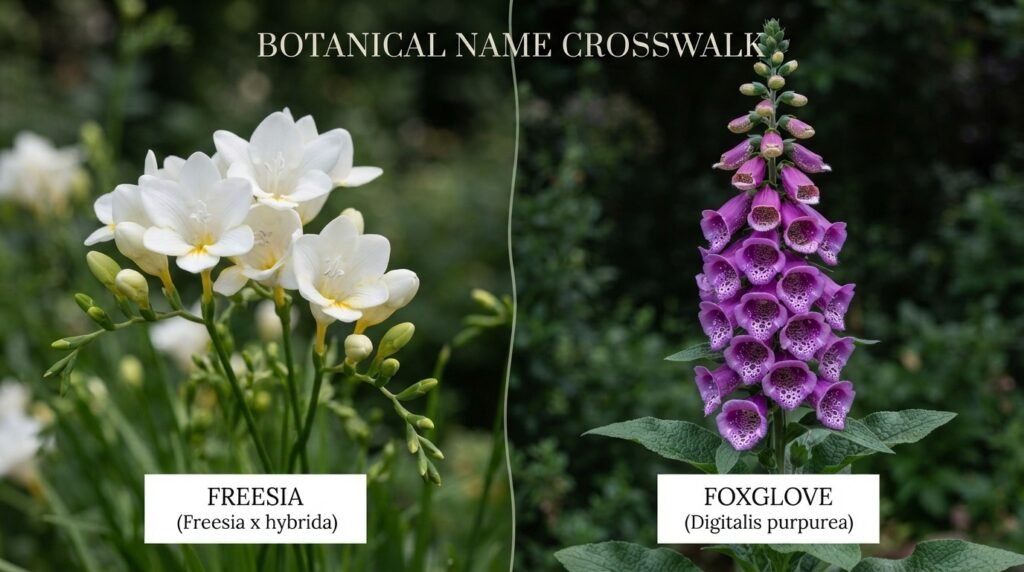
The table below matches common F flower names to their botanical names and plant families, which is useful if you want to search more precisely or double-check you’re buying the correct species at a nursery.
| Common Name | Botanical Name | Family |
| Freesia | Freesia spp. | Iridaceae |
| Fuchsia | Fuchsia spp. | Onagraceae |
| Foxglove | Digitalis purpurea | Plantaginaceae |
| Forsythia | Forsythia spp. | Oleaceae |
| Frangipani | Plumeria spp. | Apocynaceae |
| Flame Lily | Gloriosa superba | Colchicaceae |
| Flowering Dogwood | Cornus florida | Cornaceae |
| False Indigo | Baptisia australis | Fabaceae |
| Fritillaria | Fritillaria imperialis | Liliaceae |
| Foxtail Lily | Eremurus spp. | Asphodelaceae |
| Fringed Gentian | Gentianopsis crinita | Gentianaceae |
| Franklin Tree | Franklinia alatamaha | Theaceae |
A pattern worth noticing is how many of these entries belong to families most people wouldn’t expect to be related. Flame Lily’s placement in Colchicaceae, for instance, explains its toxic colchicine content, since that compound runs throughout the entire family. Freesia and Flag-type flowers sharing the Iridaceae family also explains some of the visual similarities in their strap-like leaves and sword-shaped foliage.
Flower Meanings and Symbolism
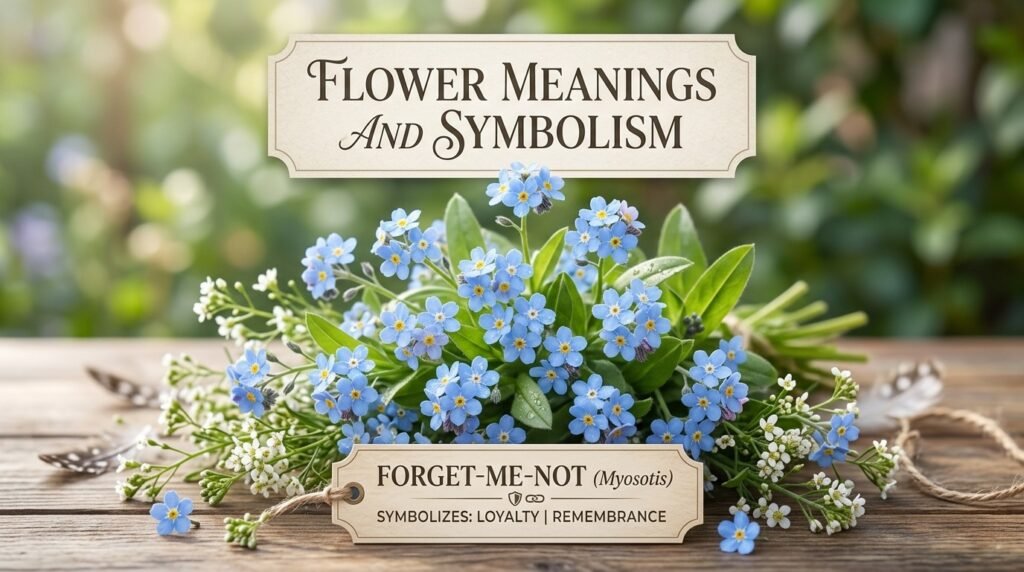
Flowers have carried symbolic weight for centuries, and F flowers hold some genuinely distinctive stories. Forget-Me-Not carries perhaps the most literal meaning of any flower in cultivation, tied to a European legend in which a knight fell into a river while picking the flower for his love and called out “forget me not” as he was swept away. That story has kept the flower tied to enduring love, remembrance, and loyalty across generations. Foxglove, by contrast, carries a more complicated reputation, since old folklore associated it with both healing and danger, a duality that lines up neatly with its real pharmacological history as the source of digoxin.
Freesia is often associated with trust and thoughtfulness, which is part of why it shows up so frequently in bouquets meant to mark a friendship rather than a romance. Frangipani carries different meanings depending on the region; in some Pacific Island cultures it’s worn to signal relationship status, tucked behind the right ear if single and the left if taken. Fireweed earned its common name because it’s often the first plant to recolonize land after a wildfire, which has made it an informal symbol of resilience and renewal in parts of North America.
Fatsia, though less romantic in its symbolism, is prized in some East Asian traditions for its association with good fortune, since its broad, hand-shaped leaves are said to resemble an open palm welcoming prosperity into a home. Each of these meanings adds a layer of cultural context to a flower that goes well beyond how it looks in a vase.
Decision-Flow Table: Which F Flower Should You Choose?
Choosing the right F flower depends far more on your specific goal than on appearance alone. The table below matches common gardening or floral goals to F flowers that fit well, so you can start with whichever row is closest to your situation and then double back to the earlier sections for full growing details.
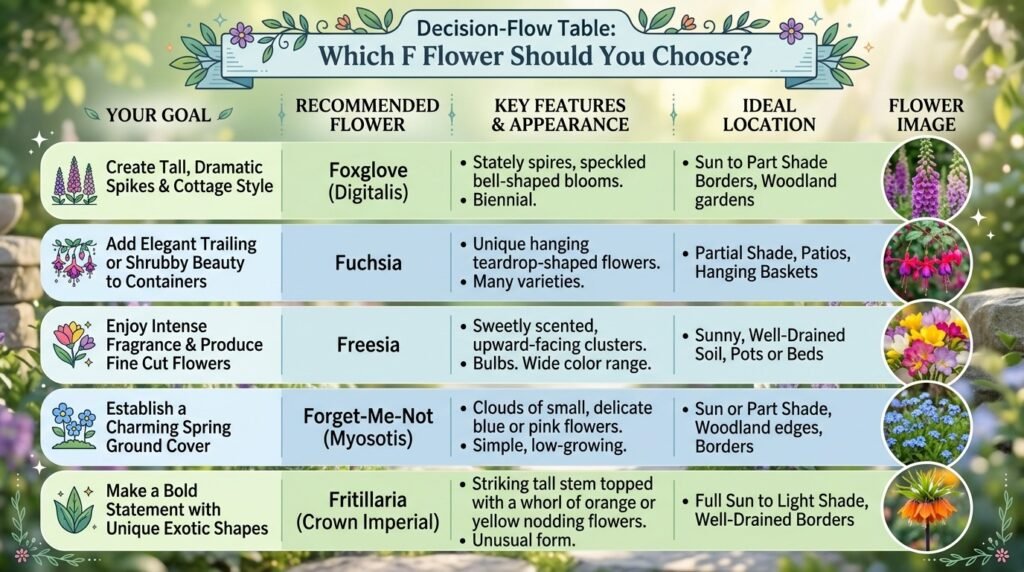
Image Caption: Not sure which F flower fits your garden? Match your goal to a recommended pick in the table below.
| Your Goal | Recommended F Flower |
| Fragrant cut flower for arrangements | Freesia or Frangipani |
| Earliest color of the spring season | Forsythia |
| Dramatic vertical accent for a border | Foxglove (keep away from pets) |
| Hummingbird-attracting hanging basket | Fuchsia |
| Low-maintenance native perennial | False Indigo or Fireweed |
| Rare collector plant for enthusiasts | Franklin Tree or Fairy Wand |
| Pet-safe flowering houseplant | Flame Violet |
| Dry, poor-soil pollinator plant | Firewheel |
| Fall foliage plus spring bloom | Fothergilla |
| Tropical statement bloom | Flame Lily or Flamingo Flower |
This table works best as a starting point rather than a strict rule, since many gardens benefit from combining several of these picks rather than choosing just one. A bed that mixes Forsythia, False Indigo, and Firewheel, for example, covers three completely different bloom windows within a single planting area.
Conclusion
Flowers that start with F cover a genuinely wide range of colors, growth habits, and native climates, from the fragrant Freesia to the rare, once-extinct-in-the-wild Franklin Tree. Whether you’re after an easy spring shrub, a dramatic tropical bloom, or a pet-safe houseplant, there’s very likely an F flower that fits the bill. The tables and groupings above should give you a solid starting point for your next planting project, no matter which angle brought you to this list of flowers that start with F.
Frequently Asked Questions
What are some common flowers that start with F?
Common flowers that start with F include Freesia, Fuchsia, Forsythia, and Foxglove. All four are widely sold at nurseries and garden centers.
Are there any rare flowers that start with F?
Yes, Franklin Tree and Fairy Wand are considered rare flowers that start with F. Franklin Tree no longer exists in the wild at all.
Which flowers that start with F are toxic to pets?
Foxglove, Flame Lily, and Featherbells are the most toxic flowers that start with F. Freesia and Flowering Tobacco cause milder reactions.
What is the most fragrant flower that starts with F?
Freesia is widely considered the most fragrant flower that starts with F. Frangipani is a close second, especially in perfumery.
Which F flowers are best for beginner gardeners?
Forsythia and French Marigold are forgiving, low-maintenance flowers that start with F. False Indigo is another strong beginner option.
Can Frangipani grow outside tropical climates?
Frangipani grows best in warm, frost-free zones 10 through 12. In cooler climates, it does well in a container brought indoors before frost.
Is Foxglove safe to grow if I have children?
Foxglove is not safe around young children, since every part of the plant is toxic if ingested. Most gardeners place it toward the back of a border, out of easy reach.