

Blue is a rare and special color in nature. It stands for calm, trust, and peace. Blue flowers bring a cool, dreamy feel to any garden. They also carry deep meaning in many cultures, from loyalty to healing to quiet wisdom.
- Classic Blue Garden Flowers
- 1. Delphinium
- 2. Cornflower (Bachelor’s Button)
- 3. Blue Iris
- 4. Blue Salvia
- 5. Hydrangea
- 6. Balloon Flower
- 7. Blue Columbine
- 8. Blue Aster
- 9. Blue Bellflower
- 10. Blue Larkspur
- Blue Flowering Shrubs & Trees
- 11. Butterfly Bush
- 12. Plumbago
- 13. Ceanothus (California Lilac)
- 14. Chaste Tree
- 15. Rose of Sharon ‘Blue Chiffon’
- 16. Blue Potato Bush
- 17. Panicle Hydrangea (Blue Varieties)
- 18. Rosemary
- Blue Wildflowers
- 19. Chicory
- 20. Forget-Me-Not
- 21. Texas Bluebonnet
- 22. Virginia Bluebells
- 23. Blue-Eyed Grass
- 24. Wild Blue Flax
- 25. Spiderwort
- 26. Blue Vervain
- Blue Tropical & Exotic Flowers
- 27. Blue Passionflower
- 28. Blue Ginger
- 29. Butterfly Pea
- 30. Blue Water Lily
- 31. Blue Vanda Orchid
- 32. Jacaranda
- 33. Blue Morning Glory
- 34. Torenia (Wishbone Flower)
- Blue Bulbs
- 35. Grape Hyacinth
- 36. Blue Hyacinth
- 37. Siberian Squill
- 38. Blue Anemone
- 39. Camassia
- 40. Dutch Iris
- 41. Puschkinia (Striped Squill)
- 42. Blue Crocus
- Blue Annuals for Containers
- 43. Blue Lobelia
- 44. Ageratum (Floss Flower)
- 45. Blue Petunia
- 46. Mealy Cup Sage
- 47. Browallia
- 48. Blue Daze
- 49. Blue Pansy
- 50. Nigella (Love-in-a-Mist)
- Bonus Blue Favorites
- 51. Himalayan Blue Poppy
- 52. Blue Sea Holly
- 53. Blue Globe Thistle
- 54. Blue Star Flower (Amsonia)
- 55. Blue Agapanthus (African Lily)
- 56. Blue Cranesbill Geranium
- Frequently Asked Questions About Blue Flowers
- 1. What flowers are naturally blue?
- 2. Why are blue flowers so rare?
- 3. What is the most popular blue flower?
- 4. What do blue flowers symbolize?
- 5. Can I turn a flower blue by changing the soil?
- 6. What are the best blue flowers for beginners?
- 7. Which blue flowers bloom the longest?
- 8. Are blue flowers good for pollinators?
- 9. Can blue flowers grow in containers?
- 10. What blue flowers work well in bouquets?
- Final Thoughts on Growing Blue Flowers
So, what are flowers? Flowers are the reproductive part of a plant. They grow to attract pollinators like bees and butterflies. There are over 400,000 known flowering plant species in the world. New types are still being found today.
Some flowers are more loved than others. Roses, tulips, orchids, and sunflowers are among the most popular flowers worldwide. People grow them for beauty, scent, and meaning.
Flowers can be grouped in different ways. Some are annuals, which live for one season. Others are perennials, which return year after year. Some grow from bulbs. Others are shrubs or trees. Botanists also group flowers by family, based on shared traits.
In this guide, you will find 55+ blue flowers. Each entry includes the flower’s name, a short description, and key facts. You will learn each flower’s bloom season, sun needs, height, and meaning. Photos are included so you can see each type of blue flower up close.
Whether you want blue flower names for a garden or blue flower pictures for inspiration, this list has it all. Let’s explore the most beautiful blue flowers in the world.
Classic Blue Garden Flowers
These blue flowers are garden favorites. They are easy to grow and simple to find at most nurseries.
1. Delphinium
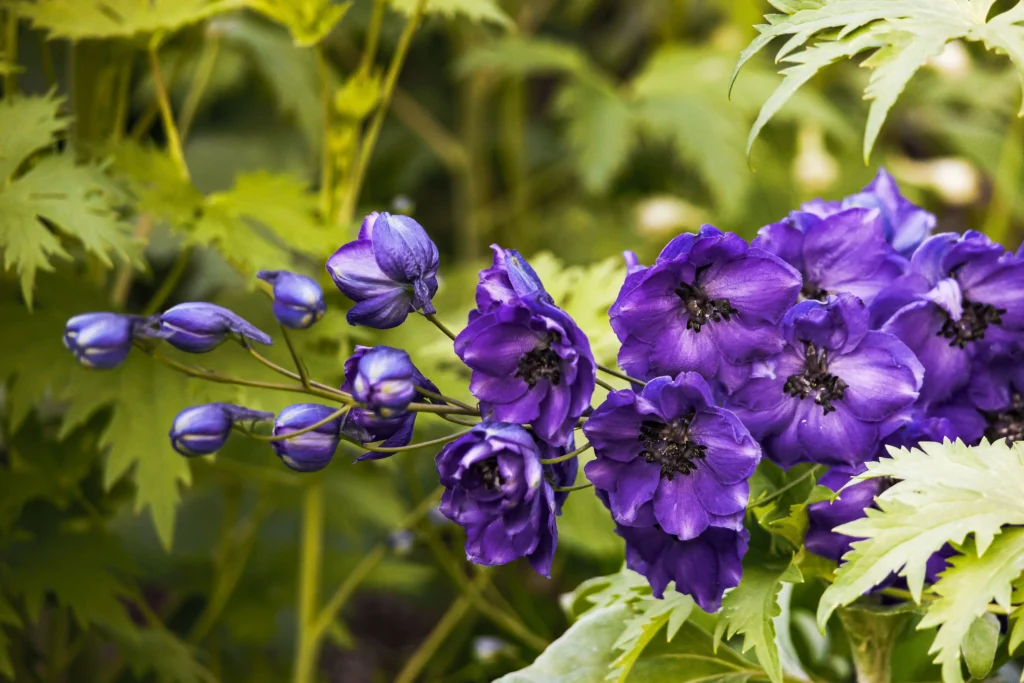
Delphinium grows tall spikes packed with blue blooms. It is a bold plant for the back of a garden bed. Bees love their bright color. The flower has been grown in cottage gardens for centuries.
- Scientific name: Delphinium elatum
- Flower type: Perennial
- Colors: Blue, purple, white, pink
- Bloom season: Early to mid-summer
- Sun: Full sun
- Height: 3–6 feet
- Fragrance: No
- Common uses: Garden borders, cut flower arrangements
- Meaning: Positivity, strong bond
2. Cornflower (Bachelor’s Button)
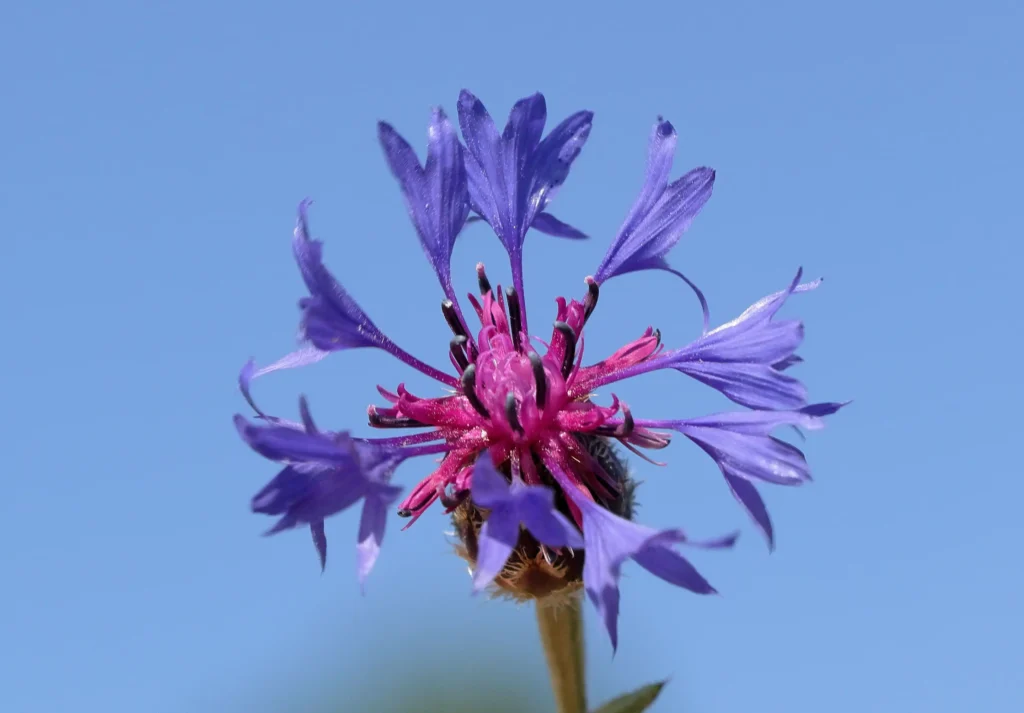
Cornflower has a wispy, star-shaped bloom. Its deep blue color is one of the most well-known in nature. This flower grows wild in fields across Europe. It is easy to grow from seed.
- Scientific name: Centaurea cyanus
- Flower type: Annual
- Colors: Blue, pink, white, purple
- Bloom season: Late spring to summer
- Sun: Full sun
- Height: 1–3 feet
- Fragrance: Mild, sweet
- Common uses: Wildflower gardens, bouquets, tea
- Meaning: Hope, delicacy
3. Blue Iris
Blue Iris has sword-like leaves and elegant petals. The flower has a unique shape with upright and drooping parts. It is a symbol used in art and royal emblems for centuries.
- Scientific name: Iris versicolor
- Flower type: Perennial
- Colors: Blue, purple, yellow, white
- Bloom season: Late spring to early summer
- Sun: Full sun to partial shade
- Height: 2–3 feet
- Fragrance: Slight
- Common uses: Garden beds, ponds, floral art
- Meaning: Wisdom, faith, hope
4. Blue Salvia
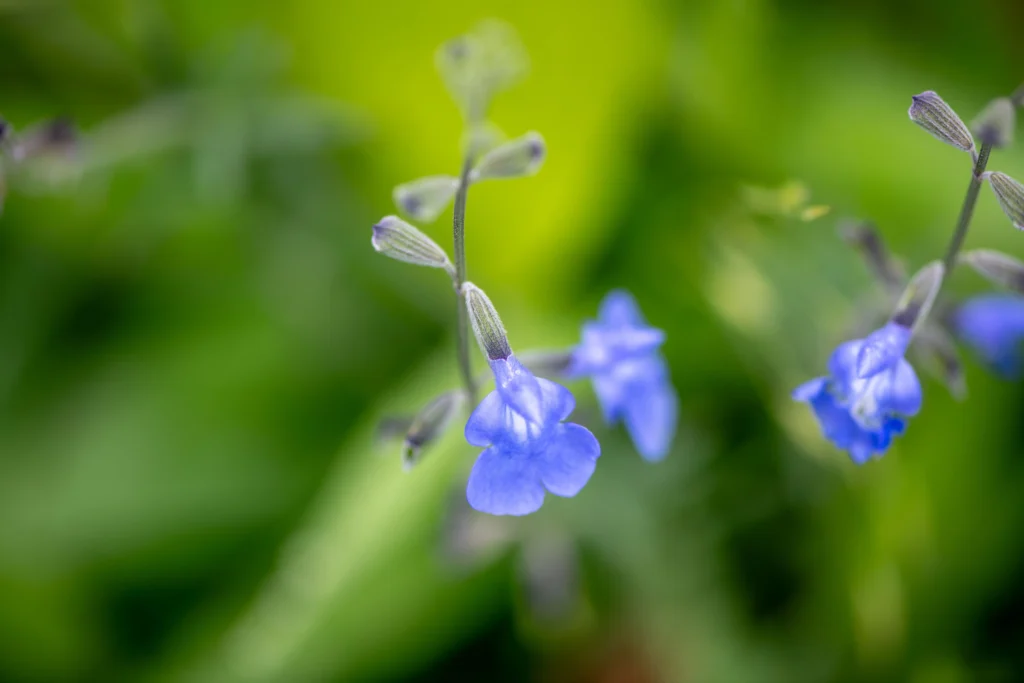
Blue Salvia grows in tall, narrow spikes. The blooms open in a steady row along the stem. This plant attracts hummingbirds and bees all summer long.
- Scientific name: Salvia guaranitica
- Flower type: Perennial
- Colors: Blue, purple
- Bloom season: Summer to fall
- Sun: Full sun
- Height: 2–4 feet
- Fragrance: Slight, herbal
- Common uses: Borders, pollinator gardens
- Meaning: Wisdom, protection
5. Hydrangea
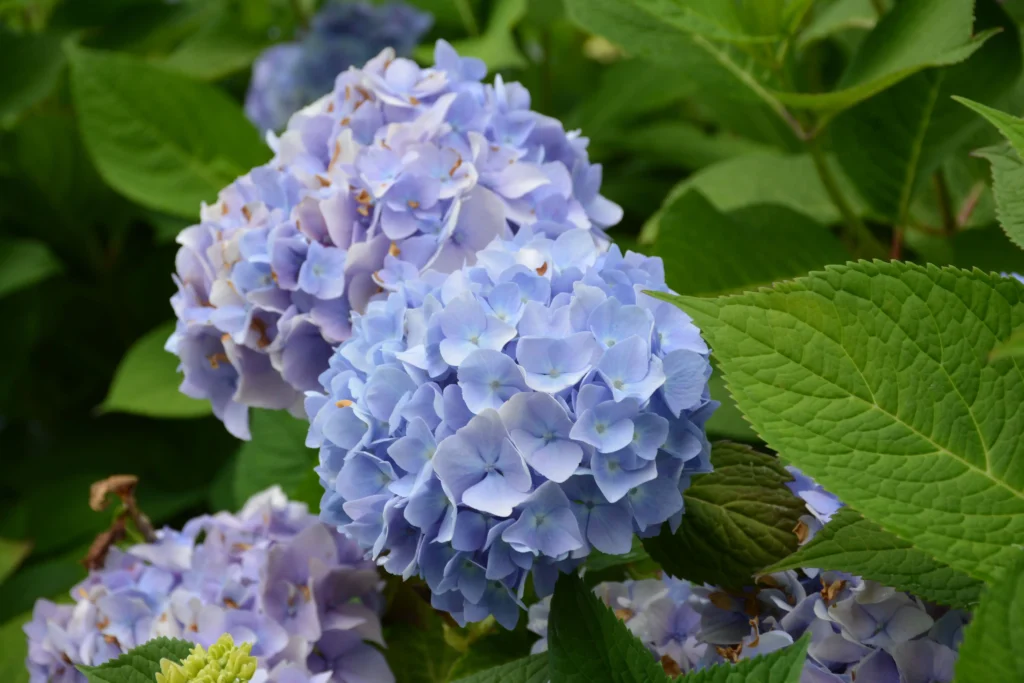
Hydrangea forms large, round clusters of tiny blooms. Its color can shift between blue and pink based on soil pH. Acidic soil makes the blooms bluer.
- Scientific name: Hydrangea macrophylla
- Flower type: Shrub
- Colors: Blue, pink, purple, white
- Bloom season: Summer to early fall
- Sun: Partial shade
- Height: 3–6 feet
- Fragrance: No
- Common uses: Hedges, bouquets, weddings
- Meaning: Gratitude, understanding
6. Balloon Flower
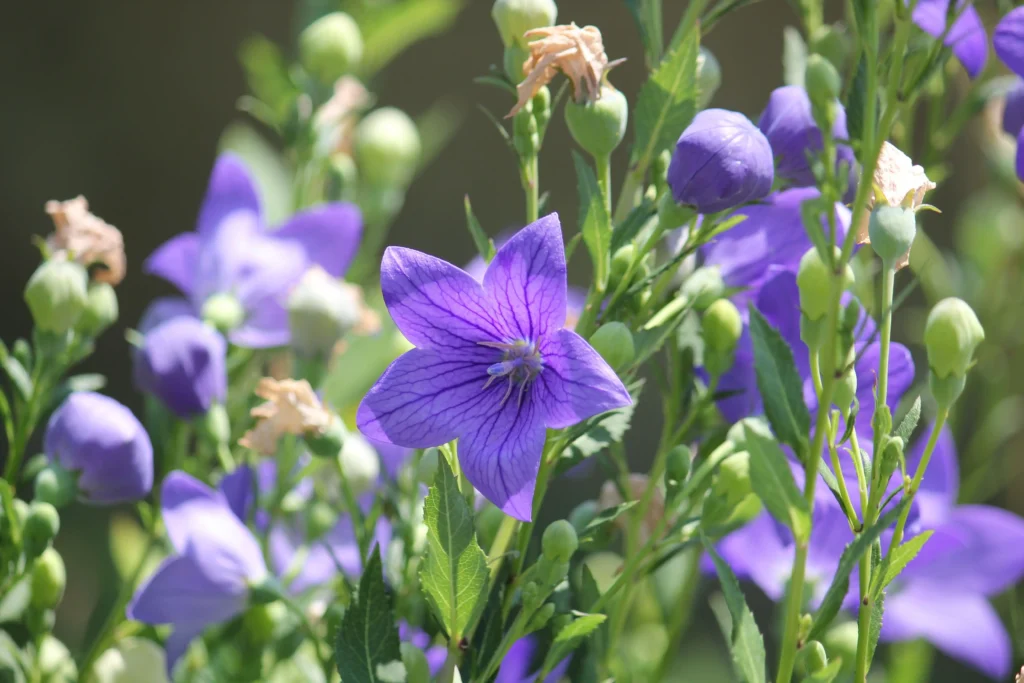
Balloon Flower gets its name from its puffy, balloon-like buds. The buds pop open into star-shaped blue blooms. It is a low-care plant that returns each year.
- Scientific name: Platycodon grandiflorus
- Flower type: Perennial
- Colors: Blue, white, pink
- Bloom season: Summer
- Sun: Full sun to partial shade
- Height: 1–2.5 feet
- Fragrance: No
- Common uses: Borders, rock gardens
- Meaning: Endless love, honesty
7. Blue Columbine
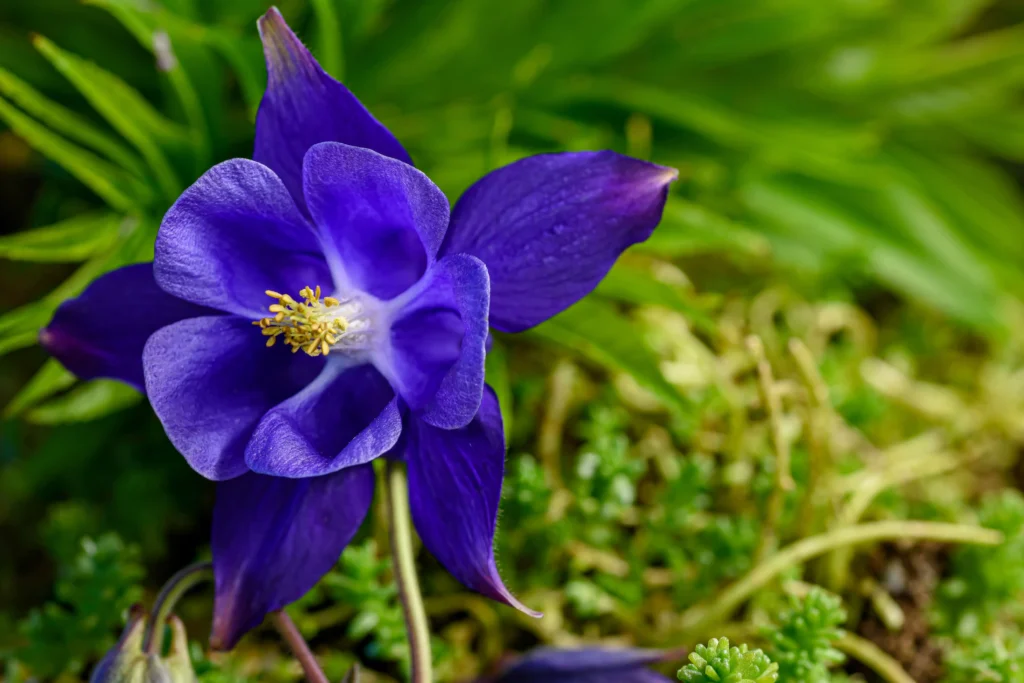
Blue Columbine has a delicate, nodding bloom with spurred petals. It grows well in cool climates. The plant often self-seeds and spreads naturally.
- Scientific name: Aquilegia caerulea
- Flower type: Perennial
- Colors: Blue, white, purple, pink
- Bloom season: Spring to early summer
- Sun: Partial shade
- Height: 1–3 feet
- Fragrance: No
- Common uses: Woodland gardens, borders
- Meaning: Faithfulness, wisdom
8. Blue Aster
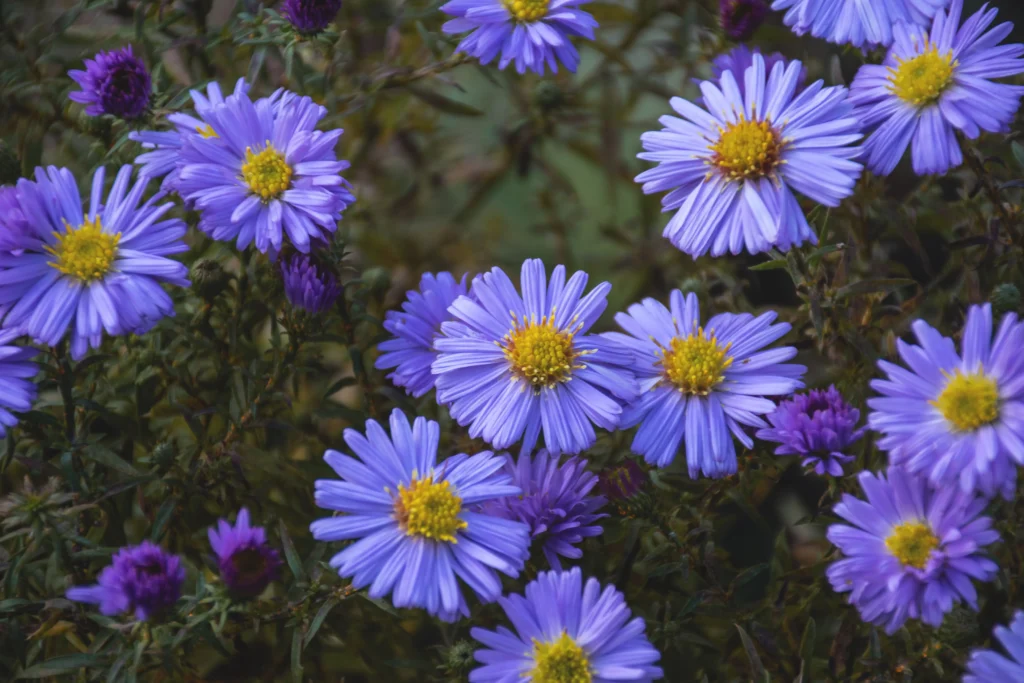
Blue Aster blooms in late summer when most flowers fade. Its daisy-like petals surround a bright yellow center. It is a key source of nectar for fall pollinators.
- Scientific name: Symphyotrichum spp.
- Flower type: Perennial
- Colors: Blue, purple, pink, white
- Bloom season: Late summer to fall
- Sun: Full sun
- Height: 1–4 feet
- Fragrance: Mild
- Common uses: Fall gardens, pollinator beds
- Meaning: Patience, love
9. Blue Bellflower
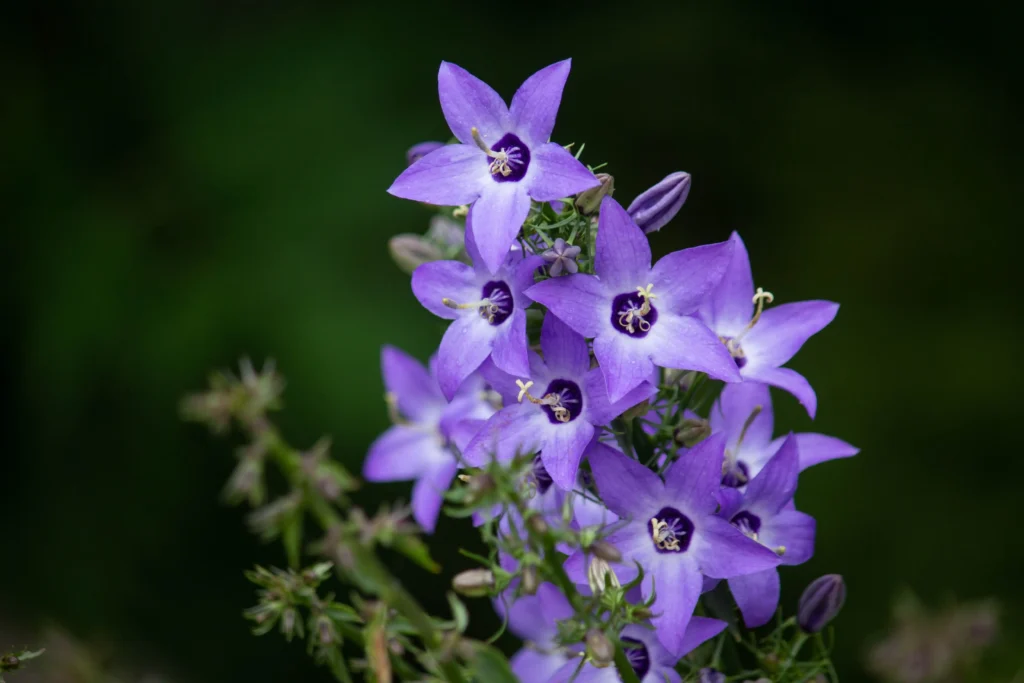
Bellflower produces small, drooping, bell-shaped blooms. The plant forms neat mounds or trailing vines depending on the variety. It is a gentle addition to any garden bed.
- Scientific name: Campanula persicifolia
- Flower type: Perennial
- Colors: Blue, purple, white
- Bloom season: Early to mid-summer
- Sun: Full sun to partial shade
- Height: 1–3 feet
- Fragrance: No
- Common uses: Borders, rock gardens, hanging baskets
- Meaning: Gratitude, constancy
10. Blue Larkspur
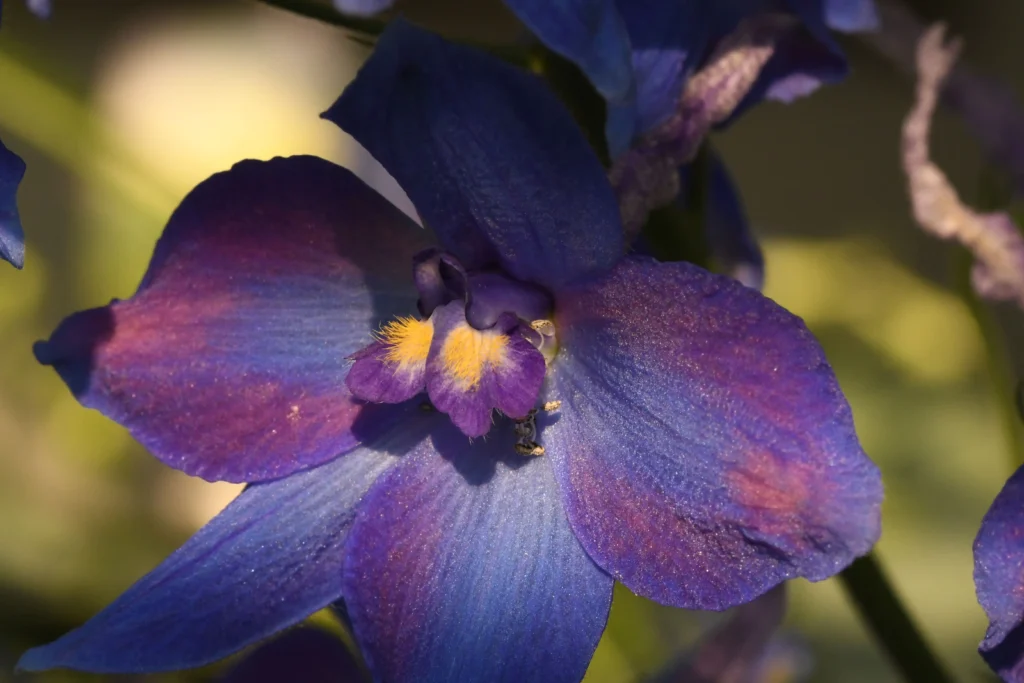
Larkspur is closely related to Delphinium but blooms earlier. Its tall spikes are covered in small, spurred flowers. It is often dried for use in crafts.
- Scientific name: Consolida ajacis
- Flower type: Annual
- Colors: Blue, purple, pink, white
- Bloom season: Late spring to summer
- Sun: Full sun
- Height: 1–4 feet
- Fragrance: No
- Common uses: Cut flowers, dried arrangements
- Meaning: Openness, lightness
Blue Flowering Shrubs & Trees
These woody plants add a blue color at eye level and above. They work well as hedges, focal points, or backdrops.
11. Butterfly Bush
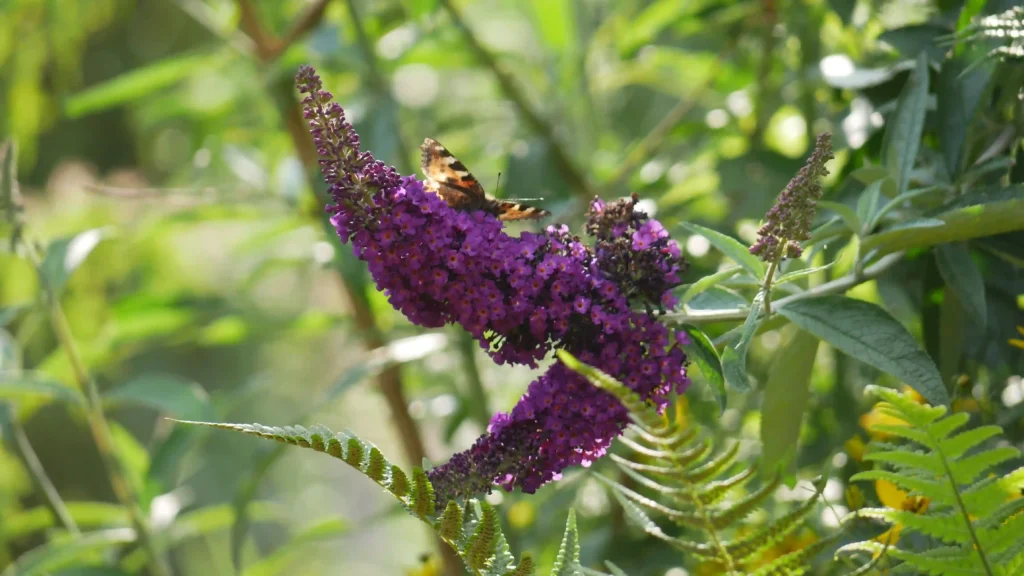
Butterfly Bush grows long, cone-shaped clusters of tiny blue blooms. As its name suggests, it draws butterflies from every direction. The plant grows fast and blooms for months.
- Scientific name: Buddleja davidii
- Flower type: Shrub
- Colors: Blue, purple, pink, white
- Bloom season: Summer to fall
- Sun: Full sun
- Height: 5–10 feet
- Fragrance: Sweet, honey-like
- Common uses: Hedges, pollinator gardens
- Meaning: Attraction, rebirth
12. Plumbago
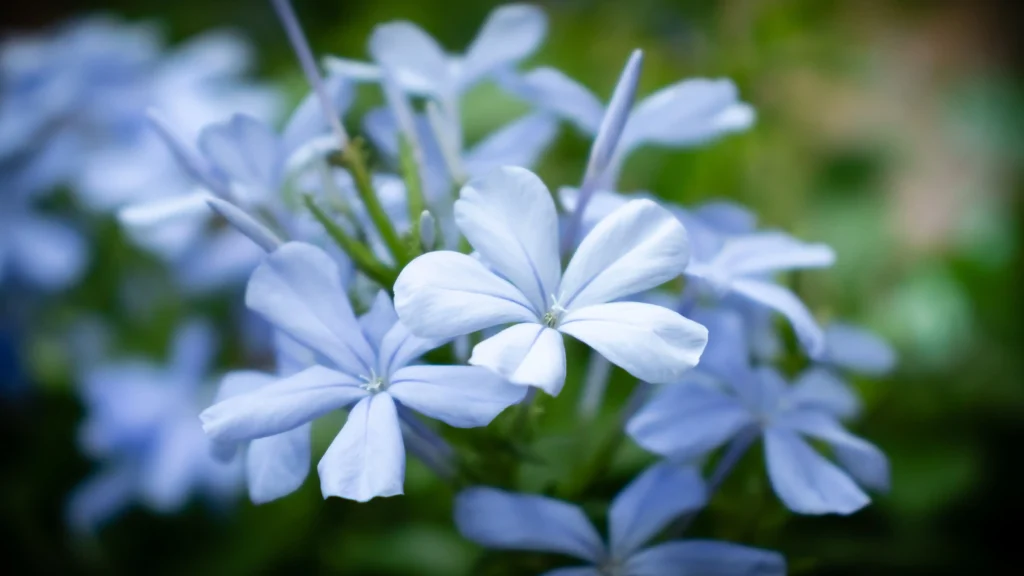
Plumbago produces clusters of soft, sky-blue blooms all season. It grows as a spreading shrub or a climbing vine. This plant thrives in warm climates.
- Scientific name: Plumbago auriculata
- Flower type: Shrub
- Colors: Blue, white
- Bloom season: Spring to fall
- Sun: Full sun
- Height: 3–6 feet
- Fragrance: No
- Common uses: Hedges, trellises, containers
- Meaning: Warmth, connection
13. Ceanothus (California Lilac)
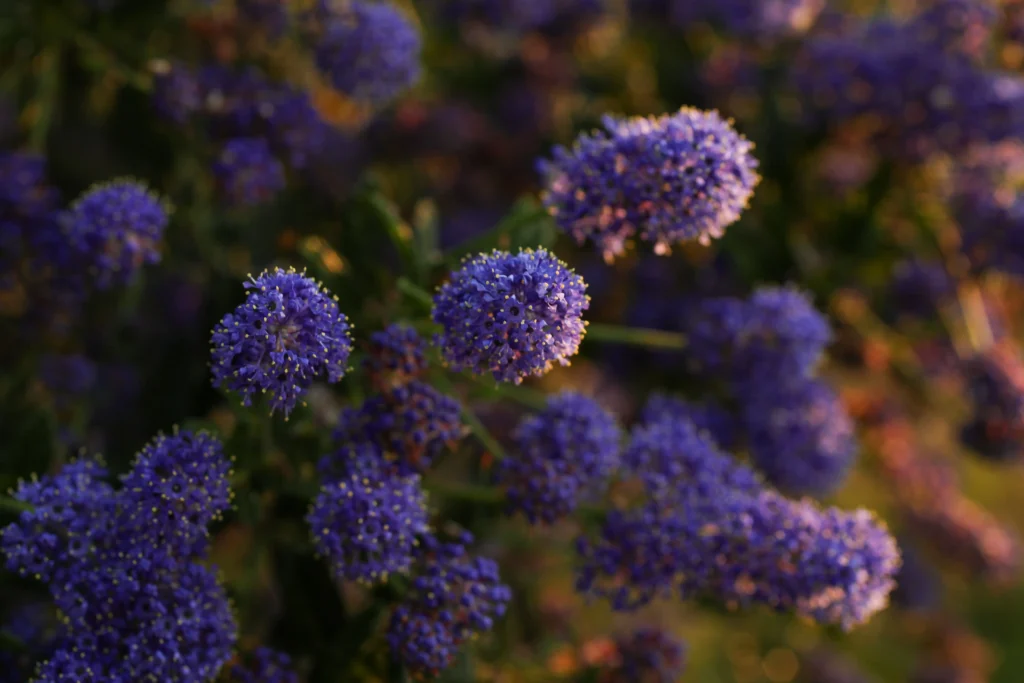
Ceanothus bursts into clouds of small, powder-blue blooms in spring. It is a tough, drought-tolerant shrub. Bees and butterflies flock to it when it flowers.
- Scientific name: Ceanothus thyrsiflorus
- Flower type: Shrub
- Colors: Blue, purple, white
- Bloom season: Spring
- Sun: Full sun
- Height: 6–20 feet
- Fragrance: Mild, sweet
- Common uses: Hedges, slopes, wildlife gardens
- Meaning: Resilience, renewal
14. Chaste Tree
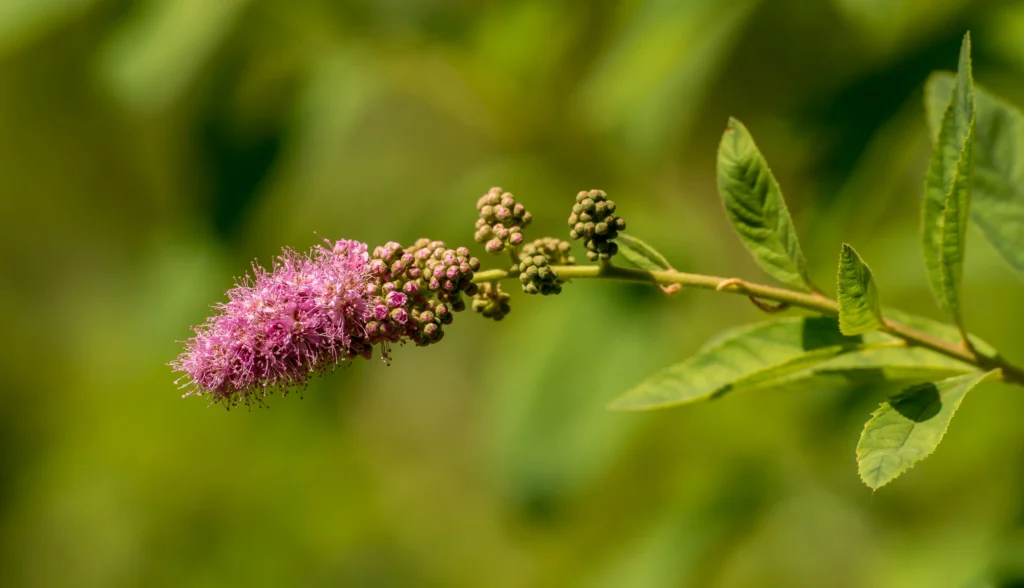
Chaste Tree grows tall, narrow spikes of lavender-blue blooms. It has a light, herbal scent when brushed. This plant handles heat and drought with ease.
- Scientific name: Vitex agnus-castus
- Flower type: Shrub or small tree
- Colors: Blue, purple, white, pink
- Bloom season: Summer
- Sun: Full sun
- Height: 8–15 feet
- Fragrance: Herbal, spicy
- Common uses: Specimen tree, hedges
- Meaning: Purity, clarity
15. Rose of Sharon ‘Blue Chiffon’
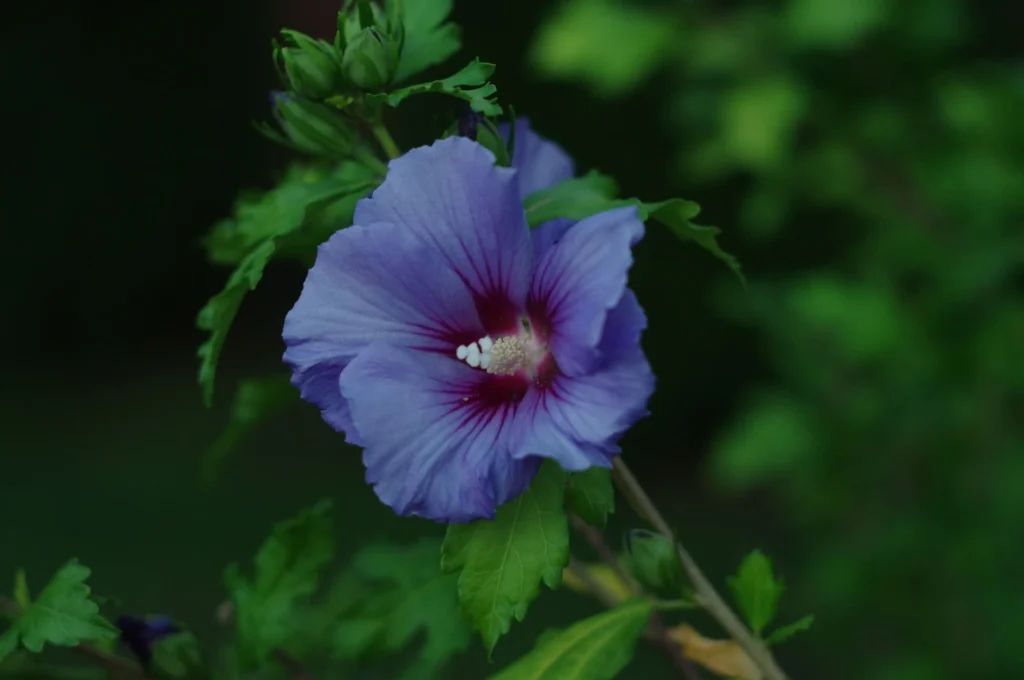
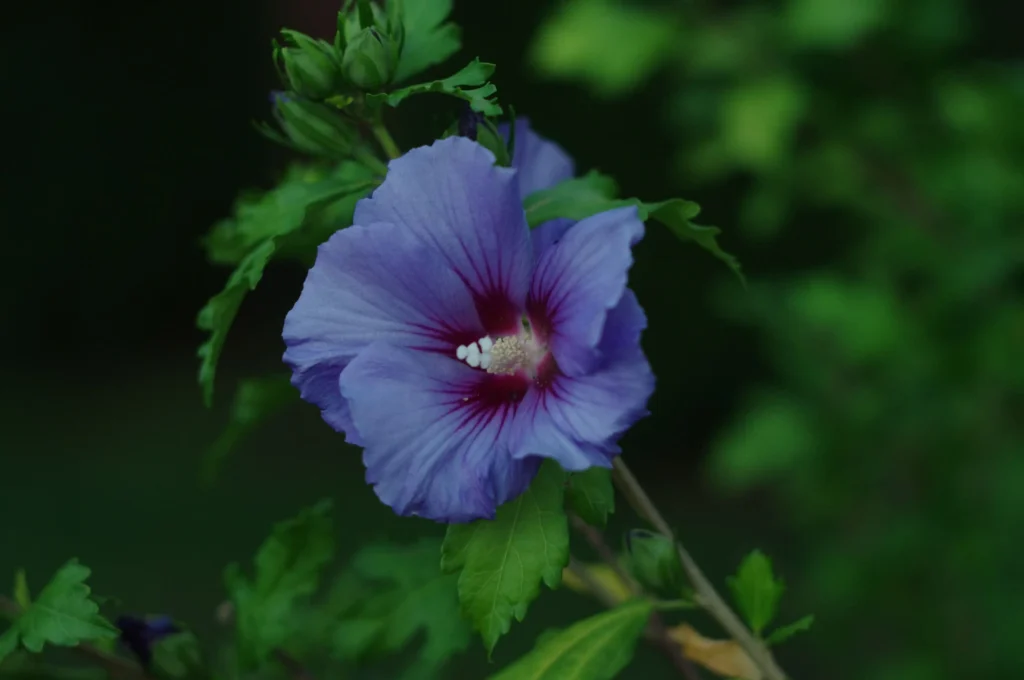
This shrub produces large, ruffled blue blooms with a soft center. It flowers for a long stretch in late summer. It is a hardy plant that handles many soil types.
- Scientific name: Hibiscus syriacus ‘Blue Chiffon’
- Flower type: Shrub
- Colors: Blue, lavender
- Bloom season: Mid to late summer
- Sun: Full sun
- Height: 6–10 feet
- Fragrance: No
- Common uses: Hedges, focal points
- Meaning: Delicate beauty
16. Blue Potato Bush
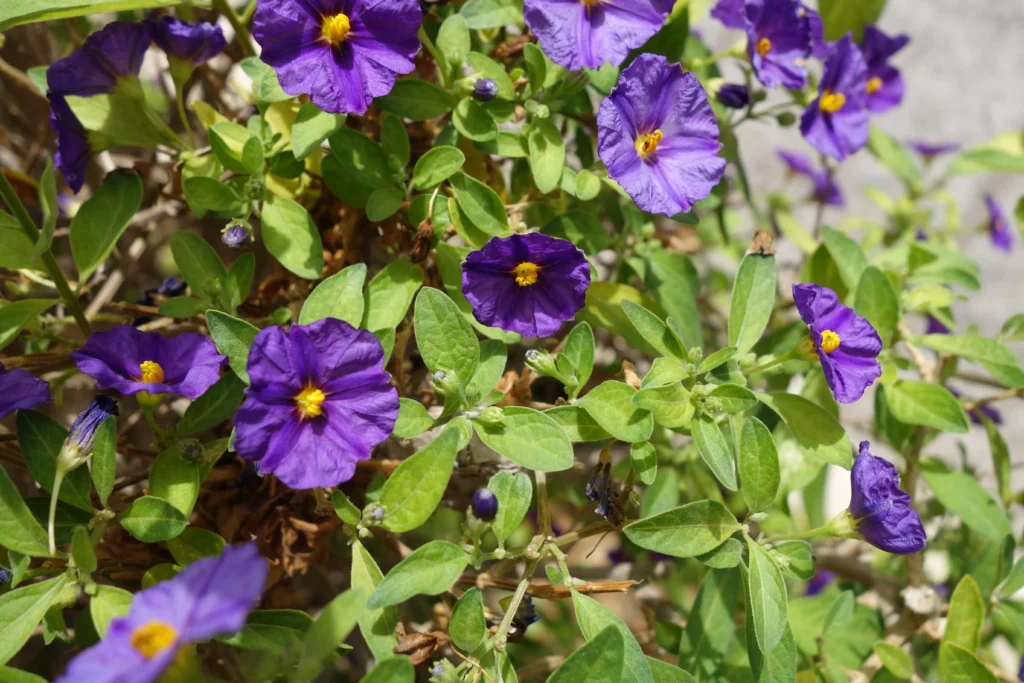
Blue Potato Bush blooms with clusters of star-shaped, violet-blue flowers. Each bloom has a bright yellow center. It flowers almost nonstop in warm weather.
- Scientific name: Lycianthes rantonnetii
- Flower type: Shrub
- Colors: Blue, purple
- Bloom season: Spring to fall
- Sun: Full sun
- Height: 3–6 feet
- Fragrance: No
- Common uses: Containers, borders
- Meaning: Vitality
17. Panicle Hydrangea (Blue Varieties)
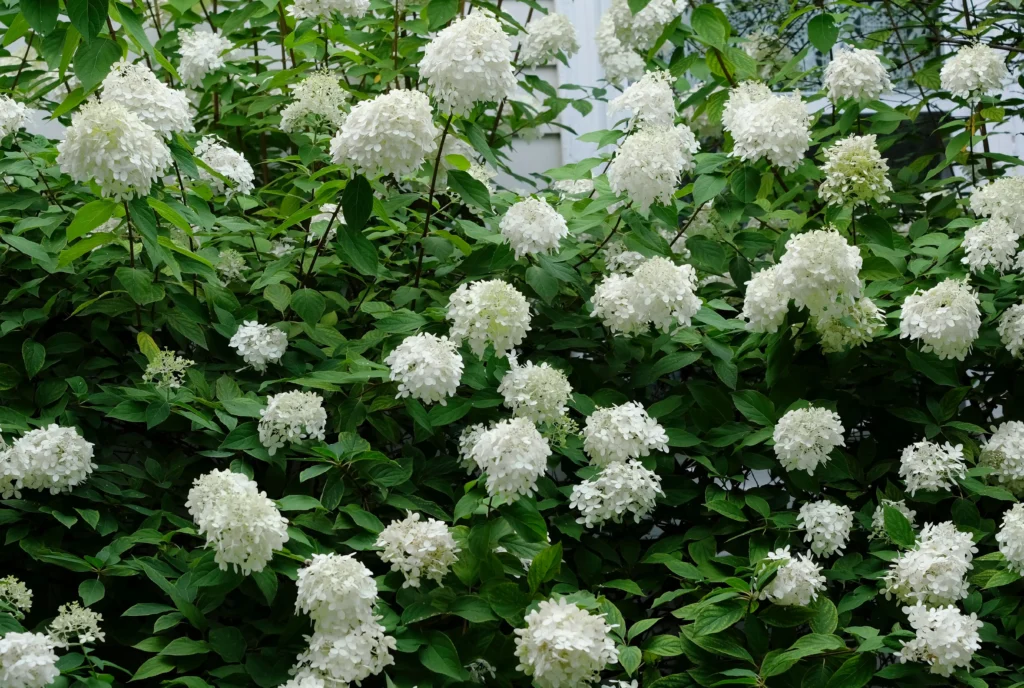
Some Panicle Hydrangea varieties shift toward soft blue tones in acidic soil. The blooms grow in large, cone-shaped clusters. This shrub is hardier than other hydrangea types.
- Scientific name: Hydrangea paniculata
- Flower type: Shrub
- Colors: Blue, white, pink
- Bloom season: Summer to fall
- Sun: Full sun to partial shade
- Height: 6–8 feet
- Fragrance: No
- Common uses: Hedges, borders, cut flowers
- Meaning: Gratitude, abundance
18. Rosemary
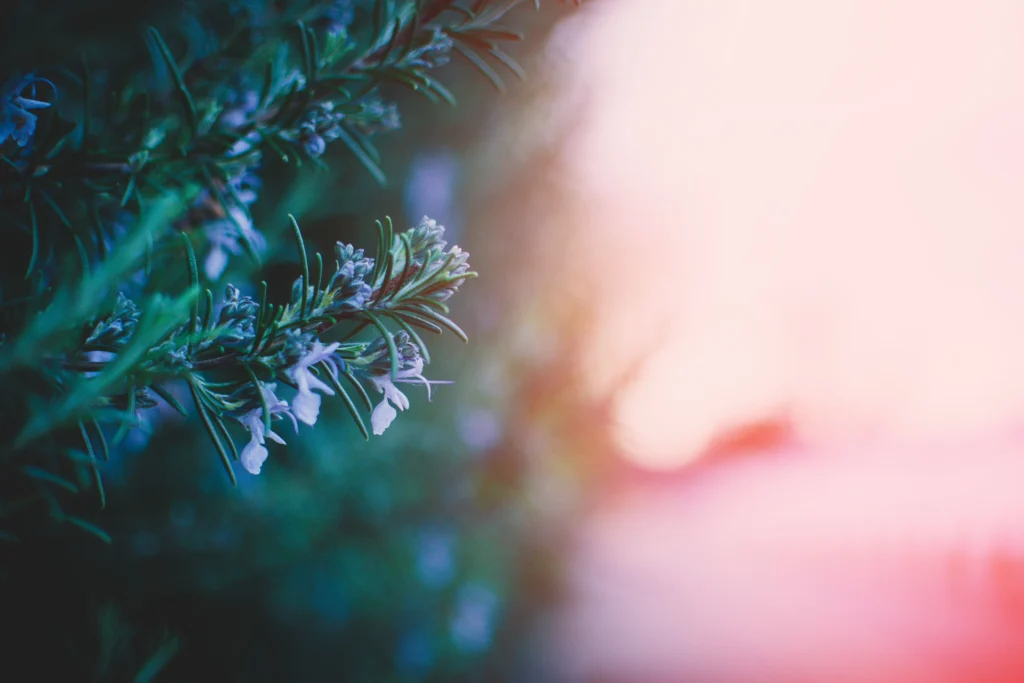
Rosemary is known as an herb, but it also produces small, pale blue flowers. The blooms appear along its woody stems in early spring. Bees are drawn to its scent and color.
- Scientific name: Salvia rosmarinus
- Flower type: Shrub
- Colors: Blue, lavender, white
- Bloom season: Spring
- Sun: Full sun
- Height: 2–4 feet
- Fragrance: Strong, herbal
- Common uses: Herb gardens, borders, cooking
- Meaning: Remembrance, loyalty
Blue Wildflowers
These blue flowers grow naturally in fields, meadows, and roadsides. Many can be added to a home garden, too.
19. Chicory
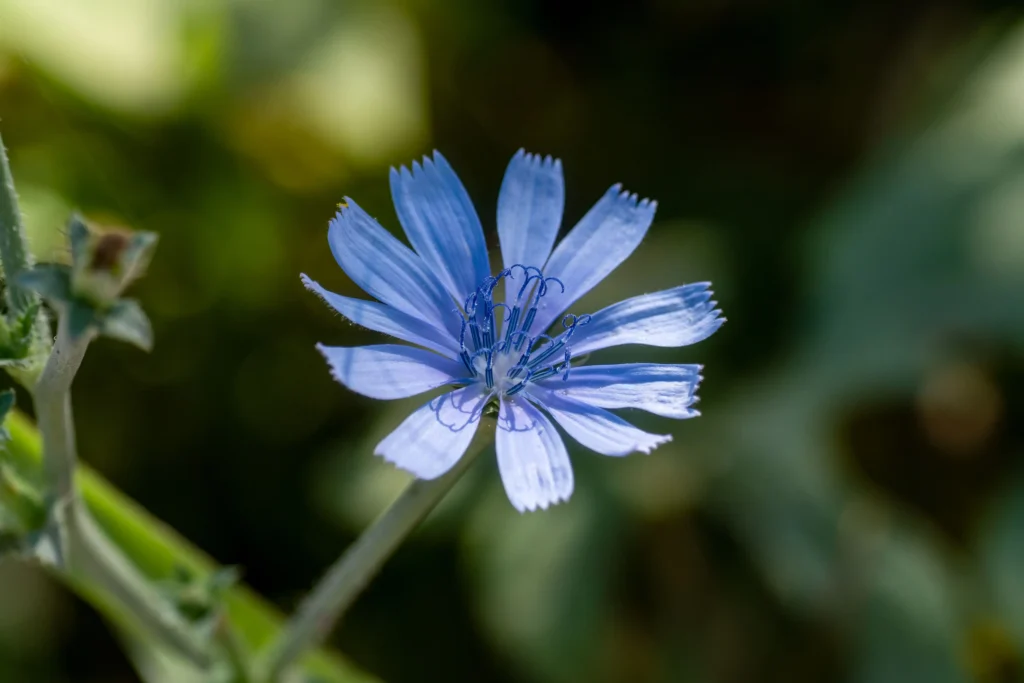
Chicory grows along roadsides with bright, sky-blue blooms. Each flower opens in the morning and closes by the afternoon. The plant’s roots are sometimes used as a coffee substitute.
- Scientific name: Cichorium intybus
- Flower type: Perennial
- Colors: Blue
- Bloom season: Summer to early fall
- Sun: Full sun
- Height: 2–4 feet
- Fragrance: No
- Common uses: Wildflower meadows, herbal use
- Meaning: Frugality, simplicity
20. Forget-Me-Not
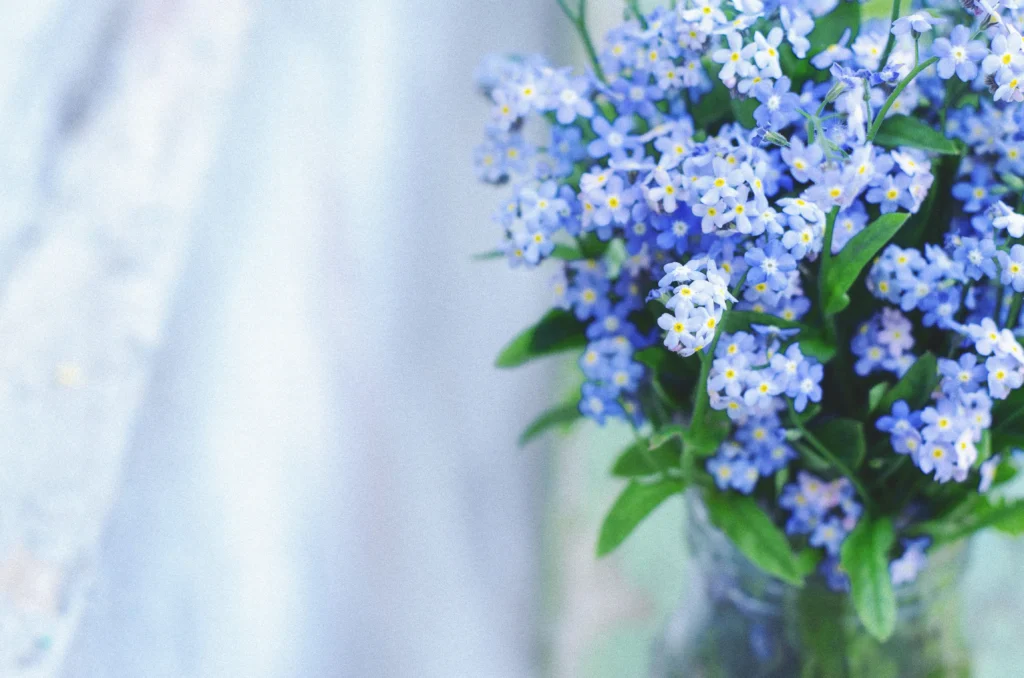
Forget-Me-Not has tiny, five-petaled blue blooms with a yellow center. It spreads easily and grows in soft clusters. The flower is a common symbol of remembrance.
- Scientific name: Myosotis sylvatica
- Flower type: Biennial or short-lived perennial
- Colors: Blue, pink, white
- Bloom season: Spring
- Sun: Partial shade
- Height: 6–12 inches
- Fragrance: No
- Common uses: Borders, ground cover, memorial gardens
- Meaning: True love, remembrance
21. Texas Bluebonnet
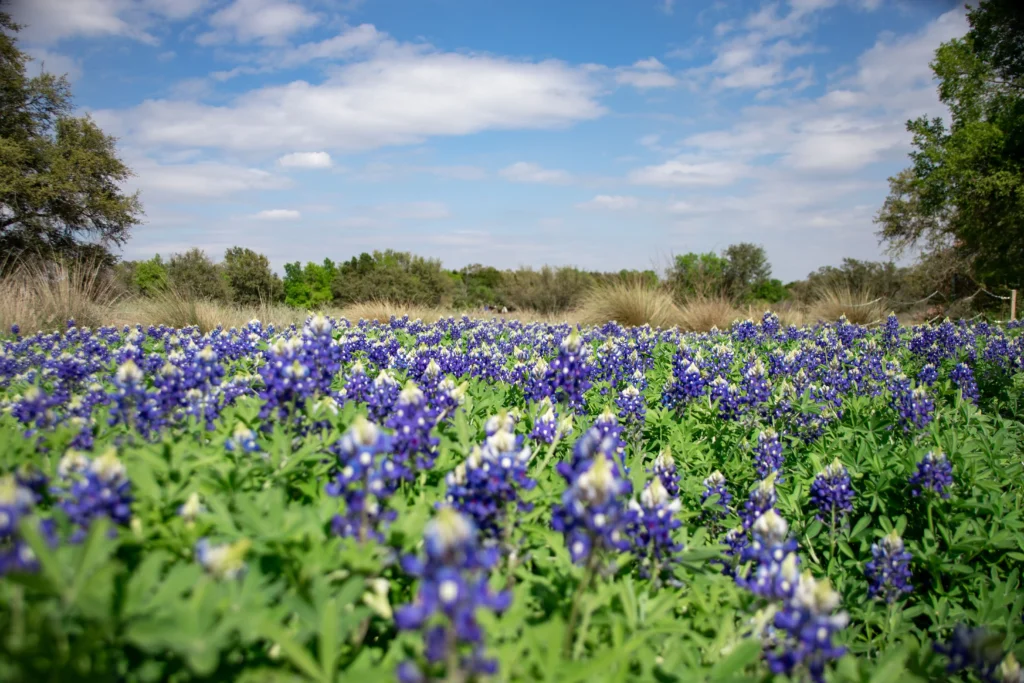
Bluebonnet is the state flower of Texas. It grows in dense fields each spring, covering hills in deep blue. Each flower spike ends in a white tip.
- Scientific name: Lupinus texensis
- Flower type: Annual
- Colors: Blue with white tips
- Bloom season: Spring
- Sun: Full sun
- Height: 1–2 feet
- Fragrance: Mild, sweet
- Common uses: Wildflower fields, roadside plantings
- Meaning: Pride, state heritage
22. Virginia Bluebells
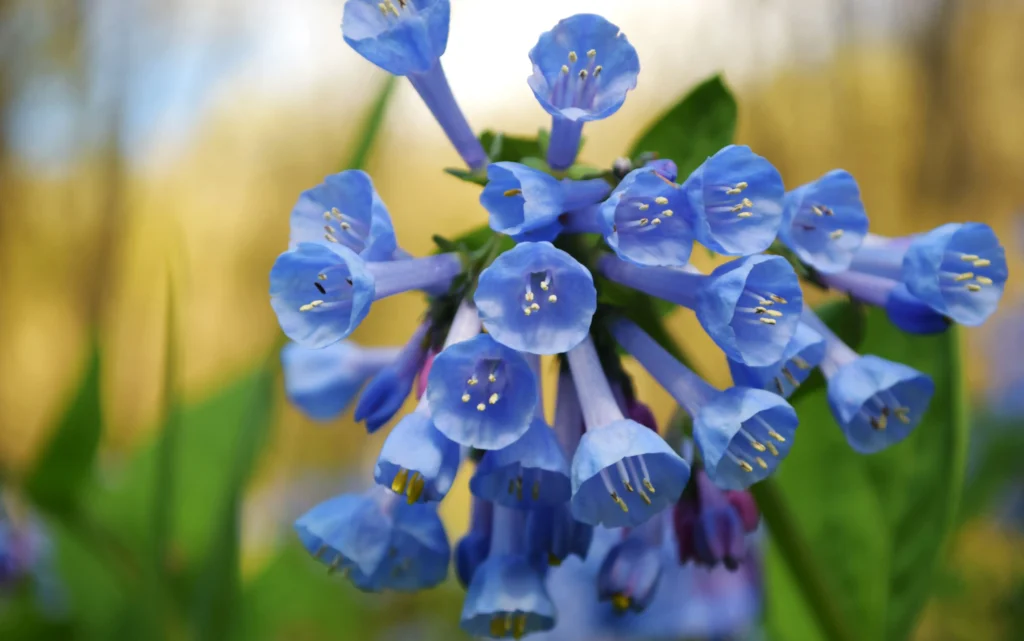
Virginia Bluebells open as pink buds and turn sky blue as they mature. The plant grows in shaded woodlands. It disappears underground after its short spring bloom.
- Scientific name: Mertensia virginica
- Flower type: Perennial
- Colors: Blue, pink (in bud)
- Bloom season: Early spring
- Sun: Partial to full shade
- Height: 1–2 feet
- Fragrance: No
- Common uses: Woodland gardens, naturalized areas
- Meaning: New beginnings
23. Blue-Eyed Grass
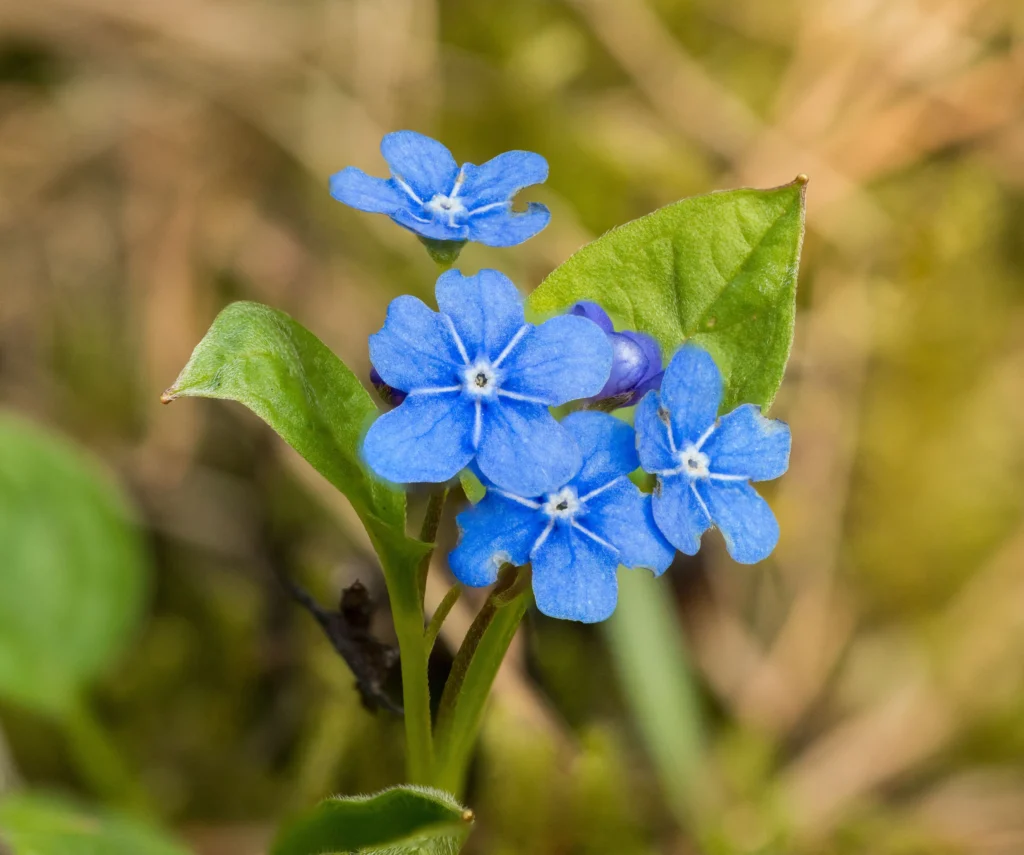
Blue-Eyed Grass looks like grass until it blooms with tiny, star-shaped blue flowers. Each bloom has a bright yellow center. It grows well in damp, sunny meadows.
- Scientific name: Sisyrinchium angustifolium
- Flower type: Perennial
- Colors: Blue, purple
- Bloom season: Late spring to summer
- Sun: Full sun to partial shade
- Height: 6–20 inches
- Fragrance: No
- Common uses: Native gardens, rock gardens
- Meaning: Simplicity, cheerfulness
24. Wild Blue Flax
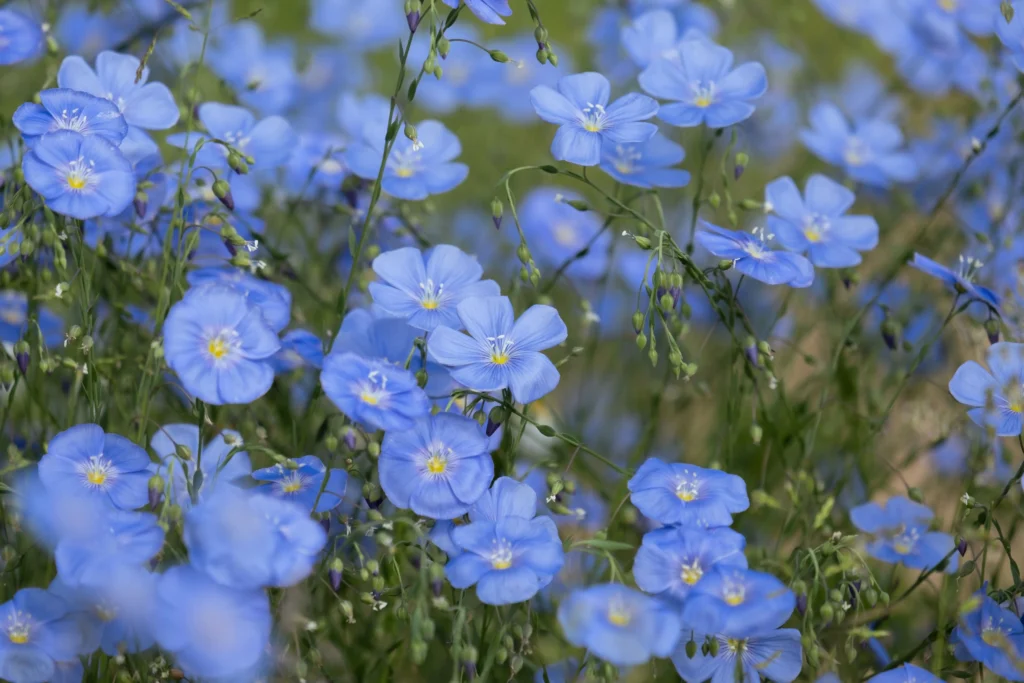
Wild Blue Flax has thin stems topped with soft blue, five-petaled blooms. Each flower lasts only a day, but the plant blooms for weeks. It sways gently in open fields.
- Scientific name: Linum lewisii
- Flower type: Perennial
- Colors: Blue
- Bloom season: Late spring to summer
- Sun: Full sun
- Height: 1–2 feet
- Fragrance: No
- Common uses: Wildflower gardens, erosion control
- Meaning: Fate, domestic happiness
25. Spiderwort
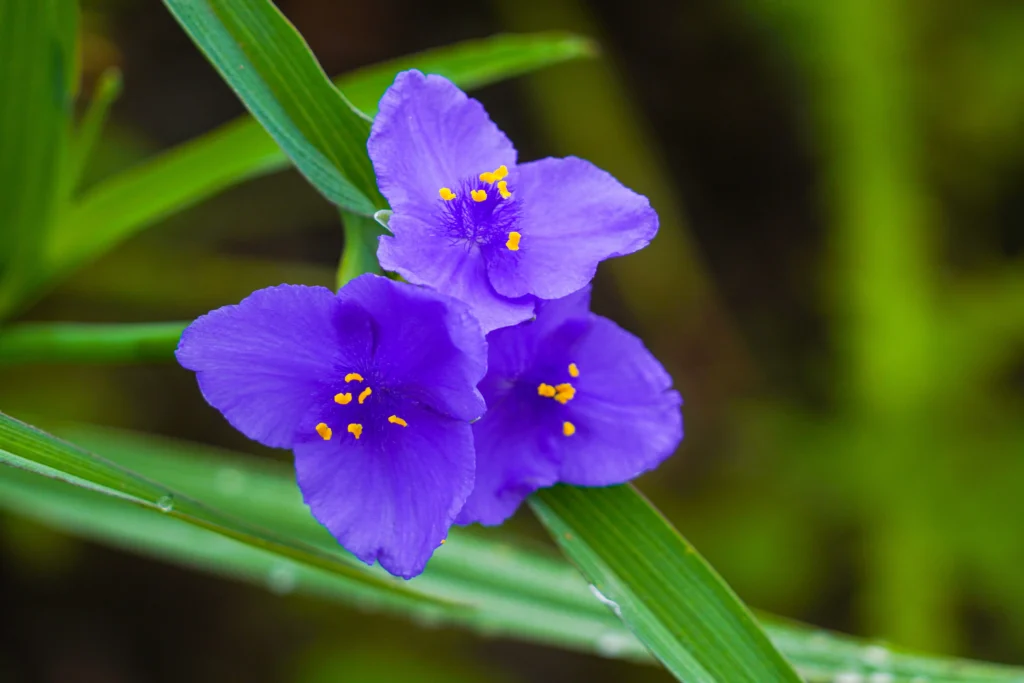
Spiderwort has three-petaled blue-purple blooms that open in the morning. The plant forms grassy clumps that spread over time. Each flower only lasts one day.
- Scientific name: Tradescantia ohiensis
- Flower type: Perennial
- Colors: Blue, purple, pink, white
- Bloom season: Late spring to summer
- Sun: Full sun to partial shade
- Height: 1–3 feet
- Fragrance: No
- Common uses: Borders, naturalized gardens
- Meaning: Fleeting beauty
26. Blue Vervain
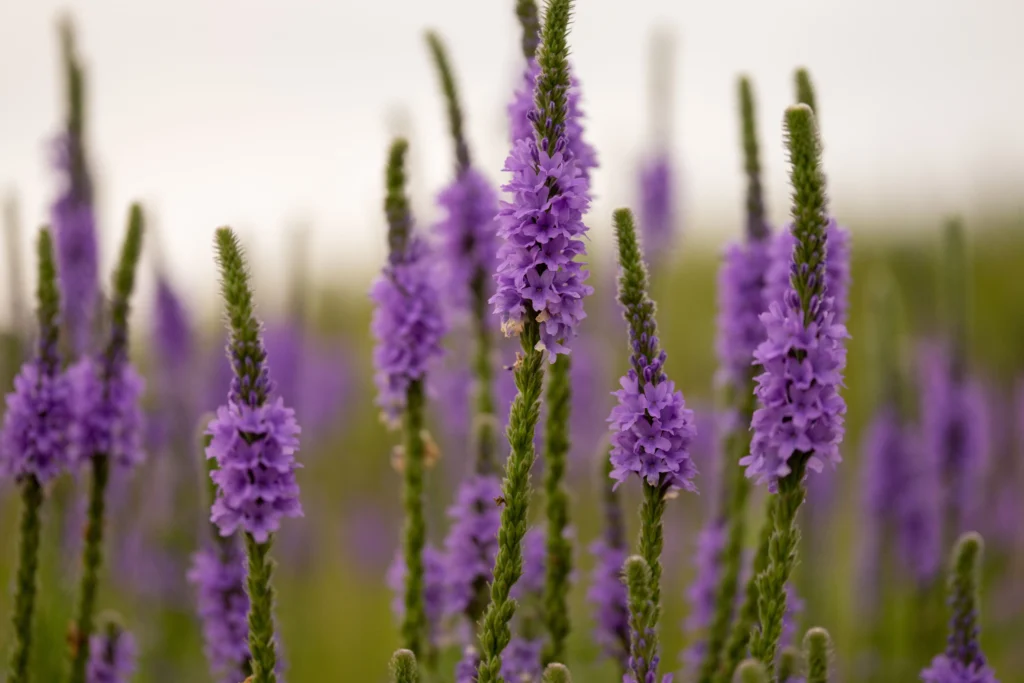
Blue Vervain grows tall spikes covered in small purple-blue blooms. It grows wild in damp meadows and along streams. Pollinators visit it often through the summer.
- Scientific name: Verbena hastata
- Flower type: Perennial
- Colors: Blue, purple
- Bloom season: Summer
- Sun: Full sun to partial shade
- Height: 2–5 feet
- Fragrance: No
- Common uses: Wetland gardens, pollinator beds
- Meaning: Healing, protection
Blue Tropical & Exotic Flowers
These striking blue flowers come from warm climates around the world. They bring a bold, unusual look to any collection.
27. Blue Passionflower
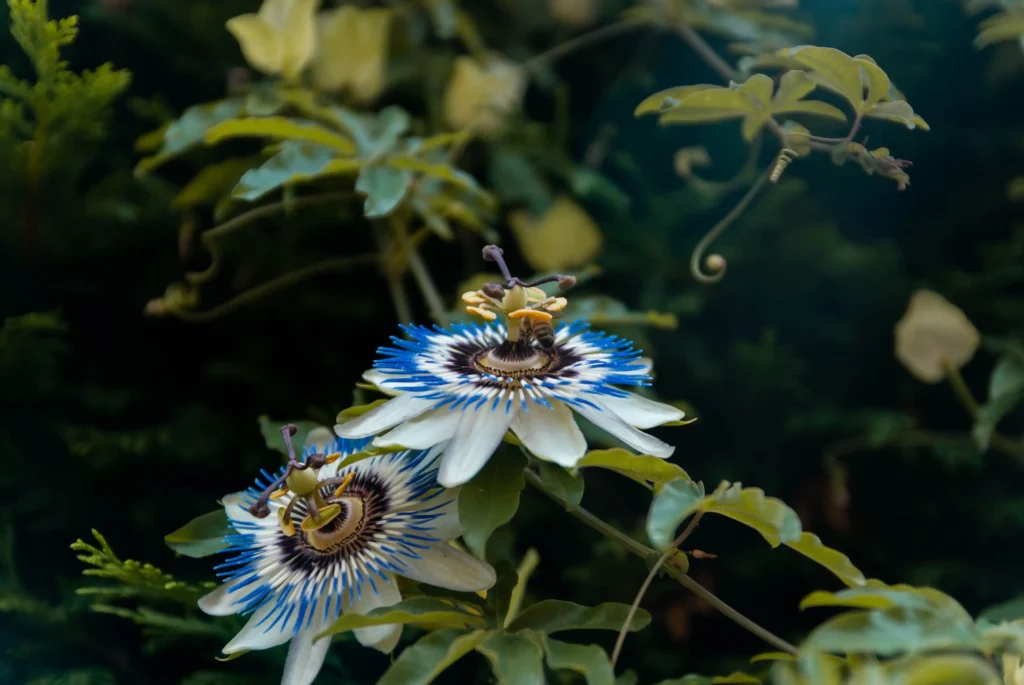
Blue Passionflower has an intricate bloom with thin, star-shaped petals and a crown of blue and white filaments. It grows as a fast-climbing vine. The flower is unlike any other in shape.
- Scientific name: Passiflora caerulea
- Flower type: Perennial vine
- Colors: Blue, white, purple
- Bloom season: Summer to fall
- Sun: Full sun
- Height: 15–30 feet (vine)
- Fragrance: Mild
- Common uses: Trellises, fences, exotic gardens
- Meaning: Faith, spirituality
28. Blue Ginger
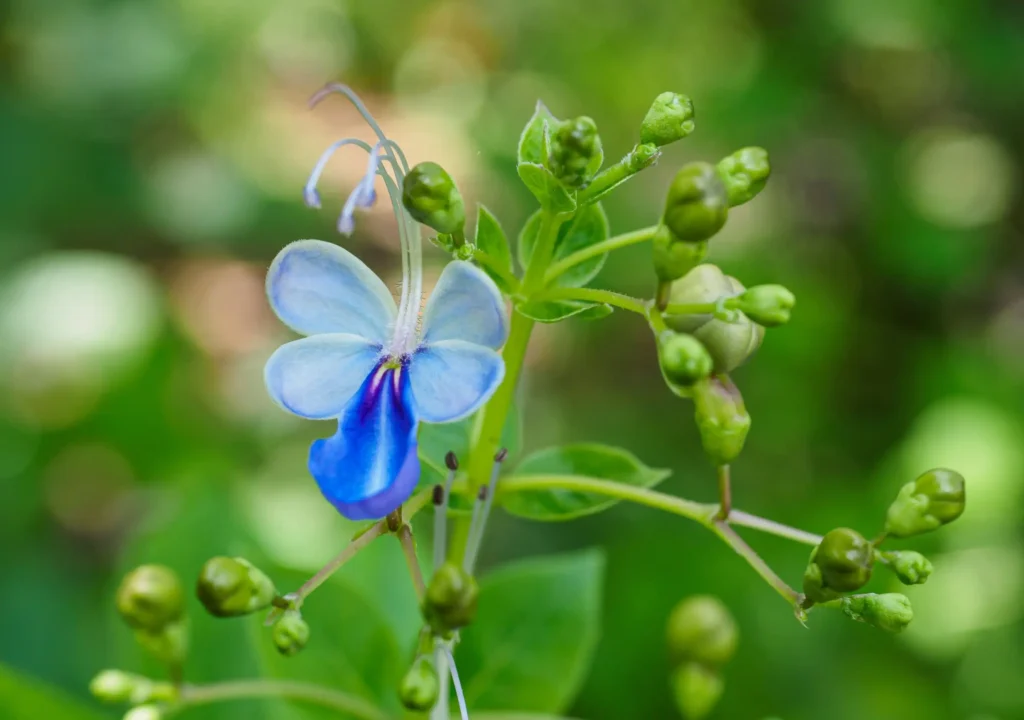
Blue Ginger is not a true ginger but shares the lush, tropical leaves. It grows tall spikes of vivid blue-purple blooms. The plant thrives in warm, humid climates.
- Scientific name: Dichorisandra thyrsiflora
- Flower type: Perennial
- Colors: Blue, purple
- Bloom season: Late summer to fall
- Sun: Partial shade
- Height: 4–8 feet
- Fragrance: No
- Common uses: Tropical gardens, shaded borders
- Meaning: Exotic beauty
29. Butterfly Pea
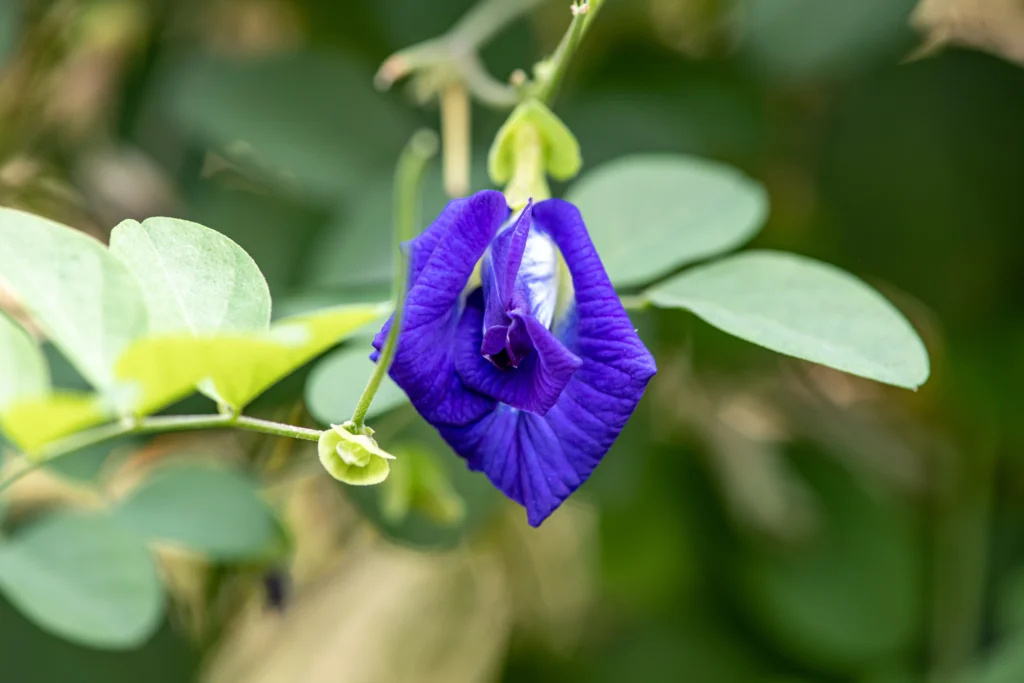
Butterfly Pea produces deep blue, pea-shaped blooms on a climbing vine. It is often used to make natural blue food dye and tea. The color can shift to purple when mixed with acid.
- Scientific name: Clitoria ternatea
- Flower type: Perennial vine
- Colors: Blue, white
- Bloom season: Summer to fall
- Sun: Full sun
- Height: 6–10 feet (vine)
- Fragrance: No
- Common uses: Trellises, herbal tea, natural dye
- Meaning: Peace, healing
30. Blue Water Lily
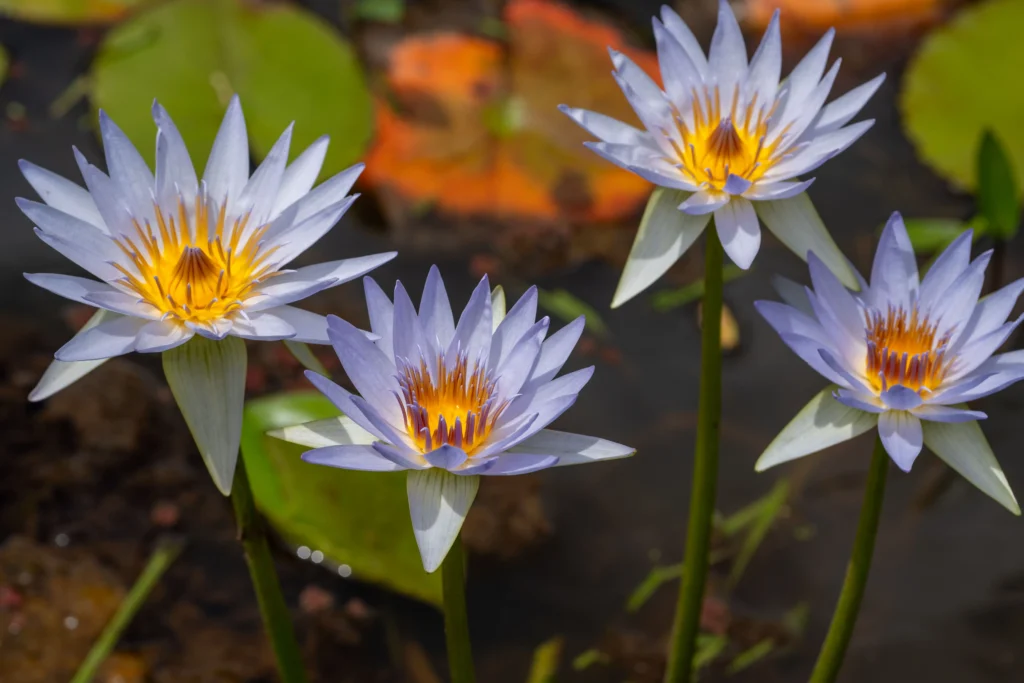
Blue Water Lily floats on calm water with wide, star-shaped petals. It opens with the morning sun and closes at night. The flower has been grown in ponds for thousands of years.
- Scientific name: Nymphaea caerulea
- Flower type: Perennial (aquatic)
- Colors: Blue, light purple
- Bloom season: Summer
- Sun: Full sun
- Height: Floats on the water surface
- Fragrance: Sweet
- Common uses: Ponds, water gardens
- Meaning: Rebirth, enlightenment
31. Blue Vanda Orchid
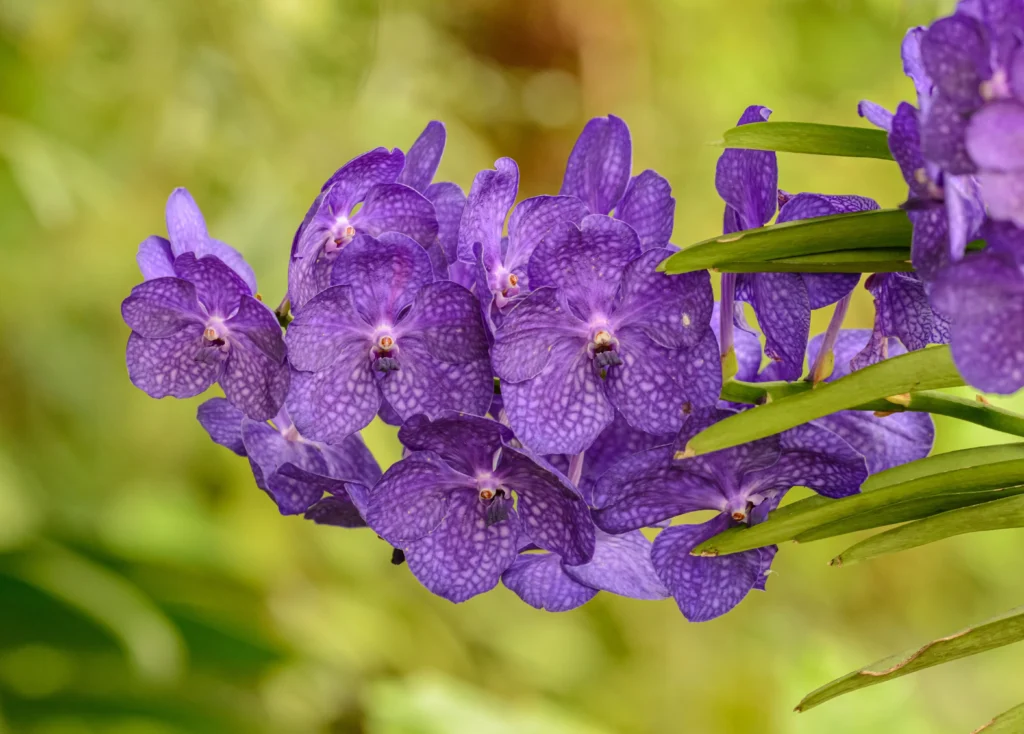
Blue Vanda Orchid is famous for its rare, true-blue petals with a fine net-like pattern. It is one of the most sought-after orchids in the world. The plant grows on tree bark in humid forests.
- Scientific name: Vanda coerulea
- Flower type: Perennial (epiphyte)
- Colors: Blue
- Bloom season: Fall to winter
- Sun: Bright, indirect light
- Height: 1–2 feet
- Fragrance: No
- Common uses: Indoor display, orchid collections
- Meaning: Rarity, refined beauty
32. Jacaranda
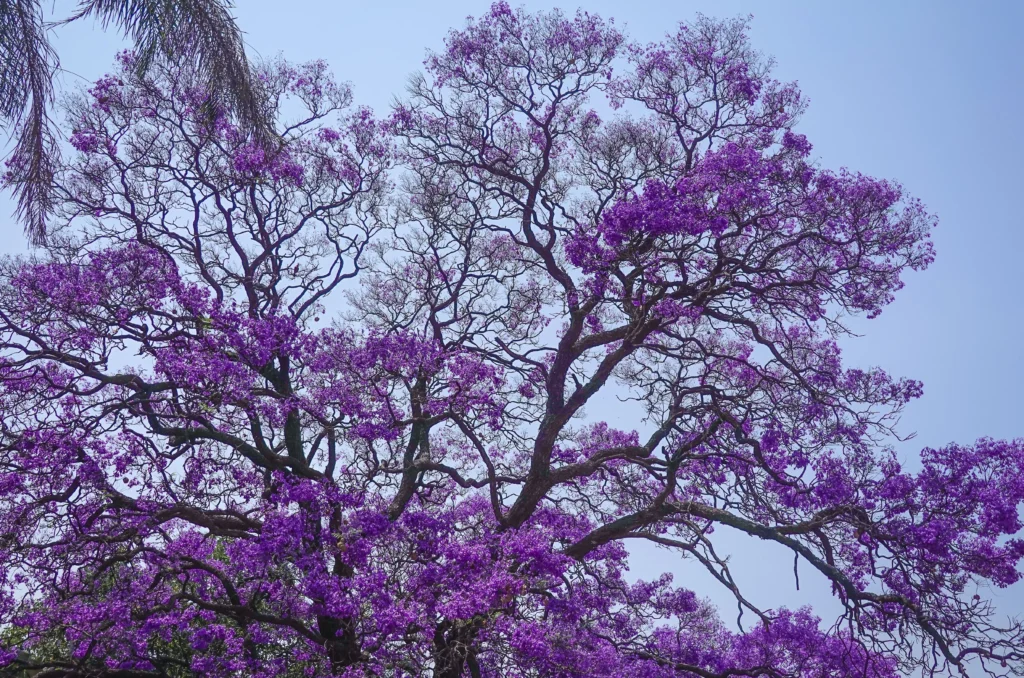
Jacaranda is a tree that bursts into clouds of trumpet-shaped, lavender-blue blooms. It flowers before its leaves fully return in spring. Entire streets turn blue when this tree blooms.
- Scientific name: Jacaranda mimosifolia
- Flower type: Tree
- Colors: Blue, purple
- Bloom season: Spring
- Sun: Full sun
- Height: 25–50 feet
- Fragrance: Mild, sweet
- Common uses: Shade tree, ornamental landscaping
- Meaning: Wisdom, rebirth
33. Blue Morning Glory
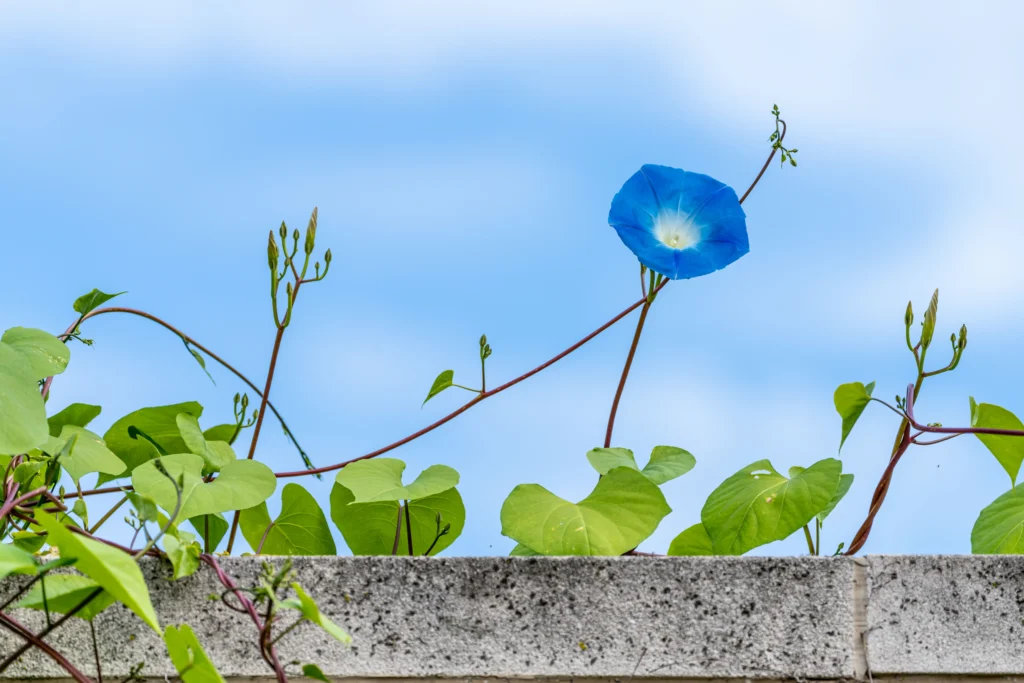
Blue Morning Glory opens wide, trumpet-shaped blooms at dawn. The color deepens to a true sky blue as the flower matures. It climbs quickly and can cover fences with ease.
- Scientific name: Ipomoea indica
- Flower type: Annual or perennial vine
- Colors: Blue, purple, pink
- Bloom season: Summer to fall
- Sun: Full sun
- Height: 10–15 feet (vine)
- Fragrance: No
- Common uses: Trellises, fences, arbors
- Meaning: Affection, mortality
34. Torenia (Wishbone Flower)
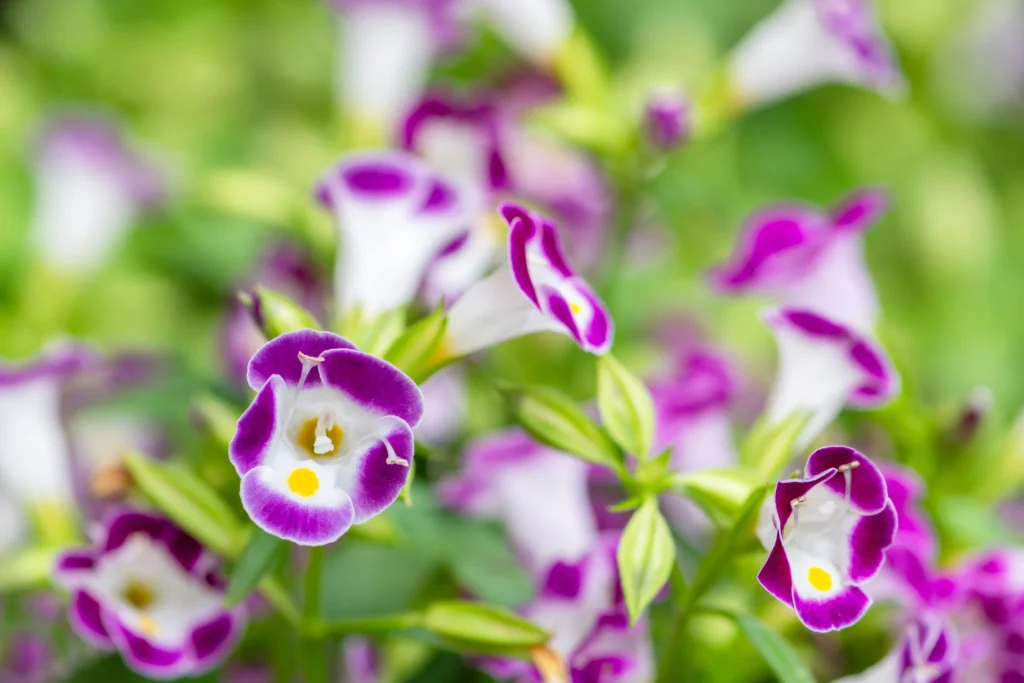
Torenia produces small, trumpet-shaped blooms in shades of blue and purple. Inside each flower is a tiny wishbone-shaped part, giving it its common name. It flowers well in shady, humid spots.
- Scientific name: Torenia fournieri
- Flower type: Annual
- Colors: Blue, purple, pink, white
- Bloom season: Summer to fall
- Sun: Partial shade
- Height: 6–12 inches
- Fragrance: No
- Common uses: Shade gardens, hanging baskets
- Meaning: Charm, playfulness
Blue Bulbs
These flowers grow from bulbs and often bloom early in the season. They are simple to plant and return year after year.
35. Grape Hyacinth
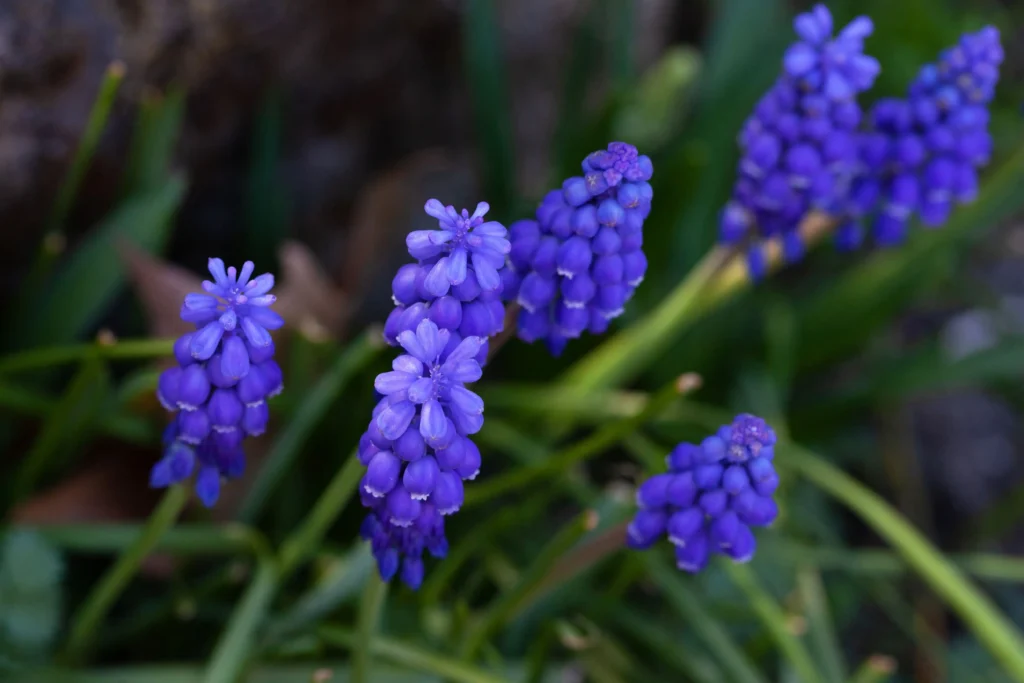
Grape Hyacinth grows tight clusters of tiny, bell-shaped blooms that look like bunches of grapes. It is one of the earliest blue flowers to appear each spring. The plant naturalizes easily in lawns and beds.
- Scientific name: Muscari armeniacum
- Flower type: Bulb
- Colors: Blue, purple, white
- Bloom season: Early to mid-spring
- Sun: Full sun to partial shade
- Height: 6–8 inches
- Fragrance: Mild, musky
- Common uses: Borders, naturalizing, containers
- Meaning: Trust, generosity
36. Blue Hyacinth
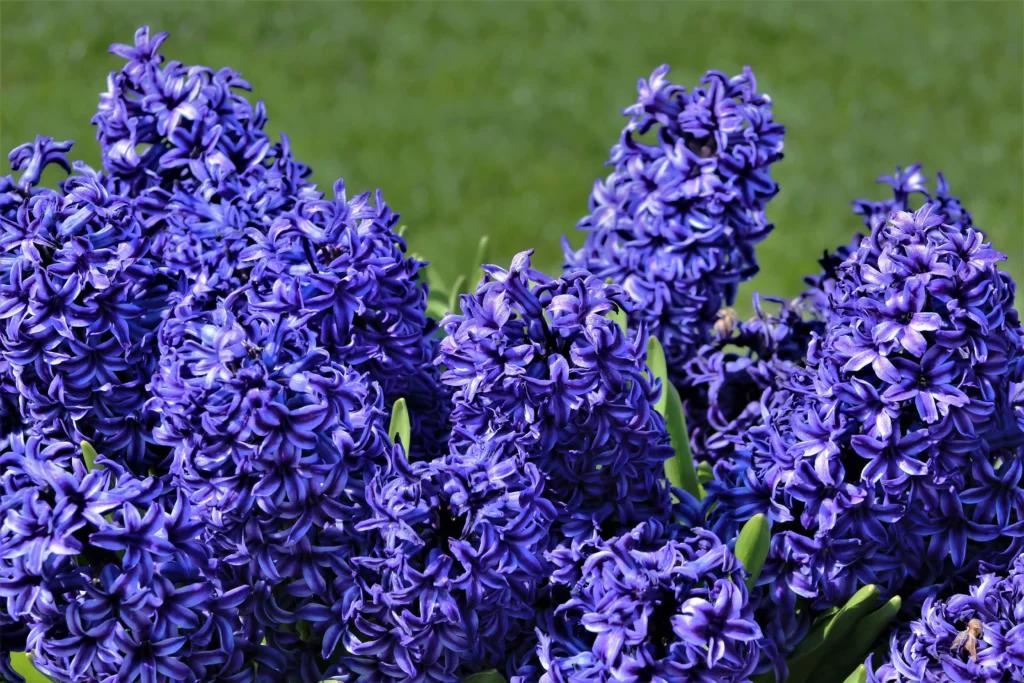
Blue Hyacinth grows a single, dense spike packed with star-shaped blooms. Its scent is one of the strongest of any spring bulb. The flower is often forced indoors for early blooms.
- Scientific name: Hyacinthus orientalis
- Flower type: Bulb
- Colors: Blue, purple, pink, white
- Bloom season: Early spring
- Sun: Full sun to partial shade
- Height: 8–12 inches
- Fragrance: Strong, sweet
- Common uses: Borders, indoor forcing, containers
- Meaning: Sincerity, constancy
37. Siberian Squill
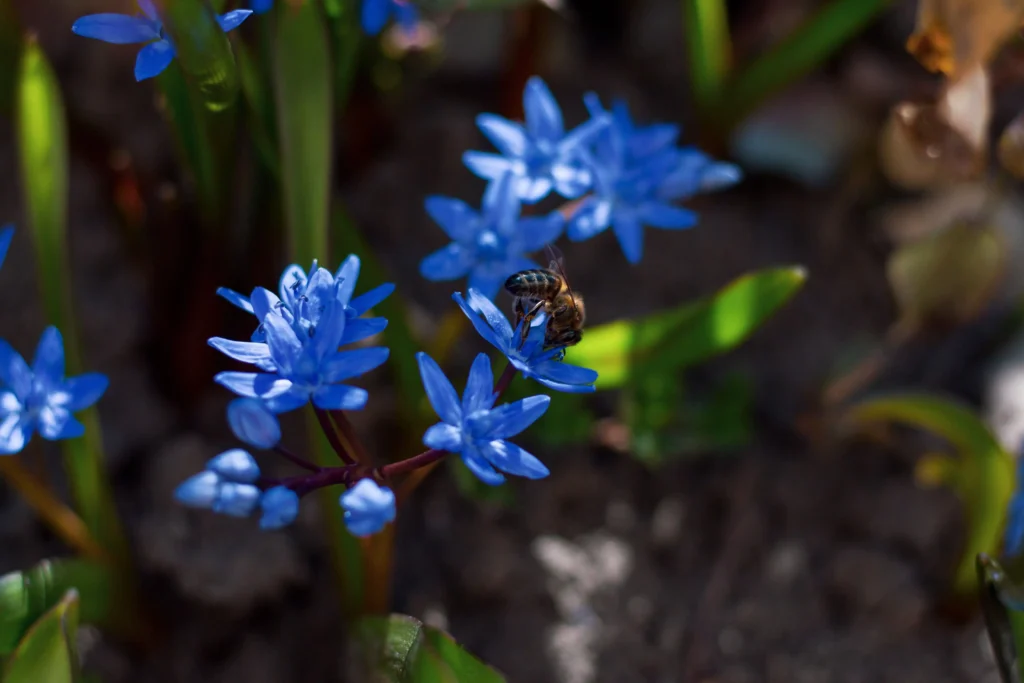
Siberian Squill blooms in small, nodding, star-shaped flowers of vivid blue. It spreads quickly to form a carpet under trees. This bulb is one of the first signs of spring.
- Scientific name: Scilla siberica
- Flower type: Bulb
- Colors: Blue
- Bloom season: Early spring
- Sun: Full sun to partial shade
- Height: 4–6 inches
- Fragrance: No
- Common uses: Naturalizing, ground cover, borders
- Meaning: Renewal, purity
38. Blue Anemone
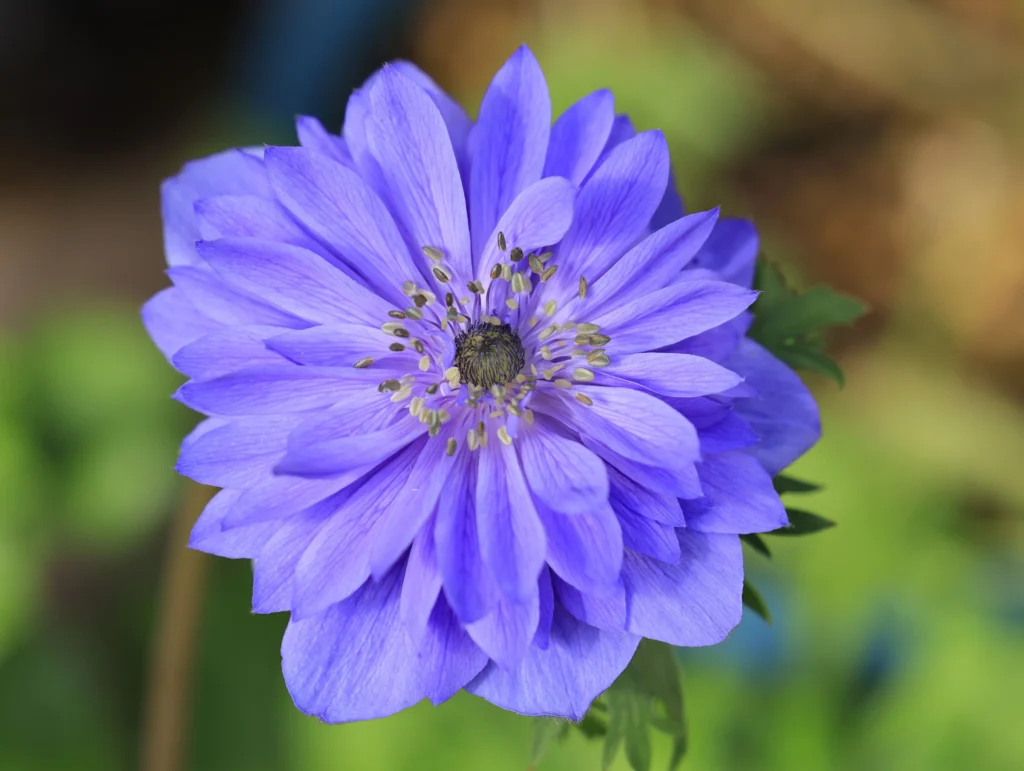
Blue Anemone produces daisy-like blooms with slender, deep blue petals around a dark center. The flower opens flat in full sun and closes on cloudy days. It grows from a small tuber.
- Scientific name: Anemone blanda
- Flower type: Bulb (tuber)
- Colors: Blue, pink, white
- Bloom season: Early to mid-spring
- Sun: Full sun to partial shade
- Height: 4–8 inches
- Fragrance: No
- Common uses: Borders, rock gardens, naturalizing
- Meaning: Anticipation, protection
39. Camassia
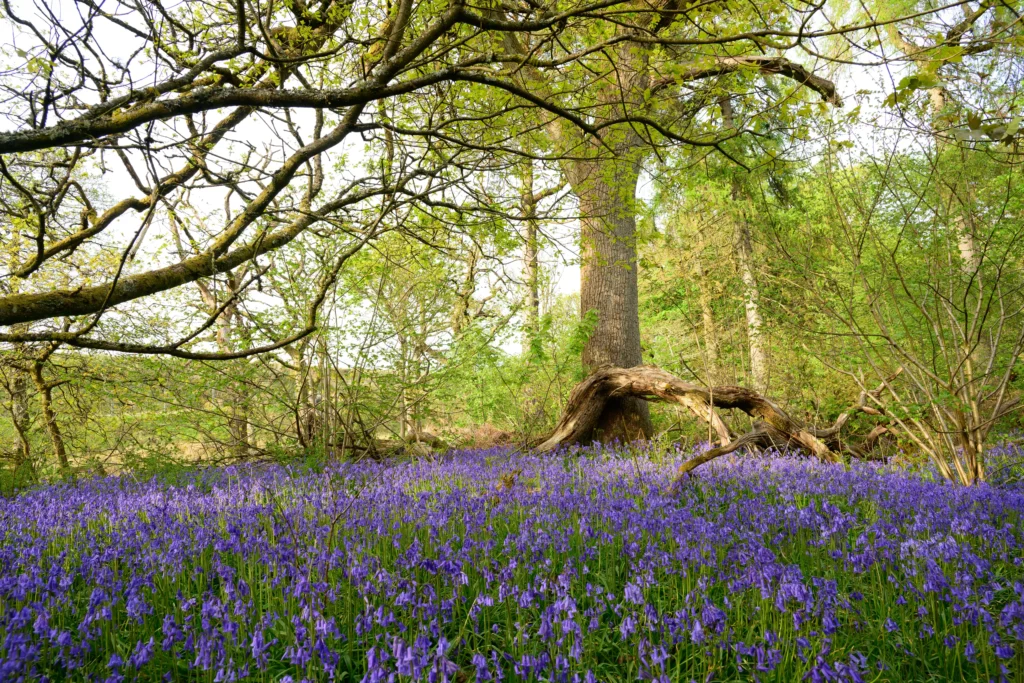
Camassia grows tall spikes of star-shaped blue blooms in late spring. It is native to North American meadows. The bulb was once an important food source for Native American tribes.
- Scientific name: Camassia leichtlinii
- Flower type: Bulb
- Colors: Blue, purple, white
- Bloom season: Late spring
- Sun: Full sun to partial shade
- Height: 2–3 feet
- Fragrance: No
- Common uses: Naturalized meadows, borders
- Meaning: Heritage, abundance
40. Dutch Iris
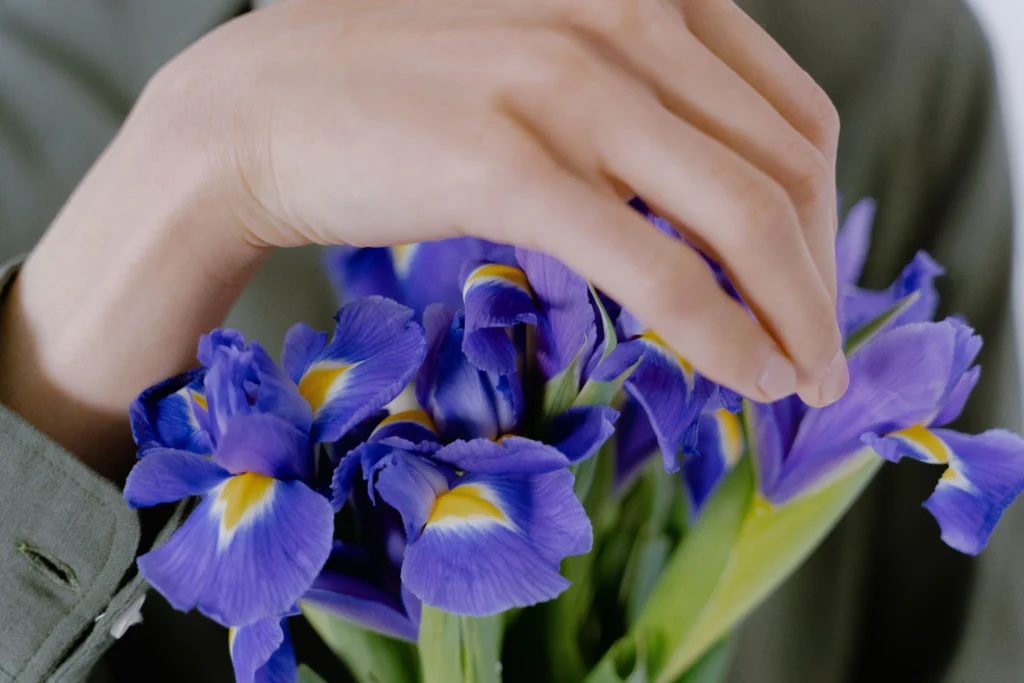
Dutch Iris grows slender stems topped with elegant blue and yellow blooms. It blooms earlier than bearded iris types. The flower is a popular choice for cut arrangements.
- Scientific name: Iris x hollandica
- Flower type: Bulb
- Colors: Blue, purple, yellow, white
- Bloom season: Late spring
- Sun: Full sun
- Height: 1.5–2 feet
- Fragrance: Slight
- Common uses: Cut flowers, borders
- Meaning: Hope, elegance
41. Puschkinia (Striped Squill)
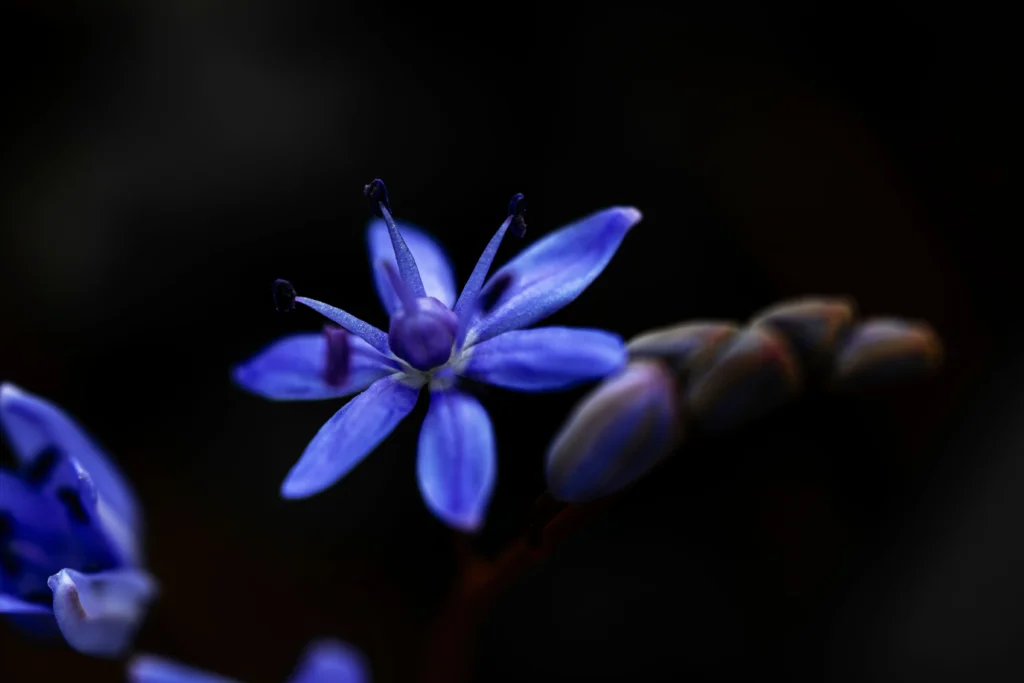
Puschkinia has pale blue petals marked with a thin, darker blue stripe down the center. The blooms cluster in small spikes close to the ground. It naturalizes well in cool climates.
- Scientific name: Puschkinia scilloides
- Flower type: Bulb
- Colors: Blue, white
- Bloom season: Early spring
- Sun: Full sun to partial shade
- Height: 4–6 inches
- Fragrance: No
- Common uses: Rock gardens, naturalizing
- Meaning: Subtlety, quiet beauty
42. Blue Crocus
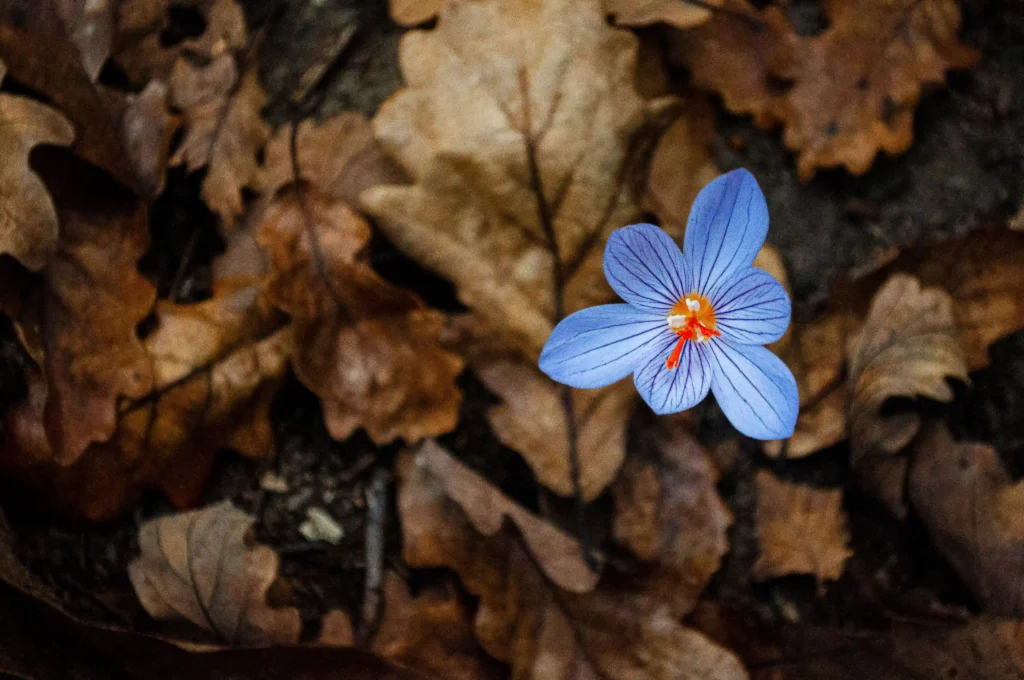
Blue Crocus is one of the very first flowers to bloom after winter. Its cup-shaped blooms open wide in sunlight and close at night. The plant grows from a small corm.
- Scientific name: Crocus vernus
- Flower type: Bulb (corm)
- Colors: Blue, purple, white, yellow
- Bloom season: Late winter to early spring
- Sun: Full sun
- Height: 3–5 inches
- Fragrance: Mild
- Common uses: Lawns, borders, containers
- Meaning: Cheerfulness, youth
Blue Annuals for Containers
These blue flowers bloom for one season and are perfect for pots, hanging baskets, and window boxes.
43. Blue Lobelia
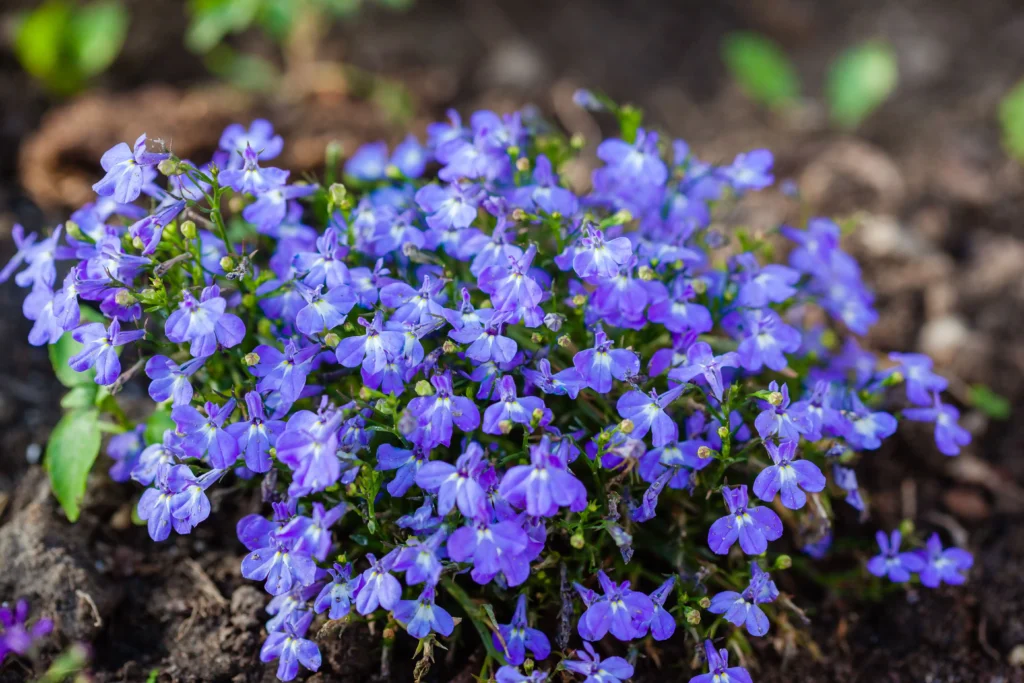
Blue Lobelia forms a mound of tiny, bright blue blooms. It works well spilling over the edges of containers. The plant blooms nonstop through the growing season.
- Scientific name: Lobelia erinus
- Flower type: Annual
- Colors: Blue, purple, white, pink
- Bloom season: Spring to fall
- Sun: Full sun to partial shade
- Height: 4–8 inches
- Fragrance: No
- Common uses: Hanging baskets, containers, borders
- Meaning: Malevolence (in old folklore), distinction
44. Ageratum (Floss Flower)
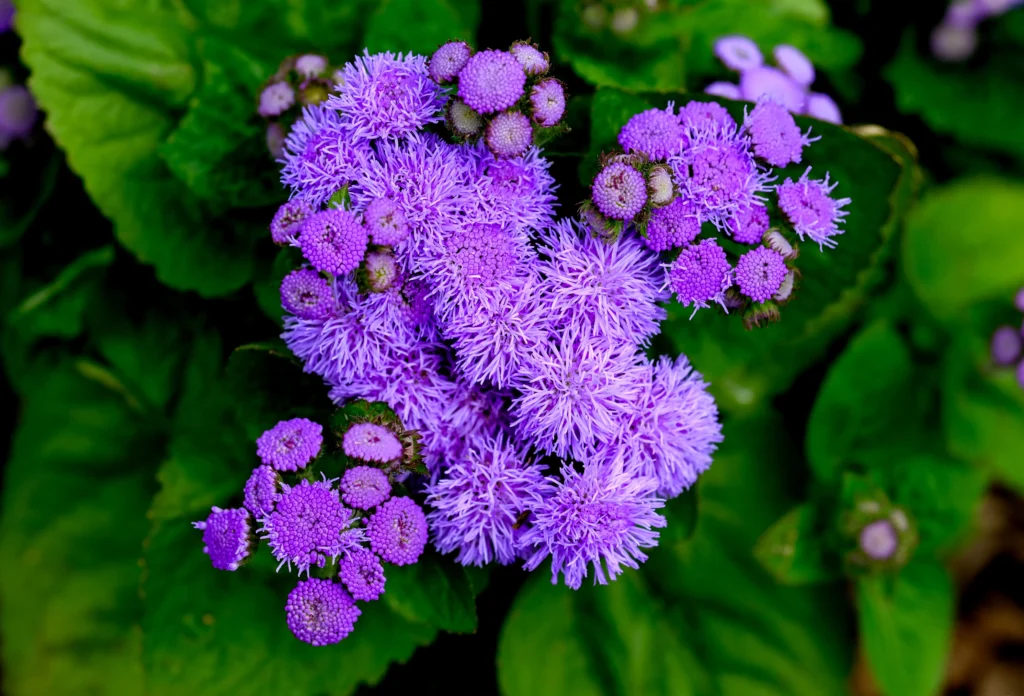
Ageratum produces fluffy, powder-puff blooms in soft blue tones. The plant stays compact and neat all season. It is a favorite for edging garden beds.
- Scientific name: Ageratum houstonianum
- Flower type: Annual
- Colors: Blue, purple, pink, white
- Bloom season: Summer to fall
- Sun: Full sun to partial shade
- Height: 6–24 inches
- Fragrance: No
- Common uses: Edging, containers, borders
- Meaning: Trust, delicate love
45. Blue Petunia
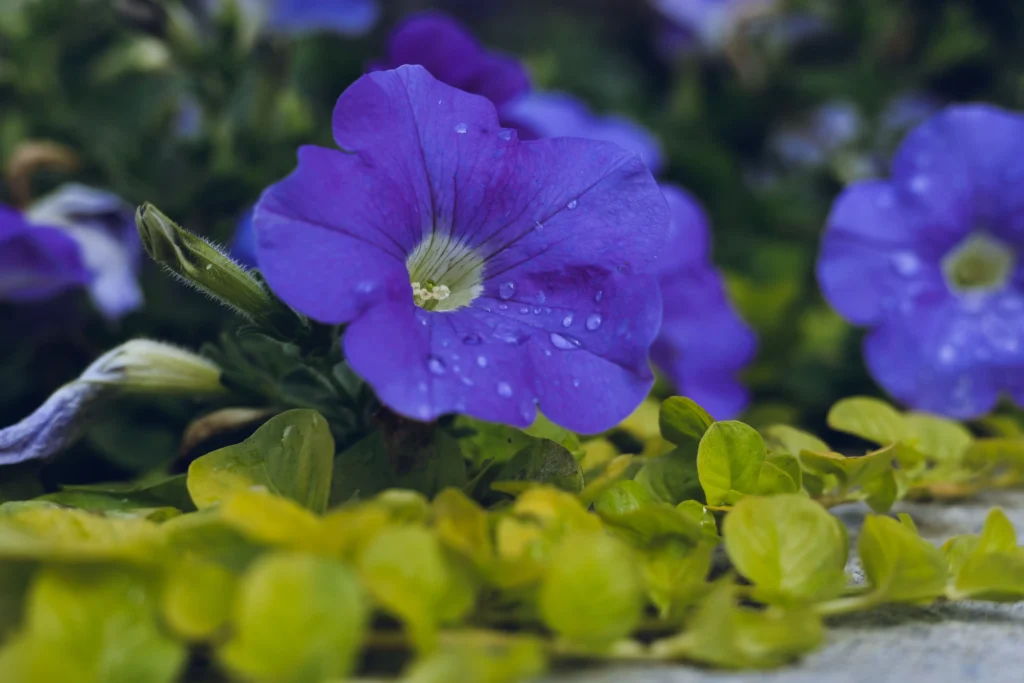
Blue Petunia produces large, trumpet-shaped blooms in shades from soft periwinkle to deep indigo. It flowers heavily all summer with little care. The plant trails nicely from the containers.
- Scientific name: Petunia x hybrida
- Flower type: Annual
- Colors: Blue, purple, pink, white, red
- Bloom season: Spring to fall
- Sun: Full sun
- Height: 6–12 inches
- Fragrance: Mild, sweet
- Common uses: Containers, hanging baskets, borders
- Meaning: Resentment (historically), comfort
46. Mealy Cup Sage
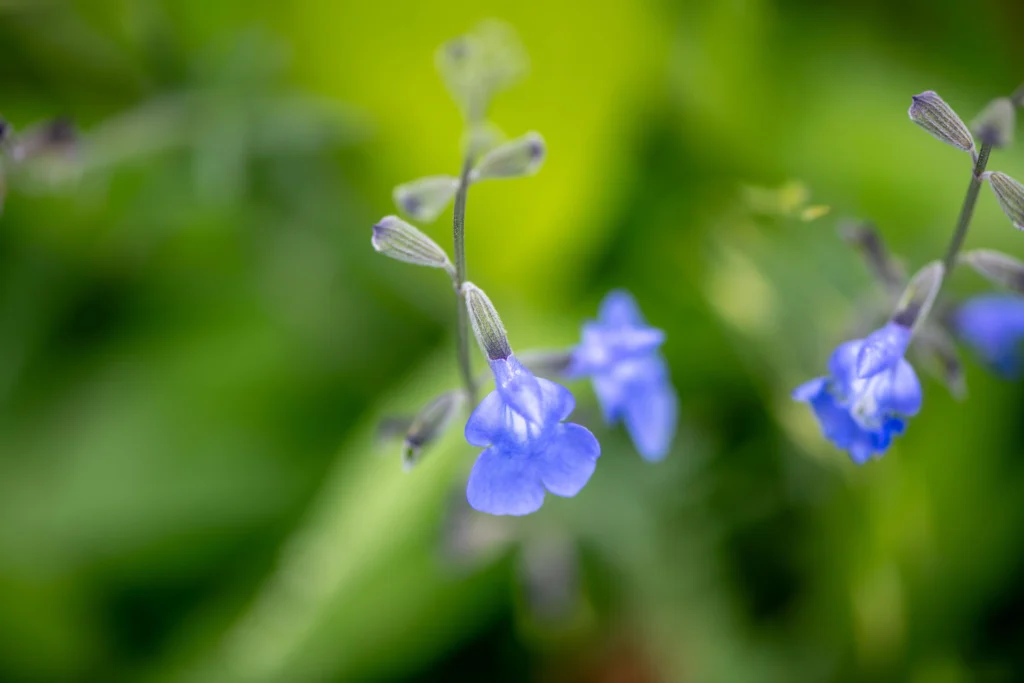
Mealy Cup Sage grows narrow spikes of soft, powdery blue blooms. It attracts bees and hummingbirds all summer. The plant handles heat and drought well.
- Scientific name: Salvia farinacea
- Flower type: Annual (perennial in warm climates)
- Colors: Blue, purple, white
- Bloom season: Summer to fall
- Sun: Full sun
- Height: 1.5–3 feet
- Fragrance: Mild, herbal
- Common uses: Borders, containers, pollinator gardens
- Meaning: Wisdom, calm
47. Browallia
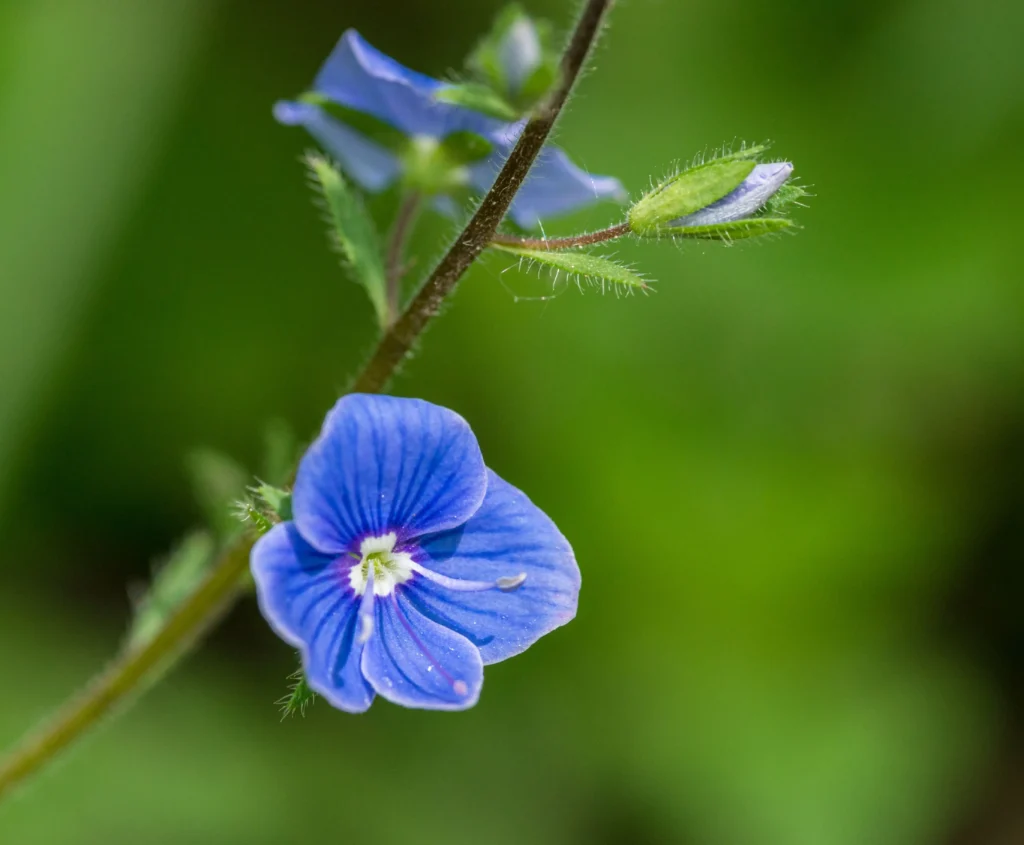
Browallia produces star-shaped blooms in a rich, velvety blue. It thrives in shady spots where many flowers struggle. The plant blooms steadily through summer and into fall.
- Scientific name: Browallia speciosa
- Flower type: Annual
- Colors: Blue, purple, white
- Bloom season: Summer to fall
- Sun: Partial shade
- Height: 1–2 feet
- Fragrance: No
- Common uses: Shade containers, hanging baskets
- Meaning: Modesty
48. Blue Daze
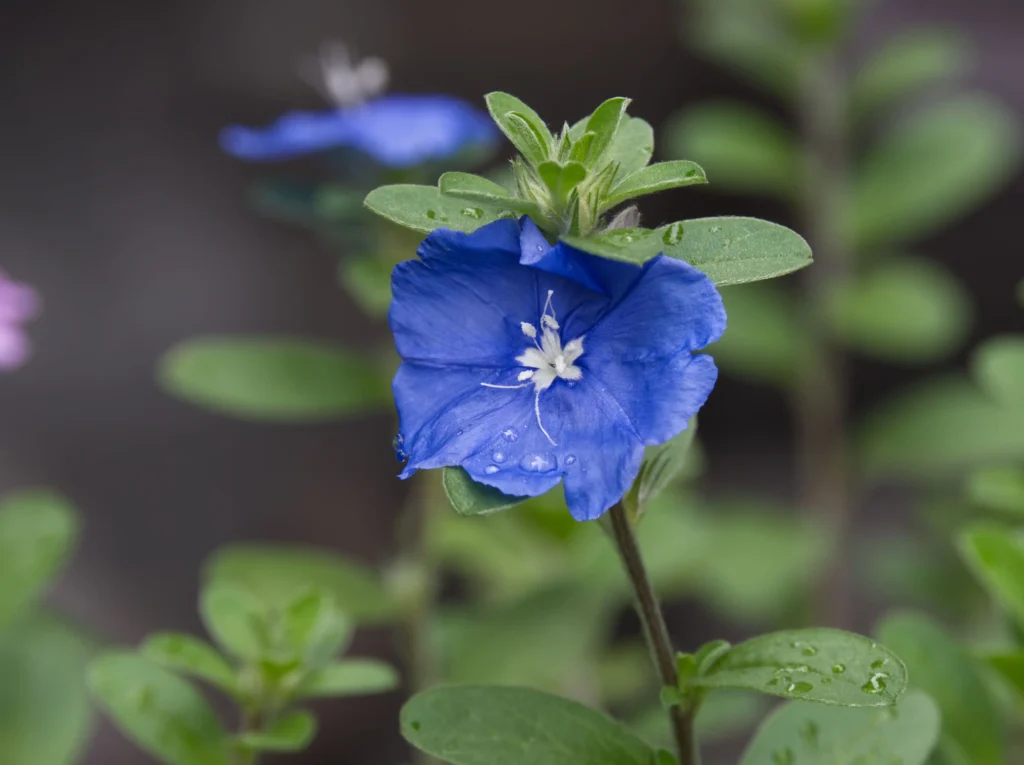
Blue Daze forms a low, spreading mound covered in small, sky-blue blooms. Each flower lasts only a day, but new ones open constantly. It is a reliable ground cover for warm areas.
- Scientific name: Evolvulus glomeratus
- Flower type: Perennial (grown as annual in cool climates)
- Colors: Blue
- Bloom season: Spring to fall
- Sun: Full sun
- Height: 6–12 inches
- Fragrance: No
- Common uses: Ground cover, containers, borders
- Meaning: Everlasting joy
49. Blue Pansy
Blue Pansy has broad, overlapping petals often marked with a dark blotch at the center. It blooms well in cool weather, even with light frost. The flower’s face-like pattern makes it easy to recognize.
- Scientific name: Viola x wittrockiana
- Flower type: Annual (biennial in mild climates)
- Colors: Blue, purple, yellow, white, orange
- Bloom season: Fall to spring (cool season)
- Sun: Full sun to partial shade
- Height: 4–8 inches
- Fragrance: Mild
- Common uses: Containers, borders, edging
- Meaning: Thoughtfulness, remembrance
50. Nigella (Love-in-a-Mist)
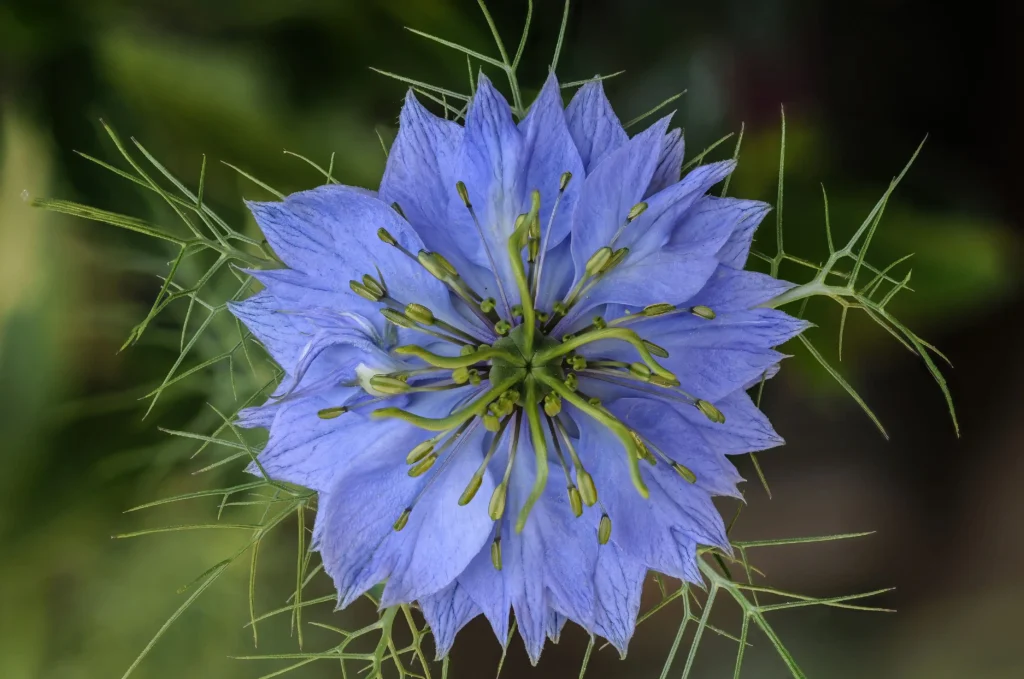
Nigella has delicate blue blooms surrounded by wispy, thread-like foliage, giving it a misty look. After flowering, it forms an unusual, balloon-shaped seed pod. The plant self-seeds each year easily.
- Scientific name: Nigella damascena
- Flower type: Annual
- Colors: Blue, white, pink, purple
- Bloom season: Late spring to summer
- Sun: Full sun
- Height: 1–2 feet
- Fragrance: No
- Common uses: Borders, cut flowers, dried seed pods
- Meaning: Perplexity, mystery
Bonus Blue Favorites
These extra blue flowers are worth knowing for their unique looks or long-standing popularity.
51. Himalayan Blue Poppy
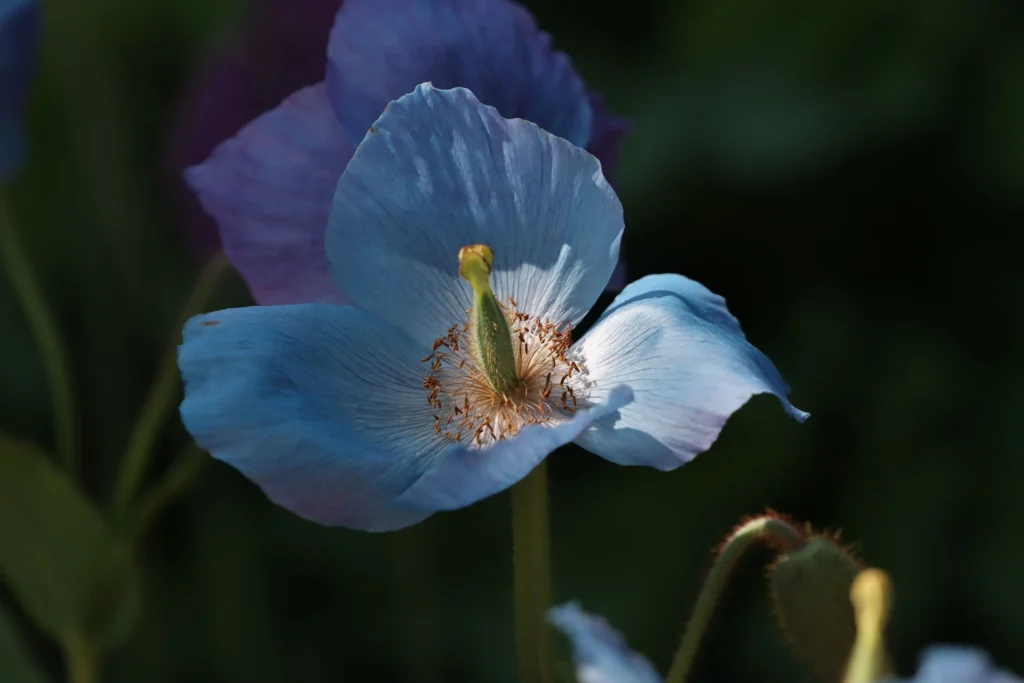
Himalayan Blue Poppy has silky, sky-blue petals around a golden center. It is famous among gardeners for its rare, true-blue color. The plant needs cool, moist conditions to thrive.
- Scientific name: Meconopsis betonicifolia
- Flower type: Perennial
- Colors: Blue
- Bloom season: Late spring to early summer
- Sun: Partial shade
- Height: 2–4 feet
- Fragrance: No
- Common uses: Cool-climate gardens, specimen plantings
- Meaning: Rarity, imagination
52. Blue Sea Holly
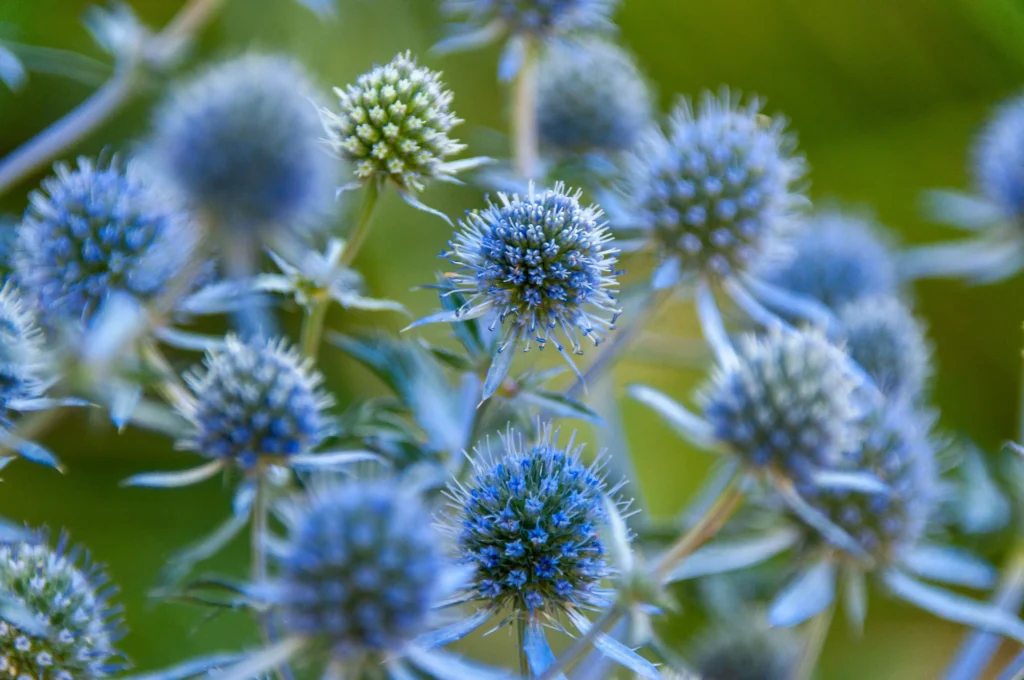
Blue Sea Holly has spiky, silvery-blue bracts around a small, cone-shaped flower head. Its bold texture stands out in any bed. The plant tolerates poor, dry soil with ease.
- Scientific name: Eryngium planum
- Flower type: Perennial
- Colors: Blue, silver-blue
- Bloom season: Summer
- Sun: Full sun
- Height: 2–3 feet
- Fragrance: No
- Common uses: Dried arrangements, borders, coastal gardens
- Meaning: Independence, admiration
53. Blue Globe Thistle
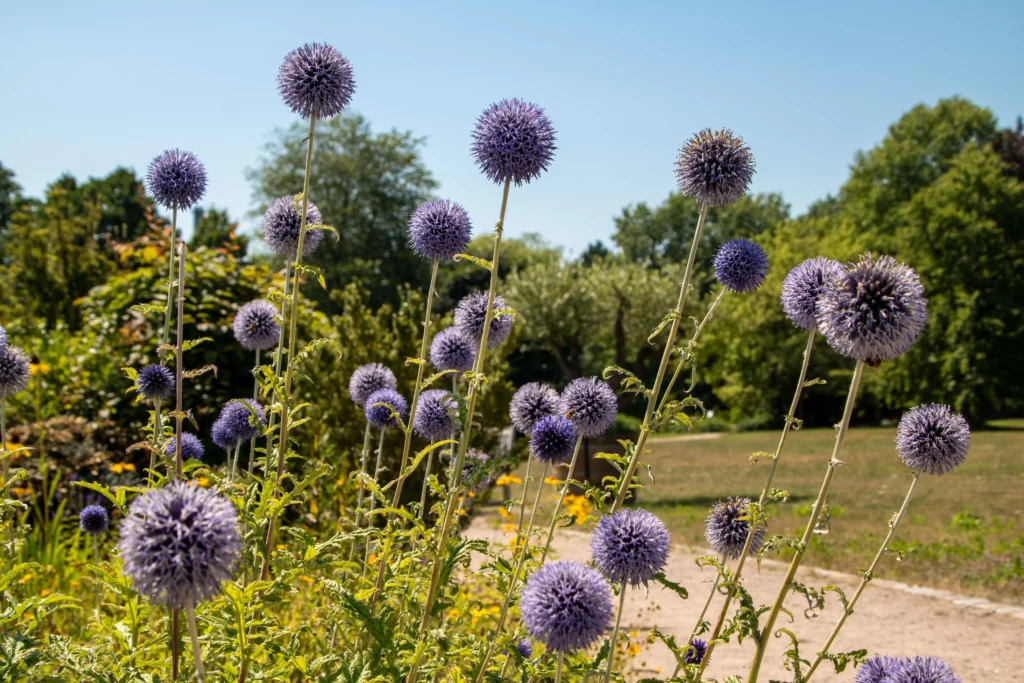
Blue Globe Thistle produces perfectly round, spiky flower heads in steel blue. Bees swarm to its blooms in mid-summer. The plant stands out for its bold, geometric shape.
- Scientific name: Echinops bannaticus
- Flower type: Perennial
- Colors: Blue
- Bloom season: Summer
- Sun: Full sun
- Height: 3–4 feet
- Fragrance: No
- Common uses: Borders, dried arrangements, pollinator gardens
- Meaning: Strength, protection
54. Blue Star Flower (Amsonia)
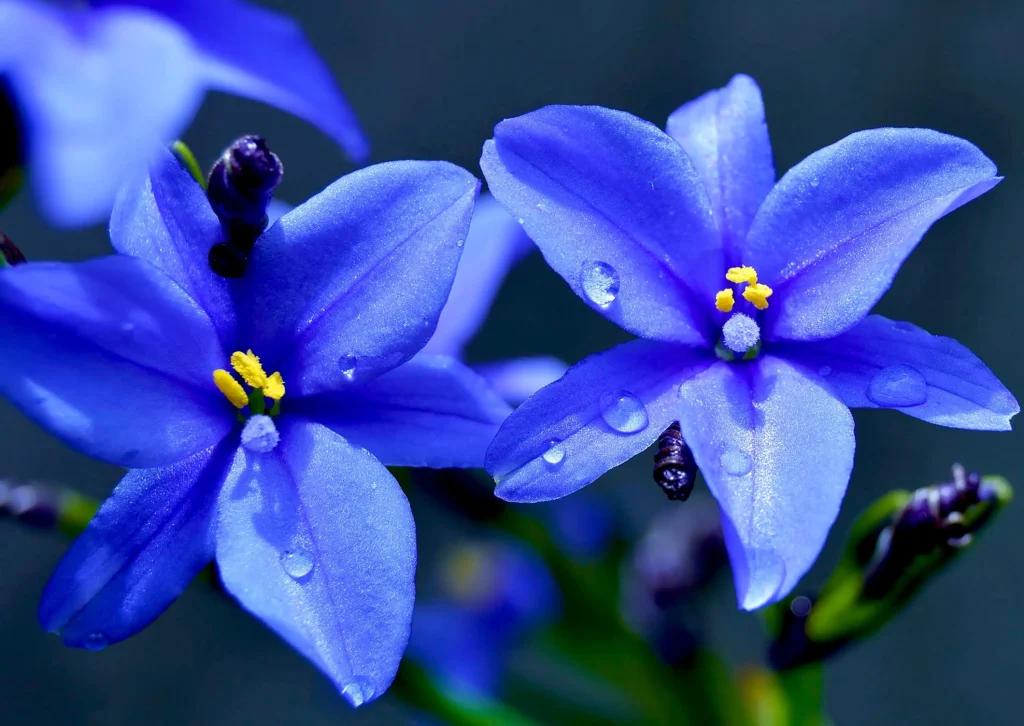
Amsonia produces clusters of small, star-shaped, pale blue blooms in spring. Its foliage turns golden yellow in fall, giving two seasons of interest. The plant is low-care and long-lived.
- Scientific name: Amsonia tabernaemontana
- Flower type: Perennial
- Colors: Blue
- Bloom season: Late spring
- Sun: Full sun to partial shade
- Height: 2–3 feet
- Fragrance: No
- Common uses: Borders, naturalized gardens
- Meaning: Endurance
55. Blue Agapanthus (African Lily)
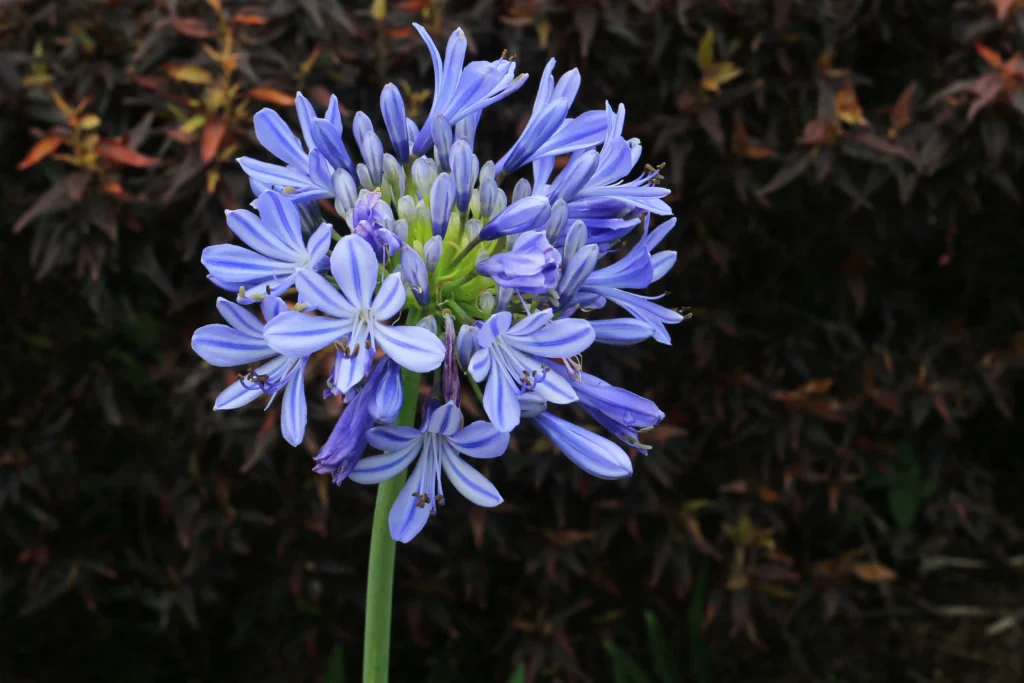
Agapanthus grows tall stems topped with a round cluster of trumpet-shaped blue blooms. It is a striking plant for warm gardens. The flower head can hold over 30 individual blooms.
- Scientific name: Agapanthus africanus
- Flower type: Perennial (bulb-like rhizome)
- Colors: Blue, purple, white
- Bloom season: Summer
- Sun: Full sun
- Height: 2–4 feet
- Fragrance: No
- Common uses: Borders, containers, cut flowers
- Meaning: Love, fertility
56. Blue Cranesbill Geranium
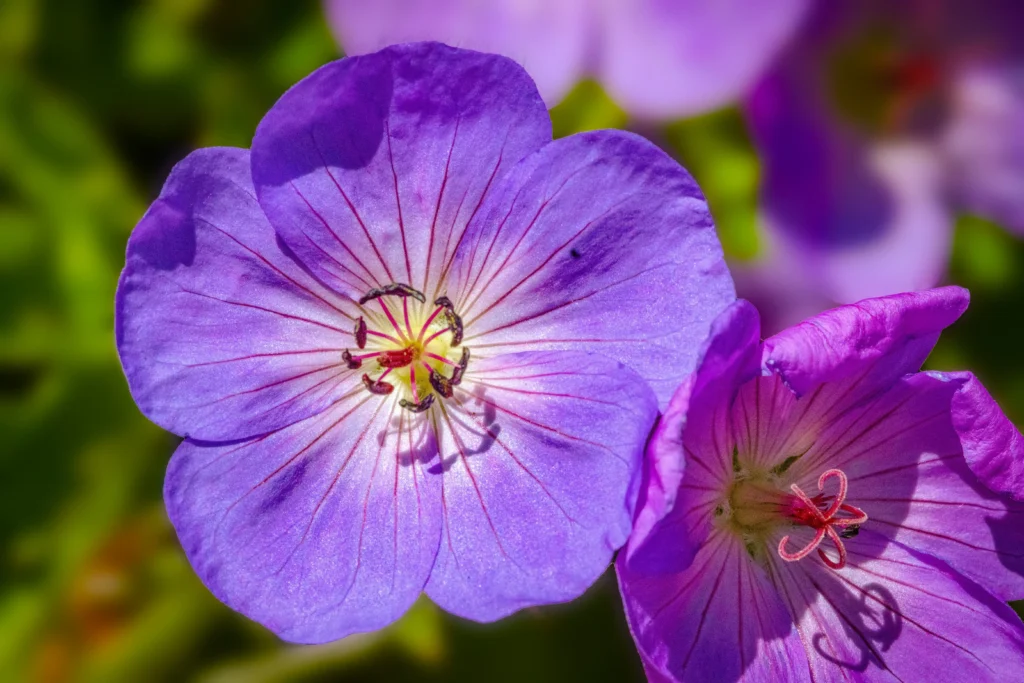
Blue Cranesbill Geranium forms a low, spreading mound of soft blue blooms. It flowers for weeks with very little care. The plant is a true perennial garden staple.
- Scientific name: Geranium ‘Johnson’s Blue’
- Flower type: Perennial
- Colors: Blue, violet-blue
- Bloom season: Late spring to summer
- Sun: Full sun to partial shade
- Height: 1–1.5 feet
- Fragrance: No
- Common uses: Ground cover, borders, rock gardens
- Meaning: True friendship
Frequently Asked Questions About Blue Flowers
1. What flowers are naturally blue?
True blue is rare in nature. Delphinium, Cornflower, Himalayan Blue Poppy, and Siberian Squill are some of the few flowers with a natural, true-blue color. Most other “blue” flowers lean toward purple or violet tones.
2. Why are blue flowers so rare?
Plants struggle to produce true blue pigment. Most blue flowers use a red pigment called anthocyanin, mixed with other compounds, to trick the eye into seeing blue. This is why true blue blooms are harder to find than red, pink, or yellow ones.
3. What is the most popular blue flower?
Hydrangea and Delphinium are among the most popular blue flowers. Both are widely grown, easy to recognize, and often used in gardens and bouquets.
4. What do blue flowers symbolize?
Blue flowers often symbolize trust, peace, calm, and loyalty. In many cultures, they also represent hope, wisdom, and quiet strength.
5. Can I turn a flower blue by changing the soil?
Yes, for some flowers. Hydrangea is the best example — acidic soil makes its blooms turn blue, while alkaline soil shifts them toward pink. Most other flowers do not change color with soil pH.
6. What are the best blue flowers for beginners?
Cornflower, Grape Hyacinth, and Blue Lobelia are easy choices for beginners. They need little care, grow well in most climates, and bloom each season reliably.
7. Which blue flowers bloom the longest?
Blue Daze, Plumbago, and Blue Salvia bloom for many months, often from spring through fall. They are good picks if you want color for most of the growing season.
8. Are blue flowers good for pollinators?
Yes. Bees see blue and purple shades very well, so many blue flowers, like Salvia, Butterfly Bush, and Globe Thistle, attract large numbers of bees and other pollinators.
9. Can blue flowers grow in containers?
Many can. Blue Petunia, Ageratum, Blue Pansy, and Blue Lobelia all grow well in pots and hanging baskets, making them good choices for small spaces or patios.
10. What blue flowers work well in bouquets?
Delphinium, Cornflower, Blue Hydrangea, and Dutch Iris are popular choices for bouquets. They hold their color well after cutting and pair nicely with white or pastel blooms.
Final Thoughts on Growing Blue Flowers
Blue flowers are a wonderful choice for any garden. They pair well with silver foliage, white blooms, and soft pastels. Many types of blue flowers also do well in pots, so you don’t need a big yard to enjoy them.
When choosing blue flowers, think about your climate first. Some, like Jacaranda, need warm weather. Others, like Siberian Squill, need a cold winter to bloom well. Match the flower to your growing zone for the best results.
Across cultures, blue flowers often stand for trust, peace, and loyalty. They make thoughtful gifts for a friend, a new home, or a quiet moment of reflection. Whatever the reason, these 55+ blue flowers offer something for every garden and every story.