

Flowers that start with N represent exceptional plant diversity. This letter contains a remarkable range of specimens. From massive tropical Nerium flowers to tiny Nigella blooms. Hardy perennials that withstand extreme cold appear here. Tender annuals requiring frost protection exist alongside. Bulbs that hide underground until proper conditions emerge. Shrubs with year-round appeal command significant garden space. Herbaceous perennials that return each season reliably. Trees that provide permanent garden structure always. Climbing vines that ascend trellises and walls energetically.
- Quick Answer: Best Flowers That Start with N
- Master Alphabetical List of Flowers That Start With N
- Full Comparison Table
- Garden Favorites
- Indoor Plants & Houseplants
- Florist Favorites
- Rare & Unusual Flowers
- Caution And Toxicity
- Color-Based Groupings
- Life-Cycle Groupings
- Botanical Name Crosswalk
- Flower Meanings & Symbolism
- Decision-Flow Table: Which N Flower Should You Choose?
- Conclusion
- Frequently Asked Questions
The flowers in this guide span continents and climates. Some thrive in scorching heat and drought conditions. Others prefer cool, moist environments and partial shade. Many N flowers attract pollinators reliably all season. Bees, butterflies, and hummingbirds visit them enthusiastically. A smaller group offers night-blooming or fragrant characteristics. Evening gardens gain magical appeal from scented varieties. Cut-flower enthusiasts discover long-lasting N specimens. Arrangers find structural interest in unusual forms. Pet owners identify safe options for curious pets. Collectors seeking rarities find lesser-known N species. Coastal gardeners locate salt-tolerant selections for challenging sites.
This article serves multiple types of gardeners. Home gardeners seeking reliable perennials find proven selections. Hardy selections for each climate zone appear here. Florists exploring commercial cut-flower options have clear guidance. Vase life expectations are stated clearly throughout. Tropical gardeners discover dramatic specimen plants. Shade gardeners find excellent foliage and flowers. Beginning gardeners locate foolproof, forgiving varieties. Experienced collectors hunt for obscure N species. Every reader finds something matching their needs. Organized sections allow quick navigation to information. Tables provide at-a-glance comparisons of characteristics. Prose explanations prevent confusion and support decisions.
Quick Answer: Best Flowers That Start with N
Need immediate recommendations without extensive reading? These eight flowers represent standout choices. Each serves different gardening goals and styles. Narcissus leads this group for spring impact. Early blooming appears before most plants wake. Cheerful yellow and white flowers line the gardens. Northern gardeners especially appreciate this bulb. Reliable performance in zones 3–8 ensures success. Quick multiplication creates masses within a few years.
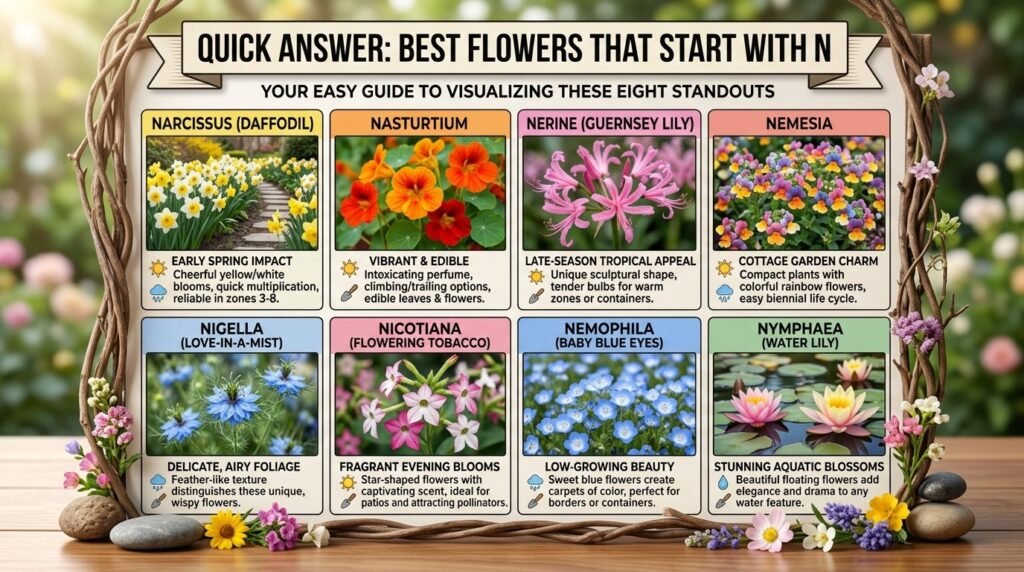
Nasturtium follows as the most vibrant N choice. Funnel-shaped flowers always emit intoxicating perfume. Edible flowers and leaves add culinary appeal. Climbing and trailing varieties suit different spaces. Cool-season gardeners force these annuals indoors. Nerine provides unusual late-season tropical appeal. Spider-like flowers provide sculptural interest prominently. Tender bulbs suit warm zones and containers. Nemesia offers colorful blooms on compact plants. Rainbow-hued flowers create cottage garden charm. A biennial life cycle adds garden intrigue. Nigella (Love-in-a-Mist) provides delicate, airy foliage. Feathery texture distinguishes these unique flowers. Together, these eight showcase the letter N’s range.
Master Alphabetical List of Flowers That Start With N
Flowers beginning with N include common English names. Scientific genus names also appear throughout. Some entries, like narcissus, rely on common usage. Others like Nemesia are known primarily by genus. This list mixes both naming conventions deliberately. Gardeners search for plants using both methods. Both approaches yield valuable N flower options.
- Narcissus (Daffodil)
- Nasturtium (Tropaeolum)
- Nemesia
- Nerine (Spider Lily)
- Nemophila (Baby Blue Eyes)
- Nigella (Love-in-a-Mist)
- Nierembergia (Cup Flower)
- Nutmeg Flower (Nigella)
- Nicotiana (Flowering Tobacco)
- Nodding Onion
- Nepeta (Catmint)
- Nertera (Bead Plant)
- Neottia (Bird’s Nest Orchid)
- Nepenthes (Pitcher Plant)
- Neomartinellia
- Neanthe Bella
- Neoregelia (Bromeliad)
- Neolitsea
- New Zealand Flax (flowers)
- Narrow-Leaf Blue-Eyed Grass
- Narthecium
- Nathafrodite Orchid
- Native Azalea
- Naturalised Buttercup
- Navajoberry
- Nautilocalyx
- Navy Blue Flower
- Neapolitan Cyclamen
- Needle Bush
- Neglected Iris
- Nemesia caerulea
- Nemesia verscolor
- Nemesia Compact Mix
- Nepalese Primrose
- Nepalese Rose
- Nepeta cataria
- Nepeta mussinii
- Nepeta sibirica
- Nerium oleander
- Nertera granadensis
- Netted Iris
- Neume Lily
- Neutral Pink Peony
- Nevada Strawberry
- Nevi Begonia
- New England Aster
- New Jersey Tea
- New York Fern
- Newborn Flower
- Newbould’s Mint
- Newfoundland Orchid
- Newman’s Orchid
- Newport Blue Salvia
- Newquay Red Rose
- Nicandra (Apple of Peru)
- Nicotiana alata
- Nicotiana mutabilis
- Nicotiana sylvestris
- Night-Blooming Cereus
- Night Phlox
- Night Scented Stock
- Nightshade Flowers
- Nimble Flower
- Nine Bark Flower
- Nippon Daisy
Full Comparison Table
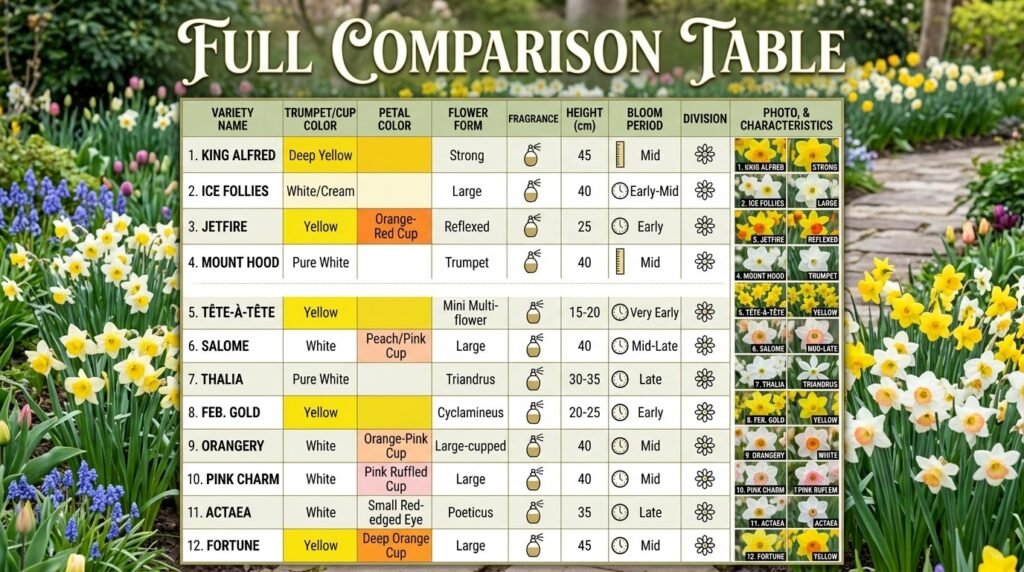
Understanding N flower characteristics streamlines garden selection. This table compares major entry information clearly. Botanical names appear alongside common names precisely. Native geographic range provides climate context. Typical flower colors guide aesthetic decisions. The primary bloom season indicates when flowers appear. Cold hardiness zones help predict survival rates. Toxicity information addresses pet safety completely. This reference prevents purchasing mistakes and frustration.
The toxicity information reflects ASPCA guidance generally. Research from poison control databases confirmed details. This information is not veterinary advice. Consult a veterinarian if pets ingest plants. Many N flowers are rated as non-toxic overall. A smaller group poses concerns for curious pets. Few N flowers rank among the most dangerous. Pet owners should still check before purchasing new specimens.
| Flower | Botanical Name | Native Range | Colors | Bloom Season | Zones | Toxic to Pets |
| Narcissus | Narcissus pseudonarcissus | Mediterranean, Europe | Yellow, white, bi-color | Spring | 3–8 | Mild |
| Nasturtium | Tropaeolum majus | Central America | Red, orange, yellow, pink | Summer–fall | 2–11 | No |
| Nemesia | Nemesia strumosa | South Africa | Pink, blue, yellow, red, white | Spring–summer | 9–11 | No |
| Nerine | Nerine bowdenii | South Africa | Pink, red, white | Late summer–fall | 8–11 | No |
| Nemophila | Nemophila menziesii | North America | Blue, white | Spring–early summer | 3–9 | No |
| Nigella | Nigella damascena | Mediterranean | Blue, pink, white | Summer | 2–11 | No |
| Nierembergia | Nierembergia hippomanica | South America | Blue, purple, white | Summer–fall | 5–10 | No |
| Nicotiana | Nicotiana alata | Brazil | White, pink, red, purple | Summer–fall | 2–11 | Mild |
| Nepeta | Nepeta cataria | Caucasus, Western Asia | Blue, purple, white, pink | Summer | 3–9 | No |
| Nerium | Nerium oleander | Mediterranean | Pink, red, yellow, white | Summer–fall | 9–11 | Yes, severe |
| Nertera | Nertera granadensis | South America | Tiny white | Spring | 9–11 | No |
| Nodding Onion | Allium cernuum | North America | Pink, white, purple | Summer | 3–8 | No |
| Nippon Daisy | Chrysanthemum nipponicum | Japan | White | Fall | 5–9 | No |
| New England Aster | Symphyotrichum novae-angliae | Eastern North America | Purple, pink, white | Fall | 3–8 | No |
| Night-Blooming Cereus | Epiphyllum oxypetalum | Mexico | White, fragrant | Night, summer | 10–12 | No |
| Night Phlox | Zaluzianskya ovata | South Africa | Red, white, fragrant | Night, summer | 8–11 | No |
| Nicandra | Nicandra physalodes | Peru | Blue, white | Summer–fall | 2–11 | Mild |
| New York Fern | Thelypteris noveboracensis | Eastern North America | Greenish | Spring–summer | 4–8 | No |
| New Zealand Flax | Phormium tenax | New Zealand | Red, yellow, burgundy | Spring–summer | 8–10 | No |
| Narrow-Leaf Blue-Eyed Grass | Sisyrinchium angustifolium | North America | Blue, white, yellow | Spring–summer | 3–9 | No |
| Nutmeg Flower | Nigella sativa | Mediterranean | Blue, white, pink | Summer | 2–11 | No |
| Native Azalea | Azalea spp. | Eastern North America | Pink, white, yellow, orange | Spring | 3–9 | Mild |
| Newport Blue Salvia | Salvia nemorosa | Europe | Blue, purple | Summer | 3–9 | No |
| Nippon Bells | Helleborus niger var | Japan | White, pink, green | Winter–spring | 4–9 | Mild |
Narcissus tops the list for spring impact. Early blooming appears when few others flower. Cheerful yellow provides energetic early-season color. Northern gardeners depend on this bulb. Nerine offers continuous late-summer interest consistently. Tender bulbs maintain year-round interest outdoors. Nicotiana reaches impressive height with bold color. A dramatic presence commands attention always.
Garden Favorites
Several N flowers have earned permanent landscape places. These cottage garden staples deserve strong reputations. Narcissus ranks at the top for spring gardeners. This bulb blooms reliably in zones 3–8. Bright yellow and white flowers appear early. Cutting stems for indoor forcing works well. Forcing bulbs brings spring indoors during winter. Fast-growing bulbs multiply within a few years. Dense plantings create an effective visual impact quickly.
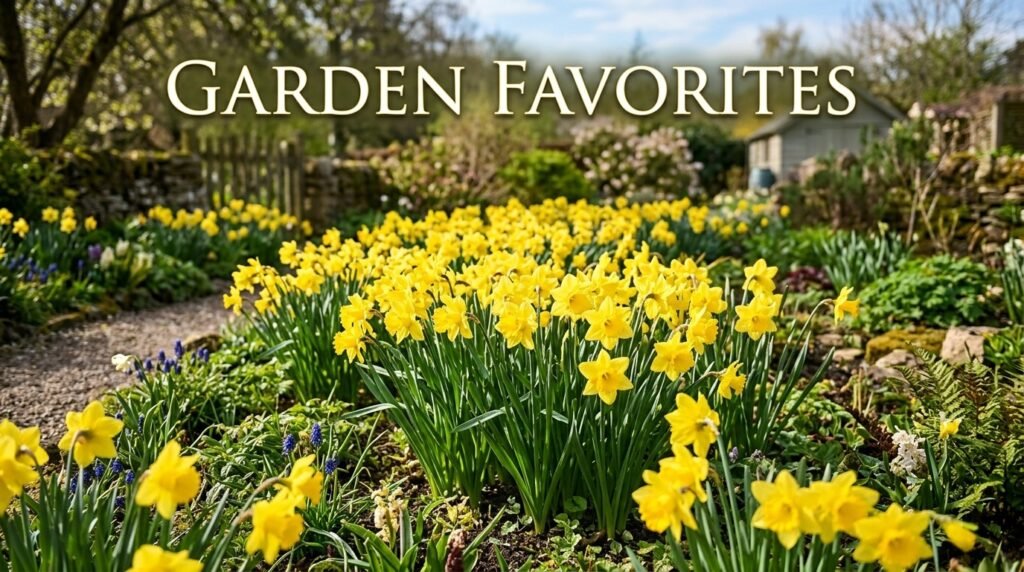
Nasturtium follows as perhaps the most vibrant. Funnel-shaped flowers always emit a sweet fragrance. Hummingbirds visit these flowers enthusiastically all season. Full sun suits most nasturtium varieties. Container growing works in cooler climates. Trailing types cascade from hanging baskets. Nemesia serves gardeners seeking compact color. Tall spikes reach two to three feet. Delicate flowers stack along stems gracefully. Spring-blooming characteristics extend garden interest early. Cool-season preference suits northern gardeners perfectly.
Nigella (Love-in-Mist) provides carpet-like groundcover effects nicely. Feathery foliage covers low plants thickly. Self-seeding ensures continuous color perpetually. Nepeta brings fragrance and delicate beauty. Cutting stems for indoor arrangements brings perfume. Aromatic foliage attracts pollinators throughout the seasons. Native origin ensures easy cultivation always. Nerine provides late-summer color when needed. Spider-like flowers dot the landscape beautifully. Tender bulbs require protection from frost.
- Narcissus – spring impact, fast-multiplying
- Nasturtium – edible flowers, hummingbirds
- Nemesia – compact color, cool season
- Nigella – self-seeding, feathery foliage
- Nerine – late season, tender bulb
Each garden favorite delivers strong seasonal interest. Low maintenance requirements appear once established. Genuine appeal attracts both visitors and pollinators. Most tolerate average soils without complaint. Regular attention extends flowering significantly overall.
Indoor Plants & Houseplants
A carefully selected group of N flowers thrives indoors. These plants transform living spaces with color. Nertera (bead plant) produces dramatic red berries. Tiny white flowers precede berry formation. Tropical origins explain humidity preferences. Bright indirect light sustains these plants indoors. Consistent moisture keeps roots healthy and happy. Nicotiana works well in containers near windows. Trumpet-shaped flowers emit an intoxicating evening fragrance. Large flowers appear in rich colors. Summer blooming brings tropical appeal indoors. Cool, humid conditions support these plants. Successive plantings provide continuous blooms. Night-blooming cereus offers spectacular nocturnal flowers.
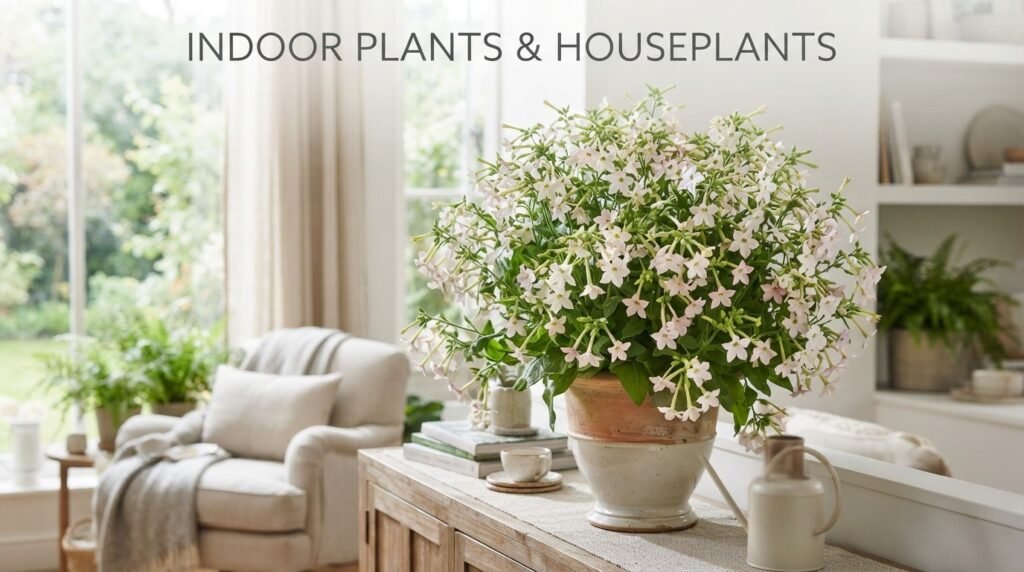
Neoregelia (bromeliad) offers velvety foliage indoors. Rosette growth forms create architectural interest. Colorful center bracts provide year-round appeal. Terrestrial varieties suit container plantings. East- or west-facing windows provide adequate light. Nemesia works on bright sills. Small, delicate flowers bloom continuously. Purple and blue varieties provide cool tones. Consistent watering prevents dormancy periods. Nemesia forces beautifully in pots indoors.
Indoor N flowers require specific attention levels. Light quality affects blooming success significantly. Humidity matters tremendously for tropical species. Consistent watering prevents stress and disease. Air circulation prevents fungal problems effectively.
Florist Favorites
Florists return to several N flowers repeatedly. They value these plants for specific traits. Narcissus ranks among the most popular. Delicate flowers last up to fourteen days. Fragrance adds unexpected value to arrangements. Yellow, white, and bi-color varieties exist. Long vase life extends the arrangement duration. Nerine provides elegant late-season flowers for design. Unusual spider-like form appeals to creative florists. Tropical varieties suit high-end event work. Nasturtium provides whimsical trailing flowers for design. Funnel-shaped blooms create unique visual interest. Edible flowers appeal to garden-to-table trends. Nicotiana contributes evening fragrance to bouquets.
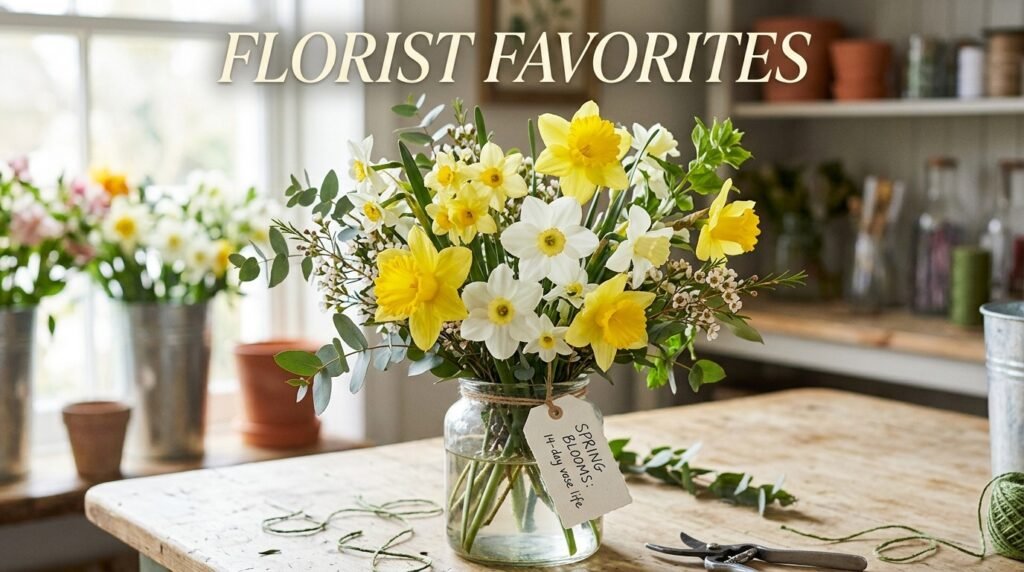
Florists appreciate the commercial reliability. Consistent quality appears season after season. Color reliability makes planning predictable always. Structural integrity prevents bruising during transport. These traits explain repeat ordering patterns. N flowers offer year-round possibilities commercially. Nemesia brings compact, multi-colored flower options.
Rare & Unusual Flowers
Several N flowers appeal to collectors especially. These plants go beyond mainstream nurseries. Nigella papillosa brings unusual seed pods. Pod formations resemble sculptural art pieces. Mediterranean origins explain tender growing needs. Rare in cultivation outside specialized collections. Nierembergia offers delicate, unusual flower forms. Cup-shaped flowers provide distinct visual appeal. South American origins explain tender status. Collectors seek these unusual specimens repeatedly. Night-blooming cereus provides magical evening blooms. Spectacular flowers open only at night. Tropical gardeners treasure this plant. A limited bloom window creates mystique and appeal.
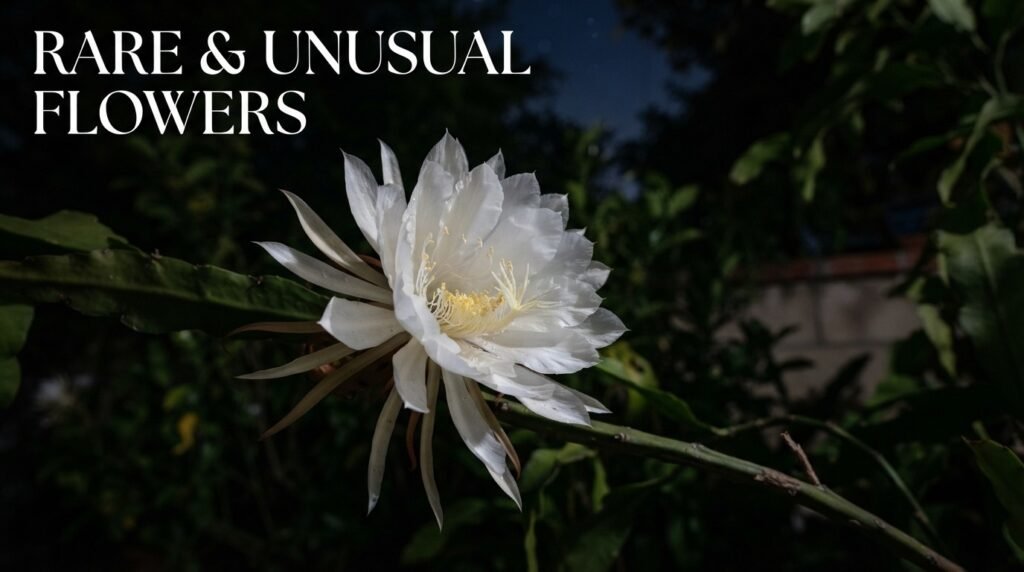
Nodding onion provides delicate architectural appeal. Nodding flower heads create a swaying movement. Native plant origins explain easy cultivation. Collectors appreciate its subtle sophistication. Nippon daisy provides Asian aesthetic appeal. Late-season blooming extends garden color. Japanese origins appeal to specialty gardeners. Nicandra (apple of Peru) offers unusual seed pods. Pod formations resemble miniature lanterns. Tender-annual status limits cultivation. Container growing works in cooler regions. New England aster provides late-season drama. Native wildflower status appeals to gardeners. Fall blooming brings color when needed.
Caution And Toxicity
Most flowers beginning with N are non-toxic. Pets can coexist safely with most choices. Several warrant careful household consideration, though. Nerium (oleander) causes severe reactions in pets. All plant parts contain toxic compounds. Ingestion creates digestive system upset quickly. Vomiting and diarrhea follow consumption. Cardiac effects sometimes occur in severe cases. Narcissus bulbs cause moderate gastrointestinal upset. Ingestion produces stomach distress in pets. Nicotiana contains nicotine-like compounds that affect digestion. Stomach upset develops in sensitive animals. Nicandra contains toxic alkaloids. Ingestion produces nausea and vomiting. Most N flowers rate as non-toxic, though.
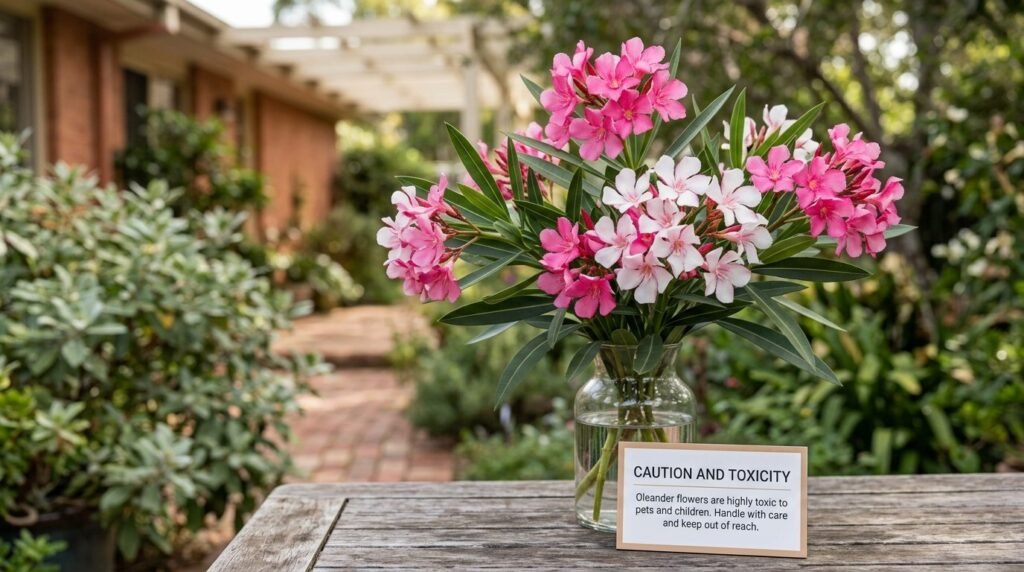
Nemesia and nasturtium prove completely safe. Nigella and nemophila remain non-toxic. Nepeta (catmint) poses no toxicity concerns. Nierembergia remains completely non-toxic always.
Most Toxic N Flowers:
- Nerium – severe, all plant parts toxic
- Narcissus – moderate bulb toxicity concern
- Nicotiana – mild, stomach upset possible
- Nicandra – mild, occasionally causes reactions
Safe N Flowers for Pet Households:
- Nasturtium – completely safe
- Nemesia – completely safe
- Nigella – completely safe
- Nemophila – completely safe
- Nepeta – completely safe
The safest approach involves veterinary consultation. Poison control provides emergency guidance at all times. Introduce new plants only after approval. Keep the ASPCA’s toxic plant list. Quick reference helps when acquiring specimens. Prevention remains better than emergency treatment.
Color-Based Groupings
Gardeners often begin selection by color preference. Refining happens later with other factors. Size and bloom time become secondary considerations. Organizing N flowers by color clarifies choices. This letter offers substantial cool-tone options. Warm hues remain well-represented throughout. Understanding color patterns simplifies bed design significantly.
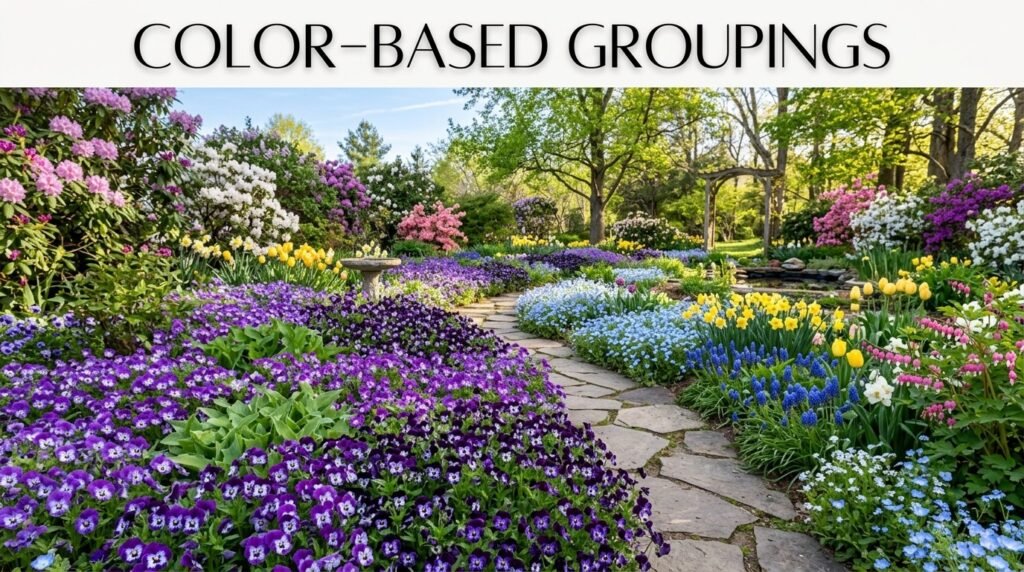
Purple, Blue, and Violet Tones
Nemophila (baby blue eyes) produces these tones. Delicate flowers cover low plants thickly. California origins explain spring preference. Nepeta (catmint) appears in purple cultivar selections. Delicate flowers blanket low plants densely. Ground cover applications suit these plants. Nemesia provides blue-flowering cultivar selections. South African origins explain the tender growing status. Nierembergia offers cup-shaped purple flowers. A delicate, unusual form creates visual interest. Nigella (love-in-a-mist) features purple-tinted varieties. Feathery foliage complements delicate flowers.
Cool-toned N flowers pair with silver foliage. Artemisia and santolina complement each other well. Dusty miller rounds out color schemes. Sophisticated, cohesive beds result from pairing. Photography captures these combinations beautifully. White flowers provide a stark contrast. Drawing eyes becomes effortless with contrast. Visual interest increases through color pairing.
Yellow, Orange, and Warm Tones
Yellow flowers begin with Nasturtium species. Nasturtium provides reliable, cheerful yellow blooms. Architectural height adds garden structure. Nemesia includes yellow-flowering cultivar selections. Smaller flowers work in various settings. Narcissus daffodils provide bright yellow masses. Spring gardens gain sunny early color. Nigella includes yellow seed-pod varieties. Seed pods transition to warm golden tones. Tropical nicotiana offers a warm color selection. Heat tolerance suits hot-summer gardens. Long-lasting flowers extend the arrangement’s value.
Warm N flowers shine in light positioning. The late afternoon sun illuminates flowers beautifully. Evening light creates glowing effects. Positioning matters tremendously for impact. Transition between cool colors occurs smoothly. Foliage softens visual connections naturally. Design coherence improves significantly through placement.
Red and Pink Tones
Red flowers begin with Nerine species. Nerine spider lily produces vibrant red flowers. Large blooms command attention in gardens. Pink flowers appear on many species. Nasturtium pink selections offer delicate charm. Nemesia pink varieties suit cottage gardens. Nicotiana pink selections provide warm tones. These warm shades work well together. Complementary pairings create visual interest. Bold statements emerge from confident color choices.
White and Cream Flowers
White flowers offer freshness and brightness. Narcissus produces pure white selections. Spring beauty brings winter-weary light. Nemophila offers white flower cultivars. Delicate blooms suit cottage gardens. Nigella includes white-flowering varieties. Night gardens gain illumination from whites. Nerine provides white spider lily selections. Elegant forms suit formal gardens always. Nodding onion offers white flower options. Delicate native wildflower appeals to collectors.
Life-Cycle Groupings
Understanding N flower life cycles matters. Annual, perennial, bulb, and shrub types vary. Each determines the replanting frequency throughout time. Garden space occupation duration differs considerably. Long-term commitment levels vary by species. This framework simplifies planning significantly. Preventing frustration through knowledge works well. Expecting one-year plants to return creates disappointment. Purchasing trees that won’t flower for years. These mistakes disappear with proper information.
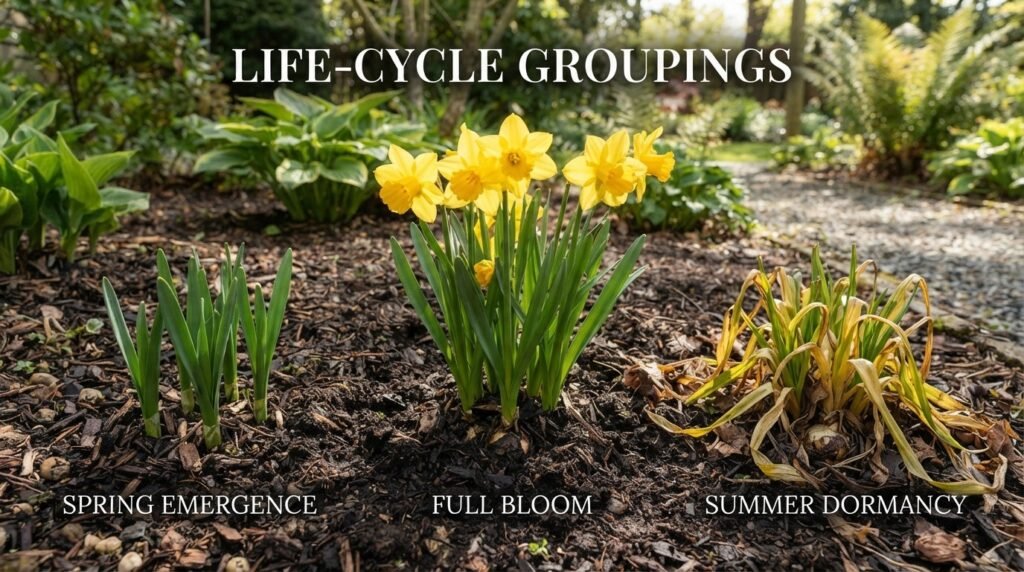
Gardeners seeking low-maintenance beds focus carefully. Perennial and shrub rows are established once. Persist indefinitely with minimal attention. Seasonal change-preferring gardeners enjoy replanting. Complete garden redesigns happen each year. Digging out established plants becomes unnecessary. Annual and tender perennial options suit them.
| Flower | Life Cycle | Replanting Need |
| Narcissus | Bulb | No, perennial bulb |
| Nasturtium | Annual | Yes, replant yearly |
| Nemesia | Annual/tender perennial | Replant or dig/store |
| Nerine | Tender bulb | Dig/store below zone 8 |
| Nemophila | Annual | Yes, replant yearly |
| Nigella | Annual | Yes, replant yearly |
| Nierembergia | Tender perennial | Dig/store or replant |
| Nicotiana | Annual | Yes, replant yearly |
| Nepeta | Perennial | No, returns annually |
| Nerium | Tender shrub | Dig/store below zone 9 |
| Nertera | Tender perennial | Container indoors |
| Nodding Onion | Perennial bulb | No, perennial bulb |
| Nippon Daisy | Perennial | No, returns annually |
| New England Aster | Perennial | No, returns annually |
| Night-Blooming Cereus | Tender perennial | Dig/store or replant |
| Night Phlox | Tender perennial | Dig/store below zone 8 |
| Nicandra | Annual | Yes, replant yearly |
| New Zealand Flax | Tender perennial | Dig/store below zone 8 |
| Narrow-Leaf Blue-Eyed Grass | Perennial | No, returns annually |
| Native Azalea | Deciduous shrub | No, long-lived |
Perennial N flowers like Nepeta return annually. Evergreen foliage maintains interest always. Shrubs like Nerium establish permanently. Providing a framework for decades follows. Bulbs like narcissus perennialize reliably. Annual N flowers need replanting yearly. Tender species require protection in cold zones.
Botanical Name Crosswalk
Botanical names matter tremendously for gardeners. Ordering online requires botanical name precision. Searching nursery websites requires accuracy. Communicating with plant enthusiasts demands clarity. Common names shift constantly across regions. Different plants share similar common names. Botanical names remain consistent worldwide. Precise identification occurs regardless of location. Local naming conventions vary by region.
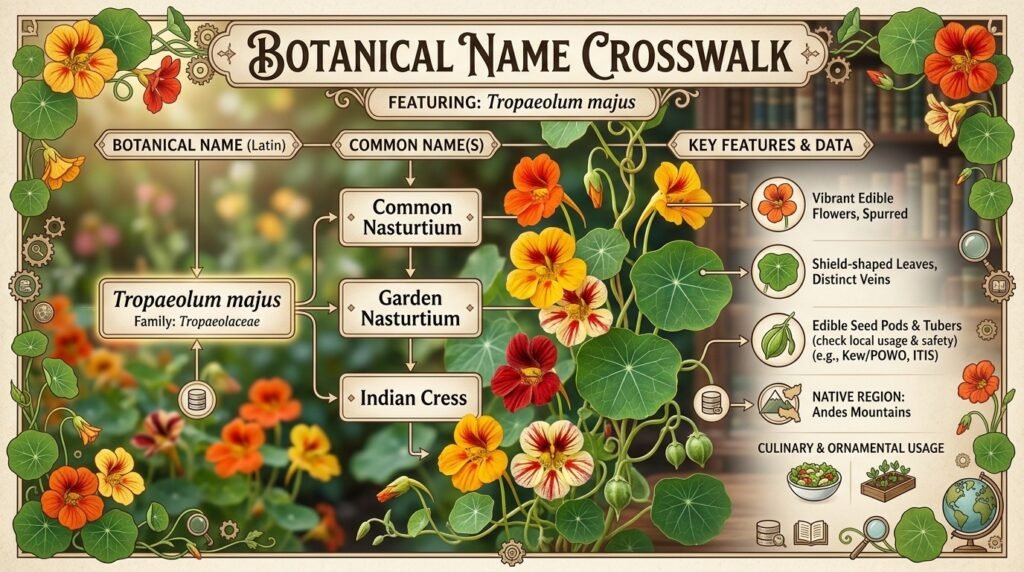
This becomes critical for specific cultivar searches. Expensive plants deserve exact identification. Narcissus species vary by growth form. Some reach 18 inches tall outdoors. Others remain dwarfs for container growing. Wrong species causes disappointment and wasted money. Ordering “Narcissus pseudonarcissus ‘Tête-à-Tête'” yields exact plants. Ordering just “daffodil” may result in confusion. Nerine species differ significantly in requirements. Pink varieties suit different conditions. Late-blooming cultivars extend season length. Knowing the exact species improves success rates.
| Common Name | Botanical Name | Plant Family | Why It Matters |
| Narcissus | Narcissus pseudonarcissus | Amaryllidaceae | Multiple species; Pseudonarcissus is most common |
| Nasturtium | Tropaeolum majus | Tropaeolaceae | Majus is the primary cultivated species |
| Nemesia | Nemesia strumosa | Scrophulariaceae | Strumosa is the most common garden species |
| Nerine | Nerine bowdenii | Amaryllidaceae | Bowdenii is the most cold-hardy species |
| Nemophila | Nemophila menziesii | Hydrophyllaceae | Menziesii is a baby blue-eyed species |
| Nigella | Nigella damascena | Ranunculaceae | Damascena is love-in-a-mist species |
| Nierembergia | Nierembergia hippomanica | Solanaceae | Hippomanica is a cup flower species |
| Nicotiana | Nicotiana alata | Solanaceae | Alata is most fragrant species |
| Nepeta | Nepeta cataria | Lamiaceae | Cataria is catnip; mussinii is catmint |
| Nerium | Nerium oleander | Apocynaceae | Oleander is the only common species |
| Nodding Onion | Allium cernuum | Amaryllidaceae | Cernuum is a native nodding species |
| Nippon Daisy | Chrysanthemum nipponicum | Asteraceae | Nipponicum is a Japanese species |
| New England Aster | Symphyotrichum novae-angliae | Asteraceae | Novae-angliae is a fall-blooming species |
| Night-Blooming Cereus | Epiphyllum oxypetalum | Cactaceae | Oxypetalum is a night-flowering species |
| Nicandra | Nicandra physalodes | Solanaceae | Physalodes is an apple of Peru species |
Notice how multiple species appear in genera. Knowing the exact species improves purchasing success. Nerine species differ from Amaryllis entirely. These require different care approaches. Botanical accuracy prevents expensive mistakes.
Flower Meanings & Symbolism
Flowers carry symbolic weight across cultures. Centuries of meaning shift constantly over time. Meaning often ties to color or origin. Historical usage shapes symbolic interpretation. N flowers contribute important symbolic traditions. The broader language of flowers includes meanings.
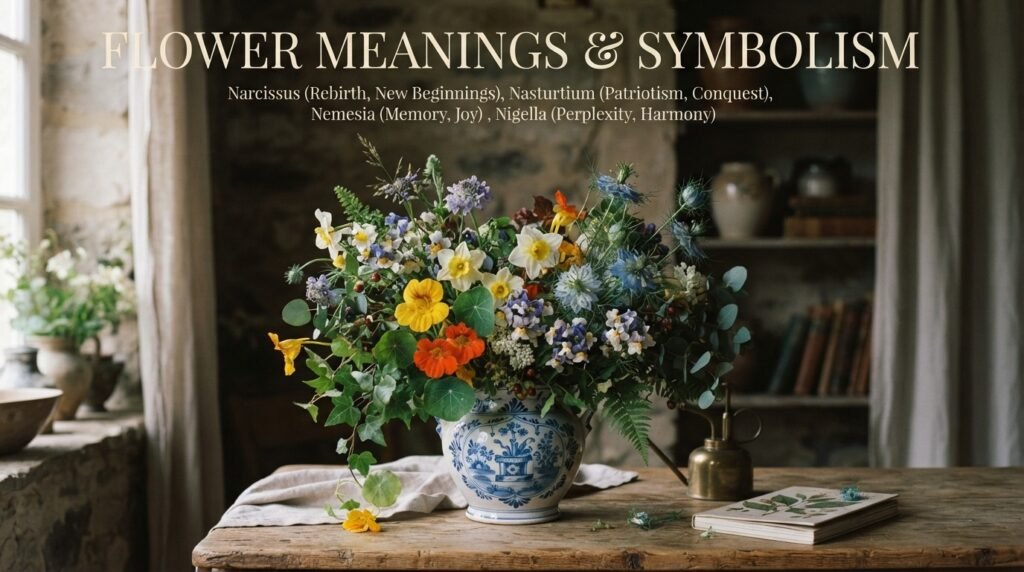
Narcissus symbolizes hope and anticipation. Early blooming appears when winter ends. Rebirth and new beginnings accompany flowers. The yellow color reinforces cheerful, hopeful meanings. Spring excitement builds through narcissus blooming. Gardeners plant this for symbolic reasons. Yellow brightness suggests optimistic perspectives.
Nasturtium represents friendship and affection warmly. Funnel-shaped flowers embody gentle sophistication. Tropical origins link this to exotic beauty. The unusual form makes this symbolically unique. Modern gardeners appreciate warm meanings. Cheerfulness and edible appeal resonate. Nasturtium carries connotations of refined taste.
Nemesia represents grace and playfulness together. Delicate multi-colored blooms suggest spontaneity. South African origins inspire adventure themes. Unusual color combinations add visual interest. Collectors appreciate this meaning intensely. Rainbow hues suggest hope and possibility.
Nigella (love-in-a-mist) symbolizes puzzlement and perplexity. Feathery foliage creates a mysterious appearance. Hidden flowers suggest secret beauty. Victorian meanings emphasize hidden depths. Modern gardeners appreciate romantic connotations. Delicate nature suggests gentleness.
Nerine represents abundance and prosperity. Spider-like flowers suggest delicate strength. Late-blooming characteristics extend garden abundance. Tropical origins link to exotic richness. South African symbolism emphasizes natural wealth.
Nepeta (catmint) represents grace and virtue. Aromatic properties suggest healing benefits. Ancient traditions honored this plant. Lavender-blue color conveys calm and peace. Cottage garden connections deepen symbolic meaning.
Decision-Flow Table: Which N Flower Should You Choose?
Selecting the right N flower depends on goals. Specific gardening objectives should guide choices. Climate matters tremendously for plant selection. Available space determines which species suit. Maintenance preferences affect long-term satisfaction. Appearance shouldn’t be the only consideration. The table below matches gardening objectives. No flowers fit specific needs and situations.
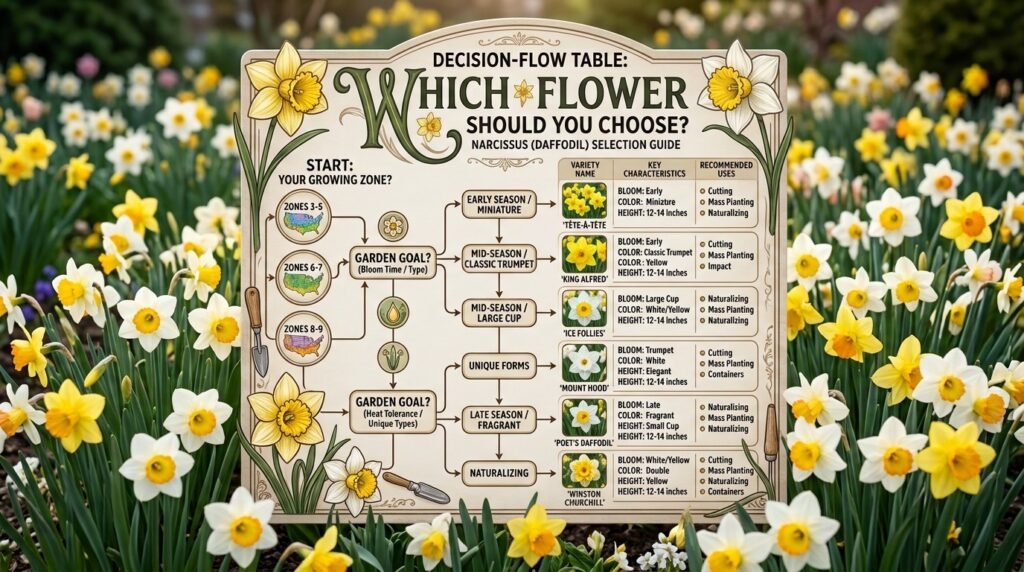
Understanding this approach prevents impulse purchases. Actual situations require appropriate plant choices. Zone 2 gardeners cannot grow nerium. Tropical specimens always need warm climates. Beautiful flowers don’t override climate limitations. Gardeners seeking four-foot shrubs need choices. Narcissus suits perennial bulb needs. Nemesia and nasturtium have annual roles. Climbing varieties ascend trellises efficiently.
| Your Goal | Recommended N Flower | Why This Works |
| Early spring color | Narcissus | Blooms before most plants emerge |
| Edible cut flowers | Nasturtium | Petals suit salads and garnishes |
| Compact container beauty | Nemesia | Reaches only 12–18 inches tall |
| Late-season blooming | Nerine | Flowers appear September through November |
| Groundcover carpet | Nemophila | Spreads densely, self-seeds readily |
| Cut-flower arrangements | Narcissus | Lasts 14 days in clean water |
| Tropical specimen | Nerium | Year-round blooming in warm zones |
| Shade-garden interest | Nepeta | Partial shade suits this plant |
| Evening fragrance | Nicotiana | Sweet scent emerges at dusk |
| Native plant gardening | Nodding Onion | Eastern North America native |
This table works best as a conversation starter. Multiple N flowers might satisfy a single goal. Choosing among them depends on additional factors. Color preference, available space, maintenance comfort. All influence final selection decisions. Use this guide as a starting point only.
Conclusion
Flowers that start with N deserve garden placement. Nearly every garden benefits from N flowers. Establishing the first perennial beds includes N species. Refining existing collections utilizes N diversity. From ubiquitous narcissus to rare nodding onion. Experienced gardeners trust nasturtium consistently. Patient collectors reward themselves with rarities. This letter offers genuine diversity throughout. Proven performance characterizes most N flowers. Hardy perennials persist for decades easily. Minimal care requirements appeal to gardeners. Tender annuals bring exotic flair seasonally. Single-season interest justifies planting them. Pet owners find safe N flower options. Narcissus and nemesia add color safely. Gardeners without pets explore unusual varieties. Use the tables and sections as references. Consulting them ensures correct flower selection. Specific garden niche requirements get satisfied. Beautiful flowers that start with N transform spaces.
Frequently Asked Questions
What is the most commonly grown flower that starts with N?
Narcissus ranks as the most widely cultivated N flower. Found in nearly every perennial garden center nationwide. Multiple cultivars ensure variety selection always. Climate zones 3–8 suit most varieties well.
Which flowers that start with N grow in shade?
Nepeta (catmint) tolerates shade exceptionally well. Nemophila performs acceptably in partial shade. Nigella thrives in dappled shade conditions. Nemesia requires afternoon shade in hot climates.
Are flowers that start with N safe for pets?
Narcissus, nasturtium, and nemesia remain relatively safe. Nigella and nemophila prove completely non-toxic. Nepeta poses no toxicity concerns whatsoever. Nerium causes severe reactions in pets. Nicotiana contains mild toxicity risks. Keep Nerium away from curious pets.
What flowers that start with N bloom in spring?
Narcissus blooms in early spring consistently. Nemophila appears as a spring annual reliably. Nemesia flowers spring into early summer. Nierembergia blooms from spring into the summer months. Nodding onion emerges in late spring.
Which N flowers attract pollinators best?
Narcissus attracts early-season bees enthusiastically. Nasturtium reliably brings hummingbirds every year. Nepeta attracts bees throughout the blooming season. Nigella attracts bees to delicate flowers. Nerine attracts late-season butterflies consistently.
Can I grow Nerium in cold climates?
Nerium grows outdoors only in zones 9+. Container cultivation works in cooler zones. Bring indoors before the first frost appears. Bright south-facing windows sustain growth indoors. Return outside after the last spring frost.
How long do cut N flowers last in vases?
Narcissus lasts up to fourteen days fresh. Nasturtium lasts approximately five to seven days. Nemesia lasts about one to two weeks. Nerine lasts approximately ten to fourteen days. Nigella seed pods last indefinitely when dried.
Which N flowers can I dry for arrangements?
Nigella dries beautifully and retains color wonderfully. Nasturtium seed pods dry for arrangements. Narcissus flowers dry for specialty arrangements. Nemophila flowers dry for pressed flowers. Seed pods of nigella create lasting interest.
Where should I plant N flowers in the garden?
Narcissus requires full sun consistently throughout. Nasturtium prefers full sun to part shade. Nemesia prefers morning sun with afternoon shade. Nigella thrives in full sun exposure. Nepeta prefers full sun to partial shade.