

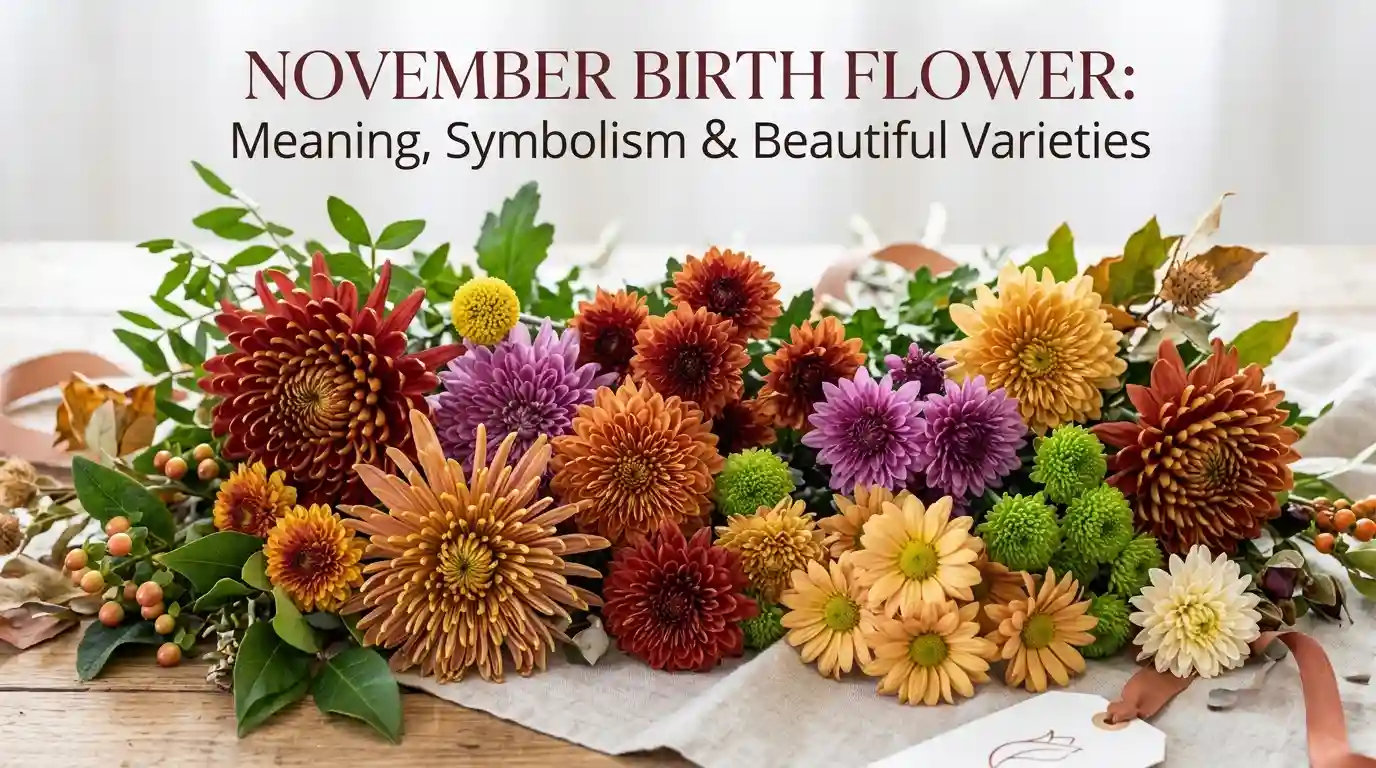
November settles in cool and golden. Leaves fall. The garden quiets down. And right when most blooms have faded, the November birth flower steps in to close out the year with real style.
- What Is a Birth Flower?
- November’s Birth Flower(s): Overview
- History and Origin of Chrysanthemum
- History and Origin of Peony
- Meaning and Symbolism of Chrysanthemum
- Meaning and Symbolism of Peony
- Color Varieties and Their Meanings (Both Flowers)
- How to Grow Chrysanthemums
- How to Grow Peony
- Gift Ideas Using November’s Birth Flowers
- Famous People Born in November and Their Connection to the Flowers
- November Birthstone (Brief Mention)
- Fun Facts About Chrysanthemum and Peony
- Conclusion
- FAQs
Quick Answer: November actually has two birth flowers. The Chrysanthemum is the primary birth flower for November. It stands for joy, optimism, and quiet resilience. The Peony is the secondary November birth flower. It represents honor, romance, and good fortune. Together, they capture what November feels like — steady cheer paired with quiet elegance, even as the year winds down.
If you were born in November, both of these flowers belong to you. Here’s what makes each one worth knowing.
What Is a Birth Flower?
A birth flower is a bloom assigned to your birth month, the same way a birthstone is. Each month has its own flower, and quite a few months, November included, have two.
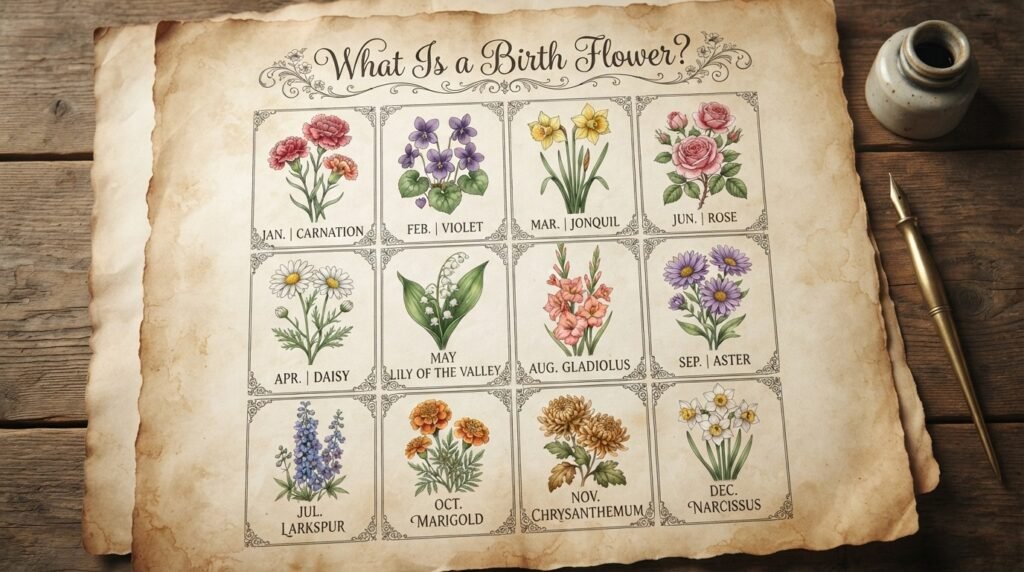
This tradition stretches back centuries. It grew out of old Roman flower festivals and, later, Victorian-era “flower language.” During the Victorian period, people used specific blooms to send messages that felt too personal to say out loud. Every flower carried its own coded meaning.
Over time, different regions settled on their own flower calendars. Many of those lists eventually merged, which is exactly why several months, including November, ended up with two recognized flowers instead of one. Today, the tradition lives on through florists, jewelers, and thoughtful gift-givers. Choosing someone’s birth flower turns an ordinary bouquet into something personal.
November’s Birth Flower(s): Overview
November brings together two very different blooms. One is bold, layered, and built for cool weather. The other is lush, fragrant, and famously hard to find this time of year.
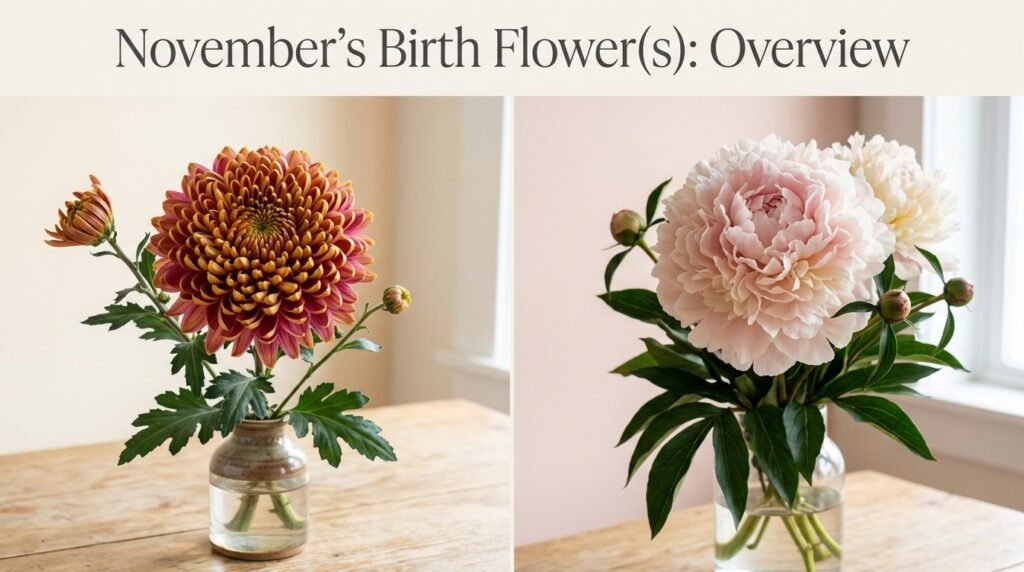
The Chrysanthemum (Primary)
The botanical name for the November flower is Chrysanthemum x morifolium. Its name comes from the Greek words for “gold” and “flower,” a nod to the wild yellow blooms that first carried the name. Modern chrysanthemums, often just called “mums,” come in tightly packed globes, spidery sprays, and everything in between.
Chrysanthemums thrive in cooler autumn conditions, blooming right when shorter days signal most other flowers to fade. Their sturdy stems and dense petal structure give them a strong, dependable presence in any arrangement. They also come in an enormous range of colors, from deep burgundy to bright white.
The Peony (Secondary)
The botanical name for the secondary November flower is Paeonia. Its blooms are famously full, layered, and fragrant, often described as looking almost too lush to be real. A single peony flower can carry dozens of tightly packed petals in one rounded bloom.
Peonies naturally flower in late spring, not November, which makes their birth-month placement a little unusual. Florists work around this by sourcing peonies from growers in the Southern Hemisphere, where the seasons run opposite to ours. Their rich fragrance and full form have made them a favorite for centuries despite the seasonal mismatch.
History and Origin of Chrysanthemum
Chrysanthemums have one of the longest cultivation histories of any garden flower, stretching back more than 3,000 years in China. Ancient Chinese texts mention the flower as both a decorative plant and an herbal remedy, valued for its beauty as much as its practical use.
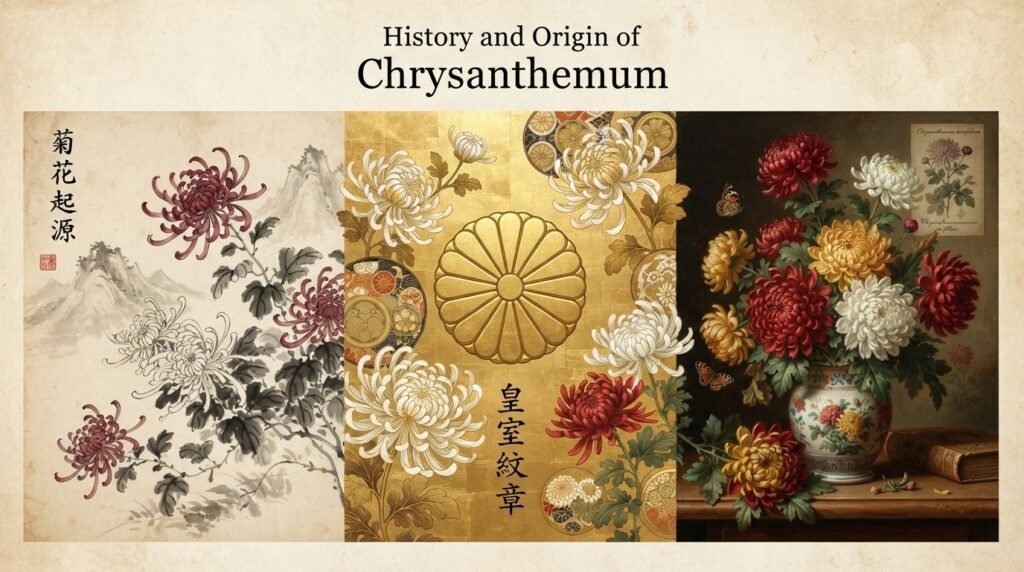
The flower eventually made its way to Japan, where it took on even deeper cultural weight. Japan’s imperial family adopted the chrysanthemum as its official symbol, and the country’s throne is still formally known as the Chrysanthemum Throne today. A stylized chrysanthemum appears on the Japanese imperial seal to this day.
Chrysanthemums reached Europe in the 17th century, where their meaning shifted depending on the region. In France, Belgium, and parts of Southern Europe, the flower became closely tied to remembrance. It’s traditionally placed on graves during All Saints’ Day observances in early November, a custom still widely followed today.
That timing, right at the start of November, along with the flower’s late-season bloom, cemented its place as the month’s primary birth flower.
History and Origin of Peony
Peonies carry a history nearly as long as the chrysanthemum’s, with cultivation records stretching back over 2,000 years. The flower’s name traces back to Greek mythology, honoring Paeon, a student of Asclepius, the Greek god of medicine and healing.
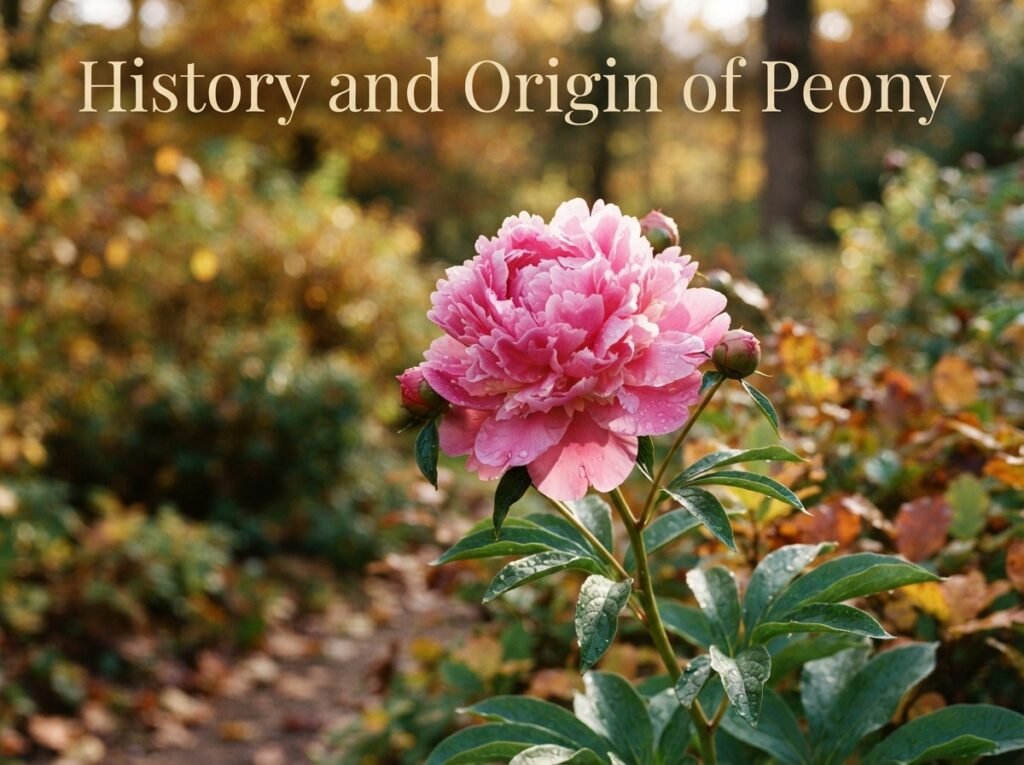
In China, the peony earned a title few other flowers can claim: the “King of Flowers.” During certain imperial dynasties, peonies were considered so prestigious that only the emperor was permitted to grow them. Ordinary citizens caught cultivating the flower could face serious punishment, a detail that shows just how much status the bloom carried.
European interest in peonies grew steadily from the 18th century onward, as traders and botanists brought new varieties back from Asia. The flower’s rich fragrance and dramatic, full form made it an instant favorite among European gardeners and florists alike.
Its link to November comes less from bloom timing and more from older Victorian and British flower calendars, which paired it with the chrysanthemum as a secondary November bloom. Despite naturally flowering in late spring, the peony’s symbolic weight earned it a permanent spot on the November list.
Meaning and Symbolism of Chrysanthemum
Chrysanthemum symbolism shifts depending on culture, but a few core meanings show up again and again. Here’s what it commonly represents:
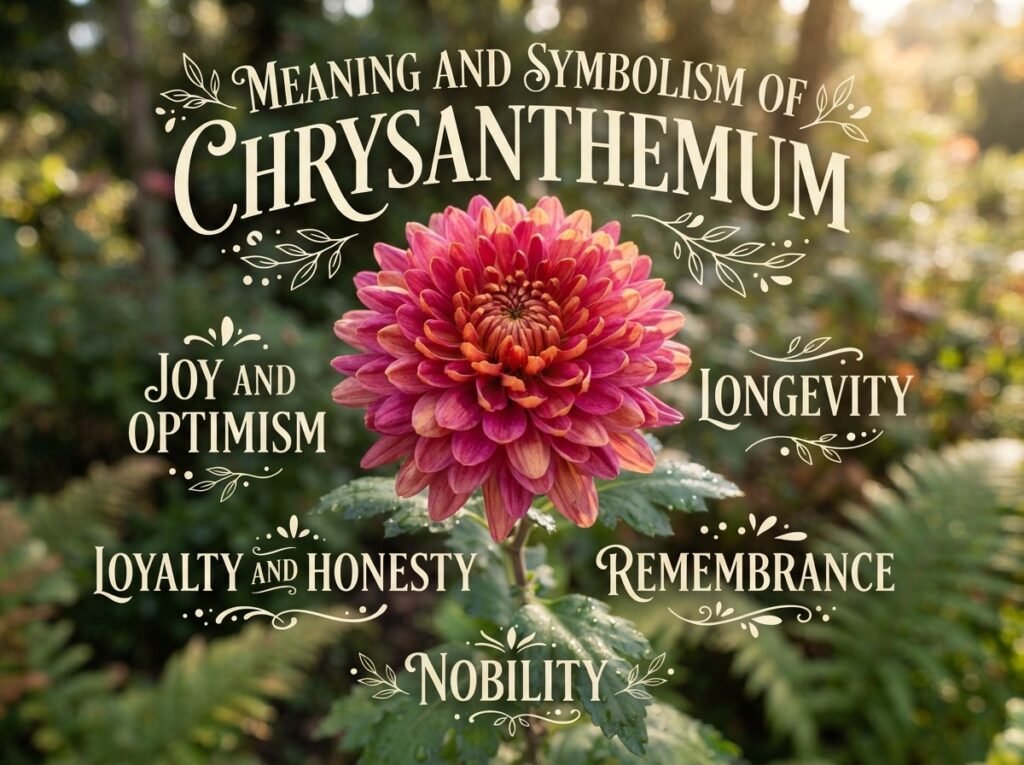
- Joy and optimism — its cheerful, layered blooms carry a naturally upbeat feeling
- Longevity — in Chinese and Japanese tradition, it’s closely tied to long life and good health
- Loyalty and honesty — a meaning that grew out of Victorian-era flower language
- Remembrance — especially in France, Belgium, and Italy, where it’s placed on graves
- Nobility — reinforced by its long-standing role in Japan’s imperial symbolism
Meaning and Symbolism of Peony
Peony symbolism leans warmer and more personal, especially around relationships. Here’s what it commonly represents:
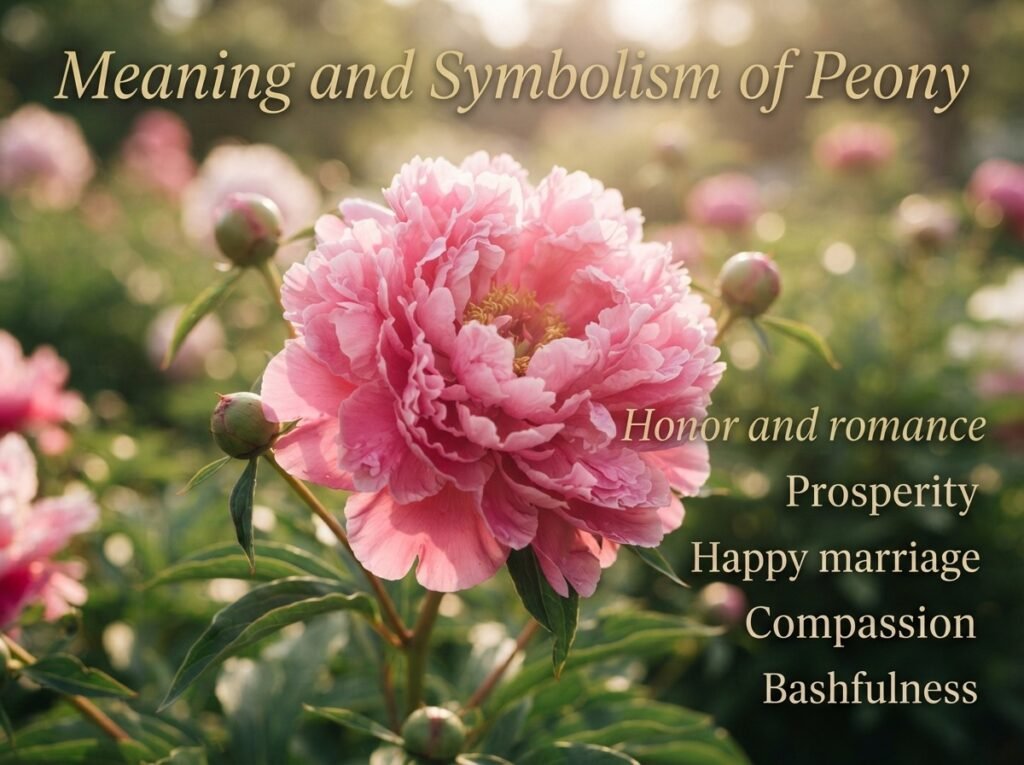
- Honor and romance — a meaning shaped by its long history in Chinese imperial culture
- Prosperity and good fortune — tied to its status as the “King of Flowers”
- Happy marriage — a common theme in wedding bouquets and anniversary gifts
- Compassion — linked to the flower’s namesake, Paeon, and his role as a healer
- Bashfulness — an older, gentler meaning tied to the way the bloom’s petals curl inward
Think of these two November flowers as a fireside conversation — the chrysanthemum is the steady, familiar voice that carries the room, while the peony is the quieter guest whose presence still lingers after they’ve gone.
Color Varieties and Their Meanings (Both Flowers)
Both November flowers come in a wide range of colors, and each shade adds its own layer of meaning. The table below breaks down the most common color varieties for the chrysanthemum and the peony side by side.
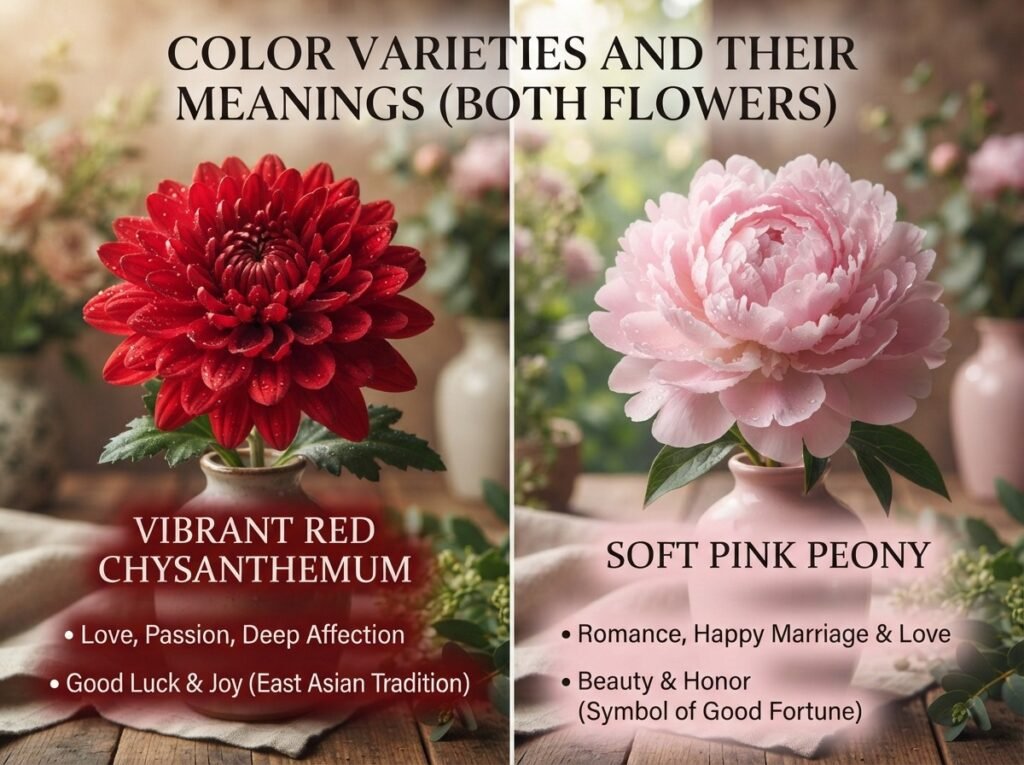
| Flower | Color | Meaning |
| Chrysanthemum | Red | Love and deep passion |
| Chrysanthemum | White | Loyalty and honesty |
| Chrysanthemum | Yellow | Cheerfulness, sometimes gentle sorrow in older Victorian use |
| Chrysanthemum | Purple | Wishes for wellness and good health |
| Peony | Pink | Romance and a happy marriage |
| Peony | Red | Honor and passionate love |
| Peony | White | Purity and gentle bashfulness |
| Peony | Yellow (rare) | Good fortune and wealth |
Red shows up as a strong, shared color between both flowers, though the emotional weight lands a little differently in each case. Chrysanthemum’s red leans toward simple, direct love, while peony’s red carries an added layer of honor and formality. Yellow tells the more interesting story here, since Victorian tradition once used yellow chrysanthemums to hint at slighted feelings, a meaning that’s almost entirely faded from modern use.
How to Grow Chrysanthemums
Chrysanthemums are a manageable, rewarding perennial for most home gardeners.
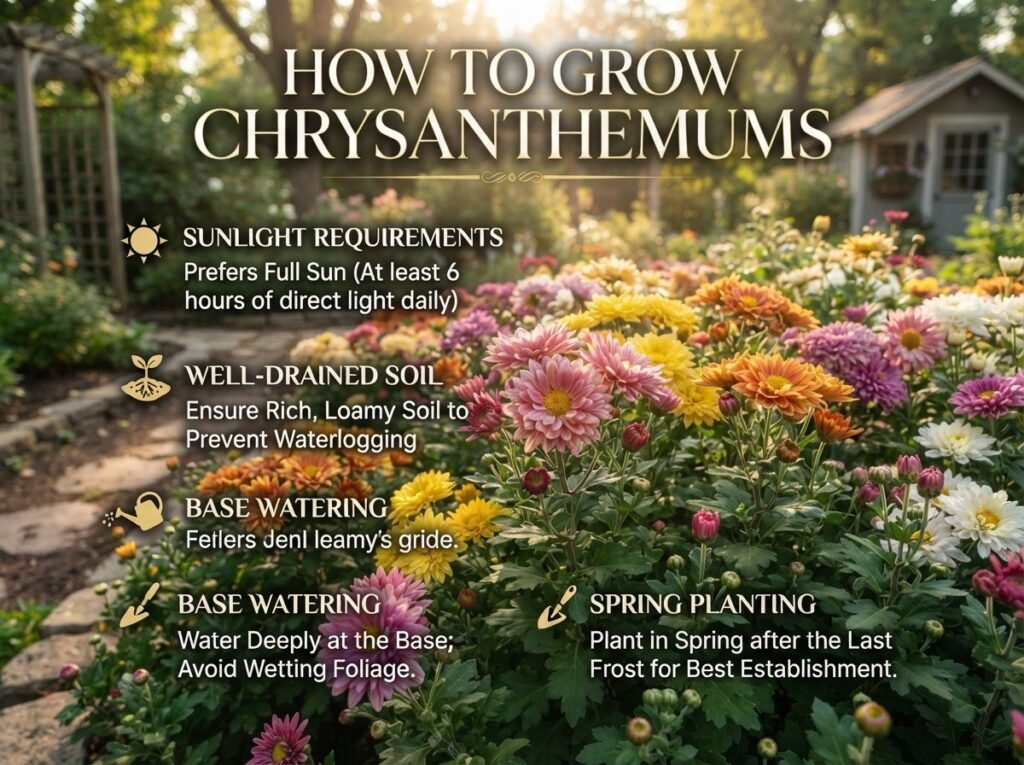
Sunlight: Full sun is essential. At least six hours of direct light keeps the blooms full and the stems sturdy.
Soil: Well-drained, fertile soil works best. Heavy, waterlogged soil can lead to root rot.
Watering: Water at the base of the plant rather than overhead, since wet foliage encourages fungal problems.
Planting season: Plant in spring, after the last frost, so the roots have a full season to establish before fall blooming.
Difficulty level: Moderate. Regular deadheading and a light trim after blooming keep the plant tidy and encourage a stronger show the following year.
How to Grow Peony
Peonies ask for more patience upfront, but they reward that patience for decades afterward.

Sunlight: Full sun produces the best blooms. A little afternoon shade is fine in especially hot climates.
Soil: Rich, well-drained soil, ideally amended with compost before planting.
Watering: Water deeply but infrequently. Established peonies handle short dry spells reasonably well.
Planting season: Plant bare-root tubers in fall, with the “eyes,” or growth points, set no more than an inch or two below the soil surface. Planting too deep is a common reason peonies fail to bloom.
Difficulty level: Moderate to challenging at first. Peonies often take two to three years to bloom well, but once established, a single plant can keep flowering for decades in the same spot.
Gift Ideas Using November’s Birth Flowers
Both November birth flowers make thoughtful, well-suited gifts. Here are a few ways to use them well:

- A mixed arrangement pairing chrysanthemums with imported or preserved peonies for a full, layered look
- Chrysanthemum tea, a traditional herbal drink in Chinese culture, as a gift with cultural depth
- A potted chrysanthemum plant, ideal for someone who wants color that lasts well into the cool season
- A peony-scented candle or perfume, capturing the flower’s fragrance even outside its natural bloom season
- A 13th wedding anniversary gift, since chrysanthemums are the official flower for that milestone
- A November birth flower keepsake, like a pressed-flower frame or piece of jewelry, featuring both blooms
Famous People Born in November and Their Connection to the Flowers
Several notable figures share a November birthday, and the symbolism of both flowers fits them in fitting ways.
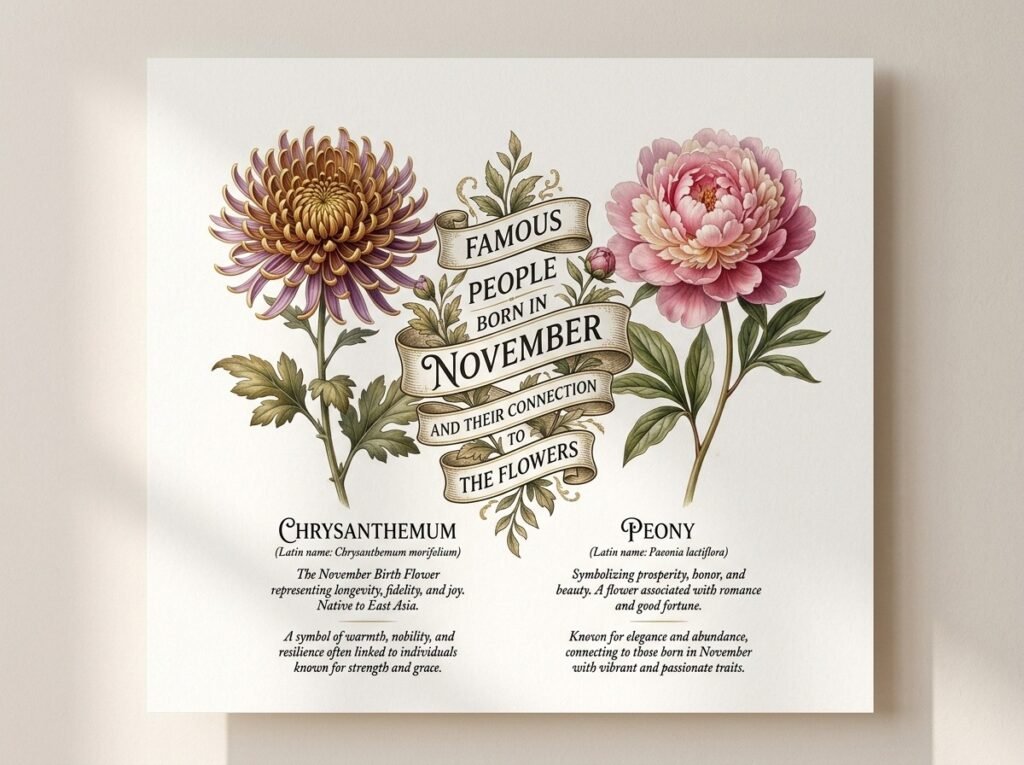
Marie Curie, born November 7, spent her life pursuing discovery with quiet, relentless focus. That same steady determination echoes the chrysanthemum’s symbolism of longevity and resilience through changing seasons.
King Charles III, born November 14, inherited a role built on tradition and formality. The peony’s long association with honor and prosperity fits naturally with a life shaped by royal history.
Georgia O’Keeffe, born November 15, built her entire career around the beauty of flowers themselves. It’s a fitting overlap for an artist so closely tied to floral imagery to share a birth month with two blooms this rich in symbolism.
November Birthstone (Brief Mention)
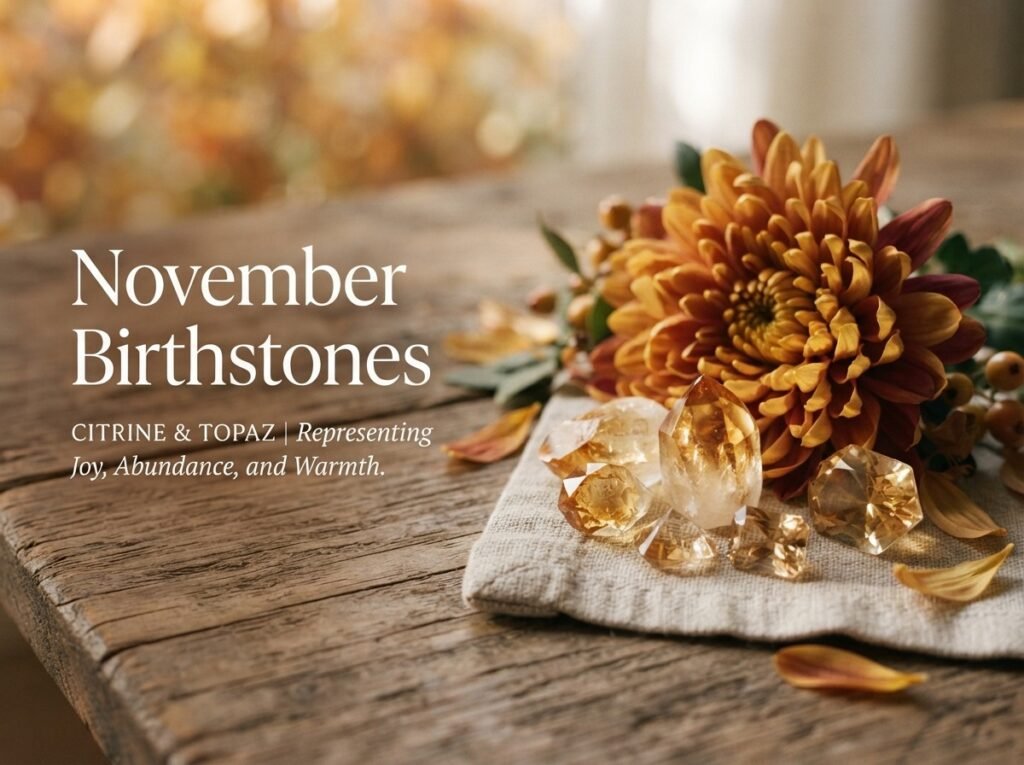
Alongside its two birth flowers, November also has its own birthstones: Topaz and Citrine. Both gems carry warm, golden tones that echo the chrysanthemum’s classic autumn colors, tying the month’s flowers and gemstones together in a shared, cozy palette.
Fun Facts About Chrysanthemum and Peony
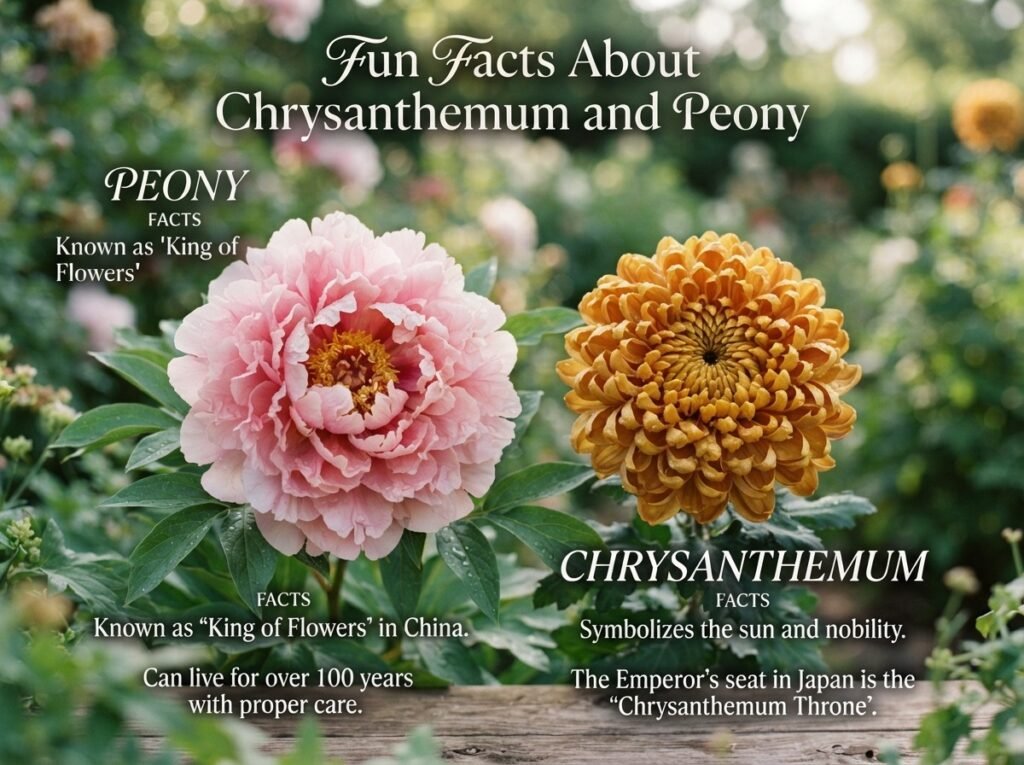
- Japan’s imperial throne is officially known as the “Chrysanthemum Throne,” named directly after the flower.
- Chrysanthemums are the official flower for the 13th wedding anniversary.
- In France, Belgium, and Italy, chrysanthemums are strongly associated with funerals, so they’re rarely given as a birthday gift there.
- In ancient China, peonies were once so prized that only the emperor was legally allowed to grow them.
- Peonies can live and bloom in the same garden spot for over 100 years once fully established.
- The sticky nectar on peony buds often attracts ants, but the relationship is harmless. Ants don’t actually help the buds open, despite the popular garden myth.
Conclusion
November offers two very different birth flowers, and together they capture the full mood of the month. The chrysanthemum brings bold, dependable color right when the rest of the garden is fading, a flower built for cool air and shorter days. The peony adds something richer: fragrance, romance, and centuries of imperial history, even if it has to travel a little further to bloom in November. Whether you’re shopping for someone born in November or just curious about the tradition, this pairing of the November birth flower duo offers plenty of meaning to choose from.
FAQs
What is the official November birth flower?
The primary November birth flower is the chrysanthemum. Its secondary birth flower is the peony, and both are widely recognized in Western flower traditions.
What does the chrysanthemum symbolize?
The chrysanthemum symbolizes joy, optimism, and longevity in most Western traditions. In parts of Europe, it also carries a strong association with remembrance and is placed on graves during early November observances.
What does the peony flower mean?
The peony symbolizes honor, romance, and prosperity, drawn largely from its long history in Chinese imperial culture. It’s also closely tied to happy marriages and good fortune.
Is peony easy to grow?
Peonies are moderate to challenging at first, since they often take two to three years to bloom well after planting. Once established, though, they’re remarkably low-maintenance and can keep blooming for decades.
Why are peonies a November birth flower if they bloom in spring?
Peonies naturally bloom in late spring, but older British and Victorian flower calendars still paired them with November as a secondary bloom. Florists today source peonies from Southern Hemisphere growers to make fresh stems available during November.
Are chrysanthemums difficult to care for?
No, chrysanthemums are considered a moderately easy perennial for most gardeners. Regular watering at the base, full sun, and a light trim after blooming are usually all they need.
Why does November have two birth flowers instead of one?
Several months, including November, ended up with two birth flowers because different regional flower calendars merged over time rather than settling on a single official list. The chrysanthemum and peony pairing reflects both Asian cultural tradition and older Victorian flower-language customs.