

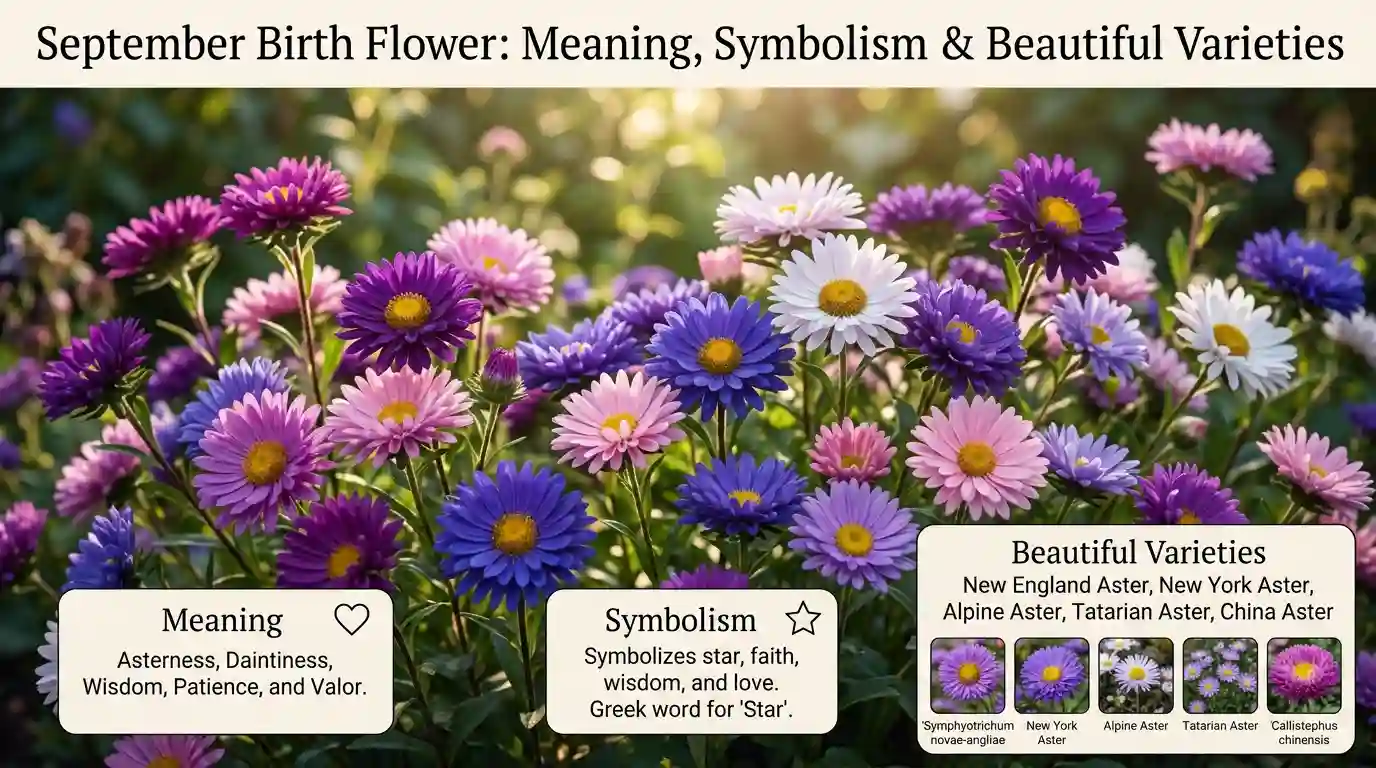
September eases summer into fall. The light turns a little softer. Evenings cool down. And right on schedule, the September birth flower opens up in shades that match the shifting season perfectly.
- September’s Birth Flower(s): Overview
- History and Origin of Aster
- History and Origin of Morning Glory
- Meaning and Symbolism of Aster
- Meaning and Symbolism of Morning Glory
- Color Varieties and Their Meanings (Both Flowers)
- How to Grow Aster
- How to Grow Morning Glory
- Gift Ideas Using September’s Birth Flowers
- Famous People Born in September and Their Connection to the Flowers
- September Birthstone (Brief Mention)
- Fun Facts About Aster and Morning Glory
- Conclusion
- FAQs
Quick Answer: September actually has two birth flowers. The Aster is the primary birth flower for September. It stands for wisdom, faith, and quiet love. The Morning Glory is the secondary September birth flower. It represents affection and the fleeting beauty of each new day. Together, they capture what September feels like — steady, star-like grace paired with a gentle reminder to notice the moment while it lasts.
If you were born in September, both of these blooms belong to you. Here’s what makes each one worth knowing.
A birth flower is a bloom tied to your birth month, working much as a birthstone does. Each month carries its own flower, and quite a few months, September included, carry two.
This tradition stretches back centuries, growing out of old Roman flower festivals and, later, Victorian-era “flower language.” During that period, people used specific blooms to say things that felt too personal for plain words. Every flower carried its own coded meaning, understood by anyone familiar with the custom.
Over time, different regions built their own flower calendars. Many of these separate lists eventually merged into the version most people know today, which is exactly why several months ended up with two recognized flowers instead of one. The tradition still holds up now, especially among florists and thoughtful gift-givers. Choosing someone’s birth flower turns a simple gesture into something personal.
.
September’s Birth Flower(s): Overview
September brings together two blooms with very different rhythms. One is steady and long-lasting. The other lives fast, blooming fresh each morning and fading by afternoon.
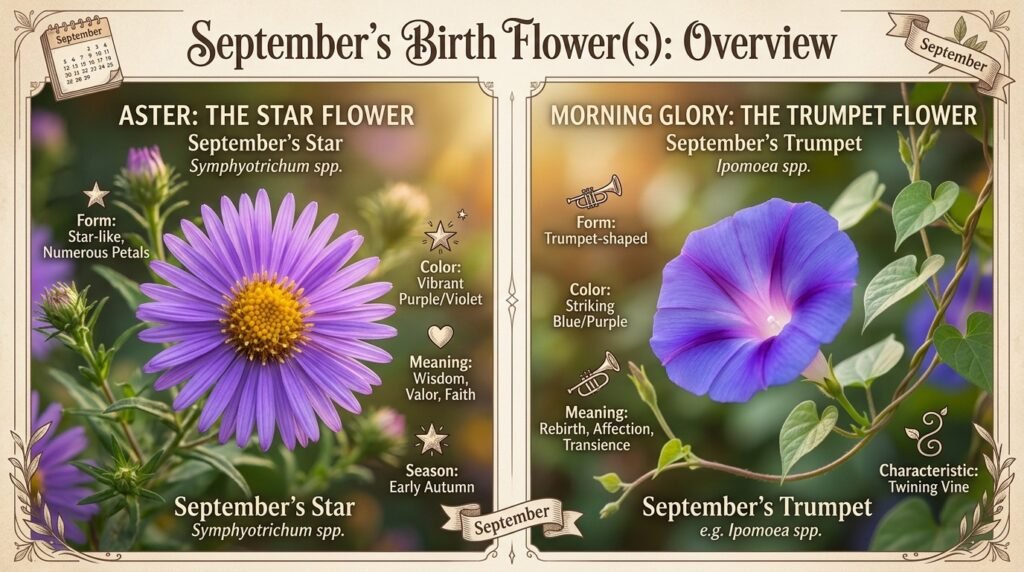
The Aster (Primary)
The botanical name for the primary September flower covers several related species, most commonly Callistephus chinensis, also known as China aster. Its blooms look like small, layered stars, with narrow petals radiating out from a bright central disc. Colors range from deep purple and blue to soft pink and crisp white.
Asters are native to Europe, Asia, and North America, thriving in the cooler, shorter days of late summer and early fall. They’re sturdy, upright plants that hold up well in gardens and cut arrangements alike. Their late bloom time makes them one of the last strong flushes of color before winter sets in.
The Morning Glory (Secondary)
The botanical name for the secondary September flower is Ipomoea purpurea, though several related species share the common name. Its trumpet-shaped blooms open wide at dawn in shades of purple, blue, pink, or white, then close and fade by early afternoon. Heart-shaped leaves and twining vines give the plant a soft, climbing character.
Morning glory is native to Central America and Mexico, where it grows as a fast, vigorous climbing vine. It spreads easily along fences, trellises, and other plants, using its twining stems to climb toward the light. Despite its short-lived individual blooms, the vine produces new flowers continuously throughout the growing season.
History and Origin of Aster
The aster’s name comes directly from the ancient Greek word “aster,” meaning star, a clear nod to its radiating, star-shaped petals. Greek mythology adds a poetic layer to this origin, telling of the goddess Astraea, who wept upon looking down at the earth and finding no stars there. Her tears are said to have fallen to the ground and transformed into asters, scattering star-shaped flowers across the fields.
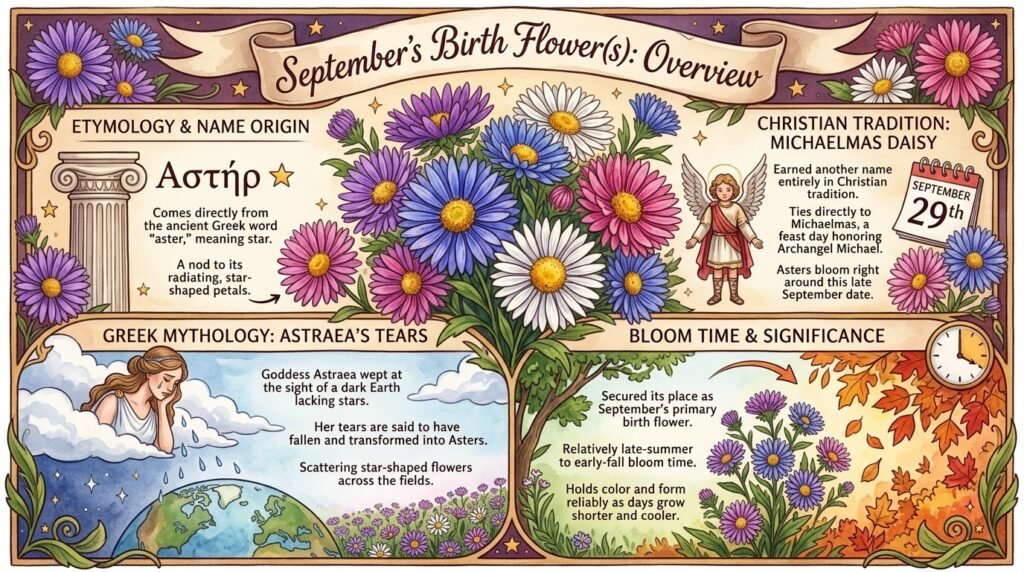
In Christian tradition, the aster earned another name entirely: the Michaelmas daisy. This name ties directly to Michaelmas, a feast day celebrated on September 29th honoring the Archangel Michael. Asters bloom right around this date in much of Europe, which cemented their long-standing association with the very end of September.
The flower’s late-summer to early-fall bloom time is really what secured its place as September’s primary birth flower. Few other blooms hold their color and form so reliably as the days grow shorter and cooler.
History and Origin of Morning Glory
Morning glory’s history centers less on mythology and more on the plant’s own striking behavior. Its habit of opening fresh each morning and closing again by afternoon gave the flower its name across many languages, not just English. This daily cycle made it a natural symbol for the fleeting nature of beauty and time.
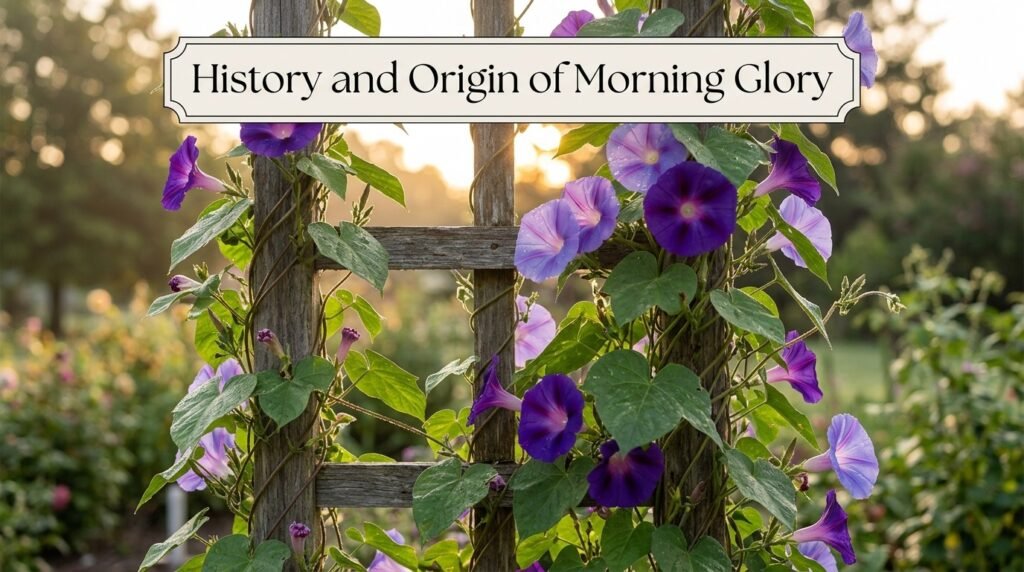
The plant is native to Central America and Mexico, where it grew widely long before European explorers encountered it. Indigenous cultures in the region were familiar with the plant for generations, and it eventually made its way into European gardens by the 17th century, prized for its vigorous climbing habit and vivid color.
Victorian flower language picked up on the plant’s short-lived blooms and assigned it a bittersweet meaning tied to unrequited or fading love. At the same time, its twining, climbing vine also came to represent bonds and affection between people, since the stems wrap so closely around anything nearby.
September’s shift from late summer into early fall lines up well with morning glory’s peak flowering period, which runs strong right through the month before cooler nights slow it down.
Meaning and Symbolism of Aster
Aster symbolism carries a graceful, steady quality that shows up across several traditions. Here’s what it commonly represents:
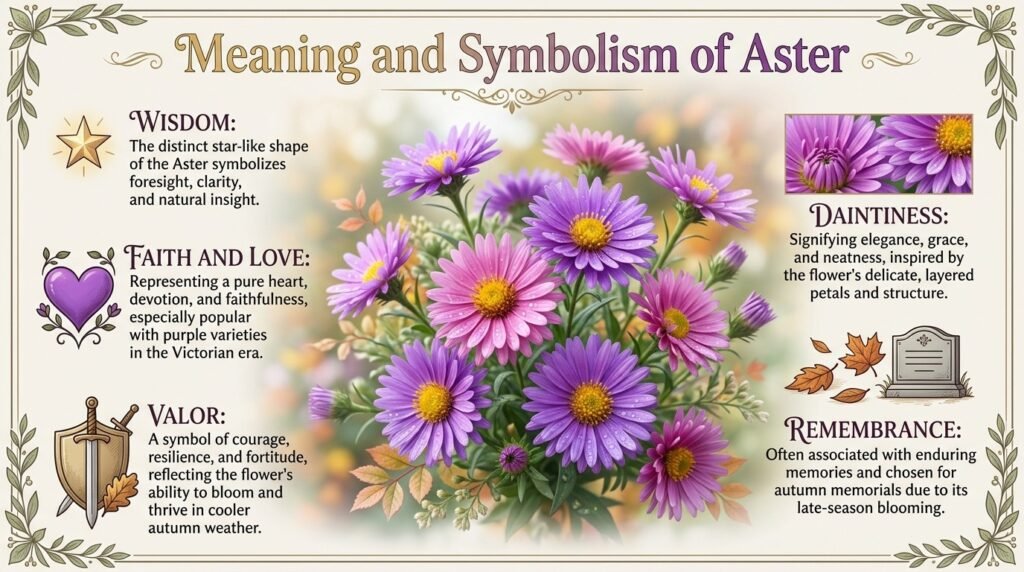
- Wisdom — a meaning tied to the flower’s star shape and its association with clarity and insight
- Faith and love — recurring themes in Victorian-era flower language, especially for purple varieties
- Valor — an older meaning linked to the flower’s resilience in cooler, harsher weather
- Daintiness — reflecting the delicate, layered structure of its petals
- Remembrance — often chosen for autumn memorials, given its late-season bloom time
Meaning and Symbolism of Morning Glory
Morning glory symbolism leans more reflective, tied closely to time and connection. Here’s what it commonly represents:
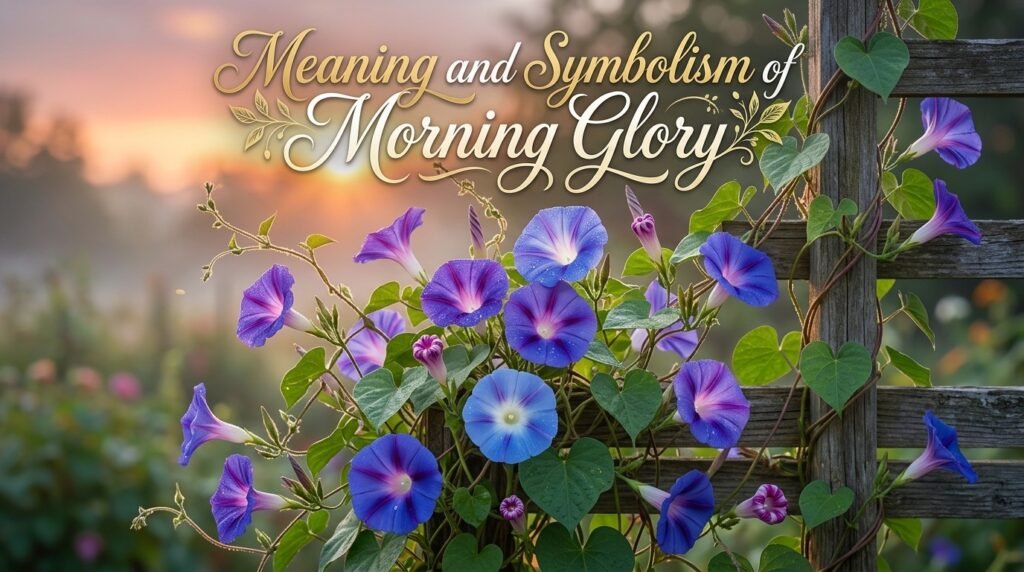
- Affection — a warm, gentle meaning drawn from the flower’s soft, trumpet-shaped bloom
- Fleeting beauty — rooted directly in the plant’s single-day flowering cycle
- Bonds and unity — inspired by the vine’s twining growth habit around anything nearby
- Mortality and impermanence — a more reflective meaning tied to how quickly each bloom fades
- New beginnings — since the flower opens fresh with each new sunrise
Think of these two September flowers like a long friendship and a single perfect morning — the aster stays steady through the changing season, while the morning glory reminds you to notice beauty before it quietly closes again.
Color Varieties and Their Meanings (Both Flowers)
Both September flowers come in a range of cool, autumn-leaning tones, and each shade adds its own layer of meaning. The table below breaks down the most common color varieties for the aster and the morning glory side by side.
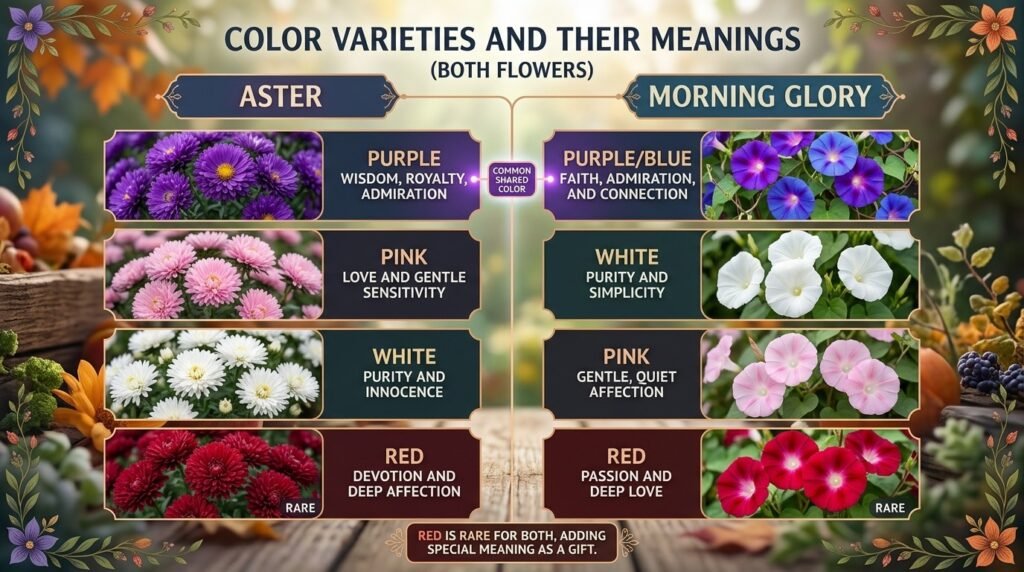
| Flower | Color | Meaning |
| Aster | Purple | Wisdom, royalty, admiration |
| Aster | Pink | Love and gentle sensitivity |
| Aster | White | Purity and innocence |
| Aster | Red | Devotion and deep affection |
| Morning Glory | Purple/Blue | Faith, admiration, and connection |
| Morning Glory | White | Purity and simplicity |
| Morning Glory | Pink | Gentle, quiet affection |
| Morning Glory | Red (rare) | Passion and deep love |
Purple stands out as the strongest shared color between the two flowers, though its meaning shifts slightly depending on which bloom carries it. Aster’s purple leans toward wisdom and admiration, while morning glory’s purple carries a warmer note of faith and connection. Red is the rarer shade for both flowers, which makes red varieties feel especially meaningful when they’re chosen deliberately as a gift.
How to Grow Aster
Asters are a reliable, long-blooming perennial for most home gardeners.

Sunlight: Full sun to partial shade works well, though full sun produces the fullest blooms.
Soil: Well-drained, fertile soil is ideal. Asters don’t tolerate consistently soggy ground.
Watering: Water regularly, keeping the soil evenly moist without letting it become waterlogged.
Planting season: Plant in spring, giving the roots a full growing season to establish before the fall bloom period arrives.
Difficulty level: Easy to moderate. Pinching back young plants in early summer encourages bushier growth, and more flowers come in the fall.
How to Grow Morning Glory
Morning glory is a fast, enthusiastic grower that rewards very little effort.
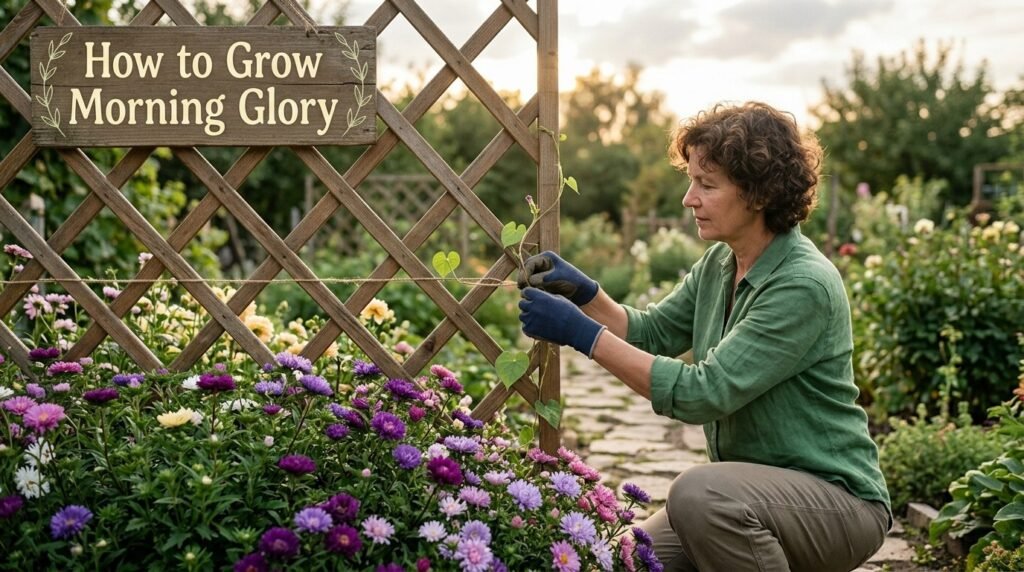
Sunlight: Full sun is essential for strong, abundant blooms.
Soil: Well-drained soil of average fertility works best. Overly rich soil tends to produce more leafy growth and fewer flowers.
Watering: Water moderately, letting the soil dry out slightly between waterings once the plant is established.
Planting season: Sow seeds directly after the last spring frost, once the soil has warmed. Nicking or soaking the seeds beforehand helps speed up germination.
Difficulty level: Easy. Morning glory grows quickly and climbs eagerly, so a trellis or fence nearby gives it the support it needs. It can also self-seed readily, so some gardeners keep an eye on its spread.
Gift Ideas Using September’s Birth Flowers
Both September birth flowers make thoughtful, well-suited gifts. Here are a few ways to use them well:
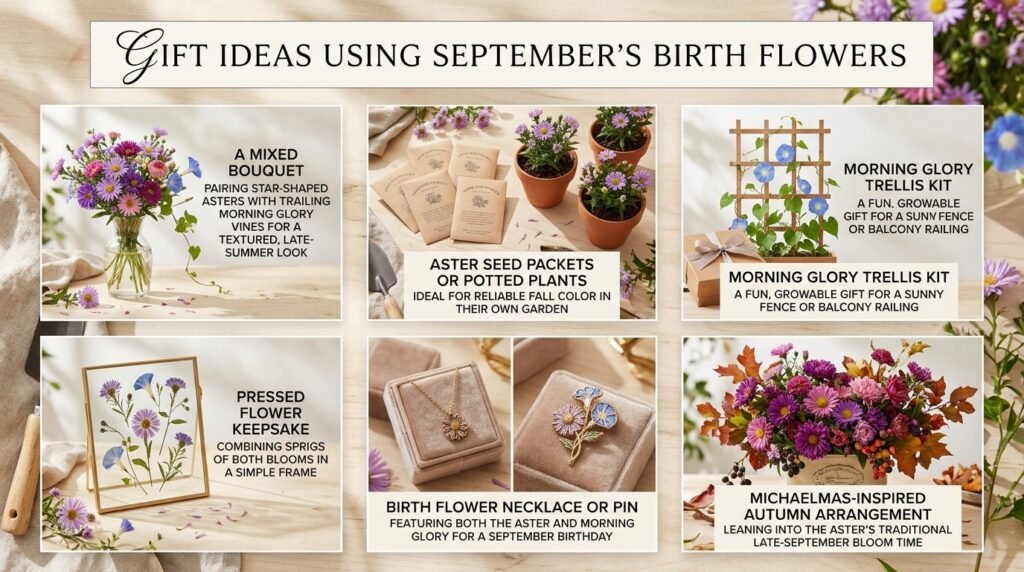
- A mixed bouquet pairing star-shaped asters with trailing morning glory vines for a textured, late-summer look
- Aster seed packets or potted plants, ideal for someone who wants reliable fall color in their own garden
- A morning glory trellis kit, a fun, growable gift for someone with a sunny fence or balcony railing
- A pressed flower keepsake, combining sprigs of both blooms in a simple frame
- A birth flower necklace or pin, featuring both the aster and morning glory for someone born in September
- A Michaelmas-inspired autumn arrangement, leaning into the aster’s traditional late-September bloom time
Famous People Born in September and Their Connection to the Flowers
Several well-known figures share a September birthday, and the symbolism of both flowers fits them in fitting ways.
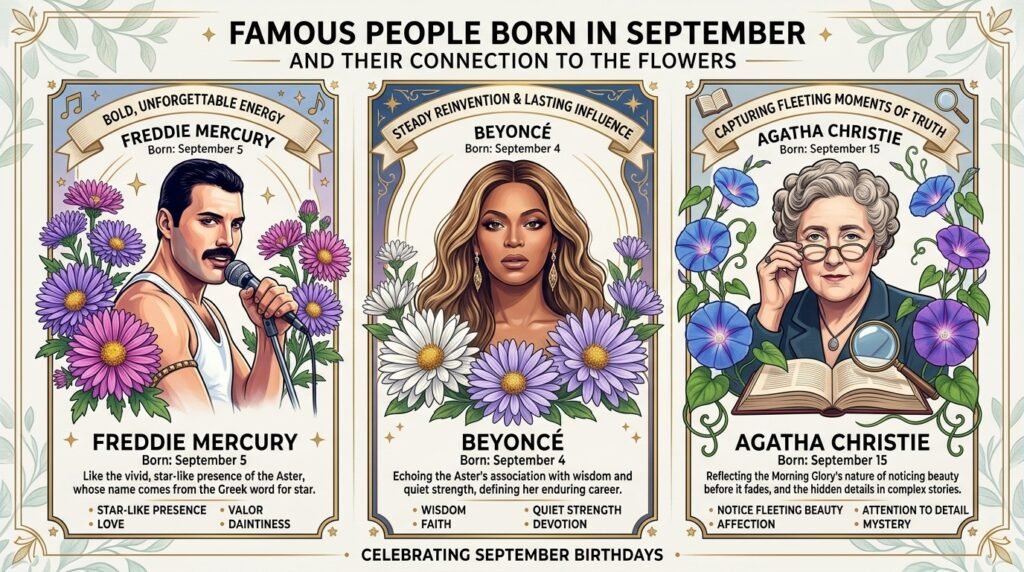
Freddie Mercury, born September 5, brought bold, unforgettable energy to everything he touched. That same vivid, star-like presence echoes the aster’s symbolism and its very name, drawn from the Greek word for star.
Beyoncé, born September 4, has built a career defined by steady reinvention and lasting influence. That sense of enduring presence lines up naturally with the aster’s meaning of wisdom and quiet strength.
Agatha Christie, born September 15, spent her career capturing fleeting moments of truth hidden inside complex stories. That attentiveness to brief, telling details echoes the morning glory’s symbolism of noticing beauty before it fades.
September Birthstone (Brief Mention)
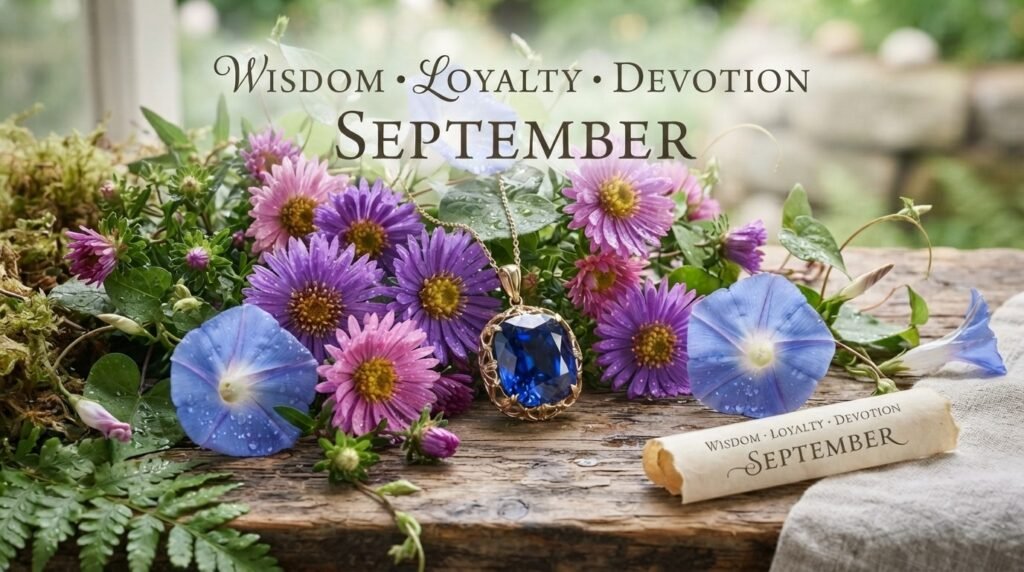
Alongside its two birth flowers, September also has its own birthstone: Sapphire. This deep blue gem is traditionally linked to wisdom, loyalty, and truth, themes that pair naturally with the aster’s symbolism of insight and the morning glory’s quiet devotion.
Fun Facts About Aster and Morning Glory
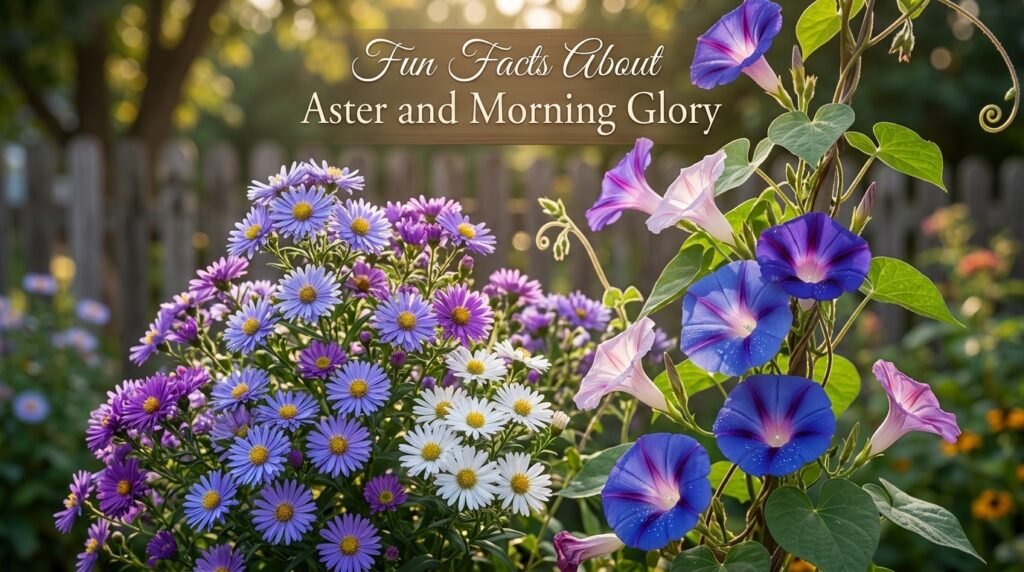
- Asters are also known as “Michaelmas daisies,” named for their bloom time around the September 29th feast day.
- Greek mythology says asters sprang from the tears of the goddess Astraea as she wept over an earth with no stars.
- The most widely cultivated garden aster, China aster, actually belongs to a different genus, Callistephus, than many wild aster species.
- A single morning glory bloom typically lasts only one day, opening at dawn and closing by early afternoon.
- Morning glory seeds contain compounds that can be toxic if ingested in large amounts, so they’re best kept away from children and pets.
- Despite each bloom’s short life, a healthy morning glory vine can produce new flowers continuously for months during the growing season.
Conclusion
September offers two birth flowers that balance each other in a quietly beautiful way. The aster brings steady, star-shaped color right as the season turns cooler, a bloom built to last through the final stretch of summer. The morning glory adds something more reflective: a reminder that beauty doesn’t need to last long to matter. Together, these two September birth flowers capture the full feeling of the month, part steady grace, part gentle impermanence. Whether you’re shopping for someone born in September or simply curious about the tradition, either flower makes a genuinely meaningful choice.
FAQs
What is the official September birth flower?
The primary September birth flower is the aster. Its secondary birth flower is the morning glory, and both are widely recognized in Western flower traditions.
What does the aster flower symbolize?
The aster symbolizes wisdom, faith, and love, along with an older meaning of valor tied to its resilience in cooler weather. It’s also linked to remembrance, especially in autumn memorial arrangements.
What does morning glory symbolize?
Morning glory symbolizes affection and the fleeting beauty of each new day, since its blooms open at dawn and close by afternoon. Its twining vine also represents bonds and connection between people.
Is morning glory easy to grow?
Yes, morning glory is genuinely easy to grow and spreads quickly once established. It just needs full sun and something to climb, like a trellis or fence, to really thrive.
Are morning glory flowers poisonous?
The seeds contain compounds that can be toxic if eaten in significant amounts, so it’s wise to keep them away from young children and pets. The flowers themselves pose minimal risk simply through normal garden handling.
Why do asters bloom so late in the year?
Asters are naturally suited to cooler temperatures and shorter days, which is why they bloom in late summer and early fall rather than spring or early summer. This late timing is exactly why they became September’s primary birth flower.
Why does September have two birth flowers instead of one?
Several months, including September, ended up with two birth flowers because regional flower calendars from different eras eventually merged into one widely accepted list. The aster and morning glory pairing reflects both ancient Greek mythology and Victorian-era flower symbolism.