

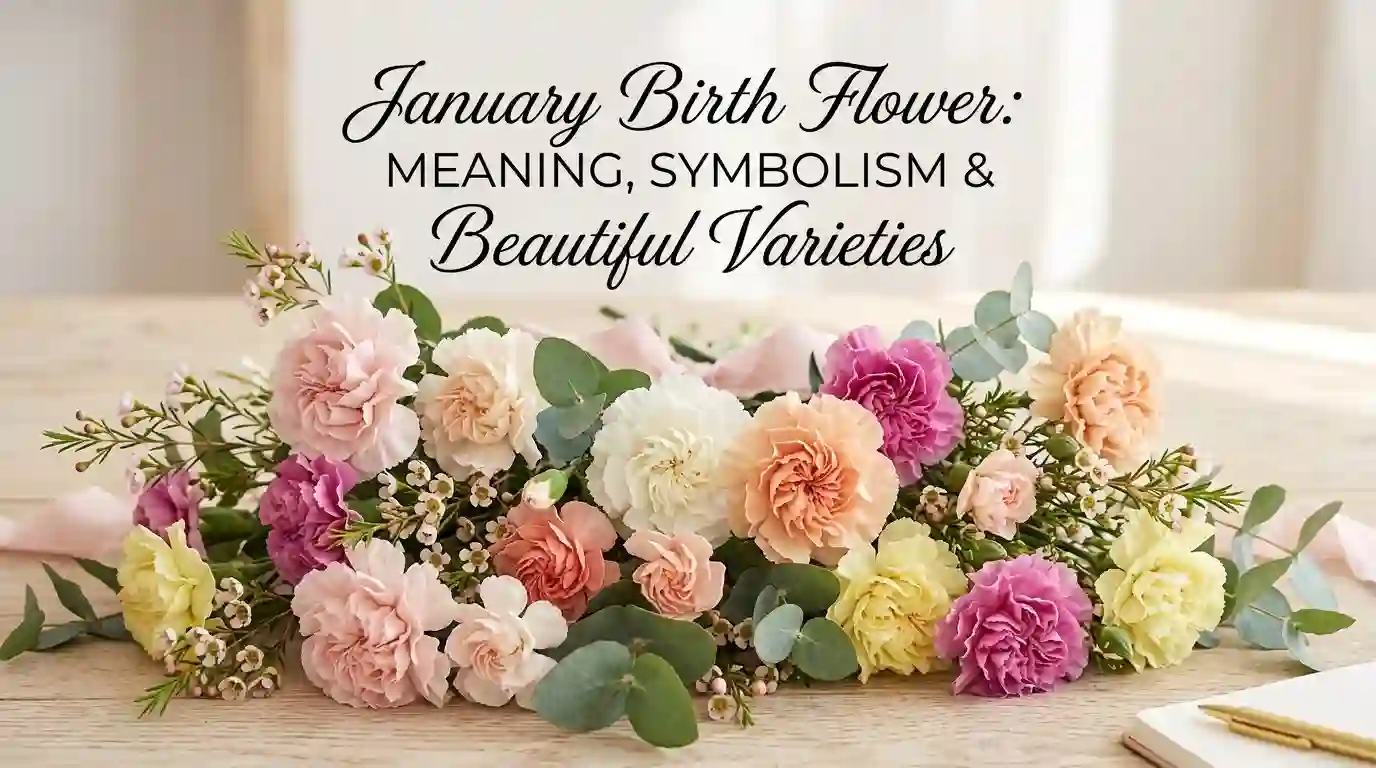
Quick Answer: The January birth flower is actually a pair of blooms, not one. Carnation (Dianthus caryophyllus) represents love, fascination, and devotion, with ruffled petals that have made it a favorite for centuries. Snowdrop (Galanthus nivalis) represents hope, purity, and renewal, pushing up through frozen ground while most of the garden still sleeps. One is bold and colorful. The other is small and quietly resilient. Together, they capture January better than any single flower could.
- What Is a Birth Flower?
- January’s Birth Flower(s): Overview
- History and Origin of Carnation
- History and Origin of Snowdrop
- Meaning and Symbolism of Carnation
- Meaning and Symbolism of Snowdrop
- Color Varieties and Their Meanings (Both Flowers)
- How to Grow Carnations
- How to Grow Snowdrop
- Gift Ideas Using January’s Birth Flowers
- Famous People Born in January and Their Connection to the Flowers
- January Birthstone (Brief Mention)
- Fun Facts About Carnation and Snowdrop
- Conclusion
- FAQs
January opens the calendar with cold weather, short days, and a fresh sense of possibility. It makes sense that the January birth flower comes as a duo rather than a single bloom, since the month itself holds two moods at once: the bright optimism of a new year and the quiet endurance needed to get through winter’s coldest stretch. Carnation brings warmth and color into that picture, thriving in greenhouses and gardens with a long vase life that outlasts almost any other cut flower. Snowdrop brings something rarer, a flower that actually blooms in the snow, often appearing while frost still covers the ground around it. If you were born in January, or you’re shopping for someone who was, this guide walks through both flowers in full detail: their history, their meaning, their color varieties, and how to grow each one successfully.
What Is a Birth Flower?
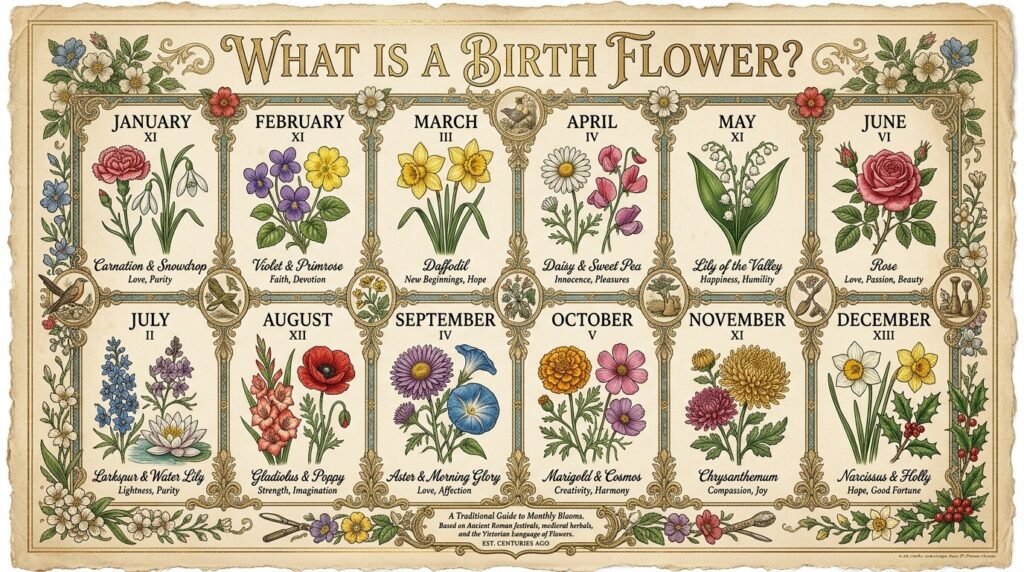
January begins the year with cold weather, short days, and a feeling of new beginnings. It is fitting that January has two birth flowers instead of one. The month carries two very different moods. One is bright and hopeful. The other is calm and strong.
The carnation brings warmth and color to January. It is loved for its beautiful petals and long-lasting blooms. Carnations can stay fresh in a vase for a long time. They are also available in many attractive colors. Each color can carry a different meaning. Pink, red, white, and other shades can express love, admiration, gratitude, or remembrance.
The snowdrop tells a different story. It is a small and delicate flower, but it is surprisingly tough. Snowdrops can appear while winter is still in full force. They may push through frozen soil and bloom while snow remains on the ground. This makes them a powerful symbol of hope, resilience, and new beginnings.
Together, these two flowers represent the spirit of January. The carnation adds warmth, beauty, and emotion. The snowdrop represents strength and the promise of better days ahead. Their contrasting qualities make the January birth flower pairing especially meaningful.
If you were born in January, these flowers can also make thoughtful birthday gifts. You can choose a colorful carnation bouquet for someone who loves traditional blooms. Snowdrops are a lovely choice for someone who prefers delicate and unusual flowers. You can also explore their history, meanings, colors, varieties, and growing needs.
January’s Birth Flower(s): Overview
Carnation
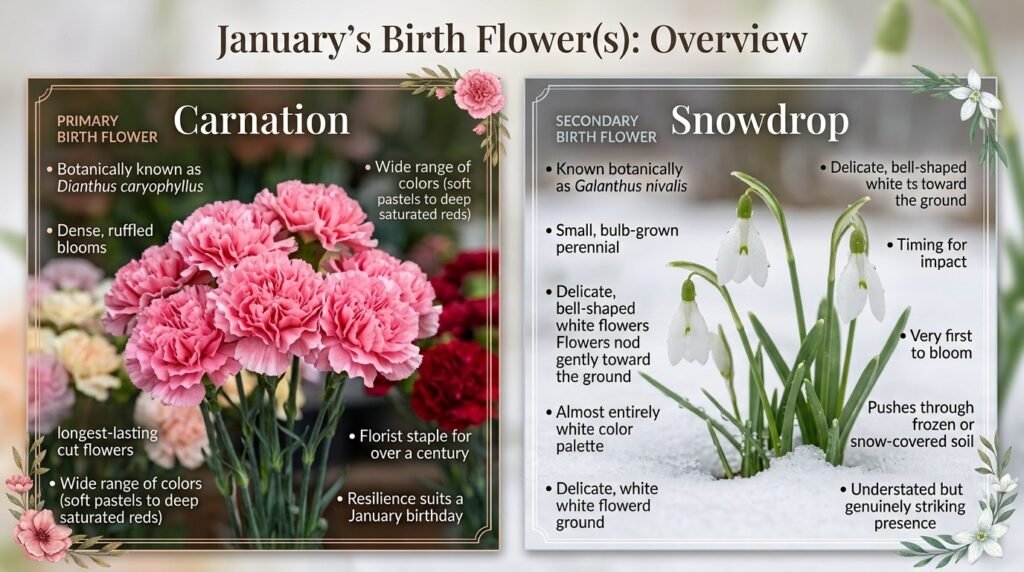
The primary January birth flower is the carnation, botanically known as Dianthus caryophyllus. It produces dense, ruffled blooms with a spicy, clove-like fragrance, held on sturdy stems that make it one of the longest-lasting cut flowers available. Its layered petals come in an unusually wide range of colors, from soft pastels to deep, saturated reds, giving it more visual variety than most other single-species flowers. Carnation’s toughness and remarkably long vase life have made it a florist staple for well over a century, and that same resilience is exactly why it suits a January birthday.
Snowdrop
The secondary January birth flower is the snowdrop, known botanically as Galanthus nivalis. It’s a small, bulb-grown perennial with slender, grass-like leaves and delicate, bell-shaped white flowers that nod gently toward the ground. Unlike the bold, colorful carnation, the snowdrop keeps its color palette almost entirely white, relying instead on its remarkable timing for impact. This is one of the very first flowers to bloom each year, often pushing through frozen or snow-covered soil weeks before anything else in the garden stirs, which gives it an understated but genuinely striking presence.
History and Origin of Carnation
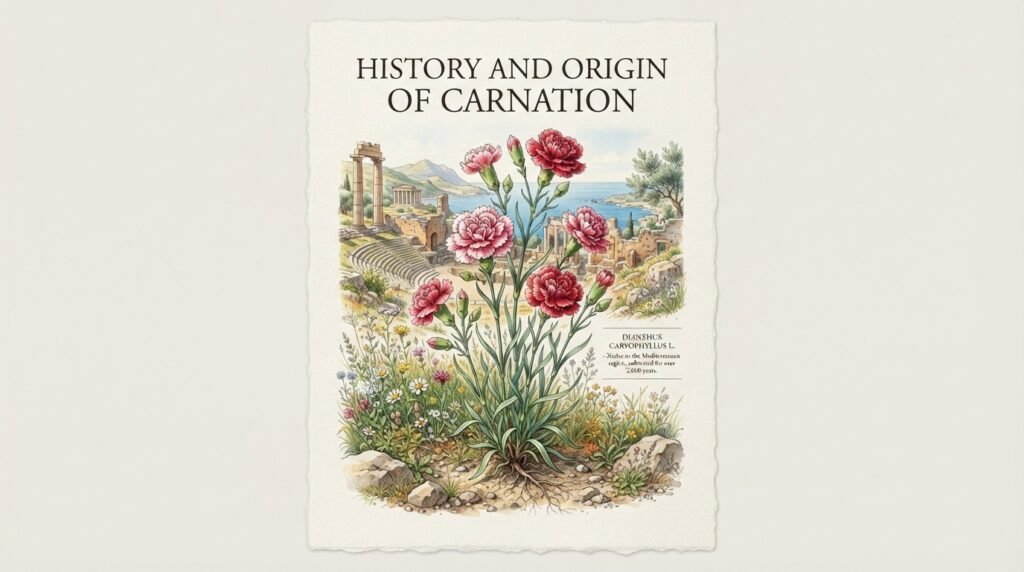
Carnation’s history runs deep, stretching back more than two thousand years to the ancient Mediterranean world. The name itself likely comes from the Greek words dios, meaning god, and anthos, meaning flower, giving carnation its poetic old title, “flower of the gods.” Greek and Roman artists featured the bloom regularly in frescoes, mosaics, and ceremonial garlands, treating it as a symbol of nature’s abundance rather than a simple decorative plant. One enduring Greek myth ties carnations to Diana, goddess of the hunt, who is said to have blamed a young shepherd for interrupting her hunt and, in her anger, caused carnations to spring up from the spot where the encounter ended in tragedy.
Carnation’s connection to January likely comes down to a mix of availability and symbolism. Because it grows readily in Mediterranean climates and adapts easily to greenhouse cultivation, carnation remained accessible through the coldest months of the year long before modern global flower shipping existed. Its meanings of love, fascination, and devotion also made it a fitting choice for a month that begins with resolutions, fresh starts, and renewed personal commitments. By the time carnation was formally imported to the United States in the 1850s, it had already carried centuries of layered symbolism into its new role as a January birth flower.
History and Origin of Snowdrop
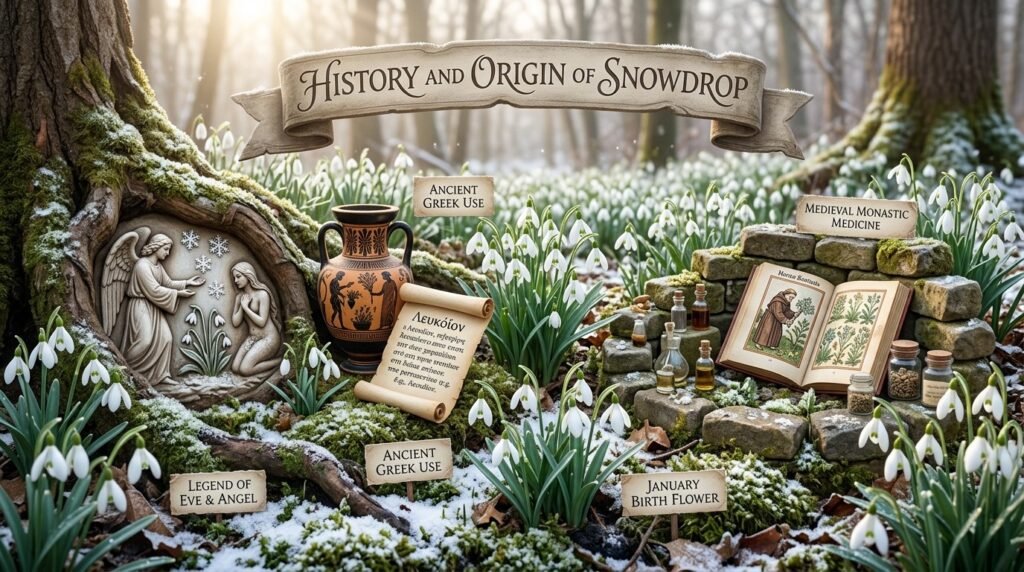
Snowdrop’s story is quieter than Carnation’s but no less rich. Native to the mountainous regions of Europe and parts of the Middle East, the plant has a documented history stretching back to ancient Greece, where its extract was noted for certain mind-altering and medicinal properties. Monks and midwives are believed to have helped spread snowdrop bulbs further across Europe during the medieval period, valuing the plant for folk-medicine uses that persisted for centuries afterward. A gentler legend also surrounds the flower in Christian tradition, which holds that an angel comforted Eve after her exile from Eden by transforming falling snowflakes into snowdrops, offering proof that spring and hope would eventually return.
Snowdrop earned its place as a January birth flower almost entirely through timing. It is one of the first plants to bloom each year, frequently emerging through frozen or snow-covered ground in late January, well before crocuses or daffodils make their appearance. That early, defiant bloom made it a natural symbol for a month defined by fresh starts and the first real signs of the year turning toward spring. Interestingly, Victorian households sometimes viewed the flower with suspicion, associating a snowdrop brought indoors with an omen of death, a superstition that stood in sharp contrast to its more common meaning of hope and renewal.
Meaning and Symbolism of Carnation
As the more prominent January birth flower, the carnation carries centuries of layered meaning that shift depending on color and context. Its core symbolism includes:
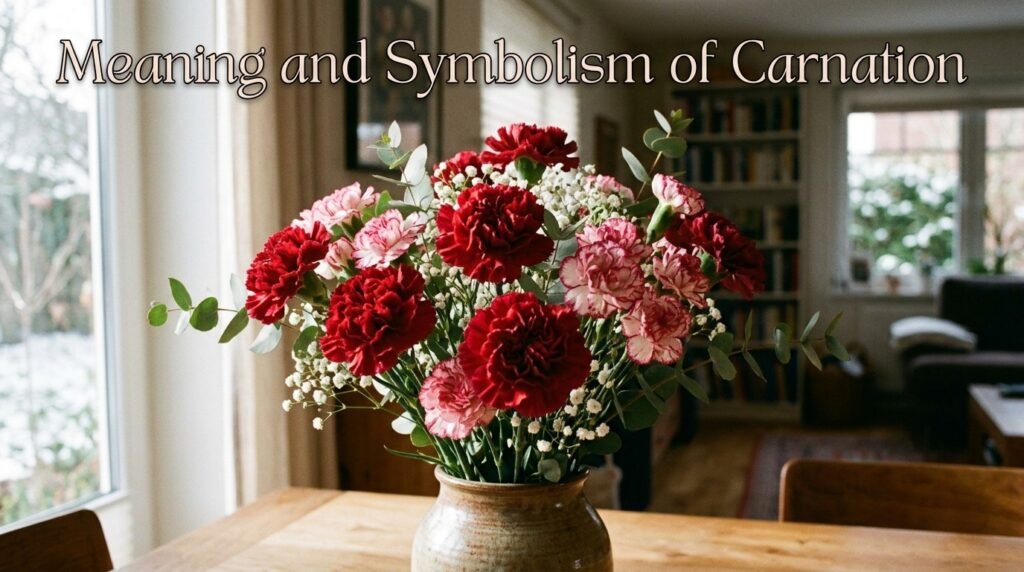
- Love and devotion — the flower’s most widely recognized meaning across cultures
- Fascination — tied to its old Greek associations and unusual, ruffled petal structure
- Distinction — reflecting its long history as a flower reserved for meaningful occasions
- Remembrance — a common meaning in memorial arrangements and tribute bouquets
- Maternal love — especially tied to pink varieties, which are strongly associated with Mother’s Day
Carnation’s meanings shift more by color than almost any other common flower, which makes it especially useful for gift-givers who want to communicate something specific. A January birthday bouquet built around carnations carries real emotional weight, not just decorative appeal.
Meaning and Symbolism of Snowdrop
Snowdrop’s symbolism leans toward quieter, more introspective themes, fitting for a flower that blooms in near-total silence under frost and snow. As the secondary January birth flower, its core meanings include:
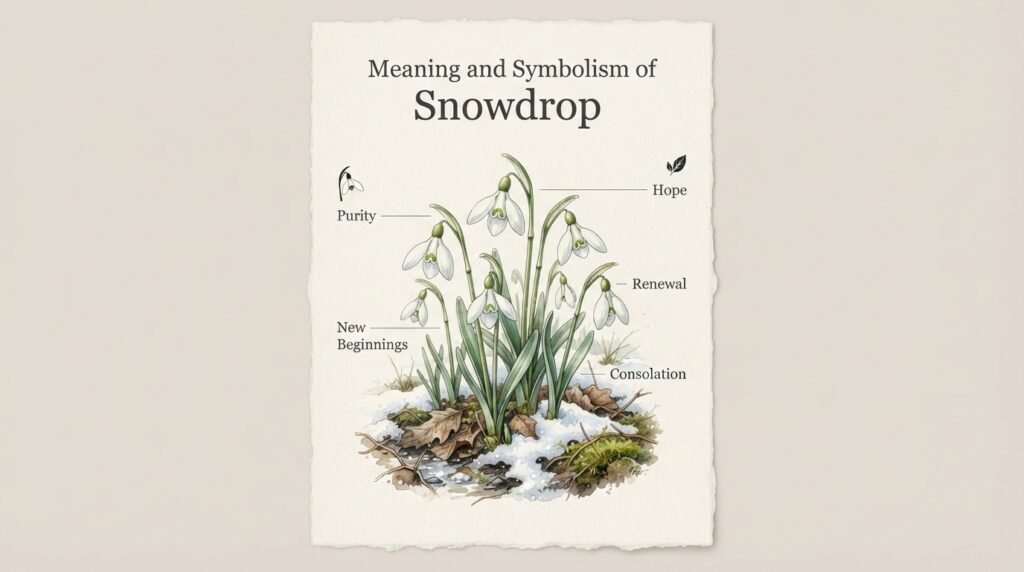
- Hope — drawn directly from its ability to bloom before winter has fully ended
- Purity — reflected in its simple, unblemished white petals
- Renewal — tied to its role as one of the very first flowers of the growing year
- Consolation — a traditional meaning associated with comfort during difficult times
- New beginnings — a natural fit for a flower that blooms at the very start of the calendar year
Where carnation speaks boldly, snowdrop speaks softly, and that contrast is part of what makes the January birth flower pairing so effective. One flower announces itself. The other simply persists, and there is real meaning in that persistence.
Color Varieties and Their Meanings (Both Flowers)
Carnation offers one of the widest color ranges of any common flower, while snowdrop stays almost entirely within a single, simple palette. Reading through both sets of color meanings side by side helps explain why the two flowers balance each other so well as a shared birth-month symbol, one flower offering choice and nuance, the other offering constancy. The table below breaks down the most common colors for each January birth flower and what each one traditionally represents.
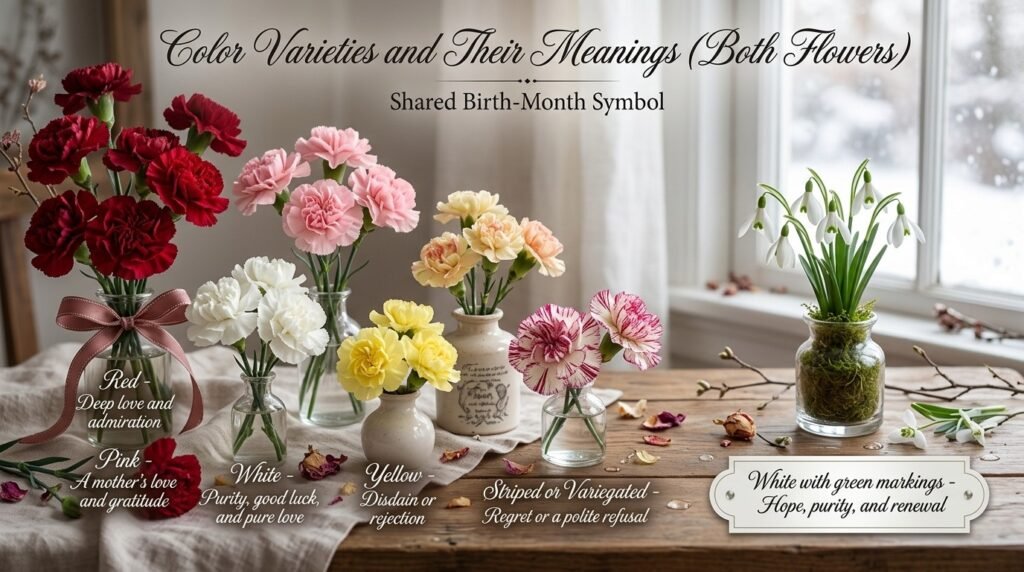
| Flower | Color Variety | Symbolic Meaning |
| Carnation | Red | Deep love and admiration |
| Carnation | Pink | A mother’s love and gratitude |
| Carnation | White | Purity, good luck, and pure love |
| Carnation | Yellow | Disdain or rejection (a cautionary meaning) |
| Carnation | Striped or variegated | Regret or a polite refusal |
| Snowdrop | White with green markings | Hope, purity, and renewal |
Carnation’s color-based meanings carry real weight in floral gift-giving, and choosing the wrong shade, yellow in particular, can send an unintended message to the recipient. Snowdrop offers a simpler, more forgiving choice by comparison, since its meaning of hope and renewal stays consistent across nearly every variety grown today.
How to Grow Carnations
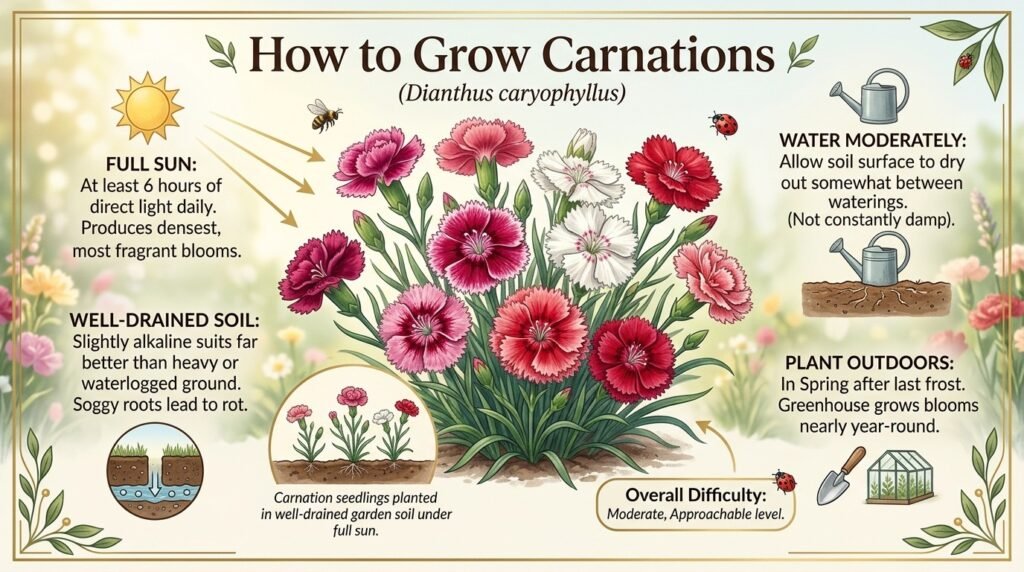
Carnation grows best with full sun, needing at least six hours of direct light each day to produce its densest, most fragrant blooms. Well-drained, slightly alkaline soil suits it far better than heavy or waterlogged ground, since soggy roots quickly lead to rot. Water moderately, allowing the soil surface to dry out somewhat between waterings rather than keeping it constantly damp. Most gardeners plant carnations outdoors in spring after the last frost has passed, though greenhouse growers can produce blooms nearly year-round. Overall difficulty sits at a moderate, approachable level, making carnation a reasonable choice even for gardeners without extensive experience growing cut flowers.
How to Grow Snowdrop
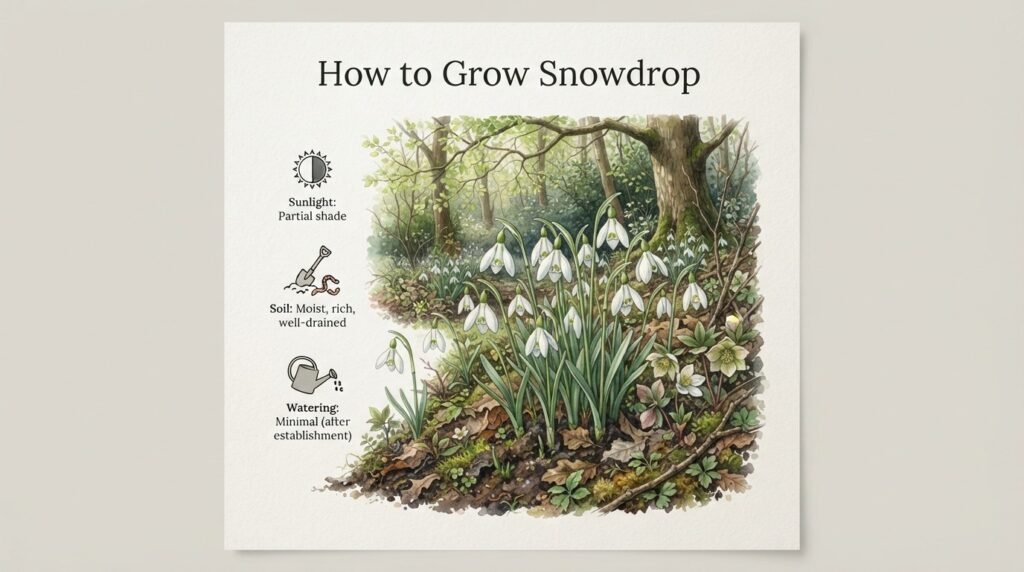
Snowdrop prefers a very different environment from its bold January counterpart, thriving in partial shade rather than full sun, much like the woodland conditions it grows in naturally. Moist, well-drained soil rich in organic matter gives the best results, mimicking the leaf-littered forest floors where wild snowdrop populations flourish. Watering needs stay minimal once the bulbs are established, since snowdrops are naturally adapted to damp winters followed by drier summer dormancy. Bulbs are typically planted in fall, though many gardeners find more success planting them “in the green,” meaning just after flowering while the foliage is still active, rather than as dry, dormant bulbs. Snowdrop ranks as an easy, low-maintenance plant once settled into the right spot, often naturalizing and spreading further across a garden with almost no ongoing care.
Gift Ideas Using January’s Birth Flowers
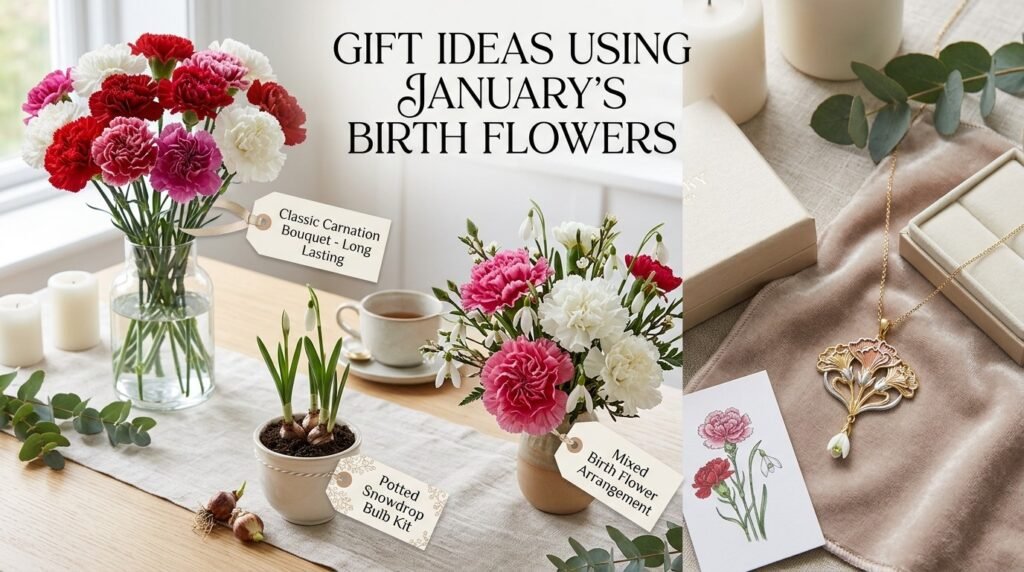
Because carnation and snowdrop offer such different strengths, gift-givers have real room to get creative with a January birthday. A classic carnation bouquet, chosen carefully by color, makes a bold, long-lasting gift that can stay fresh in a vase for two weeks or more. A small potted snowdrop bulb kit offers something more delicate and personal, letting the recipient watch the flower emerge on its own timeline right around their birthday. Mixed arrangements pairing ruffled carnation blooms with a few sprigs of snowdrop capture both January birth flowers in a single gift, balancing bold color against quiet, understated detail. For something that lasts well beyond the growing season, jewelry or artwork featuring both flowers gives a January-born recipient a lasting reminder of their full birth-flower pairing.
Image caption:
Famous People Born in January and Their Connection to the Flowers

Quite a few notable figures share a January birthday, and the symbolism behind carnation and snowdrop maps onto their legacies in interesting ways. Physicist Isaac Newton, born in early January, built a body of work centered on discovery and new understanding, echoing the snowdrop’s symbolism of renewal and fresh beginnings. Civil rights leader Martin Luther King Jr., born on January 15th, is remembered for a message of hope and perseverance through hardship, themes that align closely with both January birth flowers at once. Musician Elvis Presley, born January 8th, built a career defined by boldness and unmistakable presence, a quality that mirrors carnation’s reputation as a flower that commands attention despite its modest price point. These connections lean more poetic than scientific, but they help explain why birth flowers remain such a popular way to add personal meaning to a January birthday.
January Birthstone (Brief Mention)
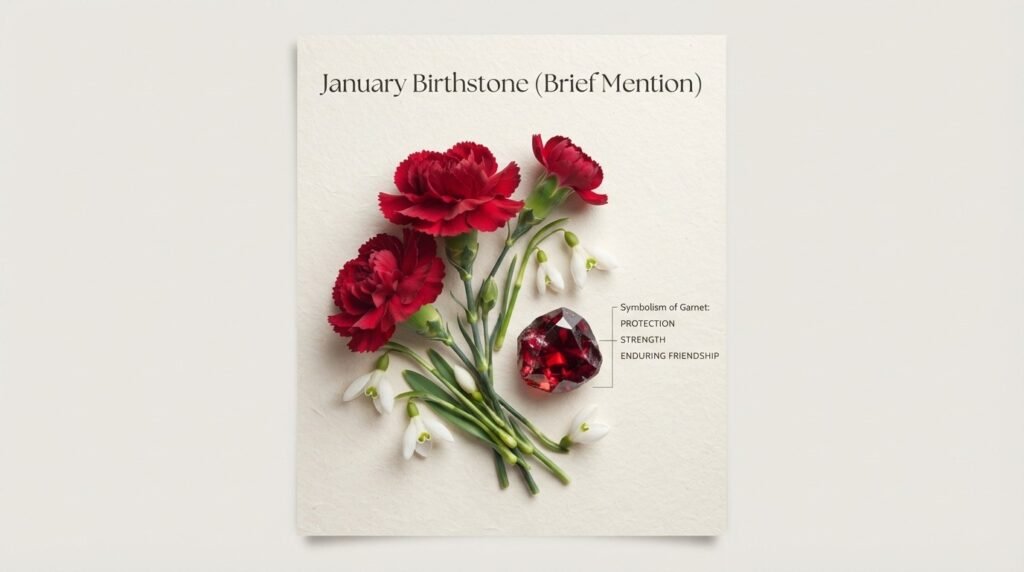
Alongside its two birth flowers, January also claims a well-known birthstone: garnet, prized for its deep red color and long history as a symbol of protection, strength, and enduring friendship. Garnet’s rich tone pairs naturally with the red and pink varieties of carnation, giving anyone born in January multiple ways, in gemstone and in flower alike, to mark their birthday with meaningful color.
Fun Facts About Carnation and Snowdrop

- Carnation is the official state flower of Ohio and has been used in ceremonial and political contexts for well over a century.
- The name “carnation” is believed to derive from the Greek words for “god” and “flower,” giving it the old nickname “flower of the gods.”
- Snowdrop’s botanical name, Galanthus nivalis, translates roughly to “milk flower of the snow,” a direct nod to its pale color and cold-weather bloom time.
- Snowdrop seeds carry an oil-rich coating that attracts ants, which then help disperse the seeds naturally across a garden or woodland floor.
- Carnation was first imported to the United States in the 1850s, and within twenty years, more than fifty distinct varieties were already available to growers.
- Victorian households sometimes considered a single snowdrop brought indoors to be an omen of bad luck, despite the flower’s otherwise hopeful symbolism.
Conclusion
January has two birth flowers: carnation and snowdrop. This pairing makes January especially meaningful. Carnations bring warmth, color, love, and devotion. They also have a long history of symbolism. Snowdrops offer a different feeling. They represent hope, resilience, and new beginnings. These delicate flowers can bloom through cold winter soil. Together, they reflect the spirit of January. One flower feels warm and expressive. The other feels quiet and strong.
This combination also makes January birth flowers useful for many occasions. You can choose carnations for a January birthday gift. Snowdrops can add a gentle winter touch to a garden or bouquet. Both flowers have unique colors, meanings, and stories worth exploring. Together, they show that beauty can appear even during the coldest part of the year.
FAQs
What is the birth flower for January?
January has two birth flowers: the carnation and the snowdrop. Carnation represents love, fascination, and devotion, while snowdrop represents hope, purity, and renewal.
What does a carnation symbolize as a January birth flower?
Carnation symbolizes love, distinction, and fascination, with specific meanings that shift depending on color. Red carnations represent deep love, pink represents a mother’s love, and white represents purity and good luck.
What does the snowdrop symbolize as a January birth flower?
Snowdrop symbolizes hope, purity, and renewal, largely because it’s one of the very first flowers to bloom each year. Its ability to push through frozen ground has long made it a symbol of resilience and fresh starts.
Is snowdrop easy to grow at home?
Yes, snowdrop is considered a low-maintenance, easy-to-grow bulb once it’s established in the right spot. It prefers partial shade and moist, well-drained soil, and it often naturalizes on its own over time.
Is carnation easy to grow in a home garden?
Carnation is a moderately easy plant for most home gardeners, needing full sun and well-drained, slightly alkaline soil. It’s more forgiving than wide-cut-flower varieties, making it a reasonable choice even for beginners.
Why does January have two birth flowers instead of one?
Many birth-flower traditions assign two flowers per month, and January’s pairing reflects both practical availability and symbolic balance. Carnation was accessible through Mediterranean cultivation even in winter, while snowdrop’s natural bloom time lines up directly with the start of the year.
Are snowdrops toxic or safe to plant around children and pets?
Snowdrop bulbs contain compounds that can cause mild stomach upset if ingested, so it’s wise to keep them away from pets and small children who might dig them up. The flowers themselves pose minimal risk from simple handling or admiring them in a garden setting.