

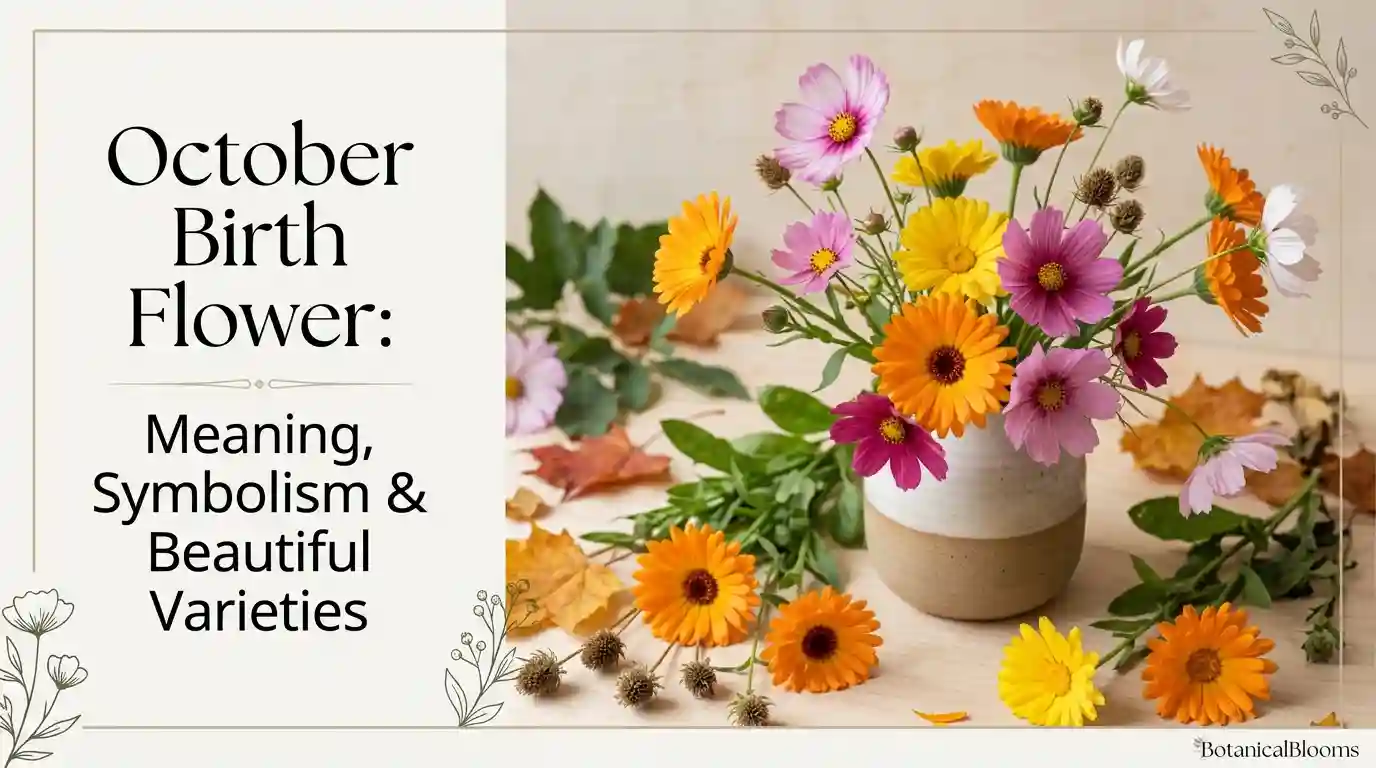
October arrives warm and golden, even as the air starts to cool. Leaves turn orange. Harvest season peaks. And right in step with the season, the October birth flower shows up in the same fiery colors.
- What Is a Birth Flower?
- October’s Birth Flower(s): Overview
- History and Origin of Marigold
- History and Origin of Cosmos
- Meaning and Symbolism of Marigold
- Meaning and Symbolism of Cosmos
- Color Varieties and Their Meanings (Both Flowers)
- How to Grow Marigold
- How to Grow Cosmos
- Gift Ideas Using October’s Birth Flowers
- Famous People Born in October and Their Connection to the Flowers
- October Birthstone (Brief Mention)
- Fun Facts About Marigold and Cosmos
- Conclusion
- FAQs
Quick Answer: October actually has two birth flowers. The Marigold is the primary birth flower for October. It stands for warmth, passion, and creativity. The Cosmos is the secondary October birth flower. It represents harmony, order, and peaceful love. Together, they capture what October feels like — bold autumn color balanced by quiet, simple grace.
If you were born in October, both of these blooms belong to you. Here’s what makes each one worth knowing.
What Is a Birth Flower?
A birth flower is a bloom tied to your birth month, working much as a birthstone does. Each month gets its own flower, and many months, including October, get two.
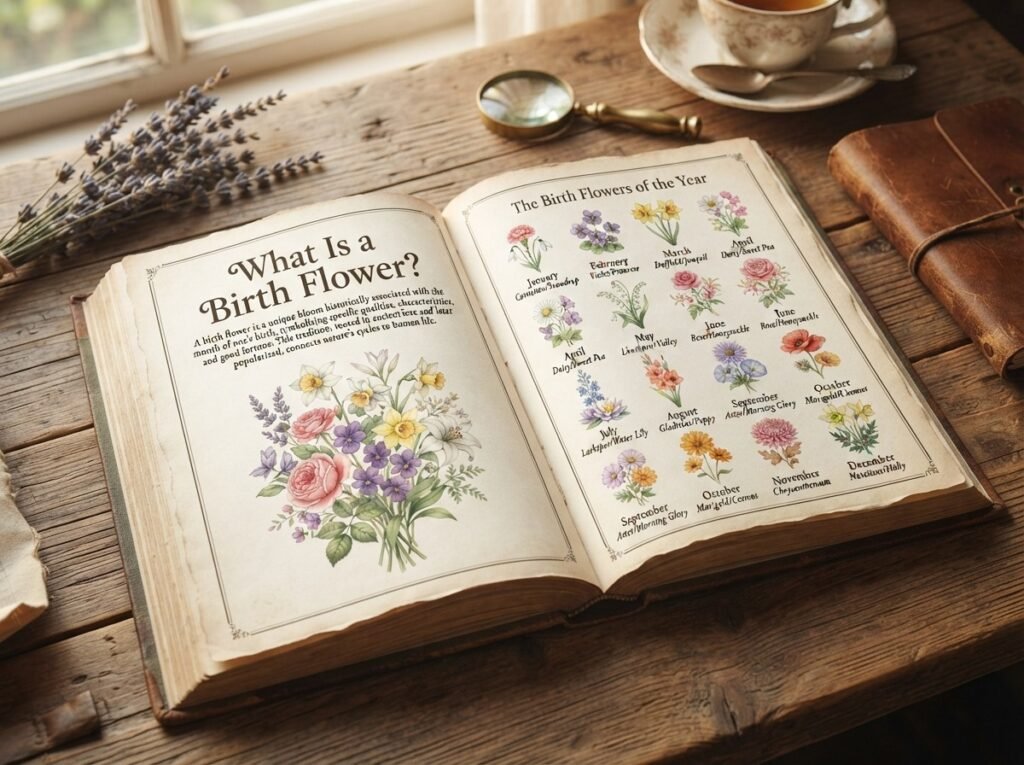
This tradition goes back centuries. It draws from old Roman flower festivals and, more directly, Victorian-era “flower language.” During that period, people used specific blooms to communicate feelings they couldn’t easily put into words. Every flower carried its own coded meaning.
Over time, different regions built their own flower calendars. Many of these separate lists eventually merged into the version most people recognize today, which is exactly why several months ended up with two flowers instead of one. Florists, jewelers, and thoughtful gift-givers still lean on the tradition now. Choosing someone’s birth flower turns a simple gift into something personal.
October’s Birth Flower(s): Overview
October brings together two blooms with very different personalities. One is bold and richly colored. The other is simple, airy, and quietly elegant.
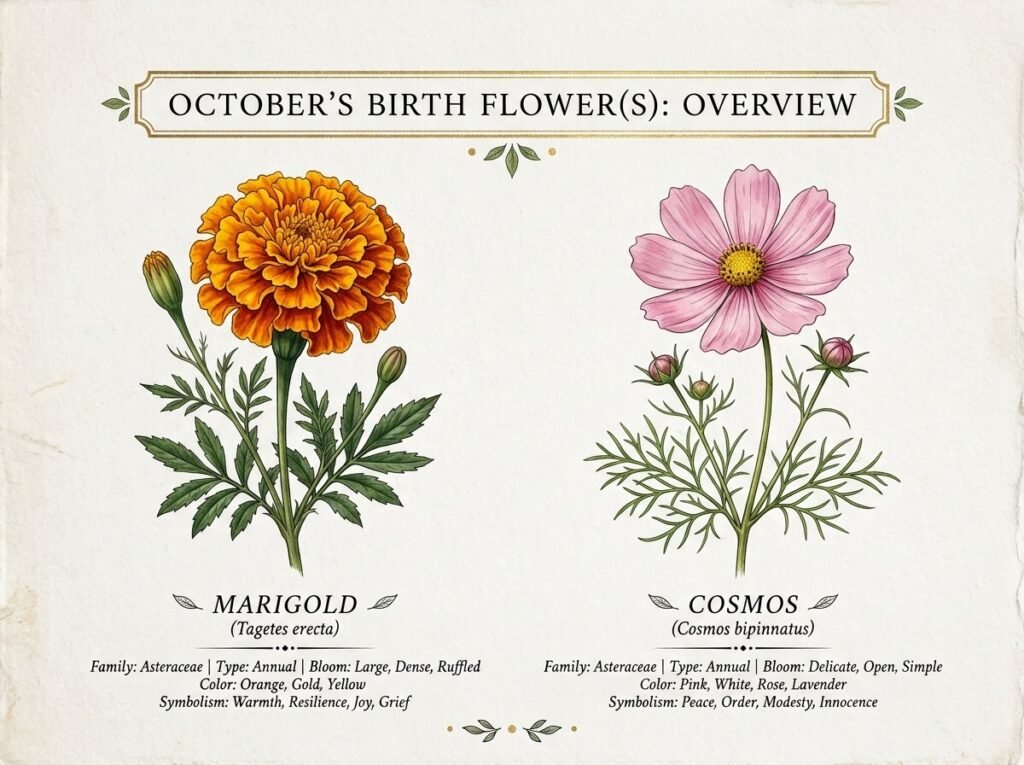
The Marigold (Primary)
The botanical name for the primary October flower is Tagetes erecta, though smaller varieties often fall under Tagetes patula. Its blooms are dense and ruffled, packed tightly with layers of petals in shades of orange, yellow, and deep red. The flower has a distinctive, slightly spicy scent that sets it apart from most other garden blooms.
Marigolds are native to Mexico and Central America, where they’ve grown wild for centuries. They’re tough, fast-growing annuals that thrive in full sun and warm weather. Their bright, almost fiery color makes them easy to spot in any garden bed.
The Cosmos (Secondary)
The botanical name for the secondary October flower is Cosmos bipinnatus. Unlike the marigold’s dense ruffles, the cosmos flower is simple and open, with a single ring of petals surrounding a bright yellow center. Its feathery, fern-like foliage gives the whole plant a light, airy look.
Cosmos is also native to Mexico, growing wild alongside many other autumn-blooming plants. It comes in soft shades of pink, white, and red, with a delicate, almost weightless presence in the garden. Despite its fragile appearance, it’s a genuinely tough, easy-to-grow plant.
History and Origin of Marigold
Marigolds carry deep roots in Mexican culture, where they’re known as cempasúchil, sometimes called the “flower of the dead.” For centuries, they’ve played a central role in Día de los Muertos, or Day of the Dead, celebrations. Their bright color and strong scent are believed to guide the spirits of loved ones back home for the celebration.
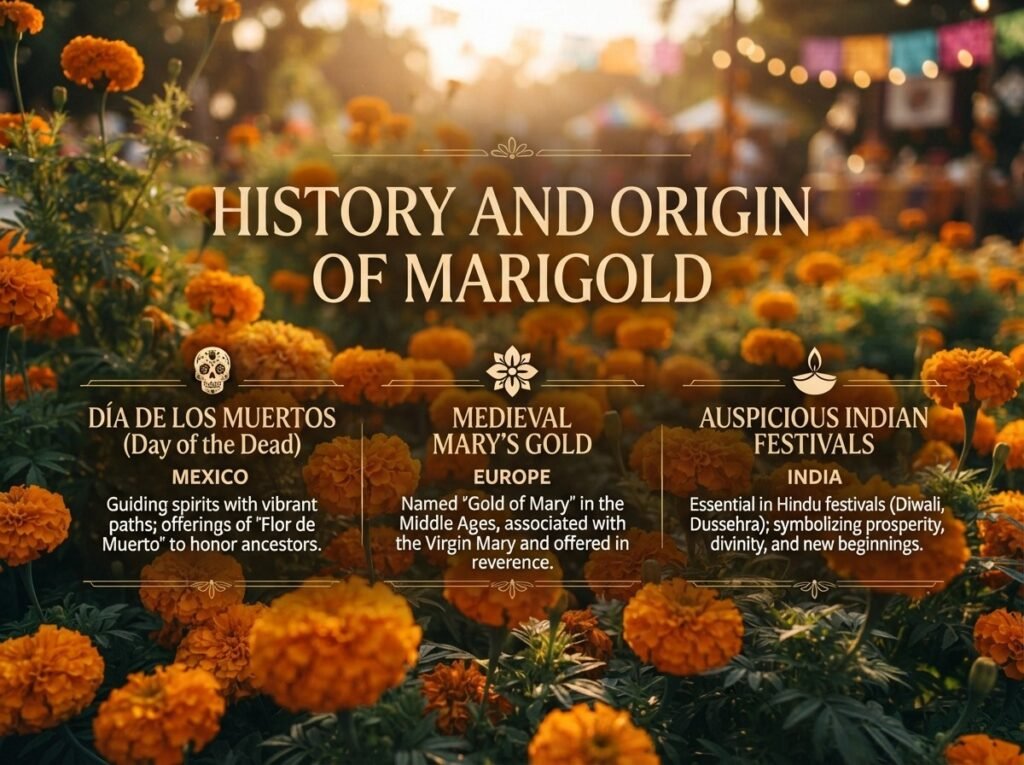
The flower’s English name likely comes from “Mary’s Gold,” a phrase tied to the Virgin Mary in medieval Christian Europe. Around that time, the flower was often used as an offering in religious ceremonies, its golden color seen as a fitting tribute.
Marigolds hold major significance in Indian culture too, where they’re a staple in wedding decorations, temple offerings, and festivals like Diwali. Their vibrant orange and yellow tones are considered auspicious, symbolizing the sun and positive energy.
This blend of remembrance, celebration, and warmth lines up naturally with October, a month that sits right between the last of the harvest and the start of colder, quieter days.
History and Origin of Cosmos
The cosmos flower gets its name from the Greek word “kosmos,” meaning order or harmony. Spanish priests exploring Mexico in the 18th century reportedly gave the flower this name, struck by how evenly and neatly its petals were arranged around the center.
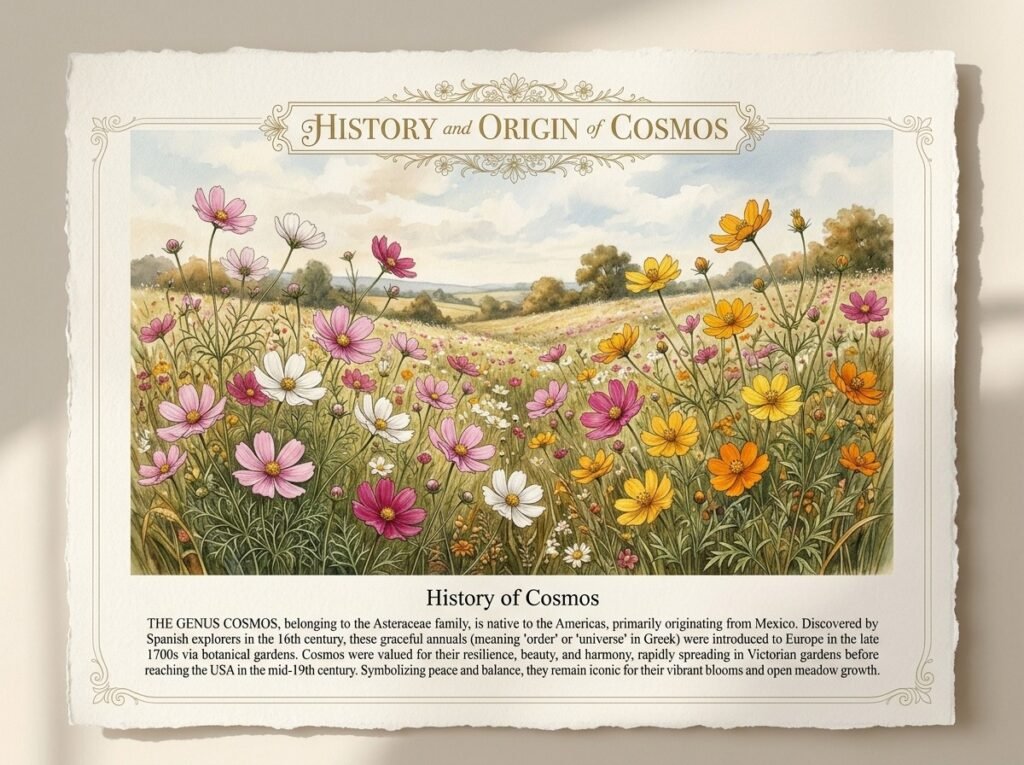
Like the marigold, cosmos is native to Mexico, where it grew widely in open fields and along roadsides. It spread from there through European botanical gardens after Spanish explorers brought seeds back across the Atlantic in the late 1700s.
Victorian flower language eventually adopted cosmos as a symbol of peaceful love and quiet order, a gentler counterpart to the marigold’s bold, fiery energy. Its simple, balanced shape made it an easy fit for that meaning.
Cosmos earned its place as October’s secondary birth flower largely through this Victorian-era pairing, offering a softer, calmer contrast to marigold’s intensity within the same birth month.
Meaning and Symbolism of Marigold
Marigold symbolism carries real weight across several cultures, though a few core meanings show up consistently. Here’s what it commonly represents:
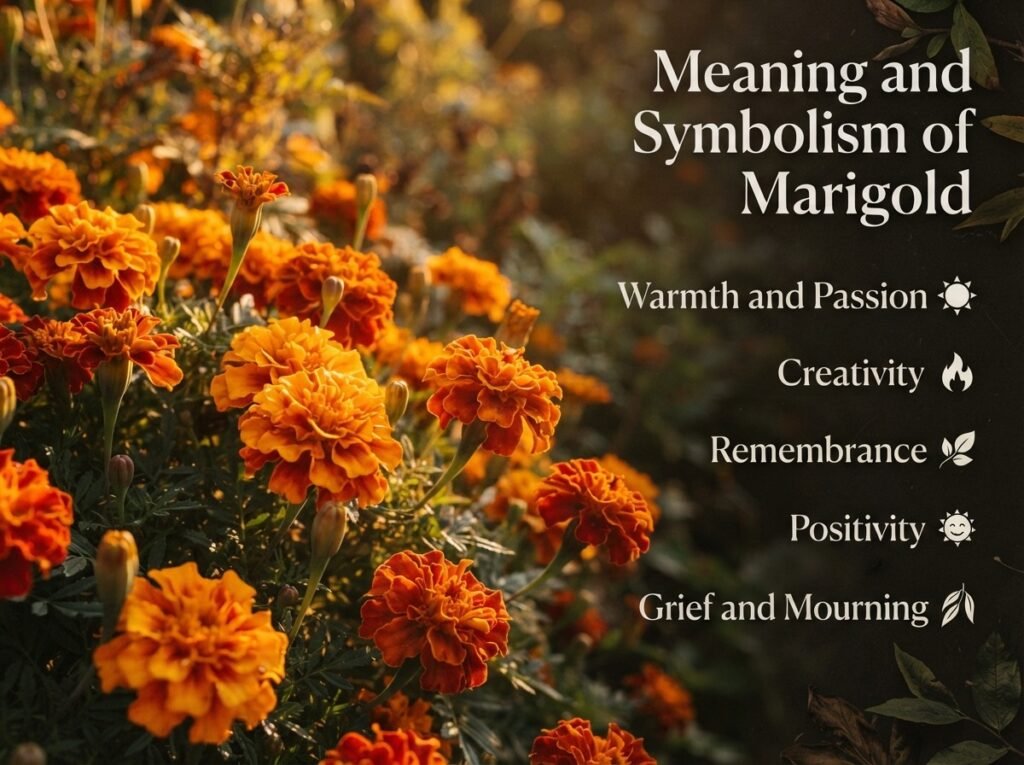
- Warmth and passion — its fiery orange and red tones give it an inherently bold, energetic feeling
- Creativity — often linked to the flower’s vivid, unconventional color palette
- Remembrance — central to Día de los Muertos traditions honoring loved ones who have passed
- Positivity and good fortune — especially in Indian culture, where it’s used in celebrations and religious offerings
- Grief and mourning — a more somber meaning tied specifically to its role in Mexican funeral traditions
Meaning and Symbolism of Cosmos
Cosmos symbolism leans gentler and more reflective. Here’s what it commonly represents:
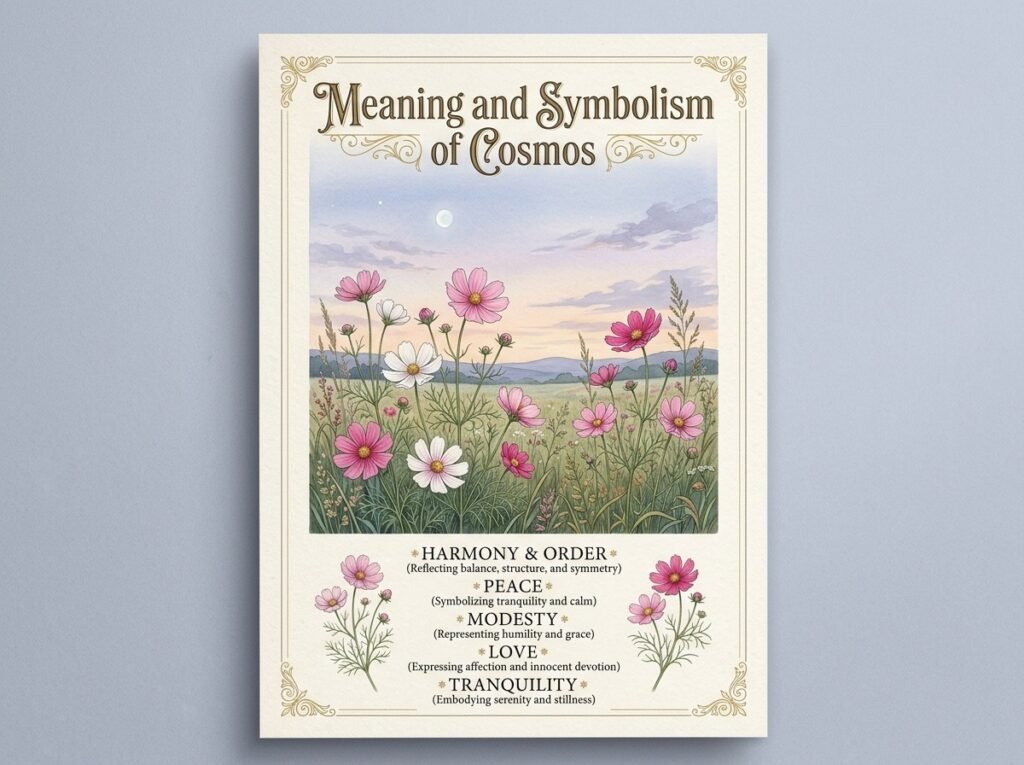
- Harmony and order — drawn directly from the Greek meaning of its name
- Peace — reflected in its soft colors and simple, balanced petal arrangement
- Modesty — a quieter counterpart to more elaborate autumn blooms
- Love — specifically a calm, enduring kind of love, according to Victorian flower language
- Tranquility — often associated with its light, airy presence in a garden
Think of these two October flowers as a harvest celebration and the quiet walk home afterward — the marigold is the bonfire, loud and warm, while the cosmos is the calm, open field under a clear night sky.
Color Varieties and Their Meanings (Both Flowers)
Both October flowers come in a range of warm and soft tones, and each shade adds its own layer of meaning. The table below breaks down the most common color varieties for the marigold and the cosmos side by side.
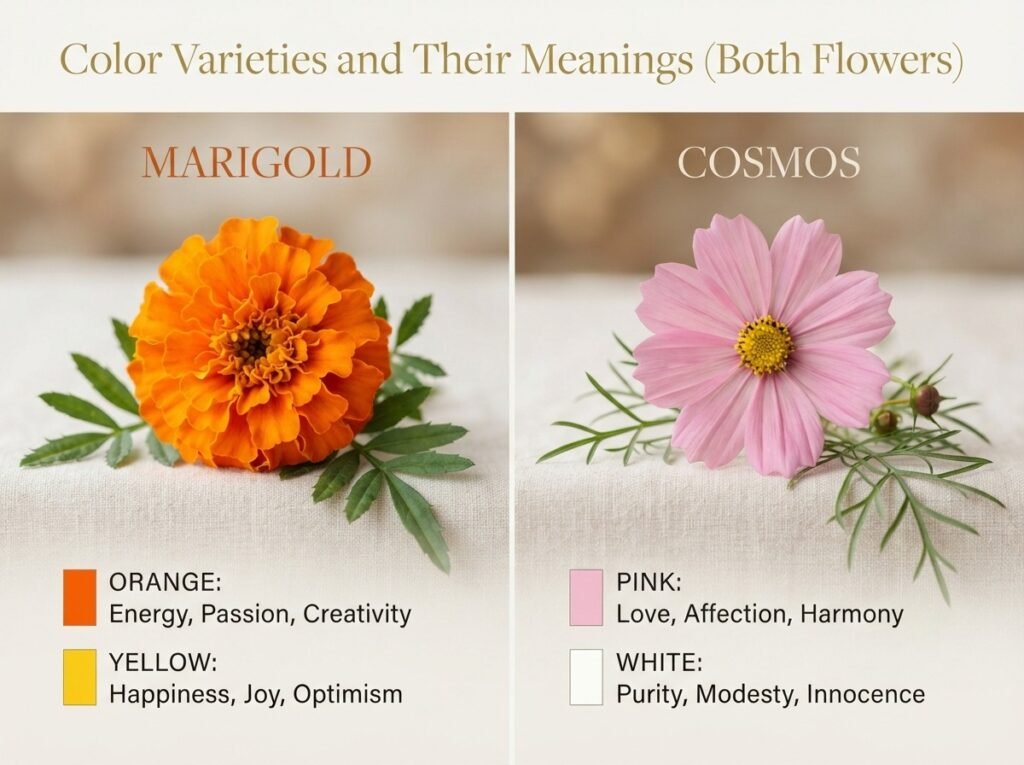
| Flower | Color | Meaning |
| Marigold | Orange | Passion, creativity, warmth |
| Marigold | Yellow | Positivity, optimism, good fortune |
| Marigold | Red | Deep love and intense passion |
| Marigold | Deep Gold | Remembrance, especially in Día de los Muertos tradition |
| Cosmos | Pink | Love and femininity |
| Cosmos | White | Purity and innocence |
| Cosmos | Red | Passionate, enduring love |
| Cosmos | Orange | Joy and lightheartedness |
Marigold’s colors lean almost entirely into warm, saturated tones, which fit its bold, attention-grabbing character. Cosmos, by contrast, softens those same warm shades into something more delicate, especially in its pink and white forms. Red is the one color both flowers share fairly directly, though marigold’s red feels more intense and cosmos’s red feels a little more tender.
How to Grow Marigold
Marigolds are one of the easiest annual flowers a beginner gardener can grow.

Sunlight: Full sun is essential. Marigolds need at least six hours of direct light each day to bloom well.
Soil: Average, well-drained soil works fine. Marigolds aren’t picky and actually struggle in overly rich soil.
Watering: Water moderately, letting the soil dry out slightly between waterings. Overwatering is the most common way this plant runs into trouble.
Planting season: Sow seeds or set out transplants after the last spring frost, once the soil has warmed up.
Difficulty level: Easy. Marigolds grow quickly from seed and tolerate heat, light neglect, and poor soil better than most garden annuals.
How to Grow Cosmos
Cosmos is just as forgiving as marigold, with a few small differences worth knowing.

Sunlight: Full sun produces the fullest, most abundant blooms.
Soil: Lean, well-drained soil is actually ideal. Rich, heavily fertilized soil tends to produce more foliage and fewer flowers.
Watering: Water lightly and infrequently. Cosmos handles dry spells well once it’s established.
Planting season: Direct-sow seeds after the last frost, since cosmos germinates quickly in warm soil.
Difficulty level: Easy. Cosmos often self-seeds so readily that a single planting can return on its own for several years afterward.
Gift Ideas Using October’s Birth Flowers
Both October birth flowers make thoughtful, well-suited gifts. Here are a few ways to use them well:

- A mixed bouquet pairing bold marigolds with airy cosmos for a balanced, autumn-inspired arrangement
- A marigold garland or wreath, drawing on its traditional use in Día de los Muertos and Indian celebrations
- Cosmos seed packets, a simple, growable gift for someone who loves an easy, low-maintenance garden
- A pressed flower keepsake, combining sprigs of both blooms in a simple frame
- A birth flower candle or perfume, capturing marigold’s spicy warmth alongside cosmos’s lighter floral notes
- A potted marigold plant, ideal for someone who wants long-lasting color through the fall season
Famous People Born in October and Their Connection to the Flowers
Several well-known figures share an October birthday, and the symbolism of both flowers fits them in fitting ways.
Mahatma Gandhi, born October 2, built a legacy around peace, patience, and quiet strength. That sense of calm resolve echoes the cosmos and its symbolism of harmony and tranquility.
John Lennon, born October 9, channeled bold creativity and passionate ideals throughout his career. That same fiery, expressive energy lines up closely with the marigold’s symbolism of passion and creativity.
Kate Winslet, born October 5, has built a career defined by both emotional depth and understated grace. That balance mirrors the pairing of October’s two flowers well: bold expression alongside quiet composure.
October Birthstone (Brief Mention)
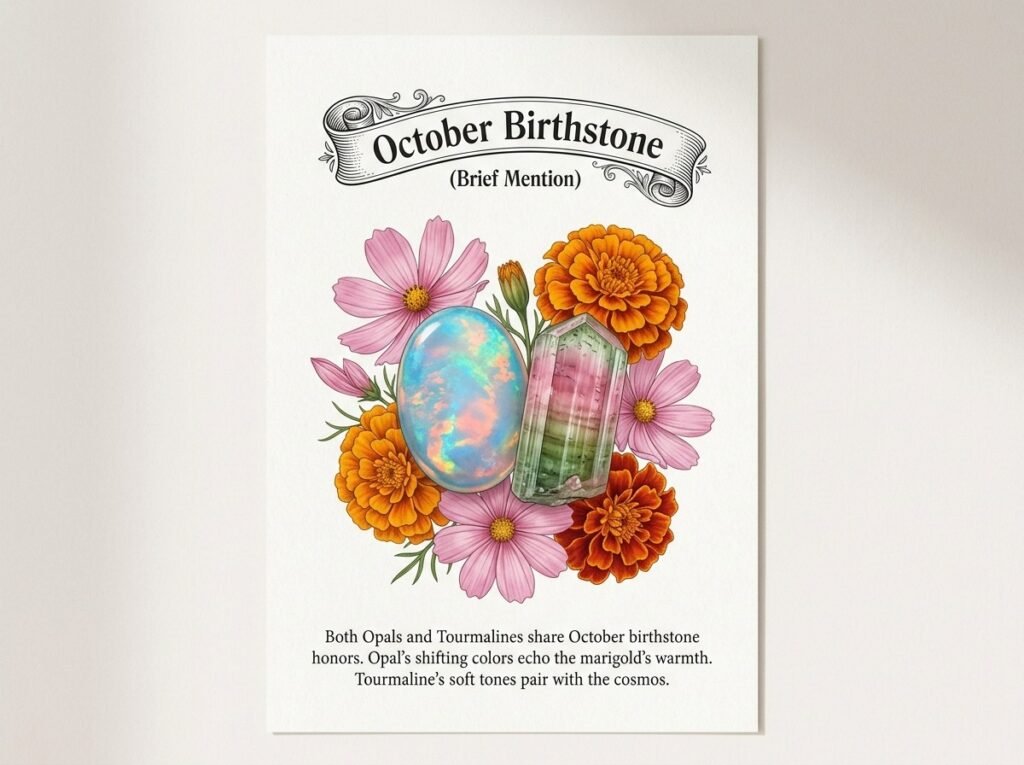
Alongside its two birth flowers, October also has its own birthstones: Opal and Tourmaline. Opal’s shifting play of color echoes the marigold’s vivid warmth, while tourmaline’s wide range of soft, varied tones pairs naturally with the gentler colors of the cosmos.
Fun Facts About Marigold and Cosmos
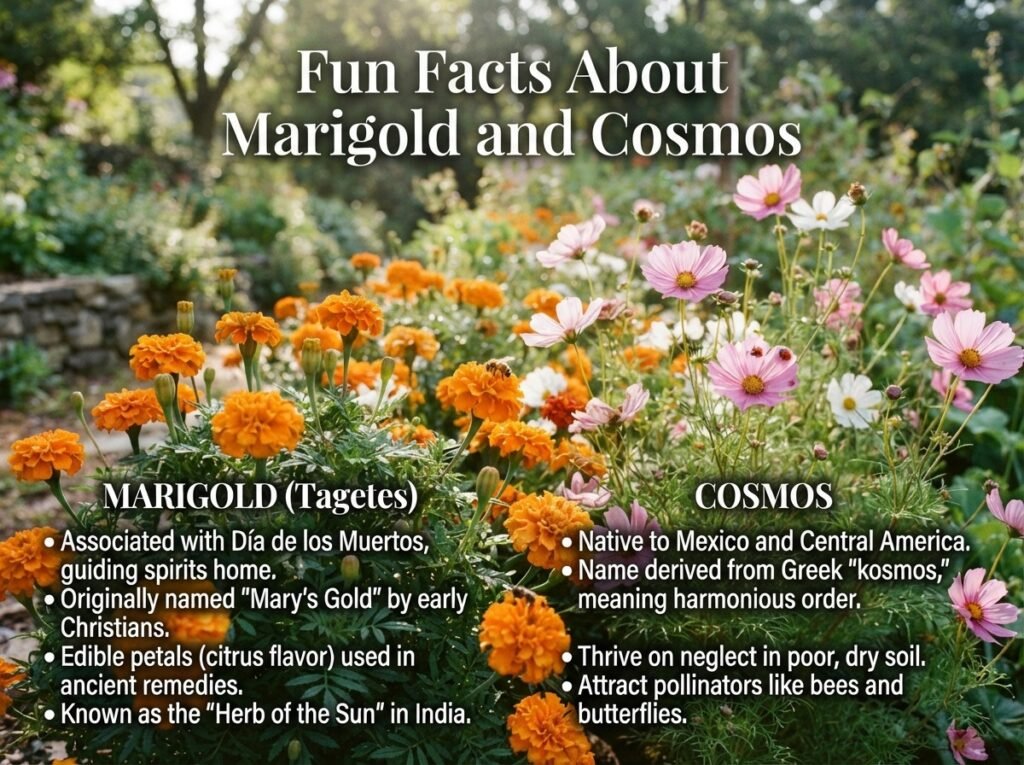
- Mexican Día de los Muertos celebrations use thousands of marigolds each year to create pathways believed to guide spirits home.
- The word “marigold” likely comes from “Mary’s Gold,” a reference to the Virgin Mary in medieval Christian tradition.
- In India, marigolds are considered so auspicious that they’re used in nearly every major festival and wedding celebration.
- The cosmos flower’s name comes from the Greek word “kosmos,” meaning order or harmony, a nod to its evenly spaced petals.
- Cosmos actually blooms better in poor, less fertile soil, making it one of the few flowers that thrive on neglect.
- A single cosmos planting can self-seed for years, often returning on its own without any replanting required.
Conclusion
October offers two birth flowers that balance each other beautifully. The marigold brings bold, fiery color and centuries of cultural meaning, from Mexican remembrance traditions to Indian celebrations of good fortune. The cosmos adds something gentler: order, peace, and a light, understated beauty that holds its own quiet appeal. Together, these two blooms make the October birth flower pairing one of the most balanced on the entire calendar. Whether you’re shopping for someone born in October or simply curious about the tradition, either flower makes a genuinely meaningful choice.
FAQs
What is the official October birth flower?
The primary October birth flower is the marigold. Its secondary birth flower is the cosmos, and both are widely recognized in Western flower traditions.
What does the marigold symbolize?
The marigold symbolizes warmth, passion, and creativity, along with deeper meanings of remembrance and good fortune depending on the culture. It plays a central role in Mexican Día de los Muertos traditions and Indian festival celebrations.
What does the cosmos flower mean?
The cosmos symbolizes harmony, peace, and order, drawn directly from the Greek meaning of its name. It also represents a calm, enduring form of love in Victorian flower language.
Is Cosmos easy to grow?
Yes, cosmos is genuinely easy to grow, even for beginners. It actually prefers lean, less fertile soil and often self-seeds, returning year after year with very little effort.
Are marigolds and cosmos both native to Mexico?
Yes, both flowers originated in Mexico and grew wild there long before European explorers brought them back to Europe in the 18th century. This shared origin is part of why they’re paired together as October’s birth flowers.
Why is the marigold associated with Day of the Dead?
Marigolds, known as cempasúchil in Mexico, are believed to guide the spirits of loved ones home with their bright color and strong scent. They’re used to create pathways and decorate altars during Día de los Muertos each year.
Why does October have two birth flowers instead of one?
Several months, including October, ended up with two birth flowers because regional flower calendars from different cultures and eras eventually merged into one widely used list. Marigold and cosmos both trace back to Mexico, which likely helped cement their pairing over time.