

Flowers that start with A cover an enormous range of shapes, colors, and growing habits. This single letter gives gardeners everything from the humble sweet alyssum to the towering hollyhock. It also hides a few genuine oddities, like the rare Amazon water lily and the poisonous monkshood. Anyone searching for flowers that start with A usually starts with a short list of five or six names. This guide goes much further than that.
- Quick Answer: Top A Flowers at a Glance
- Master Alphabetical List of Flowers That Start With A
- Full Comparison Table
- Garden Favorites
- Indoor Plants
- Florist Favorites
- Rare Flowers
- Caution: Toxic A Flowers
- Color-Based Groupings
- Life-Cycle Groupings
- Botanical Name Crosswalk
- Flower Meanings and Symbolism
- Decision-Flow Table
- Conclusion
- Frequently Asked Questions
We built this resource because most alphabet flower lists stop too early. A quick search turns up aster, allium, and amaryllis, then trails off into filler content. Gardeners deserve more than a name-drop. They need bloom times, native ranges, and toxicity warnings before they plant anything near pets or kids. So this list covers 85 flowers that start with A, each one checked for accuracy against reliable horticultural references.
The list below is organized by purpose, not just alphabetical order. Garden favorites sit near indoor picks. Florist staples sit near rare botanical curiosities. A dedicated caution section flags anything toxic, so nothing gets left to guesswork. Color groups and life-cycle tables help narrow the field fast when you already know what you want.
Whether you garden in full sun, deep shade, or a small apartment windowsill, this list of flowers that start with A has something worth planting. Start with the quick answer box for a fast overview. Then move into the full tables and category sections for deeper detail on each bloom.
Quick Answer: Top A Flowers at a Glance
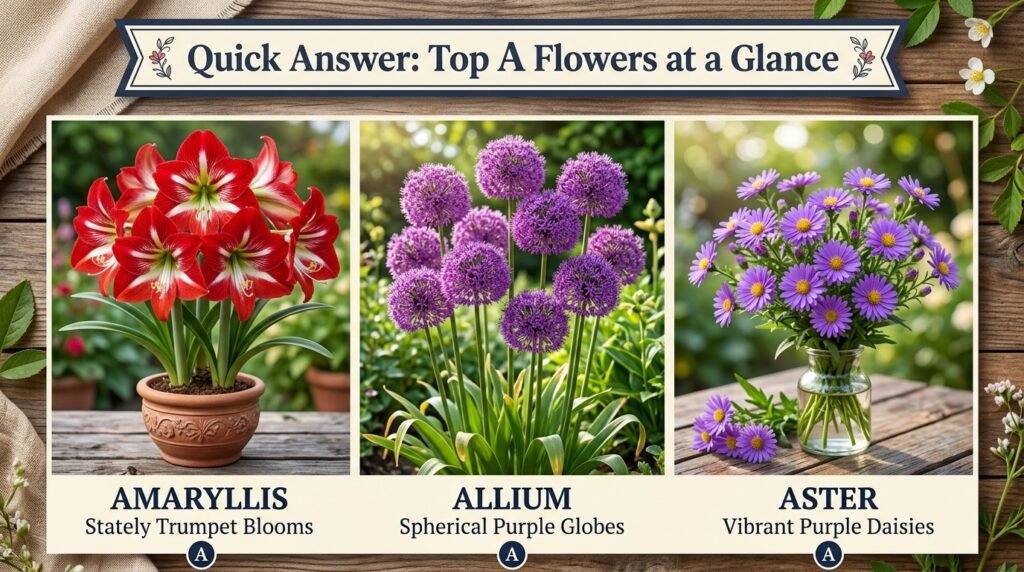
A handful of names carry this letter. Aster brings late-season color when most other perennials have finished blooming. Allium adds sculptural, globe-shaped purple heads that hold their shape long after the petals fade. Amaryllis is the classic winter bulb for indoor color during the darkest months. African Daisy blooms nearly nonstop from spring through fall in warm climates. Azalea delivers some of the boldest spring color any shrub can offer. Snapdragon suits cottage gardens and cut-flower beds alike. Agapanthus works well as a border plant with tall, rounded flower heads. Kangaroo Paw brings an unusual, almost sculptural texture that few other flowers match. These eight names cover most of what a home gardener will ever need from the letter A.
Master Alphabetical List of Flowers That Start With A
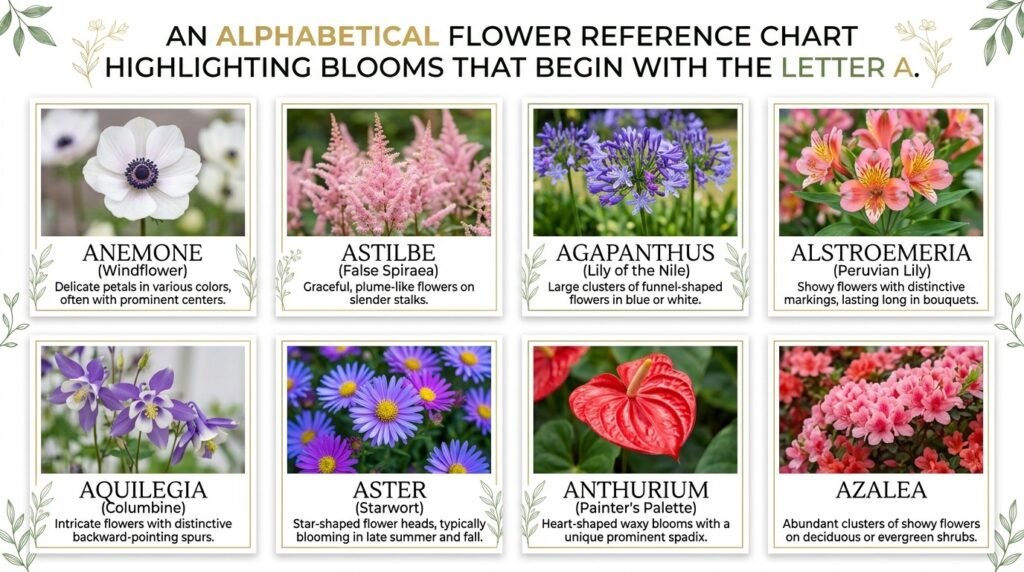
Some A flowers go by a familiar common name that most gardeners already know. Others are rarely called anything but their botanical name, since no common name ever caught on. The list below splits these two groups so you can scan either format. Common names appear first, followed by lesser-known botanical-first entries that specialty growers and plant collectors tend to search for directly.
Common-name flowers:
Aster, Allium, Alyssum, Amaryllis, African Daisy, Anemone, Anthurium, Snapdragon, Azalea, Columbine, Yarrow, Ageratum, Alstroemeria, Agapanthus, Amaranth, Angelonia, Kangaroo Paw, Rock Cress, Sea Thrift, Milkweed, Basket of Gold, Flowering Maple, Acacia, Monkshood, Desert Rose, Adonis, African Violet, Bugleweed, Hollyhock, Golden Trumpet, Bluestar, Scarlet Pimpernel, Bog Rosemary, Angelica, Cape Mallow, Pussytoes, Golden Marguerite, Arctotis Daisy, Jack-in-the-Pulpit, Dutchman’s Pipe, Sandwort, Marguerite Daisy, Arum Lily, Climbing Snapdragon, Asphodel, Masterwort, Angel’s Trumpet, Autumn Crocus, Avens, Amazon Water Lily, Anise Hyssop, Alkanet, Shell Ginger, Blue Hibiscus, Rue Anemone, Apple Blossom, Arabian Jasmine, Aromatic Aster, Ashy Sunflower, Asian Lily, Autumn Sage, Lipstick Plant, African Marigold, Bishop’s Flower.
Botanical-first flowers:
Alonsoa, Anacyclus, Androsace, Anemopsis, Aphelandra, Aptenia, Arisarum, Arnica, Astartea, Aubrieta, Aeonium, Ammobium, Anagyris, Adenophora, Aethionema, Anthericum, Aristea, Asperula, Amberboa, Anthyllis, Aotus.
That brings the total to a full 85 flowers that start with A. Not every entry suits every climate or every skill level. The comparison table below helps narrow the list down to what will actually thrive in your growing zone.
Full Comparison Table
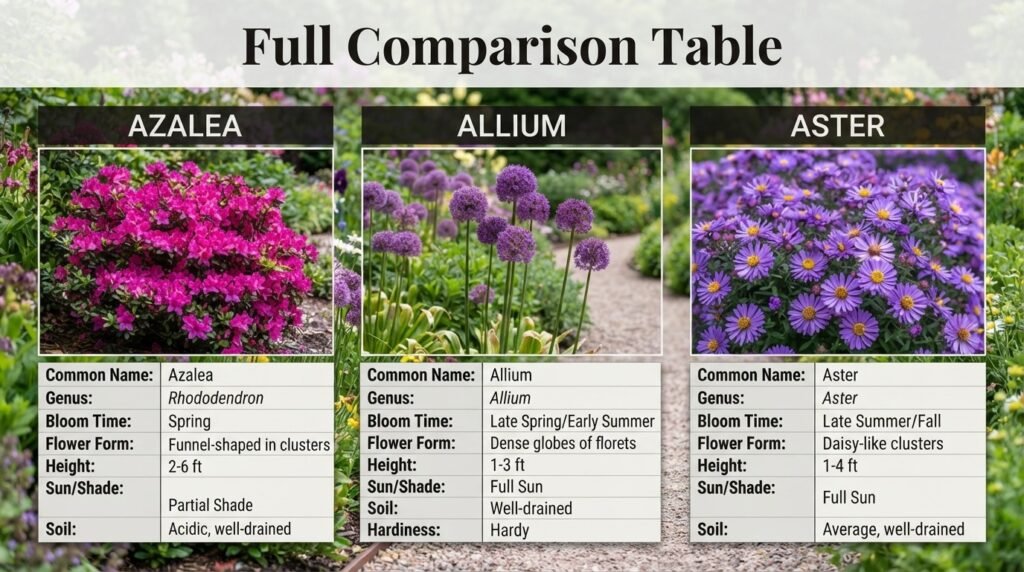
The table below focuses on the A flowers most home gardeners realistically plant. Each row lists the botanical name, native range, typical bloom season, and a toxicity rating. Toxicity ratings reflect ingestion risk for pets and children, drawn from general horticultural and veterinary references. Use this table to compare bloom timing and safety before committing a name to your garden plan.
| Common Name | Botanical Name | Native Range | Bloom Season | Toxicity |
| Aster | Symphyotrichum spp. | North America, Europe, Asia | Late summer–fall | Non-toxic |
| Allium | Allium spp. | Europe, Asia, North America | Late spring–summer | Toxic to pets |
| Alyssum | Lobularia maritima | Mediterranean | Spring–fall | Non-toxic |
| Amaryllis | Hippeastrum spp. | South America | Winter–spring | Toxic |
| African Daisy | Osteospermum spp. | South Africa | Spring–fall | Non-toxic |
| Anemone | Anemone spp. | Europe, Asia, North America | Spring | Mildly toxic |
| Snapdragon | Antirrhinum majus | Mediterranean | Spring–fall | Non-toxic |
| Azalea | Rhododendron spp. | Asia, North America | Spring | Toxic |
| Columbine | Aquilegia spp. | Northern Hemisphere | Spring–summer | Mildly toxic |
| Yarrow | Achillea millefolium | Europe, Asia | Summer–fall | Mildly toxic |
| Alstroemeria | Alstroemeria spp. | South America | Summer | Mildly toxic (dermatitis) |
| Agapanthus | Agapanthus africanus | South Africa | Summer | Mildly toxic |
| Kangaroo Paw | Anigozanthos spp. | Australia | Spring–summer | Non-toxic |
| Sea Thrift | Armeria maritima | Coastal Europe | Spring–summer | Non-toxic |
| Milkweed | Asclepias spp. | North America | Summer | Toxic |
| Hollyhock | Alcea rosea | Turkey, China | Summer | Non-toxic |
| Monkshood | Aconitum napellus | Europe | Late summer–fall | Highly toxic |
| Desert Rose | Adenium obesum | East Africa, Arabia | Summer | Toxic |
| Angel’s Trumpet | Brugmansia spp. | South America | Summer–fall | Highly toxic |
| Autumn Crocus | Colchicum autumnale | Europe | Fall | Highly toxic |
| African Violet | Saintpaulia ionantha | Tanzania, East Africa | Year-round indoors | Non-toxic |
| Amazon Water Lily | Victoria amazonica | Amazon Basin, South America | Summer | Non-toxic |
Azalea and monkshood stand out as the two names on this table that demand the most caution around pets. Kangaroo Paw and sea thrift, on the other hand, suit nearly any household without safety concerns. Amazon water lily is the outlier here, since it needs a heated pond rather than a garden bed to survive outside the tropics.
Garden Favorites
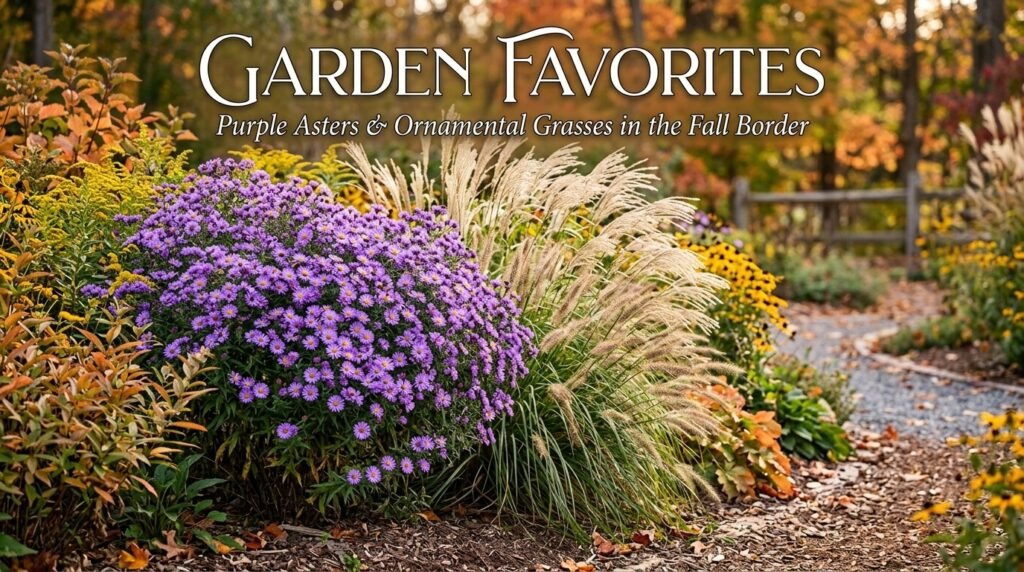
Aster earns a permanent spot in fall gardens by blooming exactly when most perennials are winding down. Its daisy-shaped flowers cover the plant in shades of purple, pink, and white from late summer into the first frost. Bees and butterflies rely on aster heavily during this late-season window. A single clump can spread into a wide mound within two or three seasons.
Allium takes a completely different approach, offering sculptural rather than soft appeal. Its round flower heads sit atop tall, leafless stems, making it look almost architectural against lower plantings. The blooms hold their shape for weeks, then dry into seed heads that still look striking through winter. Deer and rabbits tend to avoid it, which makes it a smart pick for gardens with wildlife pressure.
Hollyhock brings old-fashioned cottage-garden height that few other flowers can match. Its tall spires can reach six feet or more, lined with wide, papery blooms in almost any color. This biennial often needs staking in windy spots, since the flower spikes can grow top-heavy. Plant it against a fence or wall for both support and a classic backdrop.
Yarrow rounds out this group as the toughest, lowest-maintenance option of the four. Its flat-topped flower clusters attract pollinators steadily from summer through fall. This drought-tolerant perennial spreads readily once established, sometimes more than gardeners expect. Cutting it back after the first bloom flush often triggers a second round of flowers.
Indoor Plants
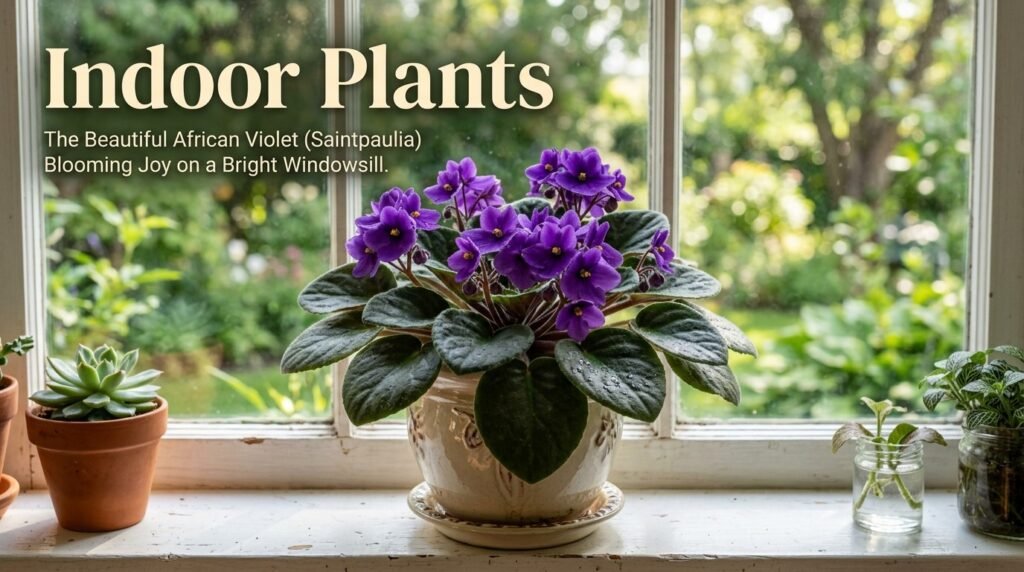
Not every flower needs outdoor space to thrive. African violet remains the classic houseplant choice, prized for compact size and near-constant blooming under the right light. Amaryllis bulbs also work well indoors, especially when forced into bloom for winter color. Lipstick plant and shell ginger round out the group for gardeners with a bit more indoor space to spare.
African violet stays small enough for a windowsill, rarely growing past eight inches across. Its fuzzy leaves and clusters of purple, pink, or white flowers can bloom for months at a stretch under bright, indirect light. Overwatering is the most common way this plant fails indoors. Letting the soil dry slightly between waterings keeps the roots healthy long-term.
Amaryllis brings a dramatic, almost theatrical bloom to indoor spaces during the coldest months. A single bulb can send up flower stalks topped with several trumpet-shaped blooms, often six inches or wider. Gardeners typically plant the bulb in fall for blooms by midwinter. After flowering fades, the bulb can be stored and forced again the following year.
Lipstick plant, or Aeschynanthus, suits a hanging basket better than a pot on a sill. Its trailing stems carry small, tube-shaped red flowers that peek out from waxy green leaves. Bright, indirect light and consistent humidity keep this plant flowering reliably. It makes a strong choice for a bathroom or kitchen with a sunny window.
Florist Favorites
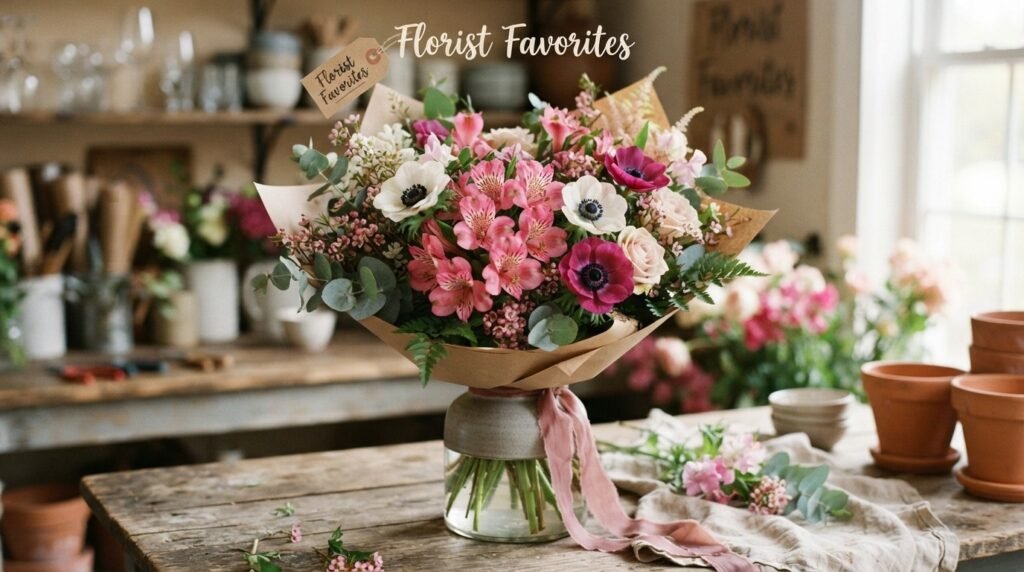
Florists reach for A flowers constantly, especially for spring weddings and mixed bouquets. Alstroemeria is a top pick thanks to its long vase life and wide color range. Anemone brings a striking, almost painterly look with its dark center and simple petals. Amaranth and snapdragon round out this group with texture that softer, rounder blooms can’t provide on their own.
Alstroemeria, often sold as Peruvian lily, can last two full weeks in a vase with proper care. Its speckled, lily-like petals come in nearly every color except true blue. Florists favor it heavily for mixed arrangements because a single stem often carries several blooms. This makes it an efficient, budget-friendly filler for larger bouquets.
Anemone offers a more dramatic look, especially the black-centered white variety florists call “Panda.” Its papery petals surround a dark, velvety center that photographs beautifully in wedding work. Unlike many cut flowers, anemone opens fully within a day or two of arriving in the shop. This fast bloom time means florists often buy it just before an event rather than days in advance.
Amaranth adds a trailing, textural element that mixed bouquets often lack. Its long, rope-like flower tassels drape dramatically over the edge of an arrangement or bouquet. Deep red and green varieties both see heavy florist use, particularly in fall designs. It also dries well, which makes it useful for arrangements meant to last beyond a single event.
Rare Flowers
A few flowers rarely show up outside botanical gardens or specialty collections. Amazon water lily produces leaves that can stretch six feet across, strong enough in some cases to support a small child’s weight. It grows only in warm, still water, which limits it to heated ponds or tropical climates outside its native range. The flower itself changes color over its short bloom cycle, opening white on the first night and shifting to pink by the second.
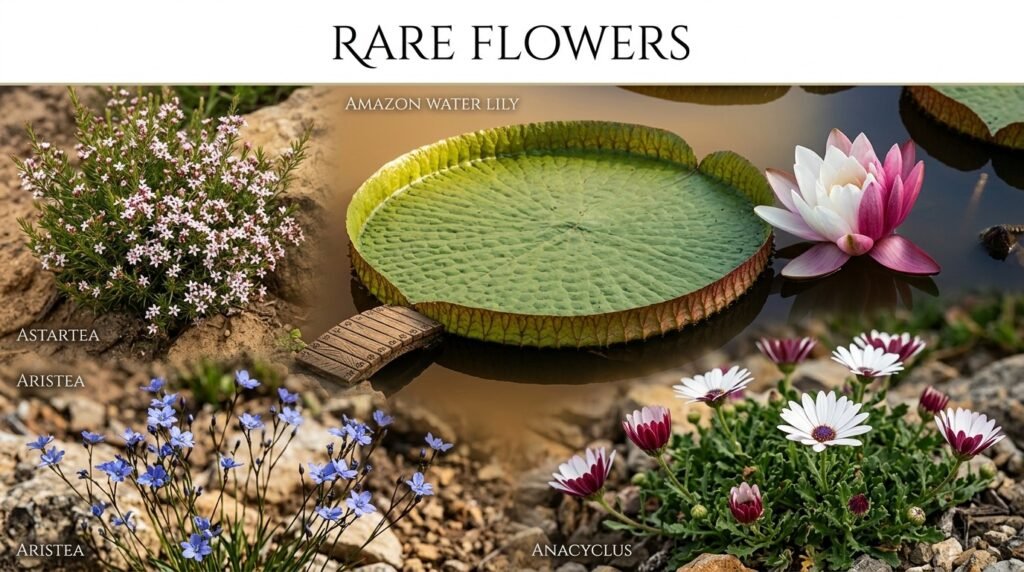
Astartea, a lesser-known Australian shrub, produces tiny, star-shaped flowers that cover the plant in a fine haze of white or pink. It tolerates poor, sandy soil far better than most ornamental shrubs. Growers outside Australia rarely encounter it, since it isn’t widely propagated for the nursery trade. Its fine, needle-like foliage gives it a texture closer to heather than to a typical flowering shrub.
Anacyclus, or Mount Atlas daisy, comes from the mountains of Morocco and stays low and mat-forming in habit. Its daisy-like flowers are white on top and a deep red-purple underneath, creating a striking two-tone effect as the petals open and close with the sun. Rock garden specialists prize it for this unusual color shift. It needs sharp drainage and full sun to survive outside its native alpine habitat.
Aristea, an African corn lily relative, produces small blue flowers along wiry stems that most gardeners outside South Africa have never seen in person. It grows from a rhizome and prefers the same well-drained, sunny conditions as many other Cape Province natives. Specialty bulb collectors are usually the only gardeners who seek it out deliberately.
Caution: Toxic A Flowers
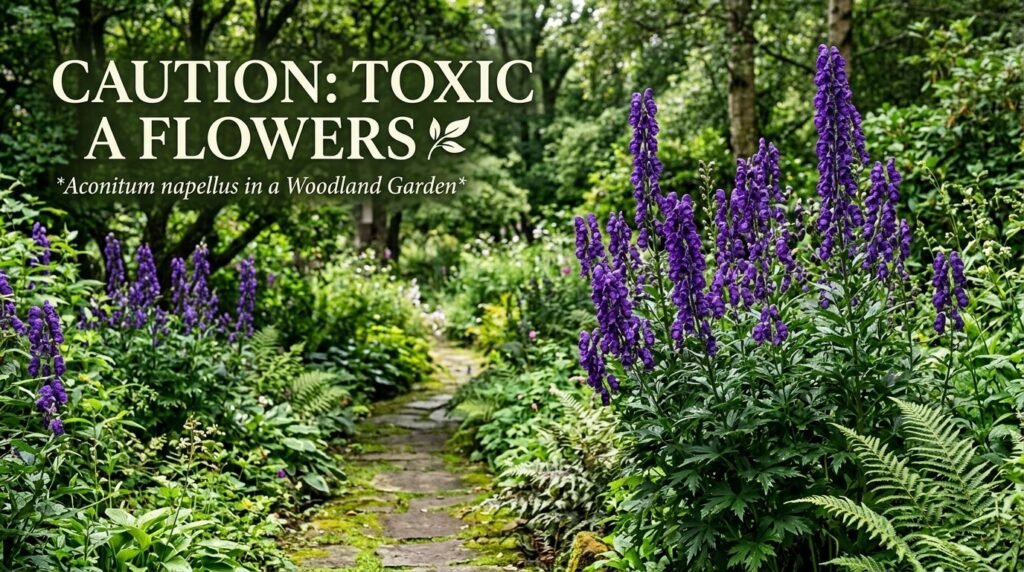
A handful of A flowers need careful placement around pets and small children. Monkshood contains some of the most potent plant toxins found in any common garden perennial. Autumn crocus causes serious poisoning even in small doses. Angel’s trumpet and desert rose both carry toxic compounds that affect the heart and nervous system if ingested.
Monkshood, or Aconitum, contains aconitine, a compound that can affect the heart within hours of ingestion. Every part of the plant carries toxicity, including the roots, which have historically been mistaken for edible tubers. Gardeners should wear gloves when handling it, since the toxin can also be absorbed through skin. Planting it well away from vegetable beds reduces the risk of accidental confusion.
Autumn crocus causes symptoms that can take days to appear, which makes accidental poisoning especially dangerous. Its resemblance to true crocus and to edible wild garlic has led to real poisoning cases in both humans and livestock. The toxin, colchicine, damages cells throughout the body rather than targeting one organ system. This flower is best kept out of gardens with grazing animals or young children who might sample plants.
Angel’s trumpet produces large, fragrant, downward-facing blooms that mask a genuinely dangerous plant. All parts contain tropane alkaloids that can cause hallucinations, rapid heartbeat, and in severe cases, death. Its striking appearance often leads to careless placement near patios or play areas. Keeping it in a container, away from curious hands, is the safer approach for most households.
Color-Based Groupings
Red and pink flowers lead with azalea, alstroemeria, and amaryllis, each bringing bold, saturated color to spring and winter displays. These warm tones suit beds meant to draw attention from a distance, since red and pink both read strongly even in low light. Angel’s trumpet also fits here in some cultivars, though its toxicity limits where it can safely go.
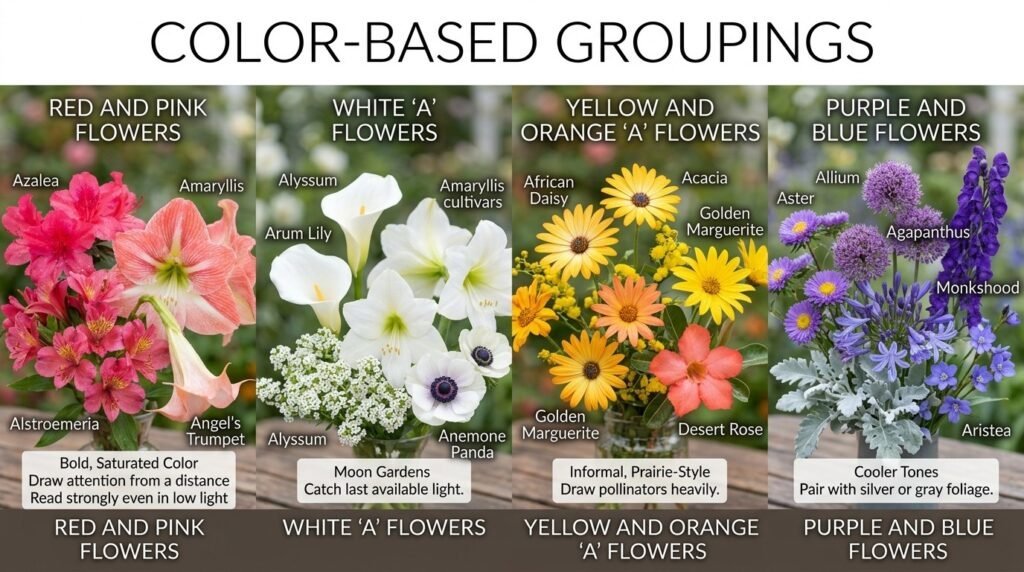
White A flowers include alyssum, arum lily, and many amaryllis cultivars. White blooms work especially well in moon gardens or evening seating areas, since pale petals catch the last available light after sunset. Anemone’s white “Panda” variety belongs in this group too, prized for its stark, dark-centered contrast.
Yellow and orange flowers center on African daisy, acacia, and golden marguerite, all of which draw pollinators heavily during peak bloom. These warmer tones suit informal, prairie-style plantings better than tightly clipped formal beds. Desert rose also contributes warm coral and orange tones in some hybrid forms.
Purple and blue flowers are led by aster, allium, and agapanthus, whose cooler tones pair naturally with silver or gray foliage nearby. Monkshood adds deep violet spikes to this group, though it belongs at the back of a border where its toxicity poses less risk. Aristea’s small blue blooms also fit here, even though the plant itself remains rare outside specialty collections.
Life-Cycle Groupings
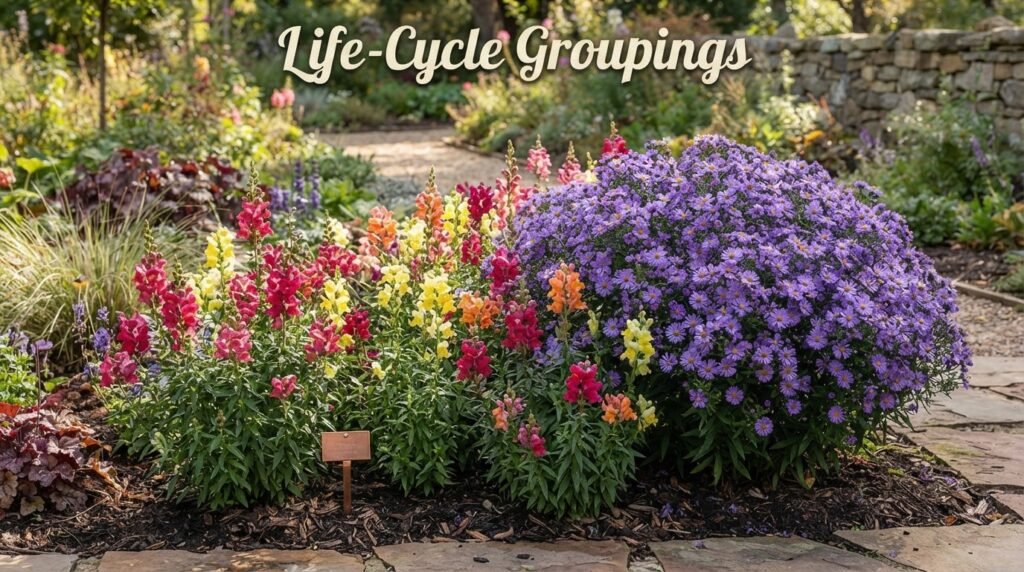
Knowing whether a flower returns on its own changes how much replanting your garden needs each year. Annual A flowers need fresh seed or transplants every season, but many bloom faster than perennials in exchange. Perennial types return without replanting and often build a larger, fuller display over several years. The table below sorts key A flowers by life cycle so you can plan a planting budget that matches your patience level.
Image caption: A garden bed showing annual snapdragons planted beside a perennial clump of aster.
| Flower | Life Cycle | Notes |
| Aster | Perennial | Spreads readily once established |
| Alyssum | Annual (self-seeds) | Reseeds freely in mild climates |
| Amaryllis | Perennial bulb | Often forced indoors for winter bloom |
| Snapdragon | Perennial grown as annual | Hardy in mild winters, reseeds lightly |
| Hollyhock | Biennial | Blooms in its second year, then declines |
| Columbine | Perennial | Short-lived but self-seeds well |
| Milkweed | Perennial | Dies back fully in cold winters |
| Agapanthus | Perennial | Slow to establish, long-lived once settled |
Hollyhock stands out here as the one flower gardeners often mistake for a perennial. It typically dies after its second flowering year, though it usually leaves seedlings behind to continue the display. Milkweed and agapanthus, by contrast, reward patience by building larger, fuller clumps with each passing season.
Botanical Name Crosswalk
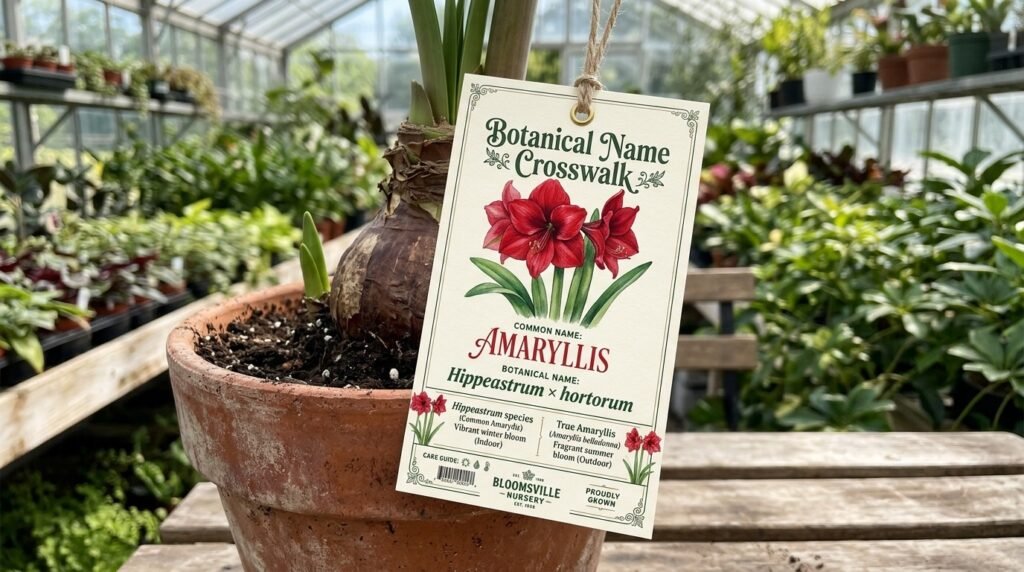
Botanical names matter more than most casual gardeners expect, especially when buying online or searching plant databases. Nurseries and seed catalogs often list stock under the genus name first, particularly for less common species. A search for “Osteospermum” will often return more accurate results than a search for “African daisy” alone, since several unrelated plants share that common name.
| Common Name | Botanical Name |
| Aster | Symphyotrichum spp. |
| African Daisy | Osteospermum spp. |
| Sweet Alyssum | Lobularia maritima |
| Kangaroo Paw | Anigozanthos spp. |
| Sea Thrift | Armeria maritima |
| Angel’s Trumpet | Brugmansia spp. |
| Autumn Crocus | Colchicum autumnale |
Using the botanical name also prevents confusion between plants that share a common name but nothing else. “Angel’s trumpet,” for instance, is sometimes used for both Brugmansia and the unrelated Datura, two plants with different growth habits despite similar flowers. The botanical name always points to one exact species, which matters most when toxicity or care needs differ sharply between look-alikes.
Flower Meanings and Symbolism
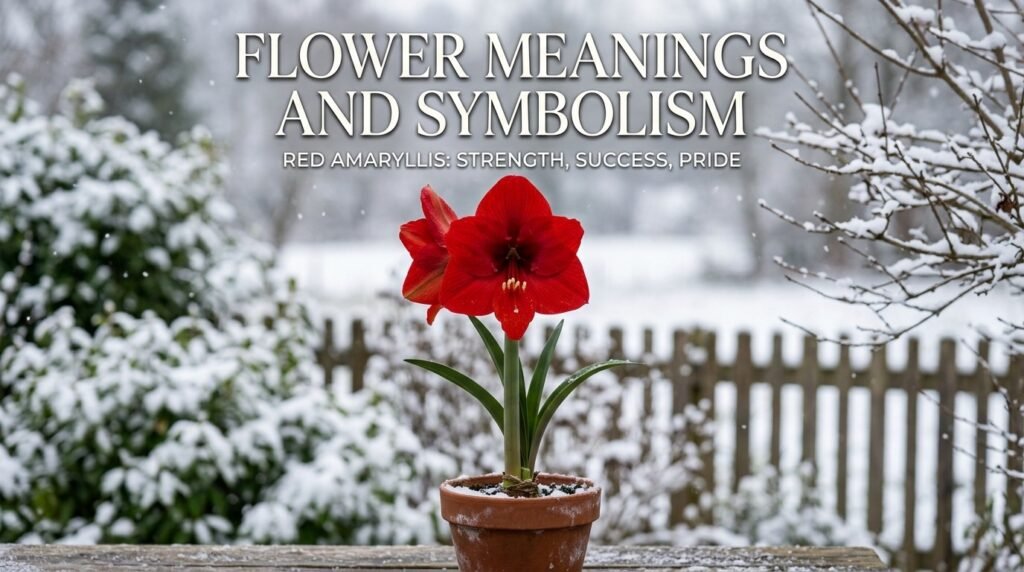
Amaryllis carries some of the richest symbolism among flowers, traditionally representing pride, determination, and radiant beauty. Its bold, trumpet-shaped bloom pushes up from a bare bulb with almost no warning, which likely shaped its association with strength and resilience. Victorian flower language often paired it with achievement, making it a fitting gift for milestones.
Aster’s name comes directly from the Greek word for star, a nod to its radiating petal shape. It has long symbolized patience and daintiness, partly because it blooms so late in the season when little else remains in flower. Some traditions also link aster to love and wisdom, making it a common choice for late-season anniversaries.
Anemone carries a more somber history, tied in Greek mythology to fleeting beauty and loss. The flower’s short bloom life, often just a few days once fully open, reinforced this association over centuries. Today it appears more often for its striking looks than for any symbolic weight, especially in modern floral design.
Azalea symbolizes temperance and taking care in relationships, a meaning that traces back to Victorian etiquette around gift-giving. Its brief but intense bloom period may have inspired this association with fleeting passion. In parts of East Asia, azalea also carries connections to womanhood and softness, appearing frequently in traditional poetry.
Decision-Flow Table
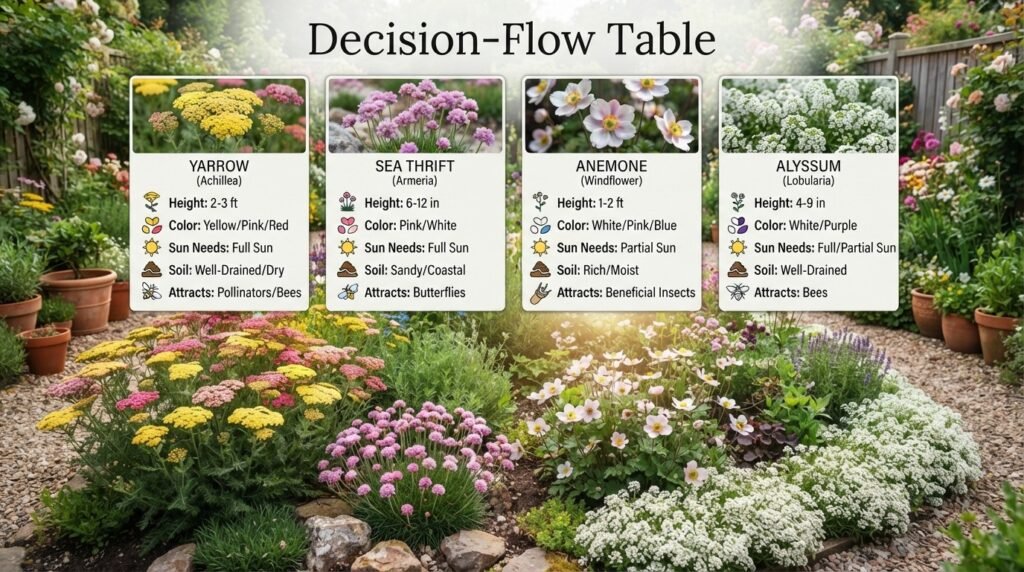
Choosing the right flower depends heavily on your space, light, and long-term goals for the bed or pot. The table below walks through common gardening scenarios and points toward a matching flower for each one. Use it as a fast reference when planning a new bed, filling a gap, or picking something for a specific spot.
| If you want… | Choose this flower |
| A drought-tolerant border plant | Yarrow or Sea Thrift |
| A fragrant flowering vine or shrub | Angelica or Acacia |
| A long-lasting cut flower | Alstroemeria or Aster |
| A shade-loving spring bloom | Anemone or Columbine |
| A low-maintenance indoor plant | African Violet or Lipstick Plant |
| A pet-safe garden bed | Kangaroo Paw, Alyssum, or Sea Thrift |
| A pollinator-friendly wildflower | Milkweed or Yarrow |
Gardeners short on time should start with yarrow or sea thrift, since both tolerate neglect once their roots are established. Anyone planning a pet-safe yard will get the most reliable results from kangaroo paw and alyssum, both of which carry no known toxicity concerns.
Conclusion
Flowers that start with A cover a real range, from cottage-garden classics to rare botanical curiosities most gardeners will never grow. Aster, allium, and azalea anchor most beds, while rare picks like the Amazon water lily and Aristea reward more curious plant lovers. The toxicity and life-cycle notes above should help you plant with more confidence around pets and children. Keep this list of flowers that start with A on hand as a lasting reference for your next planting season.
Frequently Asked Questions
What are some common flowers that start with A?
Aster, Allium, Alyssum, Amaryllis, and Azalea rank among the most widely grown flowers that start with A. Each suits a different garden style, from formal borders to low-maintenance drought beds.
Are there any flowers that start with A that are toxic to pets?
Yes. Monkshood, autumn crocus, angel’s trumpet, and desert rose are all toxic if ingested by pets. Keep these away from curious cats and dogs, especially in yards where animals roam freely.
Which flower is best for a beginner gardener?
Yarrow is an excellent starting point for new gardeners. It tolerates poor soil, needs very little care, and keeps blooming reliably from summer through fall.
Do any A flowers work well as houseplants?
African violet and lipstick plant both thrive indoors with bright, indirect light. Amaryllis also does well indoors, particularly when the bulb is forced for winter blooms.
What does an amaryllis flower symbolize?
Amaryllis symbolizes pride, determination, and radiant beauty in most flower meaning traditions. Its dramatic bloom from a bare bulb has long linked it to strength and resilience.
Is the Amazon water lily something people can grow at home?
Only with real effort. It needs a large, heated pond to survive outside its native tropical range, which puts it out of reach for most backyard gardeners.
Which A flowers attract the most pollinators?
Yarrow and milkweed both draw bees and butterflies in large numbers throughout the growing season. Milkweed is especially valuable, since it also serves as the primary host plant for monarch caterpillars.