

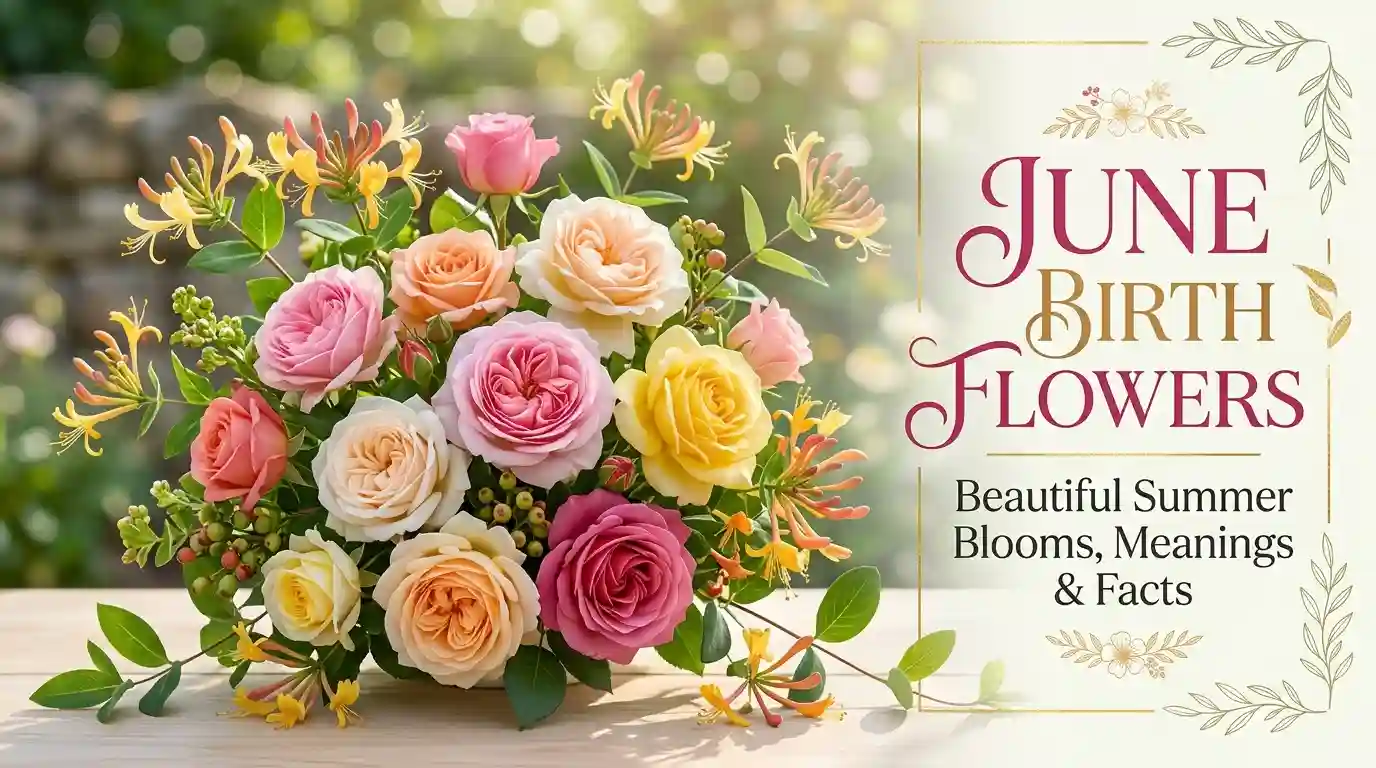
Quick Answer: The June birth flower comes as a pair, and together they cover nearly every shade of love. Rose (Rosa) is the world’s most recognized flower, standing for love, passion, and timeless beauty. Honeysuckle (Lonicera) is the quieter partner, a sweetly scented climbing vine that represents devoted affection and bonds that hold steady over time. One is bold and iconic. The other is fragrant and unassuming. Together, they capture June’s warmth from every angle.
- What Is a Birth Flower?
- June’s Birth Flower(s): Overview
- History and Origin of Rose
- History and Origin of Honeysuckle
- Meaning and Symbolism of Rose
- Meaning and Symbolism of Honeysuckle
- Color Varieties and Their Meanings (Both Flowers)
- How to Grow Rose
- How to Grow Honeysuckle
- Gift Ideas Using June’s Birth Flowers
- Famous People Born in June and Their Connection to the Flowers
- June Birthstone (Brief Mention)
- Fun Facts About Rose and Honeysuckle
- Conclusion
- FAQs
June marks the real start of summer, the point where gardens hit their stride and evenings finally turn warm and golden. It’s also one of the few months lucky enough to claim two birth flowers instead of one, and the June birth flower pairing happens to be an unusually good match. Rose brings the grand gesture, the flower most people picture when love comes up in conversation. Honeysuckle brings something gentler, a fragrant vine that has quietly symbolized devotion and lasting happiness for centuries. If you were born in June, or you’re shopping for someone who was, this guide covers both flowers in full: their history, their meaning, their color varieties, and how to grow each one successfully.
What Is a Birth Flower?
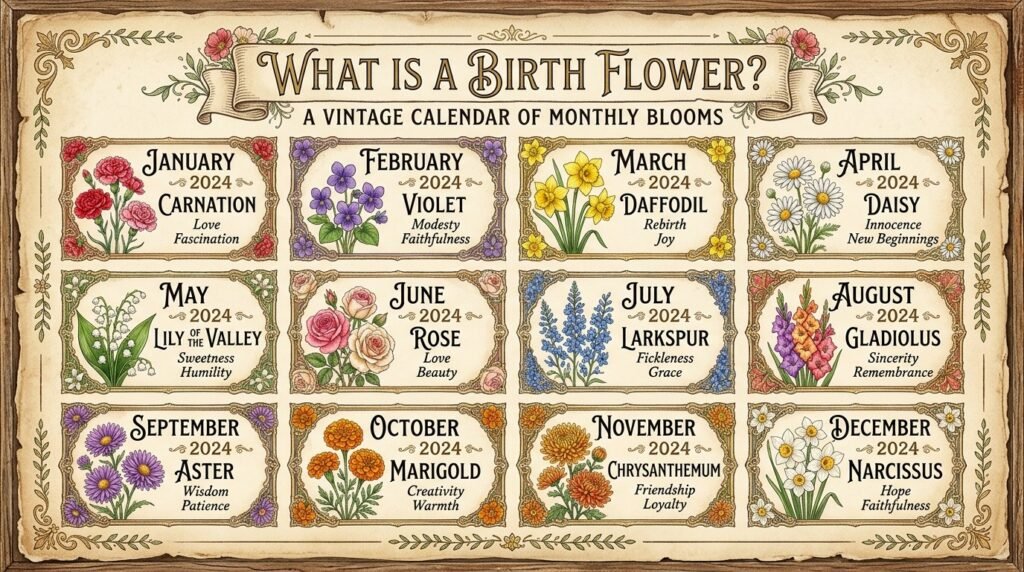
A birth flower works much like a birthstone. Each month has one or more flowers linked to it. These flowers often carry special meanings and symbols.The tradition goes back to Roman times. People believed certain flowers could bring luck. Some flowers were also linked with healing and seasonal changes. The tradition became even more popular during the Victorian era. This was when the “language of flowers” became widely known. It was also called floriography. Different flowers were given different meanings. People used them to share feelings without speaking. A single flower could express love, friendship, sadness, hope, or devotion. By the 1800s, birth flower calendars had become common. The practice spread across Europe and America. Birth flowers soon became popular gifts, much like birthstones.
June’s Birth Flower(s): Overview
Rose
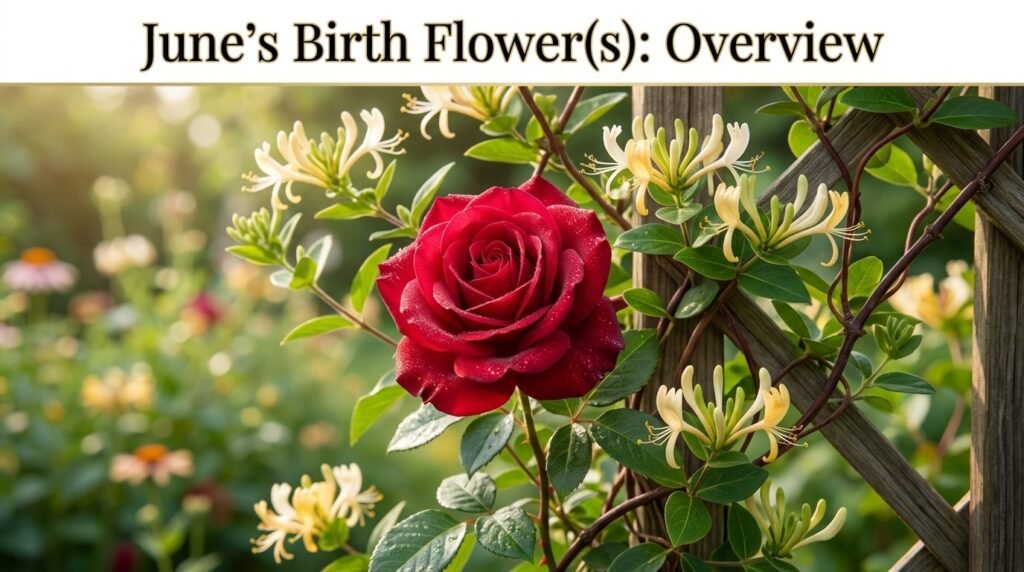
The primary June birth flower is the rose. It belongs to the genus Rosa. The rose is part of the Rosaceae family. The rose is often called the “queen of flowers.” It is known for its beautiful layered petals. Roses come in many colors. These include red, pink, white, yellow, orange, and purple. True blue roses do not occur naturally. Roses grow on woody stems. Wide varieties also have sharp thorns. Their sweet fragrance is another reason they are so popular. The rose has a very long history. People have grown roses for thousands of years. Different cultures have admired them for their beauty and fragrance. Roses also have strong emotional meanings. Red roses often represent love and passion. Pink roses can symbolize affection and gratitude. White roses are often linked with purity and innocence.
Honeysuckle
The secondary June birth flower is honeysuckle. It belongs to the genus Lonicera. Honeysuckle is known for its climbing growth and sweet fragrance.The plant grows as a twining vine. It can wrap around fences, trellises, and garden arches. Its flexible stems give it a natural and relaxed look. Honeysuckle produces small, tubular flowers. The blooms often have bright and delicate colors. They also release a strong, sweet fragrance. The scent can become stronger in the evening. This is when many pollinators become active. The fragrance helps attract them to the flowers. Honeysuckle has a different look from the rose. Roses have an upright and structured shape. Honeysuckle grows freely and climbs around nearby supports.
History and Origin of Rose
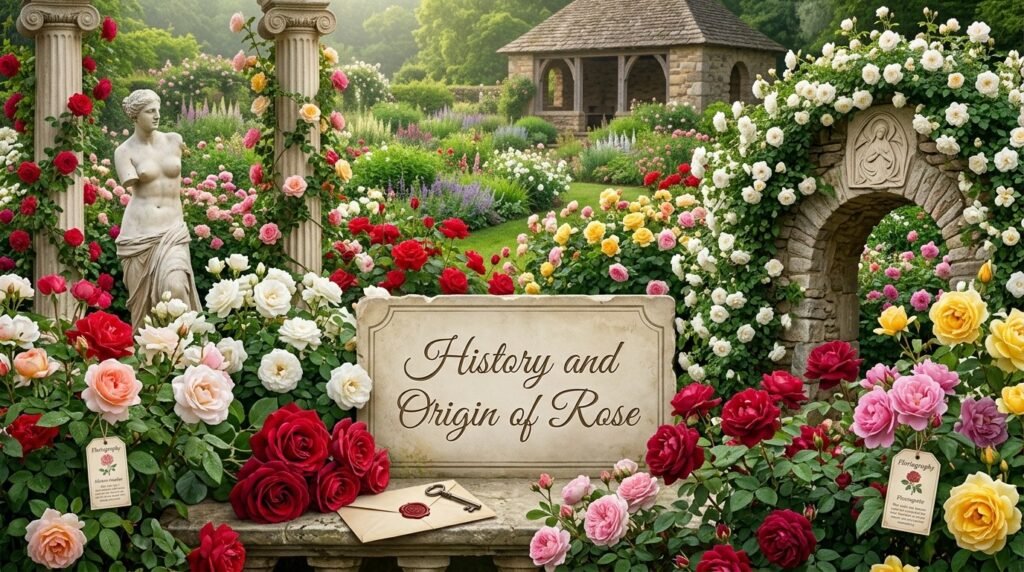
Rose’s history is almost unmatched among cultivated flowers, with fossil evidence suggesting the plant existed in some form as far back as 35 million years. Ancient Greek and Roman civilizations held the rose in particular high regard, associating it closely with Aphrodite and Venus, their respective goddesses of love and beauty, and using the flower to crown festivals and decorate temples. During the Middle Ages, the rose took on a second layer of meaning through its association with the Virgin Mary in Catholic tradition, giving it a spiritual weight that extended well beyond its earlier romantic symbolism. The Latin phrase sub rosa, meaning “under the rose,” even traces back to the flower’s old reputation as a symbol of secrecy and confidentiality.
Rose’s connection to June comes down largely to timing and sheer cultural dominance. Wide rose varieties reach peak bloom during early summer, exactly when June gardens and celebrations call for their fullest, most fragrant display. By the Victorian era, the rose had become the undisputed centerpiece of floriography, with careful color choices used to send messages that words alone couldn’t convey. That combination of perfect seasonal timing and centuries of accumulated symbolism made the rose an obvious choice as June’s primary birth flower.
History and Origin of Honeysuckle
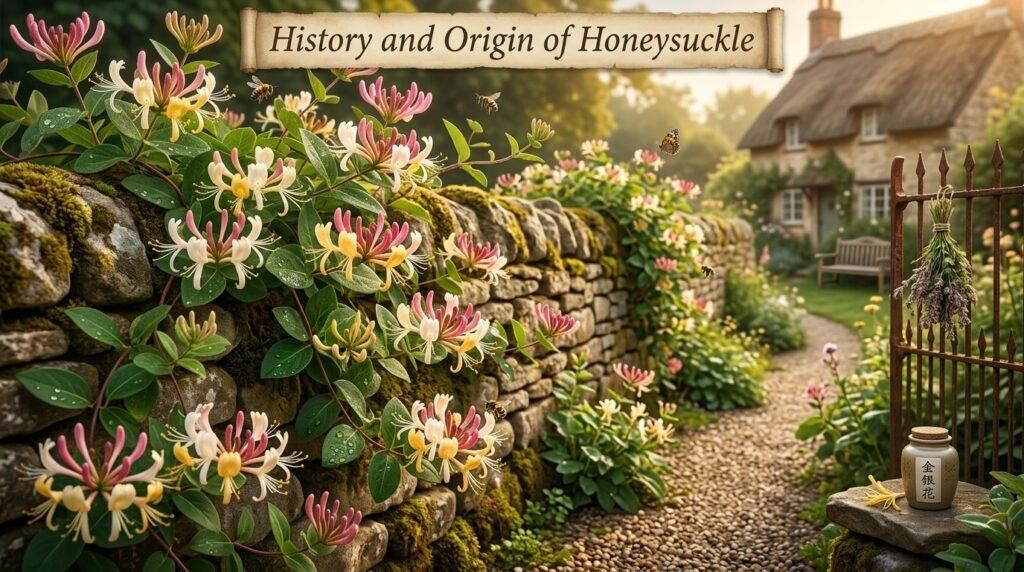
Honeysuckle’s story runs along a quieter track, though it stretches back nearly as far. Native across Asia, Europe, and North America, the plant grows wild throughout much of the Northern Hemisphere, and many cultures independently found practical and symbolic uses for it. In traditional Chinese medicine, honeysuckle was valued as a remedy for inflammation and infection long before modern science could explain why it worked, and it remains a respected herbal ingredient in parts of Asia today. European households, meanwhile, often planted honeysuckle vines close to their front doors, partly for the evening fragrance and partly out of a folk belief that the plant helped keep bad luck and evil spirits away from the home.
Honeysuckle’s link to June comes from both its bloom timing and its long romantic symbolism in Western culture. Renaissance European art frequently depicted lovers surrounded by honeysuckle vines, using the plant’s twining, embracing growth habit as a visual metaphor for devoted, intertwined love. Victorian flower-language guides carried that symbolism forward, treating honeysuckle as a gentler, more domestic counterpart to the rose, one that spoke to a contented home and quiet, lasting affection rather than passionate declaration. That pairing of wild fragrance and deep-rooted symbolism made honeysuckle a fitting secondary birth flower for June.
Meaning and Symbolism of Rose
As June’s more prominent birth flower, the rose carries centuries of layered meaning that shift depending on color and context. Its core symbolism includes:
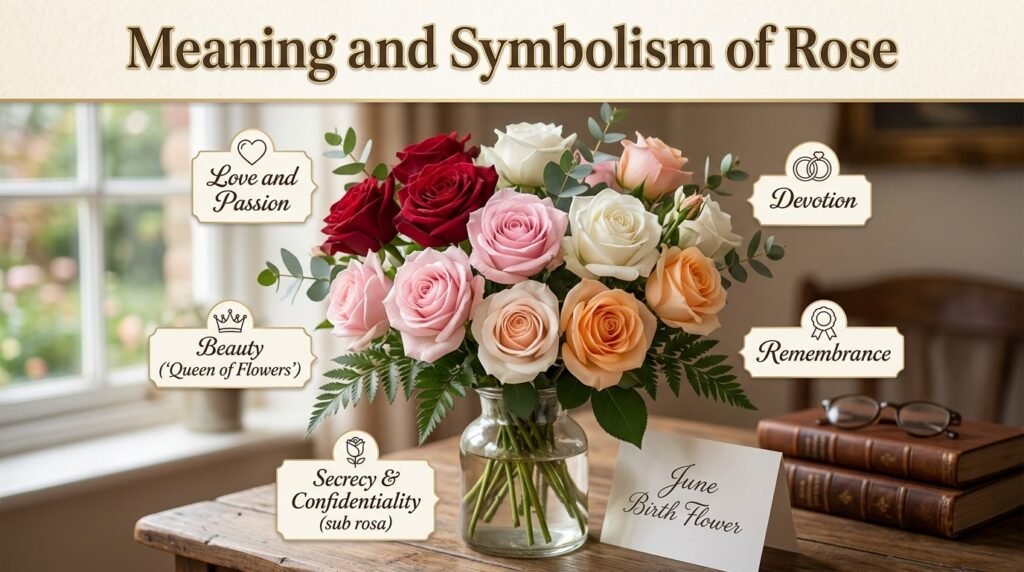
- Love and passion — the flower’s single most recognized meaning across nearly every culture
- Beauty — reflected in the rose’s long-standing title as the “queen of flowers”
- Devotion — tied to its enduring role in romantic and ceremonial traditions
- Remembrance — a common meaning in memorial bouquets and tribute arrangements
- Secrecy and confidentiality — rooted in the old Latin phrase sub rosa
Roses’ meanings shift dramatically by color, more than almost any other common flower, which makes them an especially versatile choice for a June birthday gift that needs to say something specific.
Meaning and Symbolism of Honeysuckle
Honeysuckle’s symbolism leans toward warmth and constancy, offering a gentler counterpoint to the rose’s bold romantic statement. As June’s secondary birth flower, its core meanings include:
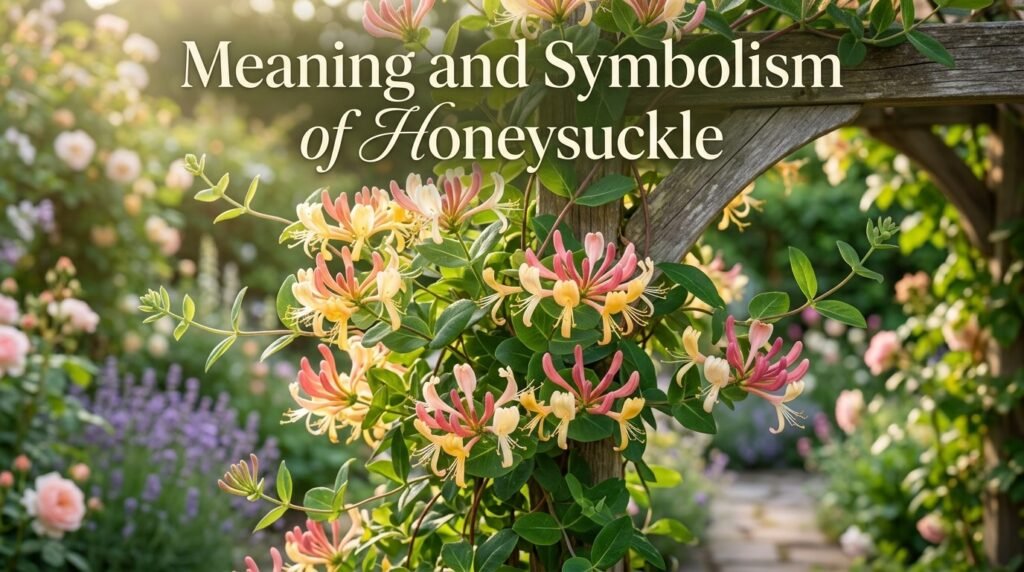
- Devoted love — the flower’s most consistently cited meaning across flower-language traditions
- Happiness — tied to its sweet fragrance and cheerful, informal growth habit
- Domestic bliss — reflecting its long history of being planted near homes for luck and comfort
- Bonds of affection — drawn directly from its twining, embracing vine structure
- Nostalgia — often associated with first love or fond memories of an earlier romance
Where rose announces love boldly, honeysuckle simply holds on, quietly and consistently, and that contrast is exactly what makes the June birth flower pairing feel so complete.
Color Varieties and Their Meanings (Both Flowers)
Rose offers one of the widest, most nuanced color ranges of any flower in the world, while honeysuckle sticks to a smaller but still meaningful palette. Reading through both sets of color meanings together shows how the two June birth flowers complement each other, one offering precise, color-coded messages, the other offering a simpler but equally warm sentiment. The table below breaks down the most common colors for each flower and what each one traditionally represents.
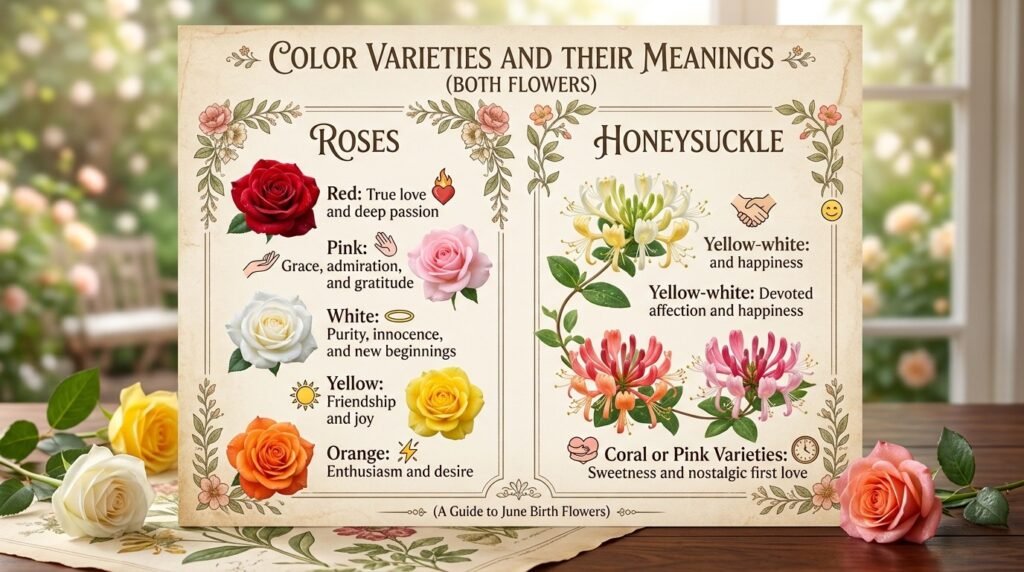
| Flower | Color Variety | Symbolic Meaning |
| Rose | Red | True love and deep passion |
| Rose | Pink | Grace, admiration, and gratitude |
| Rose | White | Purity, innocence, and new beginnings |
| Rose | Yellow | Friendship and joy |
| Rose | Orange | Enthusiasm and desire |
| Honeysuckle | Yellow-white (most common) | Devoted affection and happiness |
| Honeysuckle | Coral or pink varieties | Sweetness and nostalgic first love |
Roses’ red and pink varieties remain the most requested for June birthdays and wedding arrangements, since June is traditionally the most popular month for weddings in many Western countries. Honeysuckle’s warmer coral and pink cultivars carry a softer, more nostalgic message, making them a thoughtful addition alongside roses in a mixed June bouquet.
How to Grow Rose
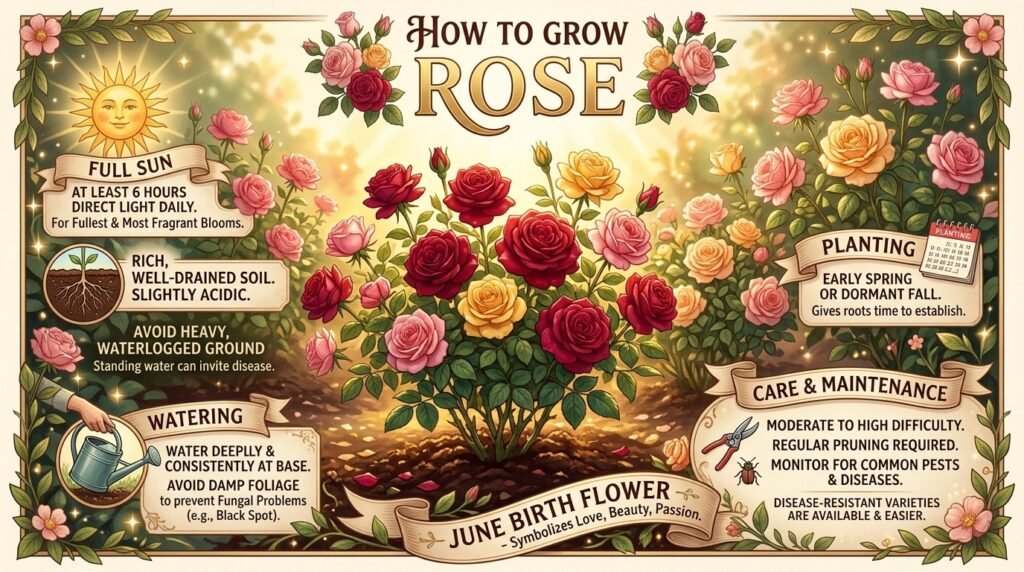
Rose grows best in full sun, needing at least six hours of direct light each day to produce its fullest, most fragrant blooms. Rich, well-drained, slightly acidic soil suits it far better than heavy or waterlogged ground, since standing water around the roots quickly invites disease. Water deeply and consistently at the base of the plant, avoiding the leaves where possible, since damp foliage can encourage fungal problems like black spot. Most gardeners plant roses in early spring or during the plant’s dormant season in fall, giving roots time to establish before summer heat or winter cold sets in. Overall difficulty sits at a moderate to high level, since roses benefit from regular pruning and consistent monitoring for common pests and diseases, though wide modern disease-resistant varieties have made the process considerably easier for beginners.
How to Grow Honeysuckle
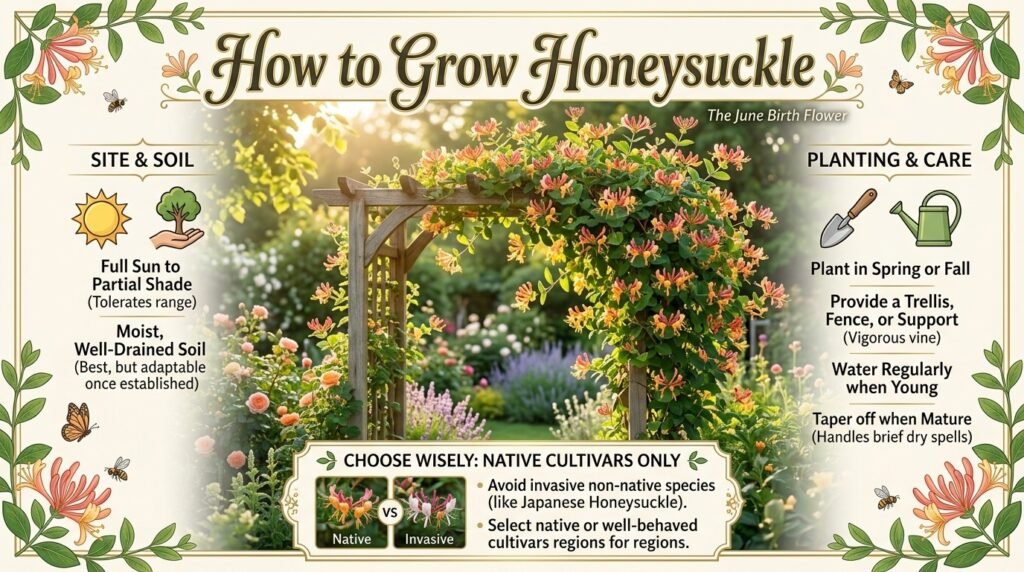
Honeysuckle adapts more easily than rose to a range of garden conditions, tolerating full sun to partial shade depending on the species. Moist, well-drained soil gives the best results, though established plants show reasonable tolerance for less-than-ideal conditions once their roots take hold. Water regularly while the vine is young and still establishing, then taper off, since mature honeysuckle handles brief dry spells reasonably well. Gardeners typically plant honeysuckle in spring or fall, providing a trellis, fence, or other support structure right from the start, since this vigorous climbing vine will quickly need somewhere to grow. Difficulty ranks as easy to moderate, and the main caution involves choosing native or well-behaved cultivars, since some honeysuckle species, particularly Japanese honeysuckle, can spread aggressively and become invasive in certain regions.
Gift Ideas Using June’s Birth Flowers
Because rose and honeysuckle offer such different personalities, gift-givers have real room to personalize a June birthday. A classic rose bouquet, chosen carefully by color, makes a bold, unmistakable gift that leans into the flower’s long romantic history. A small potted honeysuckle vine, paired with a simple trellis, offers something more lasting and personal, letting the recipient watch it climb and bloom for years to come. Mixed arrangements pairing structured rose blooms with a few trailing honeysuckle vines capture both June birth flowers in a single fragrant gift, balancing formal elegance against wild, cottage-garden charm. For something that outlasts the growing season entirely, jewelry or artwork featuring both flowers gives a June-born recipient a lasting reminder of their full birth-flower pairing.
Famous People Born in June and Their Connection to the Flowers
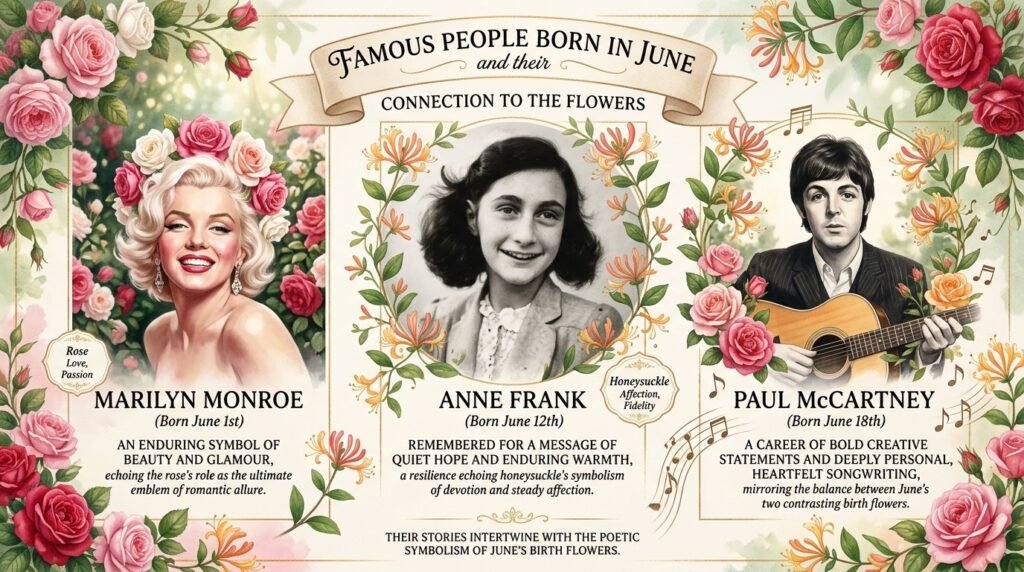
Quite a few notable figures share a June birthday, and the symbolism behind rose and honeysuckle maps onto their stories in interesting ways. Marilyn Monroe, born June 1st, became one of the most enduring symbols of beauty and glamour in modern history, echoing the rose’s long-standing role as the ultimate emblem of romantic allure. Anne Frank, born June 12th, is remembered for a message of quiet hope and enduring warmth despite extraordinarily difficult circumstances, a resilience that echoes honeysuckle’s symbolism of devotion and steady affection. Musician Paul McCartney, born June 18th, built a career defined by both bold creative statements and deeply personal, heartfelt songwriting, a balance that mirrors the contrast between June’s two birth flowers rather neatly. These connections lean more poetic than scientific, but they help explain why birth flowers remain such a popular way to personalize a June birthday.
June Birthstone (Brief Mention)
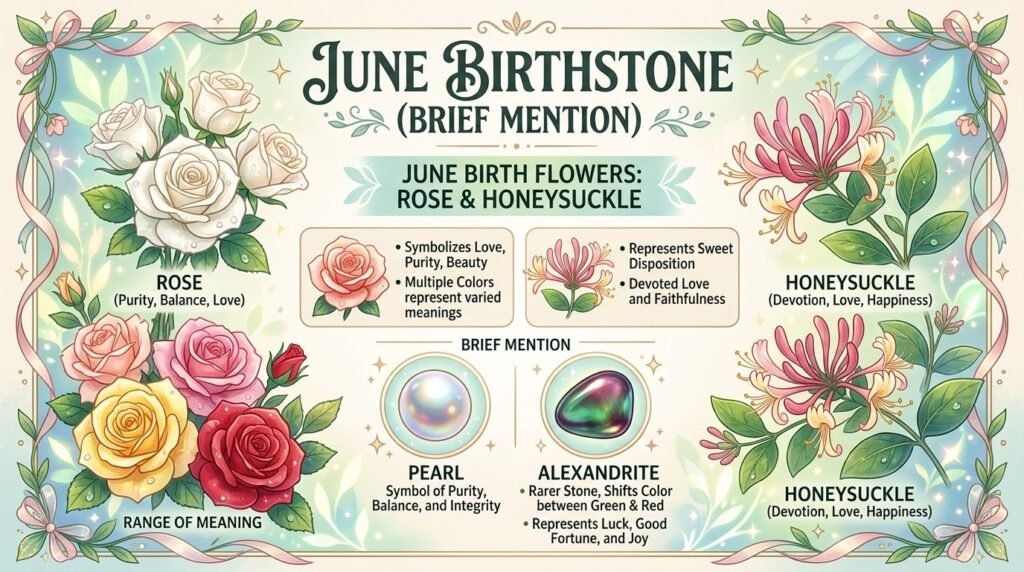
Alongside its two birth flowers, June also claims not one but two well-known birthstones: pearl, prized for centuries as a symbol of purity and emotional balance, and alexandrite, a rarer stone known for shifting color between green and red depending on the light. Pearl’s association with purity mirrors the meaning of white rose varieties, while alexandrite’s dramatic color shift echoes the sheer range of meaning packed into the rose’s many colors, giving anyone born in June several ways, in gemstone and in flower alike, to mark their birthday with real symbolic depth.
Fun Facts About Rose and Honeysuckle
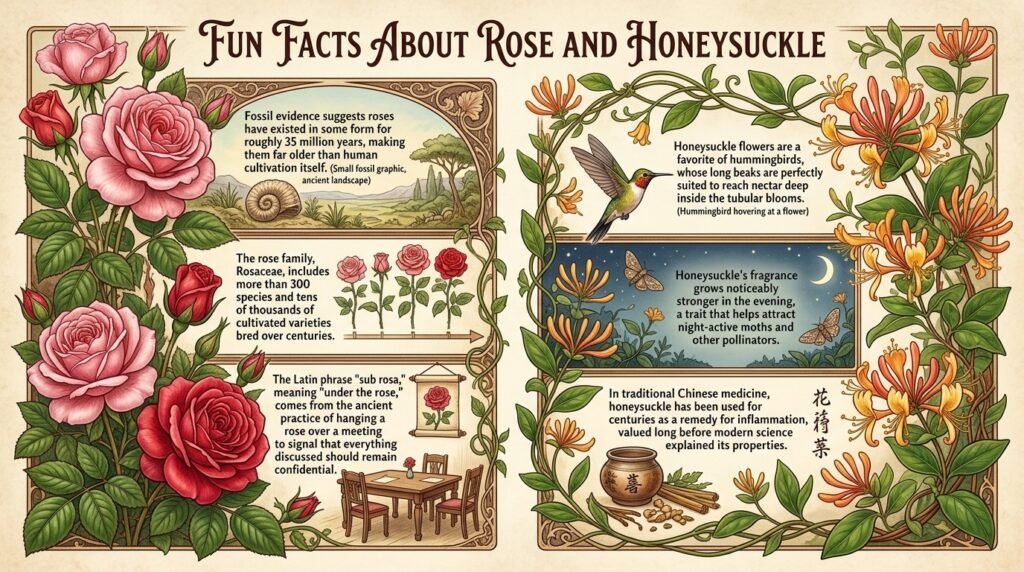
- Fossil evidence suggests roses have existed in some form for roughly 35 million years, making them far older than human cultivation itself.
- The rose family, Rosaceae, includes more than 300 species and tens of thousands of cultivated varieties bred over centuries.
- Honeysuckle flowers are a favorite of hummingbirds, whose long beaks are perfectly suited to reach nectar deep inside the tubular blooms.
- Honeysuckle’s fragrance grows noticeably stronger in the evening, a trait that helps attract night-active moths and other pollinators.
- The Latin phrase “sub rosa,” meaning “under the rose,” comes from the ancient practice of hanging a rose over a meeting to signal that everything discussed should remain confidential.
- In traditional Chinese medicine, honeysuckle has been used for centuries as a remedy for inflammation, valued long before modern science explained its properties.
Conclusion
The June birth flower isn’t a single bloom, and that pairing suits the month perfectly. Rose brings bold, unmistakable beauty and centuries of romantic symbolism, while honeysuckle brings quiet devotion and a sweetness that lingers, wrapped gently around anything it touches. Whether you’re shopping for a June birthday, planning a summer wedding, or simply curious about the stories behind these two flowers, the pairing captures early summer’s full emotional range better than any single bloom could manage alone. As one old flower-language tradition puts it, some love announces itself while other love simply stays close and holds on, and few birth-month pairings show that difference as beautifully as rose and honeysuckle do together.
FAQs
What is the birth flower for June?
June has two birth flowers: the rose and the honeysuckle. Rose represents love, passion, and beauty, while honeysuckle represents devoted affection and lasting bonds.
What does the rose symbolize as a June birth flower?
Rose symbolizes love, beauty, and devotion, with specific meanings that shift by color. Red represents true love, yellow represents friendship, and white represents purity and new beginnings.
What does honeysuckle symbolize as a June birth flower?
Honeysuckle symbolizes devoted love, happiness, and domestic bliss, largely due to its long history of being planted near homes for luck and comfort. Its twining growth habit has also made it a symbol of bonds that hold tightly over time.
Is honeysuckle easy to grow at home?
Yes, honeysuckle is generally easy to moderate to grow, tolerating a range of light conditions from full sun to partial shade. It does need a trellis or other support structure, and gardeners should choose non-invasive cultivars where local regulations recommend it.
Is a rose easy to grow in a home garden?
Rose is a moderately demanding plant for most home gardeners, needing full sun, well-drained soil, and regular pruning to stay healthy. Wide modern disease-resistant varieties have made the process considerably more beginner-friendly than older classic rose types.
Why does June have two birth flowers instead of one?
Many birth-flower traditions assign two flowers per month, and June’s pairing reflects both timing and symbolic balance. Rose reaches peak bloom during early summer celebrations, while honeysuckle’s long history of romantic symbolism made it a natural complement to the rose’s bolder statement.
Is honeysuckle toxic or safe to grow around children and pets?
Some honeysuckle species produce berries that can cause mild stomach upset if eaten in quantity, so it’s wise to discourage children and pets from snacking on them. The flowers and vines themselves pose minimal risk from simple handling or admiring them in the garden.