

May arrives soft and fragrant. Gardens fill in. Trees blossom overnight. And the May birth flower captures that exact feeling — delicate, sweet, and full of quiet promise.
- What Is a Birth Flower?
- May’s Birth Flower(s): Overview
- History and Origin of Lily of the Valley
- History and Origin of Hawthorn
- Meaning and Symbolism of Lily of the Valley
- Meaning and Symbolism of Hawthorn
- Color Varieties and Their Meanings (Both Flowers)
- How to Grow Lily of the Valley
- How to Grow Hawthorn
- Gift Ideas Using May’s Birth Flowers
- Famous People Born in May and Their Connection to the Flowers
- May Birthstone (Brief Mention)
- Fun Facts About Lily of the Valley and Hawthorn
- Conclusion
- FAQs
Quick Answer: May actually has two birth flowers. The Lily of the Valley is the primary birth flower for May. It stands for happiness, purity, and sweetness. The Hawthorn is the secondary May birth flower. It represents hope and protection. Together, they capture everything May feels like — gentle new joy paired with quiet, steady strength.
If you were born in May, these two blooms belong to you. Here’s everything worth knowing about both.
What Is a Birth Flower?
A birth flower is a bloom assigned to your birth month, much like a birthstone. Each month carries its own flower, and many months carry two.
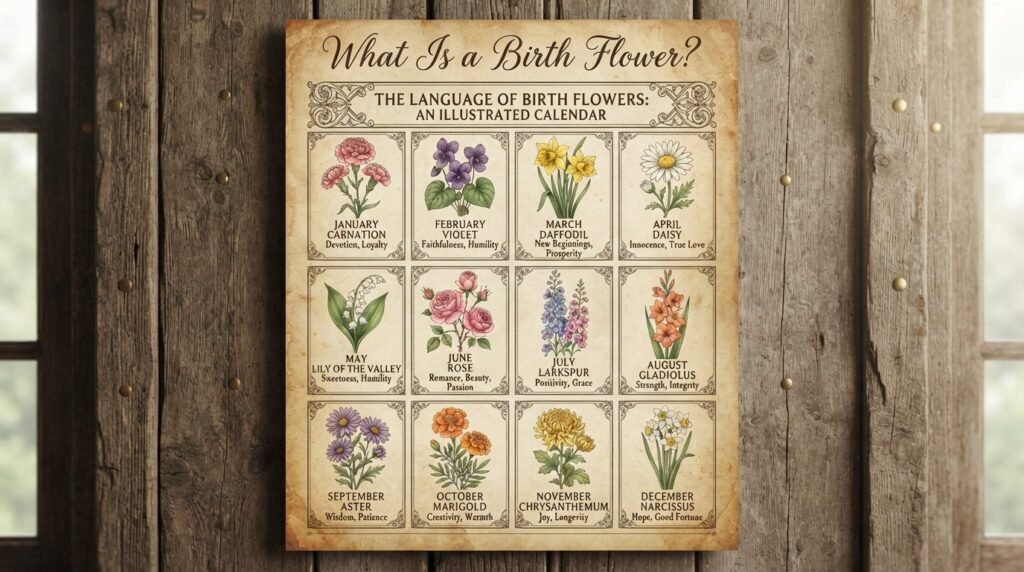
This tradition has deep roots. It draws from old Roman flower festivals, folk customs, and especially Victorian-era “flower language.” During the Victorian period, flowers carried coded meanings. People sent bouquets to say things words couldn’t quite capture.
Over time, calendars settled on specific flowers for each month. The system spread and stayed popular. Today, florists, jewelers, and gift shops still use it. Giving someone their birth flower feels personal. It shows you thought about them specifically, not just generically.
May’s Birth Flower(s): Overview
May gives us two very different blooms. One is small and delicate. The other grows on a thorny tree. Both carry real meaning.
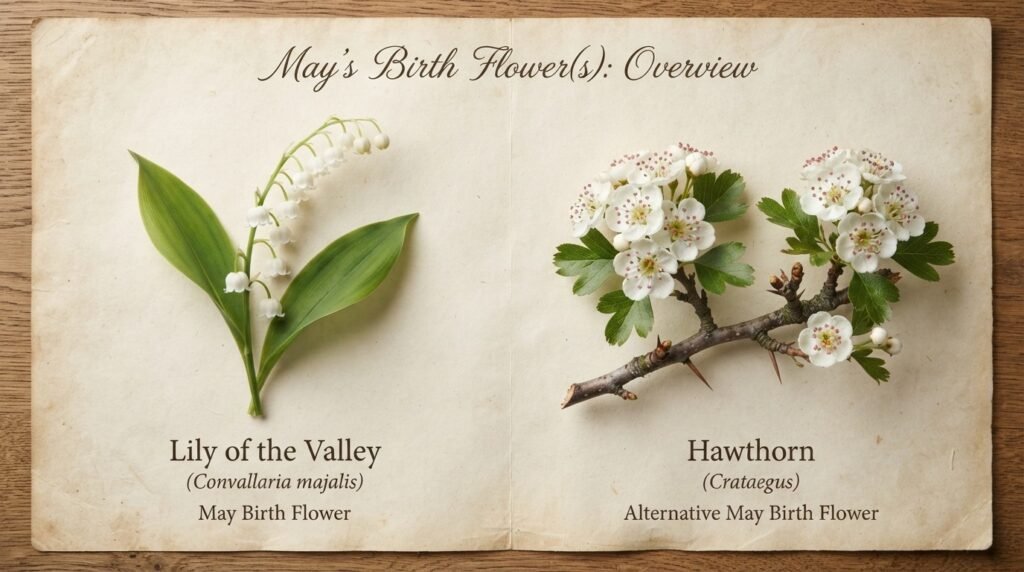
The Lily of the Valley (Primary)
The botanical name for lily of the valley is Convallaria majalis. It’s a low, spreading plant with tiny, bell-shaped white flowers that dangle along a single arching stem. Its fragrance is famously strong and sweet, often used in perfumes.
The plant is native to cool, temperate parts of Europe and Asia. It thrives in shaded woodland settings, spreading slowly through underground rhizomes. Despite its delicate look, it’s a surprisingly tough, low-growing perennial.
The Hawthorn (Secondary)
The botanical name for hawthorn is Crataegus monogyna. Unlike lily of the valley, it’s not a small flower at all. It’s a thorny shrub or small tree, covered in clusters of white or pink blossoms each spring.
Hawthorn is native to Europe, North Africa, and Western Asia. In England, it’s often simply called “May,” since its bloom time lines up so precisely with the month. Its blossoms later give way to small red berries, lily-of-the-valley
History and Origin of Lily of the Valley
Lily of the valley carries deep roots in French tradition. Every year on May 1st, France celebrates La Fête des Fleurs, Lily of the Valley Day. People give small bunches of the flower to friends and loved ones as a wish for good luck.
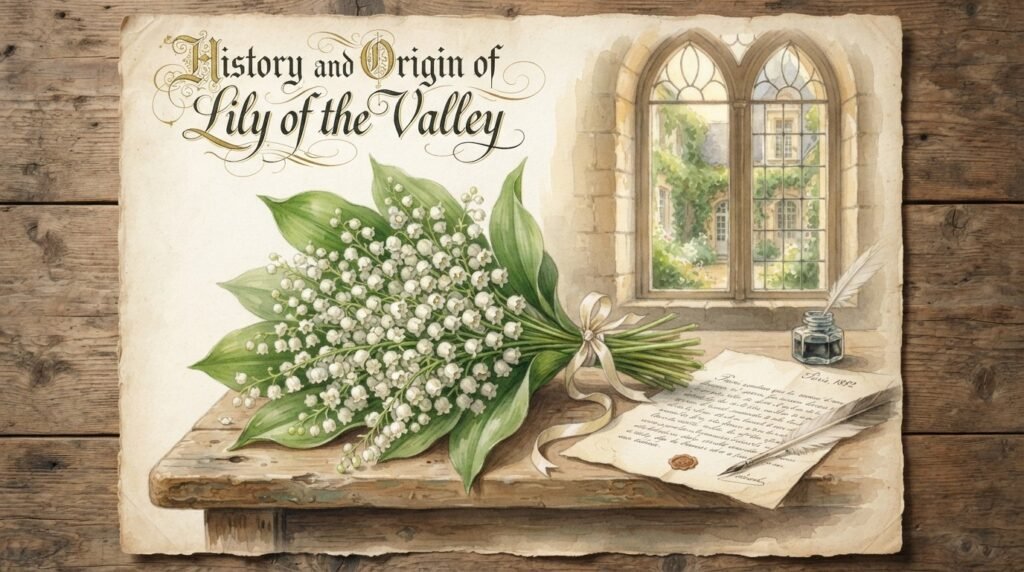
This custom dates back to 1561, when King Charles IX of France received a sprig as a good-luck gift. He liked the gesture so much that he began giving lily of the valley to the women of his court every year afterward. The tradition eventually spread to the wider public.
Christian folklore also ties the flower to May. One legend claims the lily of the valley sprang from the tears of the Virgin Mary at the crucifixion. Another version links it to Eve’s tears after being cast out of Eden. Either way, the story reinforced the flower’s association with quiet sorrow turning into hope.
By the Victorian era, lily of the valley had settled firmly into May’s flower calendar, prized for its timing and its meaning of renewed happiness.
History and Origin of Hawthorn
Hawthorn’s history runs just as deep, though it comes from a very different tradition. In Celtic culture, hawthorn played a central role in Beltane, the ancient May Day festival marking the start of summer. People decorated homes and gathered around hawthorn branches as part of the celebration.
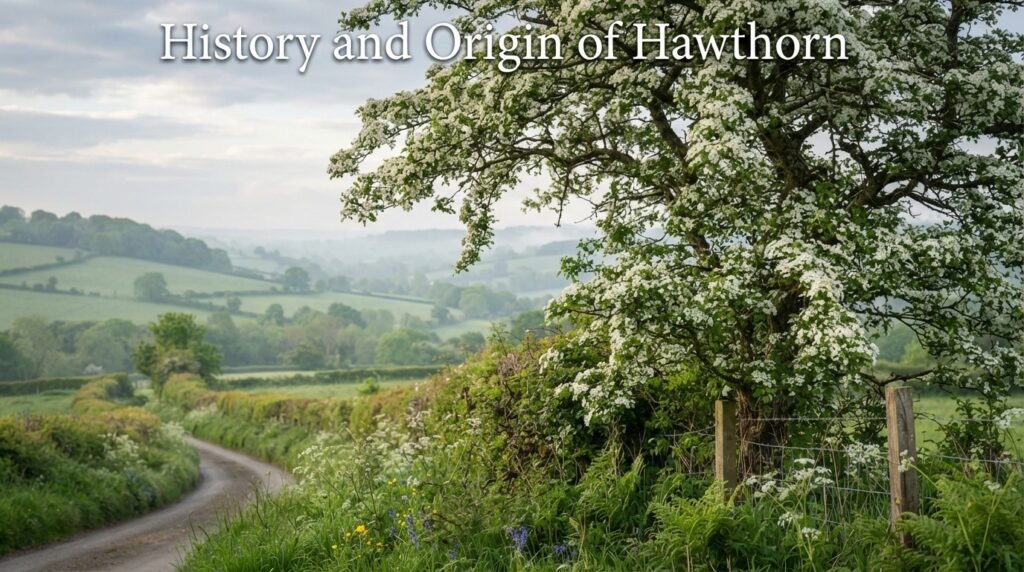
Irish folklore treats hawthorn with particular caution. It’s often called a “fairy tree,” believed to mark the entrance to the fairy realm. Cutting one down, according to old belief, could bring bad luck. Many hawthorns were left standing alone in fields for exactly this reason, even when they blocked farmland.
The ancient Greeks and Romans saw hawthorn differently, treating it as a symbol of hope and marriage. Roman brides carried hawthorn blossoms in their wedding bouquets, and wedding altars were sometimes decorated with its branches.
Hawthorn’s link to May comes down to simple timing. It blossoms right at the start of the month across much of Europe, so closely tied to the date that the Pilgrims later named their ship, the Mayflower, after it.
Meaning and Symbolism of Lily of the Valley
Lily of the valley carries some of the gentlest symbolism of any spring flower. Here’s what it commonly represents:
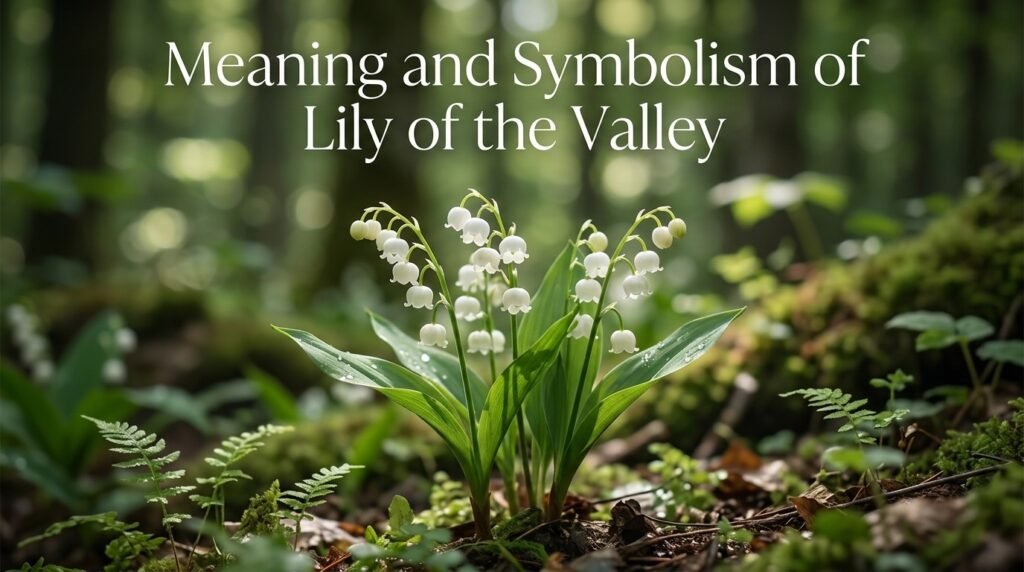
- Return of happiness — its Victorian-era meaning, tied to the joy of spring’s arrival
- Purity — its plain white color and delicate shape reinforced this association
- Humility — the flower grows low to the ground and nods downward, almost bowing
- Sweetness — often used to describe both its fragrance and gentle character
- Motherhood — its bloom time near Mother’s Day strengthened this modern connection
Meaning and Symbolism of Hawthorn
Hawthorn’s symbolism leans more toward protective and hopeful. Here’s what it commonly represents:
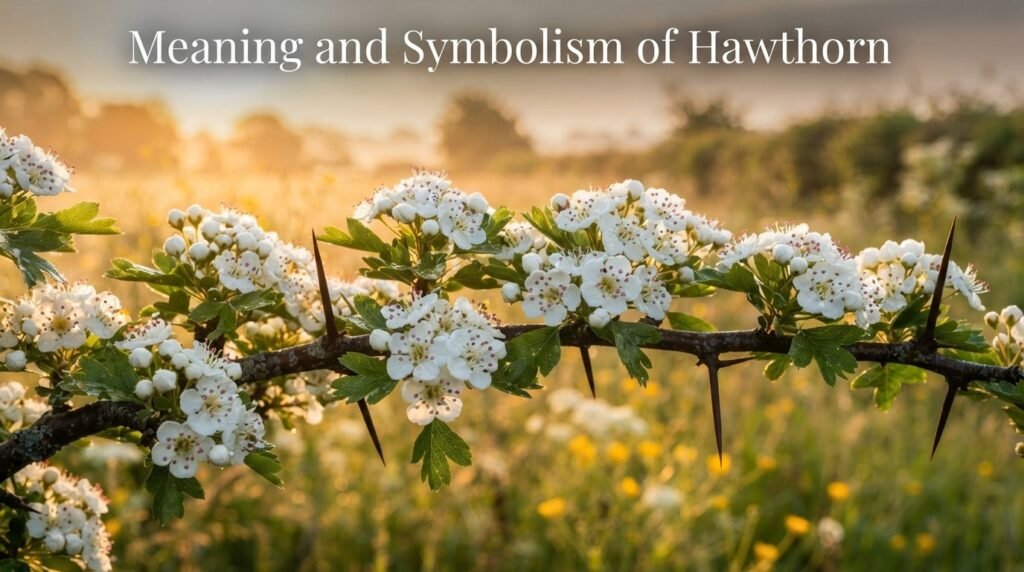
- Hope — its Victorian flower-language meaning, tied directly to the word “hawthorn”
- Protection — rooted in Celtic belief that the tree guarded against misfortune
- Fertility and marriage — drawn from its long use in Roman wedding traditions
- Duality — seen as both lucky and unlucky depending on the culture and context
- Renewal — its blossoms mark the true turning point from spring into summer
Think of these two May flowers like a quiet promise and its guardian — the lily of the valley whispers hope, while the hawthorn stands watch over it.
Color Varieties and Their Meanings (Both Flowers)
Neither May flower comes in a huge range of colors, but the few variations that exist carry distinct meaning. The table below lays out the most common color forms for both flowers side by side.
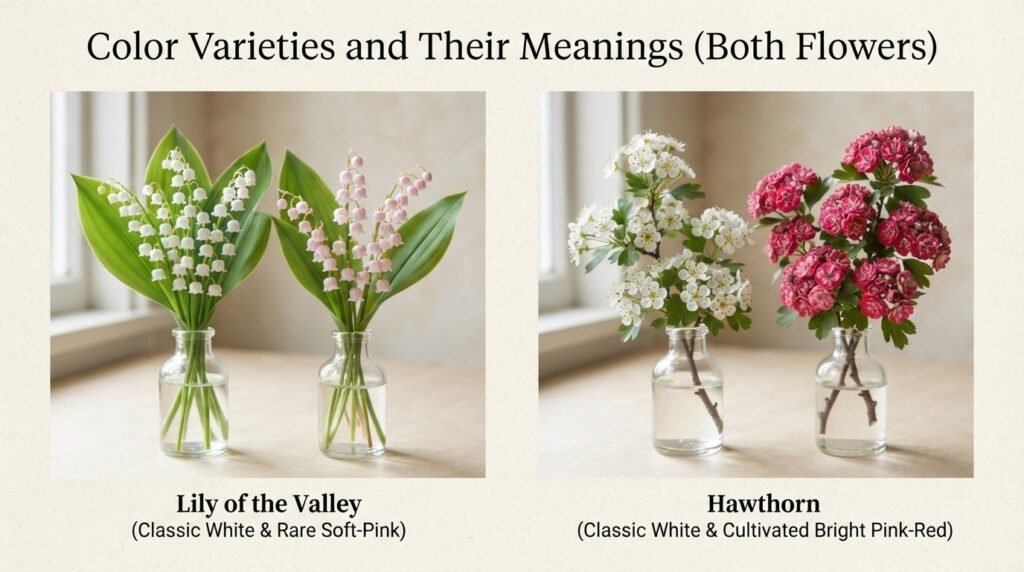
| Flower | Color | Meaning |
| Lily of the Valley | White | Purity, humility, sweetness |
| Lily of the Valley | Pink (rare variety) | Gentle joy, tenderness |
| Hawthorn | White | Hope, protection, new beginnings |
| Hawthorn | Pink/Red (cultivated) | Passion, deep protection, romance |
White dominates both flowers, and that’s no accident. It reflects the clean, hopeful energy of early summer’s approach. The rarer pink and red varieties of each flower add a warmer, more personal layer of meaning, often chosen specifically for romantic or sentimental gifts.
How to Grow Lily of the Valley
Lily of the valley is an easy, low-maintenance perennial once it’s settled in.
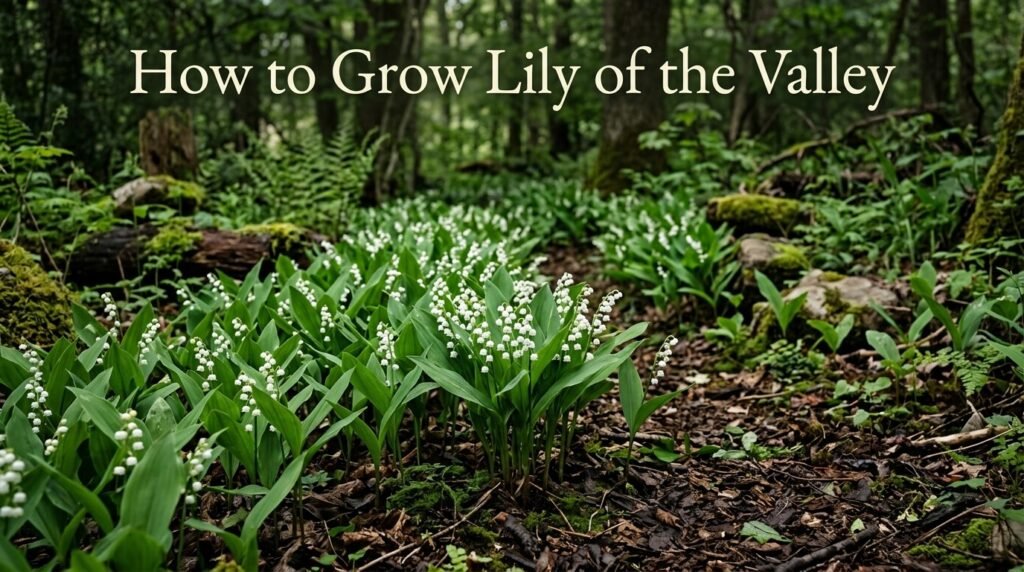
Sunlight: Partial to full shade works best. Direct afternoon sun can scorch the leaves.
Soil: Moist, well-drained soil with rich organic matter. It thrives in woodland-style conditions.
Watering: Keep the soil consistently moist, especially during dry spells in spring and summer.
Planting season: Plant pips (small rhizome divisions) in fall or very early spring, while the plant is still dormant.
Difficulty level: Easy. In fact, it spreads so readily that many gardeners need to manage it to keep it from taking over a bed.
How to Grow Hawthorn
Hawthorn asks for a bit more patience and space, but it’s still manageable for most gardeners.
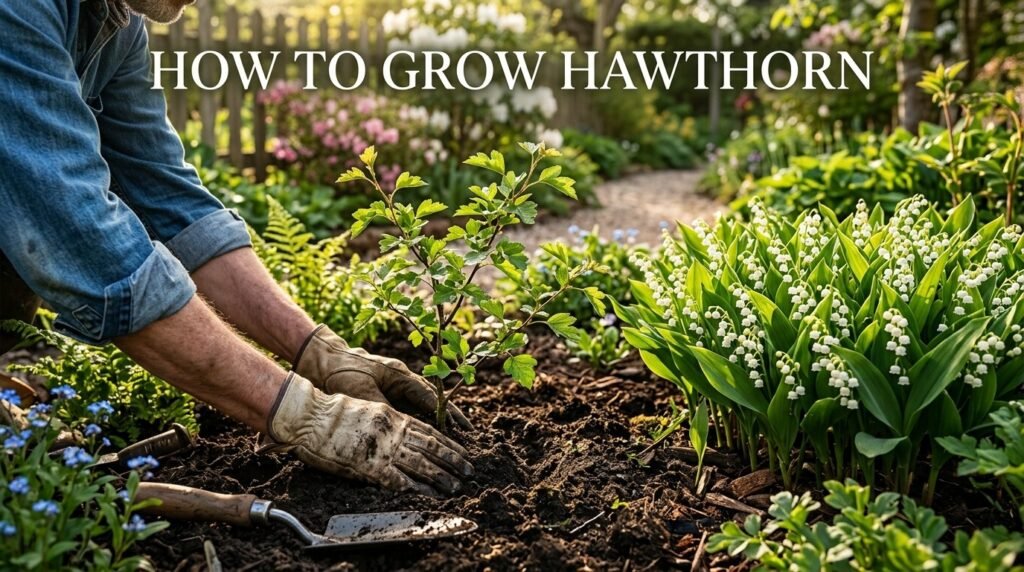
Sunlight: Full sun produces the best blossoms and fruit. It tolerates partial shade, but flowering will be lighter.
Soil: Well-drained soil of almost any type. Hawthorn is notably adaptable, tolerating poor or rocky ground.
Watering: Water regularly while young. Once established, hawthorn becomes quite drought-tolerant.
Planting season: Plant bare-root specimens during the dormant season, in late fall or winter.
Difficulty level: Moderate. Hawthorn’s thorns require careful handling, and occasional pruning helps maintain its shape and airflow.
Gift Ideas Using May’s Birth Flowers
Both May birth flowers lend themselves to thoughtful, meaningful gifts. Here are a few ideas worth considering:
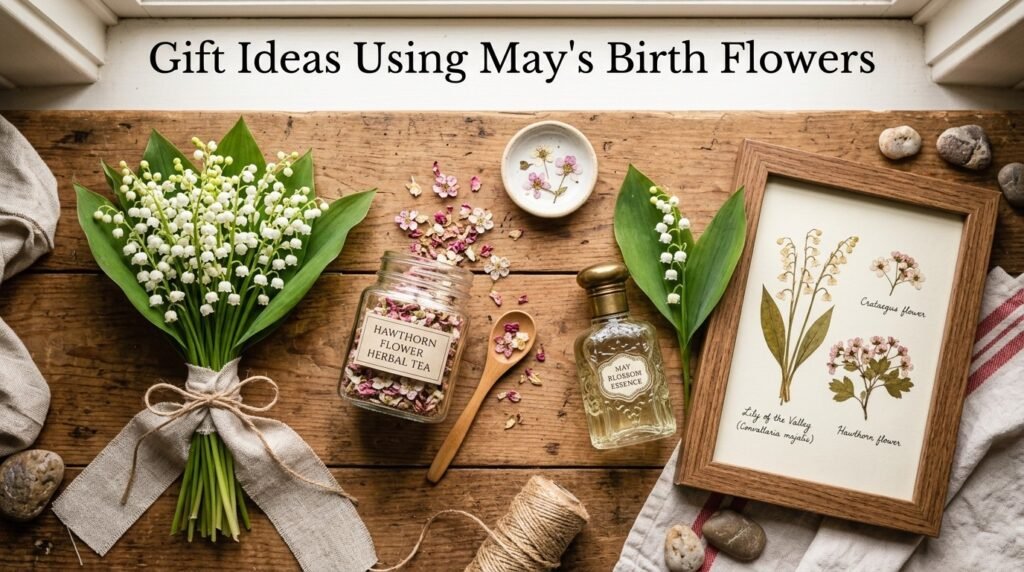
- A small bouquet of lily of the valley, following the French tradition of gifting it for good luck on May 1st
- A hawthorn-flower herbal tea or tincture, since the blossoms are widely used in heart-health herbal remedies
- Lily of the valley perfume, a classic scent used in famous fragrances for decades
- A potted hawthorn sapling, ideal for someone with garden space who wants a long-lasting, symbolic gift
- A May birth flower necklace or charm, featuring both blooms for someone born in May
- A pressed flower keepsake, combining sprigs of both flowers in a simple frame
Famous People Born in May and Their Connection to the Flowers
Several notable figures share a May birthday, and the symbolism of both flowers fits them in interesting ways.
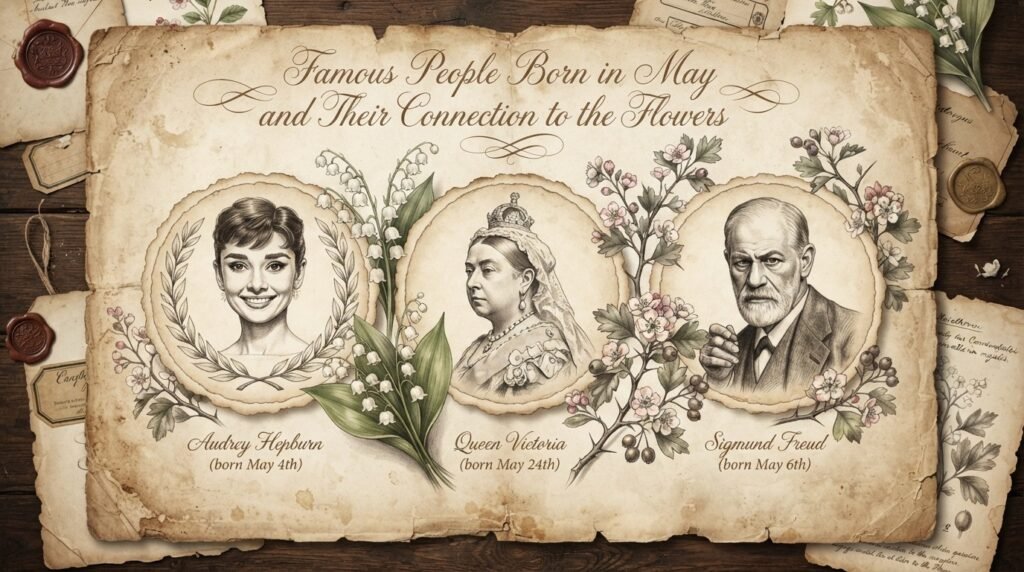
Audrey Hepburn, born May 4, remains one of the most graceful and beloved figures in film history. That elegance and quiet charm mirror the gentle, understated beauty of the lily of the valley.
Queen Victoria, born May 24, gave her name to the very era that popularized flower symbolism in the first place. She should share a birth month with two flowers so rich in Victorian-era meaning.
Sigmund Freud, born May 6, spent his career exploring the hidden layers beneath everyday life. That sense of protective depth echoes the hawthorn’s long-standing symbolism of guarding what matters most.
May Birthstone (Brief Mention)
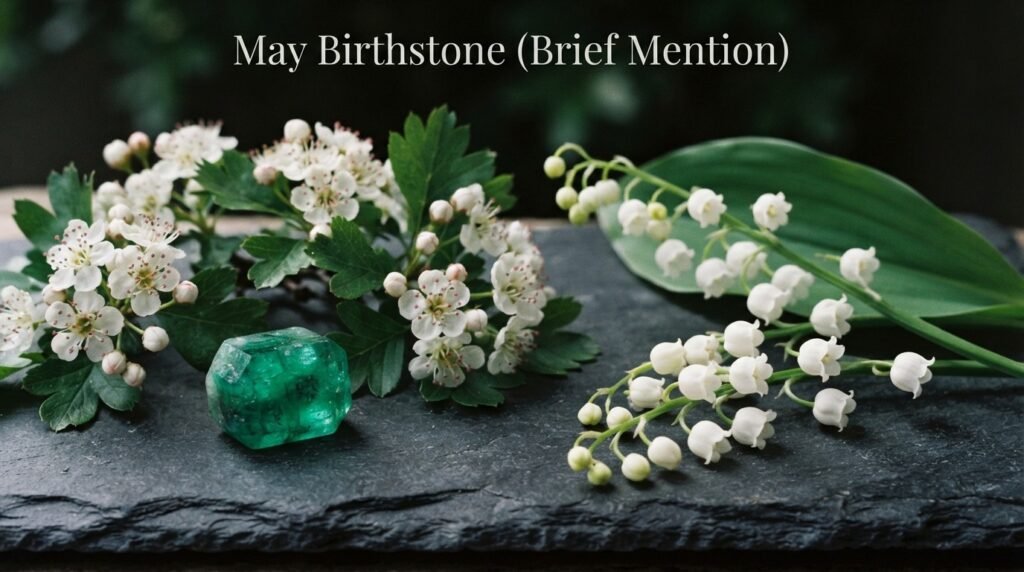
Alongside its two birth flowers, May also has its own birthstone: Emerald. This vivid green gem is traditionally linked to renewal, growth, and love, themes that pair naturally with the fresh, hopeful energy of both the lily of the valley and the hawthorn.
Fun Facts About Lily of the Valley and Hawthorn
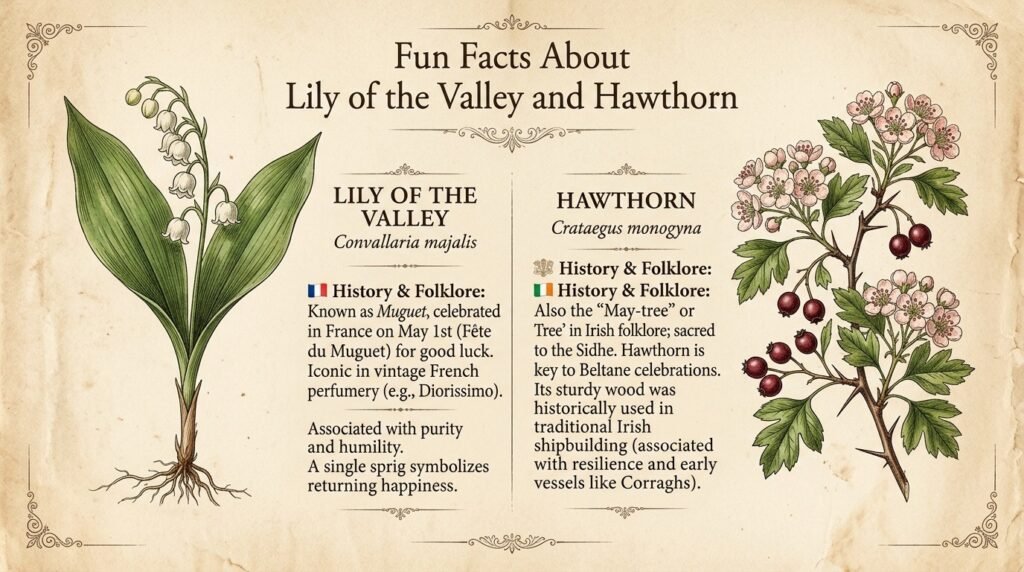
- Lily of the valley is the signature scent behind Christian Dior’s famous “Diorissimo” perfume.
- Every part of the lily of the valley plant is toxic if ingested, despite its delicate appearance.
- France’s May Day tradition of gifting lily of the valley has continued for more than 450 years.
- The Pilgrims’ ship, the Mayflower, was named directly after the hawthorn tree.
- In Irish folklore, hawthorn trees left standing alone in fields were believed to mark fairy meeting places.
- Hawthorn berries are still used today to make jellies, syrups, and traditional heart-health remedies.
Conclusion
May offers two birth flowers, and both feel perfectly suited to the season. The lily of the valley brings small, fragrant hope, a flower so gentle it seems to whisper rather than announce itself. The hawthorn adds something sturdier: protection, history, and a long-standing link to good fortune. Together, these two May birth flowers capture the full spirit of the month, delicate and resilient at once. Whether you’re shopping for someone born in May or simply curious about the tradition, either flower makes a meaningful choice.
FAQs
What is the official May birth flower?
The primary May birth flower is the lily of the valley. Its secondary birth flower is the hawthorn, and both are widely recognized in Western flower traditions.
What does lily of the valley symbolize?
Lily of the valley symbolizes the return of happiness, purity, and sweetness. It’s also closely associated with humility and, more recently, motherhood.
What does the hawthorn flower mean?
Hawthorn symbolizes hope and protection, drawn from both Celtic folklore and ancient Roman wedding traditions. It also represents fertility and the turning point between spring and summer.
Is hawthorn easy to grow?
Hawthorn is moderately easy to grow. It tolerates poor soil and drought well once established, though its thorns require some care during planting and pruning.
Is lily of the valley poisonous?
Yes, every part of the plant is toxic if ingested. Keep it away from pets and small children, and always wash your hands after handling it.
Can lily of the valley and hawthorn grow in the same garden?
Yes, and they actually complement each other well. Lily of the valley thrives in the shade beneath a hawthorn tree, making the pairing both symbolic and practical.
Why does May have two birth flowers instead of one?
Several months, including May, have two recognized birth flowers due to regional differences in older flower-calendar traditions. Over time, both flowers became widely accepted together rather than one replacing the other.