

Why the Letter Y Splits Into Two Flower Groups
Flowers that start with Y fall into two very different groups. The first group has a true botanical name starting with Y, like Yucca or Yulania. The second, much larger group has a common name starting with “Yellow,” even though the botanical name starts with something else entirely.
- Why the Letter Y Splits Into Two Flower Groups
- Quick Answer: The Best Flowers That Start With Y
- Master List of Flowers That Start With Y
- Full Comparison Table
- Garden Favorites
- Florist and Fragrance Favorites
- Rare and Unusual Flowers
- Caution and Toxicity Notes
- Color-Based Groupings
- Life-Cycle Groupings
- Botanical Name Crosswalk
- Flower Meanings and Symbolism
- Decision-Flow Table: Which Y Flower Should You Grow?
- Conclusion
- Frequently Asked Questions
This split matters for accuracy. A site that only counts true Y-genus plants ends up with a short list of 15 or 20 names. A site that blends in every “yellow” flower can reach 60 or more, as long as each entry is real and clearly labeled. This guide takes the second, more honest approach and marks each entry so you always know which type you are looking at.
You will find desert plants, Chinese magnolias, wetland wildflowers, and a few seriously toxic ornamentals in this list. Some, like yarrow, grow almost everywhere. Others, like Ypsilandra thibetica, are rare woodland plants most gardeners have never heard of. Every entry below includes a checked botanical name, native range, and toxicity note.
Use this guide to browse by category, color, or growing needs. Each flower comes with a short description and a suggested image caption for easy reference. By the end, you will have a full, trustworthy picture of every real flower that starts with Y.
Quick Answer: The Best Flowers That Start With Y
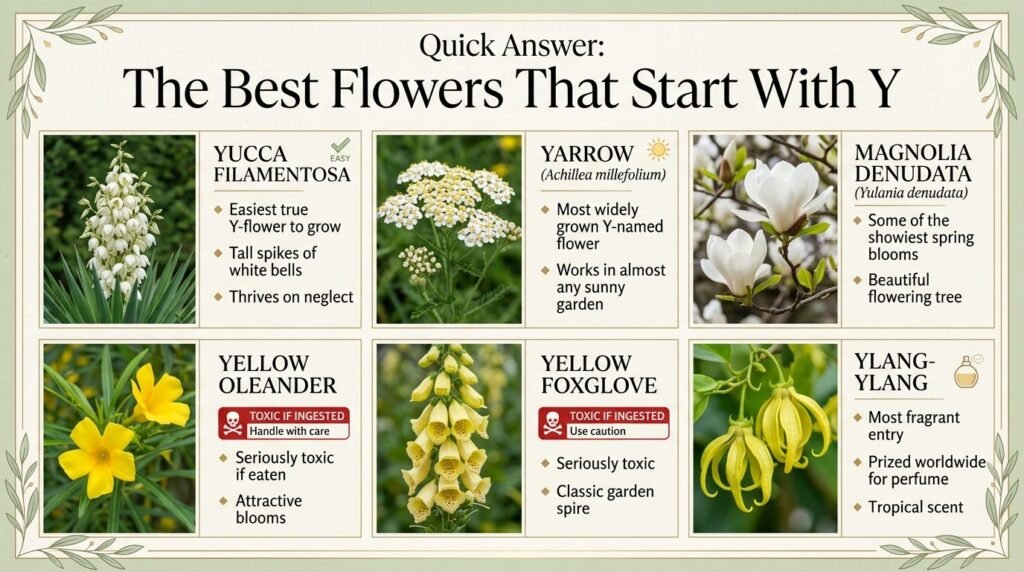
If you only remember a few names, start here. Yucca filamentosa is the easiest true Y-flower to grow, with tall spikes of white bells that thrive on neglect. Yarrow, or Achillea millefolium, is the most widely grown Y-named flower and works in almost any sunny garden. Magnolia denudata, also called Yulania denudata, produces some of the showiest spring blooms among the trees on this list. Gardeners should also know yellow oleander and yellow foxglove by name, since both are seriously toxic if ingested. Ylang-ylang rounds out the list as the most fragrant entry, prized worldwide for its use in perfume.
Master List of Flowers That Start With Y
Two types of names appear on this list, and it helps to know the difference before you start browsing. Botanical-name-first entries, like Yucca and Ypsilandra, have a genus name that truly begins with Y. Common-name-first entries, like yellow foxglove or yellow jessamine, only start with Y because of the word “yellow,” while their botanical name starts with a different letter. Both are legitimate flowers that start with Y in everyday use, so this list includes both, clearly separated below.
True Y-genus flowers:
- Yucca filamentosa (Adam’s needle)
- Yucca gloriosa (Spanish dagger)
- Yucca aloifolia (Spanish bayonet)
- Yucca brevifolia (Joshua tree)
- Yucca elata (soap tree yucca)
- Yucca baccata (banana yucca)
- Yucca schidigera (Mojave yucca)
- Yucca rostrata (beaked yucca)
- Magnolia denudata, sect. Yulania (Yulan magnolia)
- Magnolia liliiflora, sect. Yulania (mulan magnolia)
- Magnolia kobus, sect. Yulania (kobushi magnolia)
- Magnolia campbellii, sect. Yulania (Campbell’s magnolia)
- Magnolia stellata, sect. Yulania (star magnolia)
- Magnolia salicifolia, sect. Yulania (willow-leaf magnolia)
- Ypsilandra thibetica
- Youngia japonica (oriental false hawksbeard)
Common “yellow” name flowers:
- Yarrow (Achillea millefolium)
- Yellow bells (Tecoma stans)
- Yellow fritillary (Fritillaria pudica)
- Yellow archangel (Lamium galeobdolon)
- Yellow Jessamine (Gelsemium sempervirens)
- Yellow flag iris (Iris pseudacorus)
- Yellow water lily (Nuphar lutea)
- Yellow pond lily (Nuphar polysepala)
- Yellow trillium (Trillium luteum)
- Yellow foxglove (Digitalis grandiflora)
- Yellow-horned poppy (Glaucium flavum)
- Yellow cosmos (Cosmos sulphureus)
- Yellow gentian (Gentiana lutea)
- Ylang-ylang (Cananga odorata)
- Youth-on-age (Tolmiea menziesii)
- Yellow rocket (Barbarea vulgaris)
- Yesterday-today-and-tomorrow (Brunfelsia pauciflora)
- Yellow camellia (Camellia chrysantha)
- Yellow Lady’s Slipper (Cypripedium parviflorum)
- Yellow bird of paradise (Erythrostemon gilliesii)
- Yarrow (Achillea millefolium)
- Yellow bells (Tecoma stans)
- Yellow fritillary (Fritillaria pudica)
- Yellow archangel (Lamium galeobdolon)
- Yellow Jessamine (Gelsemium sempervirens)
- Yellow flag iris (Iris pseudacorus)
- Yellow water lily (Nuphar lutea)
- Yellow pond lily (Nuphar polysepala)
- Yellow trillium (Trillium luteum)
- Yellow foxglove (Digitalis grandiflora)
- Yellow-horned poppy (Glaucium flavum)
- Yellow cosmos (Cosmos sulphureus)
- Yellow gentian (Gentiana lutea)
- Ylang-ylang (Cananga odorata)
- Youth-on-age (Tolmiea menziesii)
- Yellow rocket (Barbarea vulgaris)
- Yesterday-today-and-tomorrow (Brunfelsia pauciflora)
- Yellow camellia (Camellia chrysantha)
- Yellow Lady’s Slipper (Cypripedium parviflorum)
- Yellow bird of paradise (Erythrostemon gilliesii)
- Yellow oleander (Cascabela thevetia)
- Yellow star grass (Hypoxis hirsuta)
- Yellow toadflax (Linaria vulgaris)
- Yellow evening primrose (Oenothera biennis)
- Yellow columbine (Aquilegia chrysantha)
- Yellow loosestrife (Lysimachia vulgaris)
- Yellow flax (Linum flavum)
- Yellow honeysuckle (Lonicera flava)
- Yellow monkeyflower (Erythranthe guttata)
- Yellow ironweed (Verbesina alternifolia)
- Yellow wood sorrel (Oxalis stricta)
- Yellow star-of-Bethlehem (Gagea lutea)
- Yellow trout lily (Erythronium americanum)
- Yellow globe lily (Calochortus amabilis)
- Yellow-fringed orchid (Platanthera ciliaris)
- Yellow lupine (Lupinus luteus)
- Yellow prickly poppy (Argemone mexicana)
- Yellow passionflower (Passiflora lutea)
- Yellow trumpet pitcher plant (Sarracenia flava)
- Yellow bee orchid (Ophrys lutea)
- Yellow Allamanda (Allamanda cathartica)
- Yellow wild indigo (Baptisia tinctoria)
- Yellow flame tree (Peltophorum pterocarpum)
- Yellow sweet clover (Melilotus officinalis)
Together, these two groups dndxi 60 confirmed flowers. Notice how the true Y-genus group leans heavily on Yucca and Magnolia, while the “yellow” group covers nearly every plant family, from orchids to carnivorous pitcher plants.
Full Comparison Table
This table lists the core facts for every flower named above. Columns cover the botanical name, native range, plant type, and toxicity, so you can compare entries at a glance. Scan the toxicity column carefully before planting anything around children or pets.
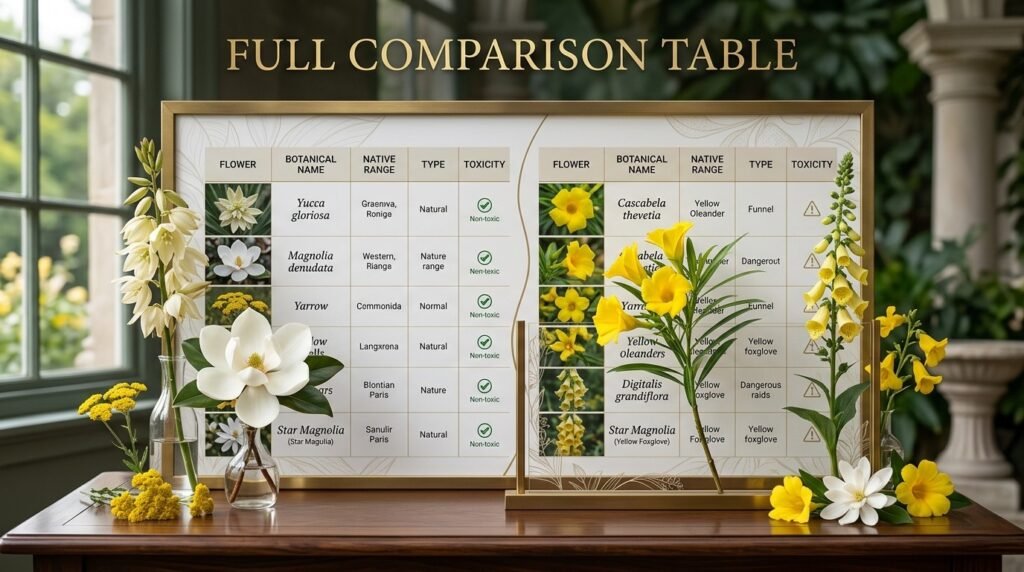
| Flower | Botanical Name | Native Range | Type | Toxicity |
| Adam’s needle | Yucca filamentosa | SE USA | Perennial shrub | Non-toxic |
| Spanish dagger | Yucca gloriosa | SE US coast | Perennial shrub | Non-toxic |
| Spanish bayonet | Yucca aloifolia | SE US, Caribbean | Perennial shrub | Non-toxic |
| Joshua tree | Yucca brevifolia | Mojave Desert, USA | Tree | Non-toxic |
| Soaptree yucca | Yucca elata | SW USA, Mexico | Tree/shrub | Non-toxic |
| Banana yucca | Yucca baccata | SW USA | Perennial shrub | Non-toxic |
| Mojave yucca | Yucca schidigera | SW USA, Mexico | Perennial shrub | Non-toxic |
| Beaked yucca | Yucca rostrata | Texas, Mexico | Perennial shrub | Non-toxic |
| Yulan magnolia | Magnolia denudata | Central/E China | Tree | Non-toxic |
| Mulan magnolia | Magnolia liliiflora | SW China | Tree/shrub | Non-toxic |
| Kobushi magnolia | Magnolia kobus | Japan | Tree | Non-toxic |
| Campbell’s magnolia | Magnolia campbellii | Himalayas | Tree | Non-toxic |
| Star magnolia | Magnolia stellata | Japan | Tree/shrub | Non-toxic |
| Willow-leaf magnolia | Magnolia salicifolia | Japan | Tree | Non-toxic |
| Ypsilandra | Ypsilandra thibetica | China | Perennial | Non-toxic |
| False hawksbeard | Youngia japonica | East Asia | Annual/biennial | Non-toxic |
| Yarrow | Achillea millefolium | Europe, W Asia | Perennial | Mildly toxic to pets |
| Yellow bells | Tecoma stans | Americas | Shrub | Toxic (alkaloids) |
| Yellow fritillary | Fritillaria pudica | Western N. America | Bulb perennial | Toxic bulb |
| Yellow archangel | Lamium galeobdolon | Europe | Perennial groundcover | Non-toxic |
| Yellow jessamine | Gelsemium sempervirens | SE USA | Vine | Toxic (all parts) |
| Yellow flag iris | Iris pseudacorus | Europe, W Asia | Perennial | Mildly toxic |
| Yellow water lily | Nuphar lutea | Europe, Asia | Aquatic perennial | Mildly toxic |
| Yellow pond lily | Nuphar polysepala | Western N. America | Aquatic perennial | Mildly toxic |
| Yellow trillium | Trillium luteum | Appalachian USA | Perennial | Mild (berries) |
| Yellow foxglove | Digitalis grandiflora | Europe | Perennial | Highly toxic |
| Yellow-horned poppy | Glaucium flavum | Coastal Europe | Biennial/perennial | Toxic |
| Yellow cosmos | Cosmos sulphureus | Mexico | Annual | Non-toxic |
| Yellow gentian | Gentiana lutea | European mountains | Perennial | Non-toxic |
| Ylang-ylang | Cananga odorata | SE Asia | Tree | Non-toxic (oil caution) |
| Youth-on-age | Tolmiea menziesii | Pacific NW USA | Perennial | Non-toxic |
| Yellow rocket | Barbarea vulgaris | Europe, Asia | Biennial | Non-toxic |
| Yesterday-today-and-tomorrow | Brunfelsia pauciflora | Brazil | Shrub | Toxic |
| Yellow camellia | Camellia chrysantha | China, Vietnam | Shrub | Non-toxic |
| Yellow lady’s slipper | Cypripedium parviflorum | North America | Perennial orchid | Mild skin irritant |
| Yellow bird of paradise | Erythrostemon gilliesii | South America | Shrub | Toxic seeds |
| Yellow oleander | Cascabela thevetia | Central/South America | Shrub | Highly toxic |
| Yellow star grass | Hypoxis hirsuta | Eastern N. America | Perennial | Non-toxic |
| Yellow toadflax | Linaria vulgaris | Europe, Asia | Perennial | Mildly toxic |
| Yellow evening primrose | Oenothera biennis | North America | Biennial | Non-toxic |
| Yellow columbine | Aquilegia chrysantha | SW USA | Perennial | Mild |
| Yellow loosestrife | Lysimachia vulgaris | Europe, Asia | Perennial | Non-toxic |
| Yellow flax | Linum flavum | Europe | Perennial | Non-toxic |
| Yellow honeysuckle | Lonicera flava | SE USA | Vine | Mild (berries) |
| Yellow monkeyflower | Erythranthe guttata | Western N. America | Perennial | Non-toxic |
| Yellow ironweed | Verbesina alternifolia | Eastern USA | Perennial | Non-toxic |
| Yellow wood sorrel | Oxalis stricta | North America | Perennial | Mild (oxalic acid) |
| Yellow star-of-Bethlehem | Gagea lutea | Europe, Asia | Bulb perennial | Mild |
| Yellow trout lily | Erythronium americanum | Eastern N. America | Perennial | Non-toxic |
| Yellow globe lily | Calochortus amabilis | California, USA | Bulb perennial | Non-toxic |
| Yellow-fringed orchid | Platanthera ciliaris | Eastern N. America | Perennial orchid | Non-toxic |
| Yellow lupine | Lupinus luteus | Mediterranean | Annual | Toxic seeds |
| Yellow prickly poppy | Argemone mexicana | Mexico | Annual | Toxic |
| Yellow passionflower | Passiflora lutea | Eastern/central USA | Vine | Non-toxic |
| Yellow trumpet pitcher plant | Sarracenia flava | SE USA | Perennial (carnivorous) | Non-toxic |
| Yellow bee orchid | Ophrys lutea | Mediterranean | Perennial orchid | Non-toxic |
| Yellow allamanda | Allamanda cathartica | Brazil | Vine/shrub | Toxic sap |
| Yellow wild indigo | Baptisia tinctoria | Eastern USA | Perennial | Mild |
| Yellow flame tree | Peltophorum pterocarpum | Tropical Asia | Tree | Non-toxic |
| Yellow sweet clover | Melilotus officinalis | Europe, Asia | Biennial | Mild (moldy hay risk) |
A few rows deserve extra attention. Yellow oleander is one of the most dangerous plants on this list, since every part contains cardiac glycosides that can be fatal if eaten. Yellow foxglove carries the same type of risk, which is why it should stay out of reach of children and pets. At the safer end, Yucca and Magnolia species dominate the non-toxic column, making them reliable picks for family gardens.
Garden Favorites
Several Y flowers are genuine landscaping staples. Yucca filamentosa is a top pick for xeriscaping, since it survives drought and poor soil while still sending up tall flower spikes each summer. Yarrow spreads easily and blooms for months, which makes it a favorite in cottage and pollinator gardens. Magnolia stellata, the star magnolia, is prized for its early spring flowers, which often open before the leaves appear. These three cover very different garden styles, from desert beds to shady spring borders.
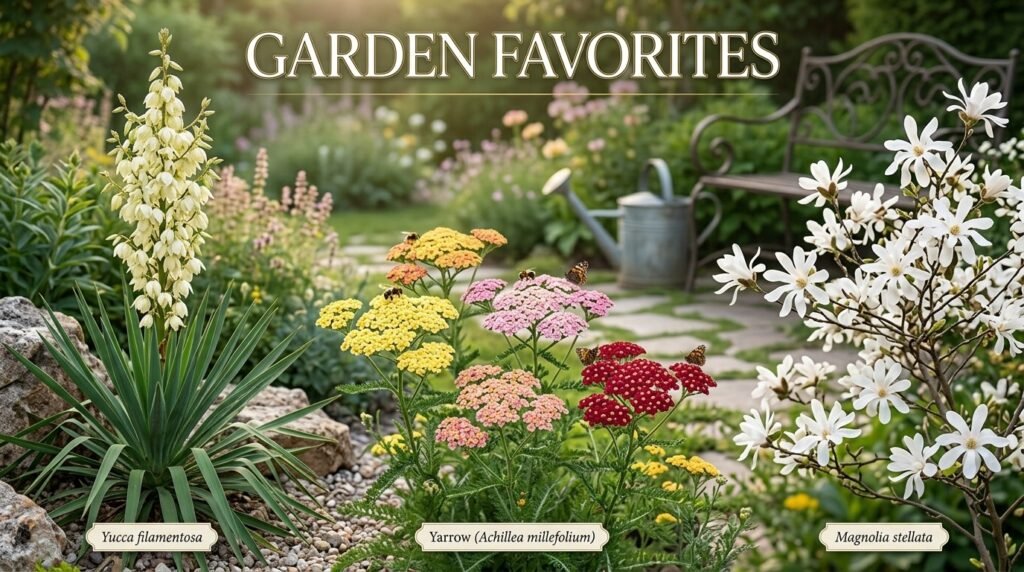
- Yucca filamentosa — drought-tolerant, structural, zones 4-10
- Yarrow (Achillea millefolium) — pollinator-friendly, spreads fast
- Magnolia stellata — small tree, early spring interest
Between them, these picks work in nearly any climate. Gardeners in cold, temperate, or dry regions can all find a Y flower suited to their conditions.
Florist and Fragrance Favorites
A smaller group of Y flowers is grown mainly for cutting or fragrance rather than garden structure. Ylang-ylang is the standout here, since its essential oil is a core ingredient in high-end perfumes worldwide. Yellow Allamanda produces large, trumpet-shaped blooms that florists use for bold tropical arrangements, despite its toxic sap requiring careful handling. Magnolia denudata flowers are prized in Chinese gardens for their citrus-like scent and symbolic ties to purity.
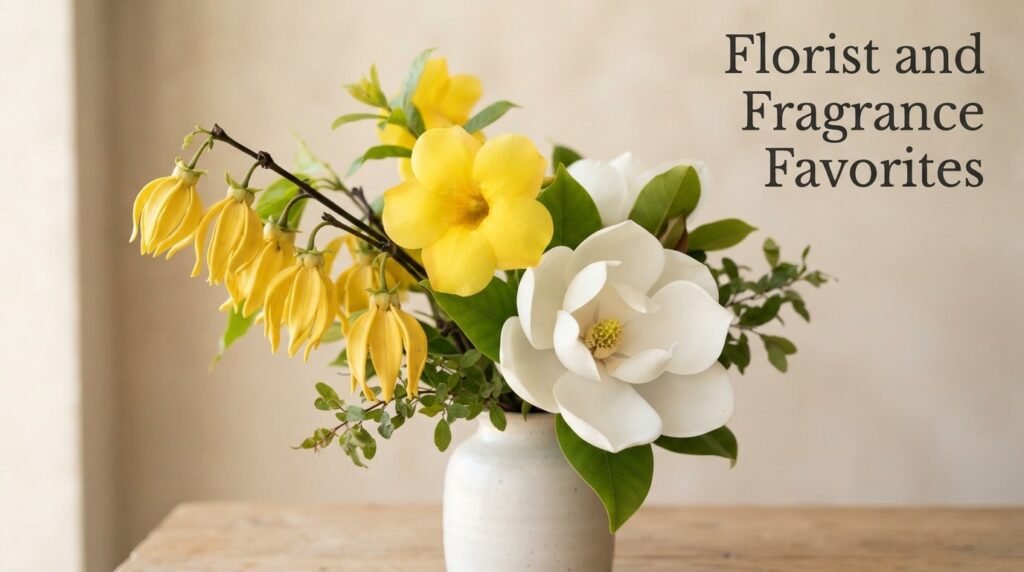
- Ylang-ylang (Cananga odorata) — perfumery, tropical fragrance
- Yellow Allamanda (Allamanda cathartica) — bold tropical cut flower
- Magnolia denudata — fragrant, symbolic spring bloom
These three show how differently “useful” can look across the Y flower group, from perfume oil to ceremonial symbolism to cut-flower drama.
Rare and Unusual Flowers
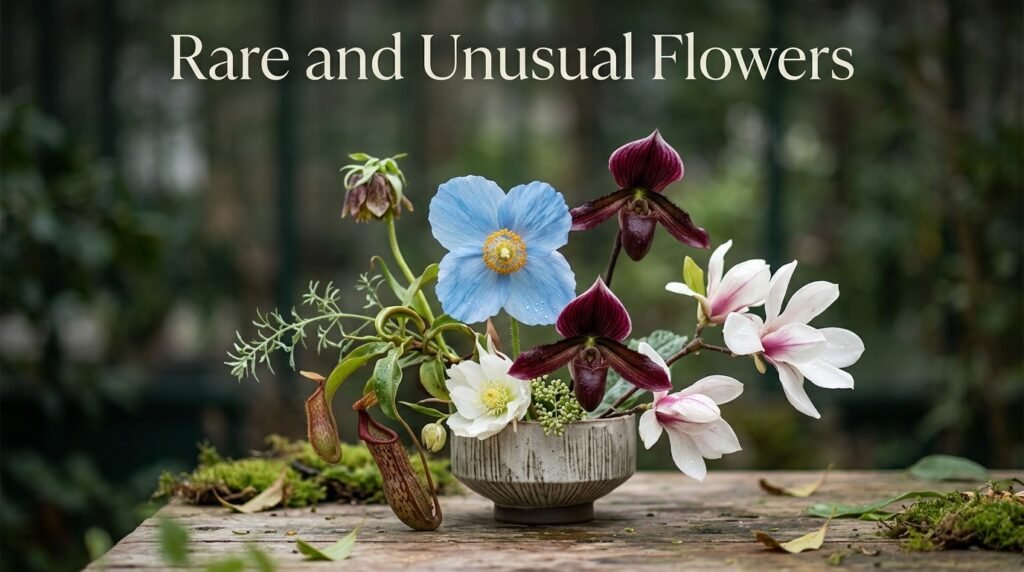
A few Y flowers are genuinely hard to find outside specialist collections. Ypsilandra thibetica is a quiet woodland perennial from China that few gardeners outside East Asia have ever grown. Youngia japonica looks like a small dandelion and is often mistaken for a weed rather than recognized as a distinct Y-named species. Magnolia zenii, a close relative of the more common Yulania magnolias, is critically endangered in the wild, with only a small wild population left in China.
- Ypsilandra thibetica — rare Chinese woodland perennial
- Youngia japonica — easily mistaken for a common weed
- Magnolia zenii — critically endangered wild magnolia relative
These three highlight just how wide the gap is between common Y flowers, like yarrow, and the true rarities hiding within the same letter.
Caution and Toxicity Notes
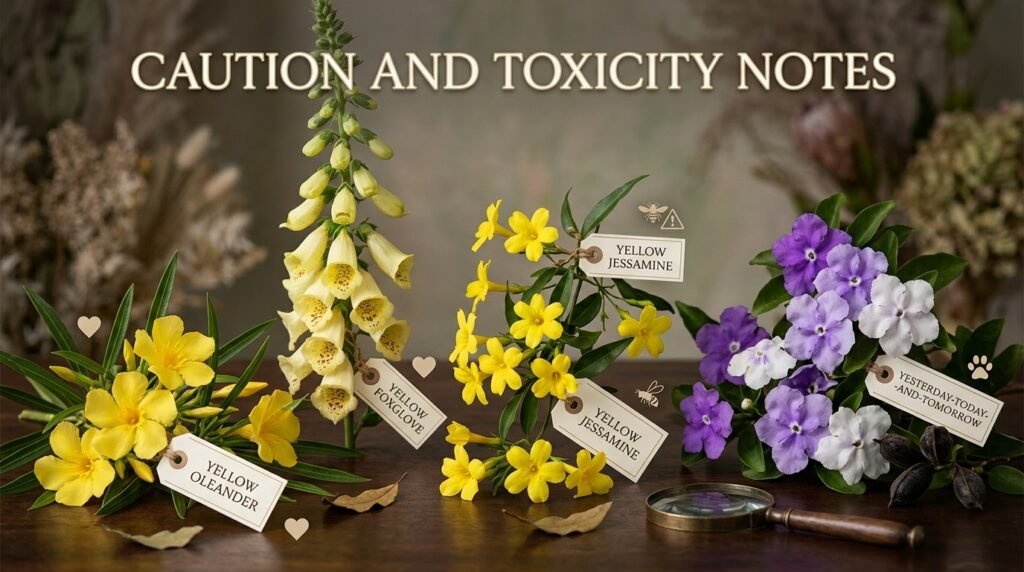
Several Y-named flowers carry real toxicity risks, more than the letter’s small size might suggest. Yellow oleander and yellow foxglove are the most dangerous, since both contain cardiac glycosides capable of causing serious harm if ingested. Yellow jessamine is a close third, since even its nectar can be toxic to bees and other pollinators in large amounts. Brunfelsia pauciflora, the yesterday-today-and-tomorrow shrub, is especially risky around pets, since its seeds are the most toxic part of the plant. Anyone gardening around children or animals should keep these four names in mind before planting.
Color-Based Groupings
Yellow. Unsurprisingly, yellow dominates this list, since most common-name entries include the word directly. Yarrow, yellow cosmos, and yellow evening primrose all bring cheerful, sunny color to garden beds. This shade works well in cottage gardens and pollinator borders, where bright color helps attract bees and butterflies.
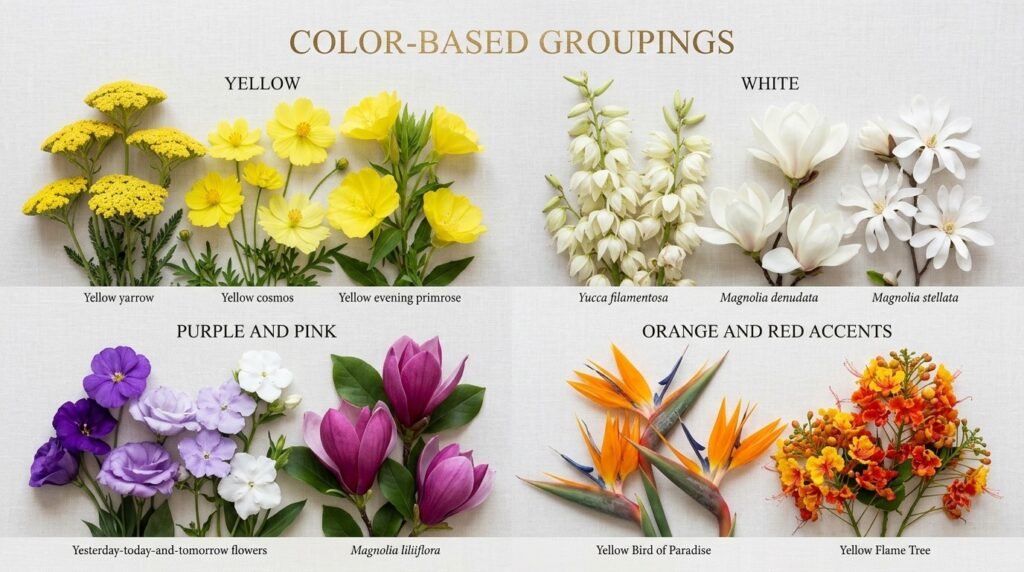
White. White-flowered Y plants tend to come from trees and desert shrubs. Yucca filamentosa, Magnolia denudata, and Magnolia stellata all bloom in white or near-white. White suits formal gardens and evening spaces, since pale petals stay visible after sunset.
Purple and pink. Purple and pink appear mostly in a few standout entries. Yesterday-today-and-tomorrow shifts from purple to white as its flowers age, while Magnolia liliiflora opens in deep pink-purple. These colors suit dramatic focal plantings, since both flowers stand out sharply against green foliage.
Orange and red accents. A handful of Y flowers lean warmer than pure yellow. The yellow bird of paradise and the yellow flame tree both show orange or red tones mixed into their blooms. These work best in tropical or desert gardens, where bold, hot colors match the surrounding landscape.
Life-Cycle Groupings
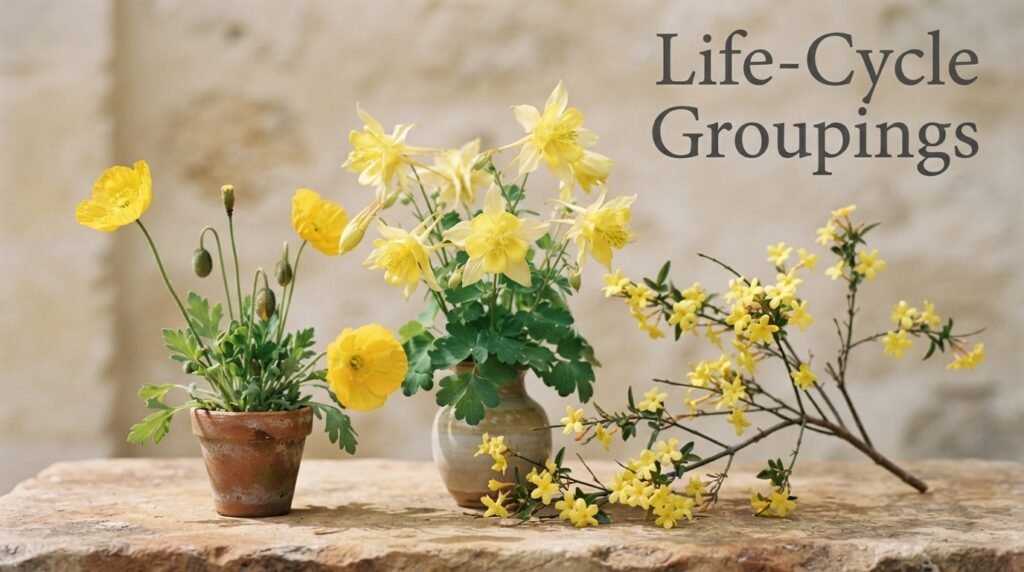
Knowing whether a flower is an annual, perennial, or woody plant helps you plan a garden that lasts. Annuals need replanting each year, perennials return on their own, and trees or shrubs take longer to establish but reward patience with years of blooms. The table below sorts every flower on this list by life cycle.
| Life Cycle | Flowers |
| Annual/biennial | Yellow cosmos, yellow rocket, yellow evening primrose, yellow lupine, yellow prickly poppy, yellow sweet clover, Youngia japonica |
| Perennial | Yarrow, yellow archangel, yellow flag iris, yellow trillium, yellow foxglove, yellow gentian, youth-on-age, yellow lady’s slipper, yellow star grass, yellow toadflax, yellow columbine, yellow loosestrife, yellow flax, yellow monkeyflower, yellow ironweed, yellow wood sorrel, yellow star-of-Bethlehem, yellow trout lily, yellow globe lily, yellow fringed orchid, yellow passionflower, yellow trumpet pitcher plant, yellow bee orchid, yellow wild indigo, Ypsilandra thibetica |
| Shrub/Tree/Vine | All Yucca species, all Yulania magnolias, yellow bells, yellow jasmine, ylang-ylang, yesterday-today-and-tomorrow, yellow camellia, yellow bird of paradise, yellow oleander, yellow honeysuckle, yellow allamanda, yellow flame tree |
The shrub and tree category is the largest group here, which fits the pattern of woody ornamentals dominating the Y-genus names. Annuals make up the smallest share, so gardeners wanting fast, one-season color have fewer true Y choices than perennial or woody options.
Botanical Name Crosswalk
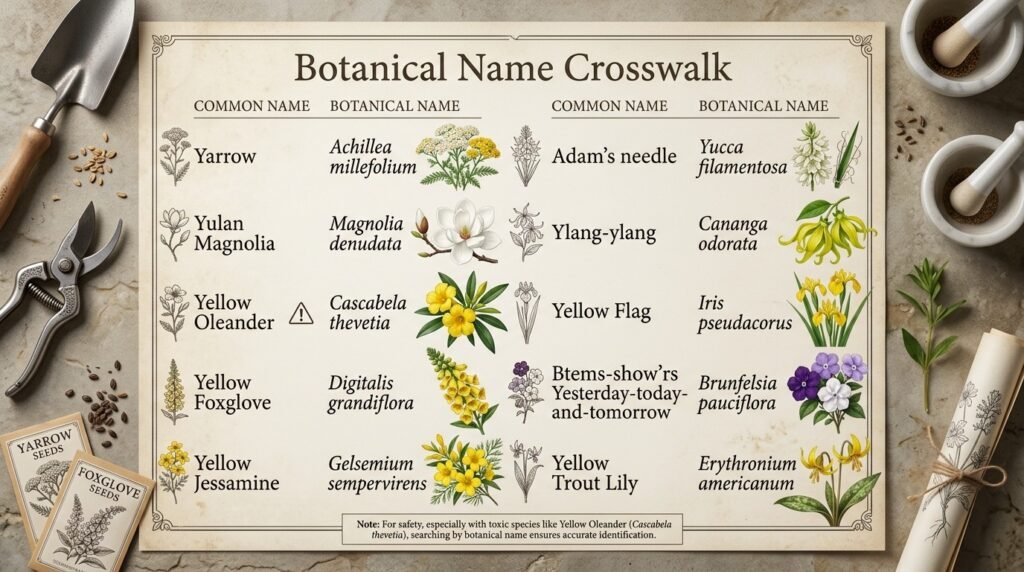
Common names for Y flowers can be confusing, since many share the word “yellow” with completely unrelated plants. Searching by botanical name is the safest way to find the exact species you want when buying seeds online. The crosswalk below pairs common names with their correct scientific names for quick reference.
| Common Name | Botanical Name |
| Yarrow | Achillea millefolium |
| Yulan magnolia | Magnolia denudata (Yulania denudata) |
| Yellow oleander | Cascabela thevetia |
| Yellow foxglove | Digitalis grandiflora |
| Yellow jessamine | Gelsemium sempervirens |
| Adam’s needle | Yucca filamentosa |
| Ylang-ylang | Cananga odorata |
| Yellow flag iris | Iris pseudacorus |
| Yesterday-today-and-tomorrow | Brunfelsia pauciflora |
| Yellow trout lily | Erythronium americanum |
This crosswalk matters most for the toxic entries. Searching only “yellow oleander” without the botanical name Cascabela thevetia could lead a buyer to confuse it with a harmless yellow-flowered look-alike.
Flower Meanings and Symbolism
Y flowers carry some of the strongest symbolism of any letter, mostly through Magnolia denudata and yarrow. In Chinese tradition, Magnolia denudata, or Yulan magnolia, symbolizes purity and feminine beauty, and it has been planted in temple gardens since the year 600. Its pale, unblemished petals made it a natural choice for imperial gardens during the Tang dynasty. Yarrow carries a very different meaning, tied to protection and healing, since it was historically used to treat wounds and stop bleeding.
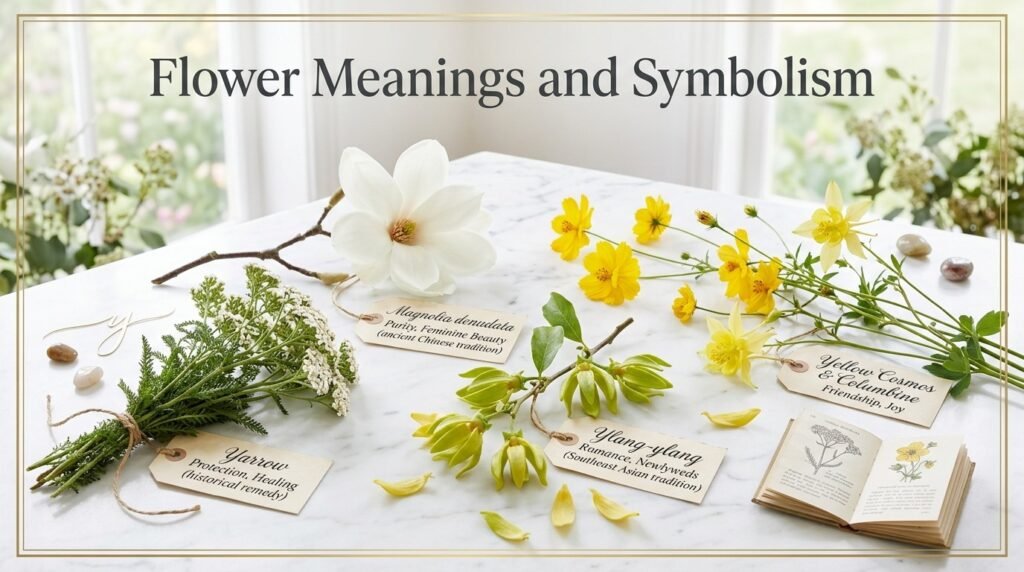
Yellow flowers in general often symbolize friendship and joy, which extends loosely to many common-name Y entries like yellow cosmos and yellow columbine. Ylang-ylang holds a more romantic meaning in parts of Southeast Asia, where its petals are traditionally scattered on the beds of newlyweds. Together, these stories show that even a letter as rare as Y still carries centuries of cultural weight.
Decision-Flow Table: Which Y Flower Should You Grow?
Choosing the right Y flower depends mostly on your climate, garden style, and safety needs. This table matches common goals with the flower most likely to succeed. Always check the toxicity column in the earlier comparison table if you have pets or young children.
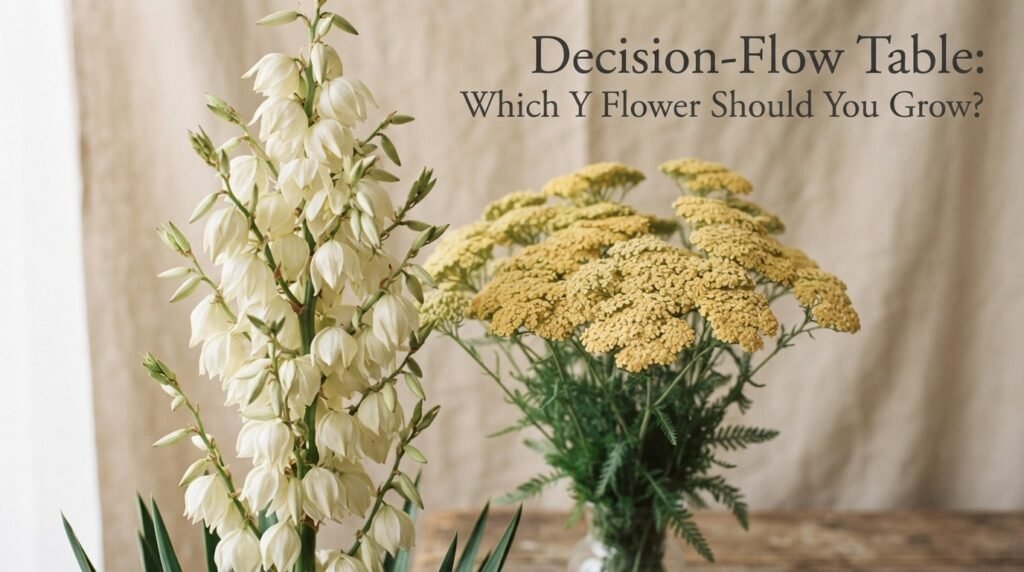
| Your Goal | Best Choice | Why |
| Want a drought-tolerant structural plant | Yucca filamentosa | Thrives on neglect, tall flower spikes |
| Want a fragrant spring-flowering tree | Magnolia denudata | Citrus-scented, showy white blooms |
| Want a pollinator-friendly perennial | Yarrow | Blooms for months, easy to grow |
| Want fragrance for perfume or oil use | Ylang-ylang | Industry-standard fragrance tree |
| Have pets or small children | Yucca or Magnolia species | Both are non-toxic |
| Want a plant to avoid entirely with pets | N/A | Skip yellow oleander and yellow foxglove |
| Want something genuinely rare | Ypsilandra thibetica | Uncommon Chinese woodland perennial |
Most home gardeners will do best starting with Yucca filamentosa or yarrow. Both are widely available, forgiving of poor soil, and safe around most households.
Conclusion
Flowers that start with Y split neatly into two honest groups: rare true Y-genus plants and abundant “yellow” common names. This guide covers 60 verified entries across both groups, each with a checked botanical name and toxicity note. If you want a safe, easy starting point, Yucca filamentosa and yarrow are the most reliable flowers that start with Y for any home garden.
Frequently Asked Questions
Are there really 60 flowers that start with Y?
Yes, when you include both true Y-genus plants and common names starting with “yellow.” This guide verifies all 60 entries with real botanical names.
What is the most common flower that starts with Y?
Yarrow, or Achillea millefolium, is the most widely grown and easiest to find in nurseries and seed catalogs.
Is yellow oleander poisonous?
Yes, extremely. Every part of the plant contains cardiac glycosides, and ingestion can be fatal to both people and pets.
What flowers that start with Y are safe around pets?
Yucca species and Magnolia (Yulania) species are generally non-toxic. Avoid yellow oleander, yellow foxglove, and yellow jasmine around animals.
Is yellow jessamine the same as jasmine?
No. Despite the similar name, yellow jessamine (Gelsemium sempervirens) is unrelated to true jasmine and is toxic if ingested.
What is the difference between Yucca and Yulania?
Yucca is a genus of desert and dryland shrubs from the Americas. Yulania is a section within Magnolia, made up of deciduous Asian flowering trees.
Which Y flower is best for a fragrant garden?
Ylang-ylang and Magnolia denudata are both known for a strong, pleasant fragrance, though ylang-ylang needs a tropical climate.
Are there any rare flowers that start with Y?
Yes. Ypsilandra thibetica and Magnolia zenii are both considered rare, with limited cultivation outside their native ranges.
Can Yucca flowers be eaten?
Yes, in many species. Yucca filamentosa and Yucca baccata both produce edible flowers and fruit, though preparation matters.