

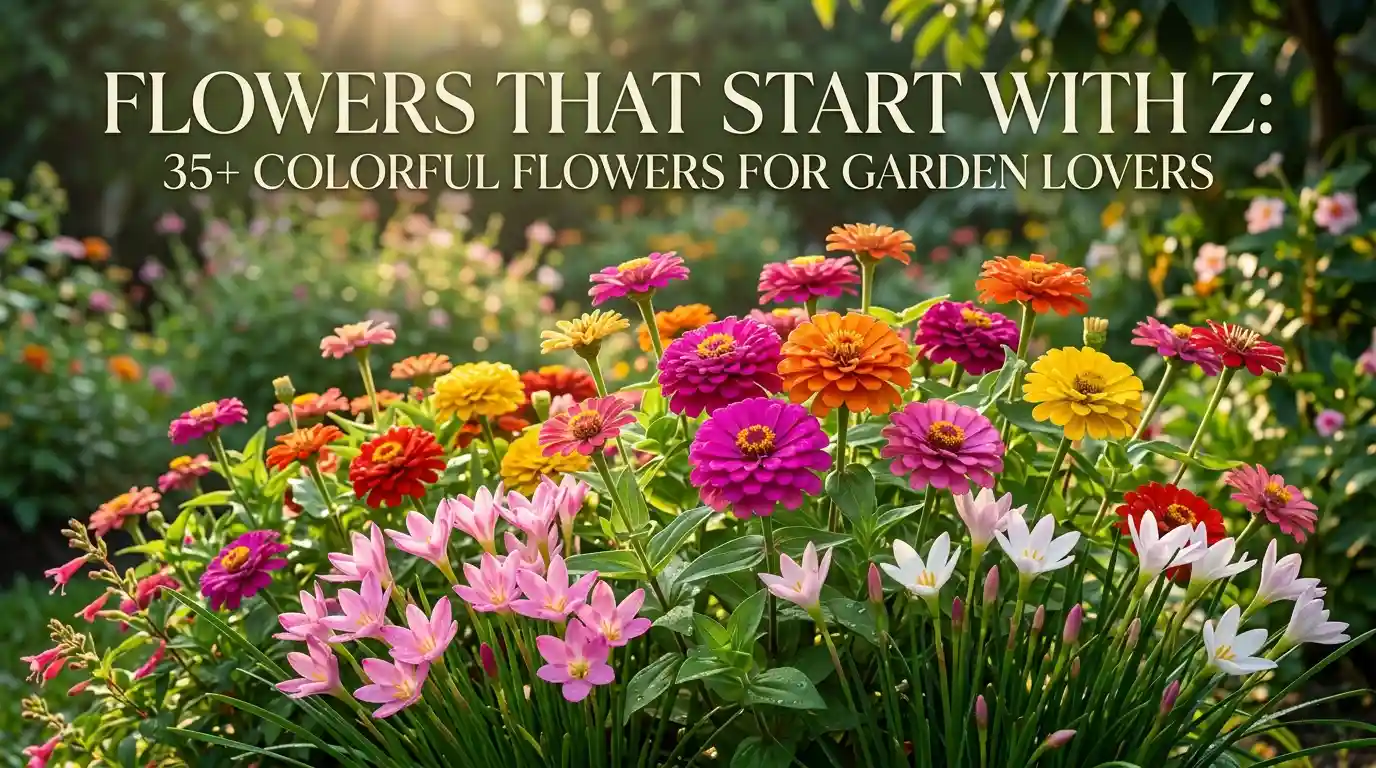
Flowers that start with Z are rare compared to other letters, but they are far from boring. This guide brings together 35+ real flowers, from cheerful garden Zinnias to rare orchids like Zygopetalum. Each entry includes a verified botanical name, native range, bloom time, and toxicity note. Whether you garden, arrange bouquets, or just love plant names, this list has something new to offer.
- Quick Answer: Top Flowers That Start With Z
- Master Alphabetical List of Flowers That Start With Z
- Full Comparison Table of Flowers That Start With Z
- Garden Favorites Among Flowers That Start With Z
- Indoor Plants Among Flowers That Start With Z
- Florist Favorites Among Flowers That Start With Z
- Rare Flowers That Start With Z
- Flowers That Start With Z and Need Caution
- Color-Based Groupings of Flowers That Start With Z
- Life-Cycle Groupings of Flowers That Start With Z
- Botanical Name Crosswalk for Flowers That Start With Z
- Flower Meanings and Symbolism
- Decision Guide: Which Flower That Starts With Z Should You Choose?
- Conclusion
- Frequently Asked Questions
This article is built for several kinds of readers. A home gardener can use it to fill a sunny bed with color. A florist can use it to find fresh Z-letter stems for a bouquet. A pet owner can use it to avoid risky plants like deathcamas. A curious plant lover can simply enjoy how varied this small letter group turns out to be.
The flowers below are sorted in several useful ways. There is a master alphabetical list first, followed by a full comparison table. After that come category sections for garden favorites, indoor plants, florist picks, rare finds, and toxic plants. Color groups and life-cycle groups follow near the end.
Every flower named here has a real, checked botanical name. Native range and toxicity notes are also included, so you can plan safely around kids or pets. By the end of this guide, you should be able to pick flowers that start with Z for almost any garden goal.
Quick Answer: Top Flowers That Start With Z
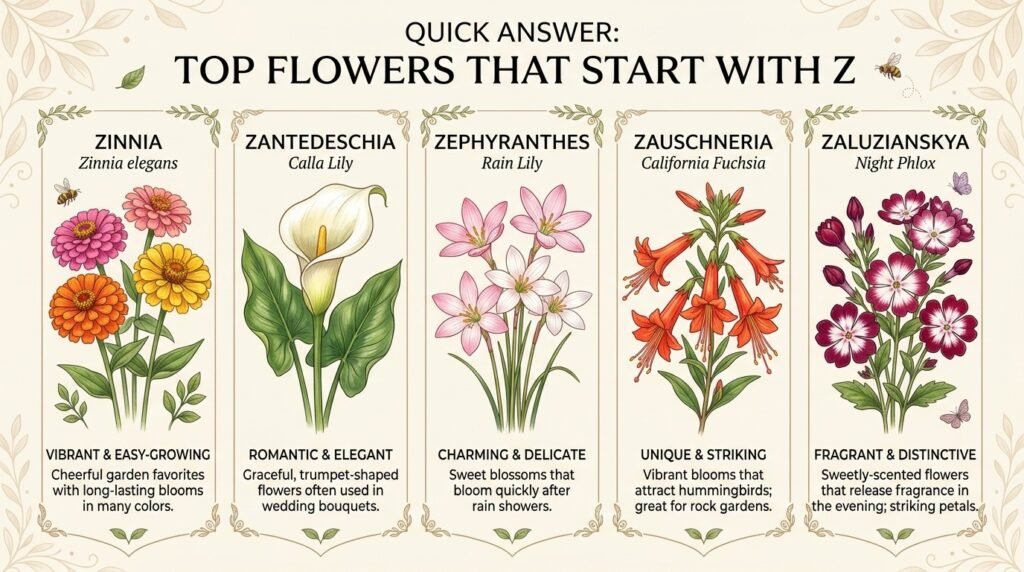
If you only remember a few names, start here. The Common Zinnia is the clear leader, since it blooms all summer in almost any sunny garden. Calla Lily brings sculptural white or colored blooms often used in weddings. Rain Lily, or Zephyranthes, pops up fast after summer storms with star-shaped flowers. Zygopetalum Orchid offers fragrant purple-green blooms for indoor collectors. California Fuchsia draws hummingbirds with tubular red-orange flowers in late summer. Night Phlox releases a sweet scent only after dark, making it a favorite for evening gardens. Christmas Cactus fills winter windowsills with pink and red blooms. Deathcamas rounds out the list as one to avoid, since it is highly toxic despite its pretty white flowers.
Master Alphabetical List of Flowers That Start With Z
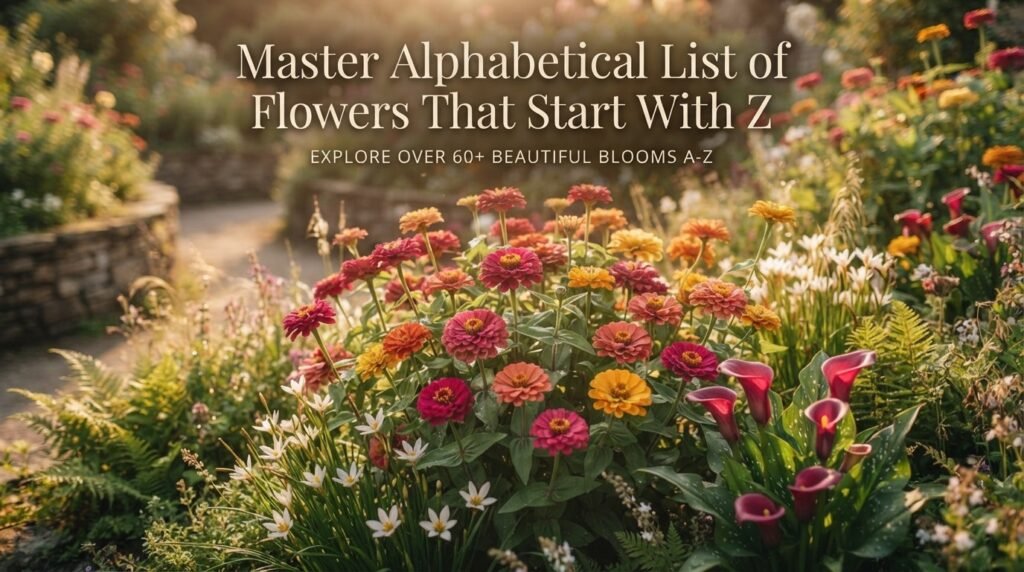
Some flowers here start with Z in their common name, like Zinnia or Zebra Plant. Others start with Z only in the botanical name, like Zauschneria or Zaluzianskya. Both types appear below, since most searches for this topic mix the two together. Each entry lists the most searched common name first, with its botanical name right beside it.
- Common Zinnia (Zinnia elegans)
- Mexican Zinnia (Zinnia haageana)
- Narrowleaf Zinnia (Zinnia angustifolia)
- Peruvian Zinnia (Zinnia peruviana)
- Rocky Mountain Zinnia (Zinnia grandiflora)
- Desert Zinnia (Zinnia acerosa)
- Profusion Zinnia (Zinnia marylandica)
- Redstar Zinnia (Zinnia tenuifolia)
- Rain Lily (Zephyranthes candida)
- Pink Rain Lily (Zephyranthes grandiflora)
- Yellow Rain Lily (Zephyranthes citrina)
- Rose Rain Lily (Zephyranthes rosea)
- Atamasco Lily (Zephyranthes atamasca)
- Prairie Rain Lily (Zephyranthes drummondii)
- Calla Lily (Zantedeschia aethiopica)
- Zygopetalum Orchid (Zygopetalum mackayi)
- Zygopetalum Intermedium (Zygopetalum intermedium)
- Zenobia (Zenobia pulverulenta)
- Golden Alexanders (Zizia aurea)
- Heart-Leaved Alexanders (Zizia aptera)
- Night Phlox (Zaluzianskya capensis)
- Silver Night Phlox (Zaluzianskya ovata)
- Donkey Flower (Zaluzianskya villosa)
- California Fuchsia (Zauschneria californica)
- Alpine Hummingbird Trumpet (Zauschneria garrettii)
- Zabelia (Zabelia triflora)
- Deathcamas (Anticlea elegans, formerly Zigadenus elegans)
- Texas Wedelia (Zexmenia hispida)
- Christmas Cactus (Schlumbergera truncata)
- Zebra Plant (Aphelandra squarrosa)
- Zéphirine Drouhin Rose (Rosa ‘Zéphirine Drouhin’)
- Beehive Ginger (Zingiber spectabile)
- Stinkwood (Zieria arborescens)
- Zigzag Plant (Pedilanthus tithymaloides)
- Zion Osteospermum (Osteospermum ecklonis ‘Zion Series’)
That is 35 flowers in total, right at the mark this guide promises. Notice how many entries come from just two genera, Zinnia and Zephyranthes, since both are unusually rich sources of Z names. The list also mixes true wildflowers, like Golden Alexanders, with tropical shrubs, like Beehive Ginger, showing real range within one small letter group.
Full Comparison Table of Flowers That Start With Z
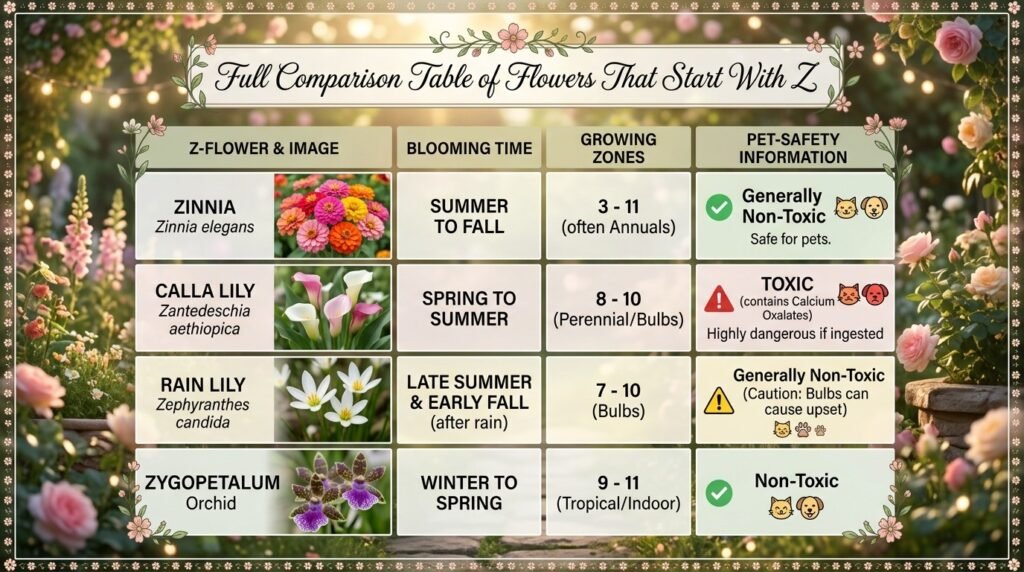
The table below lines up six key facts for each flower on this list. Native range shows where a plant grows in the wild, which helps you judge if your climate will suit it. Bloom season and USDA zone guide planting timing, while the toxicity column flags any risk to people or pets. Use this table for a fast check before reading the fuller category sections below.
| Flower | Botanical Name | Native Range | Bloom Season | USDA Zone | Toxicity |
| Common Zinnia | Zinnia elegans | Mexico | Summer to fall | 2–11, annual | Non-toxic |
| Mexican Zinnia | Zinnia haageana | Mexico | Summer to fall | 2–11, annual | Non-toxic |
| Narrowleaf Zinnia | Zinnia angustifolia | Mexico | Summer to fall | 2–11, annual | Non-toxic |
| Peruvian Zinnia | Zinnia peruviana | Mexico to South America | Summer | 2–11, annual | Non-toxic |
| Rocky Mountain Zinnia | Zinnia grandiflora | Southwestern United States | Summer | 4–9 | Non-toxic |
| Desert Zinnia | Zinnia acerosa | Southwestern United States, Mexico | Summer | 6–9 | Non-toxic |
| Profusion Zinnia | Zinnia marylandica | Garden hybrid | Summer to frost | 2–11, annual | Non-toxic |
| Redstar Zinnia | Zinnia tenuifolia | Mexico | Summer | 2–11, annual | Non-toxic |
| Rain Lily | Zephyranthes candida | Argentina, Uruguay | Late summer to fall | 7–10 | Mild, toxic if eaten |
| Pink Rain Lily | Zephyranthes grandiflora | Mexico, Central America | Summer to fall | 8–10 | Mild, toxic if eaten |
| Yellow Rain Lily | Zephyranthes citrina | Mexico | Summer to fall | 8–10 | Mild, toxic if eaten |
| Rose Rain Lily | Zephyranthes rosea | Peru, Colombia | Summer to fall | 9–11 | Mild, toxic if eaten |
| Atamasco Lily | Zephyranthes atamasca | Southeastern United States | Spring | 6–9 | Mild, toxic if eaten |
| Prairie Rain Lily | Zephyranthes drummondii | South-central United States, Mexico | Summer, after rain | 7–10 | Mild, toxic if eaten |
| Calla Lily | Zantedeschia aethiopica | South Africa | Late spring to summer | 8–10 | Toxic, all parts |
| Zygopetalum Orchid | Zygopetalum mackayi | Brazil | Fall to winter | 10–11, indoor | Non-toxic |
| Zygopetalum Intermedium | Zygopetalum intermedium | Brazil | Fall to winter | 10–11, indoor | Non-toxic |
| Zenobia | Zenobia pulverulenta | Southeastern United States | Late spring | 5–9 | Mild, nectar caution |
| Golden Alexanders | Zizia aurea | Eastern North America | Late spring | 3–8 | Mild, sap irritant |
| Heart-Leaved Alexanders | Zizia aptera | North America | Spring | 3–8 | Mild, sap irritant |
| Night Phlox | Zaluzianskya capensis | South Africa | Summer | 9–11, annual elsewhere | Non-toxic |
| Silver Night Phlox | Zaluzianskya ovata | South Africa | Summer | 9–10 | Non-toxic |
| Donkey Flower | Zaluzianskya villosa | South Africa | Spring | 9–10 | Non-toxic |
| California Fuchsia | Zauschneria californica | Western United States, Mexico | Late summer to fall | 8–10 | Non-toxic |
| Alpine Hummingbird Trumpet | Zauschneria garrettii | Idaho, Utah | Summer | 5–8 | Non-toxic |
| Zabelia | Zabelia triflora | Himalayas, Central Asia | Late spring | 5–8 | Non-toxic |
| Deathcamas | Anticlea elegans | North America | Summer | 3–7 | Highly toxic, all parts |
| Texas Wedelia | Zexmenia hispida | Southern United States, Mexico | Summer to fall | 8–10 | Non-toxic |
| Christmas Cactus | Schlumbergera truncata | Brazil | Winter | 10–12, houseplant | Mild, toxic to pets |
| Zebra Plant | Aphelandra squarrosa | Brazil | Summer to fall | 10–11, houseplant | Non-toxic |
| Zéphirine Drouhin Rose | Rosa ‘Zéphirine Drouhin’ | Garden hybrid, France | Repeat summer bloom | 5–9 | Non-toxic |
| Beehive Ginger | Zingiber spectabile | Southeast Asia | Summer to fall | 9–11 | Non-toxic |
| Stinkwood | Zieria arborescens | Australia | Spring to summer | 9–11 | Non-toxic |
| Zigzag Plant | Pedilanthus tithymaloides | Central America, Caribbean | Spring to summer | 10–11 | Toxic sap |
| Zion Osteospermum | Osteospermum ecklonis ‘Zion Series’ | South Africa | Spring to fall | 9–11, annual elsewhere | Non-toxic |
A few rows deserve special attention after a first read. Deathcamas is the single most dangerous entry, since every part is highly toxic to people and livestock. Calla Lily and Zigzag Plant both carry real toxicity too, mostly from irritating sap or crystals. Zygopetalum Orchid stands out as fully safe, making it a solid pick for homes with pets or small children.
Garden Favorites Among Flowers That Start With Z
Garden favorites are the flowers gardeners plant season after season without fail. Common Zinnia leads this group, since it blooms nonstop through heat and needs little care. Rocky Mountain Zinnia brings the same cheerful look in a tougher, drought-ready perennial form. Golden Alexanders adds early color to native beds and feeds pollinators before summer flowers open. California Fuchsia rounds things out with red-orange tubes that hummingbirds cannot resist.
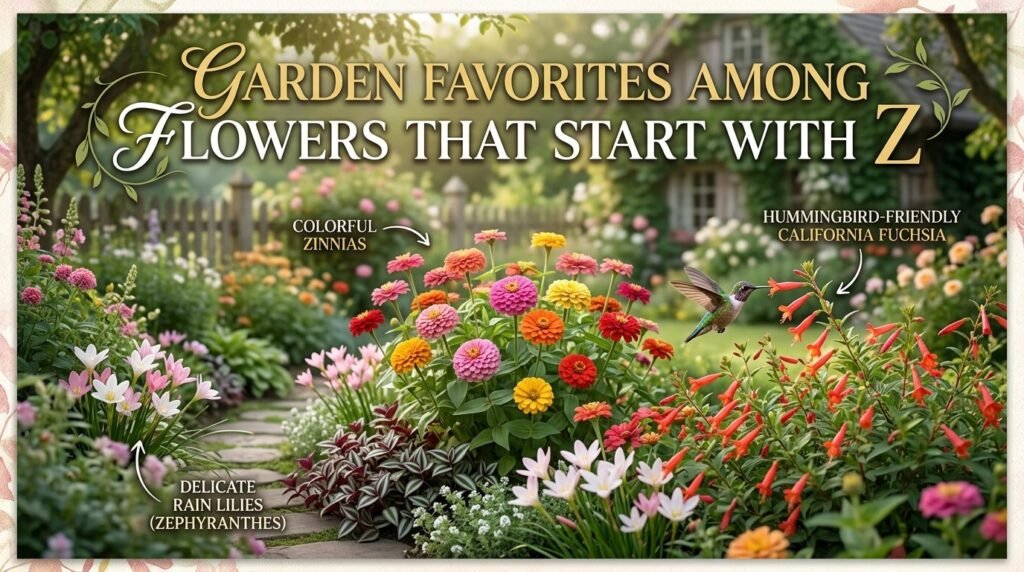
- Common Zinnia — bold summer color in nearly any bed
- Profusion Zinnia — compact, disease-resistant hybrid form
- Rocky Mountain Zinnia — tough perennial for hot, dry spots
- Golden Alexanders — early native bloomer for pollinator gardens
- California Fuchsia — hummingbird magnet for late summer
- Rain Lily — surprise blooms after summer rain showers
- Night Phlox — fragrant white flowers for evening gardens
- Zenobia — glossy leaves and bell-shaped spring flowers
These eight plants cover very different garden needs. Common Zinnia and Profusion Zinnia both suit beginner gardeners who want fast, reliable color. Zinnia and Golden Alexanders, by contrast, reward patient gardeners building a long-term native landscape.
Indoor Plants Among Flowers That Start With Z
Indoor flowers need to handle lower light and steady room temperatures. Zygopetalum Orchid tops this group, since its fragrant purple-green blooms thrive on a bright windowsill. Christmas Cactus is nearly foolproof, flowering each winter reliably with almost no attention. Zebra Plant adds bold striped leaves alongside a striking yellow flower spike. Beehive Ginger looks dramatic in a large indoor pot, with waxy red-and-yellow flower cones that last for weeks.
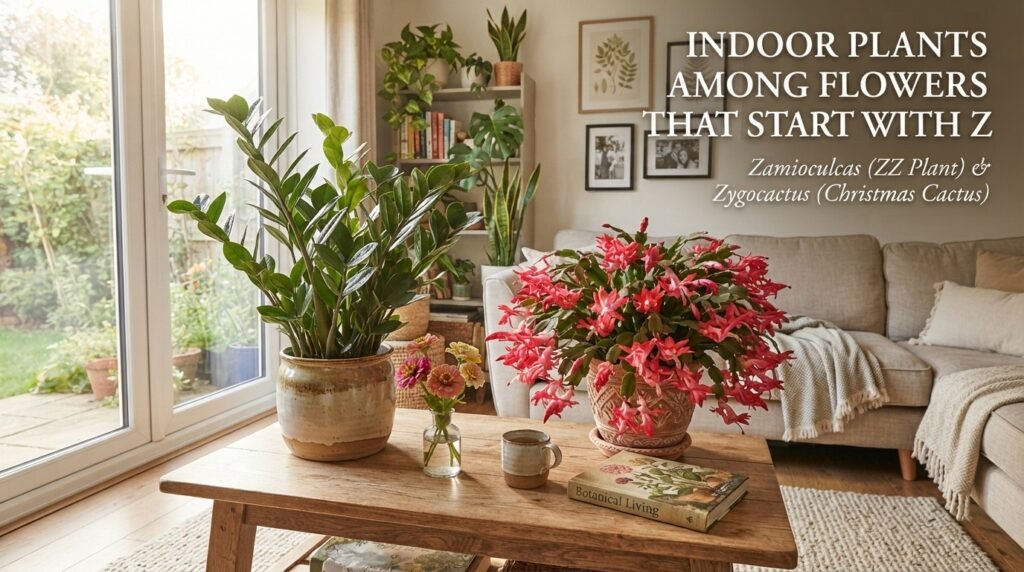
- Zygopetalum Orchid — fragrant blooms for a bright window
- Christmas Cactus — reliable winter color, minimal care
- Zebra Plant — striped leaves plus a tall yellow bloom spike
- Beehive Ginger — dramatic cone-shaped flowers in a large pot
- Zigzag Plant — unusual sculptural stems for a sunny room
- Zion Osteospermum — daisy-like blooms on a bright patio or sill
Zygopetalum Orchid and Christmas Cactus both suit true beginners, since neither demands special humidity. Zebra Plant and Beehive Ginger need brighter light and warmer rooms to bloom well. Zigzag Plant works best for collectors who enjoy odd, sculptural shapes over classic flower form.
Florist Favorites Among Flowers That Start With Z
Florists choose flowers for strong stems, long vase life, and dependable color. Common Zinnia is a cut-flower classic, since its sturdy stems hold up well in mixed bouquets. Calla Lily brings clean, sculptural lines that suit modern and wedding-style arrangements alike. Zéphirine Drouhin Rose offers a thornless, fragrant pink bloom that is easy to handle when cutting. Pink Rain Lily adds a softer, smaller accent flower for garden-style bouquets.
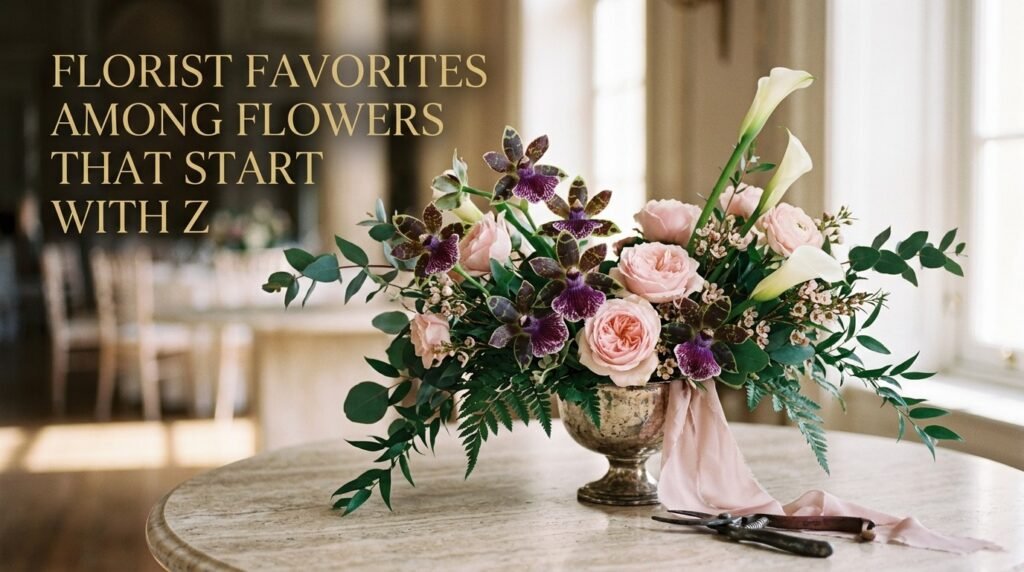
- Common Zinnia — sturdy stems, long-lasting cut flower
- Calla Lily — sculptural shape favored in wedding florals
- Zéphirine Drouhin Rose — thornless, fragrant pink blooms
- Zygopetalum Orchid — unusual scent and color for luxury bouquets
- Pink Rain Lily — delicate accent for garden-style arrangements
- Redstar Zinnia — quilled petals add texture to mixed bunches
Calla Lily and Zéphirine Drouhin Rose both suit formal event work, since their look reads as elegant rather than casual. Common Zinnia and Redstar Zinnia instead suit relaxed, garden-style bouquets. Zygopetalum Orchid is the rarest of the group, often reserved for higher-end floral design.
Rare Flowers That Start With Z
A few flowers on this list rarely show up outside specialist growers. Zabelia is an East Asian shrub with small, tubular pink flowers that few Western gardeners have ever grown. Stinkwood, despite its blunt name, produces delicate white or pink blossoms on an Australian native shrub. Silver Night Phlox and Donkey Flower are both South African cousins of the more common Night Phlox, sold only through specialty seed suppliers. Zygopetalum Intermedium remains a collector’s orchid, prized for subtle color that differs slightly from its better-known relative.
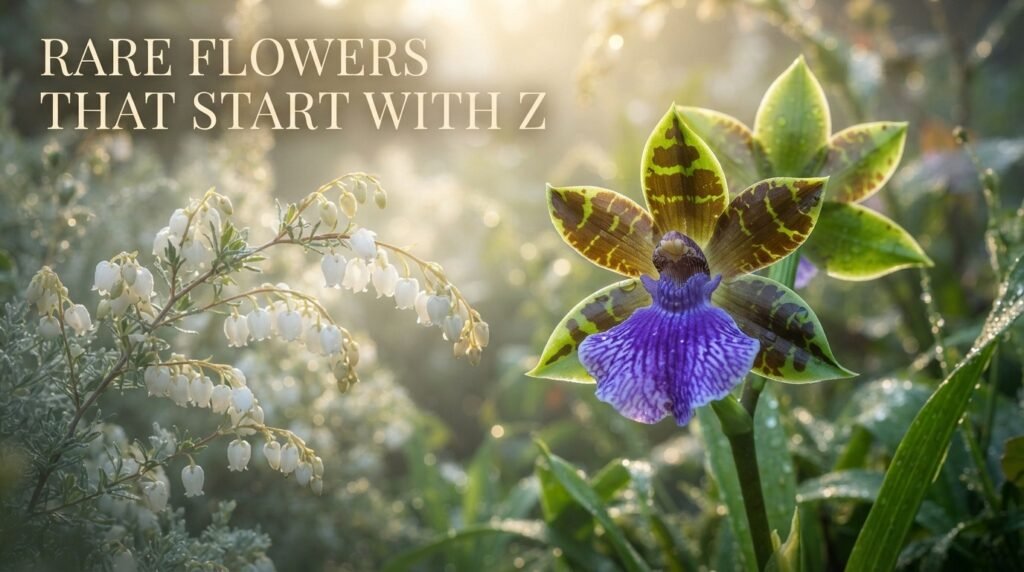
- Zabelia — rare East Asian shrub with tubular pink blooms
- Stinkwood — Australian native despite its unflattering common name
- Silver Night Phlox — hard-to-find South African evening bloomer
- Donkey Flower — unusual South African species named for its shape
- Zygopetalum Intermedium — collector’s orchid with subtle coloring
- Heart-Leaved Alexanders — overlooked native cousin of Golden Alexanders
Stinkwood earns its odd name from its bark, not its flowers, which actually smell mild and pleasant. Zabelia and the two rare Zaluzianskya species share one trait: none of them are sold at typical big-box garden centers. Heart-Leaved Alexanders is easy to overlook entirely, since it closely resembles its far more common relative.
Flowers That Start With Z and Need Caution
A small group of Z-flowers carries real toxicity risk, especially around kids and pets. Deathcamas is by far the most dangerous, since every part of the plant is highly toxic if eaten. Calla Lily contains sharp calcium oxalate crystals that cause burning in the mouth and throat. Zigzag Plant leaks a milky, irritating sap that can harm skin and eyes on contact. Rain Lily bulbs carry mild Amaryllis-family toxins, similar in effect to a true daffodil bulb.
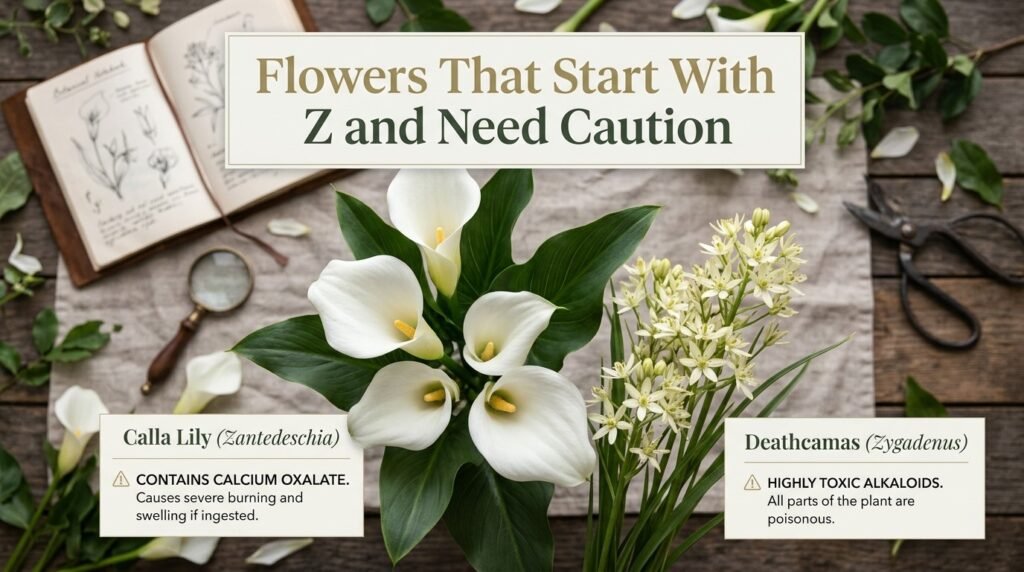
- Deathcamas — highly toxic, resembles edible wild onions closely
- Calla Lily — oxalate crystals cause mouth and throat irritation
- Zigzag Plant — irritating milky sap, handle with gloves
- Rain Lily — mildly toxic bulb, keep from curious pets
- Christmas Cactus — mild toxicity risk for cats and dogs
- Zenobia — nectar caution noted in some Ericaceae relatives
Deathcamas deserves the most caution here, since it closely resembles edible wild onions in the field. Calla Lily and Zigzag Plant both cause irritation rather than severe poisoning in most healthy adults. Even so, all six of these are best kept away from small children and pets that chew on leaves.
Color-Based Groupings of Flowers That Start With Z
Grouping flowers by color helps with planning a themed bed or bouquet. Yellow and gold tones show up often in this letter group. Golden Alexanders, Yellow Rain Lily, and Rocky Mountain Zinnia all bring warm gold shades that pair well in a native pollinator bed.
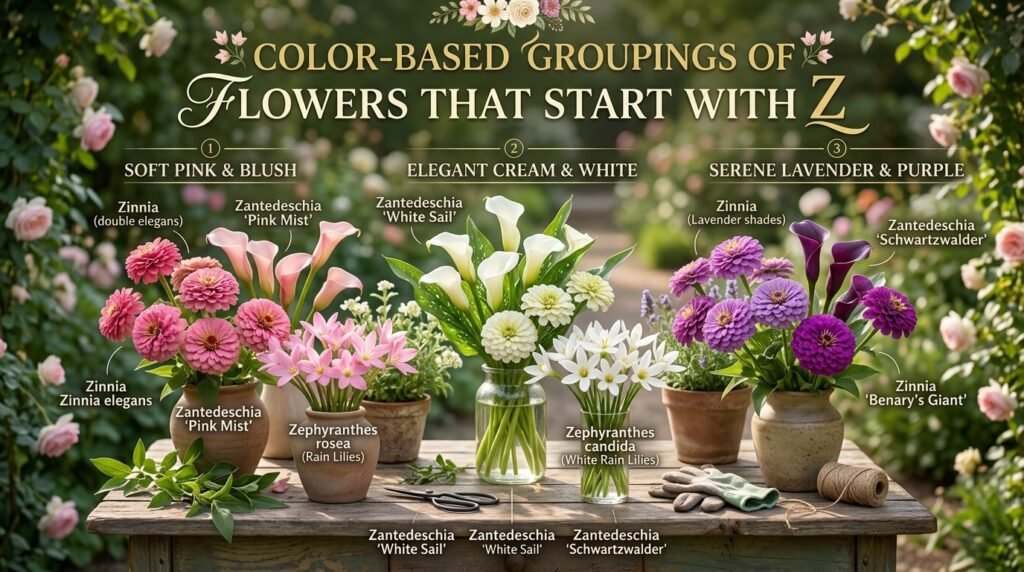
Red and orange flowers add heat and energy to sunny borders. Mexican Zinnia and Redstar Zinnia both lean into fiery red-orange tones, while California Fuchsia adds a matching tubular red bloom that hummingbirds seek out. These work well planted together for a bold, high-contrast border.
White flowers bring calm, clean contrast to almost any planting scheme. Calla Lily, Atamasco Lily, and Silver Night Phlox all offer pure white blooms with slightly different shapes. Night Phlox adds fragrance to this group, releasing its scent only after sunset.
Pink and purple flowers suit softer, romantic garden themes. Pink Rain Lily and Rose Rain Lily both bring gentle blush tones to a bulb bed. Zéphirine Drouhin Rose adds a deeper pink on a climbing form, and Zygopetalum Orchid contributes a rare purple-and-green combination indoors.
Life-Cycle Groupings of Flowers That Start With Z
Knowing a flower’s life cycle helps you plan how often to replant. Annuals finish their life cycle in one season, so they need fresh seeds or plants each year. Perennials return from the same roots for years, while bulbs store energy underground between bloom cycles. Shrubs and woody plants take longer to establish but reward patience with years of repeat blooms.
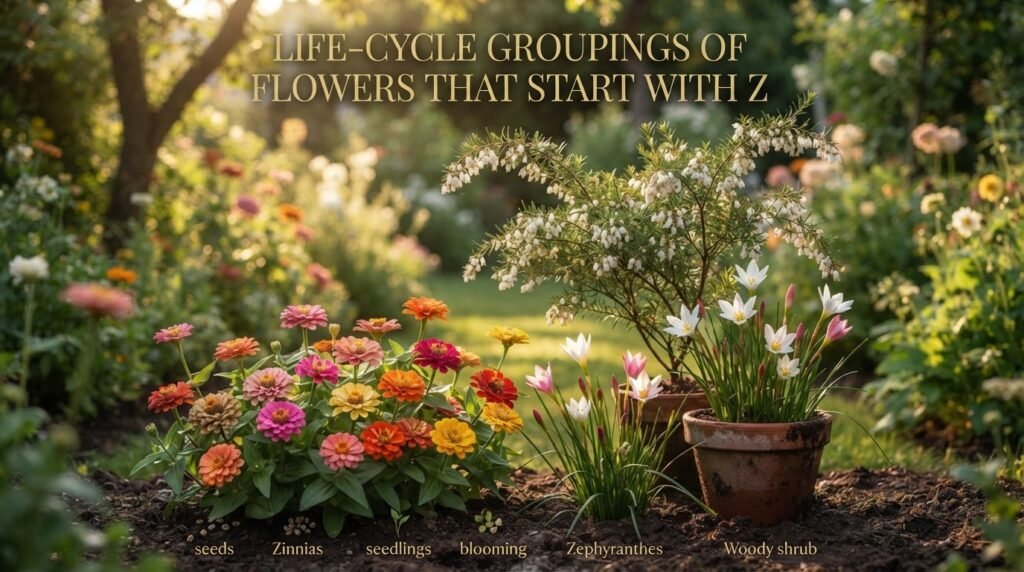
| Life Cycle Type | Example Flowers |
| Annual | Common Zinnia, Mexican Zinnia, Narrowleaf Zinnia, Profusion Zinnia |
| Perennial | Golden Alexanders, California Fuchsia, Zenobia, Rocky Mountain Zinnia |
| Bulb | Rain Lily, Pink Rain Lily, Atamasco Lily, Calla Lily |
| Shrub or Woody | Stinkwood, Zebra Plant, Zéphirine Drouhin Rose, Zigzag Plant |
Annual Zinnias dominate the first row, since the genus is famous for fast, easy seed-grown color. Bulb types like Rain Lily reward patience, since they often wait for a rain event before blooming. Shrubs such as Zéphirine Drouhin Rose take the longest to mature but need the least yearly replanting once settled.
Botanical Name Crosswalk for Flowers That Start With Z
Botanical names matter more than most gardeners expect. Common names shift by region, but a botanical name stays fixed everywhere in the world. This matters most when ordering online, since the wrong common name can return a completely different plant. The crosswalk below pairs common names with correct botanical names and plant families for accurate searching.
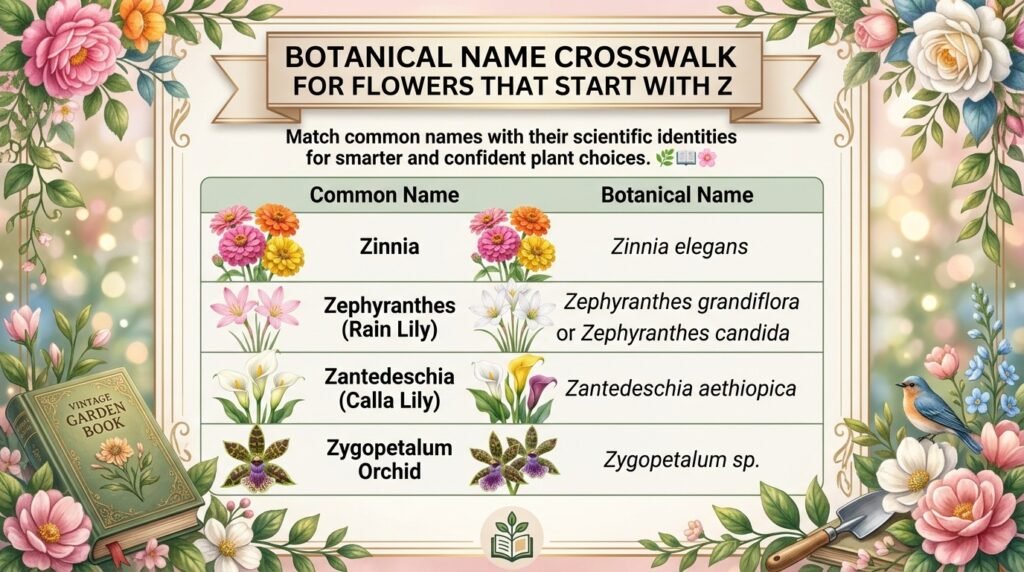
| Common Name | Botanical Name | Plant Family |
| Common Zinnia | Zinnia elegans | Asteraceae |
| Rain Lily | Zephyranthes candida | Amaryllidaceae |
| Calla Lily | Zantedeschia aethiopica | Araceae |
| Zygopetalum Orchid | Zygopetalum mackayi | Orchidaceae |
| Zenobia | Zenobia pulverulenta | Ericaceae |
| Golden Alexanders | Zizia aurea | Apiaceae |
| Night Phlox | Zaluzianskya capensis | Scrophulariaceae |
| California Fuchsia | Zauschneria californica | Onagraceae |
| Deathcamas | Anticlea elegans | Melanthiaceae |
| Christmas Cactus | Schlumbergera truncata | Cactaceae |
| Zebra Plant | Aphelandra squarrosa | Acanthaceae |
| Zéphirine Drouhin Rose | Rosa ‘Zéphirine Drouhin’ | Rosaceae |
| Beehive Ginger | Zingiber spectabile | Zingiberaceae |
| Zigzag Plant | Pedilanthus tithymaloides | Euphorbiaceae |
This shortlist shows how varied the plant families really are. Zinnia and its relatives sit alone in the daisy family, while Zephyranthes and Zantedeschia share broader bulb-plant lineages. Deathcamas stands apart in the Melanthiaceae family, which explains why it looks so deceptively similar to safer bulb plants nearby.
Flower Meanings and Symbolism
Flowers that start with Z carry meaning across several cultures, even with a smaller name pool. Zinnia is widely linked to endurance and lasting friendship, since its blooms hold color for weeks in a vase. Gardeners have long given Zinnias as a symbol of thinking fondly of someone far away. That meaning likely grew from the flower’s own toughness, since it survives heat and neglect better than most annuals.
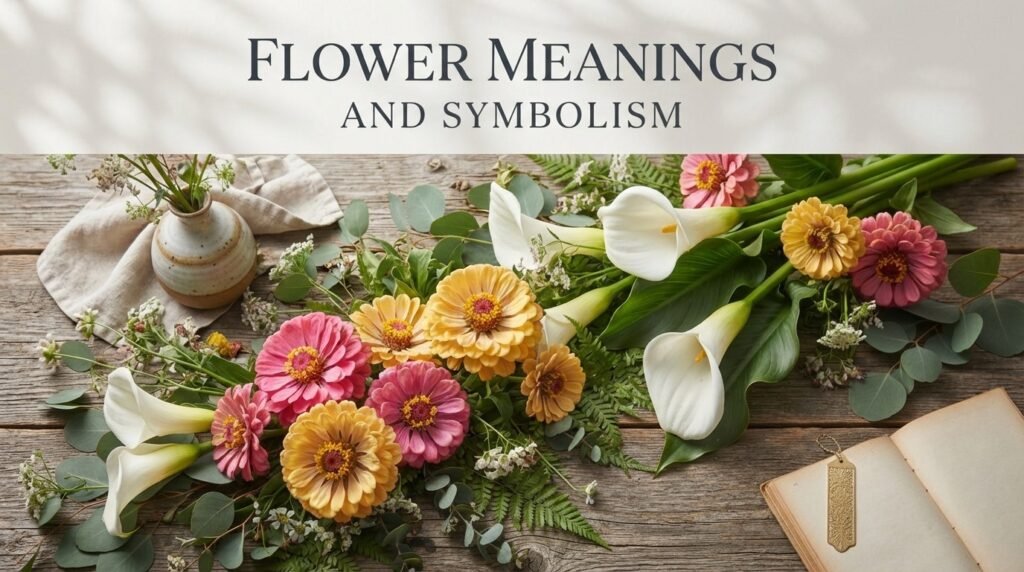
Rain Lily, or Zephyranthes, carries a gentler symbolism tied to renewal and rebirth. Its habit of blooming right after a storm made it a natural symbol for fresh starts in several folk traditions. Calla Lily holds a more formal meaning, often standing for elegance, purity, and new beginnings at weddings and other milestone events.
Deathcamas, unlike the flowers above, holds a cautionary meaning rooted in real danger. Its story is less about symbolism and more about respect, since it has caused real harm to livestock and foragers who mistook it for a safe wild onion. That contrast shows how even a small letter group can span both celebration and caution.
Decision Guide: Which Flower That Starts With Z Should You Choose?
Choosing the right flower often depends on where it will grow and who will be near it. The table below matches common situations to a flower pick from this list, with a short reason for each match. Use it as a starting point, then check the full comparison table above for growing details.
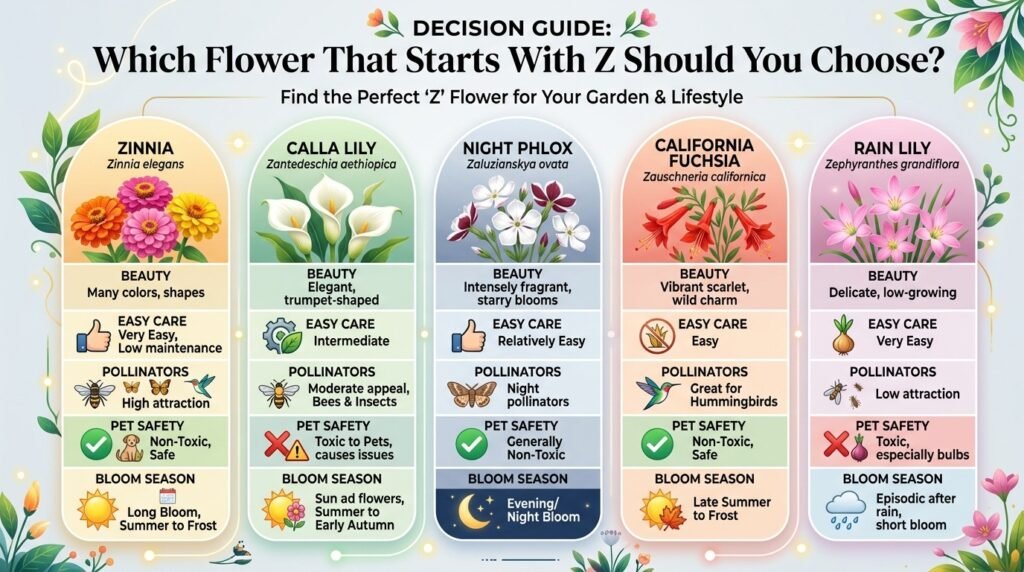
| Your Situation | Recommended Flower | Why It Fits |
| Sunny summer border | Common Zinnia | Reliable, fast, nonstop color |
| Hot, dry rock garden | Desert Zinnia | Drought-tough and low maintenance |
| Indoor bright window | Zygopetalum Orchid | Fragrant blooms, easy indoor care |
| Cut flower bouquet | Calla Lily | Sculptural shape, long vase life |
| Native pollinator bed | Golden Alexanders | Early bloom feeds spring pollinators |
| Household with pets | Common Zinnia | Non-toxic and easy to grow |
| Evening or patio garden | Night Phlox | Sweet scent released after dark |
| Winter indoor color | Christmas Cactus | Reliable winter blooms, low care |
Notice that Common Zinnia appears twice in this table, once for sunny borders and once for pet-safe homes. That overlap is not an accident, since the same traits that make it easy to grow also make it low-risk indoors and out. Calla Lily, by contrast, is stunning in a bouquet but needs careful handling in homes with pets, since it appears again in the caution section above.
Conclusion
Flowers that start with Z prove that a small letter group can still hold real variety. This guide covered 35+ of them, complete with botanical names, native range, and toxicity notes. Whether you want a tough summer annual, a fragrant orchid, or a flower to avoid around pets, this list has a fit. Keep it close the next time you plan a garden bed or a bouquet built around unusual names.
Frequently Asked Questions
What are some common flowers that start with Z?
Zinnia, Zephyranthes, Zantedeschia, and Zygopetalum are the most common picks. Zinnia is by far the most widely grown of the group. All four appear regularly in gardens and florist shops.
Are there 35+ colorful flowers that start with Z?
Yes, this guide lists 35 verified flowers starting with Z. They range from garden annuals to rare orchids and shrubs. Many share just two genera, Zinnia and Zephyranthes.
Which flowers that start with Z are toxic to pets?
Deathcamas, Calla Lily, Zigzag Plant, and Christmas Cactus all carry some toxicity risk. Deathcamas is by far the most dangerous of the group. Keep all four away from pets that chew on plants.
Is Zinnia safe to plant around children? Yes, Zinnia is considered non-toxic and safe for most gardens. It causes no major harm if touched or tasted lightly. It remains one of the safest flowers on this entire list.
Which Z-flower blooms the longest?
Common Zinnia blooms from early summer until the first frost. Profusion Zinnia comes close behind it with steady, disease-resistant flowers. Both need regular deadheading to keep flowering that long.
What is the tallest flower that starts with Z?
Calla Lily often reaches two to three feet tall in good soil. Most Zinnia varieties stay shorter, closer to one to two feet. Calla Lily suits the back of a bed or a tall vase.
Can I grow flowers that start with Z indoors? Yes, Zygopetalum Orchid, Christmas Cactus, Zebra Plant, and Beehive Ginger all adapt well indoors. Bright, indirect light suits most of them. Christmas Cactus needs the least fuss of the group.