

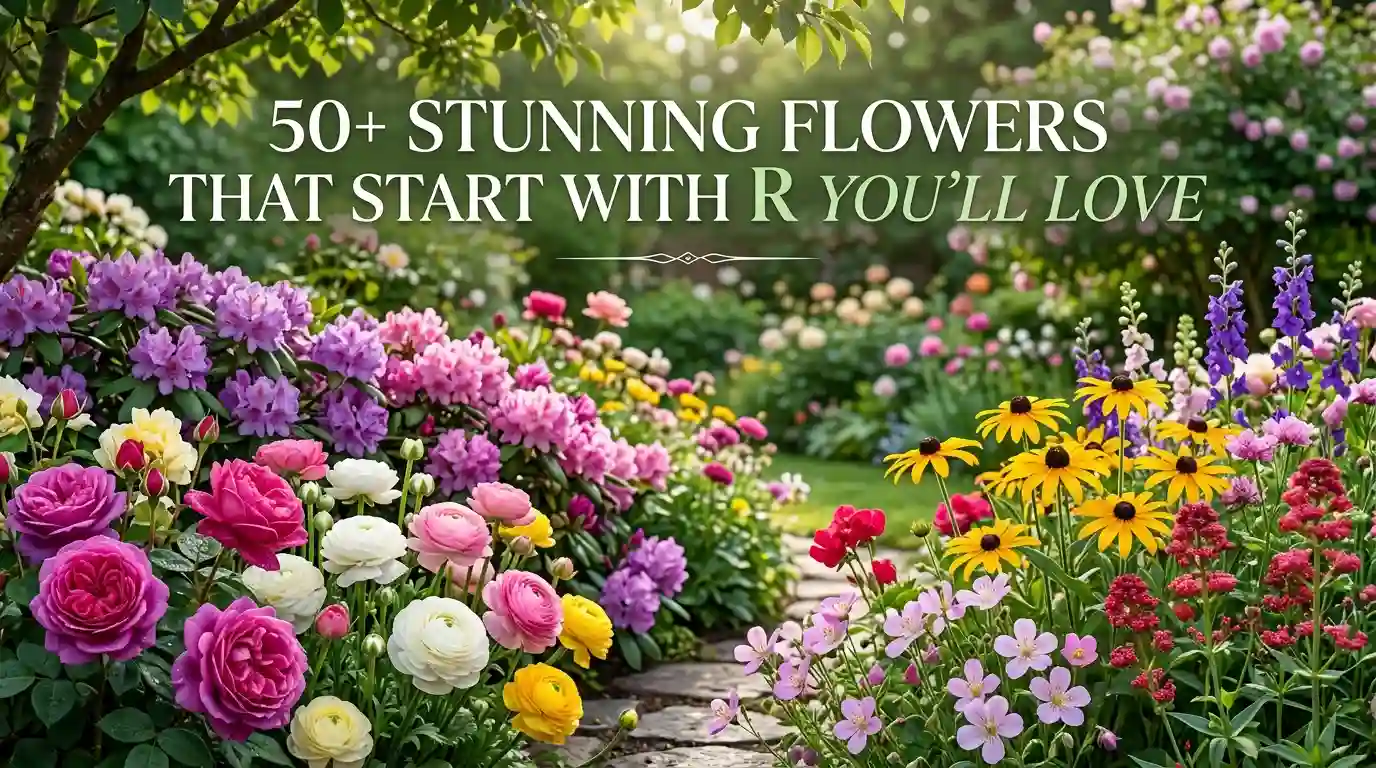
Flowers that start with R cover an amazing range of shapes and colors. This letter alone gives us garden classics, rare exotics, and tough native wildflowers. From the elegant rose to the fiery red hot poker, R has something for every garden style. This guide brings all of them together in one place, with photos in mind for every entry.
- Quick Answer: Top R Flowers at a Glance
- Master Alphabetical List of Flowers That Start With R
- Full Comparison Table
- Garden Favorites
- Indoor Plants
- Florist Favorites
- Rare Flowers
- Caution: Toxic R Flowers
- Color-Based Groupings
- Life-Cycle Groupings
- Botanical Name Crosswalk
- Flower Meanings and Symbolism
- Decision-Flow Table
- Conclusion
- Frequently Asked Questions
We built this list for a simple reason. Most alphabet flower lists stop at ten or fifteen names. Ours goes further. You will find over 50 flowers that start with R, sorted by common name and botanical name. Each entry notes its native range, bloom time, and any toxicity concerns. Where it helps, we also added an image caption you can use directly.
The list is organized to help you plan, not just browse. Garden favorites sit next to rare finds. Indoor plants sit next to florist staples. Color groups and life-cycle tables help you narrow choices fast. A toxicity section flags flowers that need extra care around pets or kids, so nothing here is left to guesswork.
Whether you garden in full sun or a shady balcony, this list of flowers that start with R will help. Use the quick answer box below for a fast overview. Then dive into the full tables and category sections for deeper detail on each bloom.
Quick Answer: Top R Flowers at a Glance
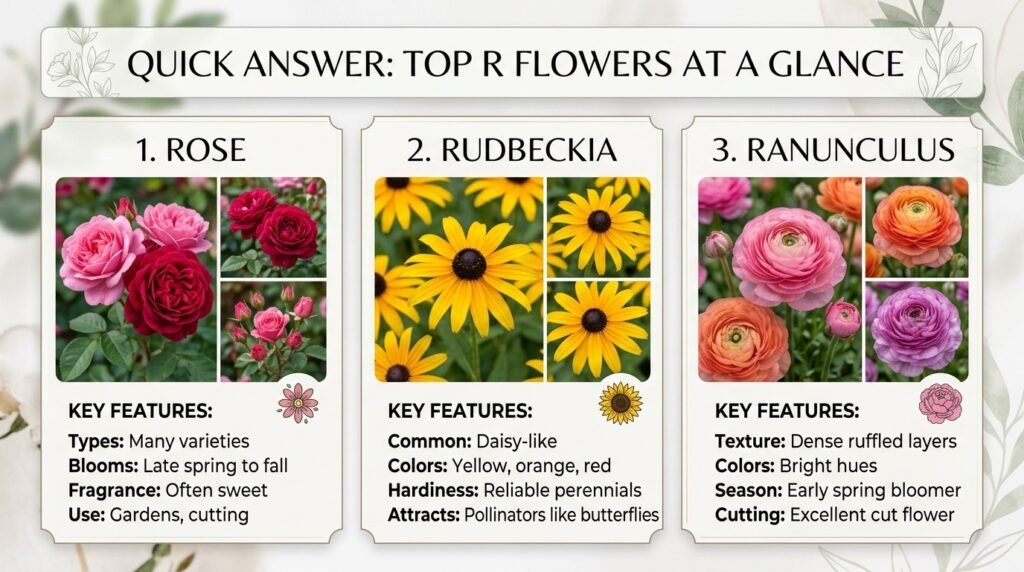
If you only remember a few names, start here. Roses (Rosa spp.) lead the list for fragrance and variety. Rudbeckia, or Black-Eyed Susan, brings months of cheerful yellow blooms. Ranunculus offers paper-thin, rose-shaped petals in spring. Rhododendron delivers dramatic spring color for shaded beds. Russian sage adds silvery-blue texture that pollinators love. Red hot poker brings bold, torch-like spikes to sunny borders. Rain lilies pop up fast after summer storms. Ruellia thrives in heat and keeps blooming for months. These eight cover nearly every garden need, from cut flowers to drought-tolerant borders.
Master Alphabetical List of Flowers That Start With R
Some R flowers are best known by their common name. Others are more often searched by botanical name. We split the list below so you can find either format fast. Common names are listed first, followed by lesser-known botanical-first entries.
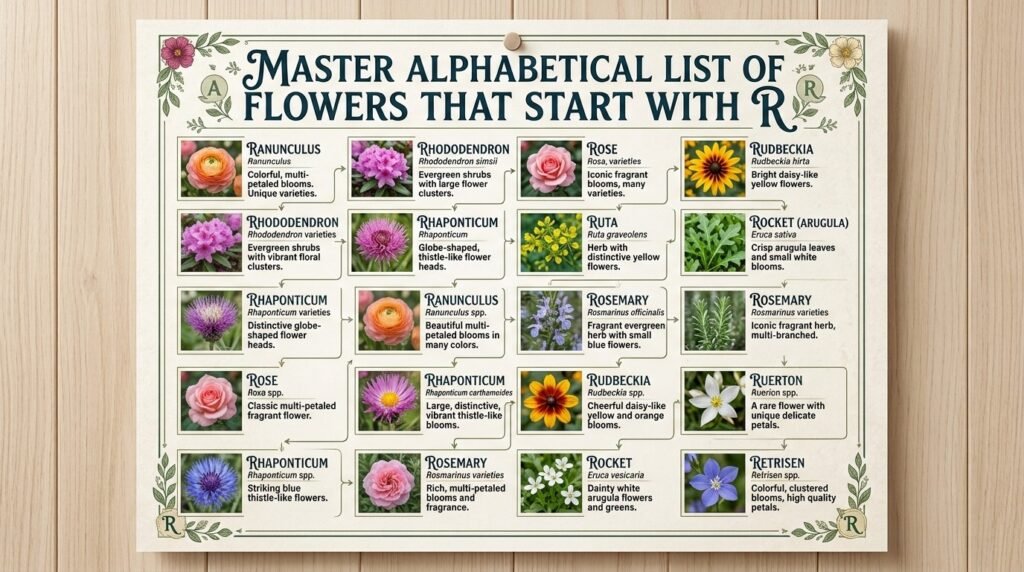
Common-name flowers:
Rose,
Ranunculus,
Rudbeckia (Black-Eyed Susan),
Rhododendron,
Rain Lily,
Rock Rose,
Red Hot Poker,
Rocktrumpet (Mandevilla),
Rugosa Rose,
Rattail Cactus,
Red Valerian,
Russell Lupine,
Redbud Tree,
Rangoon Creeper,
Rock Purslane,
Red Cranesbill,
Red Ribbons,
Rice Flower,
Rock Soapwort,
Round-Leaved Sundew,
Royal Bluebell,
Rue, Restharrow,
Red Spider Lily,
Rattlesnake Plant,
Rosemary,
Red Rover,
Russian Sage,
Ruellia (Mexican Petunia),
Rubus (bramble flowers),
Rose Mallow,
Red Clover.
Botanical-first flowers:
Ramonda
Ranzania
Raoulia
Ratibida
Ravenala
Rebutia
Rehmannia
Reineckia
Reinwardtia
Reseda
Rhaphiolepis
Rhapis
Rhipsalis
Rhodanthe
Rhodochiton
Rhodohypoxis
Robinia
Rochea
Rodgersia
Rodriguezia
Rohdea
Romneya
Romulea,
Roscoea
Rothmannia
Rafflesia.
That brings our full count well past 50 flowers that start with R. Not every name suits every climate. The tables below help you match names to your growing zone and garden goals.
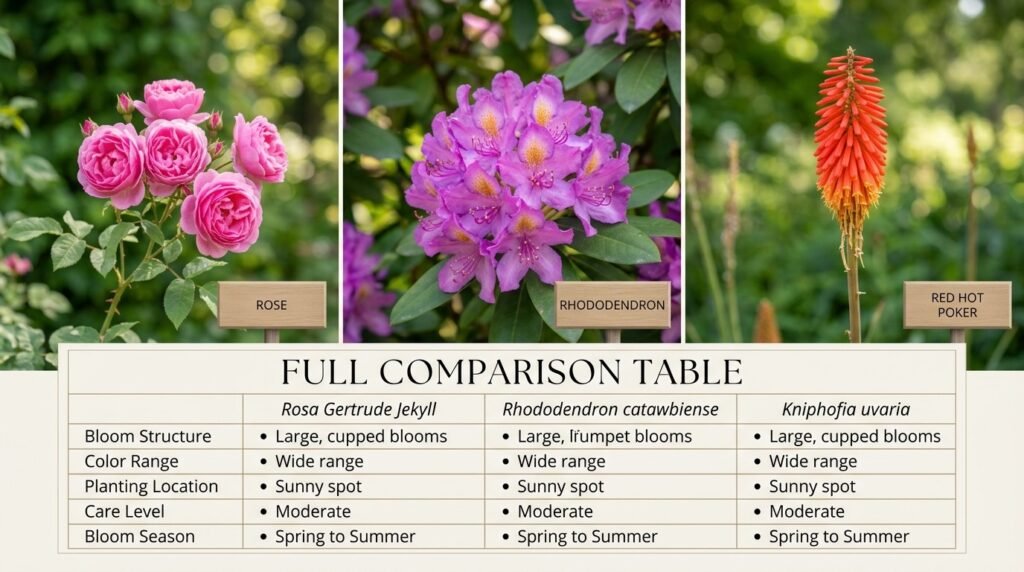
Full Comparison Table
The table below covers the flowers most home gardeners will actually plant. Each row lists the botanical name, native range, bloom season, and toxicity level. Use it to compare options before you commit to a bed layout. Toxicity ratings reflect ingestion risk for pets and children, based on general horticultural references.
| Common Name | Botanical Name | Native Range | Bloom Season | Toxicity |
| Rose | Rosa spp. | Asia, widely cultivated | Late spring–fall | Non-toxic |
| Ranunculus | Ranunculus asiaticus | Mediterranean, SW Asia | Spring | Mildly toxic |
| Rudbeckia | Rudbeckia hirta | North America | Summer–fall | Non-toxic |
| Rhododendron | Rhododendron spp. | Asia, North America | Spring–summer | Toxic |
| Rose Mallow | Hibiscus moscheutos | Eastern US | Summer–fall | Non-toxic |
| Russian Sage | Perovskia atriplicifolia | Central Asia | Summer–fall | Non-toxic |
| Red Hot Poker | Kniphofia uvaria | South Africa | Summer | Non-toxic |
| Ratibida | Ratibida columnifera | North America | Summer–fall | Non-toxic |
| Rain Lily | Zephyranthes spp. | Americas | Summer–fall | Mildly toxic |
| Rocktrumpet | Mandevilla spp. | South America | Summer–fall | Toxic |
| Rugosa Rose | Rosa rugosa | East Asia | Summer–fall | Non-toxic |
| Rattail Cactus | Disocactus flagelliformis | Mexico | Spring–summer | Non-toxic |
| Ruellia | Ruellia simplex | Mexico | Spring–fall | Non-toxic |
| Red Valerian | Centranthus ruber | Mediterranean | Spring–fall | Non-toxic |
| Rock Rose | Cistus spp. | Mediterranean | Spring–summer | Non-toxic |
| Russell Lupine | Lupinus polyphyllus hybrids | North America | Late spring–summer | Toxic (seeds) |
| Rangoon Creeper | Quisqualis indica | Southeast Asia | Spring–fall | Mildly toxic |
| Redbud Tree | Cercis canadensis | North America | Early–mid spring | Non-toxic |
| Rock Purslane | Calandrinia spectabilis | Chile | Spring–summer | Non-toxic |
| Rue | Ruta graveolens | Balkans, Mediterranean | Summer–fall | Toxic |
Roses top the list for versatility, but rock rose and Russian sage stand out for drought tolerance. Rhododendron and rue both need careful placement around pets due to their toxicity. Rangoon creeper is the pick for gardeners chasing fragrance and vertical drama on a trellis.
Garden Favorites
Roses remain the most requested flower in any flower list, and R is no exception. Their layered petals and wide color range make them a staple in beds and borders alike. They bloom from late spring through the first fall frost in most climates. Regular deadheading keeps new buds coming all season long.
Rudbeckia earns its keep with months of steady bloom and almost no maintenance. Its bright yellow petals surround a dark, dome-shaped center that pollinators love. This tough perennial handles poor soil and dry spells with ease. It also self-seeds readily, so one planting often spreads over a few seasons.
Red hot poker adds height and a bold silhouette that few other perennials match. Its torch-shaped flower spikes shift from yellow at the base to red at the tip. Hummingbirds are drawn to these blooms throughout the summer months. Plant it toward the back of a border for the best visual impact.
Rock rose brings a drought-proof option to hot, dry gardens. Its papery petals resemble small wild roses, usually in white, pink, or lavender. This evergreen shrub thrives in poor, rocky soil where other plants struggle. It also tolerates coastal wind and salt spray without much fuss.
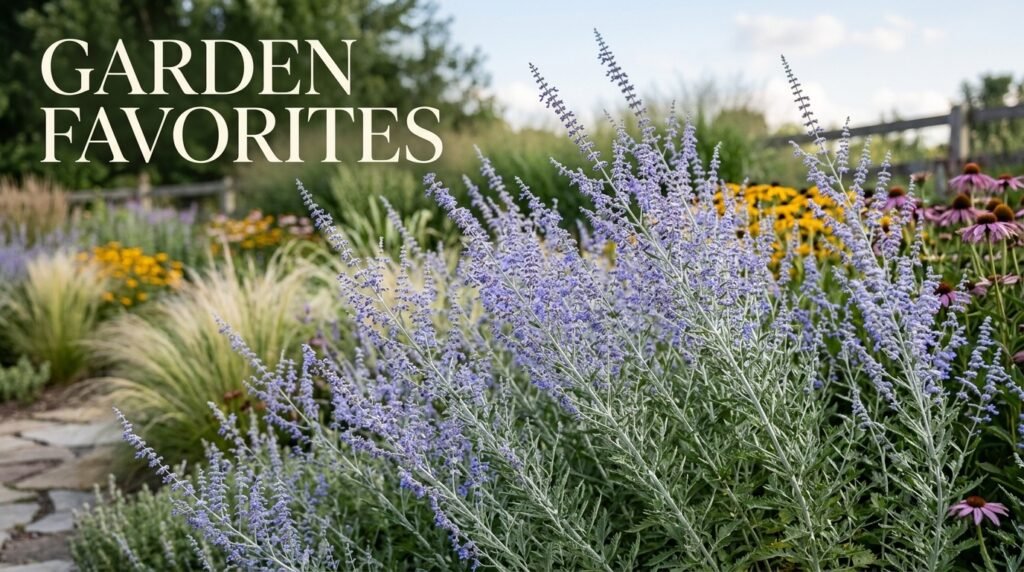
Russian sage adds airy texture and a soft, silvery haze to any bed. Its tiny lavender-blue flowers cover tall, wispy stems from midsummer into fall. Bees and other pollinators visit it constantly during peak bloom. Full sun and dry soil keep this plant looking its best.
Indoor Plants
Not every R flower needs outdoor space. Rattail cactus and rhipsalis both suit hanging baskets near a bright window. Their trailing stems make them ideal for small apartments or shelves. Rock rose and rebutia, a small cactus genus, also adapt well to pots on sunny sills.
Rattail cactus produces long, trailing stems that can stretch several feet over time. In spring, it bursts into bright pink, star-shaped flowers along the stem. This plant prefers bright light and only occasional watering. It makes an excellent choice for a hanging basket near an east-facing window.
Rhipsalis, often called jungle cactus, tolerates lower light better than most cacti. Its thin, branching stems create a soft, cascading look indoors. Small, pale flowers appear occasionally along the stem tips. Water sparingly, letting the soil dry out fully between waterings.
Rebutia is a compact desert cactus that rewards patience with bright spring flowers. Its small, globe-shaped body stays under a few inches wide for years. Flowers in shades of red, orange, or yellow ring the top of the plant. It needs full sun and very well-drained soil to thrive indoors.
Image caption: A small Rebutia cactus covered in bright orange spring flowers.
Florist Favorites
Florists reach for R flowers often, especially for weddings and spring arrangements. Ranunculus is a top seller thanks to its rose-like shape and long vase life. Roses remain the industry standard for nearly every occasion. Rain lilies and red ribbons add delicate, less formal texture to mixed bouquets.
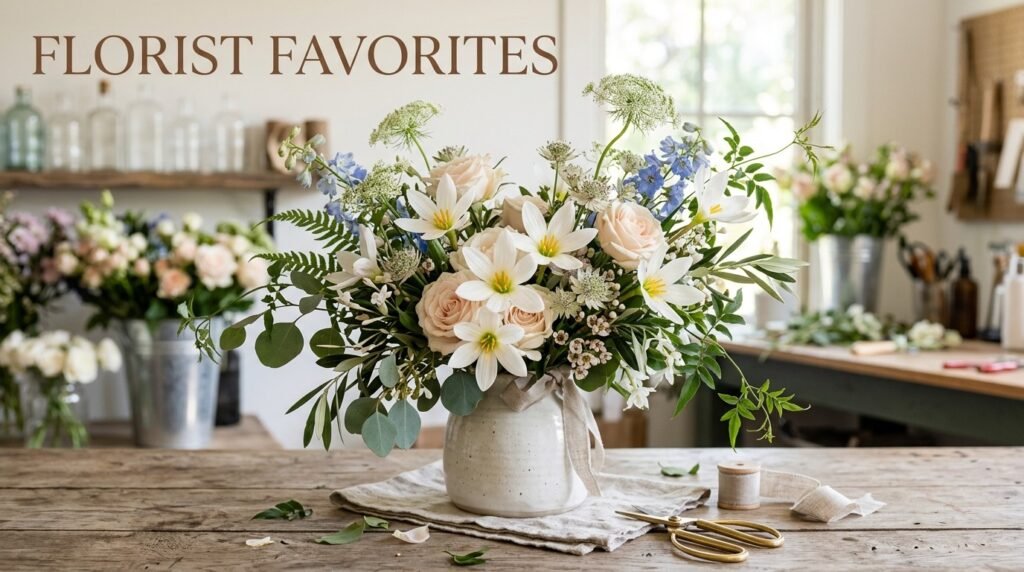
Ranunculus stands out among cut flowers for its layered, tissue-paper petals. A single stem can hold over a hundred delicate petals in tight formation. It lasts up to two weeks in a vase with proper care. Florists prize it for spring weddings in soft pastel color palettes.
Roses need little introduction as the backbone of the cut flower trade. They ship well, hold up in cold storage, and open slowly over several days. Different colors carry different meanings, from romantic red to friendly yellow. This range makes roses useful for nearly any occasion or event.
Rain lilies bring a softer, more casual note to mixed floral arrangements. Their star-shaped blooms open quickly and add light, airy texture. They work best in same-day, local arrangements rather than shipped bouquets. Pair them with greenery for a natural, garden-picked look.
Rare Flowers
Some rare flowers rarely show up outside specialty collections. Rafflesia produces the largest single bloom in the plant kingdom, sometimes over three feet across. It grows only as a parasite on specific vines in Southeast Asian rainforests. The flower also releases a strong odor to attract carrion-feeding insects for pollination.
Romneya, or the Matilija poppy, is a California native prized for its huge white, crepe-paper petals. Each flower can reach up to six inches across, with a bright yellow center. It spreads by underground rhizomes once established in the right spot. Full sun and excellent drainage are essential for success.
Rothmannia is a lesser-known tropical shrub with gardenia-scented, trumpet-shaped flowers. Its blooms are usually white or cream, often marked with maroon spots inside. This plant needs warm, humid conditions and does not tolerate frost. It suits container growing in cooler climates, moved indoors for winter. Romulea offers a crocus-like appearance that surprises gardeners unfamiliar with the genus. Its slender leaves and cup-shaped flowers suit rock gardens and container displays. Colors range from purple and pink to yellow and white. These corms prefer full sun and sharp drainage to perform well.
Caution: Toxic R Flowers
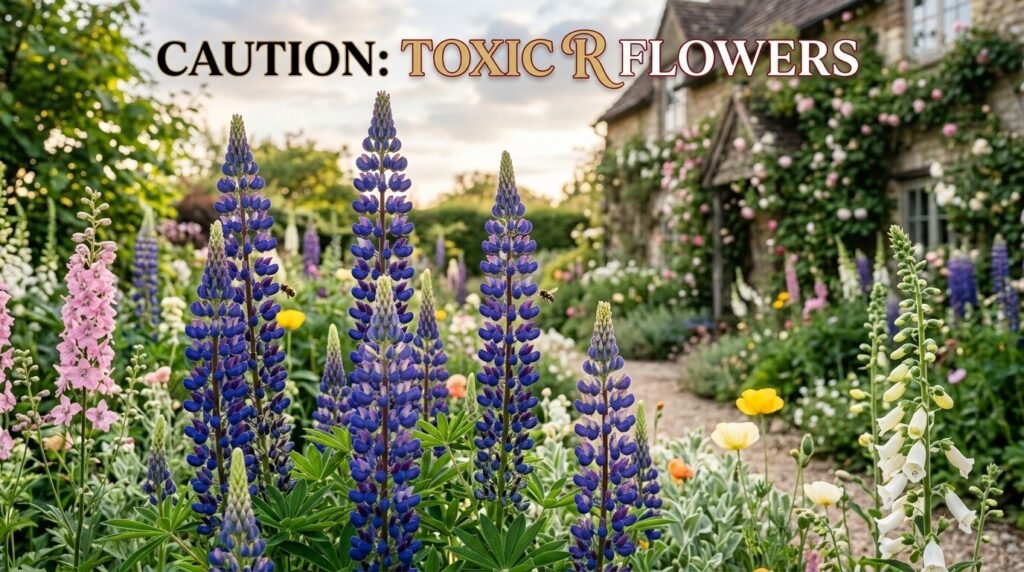
A few flowers on this list need careful placement around pets and small children. Rhododendron contains grayanotoxins, which can cause serious illness if ingested. Rue can cause skin irritation and burns when handled in direct sunlight. Russell lupine seeds carry toxic alkaloids that affect grazing animals in particular.
Rhododendron toxicity comes from compounds in its leaves, flowers, and nectar. Symptoms in pets can include vomiting, drooling, and an irregular heartbeat. Keep fallen blooms and leaves cleared away from areas pets frequent. Planting it behind a low fence or barrier can add an extra layer of safety.
Rue causes a reaction known as phytophotodermatitis when handled in sunlight. The sap can cause painful blistering on skin exposed afterward to UV light. Gardeners should wear gloves when pruning or handling this herb. Keep it away from paths where bare skin might brush against it.
Russell lupine’s real risk lies in its seeds rather than its flowers. Livestock that graze on large amounts of lupine seed can develop serious poisoning. Home gardeners with pets face lower risk but should still avoid letting animals chew on seed pods. Deadheading spent flowers before seed pods form reduces this risk.
Color-Based Groupings
Red and pink R flowers dominate this letter, led by roses, red hot poker, and rock rose. These warm tones suit cottage gardens and cutting beds where bold color is welcome. Rugosa rose also fits here, with fragrant pink-red blooms and striking fall rose hips.
White R flowers include Romneya, rain lily, and some rugosa rose varieties. White blooms work well in moon gardens or evening spaces where pale petals catch the last light. Rothmannia also belongs in this group, with its cream, gardenia-like trumpets.
Yellow and orange R flowers feature Rudbeckia and Ratibida as the strongest performers. Both attract pollinators heavily and suit prairie-style or wildflower plantings. Red hot poker also contributes warm yellow-to-orange tones at its base. Purple and blue R flowers center on Russian sage and Ruellia. Their cooler tones pair well with silver foliage and make a calming contrast to brighter beds nearby. Russell lupine also adds tall blue-purple spikes to this group.
Life-Cycle Groupings
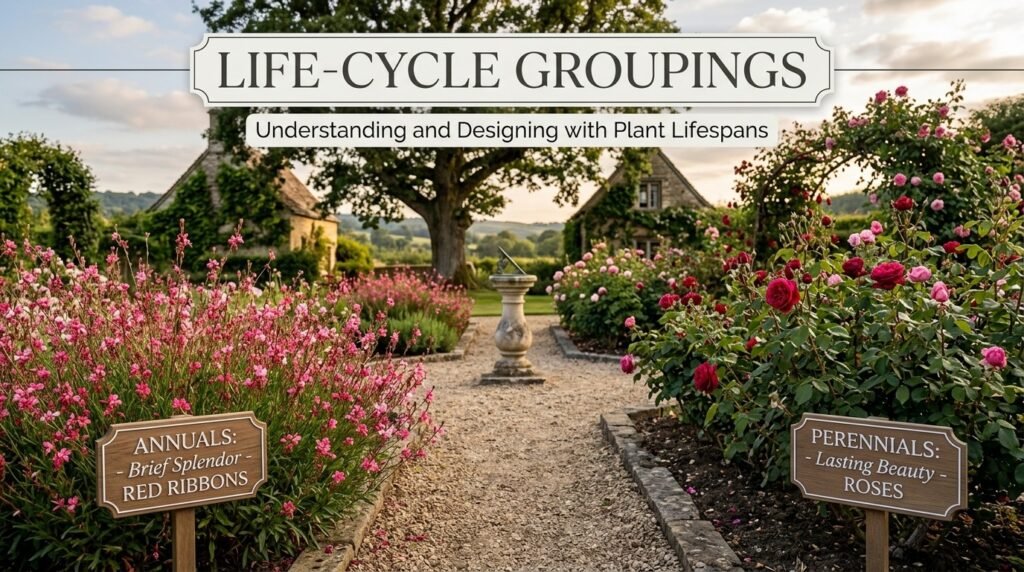
Knowing whether a flower is annual, perennial, or biennial changes how you plan your garden. Annual R flowers need replanting each year but often bloom fastest. Perennial types return on their own and reward patience with bigger displays over time. The table below sorts key R flowers by life cycle so you can budget your planting season accordingly.
| Flower | Life Cycle | Notes |
| Ranunculus | Perennial (grown as annual in cold zones) | Corms lifted in fall in cold climates |
| Rudbeckia | Perennial/short-lived perennial | Self-seeds readily |
| Rose | Perennial shrub | Long-term investment, many cultivars |
| Rain Lily | Perennial bulb | Dormant until rain triggers bloom |
| Red Ribbons | Annual | Reseeds in mild climates |
| Russian Sage | Perennial | Woody base, dies back in cold winters |
| Russell Lupine | Short-lived perennial | Often grown as biennial |
| Redbud Tree | Perennial tree | Blooms before leaves emerge |
Annual flowers like red ribbons suit gardeners who want quick color changes each season. Perennial choices such as roses and Russian sage build a lasting structure with far less replanting work.
Botanical Name Crosswalk
Knowing the botanical name matters more than most gardeners expect. Nurseries and seed catalogs often list plants by genus first, especially for less common species. In some databases, a search for “rudbeckia” will return far more accurate results than a search for “black-eyed susan” alone.
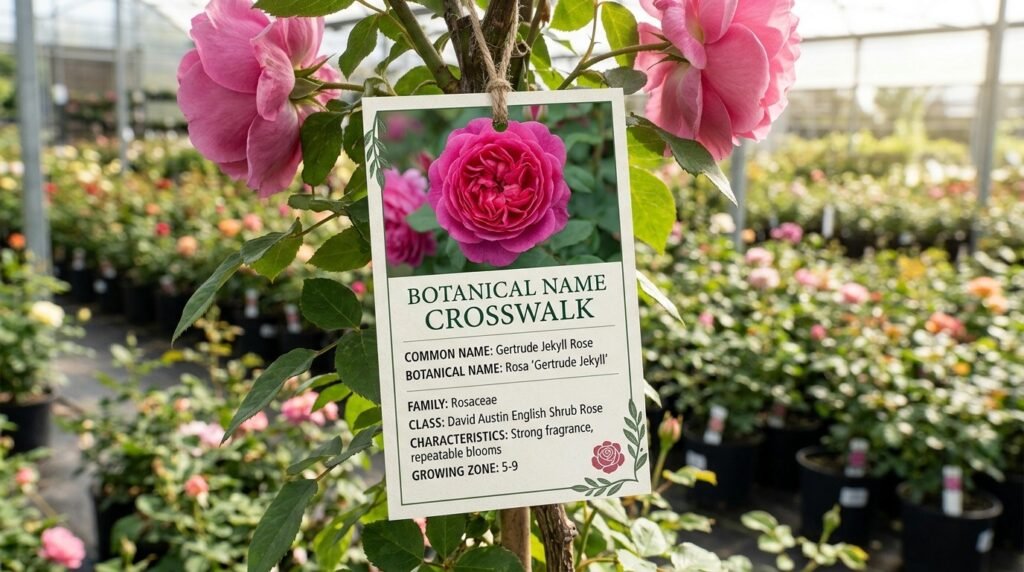
| Common Name | Botanical Name |
| Rose | Rosa spp. |
| Black-Eyed Susan | Rudbeckia hirta |
| Rain Lily | Zephyranthes spp. |
| Rock Rose | Cistus spp. |
| Mexican Petunia | Ruellia simplex |
| Matilija Poppy | Romneya coulteri |
| Red Hot Poker | Kniphofia uvaria |
Using the botanical name also helps avoid confusion between similarly named plants. “Rose mallow,” for example, can refer to hibiscus or to an unrelated wetland plant depending on the region. The botanical name always points to one exact species.
Flower Meanings and Symbolism
Roses carry the richest symbolism of any flower on this list, with different colors representing love, friendship, or remembrance. Red roses signal romantic love, while yellow roses often represent friendship instead. Pink roses lean toward gratitude and admiration in most flower meaning guides.
Ranunculus symbolizes charm and attractiveness, making it a popular choice for engagement bouquets. Its many delicate petals are sometimes linked to radiant charm in Victorian flower language. This meaning makes it a favorite for early relationship milestones.
Rain lilies carry a gentler meaning tied to renewal, since they bloom suddenly after rainfall. Their surprise appearance after storms links them to hope and fresh starts. Gardeners often plant them near entryways to symbolize new beginnings.
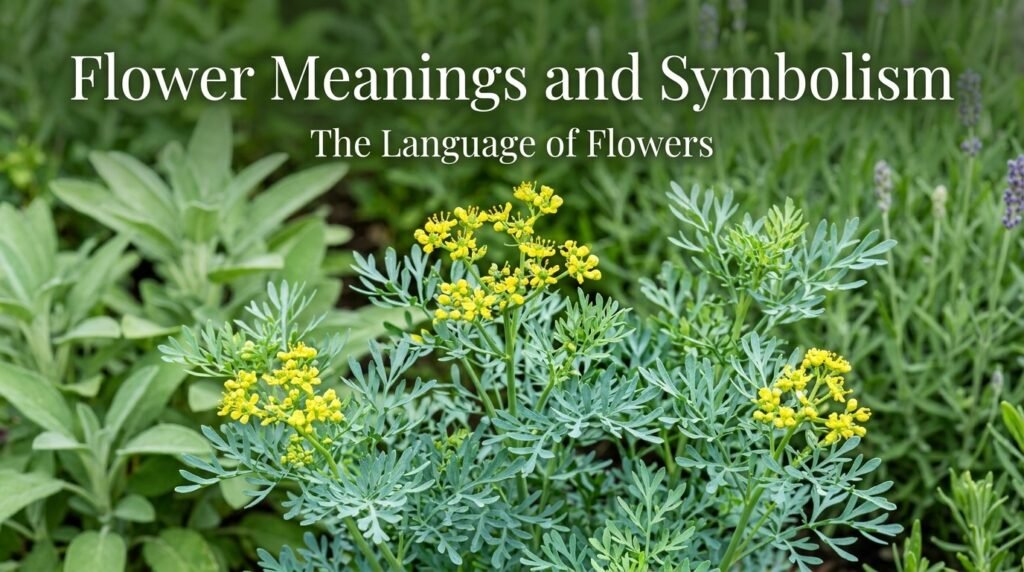
Rue has a more complex history, once associated with regret in older folklore, though it is also linked to protection in some traditions. Its bitter taste and strong scent likely shaped both associations over centuries of use. Today it appears more often in herb gardens than symbolic bouquets.
Decision-Flow Table
Choosing the right R flower depends on your space, light, and goals. The table below walks through common gardening scenarios and points to a matching flower. Use it as a quick-reference guide when planning a new bed or container.
| If you want… | Choose this R flower |
| A drought-tolerant border plant | Rock Rose or Russian Sage |
| A fragrant flowering vine | Rangoon Creeper |
| A long-lasting cut flower | Ranunculus or Rose |
| A shade-loving spring bloom | Rhododendron |
| A low-maintenance indoor plant | Rattail Cactus or Rhipsalis |
| A pet-safe garden bed | Rose, Rudbeckia, or Rock Rose |
| A pollinator-friendly wildflower | Ratibida or Rudbeckia |
Gardeners short on time should start with rock rose or Russian sage, since both thrive on neglect once established. Those planning a formal cutting garden will get the most value from roses and ranunculus together.
Image caption: A simple garden flowchart matching common goals to R flower choices.
Conclusion
Flowers that start with R offer real range, from garden classics to rare botanical curiosities. Roses and rudbeckia anchor most beds, while rare picks like Rafflesia and Romneya reward curious plant lovers. Toxicity and life-cycle notes above help you plant with confidence. Use this list of flowers that start with R as a lasting reference for your next planting season.
Frequently Asked Questions
What are some common flowers that start with R?
Rose, Ranunculus, Rudbeckia, Rhododendron, and Russian Sage are among the most common R flowers grown worldwide. Each suits a different garden style, from formal borders to drought-tolerant beds.
Are there any flowers that start with R that are toxic to pets?
Yes. Rhododendron, Rocktrumpet, and Russell Lupine seeds are all toxic if ingested by pets. Keep these away from curious cats and dogs.
Which R flower is best for a beginner gardener?
Rudbeckia is an excellent starting point. It tolerates poor soil, needs little care, and blooms reliably from summer through fall.
Do any R flowers work well indoors?
Rattail cactus and Rhipsalis both do well as houseplants. Both prefer bright, indirect light and minimal watering.
What does a Ranunculus flower symbolize?
Ranunculus symbolizes charm and attractiveness. It is a popular choice for engagement and wedding bouquets.
Is Rafflesia a flower people can grow at home?
No. Rafflesia is parasitic and grows only on specific vines in rainforest conditions. It cannot be cultivated in home gardens.
Which R flowers attract the most pollinators?
Rudbeckia and Ratibida both draw bees and butterflies in large numbers. They work well in wildflower meadows and pollinator gardens.
What is the difference between a rose and a rugosa rose?
Rugosa rose is a specific, hardy species known for wrinkled leaves and strong disease resistance. Standard garden roses cover many other species and hybrids.
Can Russian Sage survive cold winters?
Yes. Russian Sage dies back to its woody base in cold climates but returns reliably each spring. It is hardy in most temperate growing zones.