

Green is the color of growth, calm, and renewal. In the flower world, green blooms feel fresh and unusual, since true green is one of the rarest colors in nature. A green flower stands out simply by being different from the reds, pinks, and yellows most gardens are used to.
- Classic Green Garden Flowers
- 1. Bells of Ireland
- 2. Green Zinnia
- 3. Green Rose
- 4. Green Trick Dianthus
- 5. Green Carnation
- 6. Green Chrysanthemum
- 7. Green Wheat Celosia
- 8. Green Envy Coneflower
- 9. Green Dahlia
- 10. Lady’s Mantle
- Green Flowering Shrubs & Trees
- 11. Limelight Hydrangea
- 12. Little Lime Hydrangea
- 13. Annabelle Hydrangea
- 14. Guelder Rose
- 15. Mediterranean Spurge
- 16. Cushion Spurge
- 17. Snowball Viburnum
- Green Wildflowers
- 18. Green Milkweed
- 19. Green Antelope Horns
- 20. Jack-in-the-Pulpit
- 21. Skunk Cabbage
- 22. Green Violet
- 23. Green Trillium
- 24. Queen Anne’s Lace
- Green Tropical & Exotic Flowers
- 25. Jade Vine
- 26. Green Cymbidium Orchid
- 27. Green Cattleya Orchid
- 28. Green Anthurium
- 29. Bat Flower
- 30. Green Star Orchid
- 31. Green Spider Orchid
- 32. Vanilla Orchid
- 33. Green Phalaenopsis Orchid
- Green Bulbs
- Green Annuals for Containers
- 39. Green Flowering Tobacco
- 40. Lime Green Nicotiana
- 41. Green Amaranthus
- 42. Snow-on-the-Mountain
- 43. Green Envy Sunflower
- 44. Mignonette
- Bonus Green Favorites
- 45. Cotton Plant Flower
- 46. Corsican Hellebore
- 47. Stinking Hellebore
- 48. Queen Lime Zinnia
- 49. Lady’s Slipper Orchid
- 50. Reed Orchid
- Frequently Asked Questions About Green Flowers
- 1. Are green flowers rare?
- 2. What is the most popular green flower?
- 3. What do green flowers symbolize?
- 4. What are the best green flowers for beginners?
- 5. Which green flowers bloom the longest?
- 6. Are green flowers good for pollinators?
- 7. Can green flowers grow in containers?
- 8. What green flowers work well in bouquets?
- 9. Do green flowers change color as they age?
- 10. Can green flowers grow indoors?
- Final Thoughts on Growing Green Flowers
So, what are flowers? Flowers are the reproductive part of a plant. They grow to attract pollinators like bees, moths, and butterflies. There are over 400,000 known flowering plant species in the world, and new ones are still being found.
Some flowers are more loved than others. Roses, tulips, orchids, and daisies are among the most popular flowers worldwide. People grow them for their beauty, scent, and meaning.
Flowers can be grouped in different ways. Some are annuals, which live for one season. Others are perennials, which return every year. Some grow from bulbs. Others are shrubs, vines, or trees. Botanists also group flowers by family, based on shared traits.
In this guide, you will find 50+ green flowers. Each entry includes the flower’s name, a short description, and key facts. You will learn each flower’s bloom season, sun needs, height, and meaning. Photos are included so you can see each type of green flower up close.
Whether you want green flower names for a unique garden bed or green flower pictures for inspiration, this list has it all. Let’s explore the most beautiful green flowers in the world.
Classic Green Garden Flowers
These green flowers are garden favorites that bring a fresh, unusual color to any bed.
1. Bells of Ireland
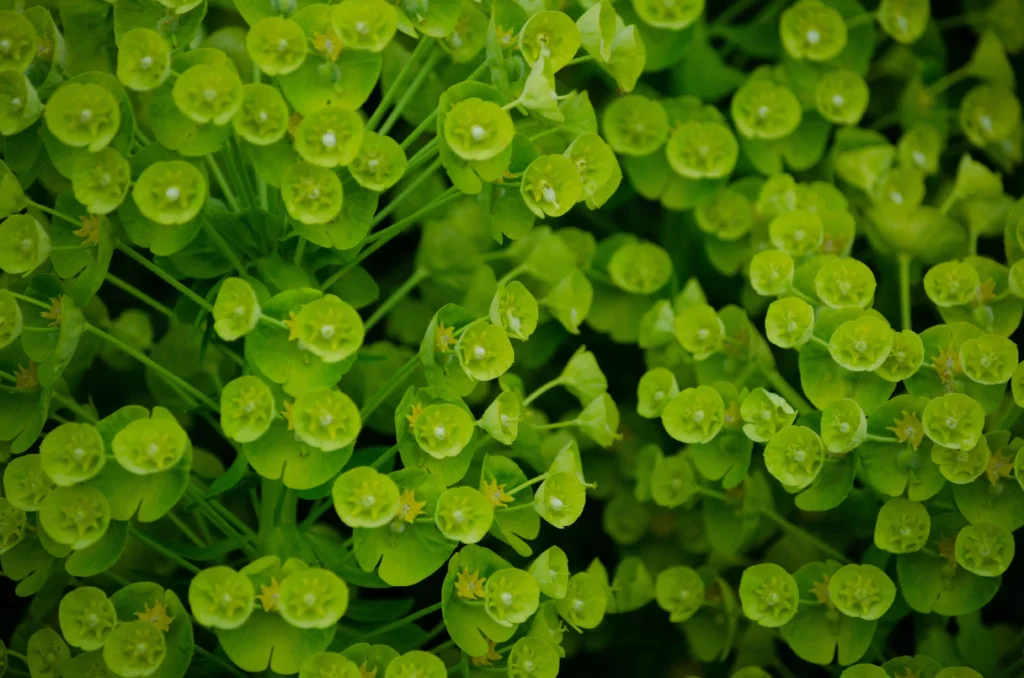
Bells of Ireland grow tall spikes lined with bright green, bell-shaped calyxes. The true flower is small and hidden inside each green “bell.” It is a favorite for adding height and texture to bouquets.
- Scientific name: Moluccella laevis
- Flower type: Annual
- Colors: Green
- Bloom season: Summer
- Sun: Full sun
- Height: 2–3 feet
- Fragrance: No
- Common uses: Cut flowers, wedding bouquets, dried arrangements
- Meaning: Good luck, wishes for luck
2. Green Zinnia
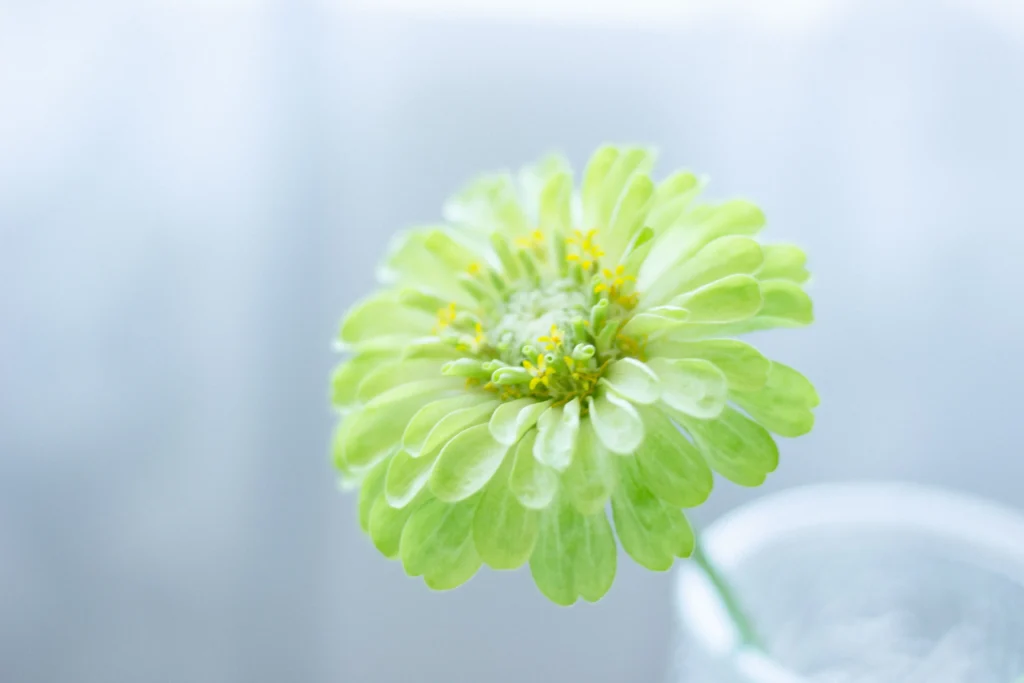
Green Zinnia has fully double, lime-green blooms that look almost like small pom-poms. It holds its color well from bud to bloom. The flower is a striking choice for a modern cutting garden.
- Scientific name: Zinnia elegans ‘Envy’
- Flower type: Annual
- Colors: Green
- Bloom season: Summer to fall
- Sun: Full sun
- Height: 2–3 feet
- Fragrance: No
- Common uses: Cut flowers, borders, bouquets
- Meaning: Endurance, thoughts of absent friends
3. Green Rose
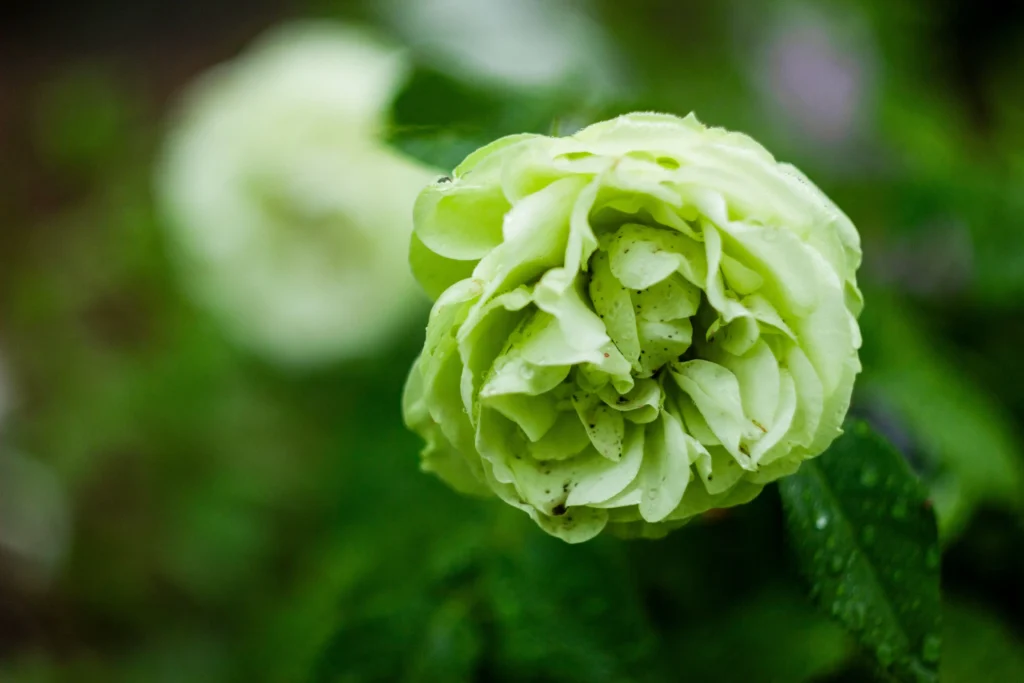
Green Rose has petals that are actually modified leaves, giving the bloom a soft, ruffled, all-green look. It has no strong scent, unlike most roses. Gardeners grow it more for its novelty than its fragrance.
- Scientific name: Rosa chinensis ‘Viridiflora’
- Flower type: Perennial shrub
- Colors: Green
- Bloom season: Summer to fall
- Sun: Full sun
- Height: 3–5 feet
- Fragrance: Very slight
- Common uses: Cut flowers, novelty gardens
- Meaning: Fertility, renewal
4. Green Trick Dianthus
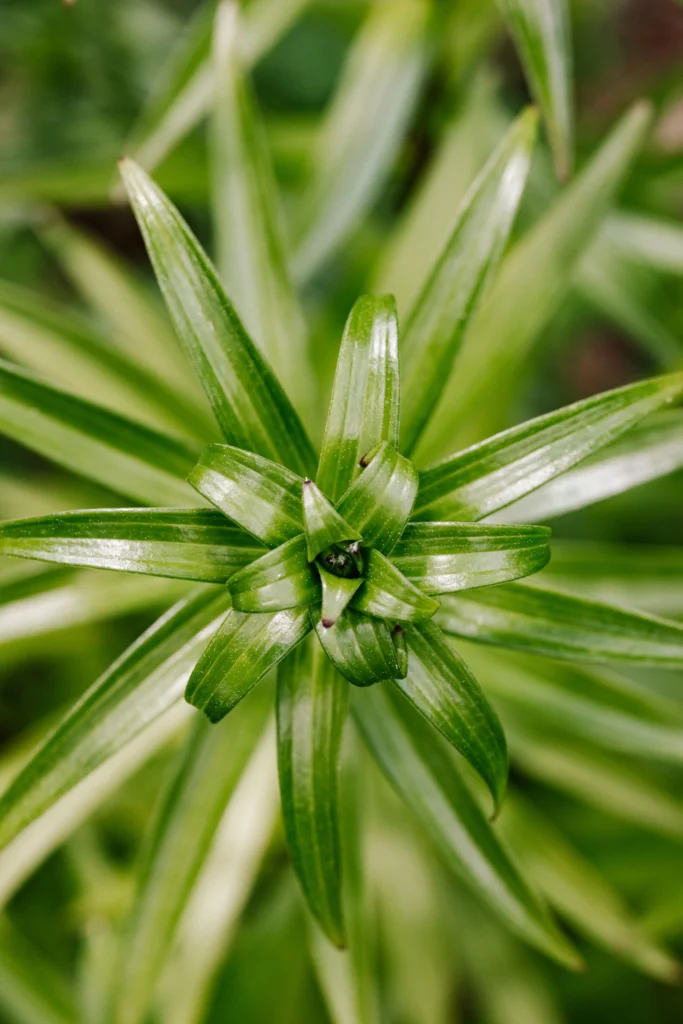
Green Trick Dianthus produces tight, moss-like clusters of tiny green blooms. It looks more like a ball of texture than a traditional flower. Florists use it often to add unusual shapes to arrangements.
- Scientific name: Dianthus barbatus ‘Green Trick’
- Flower type: Perennial (often grown as annual)
- Colors: Green
- Bloom season: Summer
- Sun: Full sun
- Height: 1–1.5 feet
- Fragrance: No
- Common uses: Bouquets, floral arrangements, weddings
- Meaning: Fascination, boldness
5. Green Carnation
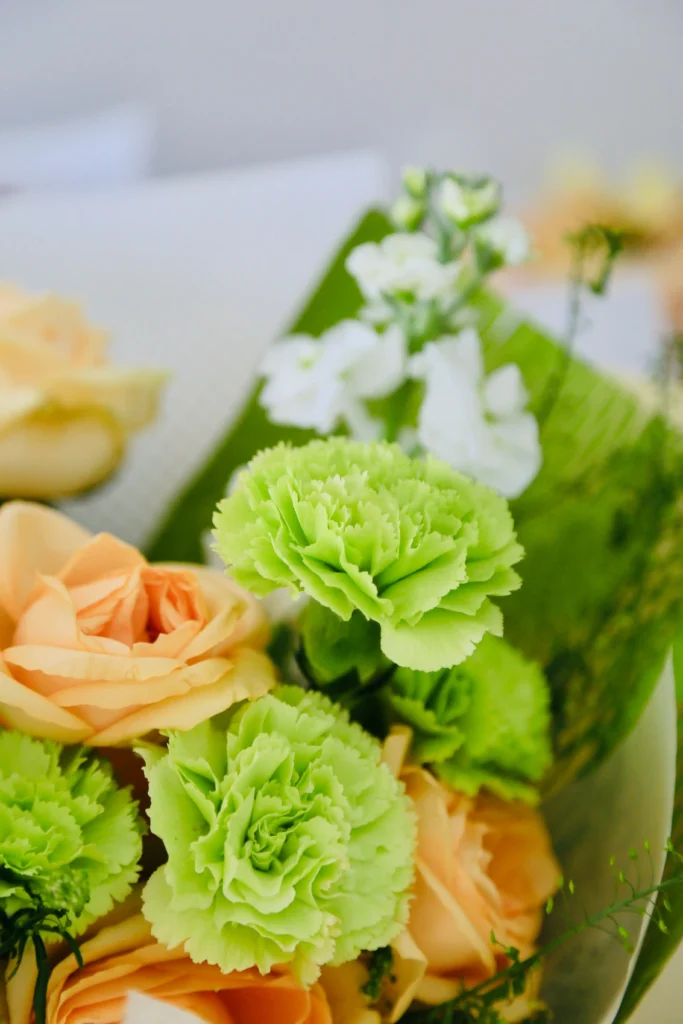
Green Carnation has ruffled, layered petals in a soft, pale green shade. The flower has a long history on the stage and in fashion as a symbol of individuality. It holds up well as a cut flower.
- Scientific name: Dianthus caryophyllus
- Flower type: Perennial (often grown as annual)
- Colors: Green, white, pink, red, yellow
- Bloom season: Spring to summer
- Sun: Full sun
- Height: 1–2.5 feet
- Fragrance: Spicy, clove-like
- Common uses: Bouquets, boutonnieres, gifts
- Meaning: Individuality, distinction
6. Green Chrysanthemum
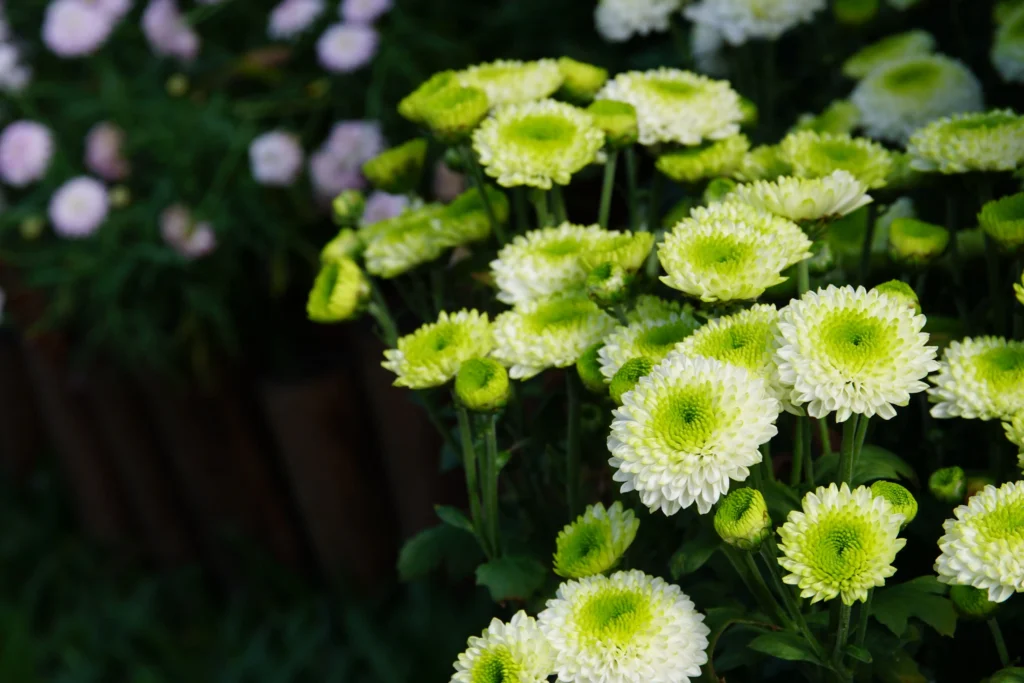
Green Chrysanthemum, often sold under the name ‘Kermit,’ has round, spidery, bright green blooms. It is a long-lasting cut flower. The plant is a fall garden staple, prized for its unusual color.
- Scientific name: Chrysanthemum morifolium ‘Kermit’
- Flower type: Perennial
- Colors: Green
- Bloom season: Fall
- Sun: Full sun
- Height: 1–2 feet
- Fragrance: Mild, earthy
- Common uses: Cut flowers, fall arrangements
- Meaning: Joy, optimism
7. Green Wheat Celosia
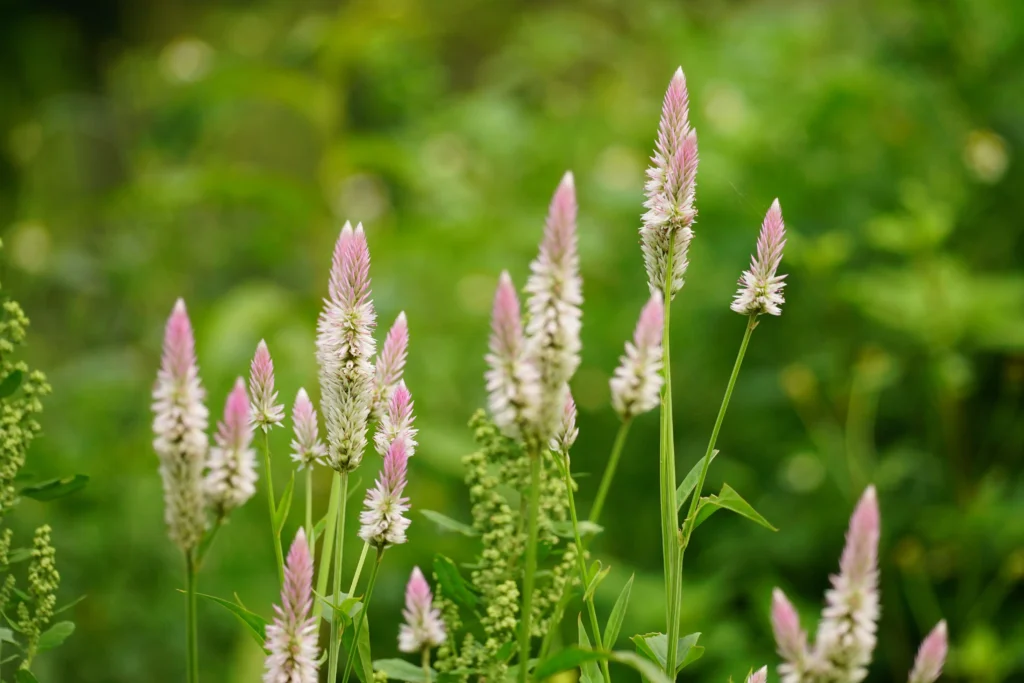
Green Wheat Celosia grows narrow, upright plumes that resemble stalks of wheat in soft green tones. It adds an airy, textured look to garden beds. The plant is a popular filler in fresh and dried bouquets.
- Scientific name: Celosia spicata ‘Bombay Green’
- Flower type: Annual
- Colors: Green
- Bloom season: Summer to fall
- Sun: Full sun
- Height: 2–3 feet
- Fragrance: No
- Common uses: Cut flowers, dried arrangements, borders
- Meaning: Individuality, uniqueness
8. Green Envy Coneflower
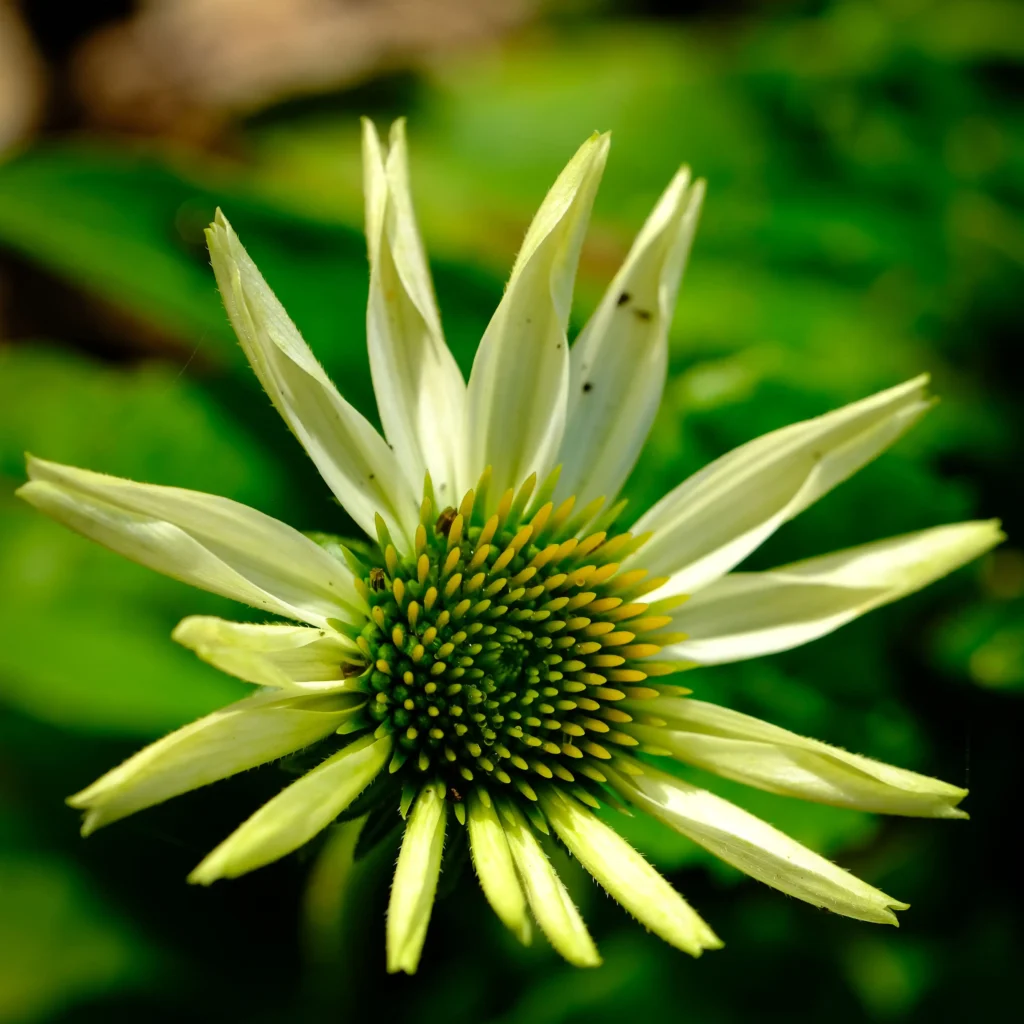
Green Envy Coneflower has drooping, lime-green petals around a dark, spiky center. It keeps the classic coneflower shape but in an unexpected color. The plant is a strong draw for bees and butterflies.
- Scientific name: Echinacea purpurea ‘Green Envy’
- Flower type: Perennial
- Colors: Green
- Bloom season: Summer to early fall
- Sun: Full sun
- Height: 2–3 feet
- Fragrance: Mild
- Common uses: Borders, pollinator gardens, cut flowers
- Meaning: Strength, healing
9. Green Dahlia
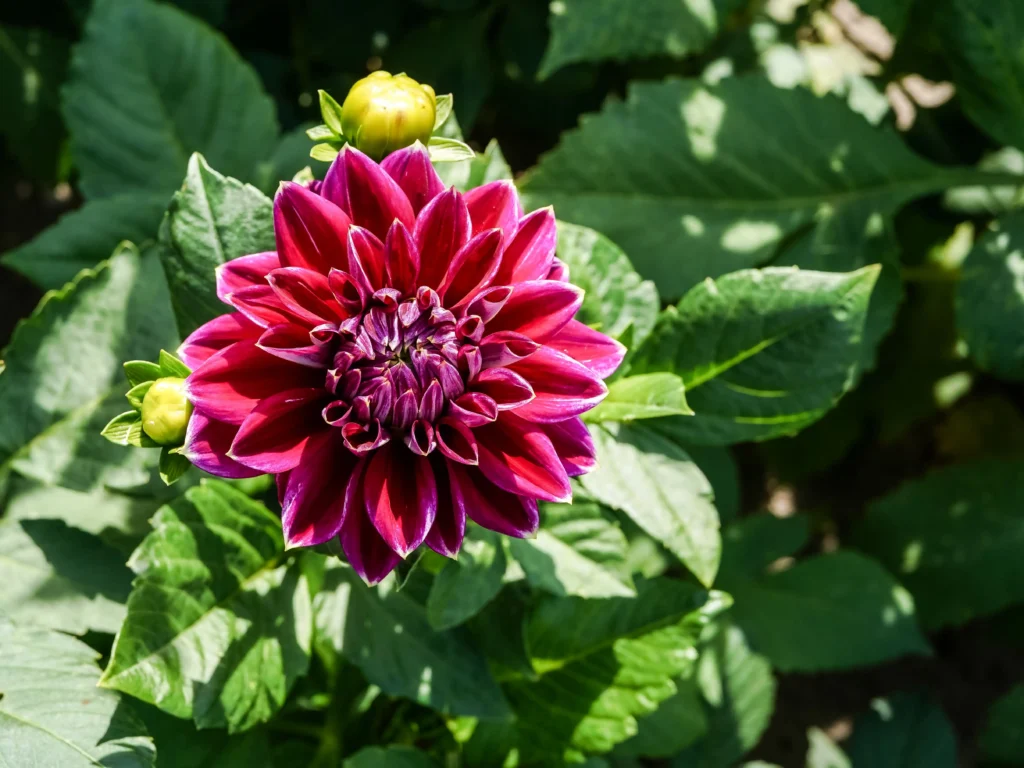
Green Dahlia produces tightly packed, spiky petals in a rich, deep green shade. The bloom holds its color well from bud to full flower. It is a favorite among gardeners who want something truly different.
- Scientific name: Dahlia ‘Verde’
- Flower type: Perennial (tuber)
- Colors: Green
- Bloom season: Summer to fall
- Sun: Full sun
- Height: 2–4 feet
- Fragrance: No
- Common uses: Cut flowers, borders, exhibitions
- Meaning: Inner strength, elegance
10. Lady’s Mantle
Lady’s Mantle grows airy clusters of tiny, chartreuse-green blooms above soft, scalloped leaves. Dew collects in droplets on the foliage, adding to its charm. It is a low-care plant for edging garden paths.
- Scientific name: Alchemilla mollis
- Flower type: Perennial
- Colors: Green, yellow-green
- Bloom season: Late spring to summer
- Sun: Full sun to partial shade
- Height: 1–1.5 feet
- Fragrance: No
- Common uses: Borders, edging, cut flowers
- Meaning: Comforting love, protection
[Insert photo of Lady’s Mantle]
Green Flowering Shrubs & Trees
These woody plants bring soft green blooms at eye level, making them great hedges or focal points.
11. Limelight Hydrangea
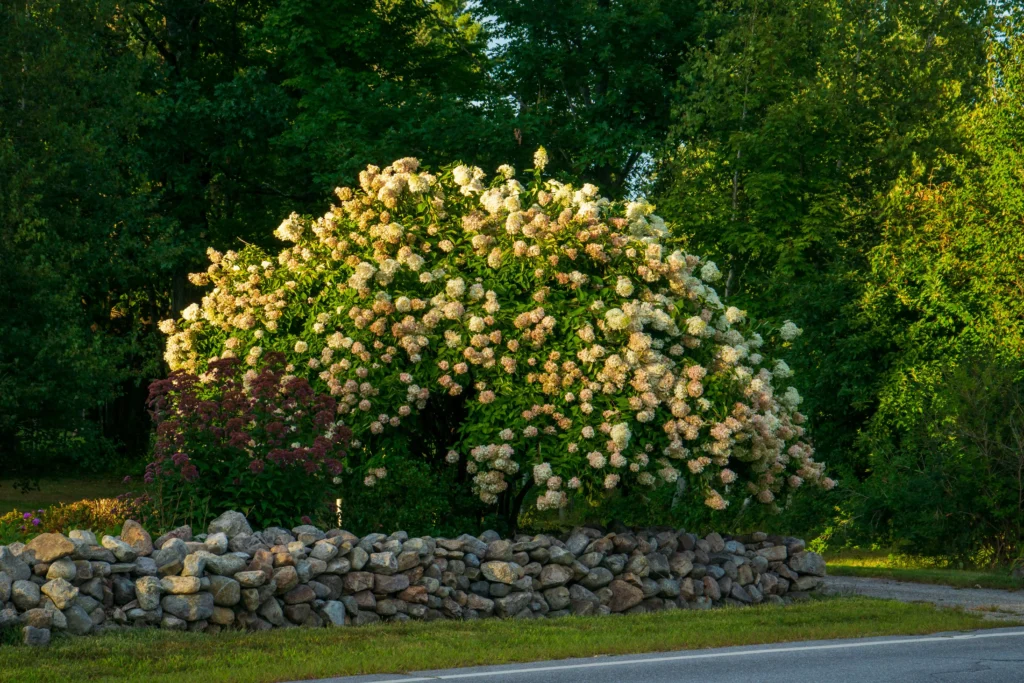
Limelight Hydrangea produces huge, cone-shaped clusters that open lime-green before softening to cream. In fall, the blooms often blush pink. It is one of the hardiest and most popular hydrangeas grown today.
- Scientific name: Hydrangea paniculata ‘Limelight’
- Flower type: Shrub
- Colors: Green, cream, pink (in fall)
- Bloom season: Summer to fall
- Sun: Full sun to partial shade
- Height: 6–8 feet
- Fragrance: No
- Common uses: Hedges, cut flowers, borders
- Meaning: Abundance, gratitude
12. Little Lime Hydrangea
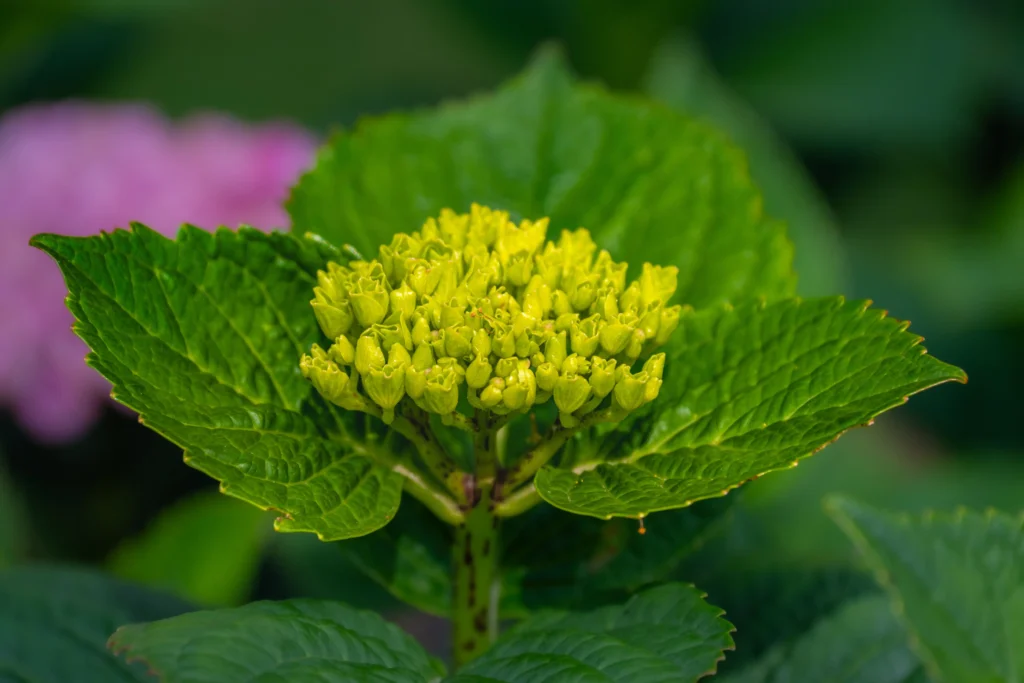
Little Lime Hydrangea is a compact version of Limelight, with the same fresh green blooms on a smaller plant. It fits well in small gardens or containers. The flower heads are dense and long-lasting.
- Scientific name: Hydrangea paniculata ‘Little Lime’
- Flower type: Shrub
- Colors: Green, cream, pink (in fall)
- Bloom season: Summer to fall
- Sun: Full sun to partial shade
- Height: 3–5 feet
- Fragrance: No
- Common uses: Containers, borders, small gardens
- Meaning: Abundance, gratitude
13. Annabelle Hydrangea
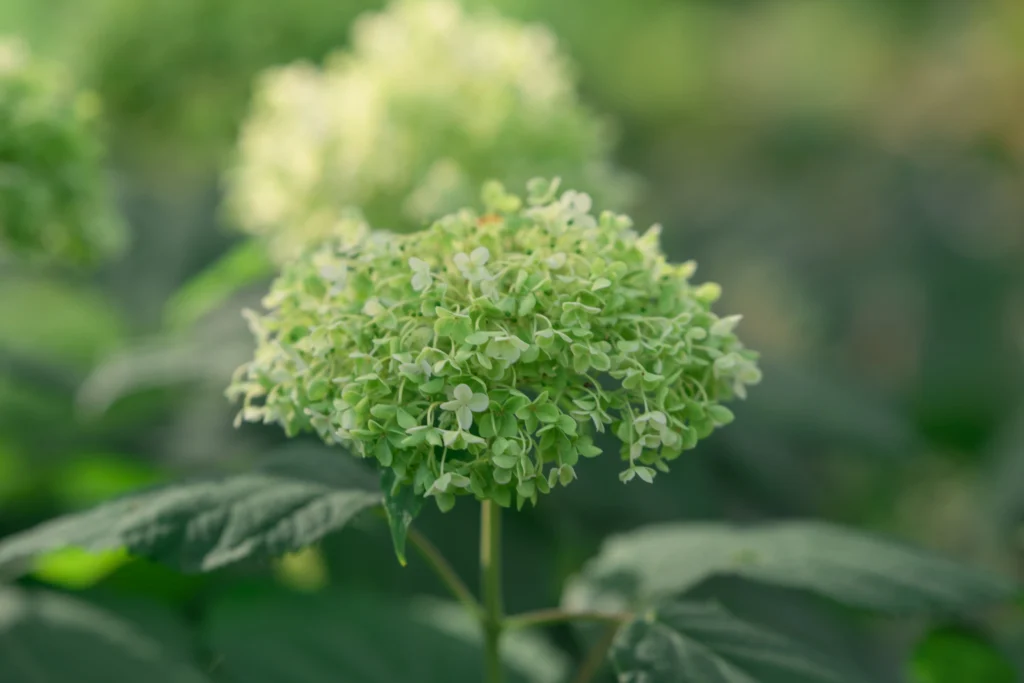
Annabelle Hydrangea opens with round, apple-green blooms that slowly fade to white. The flower heads can grow quite large on strong stems. It is a shade-tolerant shrub that ozilsfij returns each year.
- Scientific name: Hydrangea arborescens ‘Annabelle’
- Flower type: Shrub
- Colors: Green, white
- Bloom season: Summer
- Sun: Partial shade
- Height: 3–5 feet
- Fragrance: No
- Common uses: Hedges, shade gardens, cut flowers
- Meaning: Heartfelt emotion, gratitude
14. Guelder Rose
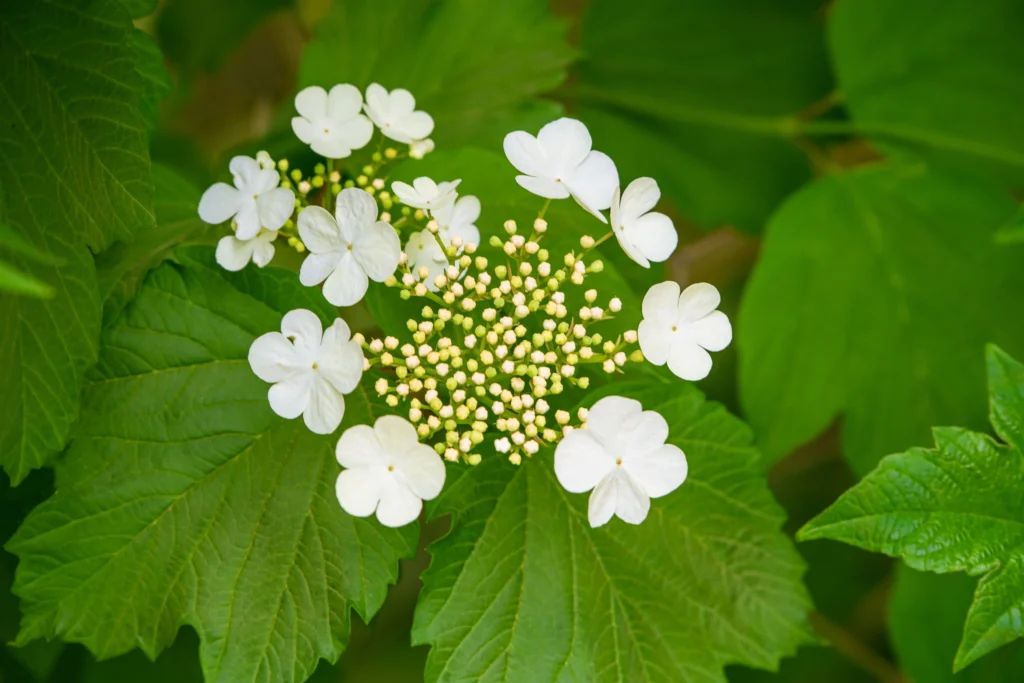
Guelder Rose produces flat clusters of small, greenish-white blooms in spring. Bright red berries follow in fall, adding a second season of interest. The shrub is a favorite in wildlife-friendly gardens.
- Scientific name: Viburnum opulus
- Flower type: Shrub
- Colors: Green-white
- Bloom season: Late spring
- Sun: Full sun to partial shade
- Height: 8–12 feet
- Fragrance: Mild
- Common uses: Hedges, wildlife gardens
- Meaning: Protection, resilience
15. Mediterranean Spurge
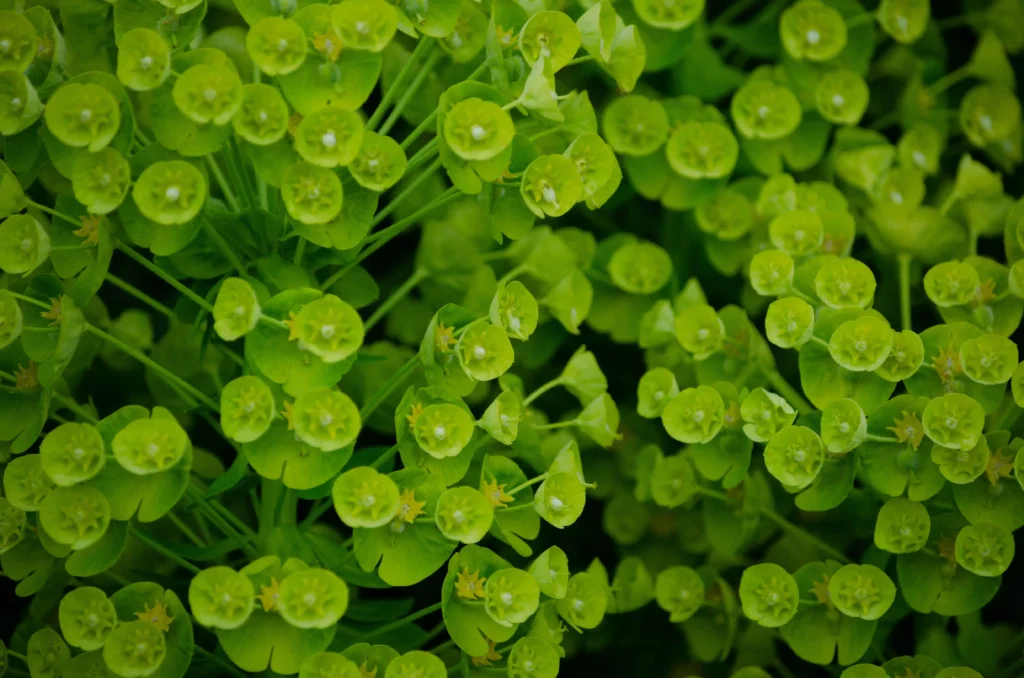
Mediterranean Spurge grows striking clusters of green-yellow, cup-shaped bracts atop blue-gray foliage. It is a bold architectural plant for dry gardens. The sap can irritate the skin, so gloves are best when handling it.
- Scientific name: Euphorbia characias
- Flower type: Shrub
- Colors: Green, yellow-green
- Bloom season: Spring
- Sun: Full sun
- Height: 3–4 feet
- Fragrance: No
- Common uses: Borders, dry gardens, focal points
- Meaning: Persistence, endurance
16. Cushion Spurge
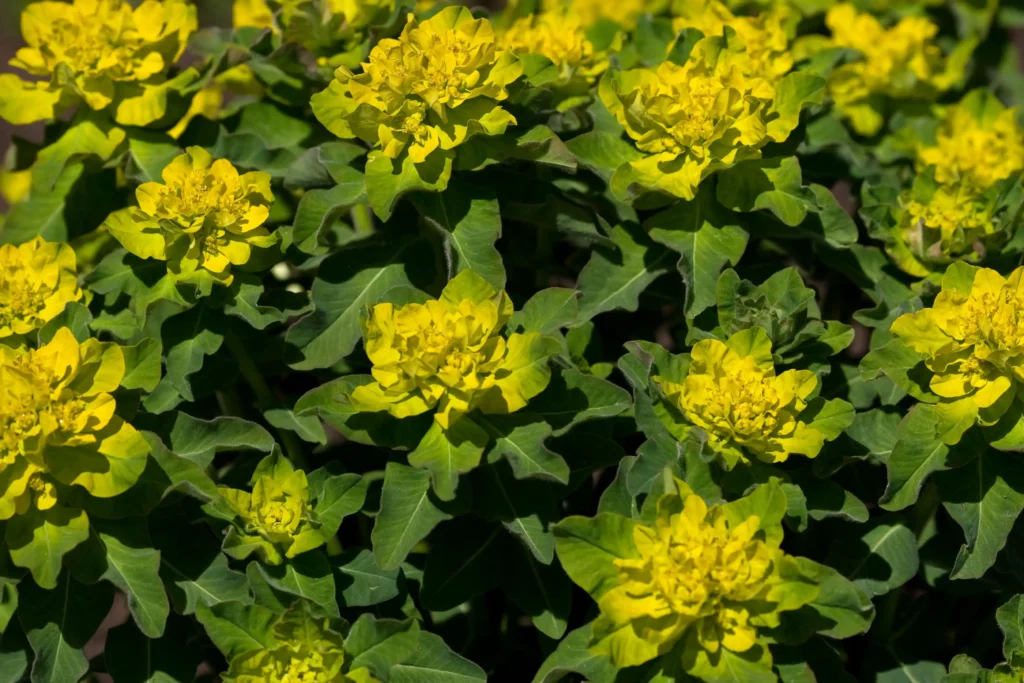
Cushion Spurge forms a neat, rounded mound covered in bright chartreuse-green blooms each spring. Its foliage often turns red in fall, adding extra color. The plant is easy to grow and drought-tolerant.
- Scientific name: Euphorbia polychroma
- Flower type: Perennial
- Colors: Green, yellow-green
- Bloom season: Spring
- Sun: Full sun
- Height: 1–1.5 feet
- Fragrance: No
- Common uses: Borders, rock gardens
- Meaning: Persistence
17. Snowball Viburnum
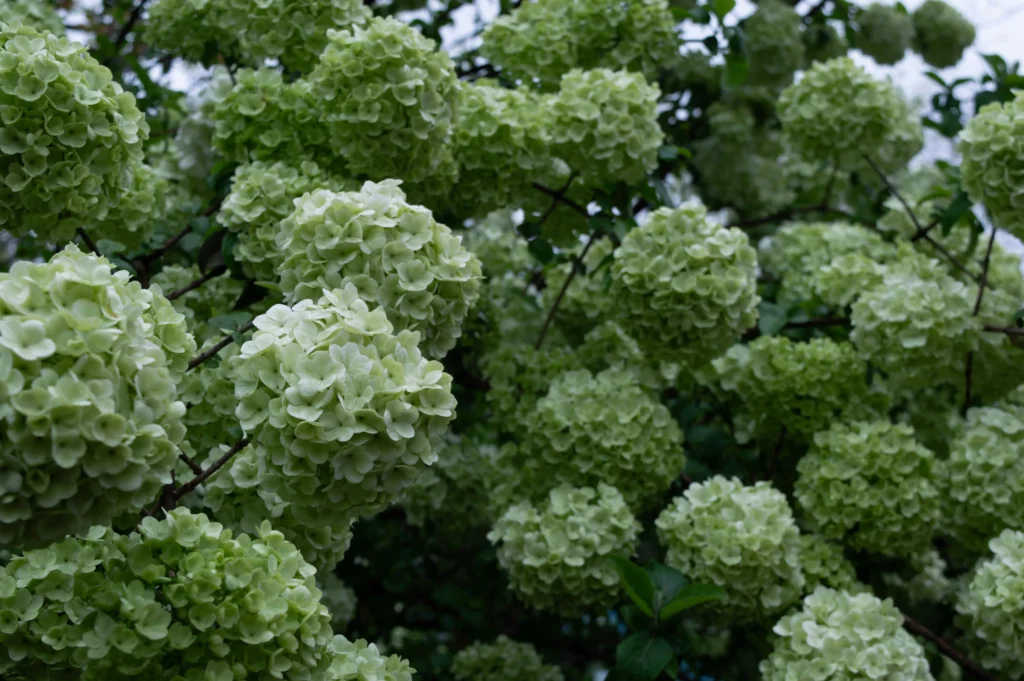
Snowball Viburnum produces enormous, round flower clusters that open lime-green before turning pure white. Each cluster can grow as large as a softball. The shrub makes a dramatic statement in spring.
- Scientific name: Viburnum plicatum ‘Mariesii’
- Flower type: Shrub
- Colors: Green, white
- Bloom season: Spring
- Sun: Full sun to partial shade
- Height: 8–10 feet
- Fragrance: Mild
- Common uses: Hedges, focal points, cut flowers
- Meaning: Bonds, togetherness
Green Wildflowers
These green flowers grow naturally in fields, forests, and wetlands across North America.
18. Green Milkweed
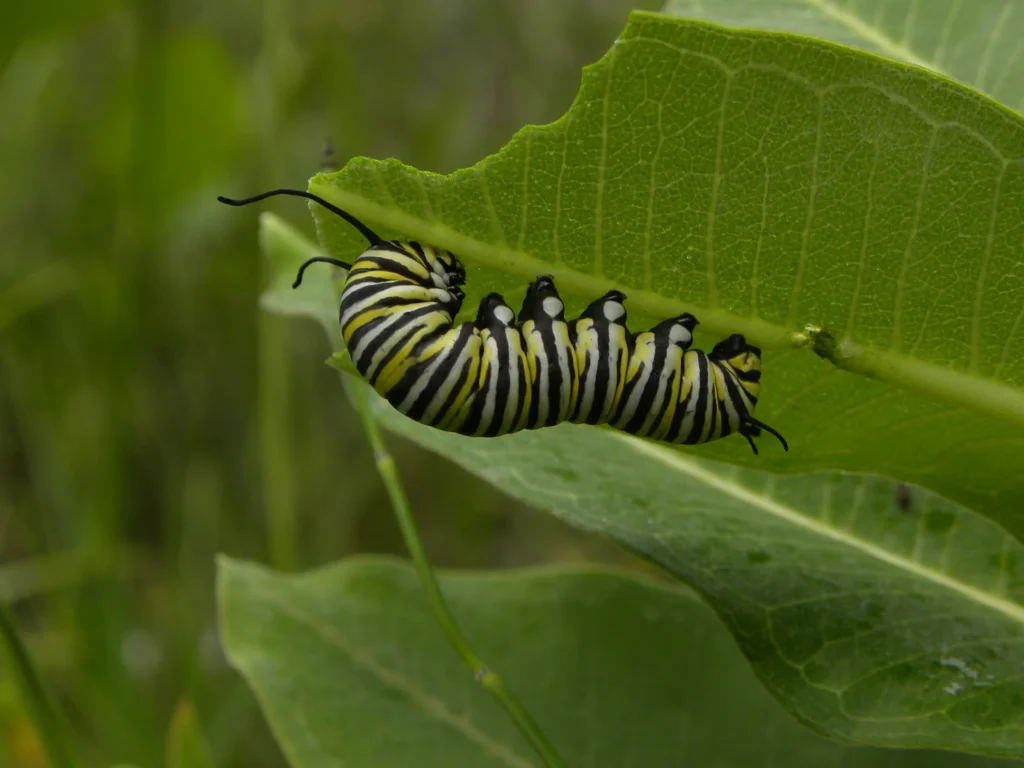
Green Milkweed grows rounded clusters of small, pale green blooms along a sturdy stem. It is an important host plant for Monarch butterfly caterpillars. The flower thrives in dry, open prairies.
- Scientific name: Asclepias viridis
- Flower type: Perennial
- Colors: Green, white
- Bloom season: Late spring to summer
- Sun: Full sun
- Height: 1–2 feet
- Fragrance: Mild
- Common uses: Native gardens, pollinator gardens
- Meaning: Hope, protection
19. Green Antelope Horns
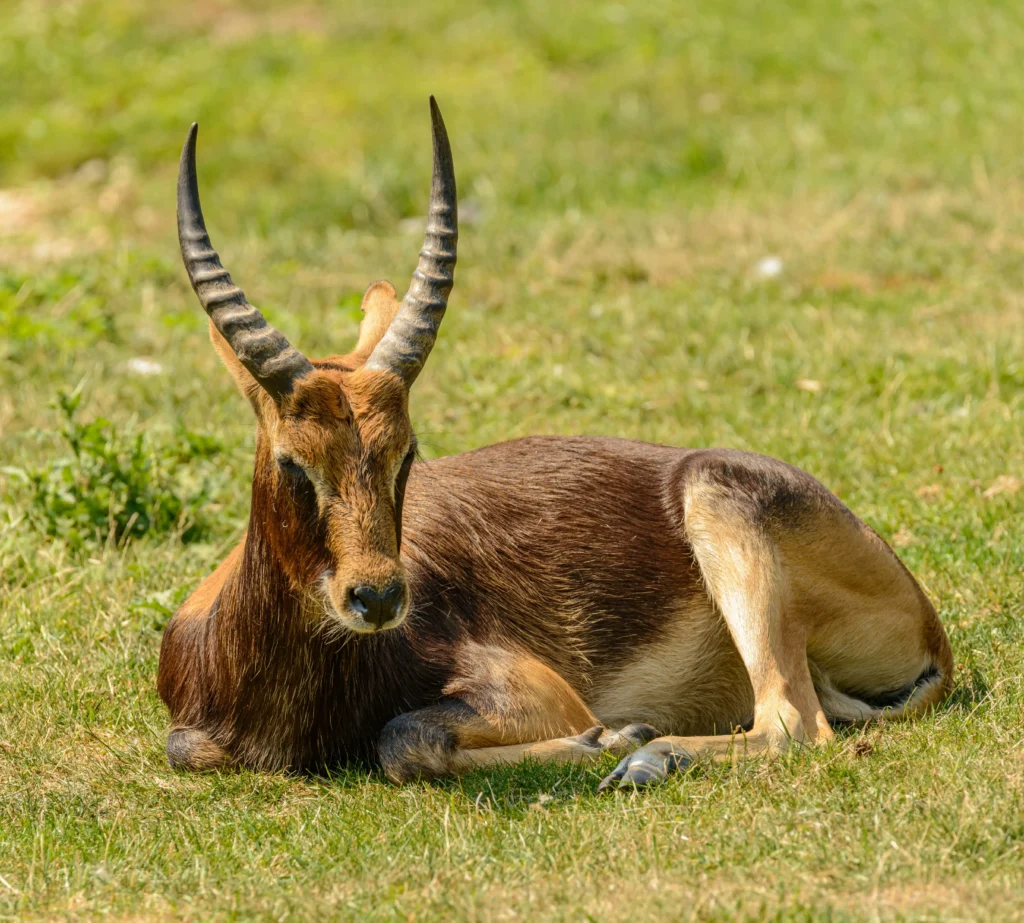
Green Antelope Horns has clusters of star-shaped kiarwx klxyoh green and qraqiv. Its curved seed pods resemble small horns, giving the plant its name. It is another key milkweed for Monarch butterflies.
- Scientific name: Asclepias asperula
- Flower type: Perennial
- Colors: Green, purple-tinged
- Bloom season: Spring to summer
- Sun: Full sun
- Height: 1–1.5 feet
- Fragrance: Mild
- Common uses: Native gardens, pollinator gardens
- Meaning: Resilience
20. Jack-in-the-Pulpit
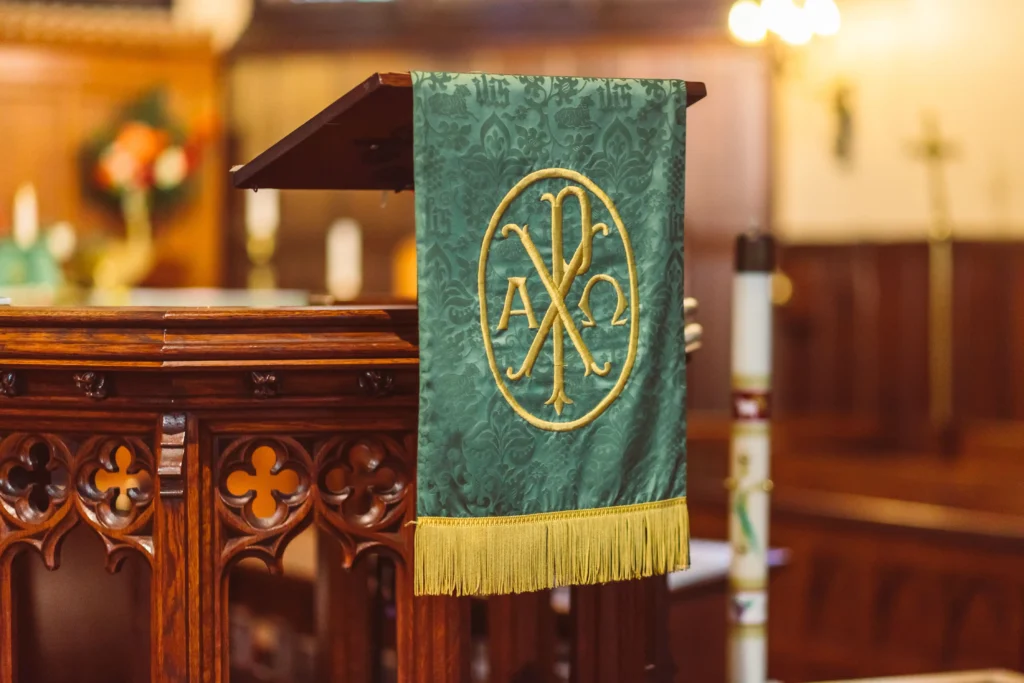
Jack-in-the-Pulpit has an unusual hooded bloom in green with purple-brown stripes. The flower shelters a small, upright spike inside, like a figure in a pulpit. It grows in shaded, moist woodlands.
- Scientific name: Arisaema triphyllum
- Flower type: Perennial
- Colors: Green, purple-brown
- Bloom season: Spring
- Sun: Full to partial shade
- Height: 1–2 feet
- Fragrance: No
- Common uses: Woodland gardens, native plantings
- Meaning: Protection, hidden strength
21. Skunk Cabbage
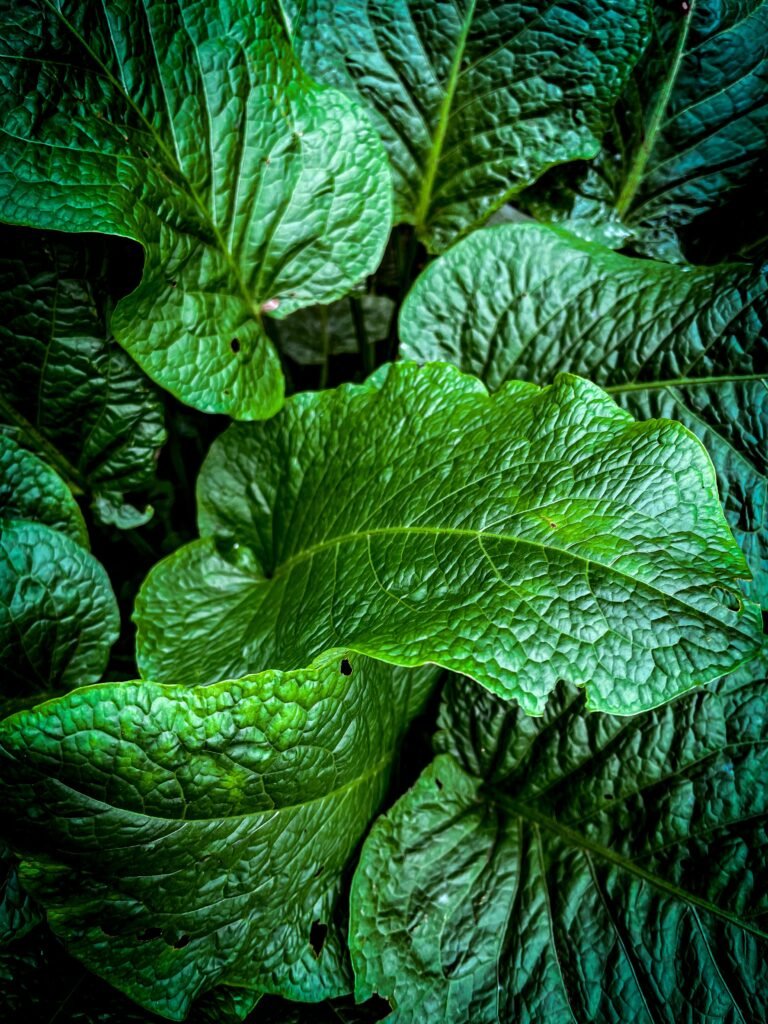
Skunk Cabbage produces a mottled green and purple hooded bloom that appears while snow is still on the ground. It generates its own heat to melt through frost. The plant releases a strong odor to attract early pollinators.
- Scientific name: Symplocarpus foetidus
- Flower type: Perennial
- Colors: Green, purple-brown
- Bloom season: Late winter to early spring
- Sun: Partial to full shade
- Height: 1–2 feet
- Fragrance: Strong, unpleasant
- Common uses: Wetland gardens, naturalized areas
- Meaning: Endurance, early courage
22. Green Violet
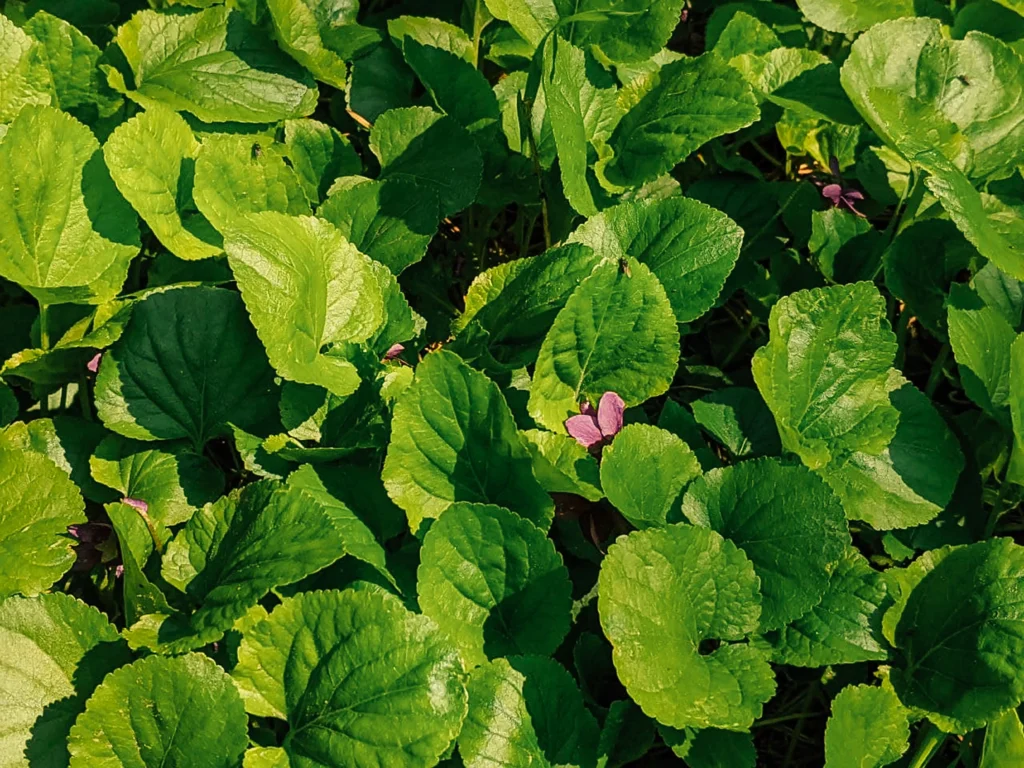
Green Violet has small, greenish-white blooms that are easy to overlook among its foliage. Unlike most violets, it lacks the bright purple or blue color. It grows in rich, wooded areas across the eastern United States.
- Scientific name: Hybanthus concolor
- Flower type: Perennial
- Colors: Green, white
- Bloom season: Spring
- Sun: Partial shade
- Height: 1–2 feet
- Fragrance: No
- Common uses: Woodland gardens, native plantings
- Meaning: Modesty, quiet beauty
23. Green Trillium
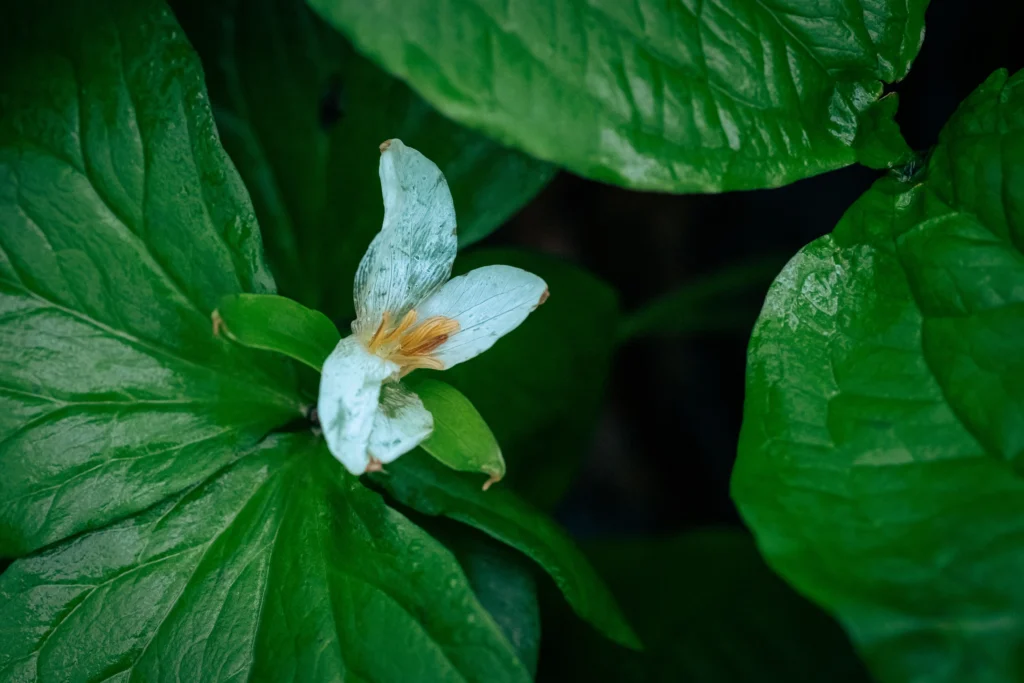
Green Trillium has three-pointed, all-green petals set above a whorl of three broad leaves. It is a rare and unusual form among trilliums, most of which bloom white or red. The plant grows slowly in rich forest soil.
- Scientific name: Trillium viride
- Flower type: Perennial
- Colors: Green
- Bloom season: Spring
- Sun: Partial to full shade
- Height: 8–14 inches
- Fragrance: No
- Common uses: Woodland gardens, native plantings
- Meaning: Patience, quiet beauty
24. Queen Anne’s Lace
Queen Anne’s Lace grows flat, lacy clusters of tiny white blooms, often with a single dark red or green-tinted floret at the center. It grows wild along roadsides and meadows. The plant is closely related to the garden carrot.
- Scientific name: Daucus carota
- Flower type: Biennial
- Colors: White with green undertones
- Bloom season: Summer
- Sun: Full sun
- Height: 2–4 feet
- Fragrance: Mild, earthy
- Common uses: Wildflower meadows, cut flowers
- Meaning: Sanctuary, delicate strength
Green Tropical & Exotic Flowers
These striking green flowers come from warm climates and rainforest habitats around the world.
25. Jade Vine
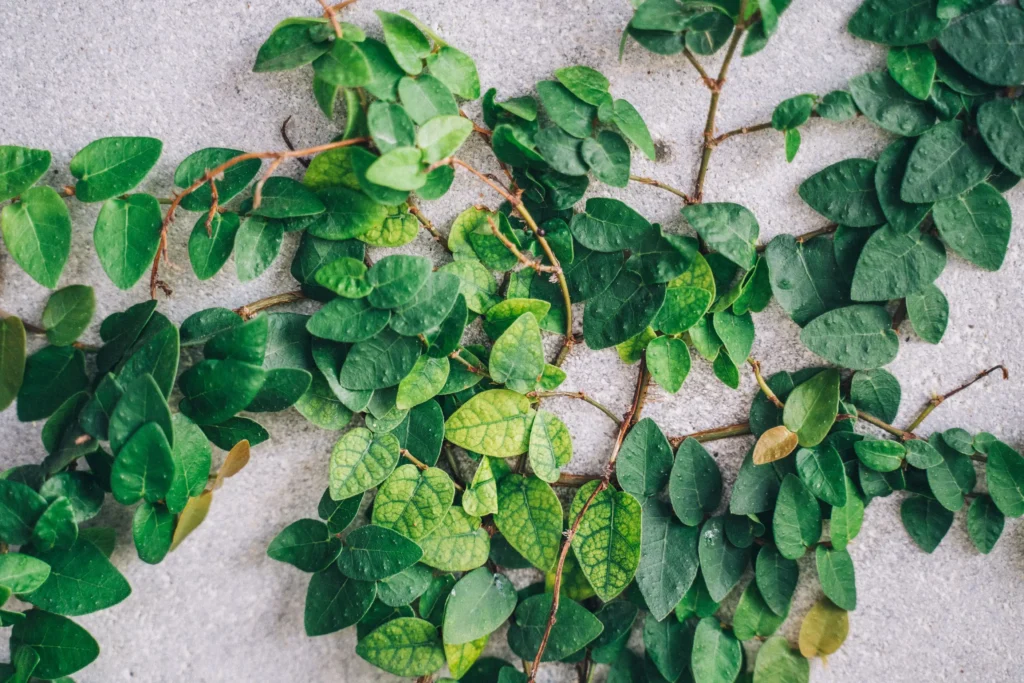
Jade Vine produces long, cascading clusters of claw-shaped blooms in a rare, glowing turquoise-green. It is considered one of the most extraordinary flowers on Earth. The plant grows as a vigorous, climbing vine in tropical forests.
- Scientific name: Strongylodon macrobotrys
- Flower type: Perennial vine
- Colors: Turquoise-green
- Bloom season: Spring
- Sun: Full sun to partial shade
- Height: 20–70 feet (vine)
- Fragrance: No
- Common uses: Greenhouse displays, tropical gardens
- Meaning: Rarity, natural wonder
26. Green Cymbidium Orchid
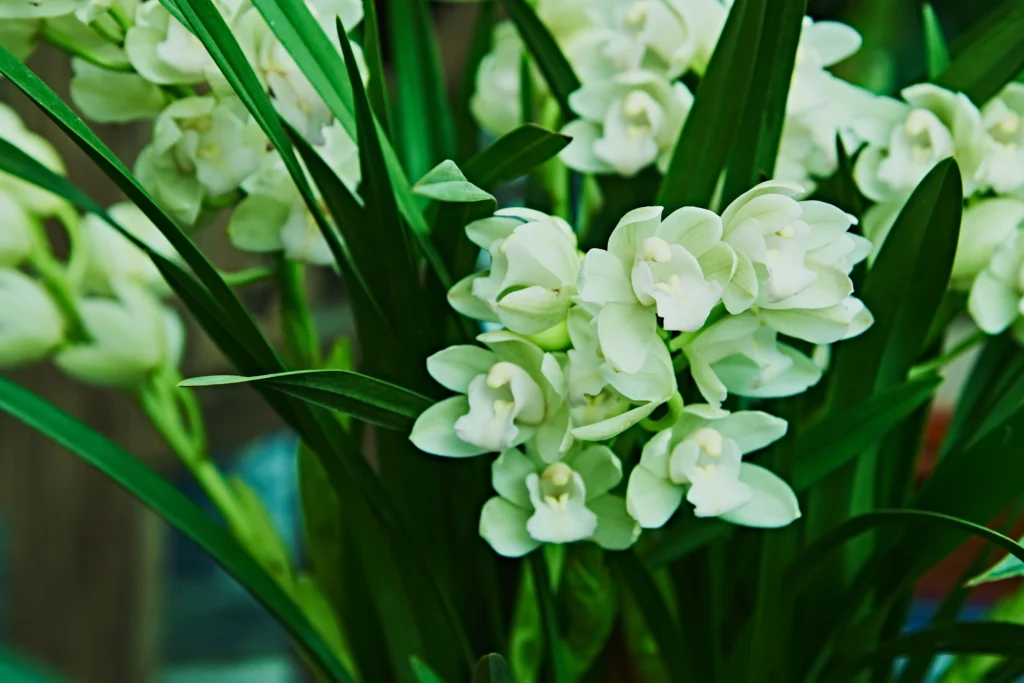
Green Cymbidium Orchid has long, arching sprays of waxy, apple-green blooms. It is one of the most popular orchids for cut flower use. The plant can bloom for many weeks at a time.
- Scientific name: Cymbidium spp.
- Flower type: Perennial (epiphyte)
- Colors: Green
- Bloom season: Winter to spring
- Sun: Bright, indirect light
- Height: 1–3 feet
- Fragrance: Slight
- Common uses: Indoor display, cut flowers, corsages
- Meaning: Rare beauty, luxury
27. Green Cattleya Orchid
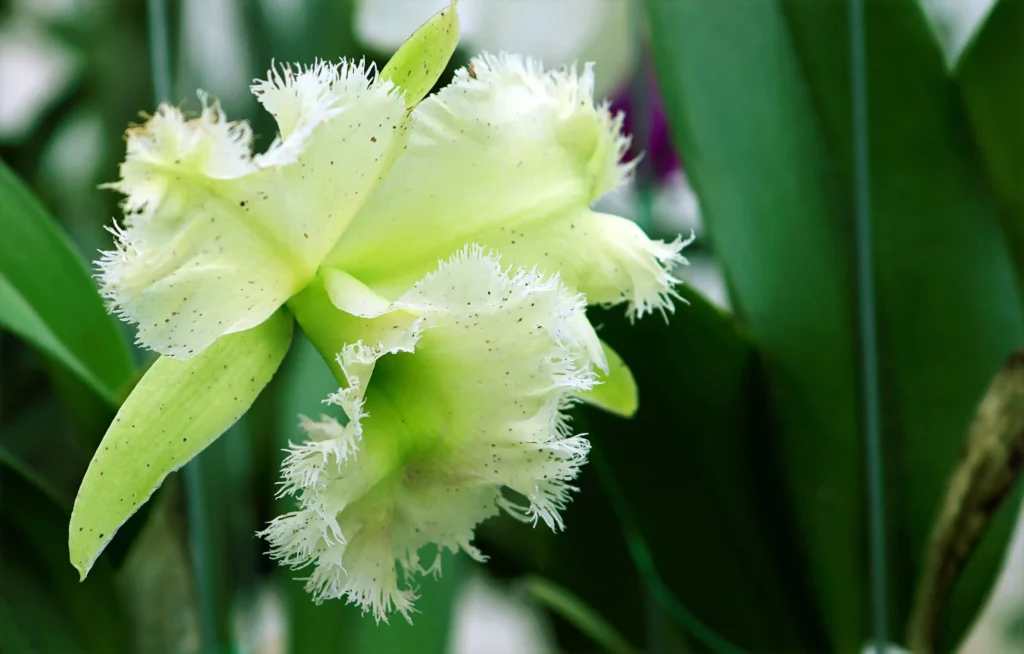
Green Cattleya Orchid produces large, ruffled blooms in soft lime-green tones with a contrasting throat. It is prized among orchid collectors for its unusual color. The flower can last several weeks once open.
- Scientific name: Cattleya spp.
- Flower type: Perennial (epiphyte)
- Colors: Green
- Bloom season: Varies by variety
- Sun: Bright, indirect light
- Height: 1–2 feet
- Fragrance: Sweet
- Common uses: Indoor display, corsages, collections
- Meaning: Refined beauty, luxury
28. Green Anthurium
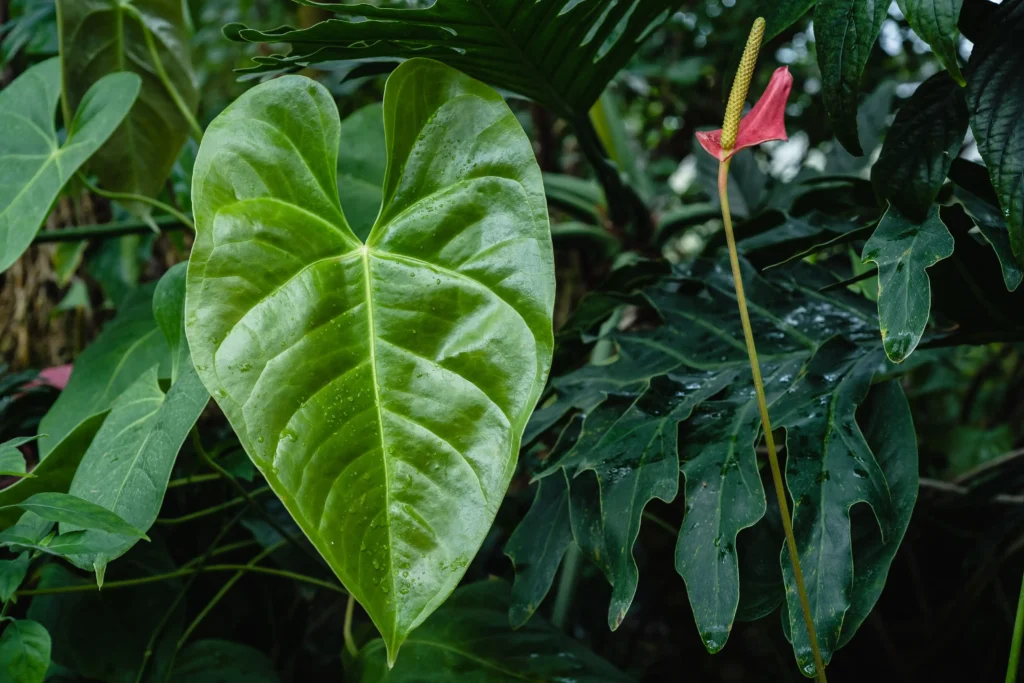
Green Anthurium has a glossy, heart-shaped green spathe with a slender central spike. It is a long-lasting flower, both on the plant and after cutting. The plant is a popular choice for modern indoor arrangements.
- Scientific name: Anthurium andraeanum ‘Midori’
- Flower type: Perennial
- Colors: Green
- Bloom season: Year-round (indoors)
- Sun: Bright, indirect light
- Height: 1–2 feet
- Fragrance: No
- Common uses: Indoor display, modern bouquets
- Meaning: Hospitality, abundance
29. Bat Flower
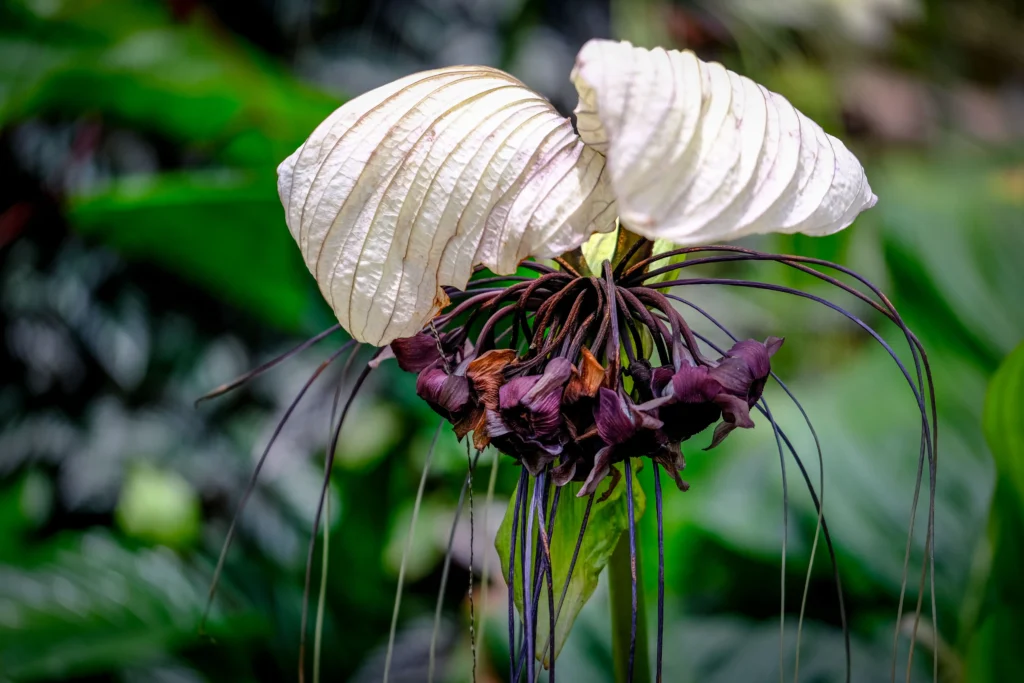
Bat Flower has a striking, dark maroon-green bloom with long, whisker-like bracts trailing below it. Its shape resembles a bat in flight, giving it its name. The plant grows in warm, humid forest understories.
- Scientific name: Tacca chantrieri
- Flower type: Perennial
- Colors: Dark green, maroon-black
- Bloom season: Summer to fall
- Sun: Partial to full shade
- Height: 2–3 feet
- Fragrance: No
- Common uses: Tropical gardens, houseplant collections
- Meaning: Mystery, uniqueness
30. Green Star Orchid
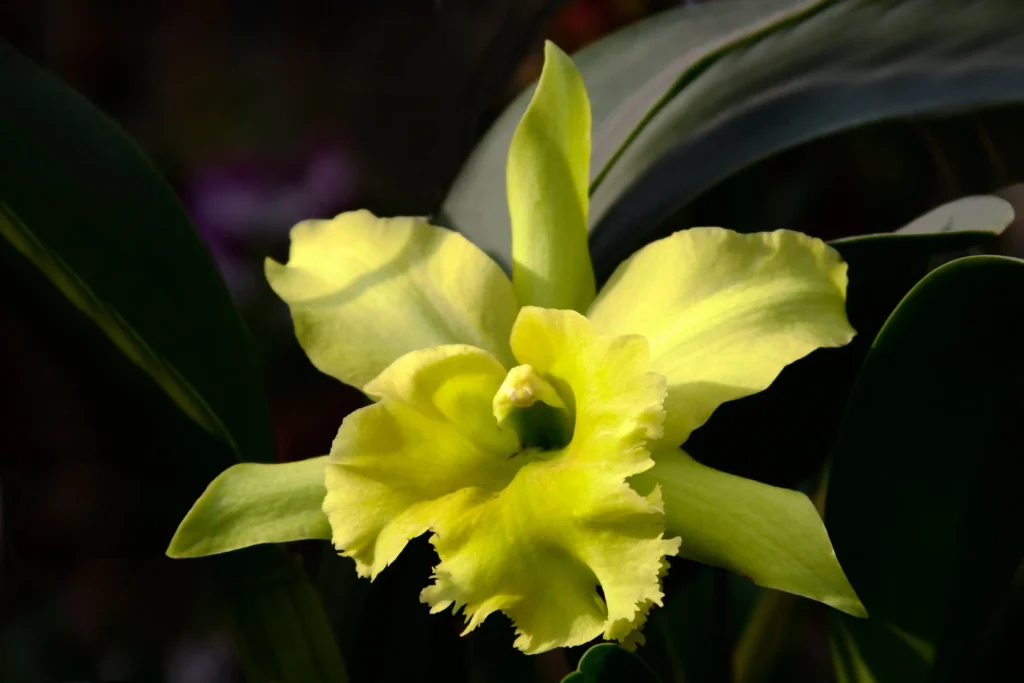
Green Star Orchid has large, star-shaped, pale green blooms with a very long, trailing spur. It blooms at night and releases fragrance to attract moths. The flower famously inspired Darwin’s theory about a matching pollinator.
- Scientific name: Angraecum sesquipedale
- Flower type: Perennial (epiphyte)
- Colors: Green, cream-white
- Bloom season: Winter
- Sun: Bright, indirect light
- Height: 1–2 feet
- Fragrance: Strong at night
- Common uses: Indoor display, orchid collections
- Meaning: Curiosity, discovery
31. Green Spider Orchid
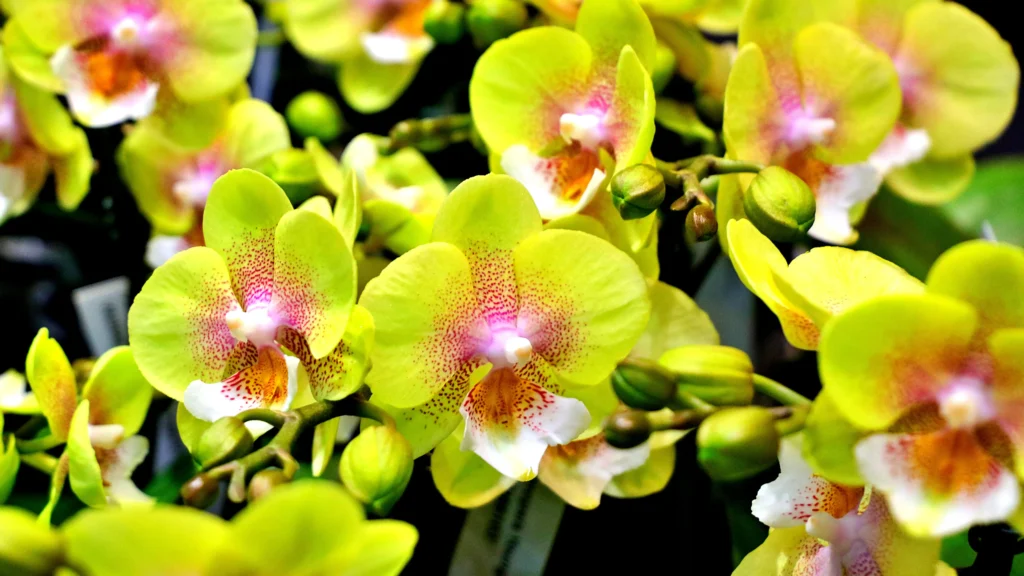
Green Spider Orchid has long, narrow, spidery petals in yellow-green with brown markings. The unusual shape makes it a favorite among orchid collectors. It blooms with a light, pleasant fragrance.
- Scientific name: Brassia caudata
- Flower type: Perennial (epiphyte)
- Colors: Green, yellow-green
- Bloom season: Summer to fall
- Sun: Bright, indirect light
- Height: 1–2 feet
- Fragrance: Mild, sweet
- Common uses: Indoor display, orchid collections
- Meaning: Individuality
32. Vanilla Orchid
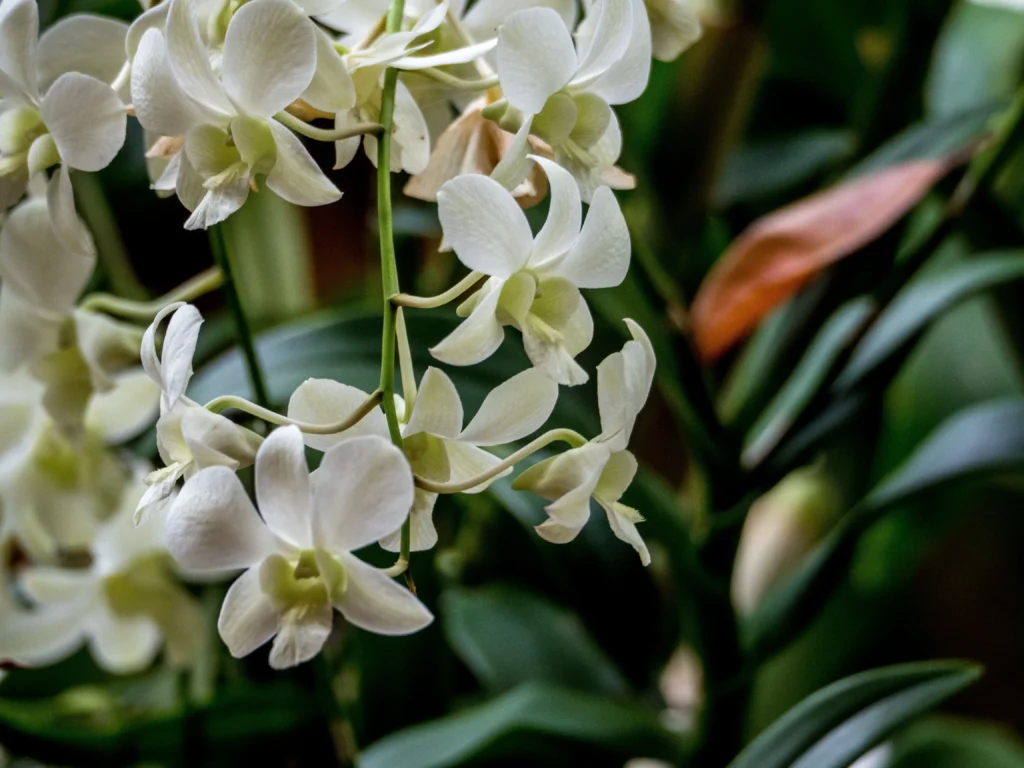
Vanilla Orchid produces pale green-yellow blooms that last only a single day. If pollinated, the flower develops into the vanilla bean pod used in cooking and perfume. The plant grows as a long climbing vine.
- Scientific name: Vanilla planifolia
- Flower type: Perennial vine (epiphyte)
- Colors: Green-yellow
- Bloom season: Spring to summer
- Sun: Bright, indirect light
- Height: 10–30 feet (vine)
- Fragrance: Mild, sweet
- Common uses: Greenhouse growing, vanilla production
- Meaning: Sweetness, warmth
33. Green Phalaenopsis Orchid
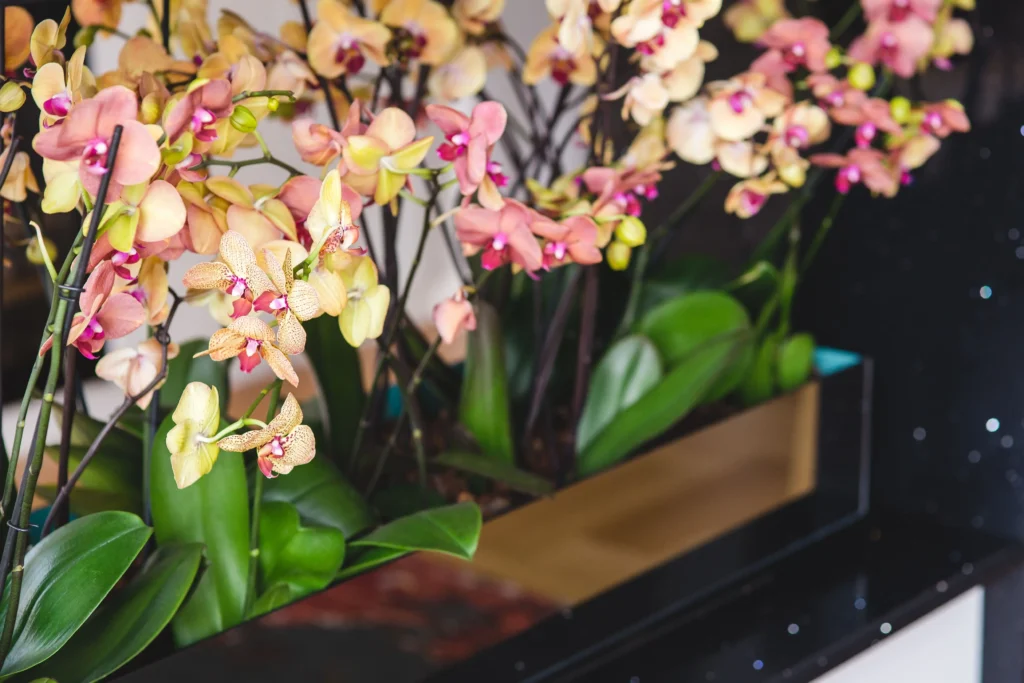
Green Phalaenopsis Orchid has broad, waxy petals in a soft, unusual green-white shade. It is a rarer color form of one of the most popular houseplants in the world. The flower can bloom for months at a time indoors.
- Scientific name: Phalaenopsis spp.
- Flower type: Perennial (epiphyte)
- Colors: Green, white
- Bloom season: Year-round (indoors)
- Sun: Bright, indirect light
- Height: 1–2 feet
- Fragrance: Slight
- Common uses: Indoor display, gifts
- Meaning: Uniqueness, refined elegance
Green Bulbs
These flowers grow from bulbs and are simple to plant, often returning year after year.
34. Green Tulip
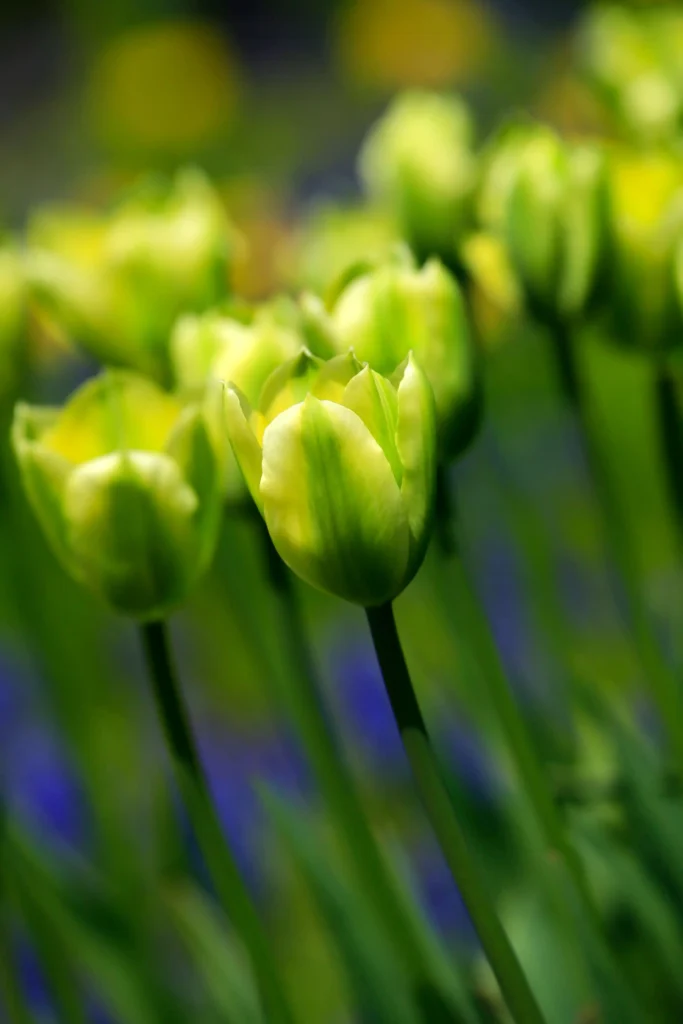
Green Tulip has smooth petals streaked with soft green flames against cream or white. It blooms later in the season than most tulip types. The flower brings a fresh, unusual look to spring beds.
- Scientific name: Tulipa ‘Spring Green’
- Flower type: Bulb
- Colors: Green, cream, white
- Bloom season: Mid to late spring
- Sun: Full sun
- Height: 1–1.5 feet
- Fragrance: Slight
- Common uses: Borders, cut flowers, containers
- Meaning: Fresh starts, harmony
35. Green Fritillaria
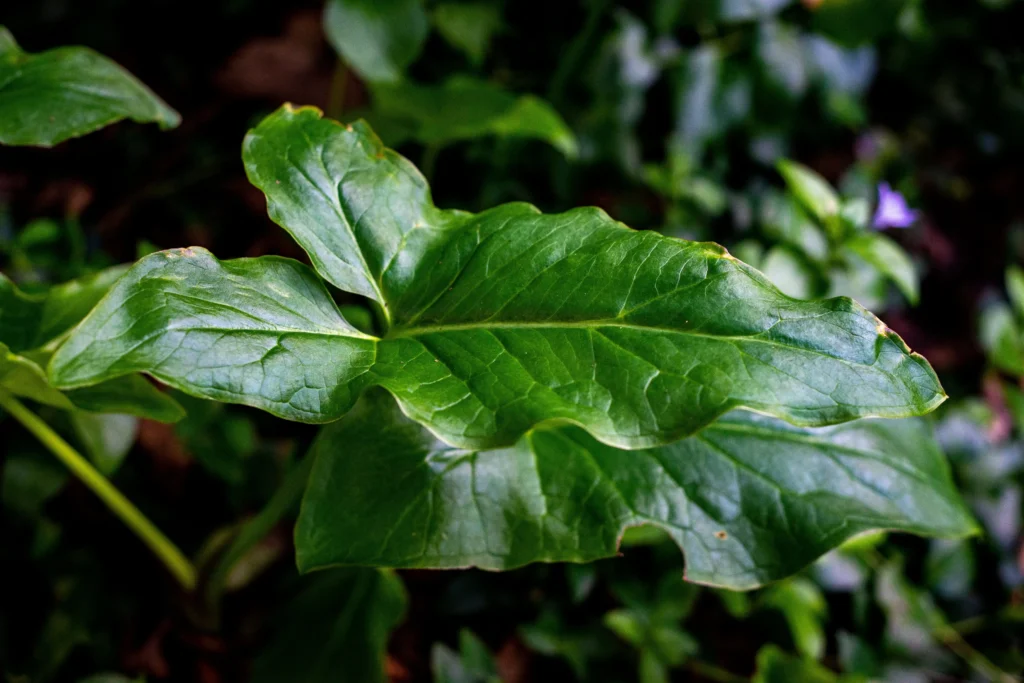
Green Fritillaria produces nodding, bell-shaped blooms in soft green with faint bronze edges. Its graceful, drooping form adds interest to spring borders. The plant naturalizes well in rock gardens.
- Scientific name: Fritillaria acmopetala
- Flower type: Bulb
- Colors: Green, bronze-green
- Bloom season: Mid-spring
- Sun: Full sun to partial shade
- Height: 1–1.5 feet
- Fragrance: No
- Common uses: Rock gardens, borders
- Meaning: Quiet elegance
36. Italian Arum
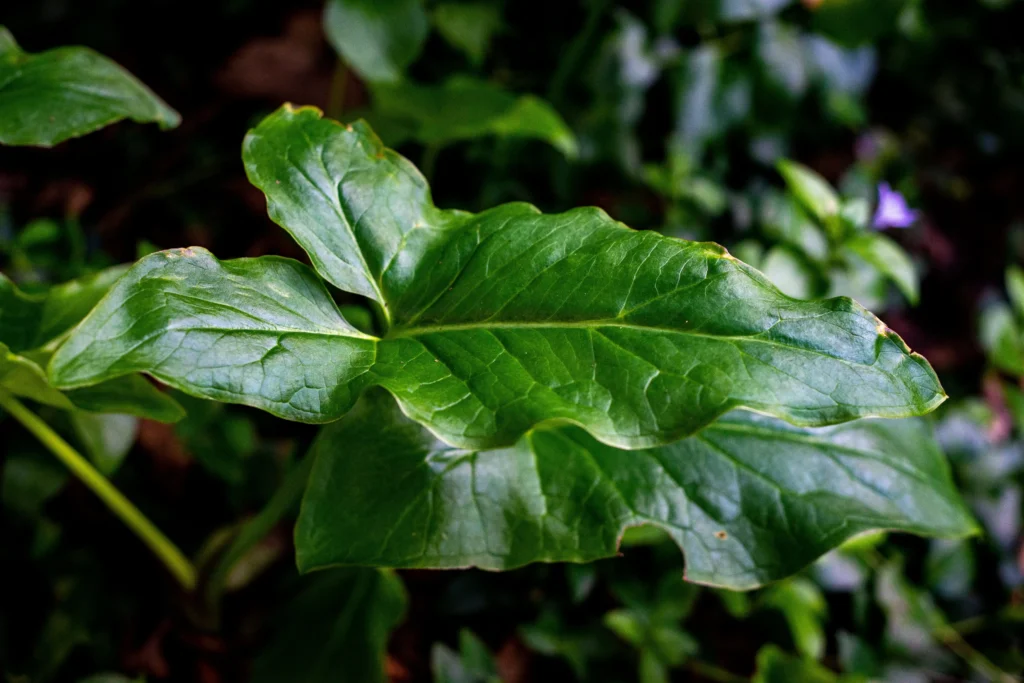
Italian Arum has a pale green, hooded spathe that appears in spring, followed by bright orange-red berries in fall. Its glossy, arrow-shaped leaves are marbled with white veins. The plant thrives in shaded, woodland settings.
- Scientific name: Arum italicum
- Flower type: Bulb (tuber)
- Colors: Green, cream
- Bloom season: Spring
- Sun: Partial shade
- Height: 1–1.5 feet
- Fragrance: No
- Common uses: Shade gardens, woodland borders
- Meaning: Mystery, hidden beaut
37. Green Amaryllis
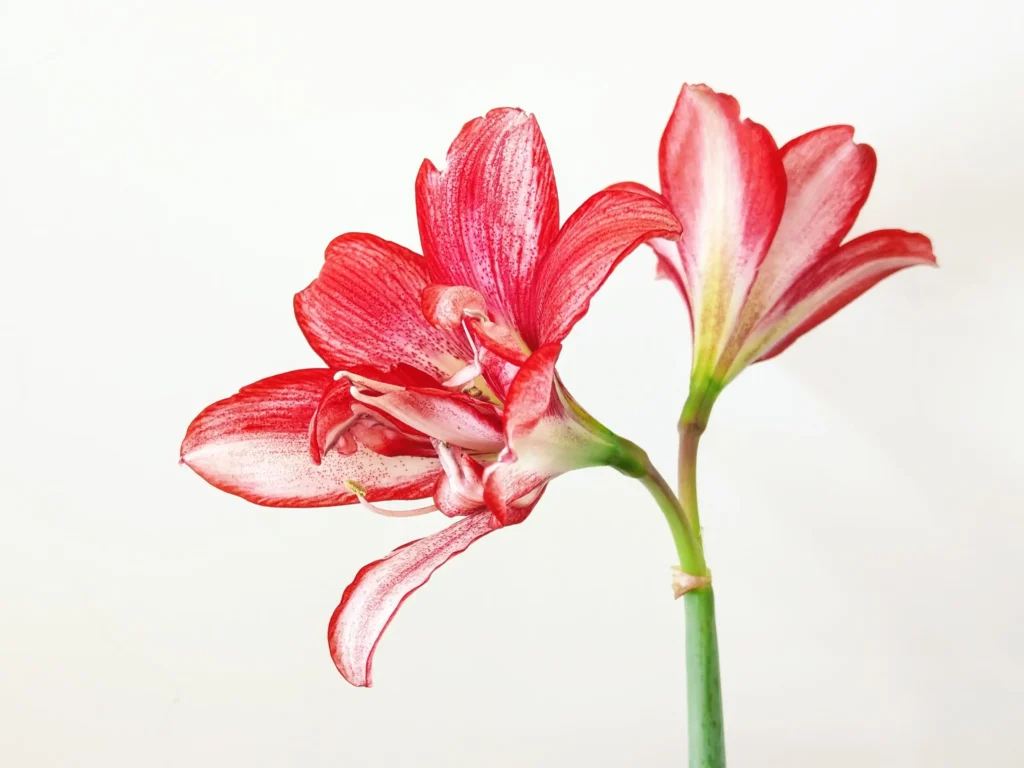
Green Amaryllis produces large, trumpet-shaped blooms in a soft, pale lime-green. It is a striking alternative to the typical red or pink amaryllis grown around the winter holidays. The bulb is often forced indoors for winter color.
- Scientific name: Hippeastrum ‘Evergreen’
- Flower type: Bulb
- Colors: Green, cream
- Bloom season: Winter (indoors)
- Sun: Bright, indirect light
- Height: 1.5–2 feet
- Fragrance: No
- Common uses: Indoor forcing, holiday displays
- Meaning: Renewal, quiet pride
38. Pineapple Lily
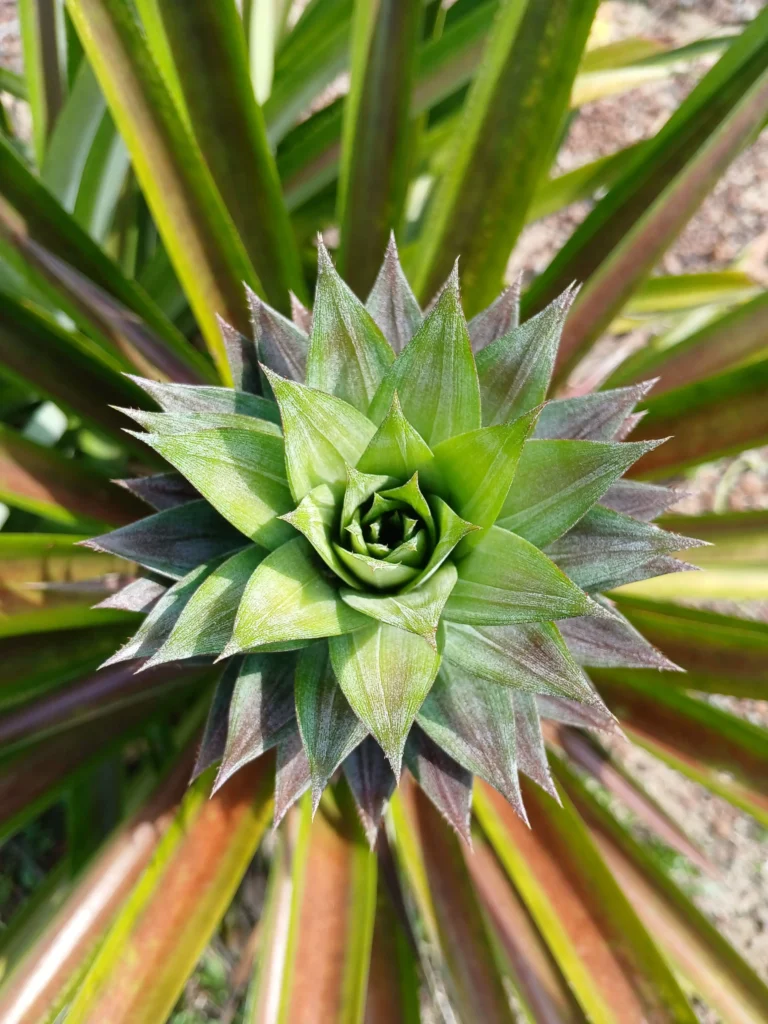
Pineapple Lily grows a tall spike of small, star-shaped green blooms topped with a tuft of leaves, like the top of a pineapple. It is a bold, unusual plant for summer borders. The flower spike can last for many weeks.
- Scientific name: Eucomis comosa
- Flower type: Bulb
- Colors: Green, white, purple-tinged
- Bloom season: Summer
- Sun: Full sun
- Height: 1.5–2.5 feet
- Fragrance: Mild
- Common uses: Borders, containers, cut flowers
- Meaning: Perfection, uniqueness
Green Annuals for Containers
These green flowers bloom for one season and are perfect for pots, hanging baskets, and cutting gardens.
39. Green Flowering Tobacco
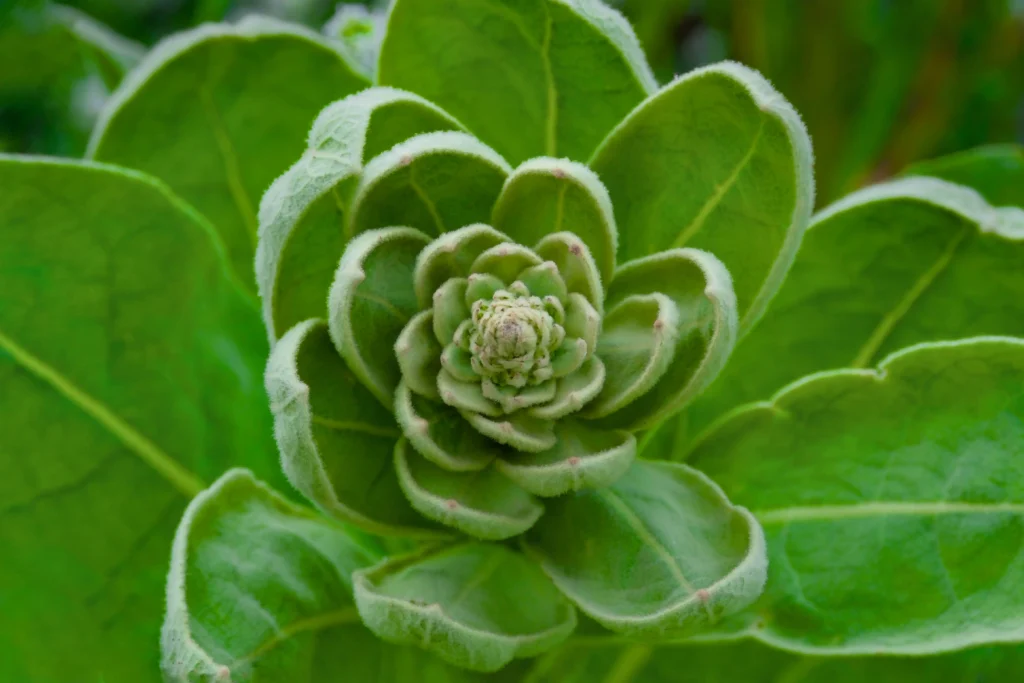
Green Flowering Tobacco grows tall, airy stems with small, star-shaped, yellow-green blooms. It attracts hummingbirds and moths through summer evenings. The plant self-seeds easily and often returns the following year.
- Scientific name: Nicotiana langsdorffii
- Flower type: Annual
- Colors: Green, yellow-green
- Bloom season: Summer to fall
- Sun: Full sun to partial shade
- Height: 3–4 feet
- Fragrance: Slight, evening scent
- Common uses: Borders, pollinator gardens, cut flowers
- Meaning: Compatibility, harmony
40. Lime Green Nicotiana
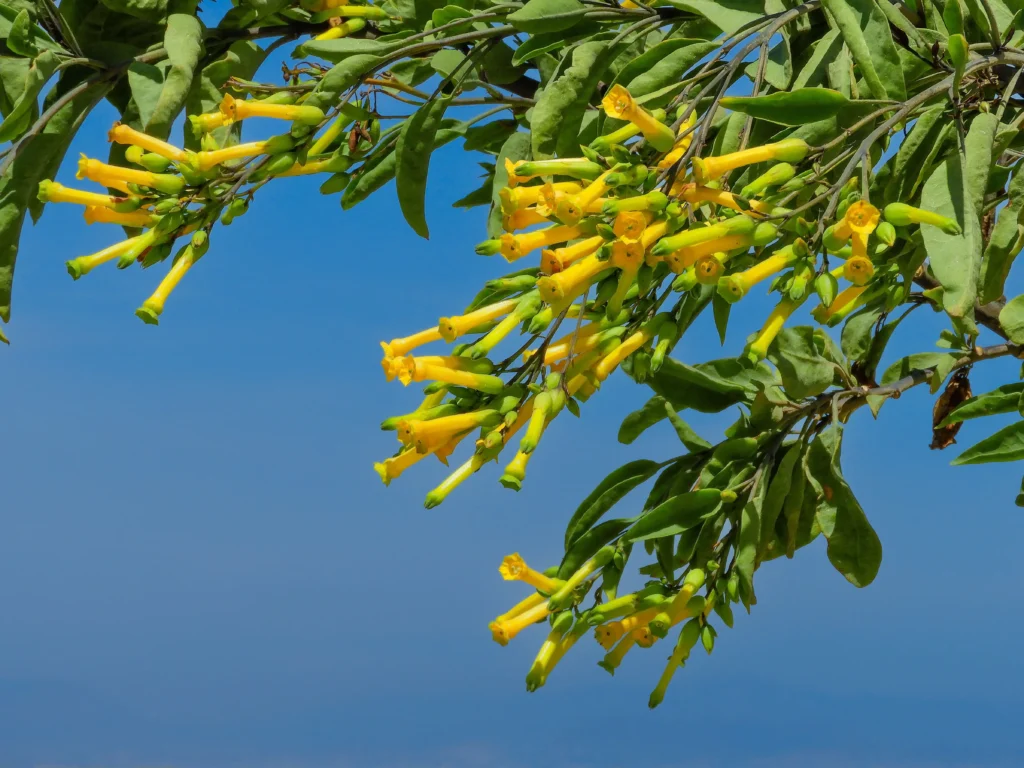
Lime Green Nicotiana has star-shaped, chartreuse blooms held above broad, soft leaves. It flowers steadily from summer through the first frost. The plant works well in both borders and container gardens.
- Scientific name: Nicotiana alata ‘Lime Green’
- Flower type: Annual
- Colors: Green
- Bloom season: Summer to fall
- Sun: Full sun to partial shade
- Height: 2–3 feet
- Fragrance: Sweet, evening scent
- Common uses: Borders, containers, cut flowers
- Meaning: Harmony, calm
41. Green Amaranthus
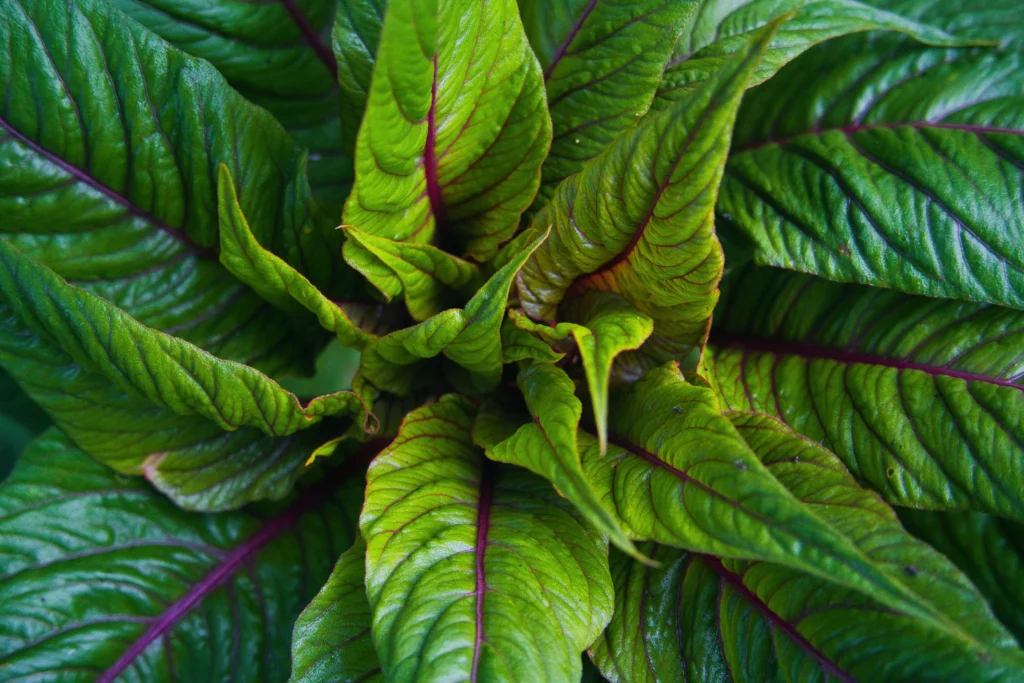
Green Amaranthus, also called Green Tails, produces long, trailing, rope-like strands of tiny green blooms. It cascades dramatically from containers or hanging baskets. The plant grows quickly and adds bold texture to any bed.
- Scientific name: Amaranthus caudatus ‘Green Tails’
- Flower type: Annual
- Colors: Green
- Bloom season: Summer to fall
- Sun: Full sun
- Height: 3–5 feet
- Fragrance: No
- Common uses: Containers, dried arrangements, borders
- Meaning: Hope, unfading love
42. Snow-on-the-Mountain
Snow-on-the-Mountain has small true flowers surrounded by showy leaf-like bracts edged in white over a green base. The plant has a cool, frosty look in the summer garden. Its milky sap can irritate skin, so care is needed when handling it.
- Scientific name: Euphorbia marginata
- Flower type: Annual
- Colors: Green, white
- Bloom season: Summer to fall
- Sun: Full sun
- Height: 2–3 feet
- Fragrance: No
- Common uses: Borders, cut flowers, dried arrangements
- Meaning: Purity, protection
43. Green Envy Sunflower
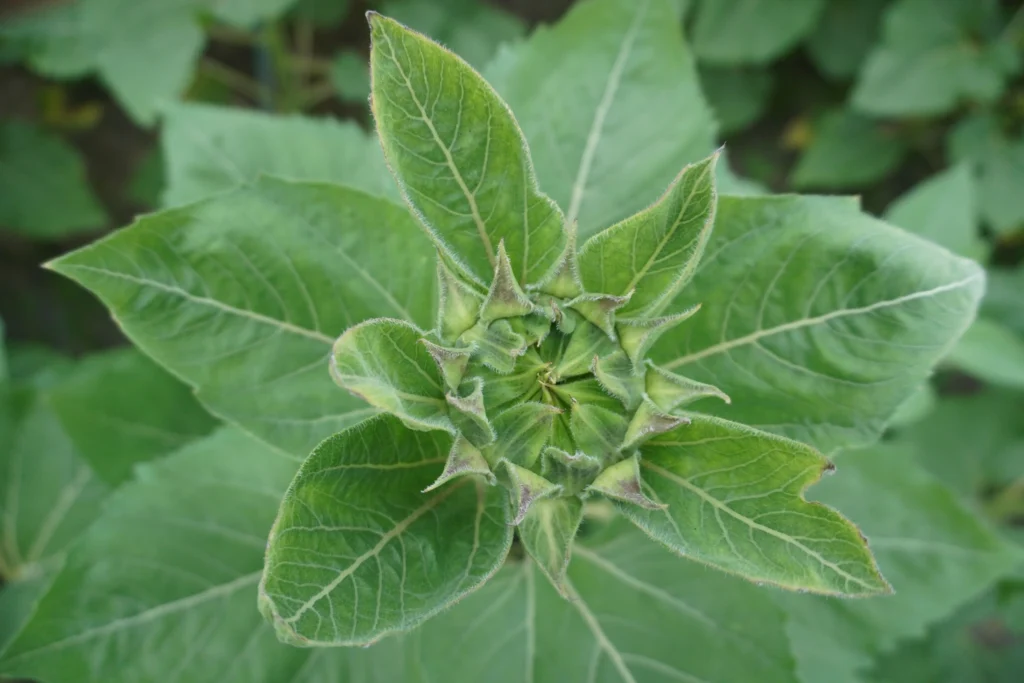
Green Envy Sunflower has fully green petals instead of the classic yellow, giving it a soft, modern look. It grows on strong, pollen-free stems, making it ideal for arrangements. The flower is a favorite among florists for its unusual color.
- Scientific name: Helianthus annuus ‘ProCut Green’
- Flower type: Annual
- Colors: Green
- Bloom season: Summer to fall
- Sun: Full sun
- Height: 3–5 feet
- Fragrance: No
- Common uses: Cut flowers, bouquets, borders
- Meaning: Adoration, uniqueness
44. Mignonette
Mignonette has small, fuzzy spikes of yellow-green blooms with a rich, sweet fragrance. It was once one of the most beloved scented flowers in Victorian gardens. The plant is easy to grow from seed in cool weather.
- Scientific name: Reseda odorata
- Flower type: Annual
- Colors: Green, yellow-green
- Bloom season: Spring to early summer
- Sun: Full sun to partial shade
- Height: 1–1.5 feet
- Fragrance: Strong, sweet
- Common uses: Fragrant gardens, cut flowers, perfumes
- Meaning: Worth beyond beauty
Bonus Green Favorites
These extra green flowers are worth knowing for their unique color or long-standing popularity.
45. Cotton Plant Flower
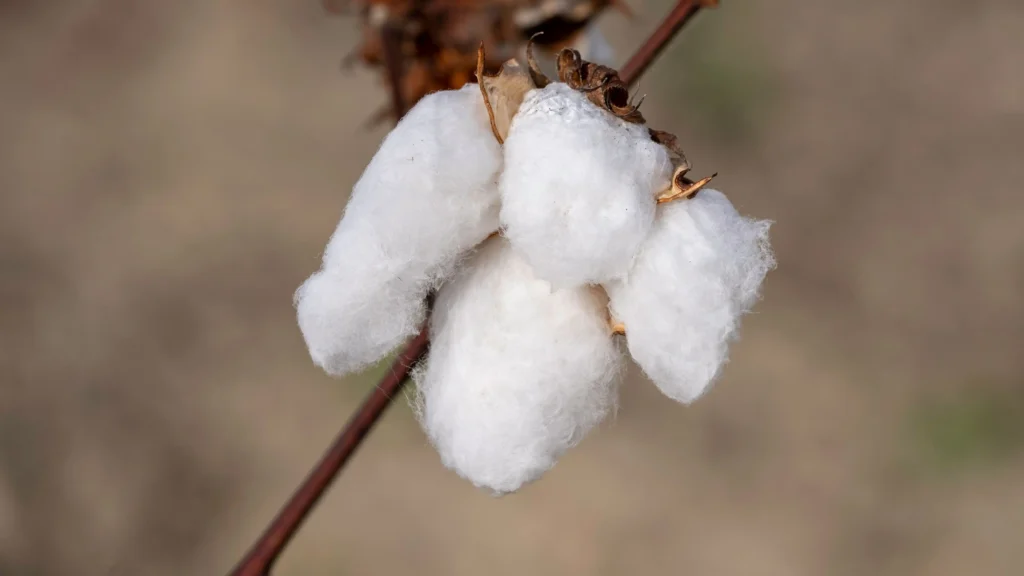
Cotton plants produce creamy, pale green-yellow blooms before turning into the fluffy white bolls used for fiber. Each flower lasts only a few days before fading. The plant has deep roots in agriculture and history.
- Scientific name: Gossypium hirsutum
- Flower type: Annual (grown as a crop plant)
- Colors: Green-yellow, cream, pink (fading)
- Bloom season: Summer
- Sun: Full sun
- Height: 3–5 feet
- Fragrance: No
- Common uses: Agriculture, dried arrangements, decor
- Meaning: Warmth, domestic bliss
46. Corsican Hellebore
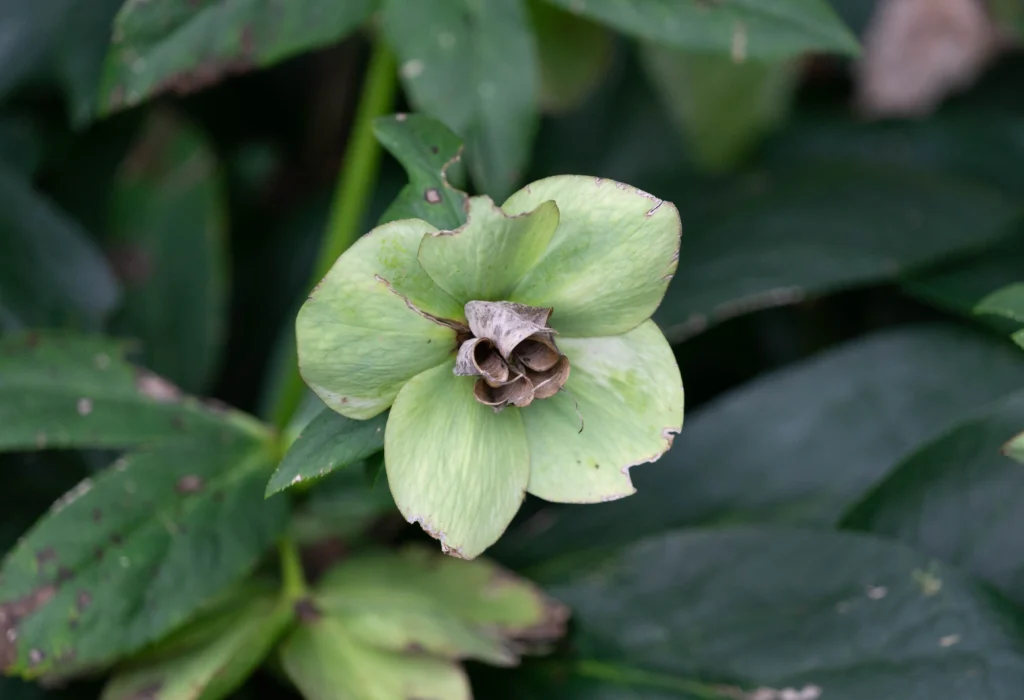
Corsican Hellebore has clusters of large, cup-shaped, pale green blooms above leathery, evergreen foliage. It flowers in the depths of winter when little else blooms. The plant tolerates shade and cold with ease.
- Scientific name: Helleborus argutifolius
- Flower type: Perennial
- Colors: Green
- Bloom season: Late winter to early spring
- Sun: Partial shade
- Height: 1.5–2 feet
- Fragrance: No
- Common uses: Shade gardens, winter interest
- Meaning: Serenity, endurance
47. Stinking Hellebore
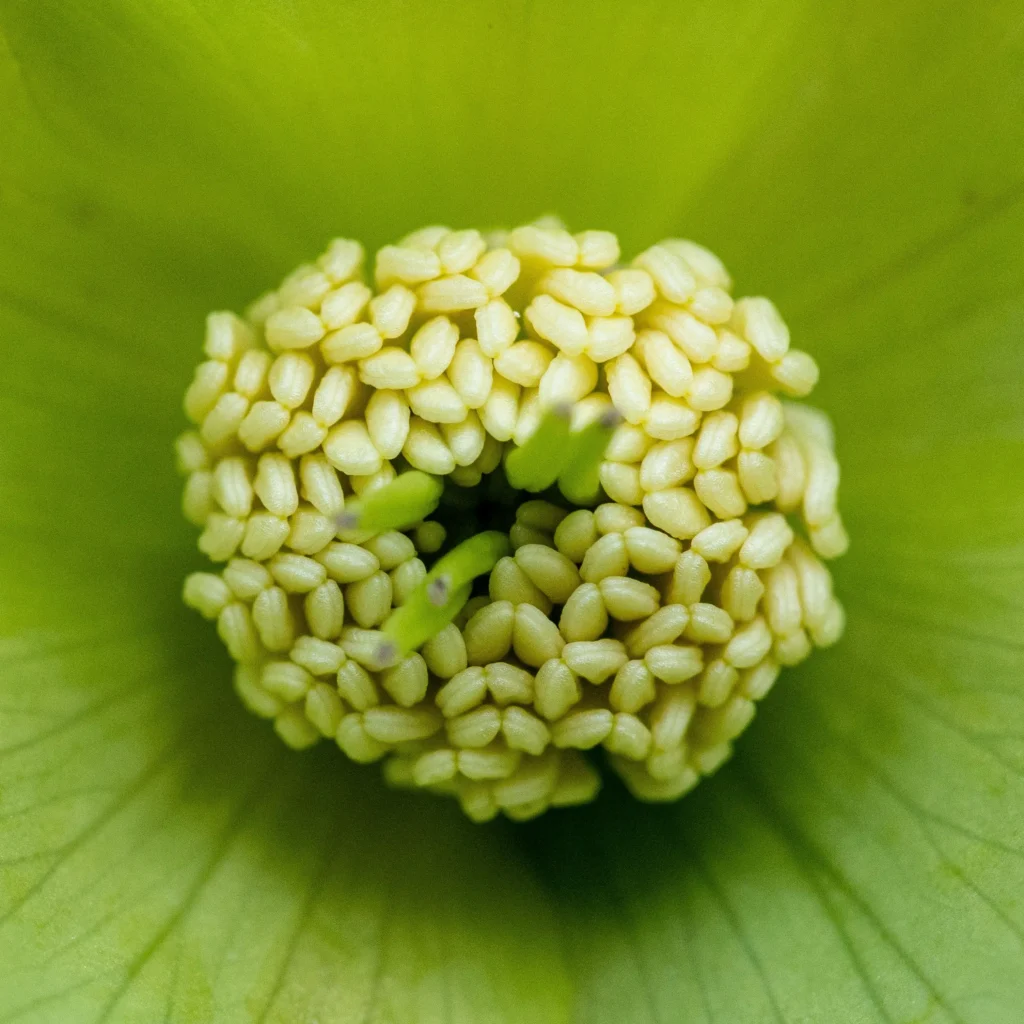
Stinking Hellebore grows clusters of nodding, cup-shaped green blooms with a fine reddish-purple edge. Despite its name, the smell is only noticeable if the leaves are crushed. It blooms earlier than most other winter flowers.
- Scientific name: Helleborus foetidus
- Flower type: Perennial
- Colors: Green, purple-edged
- Bloom season: Winter to early spring
- Sun: Partial shade
- Height: 1.5–2.5 feet
- Fragrance: Unpleasant (foliage only)
- Common uses: Shade gardens, winter interest
- Meaning: Resilience, quiet strength
48. Queen Lime Zinnia
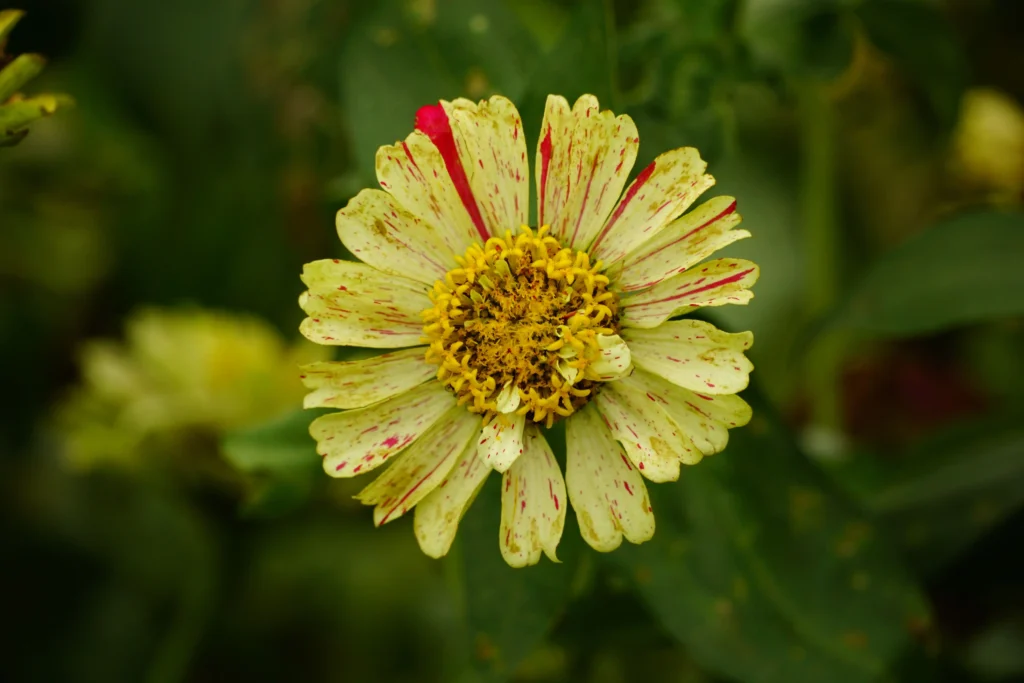
Queen Lime Zinnia has soft, dusty lime-green petals with a subtle rose blush near the center. It is one of the most popular cut-flower zinnias grown today. The bloom color shifts slightly as it ages, adding extra interest.
- Scientific name: Zinnia elegans ‘Queen Lime’
- Flower type: Annual
- Colors: Green, rose-blushed
- Bloom season: Summer to fall
- Sun: Full sun
- Height: 2.5–3.5 feet
- Fragrance: No
- Common uses: Cut flowers, borders, bouquets
- Meaning: Uniqueness, lasting friendship
49. Lady’s Slipper Orchid
Lady’s Slipper Orchid has a rounded, pouch-shaped bloom in greenish-yellow with darker veining. Its unusual shape helps trap and guide pollinators inside. The plant grows wild in cool woodlands and is protected in many regions.
- Scientific name: Cypripedium calceolus
- Flower type: Perennial
- Colors: Green, yellow, purple-brown
- Bloom season: Late spring to early summer
- Sun: Partial shade
- Height: 1–1.5 feet
- Fragrance: Mild
- Common uses: Woodland gardens, native plant collections
- Meaning: Rarity, protected beauty
50. Reed Orchid
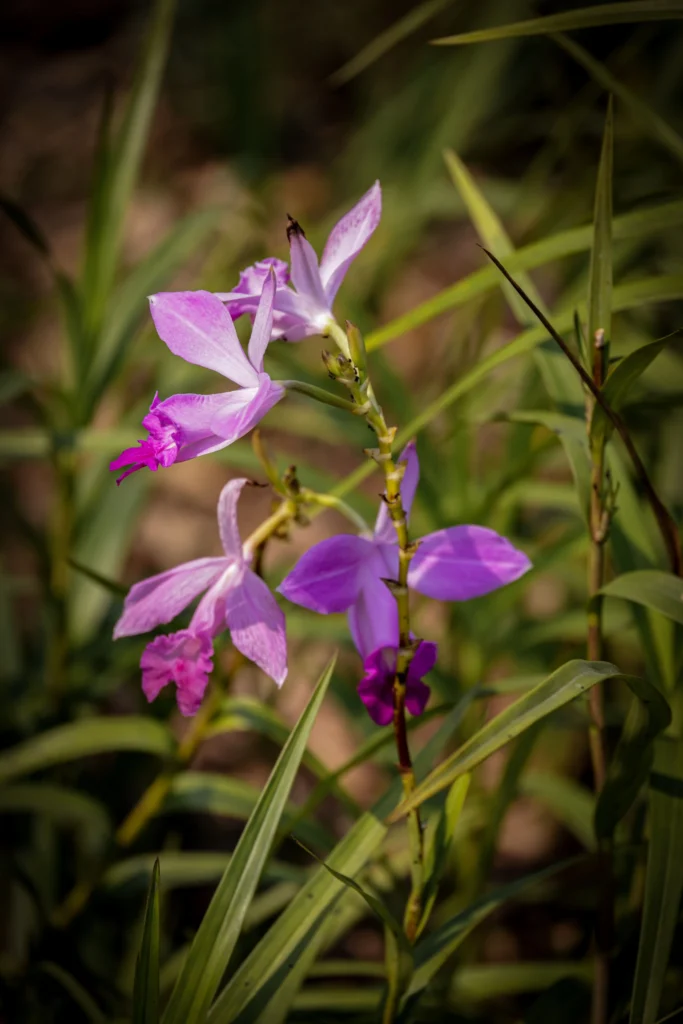
Reed Orchid grows clusters of small, star-shaped green and orange-red blooms atop tall, reed-like stems. It flowers almost continuously in warm climates. The plant is easy to grow and spreads readily once established.
- Scientific name: Epidendrum radicans
- Flower type: Perennial
- Colors: Green, orange-red
- Bloom season: Year-round (in warm climates)
- Sun: Full sun to partial shade
- Height: 2–3 feet
- Fragrance: No
- Common uses: Tropical gardens, containers
- Meaning: Growth, vitality
[Insert photo of Reed Orchid]
Frequently Asked Questions About Green Flowers
1. Are green flowers rare?
Yes. True green flowers are much rarer than red, pink, yellow, or white ones. Most plants use green pigment for leaves, not petals, so a genuinely green bloom, like Bells of Ireland or Green Envy Zinnia, stands out as unusual.
2. What is the most popular green flower?
Bells of Ireland and Green Zinnia are among the most popular green flowers. Both are widely used in bouquets and modern floral design for their fresh, unexpected color.
3. What do green flowers symbolize?
Green flowers often symbolize growth, renewal, and good fortune. In many cultures, they also represent balance, calm, and new beginnings.
4. What are the best green flowers for beginners?
Green Zinnia, Bells of Ireland, and Green Envy Coneflower are easy choices for beginners. They grow well from seed, need little care, and bloom each season reliably.
5. Which green flowers bloom the longest?
Limelight Hydrangea, Green Envy Sunflower, and Lime Green Nicotiana bloom for many weeks, often from summer through fall. They are good picks if you want a lasting green color in the garden.
6. Are green flowers good for pollinators?
Yes, though less than brighter colors. Green Milkweed, Mediterranean Spurge, and Lady’s Mantle still draw bees and butterflies, especially when planted alongside more colorful blooms.
7. Can green flowers grow in containers?
Many can. Green Zinnia, Little Lime Hydrangea, and Lime Green Nicotiana all grow well in pots, making them good choices for patios and small spaces.
8. What green flowers work well in bouquets?
Bells of Ireland, Green Trick Dianthus, Green Cymbidium Orchid, and Green Zinnia are popular choices for bouquets. They pair beautifully with white, cream, or pastel blooms.
9. Do green flowers change color as they age?
Some do. Limelight and Annabelle Hydrangea open green and gradually fade to white or pink. Queen Lime Zinnia also shifts in tone as the bloom matures.
10. Can green flowers grow indoors?
Yes. Green Cymbidium Orchid, Green Phalaenopsis Orchid, and Green Anthurium all grow well indoors with bright, indirect light. They can bloom for weeks or even months at a time.
Final Thoughts on Growing Green Flowers
Green flowers bring a fresh, calming, and slightly unexpected touch to any garden. They pair beautifully with white, cream, and soft pastel blooms, letting other colors stand out while adding quiet texture of their own. Many types of green flowers also do well in containers, so a large yard is not needed to enjoy them.
When choosing green flowers, think about your climate first. Some, like Jade Vine, need warm, humid conditions. Others, like Corsican Hellebore, prefer cool winters and shade. Match the flower to your growing zone for the best results.
Across cultures, green flowers often stand for growth, renewal, and good fortune. They make thoughtful gifts for a new home, a fresh start, or a quiet moment of reflection. Whatever the reason, these 50+ green flowers offer something for every garden and every story.