

Purple has long stood for royalty, mystery, and creativity. In the flower world, purple blooms bring a rich, regal feel to any garden. They also carry deep meaning, from admiration to spiritual calm.
- Classic Purple Garden Flowers
- 1. Lavender
- 2. Purple Iris
- 3. Purple Phlox
- 4. Purple Coneflower
- 5. Clematis
- 6. Purple Salvia
- 7. Purple Aster
- 8. Purple Foxglove
- Purple Flowering Shrubs & Trees
- 9. Lilac
- 10. Wisteria
- 11. Purple Rhododendron
- 12. Purple Butterfly Bush
- 13. Crape Myrtle
- 14. Rose of Sharon (Purple)
- Purple Wildflowers
- Purple Tropical & Exotic Flowers
- 21. Purple Orchid
- 22. Passionflower (Purple)
- 23. Purple Bougainvillea
- 24. African Violet
- 25. Purple Hibiscus
- 26. Tibouchina (Princess Flower)
- Purple Bulbs
- 27. Allium
- 28. Purple Crocus
- 29. Purple Hyacinth
- 30. Purple Tulip
- 31. Purple Anemone
- 32. Ipheion (Spring Starflower)
- Purple Annuals for Containers
- 33. Purple Petunia
- 34. Purple Pansy
- 35. Purple Verbena
- 36. Purple Heliotrope
- 37. Purple Ageratum
- 38. Purple Torenia
- Frequently Asked Questions About Purple Flowers
- 1. What flowers are naturally purple?
- 2. What is the most popular purple flower?
- 3. What do purple flowers symbolize?
- 4. What are the best purple flowers for beginners?
- 5. Which purple flowers bloom the longest?
- 6. Are purple flowers good for pollinators?
- 7. Can purple flowers grow in containers?
- 8. What purple flowers work well in bouquets?
- 9. Do purple flowers need special soil?
- 10. Can purple flowers grow indoors?
- Final Thoughts on Growing Purple Flowers
So, what are flowers? Flowers are the reproductive part of a plant. They grow to attract pollinators like bees, moths, and butterflies. There are over 400,000 known flowering plant species in the world, and new ones are still being discovered.
Some flowers are more loved than others. Roses, tulips, orchids, and lilies are among the most popular flowers worldwide. People grow them for their beauty, scent, and symbolism.
Flowers can be grouped in different ways. Some are annuals, which live for one season. Others are perennials, which return every year. Some grow from bulbs. Others are shrubs, vines, or trees. Botanists also group flowers by family, based on shared traits.
In this guide, you will find 35+ purple flowers. Each entry includes the flower’s name, a short description, and key facts. You will learn each flower’s bloom season, sun needs, height, and meaning. Photos are included so you can see each type of purple flower up close.
Whether you want purple flower names for a new garden bed or purple flower pictures for inspiration, this list has it all. Let’s explore the most beautiful purple flowers in the world.
Classic Purple Garden Flowers
These purple flowers are garden staples. They are easy to find and simple to grow in most climates.
1. Lavender
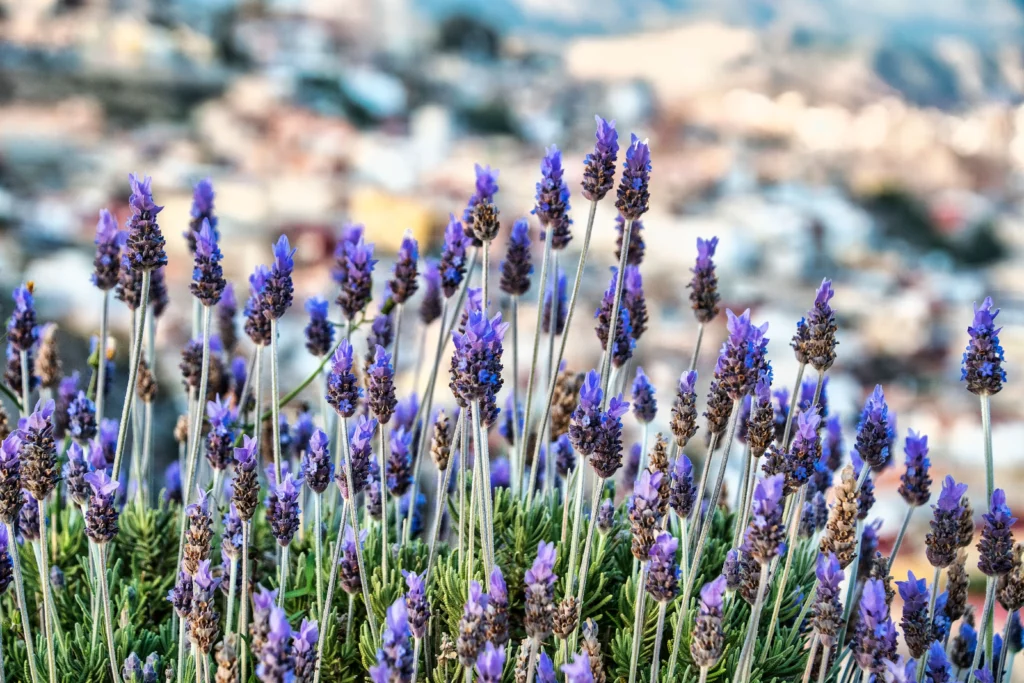
Lavender grows narrow spikes covered in tiny purple blooms. Its scent is one of the most recognized in the world. The plant thrives in dry, sunny spots and draws bees all summer.
- Scientific name: Lavandula angustifolia
- Flower type: Perennial shrub
- Colors: Purple, lavender-blue, white
- Bloom season: Late spring to summer
- Sun: Full sun
- Height: 1–3 feet
- Fragrance: Strong, sweet, herbal
- Common uses: Gardens, sachets, perfumes, essential oils
- Meaning: Calm, devotion, grace
2. Purple Iris
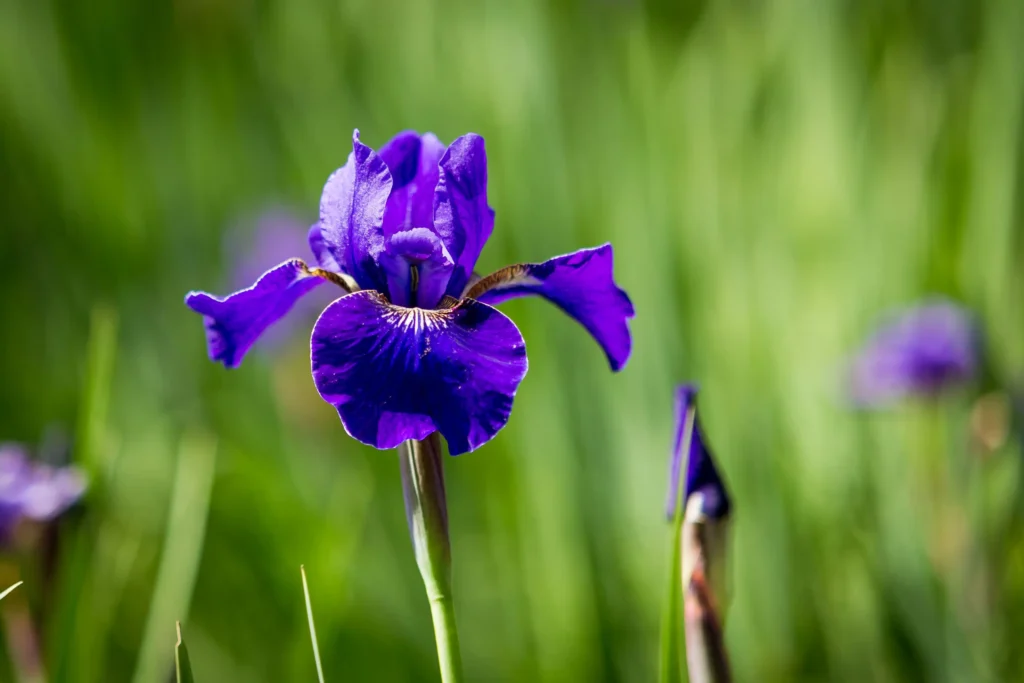
Purple Iris has sword-like leaves and bold, ruffled blooms. Its petals fold in a striking upright and drooping pattern. The flower has appeared in art and royal emblems for centuries.
- Scientific name: Iris germanica
- Flower type: Perennial
- Colors: Purple, blue, yellow, white
- Bloom season: Late spring to early summer
- Sun: Full sun
- Height: 2–3 feet
- Fragrance: Slight
- Common uses: Garden beds, cut flowers
- Meaning: Wisdom, royalty, faith
3. Purple Phlox
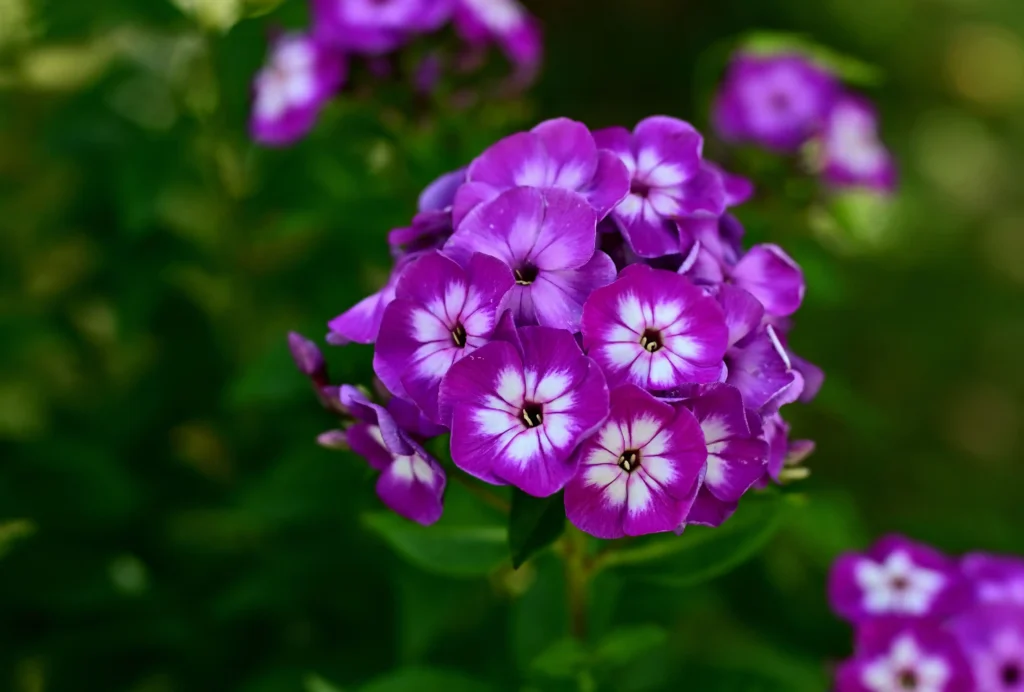
Purple Phlox forms dense clusters of small, star-shaped blooms. It grows in low mats or tall clumps, depending on the variety. The flower fills gardens with color and fragrance in summer.
- Scientific name: Phlox paniculata
- Flower type: Perennial
- Colors: Purple, pink, white, red
- Bloom season: Summer to early fall
- Sun: Full sun to partial shade
- Height: 1–4 feet
- Fragrance: Sweet
- Common uses: Borders, cut flowers, pollinator gardens
- Meaning: Harmony, partnership
4. Purple Coneflower
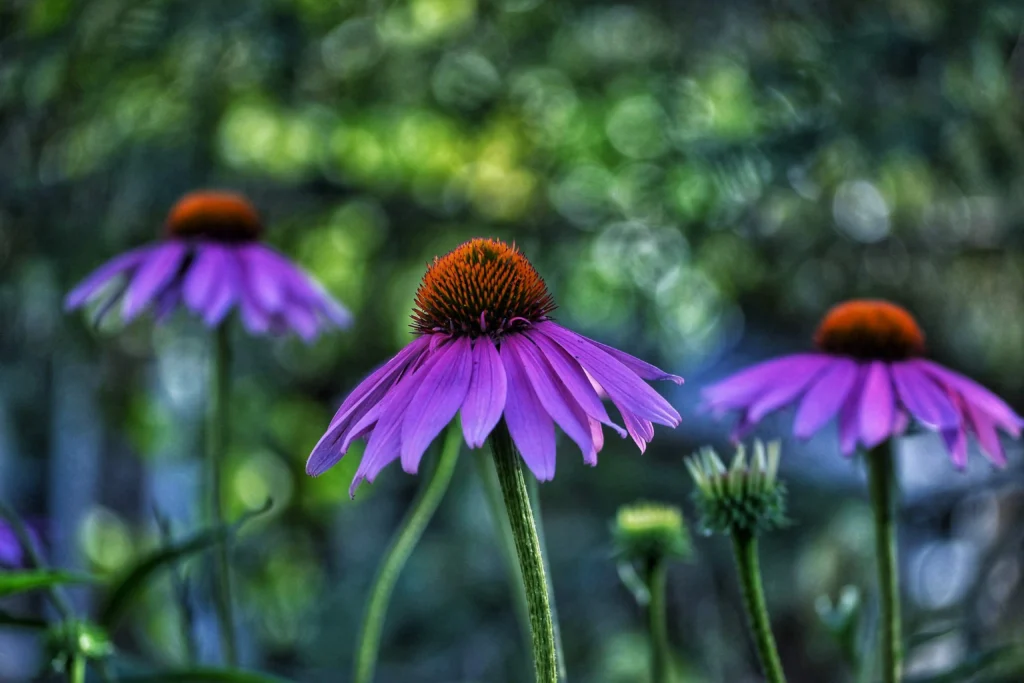
Purple Coneflower has drooping, daisy-like petals around a spiky, cone-shaped center. It is a tough plant that handles heat and drought well. Birds enjoy their seeds once the bloom fades.
- Scientific name: Echinacea purpurea
- Flower type: Perennial
- Colors: Purple, pink, white
- Bloom season: Summer to early fall
- Sun: Full sun
- Height: 2–4 feet
- Fragrance: Mild
- Common uses: Borders, pollinator gardens, herbal remedies
- Meaning: Strength, healing
5. Clematis
Clematis is a climbing vine covered in large, star-shaped purple blooms. It wraps around trellises, fences, and arbors with ease. The flower has been a garden favorite for generations.
- Scientific name: Clematis x jackmanii
- Flower type: Perennial vine
- Colors: Purple, blue, pink, white, red
- Bloom season: Summer
- Sun: Full sun to partial shade
- Height: 8–12 feet (vine)
- Fragrance: Slight
- Common uses: Trellises, arbors, fences
- Meaning: Mental strength, ingenuity
6. Purple Salvia
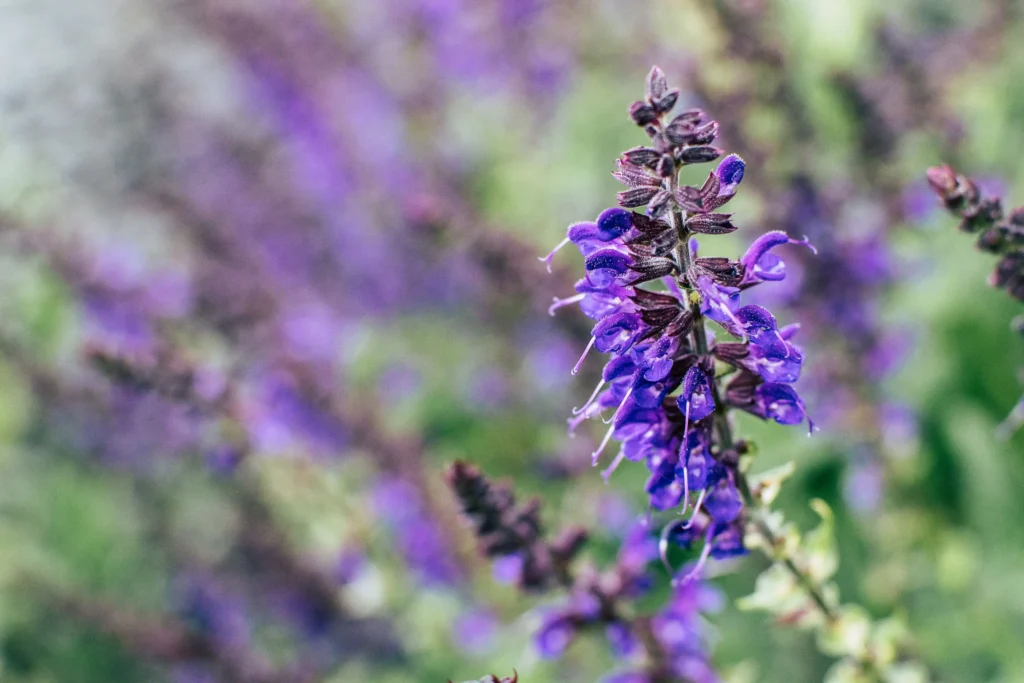
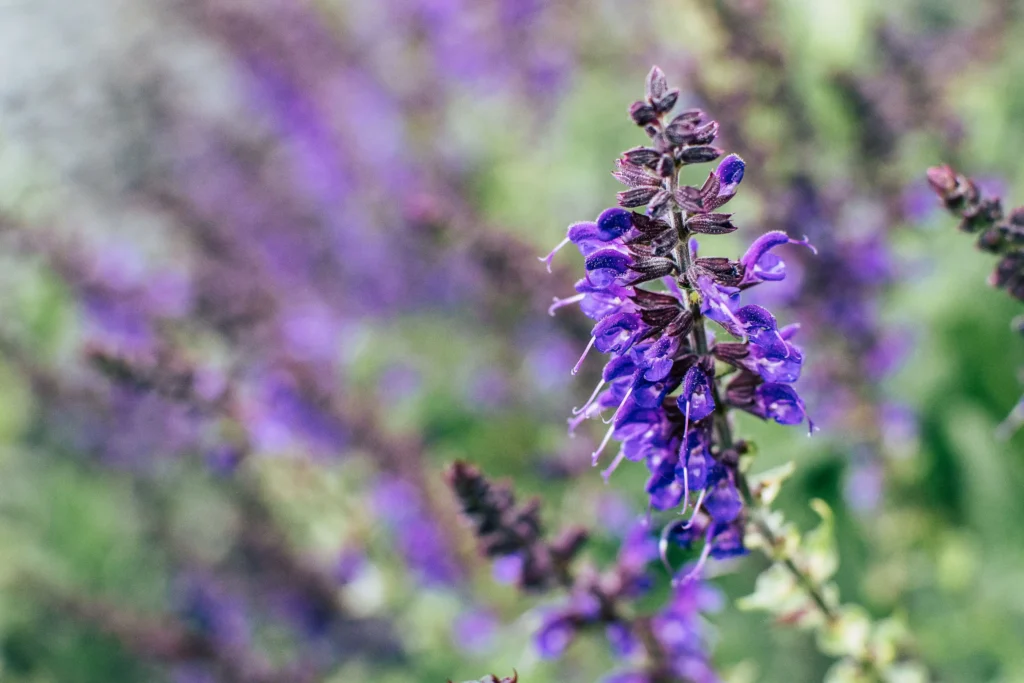
Purple Salvia grows tall, narrow spikes packed with small blooms. The plant flowers for months with little care. Bees and hummingbirds visit it often through summer and fall.
- Scientific name: Salvia nemorosa
- Flower type: Perennial
- Colors: Purple, blue, pink, white
- Bloom season: Late spring to fall
- Sun: Full sun
- Height: 1.5–3 feet
- Fragrance: Mild, herbal
- Common uses: Borders, pollinator gardens
- Meaning: Wisdom, protection
7. Purple Aster
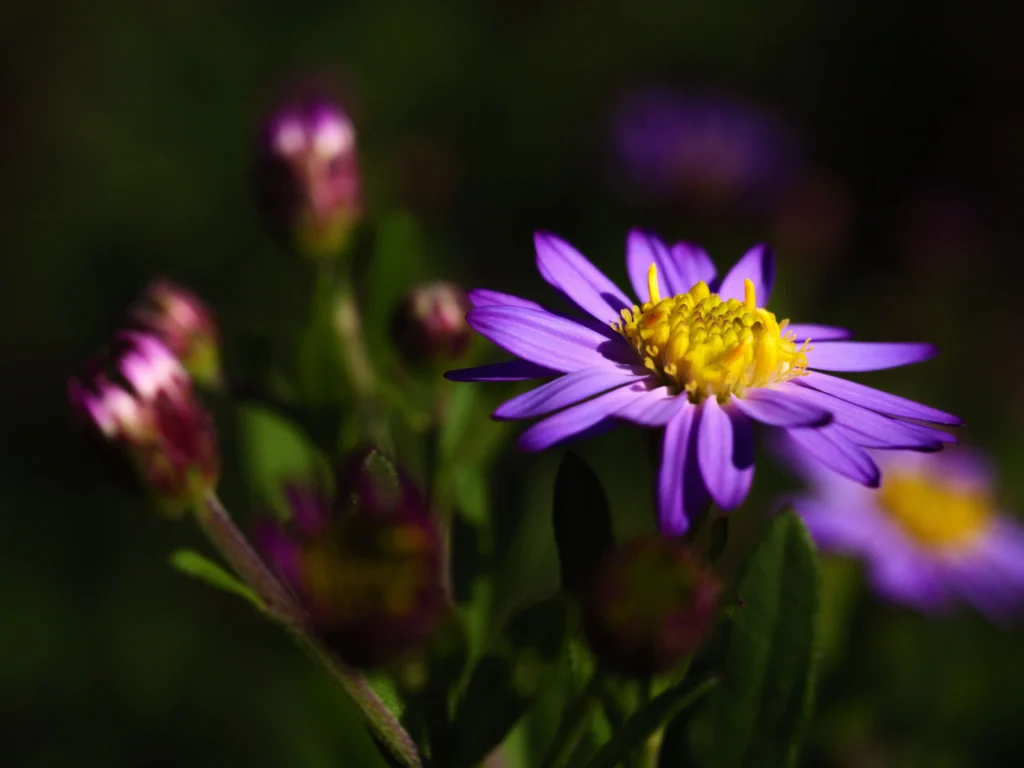
Purple Aster blooms in late summer and fall, when many other flowers have faded. Its daisy-like petals surround a bright yellow center. It is a key nectar source for late-season pollinators.
- Scientific name: Symphyotrichum novae-angliae
- Flower type: Perennial
- Colors: Purple, blue, pink, white
- Bloom season: Late summer to fall
- Sun: Full sun
- Height: 1–4 feet
- Fragrance: Mild
- Common uses: Fall gardens, pollinator beds
- Meaning: Patience, love
8. Purple Foxglove
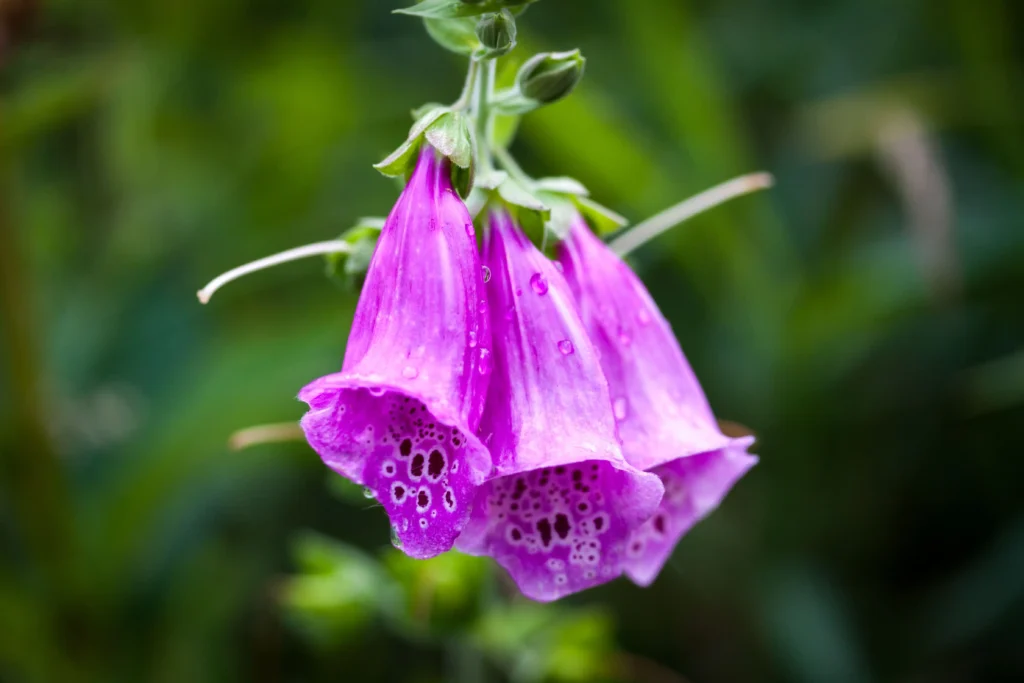
Purple Foxglove grows tall spikes of tube-shaped, spotted blooms. It is a striking plant for the back of a border. The flower is also known for its historic use in heart medicine.
- Scientific name: Digitalis purpurea
- Flower type: Biennial or short-lived perennial
- Colors: Purple, pink, white, yellow
- Bloom season: Late spring to summer
- Sun: Partial shade
- Height: 2–5 feet
- Fragrance: No
- Common uses: Cottage gardens, borders
- Meaning: Insincerity (in folklore), ambition
Purple Flowering Shrubs & Trees
These woody plants bring a purple color at eye level and above, making them great hedges or focal points.
9. Lilac
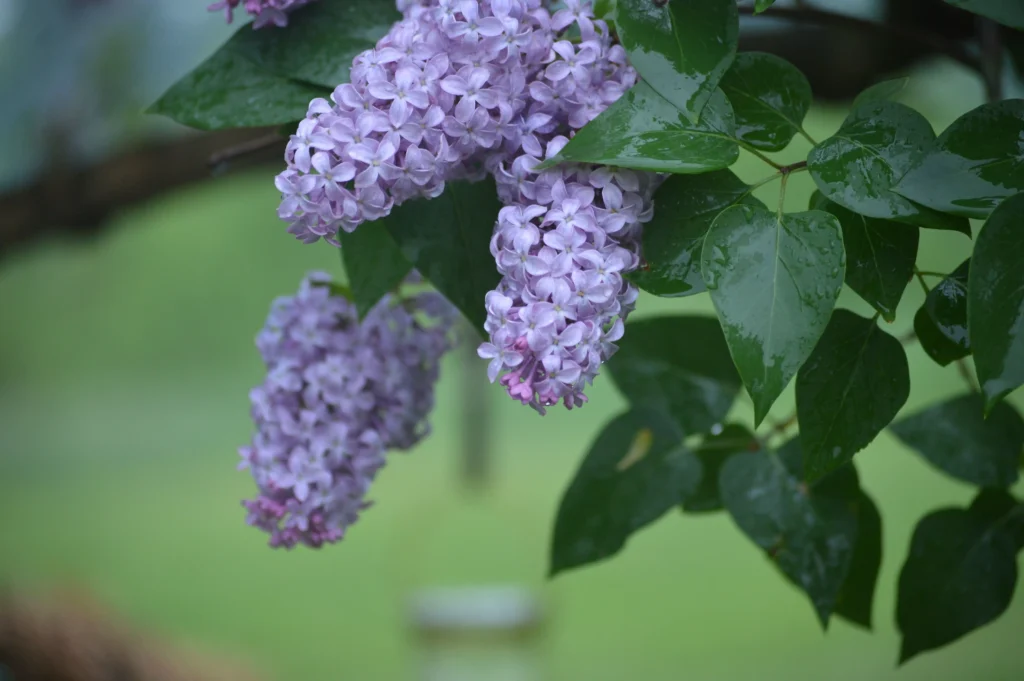
Lilac produces large, cone-shaped clusters of tiny purple blooms. Its scent is one of the most beloved of any spring shrub. The plant can live for decades once established.
- Scientific name: Syringa vulgaris
- Flower type: Shrub
- Colors: Purple, lavender, white, pink
- Bloom season: Spring
- Sun: Full sun
- Height: 8–15 feet
- Fragrance: Strong, sweet
- Common uses: Hedges, cut flowers, gardens
- Meaning: First love, renewal
10. Wisteria
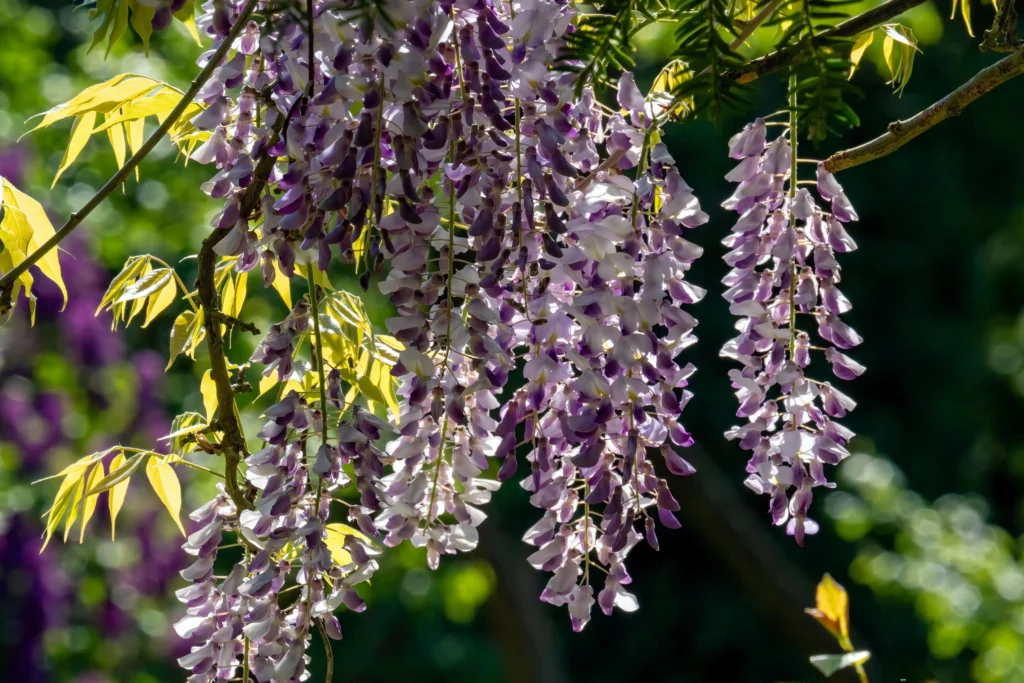
Wisteria drapes long, cascading clusters of purple blooms over arbors and pergolas. The vine grows fast and can live for many years. Its blooming season is short but dramatic.
- Scientific name: Wisteria sinensis
- Flower type: Perennial vine
- Colors: Purple, lavender, white, pink
- Bloom season: Spring
- Sun: Full sun
- Height: 10–25 feet (vine)
- Fragrance: Sweet
- Common uses: Arbors, pergolas, fences
- Meaning: Devotion, longevity
11. Purple Rhododendron
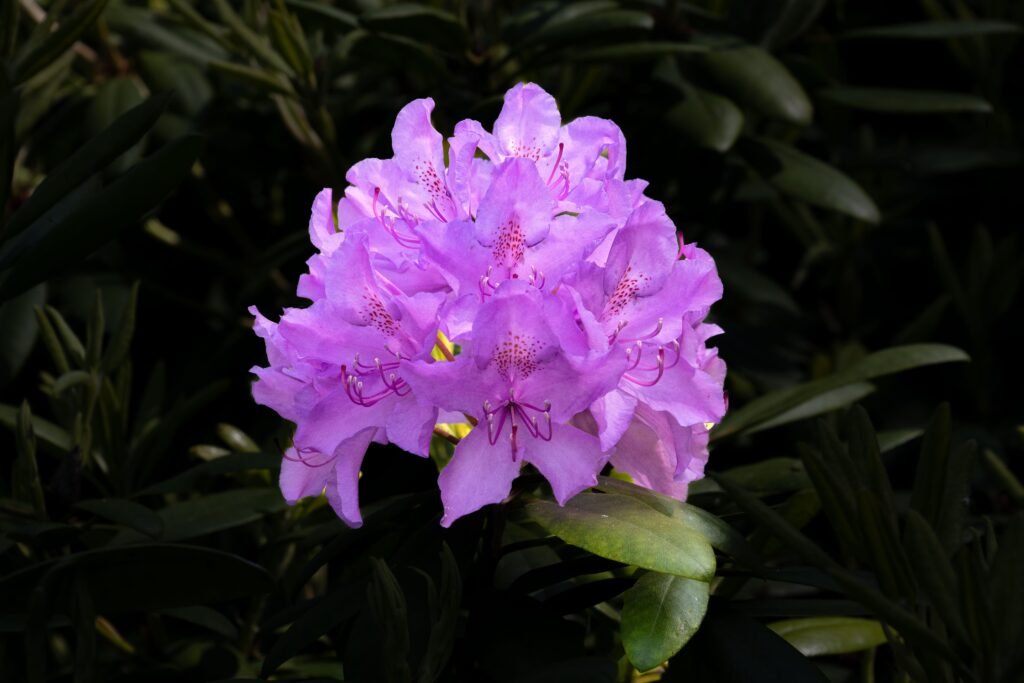
Purple Rhododendron blooms in large, rounded clusters of trumpet-shaped flowers. Its glossy, evergreen leaves stay attractive year-round. The plant prefers cool, shaded spots with rich soil.
- Scientific name: Rhododendron catawbiense
- Flower type: Shrub
- Colors: Purple, pink, red, white
- Bloom season: Spring
- Sun: Partial shade
- Height: 6–10 feet
- Fragrance: Slight
- Common uses: Woodland gardens, hedges
- Meaning: Caution, elegance
12. Purple Butterfly Bush
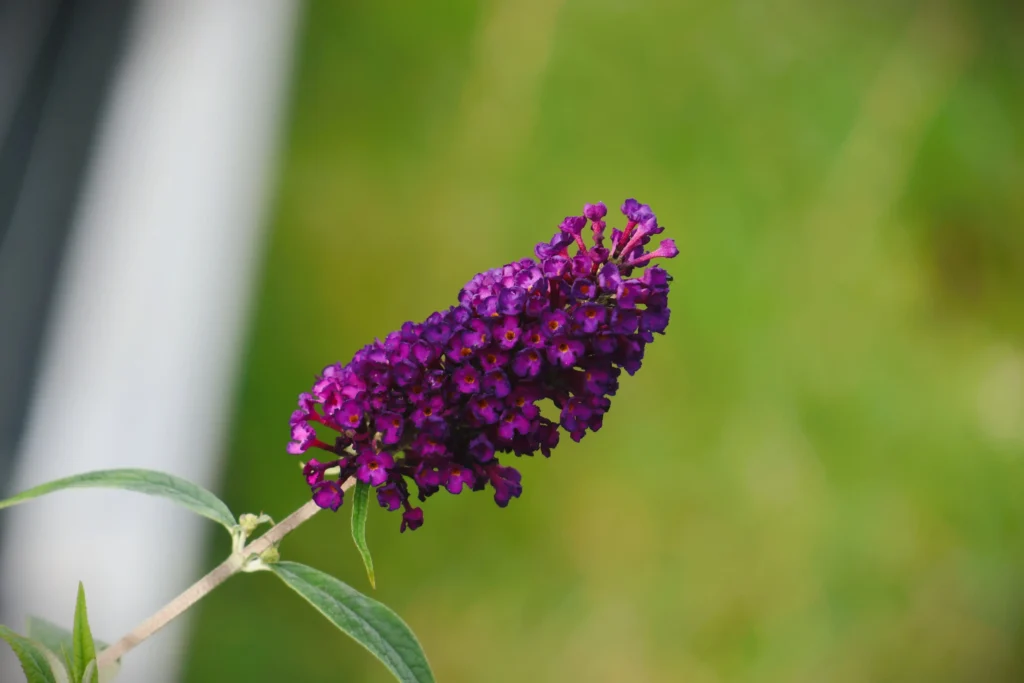
Purple Butterfly Bush grows long, cone-shaped clusters of tiny blooms. As its name suggests, it draws butterflies from every direction. The plant grows fast and blooms for months.
- Scientific name: Buddleja davidii
- Flower type: Shrub
- Colors: Purple, pink, blue, white
- Bloom season: Summer to fall
- Sun: Full sun
- Height: 5–10 feet
- Fragrance: Sweet, honey-like
- Common uses: Hedges, pollinator gardens
- Meaning: Attraction, rebirth
13. Crape Myrtle
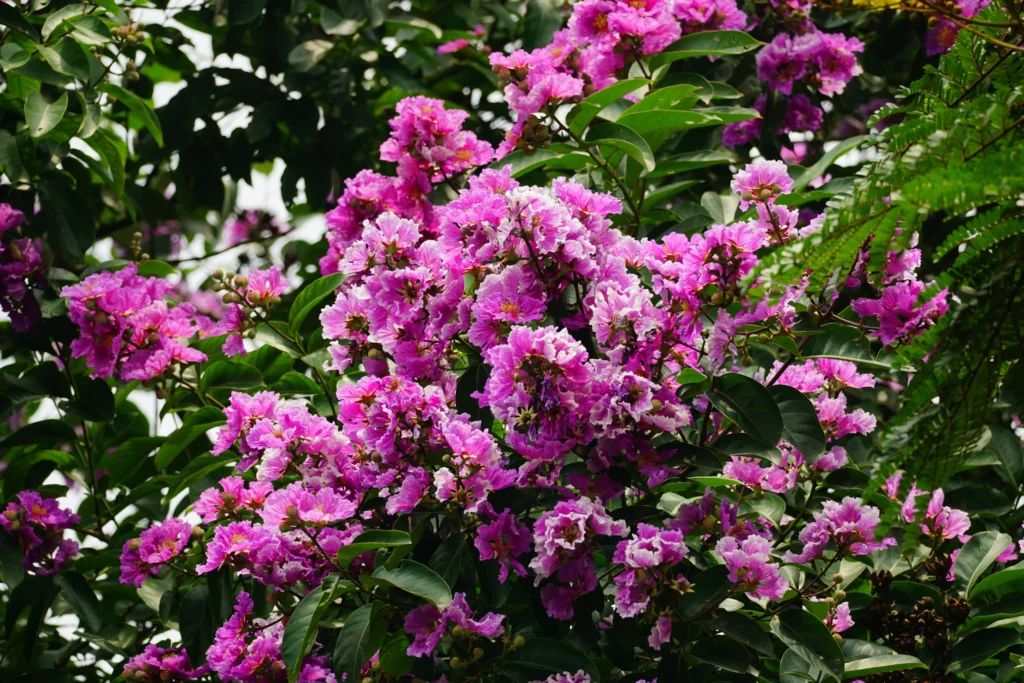
Crape Myrtle blooms in crinkled, papery clusters of purple flowers through the heat of summer. The tree also offers colorful bark and fall foliage. It is a favorite for southern gardens.
- Scientific name: Lagerstroemia indica
- Flower type: Shrub or small tree
- Colors: Purple, pink, red, white
- Bloom season: Summer to early fall
- Sun: Full sun
- Height: 10–25 feet
- Fragrance: No
- Common uses: Shade tree, landscaping, hedges
- Meaning: Wealth, good fortune
14. Rose of Sharon (Purple)
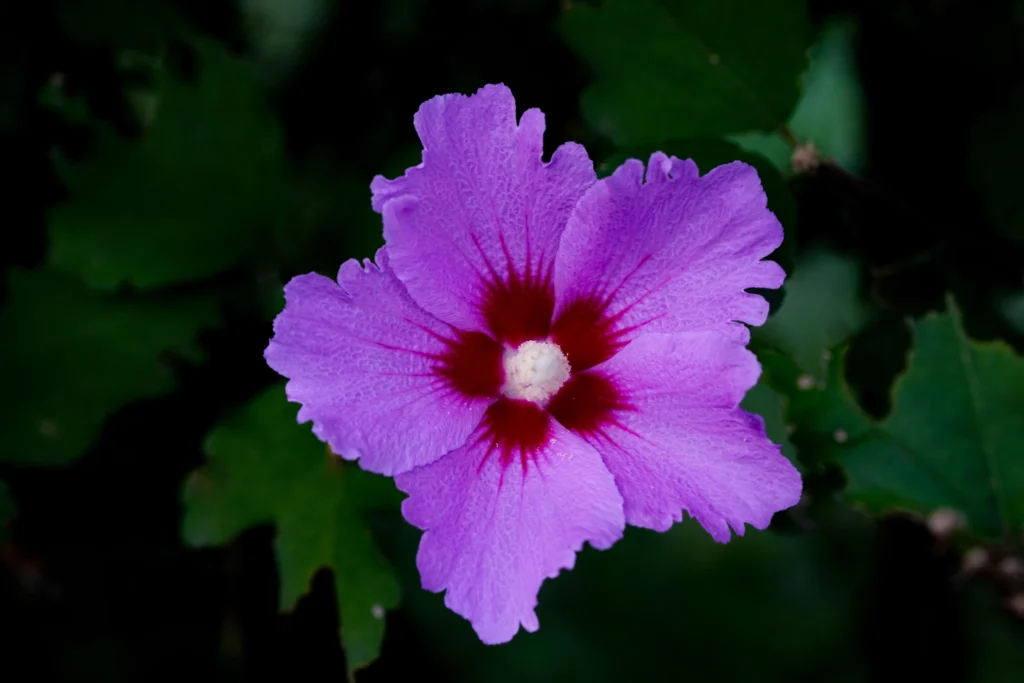
Rose of Sharon produces large, ruffled purple blooms with a deep red center. It flowers for a long stretch in late summer. This hardy shrub tolerates many soil types.
- Scientific name: Hibiscus syriacus
- Flower type: Shrub
- Colors: Purple, pink, blue, white
- Bloom season: Mid to late summer
- Sun: Full sun
- Height: 6–10 feet
- Fragrance: No
- Common uses: Hedges, focal points
- Meaning: Delicate beauty, consumed love
Purple Wildflowers
These purple flowers grow naturally in fields, meadows, and roadsides. Many can be added to a home garden, too.
15. Wild Bergamot
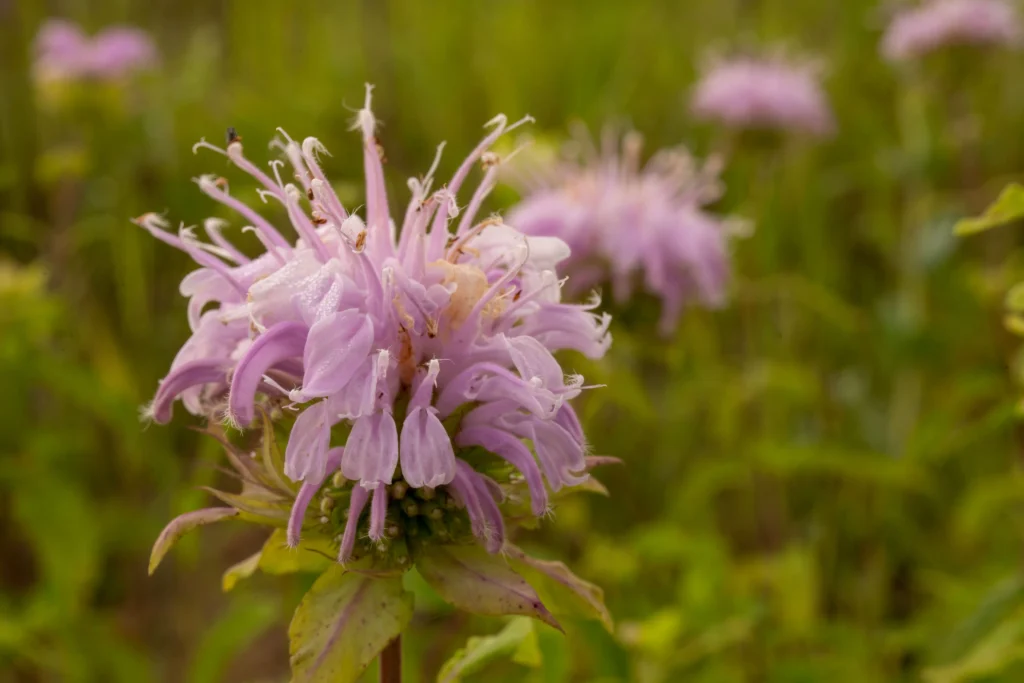
Wild Bergamot has shaggy, tube-shaped purple blooms that sit like a spiky crown. It gives off a minty scent when brushed. The flower is a favorite of bees, butterflies, and hummingbirds.
- Scientific name: Monarda fistulosa
- Flower type: Perennial
- Colors: Purple, pink, lavender
- Bloom season: Summer
- Sun: Full sun
- Height: 2–4 feet
- Fragrance: Minty, herbal
- Common uses: Wildflower gardens, herbal tea, pollinator beds
- Meaning: Sympathy, compassion
16. Purple Loosestrife
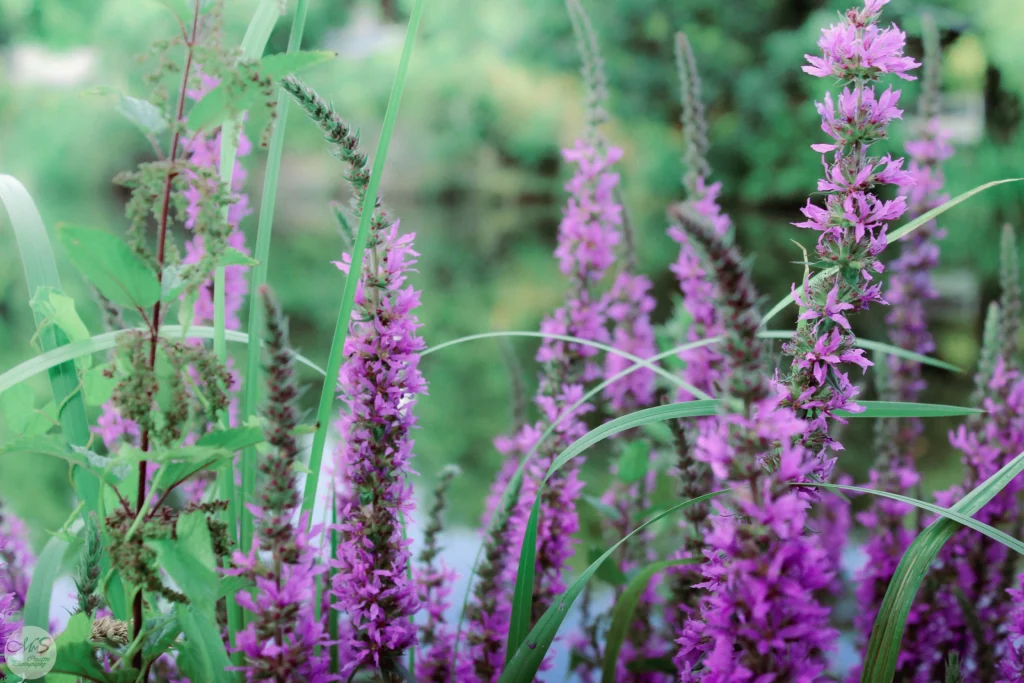
Purple Loosestrife grows tall spikes densely packed with small purple blooms. It thrives in wet meadows and along streams. The plant spreads quickly and blooms for weeks.
- Scientific name: Lythrum salicaria
- Flower type: Perennial
- Colors: Purple, magenta
- Bloom season: Summer
- Sun: Full sun
- Height: 3–5 feet
- Fragrance: No
- Common uses: Wetland gardens, naturalized areas
- Meaning: Passion, wild beauty
17. Ironweed
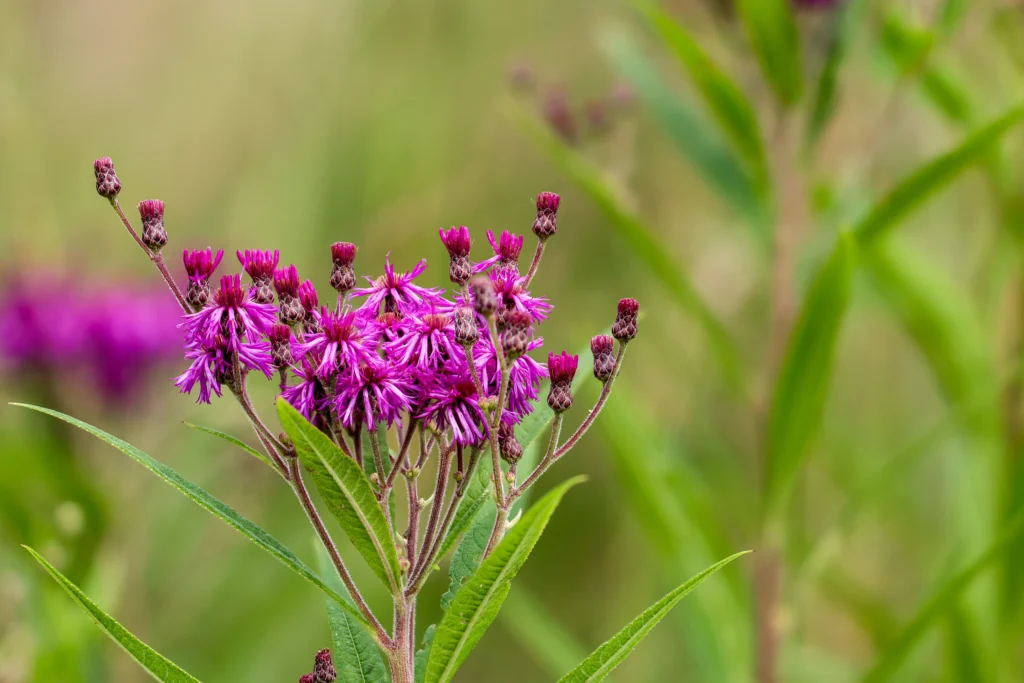
Ironweed grows tall clusters of deep purple blooms atop sturdy stems. It appears in late summer meadows across North America. The plant is a strong source of nectar for migrating butterflies.
- Scientific name: Vernonia noveboracensis
- Flower type: Perennial
- Colors: Purple
- Bloom season: Late summer to fall
- Sun: Full sun
- Height: 4–6 feet
- Fragrance: No
- Common uses: Meadow gardens, pollinator beds
- Meaning: Resilience
18. Purple Vetch
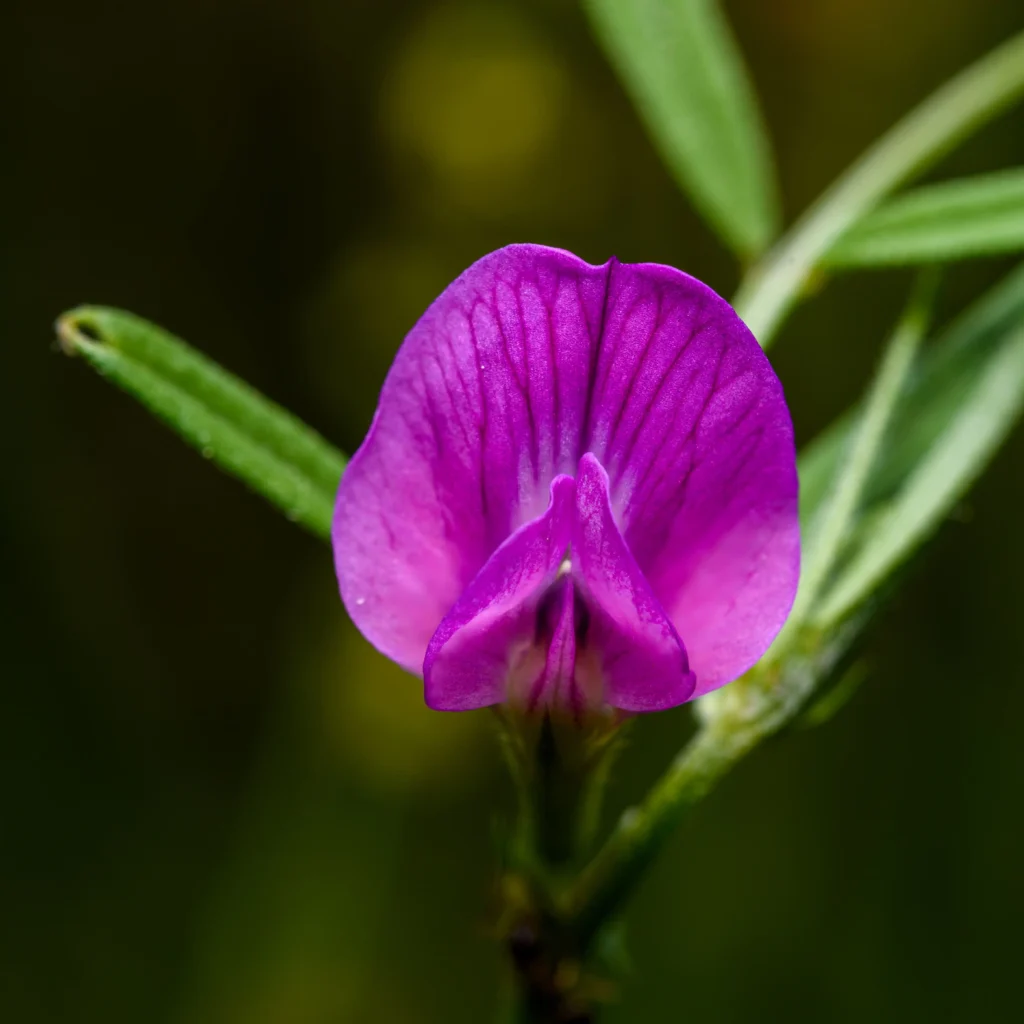
Purple Vetch is a sprawling, climbing plant with small, pea-shaped purple blooms. It often grows along roadsides and in open fields. The plant also improves soil by adding nitrogen.
- Scientific name: Vicia americana
- Flower type: Perennial vine
- Colors: Purple, blue-violet
- Bloom season: Late spring to summer
- Sun: Full sun
- Height: 1–3 feet (vine)
- Fragrance: No
- Common uses: Wildflower meadows, soil improvement
- Meaning: Persistence
19. Thistle
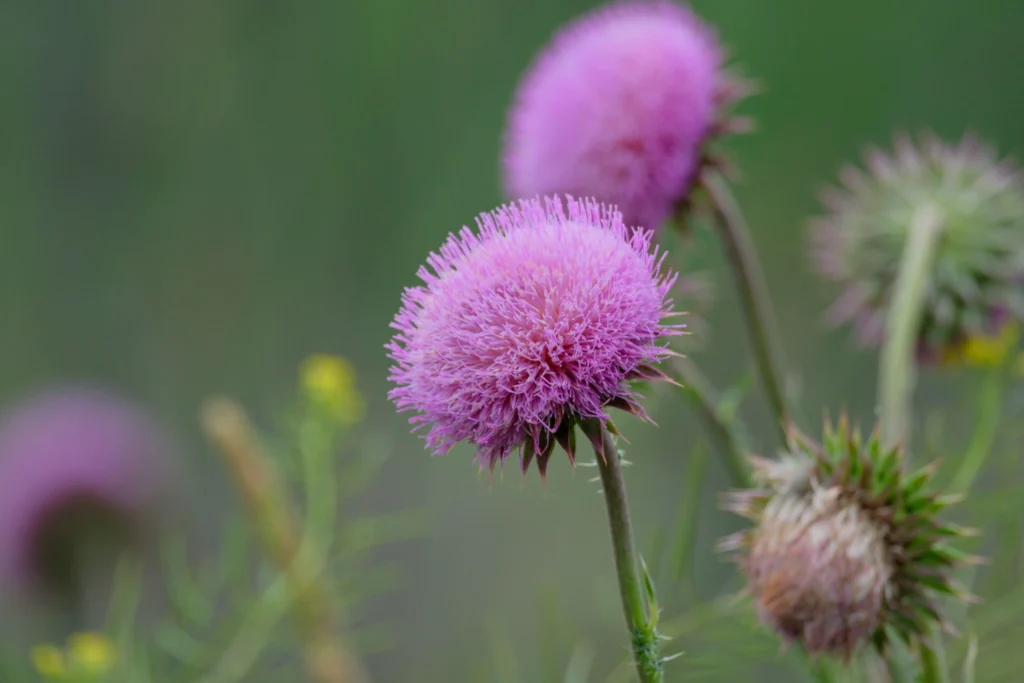
Thistle has spiky, rounded purple blooms atop a prickly stem. It grows wild in fields and along roadsides. Goldfinches and bees rely on it for food and nesting material.
- Scientific name: Cirsium vulgare
- Flower type: Biennial
- Colors: Purple, pink
- Bloom season: Summer
- Sun: Full sun
- Height: 2–5 feet
- Fragrance: No
- Common uses: Wildlife gardens, naturalized areas
- Meaning: Nobility, protection
20. Wild Violet
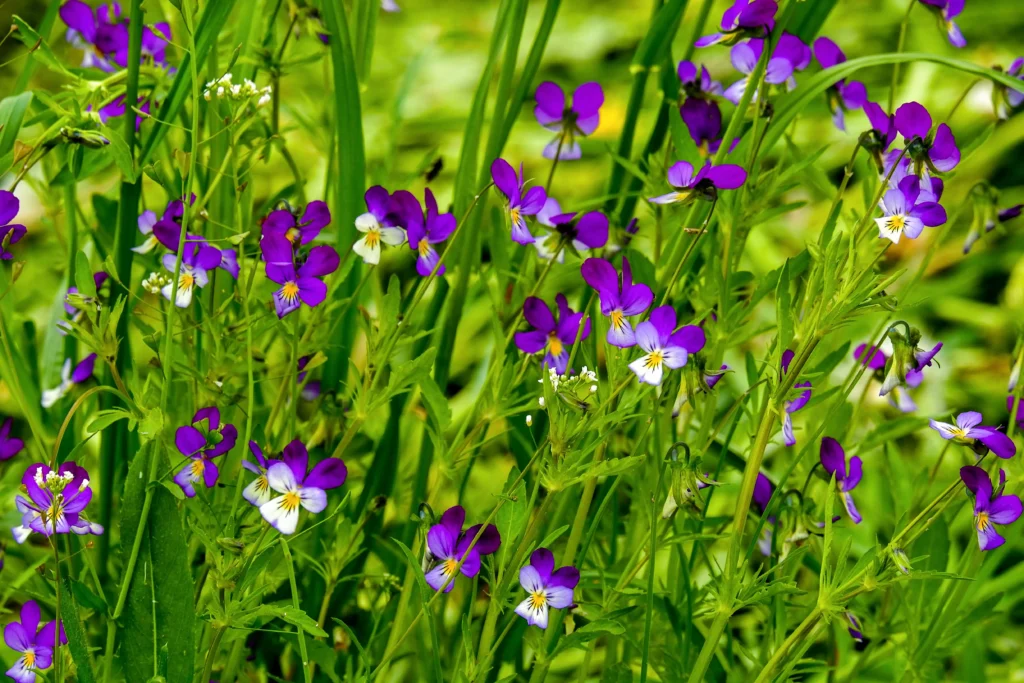
Wild Violet grows low to the ground with small, five-petaled purple blooms. It spreads easily through lawns, woodlands, and garden beds. The flower is one of the first to appear each spring.
- Scientific name: Viola sororia
- Flower type: Perennial
- Colors: Purple, blue, white
- Bloom season: Early to mid-spring
- Sun: Partial shade
- Height: 4–8 inches
- Fragrance: Mild, sweet
- Common uses: Ground cover, woodland gardens
- Meaning: Modesty, faithfulness
Purple Tropical & Exotic Flowers
These striking purple flowers come from warm climates around the world. They bring a bold, unusual look to any collection.
21. Purple Orchid
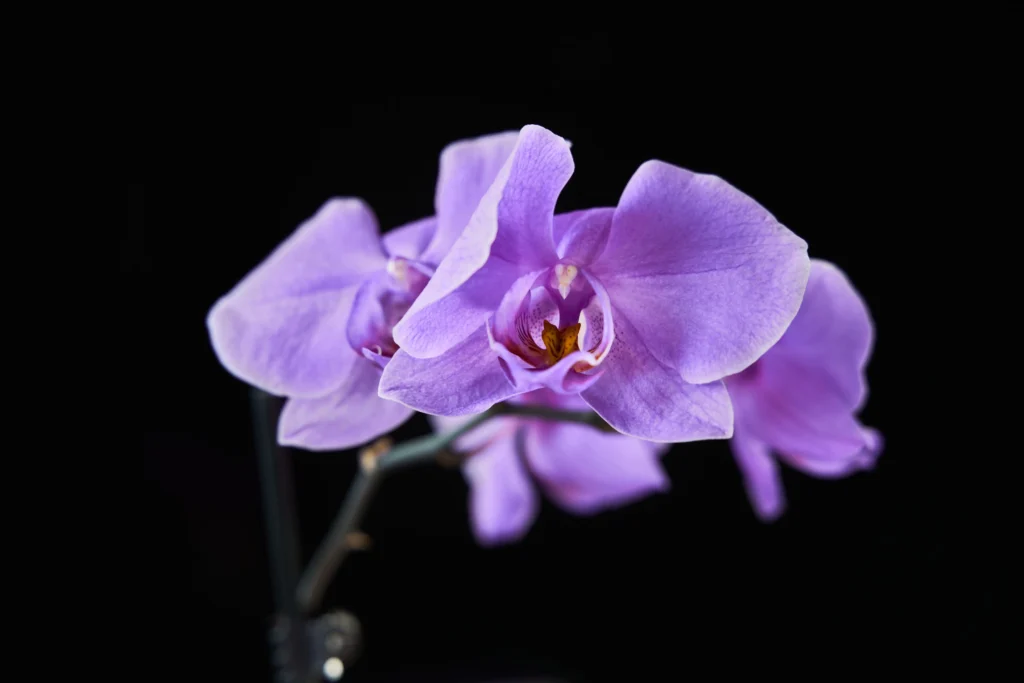
Purple Orchid has broad, waxy petals in deep, rich purple tones. It is one of the most popular houseplants in the world. The flower can bloom for months at a time indoors.
- Scientific name: Phalaenopsis spp.
- Flower type: Perennial (epiphyte)
- Colors: Purple, pink, white, yellow
- Bloom season: Year-round (indoors)
- Sun: Bright, indirect light
- Height: 1–2 feet
- Fragrance: Slight
- Common uses: Indoor display, gifts
- Meaning: Elegance, admiration
22. Passionflower (Purple)
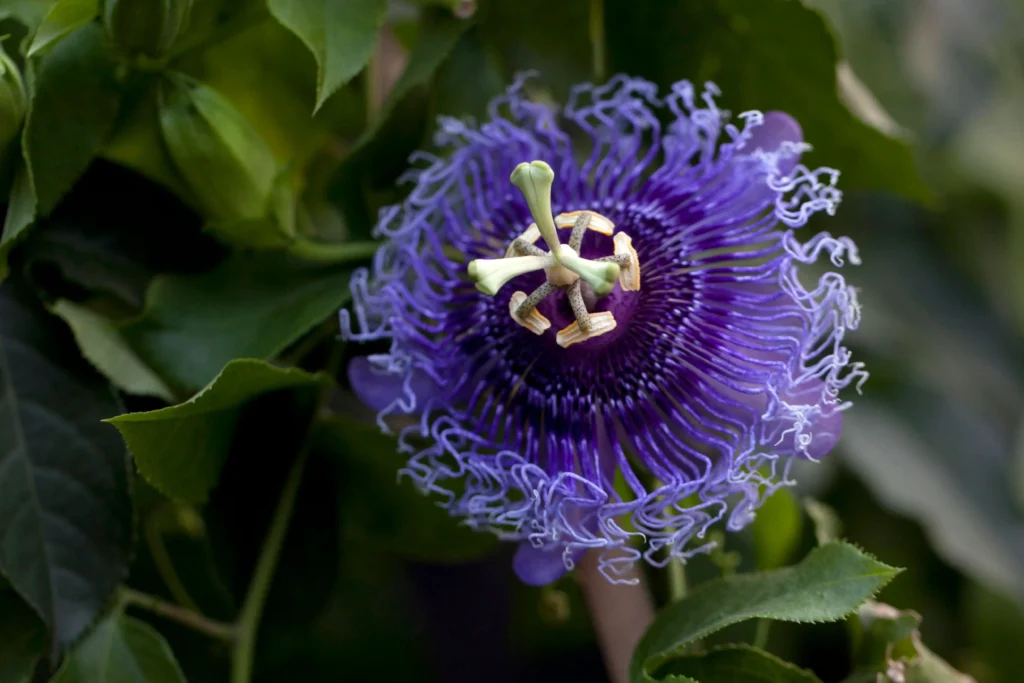
Purple Passionflower has an intricate bloom with thin, star-shaped petals and a crown of purple and white filaments. It grows as a fast-climbing vine. The flower is unlike any other in shape.
- Scientific name: Passiflora incarnata
- Flower type: Perennial vine
- Colors: Purple, white, lavender
- Bloom season: Summer to fall
- Sun: Full sun
- Height: 15–20 feet (vine)
- Fragrance: Mild
- Common uses: Trellises, fences, exotic gardens
- Meaning: Faith, spirituality
23. Purple Bougainvillea
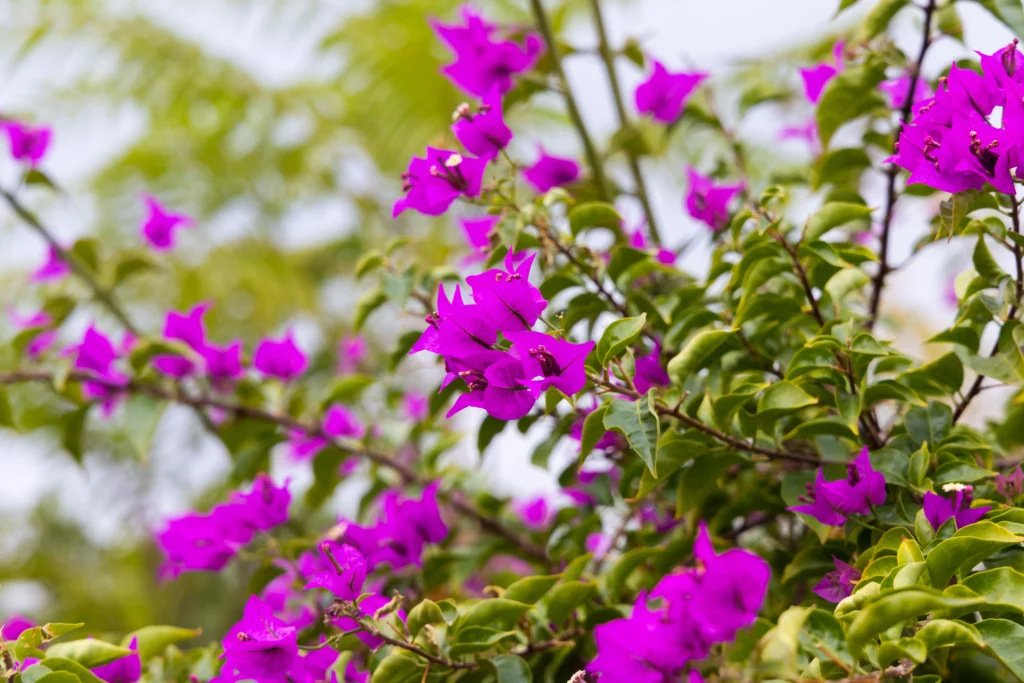
Purple Bougainvillea produces papery, vivid purple bracts that surround tiny true flowers. The plant grows as a vigorous, thorny vine. It thrives in hot, sunny climates.
- Scientific name: Bougainvillea glabra
- Flower type: Perennial vine or shrub
- Colors: Purple, pink, red, orange, white
- Bloom season: Spring to fall
- Sun: Full sun
- Height: 15–30 feet (vine)
- Fragrance: No
- Common uses: Trellises, fences, tropical landscaping
- Meaning: Passion, energy
24. African Violet
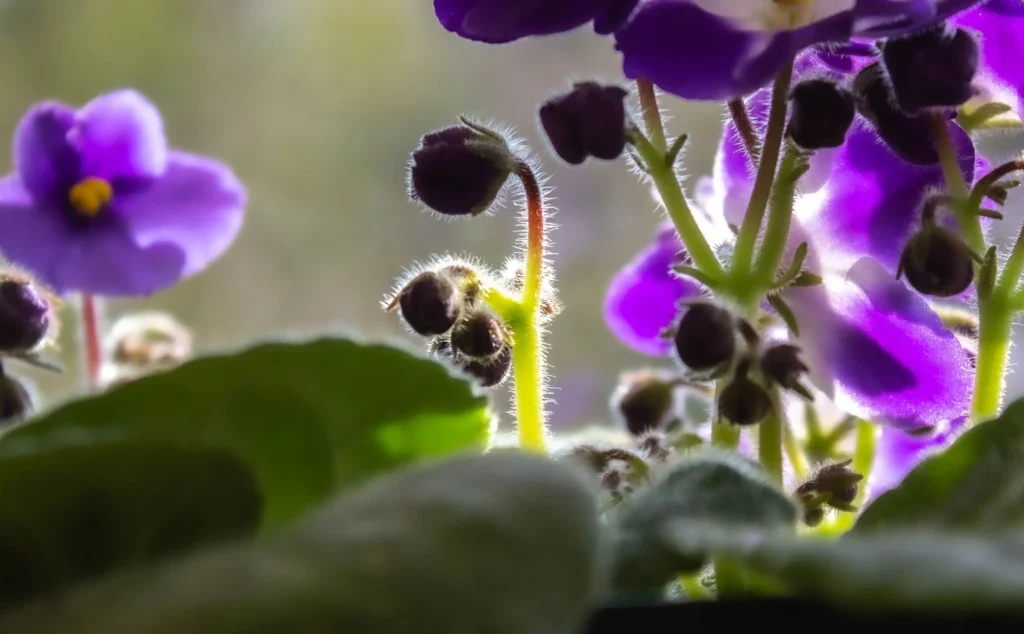
African Violet grows small, velvety purple blooms above fuzzy, rounded leaves. It is a popular houseplant that flowers for much of the year. The plant prefers warm, humid indoor conditions.
- Scientific name: Saintpaulia ionantha
- Flower type: Perennial (houseplant)
- Colors: Purple, pink, blue, white
- Bloom season: Year-round (indoors)
- Sun: Bright, indirect light
- Height: 6–12 inches
- Fragrance: No
- Common uses: Indoor display, gifts
- Meaning: Devotion, small gestures of love
25. Purple Hibiscus
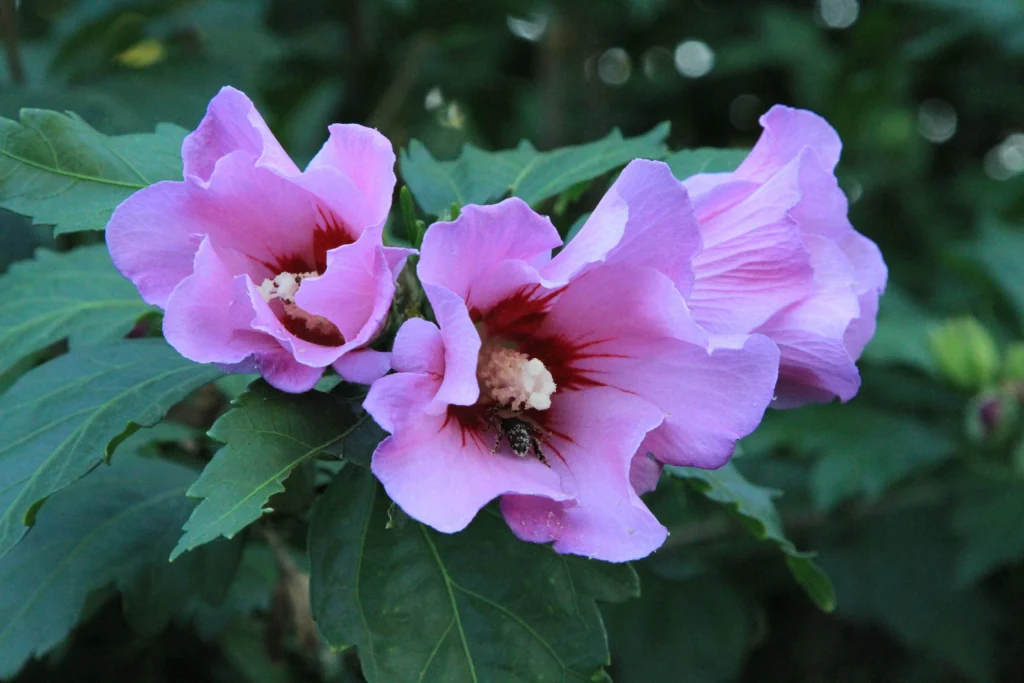
Purple Hibiscus has large, ruffled blooms with a prominent central stamen. Each flower often lasts only a day, but the plant produces new ones constantly. It brings a bold, tropical look to gardens.
- Scientific name: Hibiscus syriacus (purple cultivars)
- Flower type: Shrub
- Colors: Purple, red, pink, white, yellow
- Bloom season: Summer to fall
- Sun: Full sun
- Height: 4–10 feet
- Fragrance: Slight
- Common uses: Tropical gardens, hedges, containers
- Meaning: Delicate beauty, femininity
26. Tibouchina (Princess Flower)
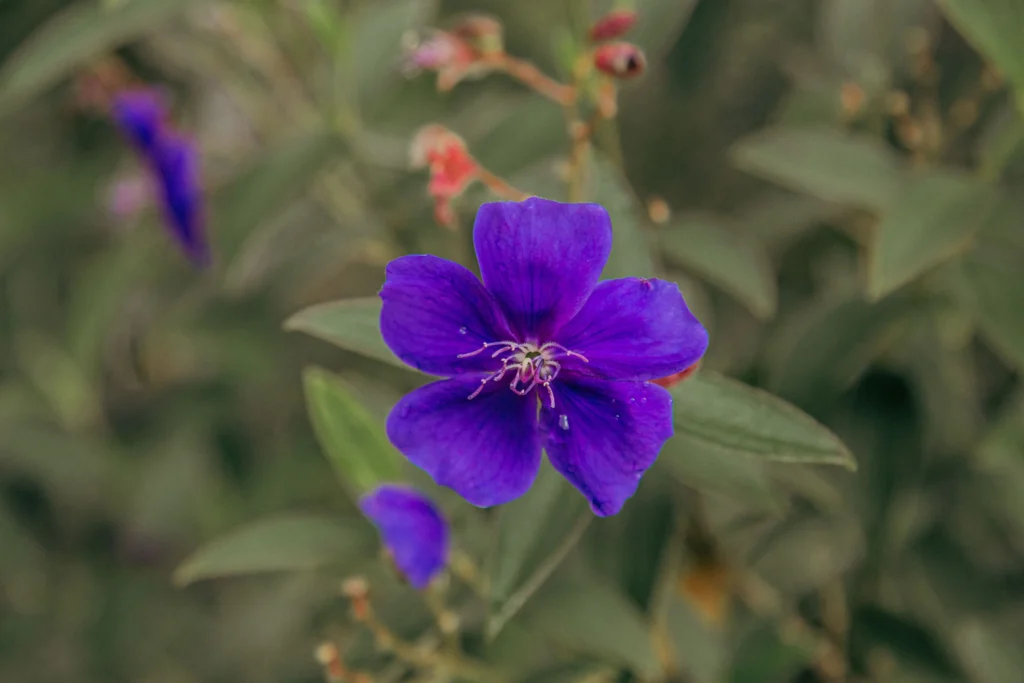
Tibouchina blooms with large, velvety purple flowers set against soft, fuzzy leaves. It is a showy plant for warm climates. The bloom color is often described as one of the richest purples in nature.
- Scientific name: Tibouchina urvilleana
- Flower type: Shrub
- Colors: Purple
- Bloom season: Summer to fall
- Sun: Full sun to partial shade
- Height: 6–10 feet
- Fragrance: No
- Common uses: Tropical gardens, containers
- Meaning: Royalty, richness
Purple Bulbs
These flowers grow from bulbs and often bloom early in the season. They are simple to plant and return year after year.
27. Allium
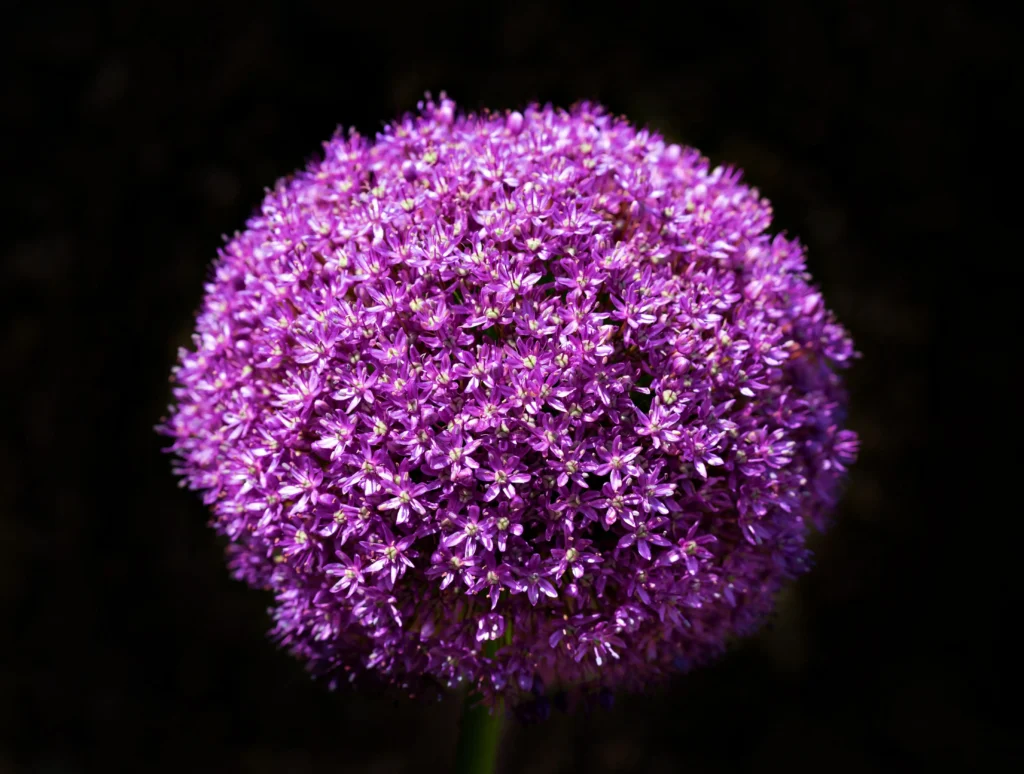
Allium produces a perfectly round cluster of small purple blooms atop a tall, bare stem. The globe-shaped flower head can be quite large. It is related to onions and garlic.
- Scientific name: Allium giganteum
- Flower type: Bulb
- Colors: Purple, white, pink
- Bloom season: Late spring to early summer
- Sun: Full sun
- Height: 2–4 feet
- Fragrance: Mild, onion-like
- Common uses: Borders, cut flowers, dried arrangements
- Meaning: Unity, prosperity
28. Purple Crocus
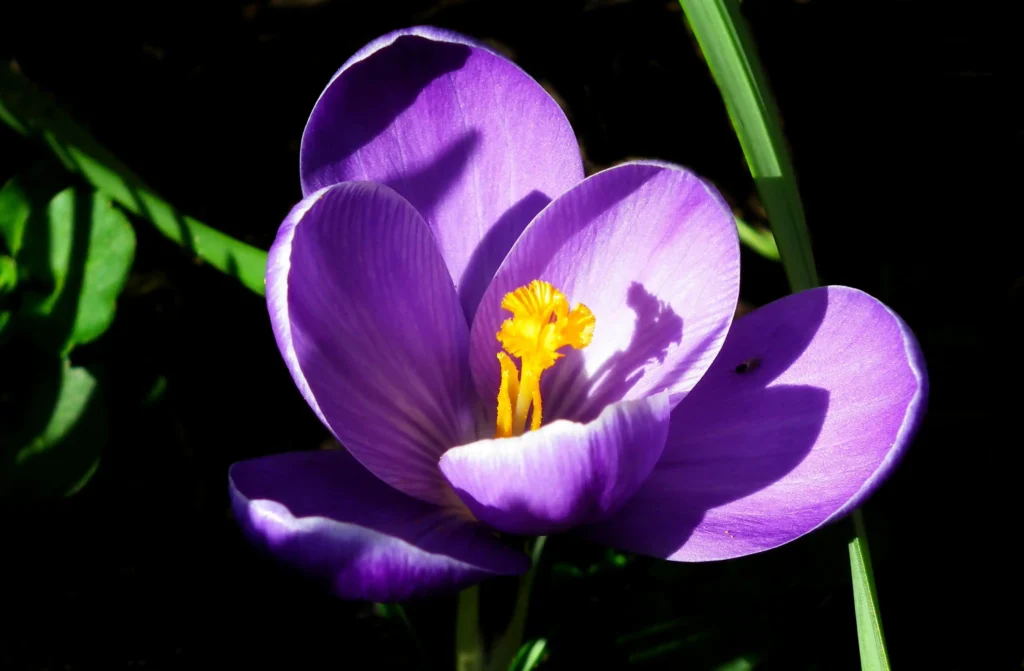
Purple Crocus is one of the very first flowers to bloom after winter. Its cup-shaped blooms open wide in sunlight and close at night. The plant grows from a small corm.
- Scientific name: Crocus vernus
- Flower type: Bulb (corm)
- Colors: Purple, blue, white, yellow
- Bloom season: Late winter to early spring
- Sun: Full sun
- Height: 3–5 inches
- Fragrance: Mild
- Common uses: Lawns, borders, containers
- Meaning: Cheerfulness, youth
29. Purple Hyacinth
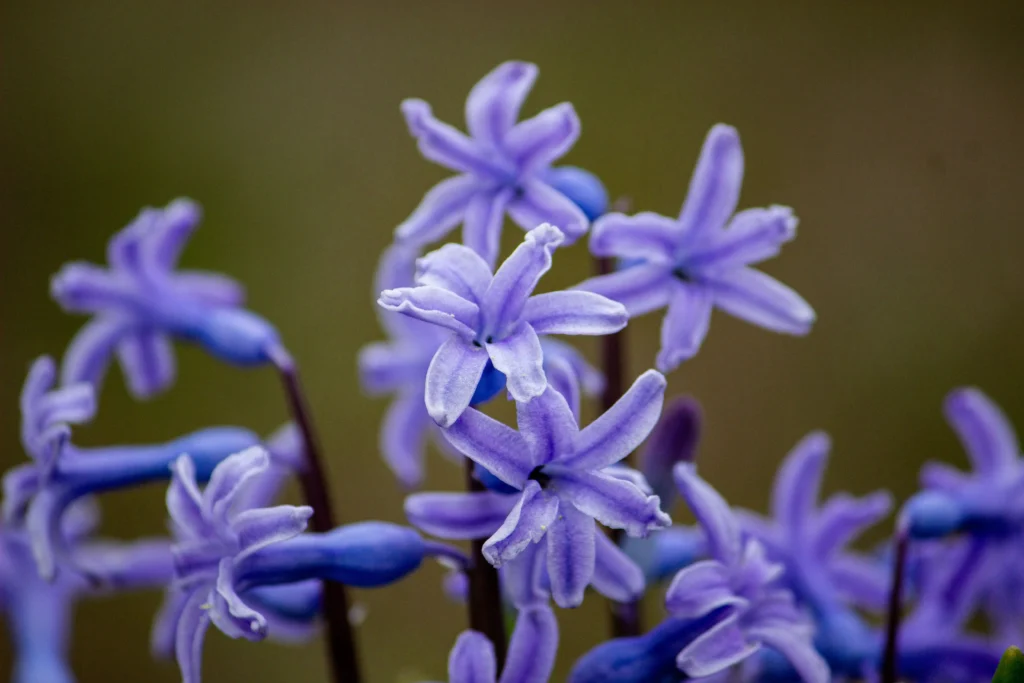
Purple Hyacinth grows a single, dense spike packed with star-shaped blooms. Its scent is one of the strongest of any spring bulb. The flower is often forced indoors for early blooms.
- Scientific name: Hyacinthus orientalis
- Flower type: Bulb
- Colors: Purple, blue, pink, white
- Bloom season: Early spring
- Sun: Full sun to partial shade
- Height: 8–12 inches
- Fragrance: Strong, sweet
- Common uses: Borders, indoor forcing, containers
- Meaning: Sincerity, constancy
30. Purple Tulip
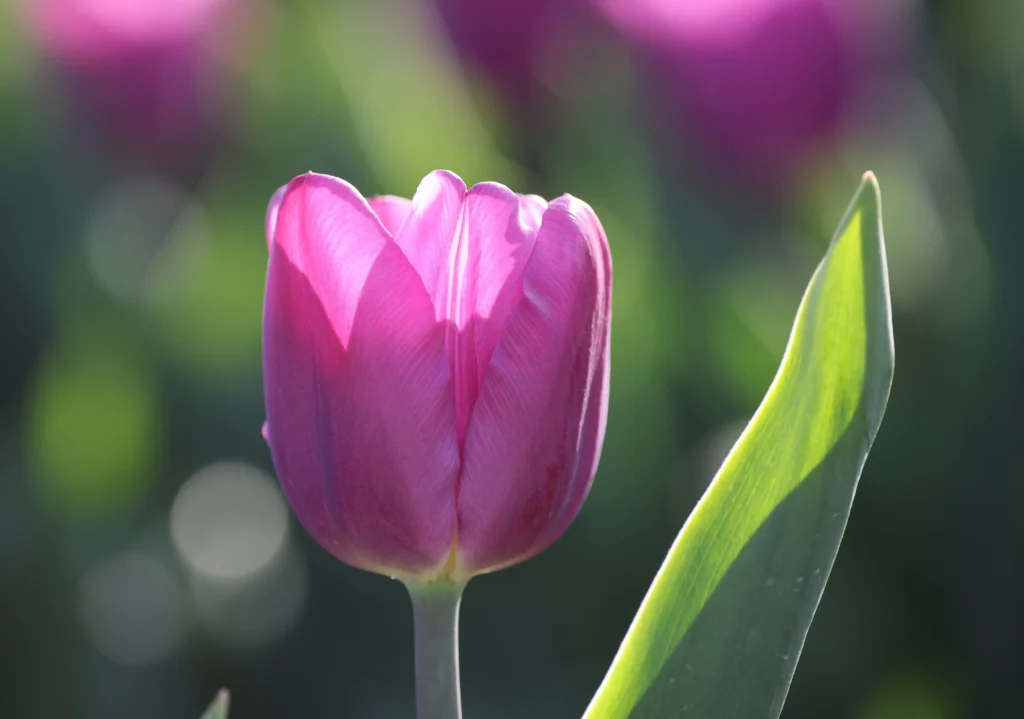
Purple Tulip has smooth, cup-shaped petals in shades from soft lilac to deep violet. It is one of the most recognized spring bulbs in the world. The flower has symbolized royalty for centuries.
- Scientific name: Tulipa gesneriana
- Flower type: Bulb
- Colors: Purple, pink, red, yellow, white
- Bloom season: Mid to late spring
- Sun: Full sun
- Height: 1–2 feet
- Fragrance: Slight
- Common uses: Borders, cut flowers, containers
- Meaning: Royalty, lasting love
31. Purple Anemone
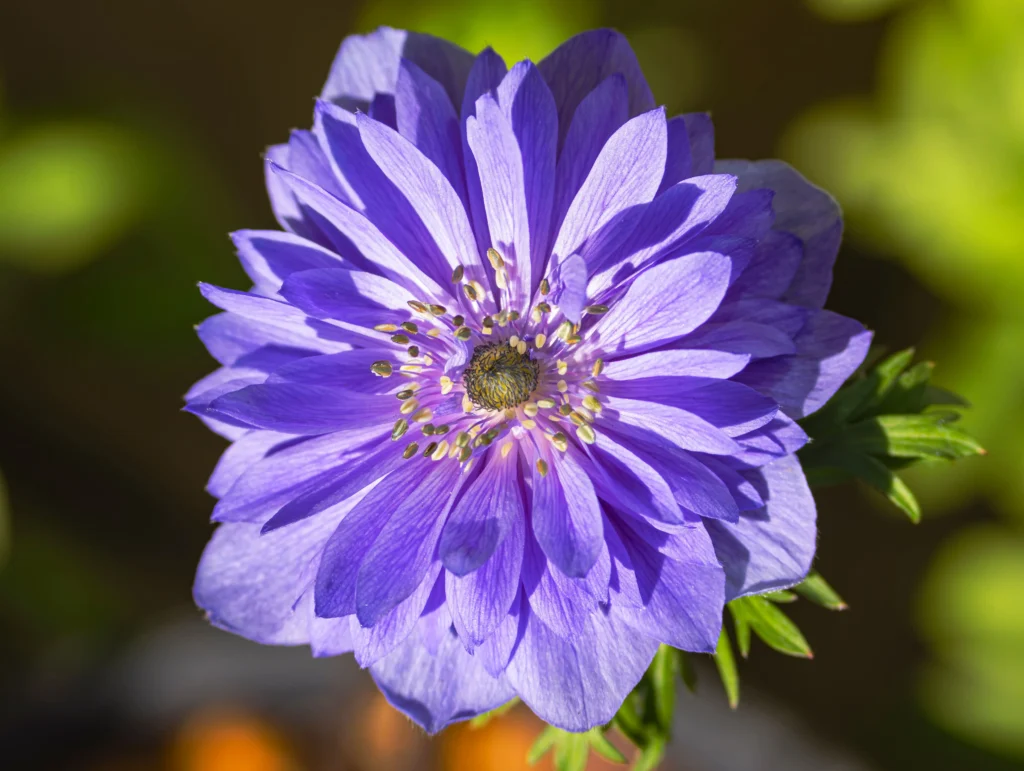
Purple Anemone produces bold, cup-shaped blooms with a dark, contrasting center. The flower opens flat in full sun and closes on cloudy days. It grows from a small tuber.
- Scientific name: Anemone coronaria
- Flower type: Bulb (tuber)
- Colors: Purple, red, pink, blue, white
- Bloom season: Early to mid-spring
- Sun: Full sun to partial shade
- Height: 6–12 inches
- Fragrance: No
- Common uses: Cut flowers, borders, containers
- Meaning: Anticipation, protection
32. Ipheion (Spring Starflower)
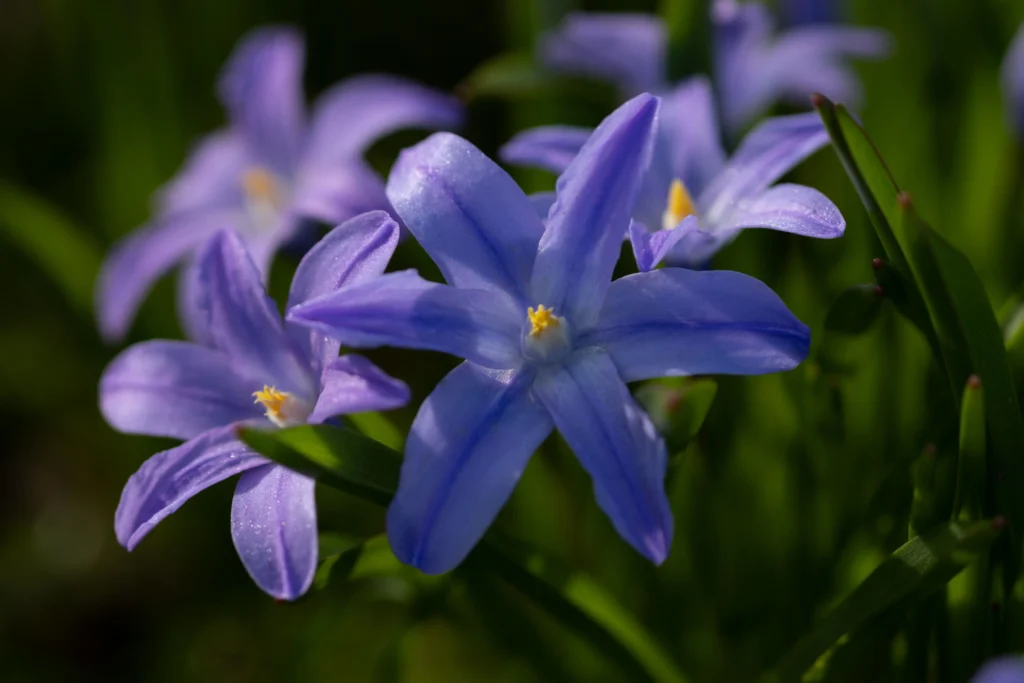
Ipheion blooms with small, star-shaped purple flowers close to the ground. Its grassy foliage releases a mild onion scent when crushed. The plant naturalizes easily and returns each spring.
- Scientific name: Ipheion uniflorum
- Flower type: Bulb
- Colors: Purple, blue, white
- Bloom season: Early to mid-spring
- Sun: Full sun to partial shade
- Height: 4–6 inches
- Fragrance: Mild, onion-like
- Common uses: Naturalizing, rock gardens, borders
- Meaning: Quiet joy
Purple Annuals for Containers
These purple flowers bloom for one season and are perfect for pots, hanging baskets, and window boxes.
33. Purple Petunia
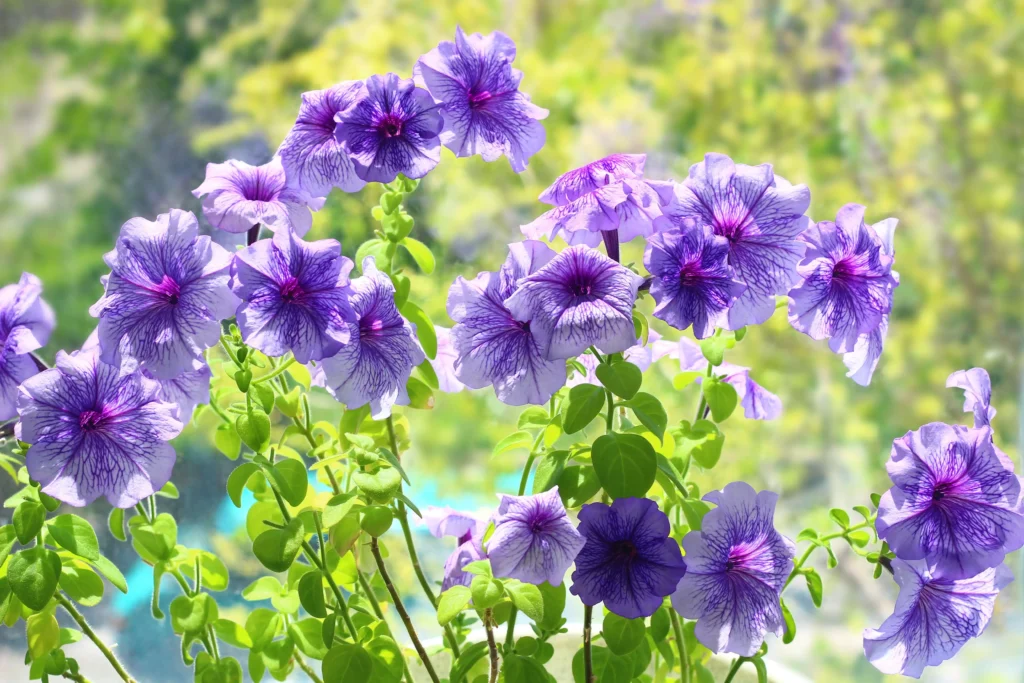
Purple Petunia produces large, trumpet-shaped blooms in shades from soft lilac to deep violet. It flowers heavily all summer with little care. The plant trails nicely from the containers.
- Scientific name: Petunia x hybrida
- Flower type: Annual
- Colors: Purple, pink, blue, white, red
- Bloom season: Spring to fall
- Sun: Full sun
- Height: 6–12 inches
- Fragrance: Mild, sweet
- Common uses: Containers, hanging baskets, borders
- Meaning: Comfort, togetherness
34. Purple Pansy
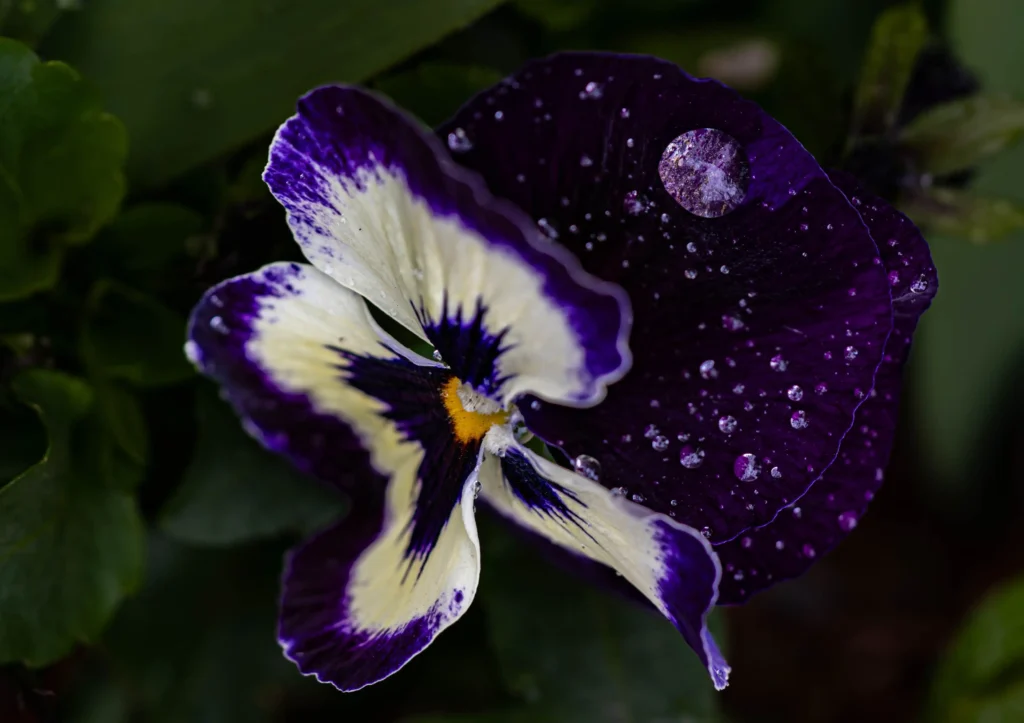
Purple Pansy has broad, overlapping petals often marked with a dark blotch at the center. It blooms well in cool weather, even with light frost. The flower’s face-like pattern makes it easy to recognize.
- Scientific name: Viola x wittrockiana
- Flower type: Annual (biennial in mild climates)
- Colors: Purple, yellow, white, blue, orange
- Bloom season: Fall to spring (cool season)
- Sun: Full sun to partial shade
- Height: 4–8 inches
- Fragrance: Mild
- Common uses: Containers, borders, edging
- Meaning: Thoughtfulness, remembrance
35. Purple Verbena
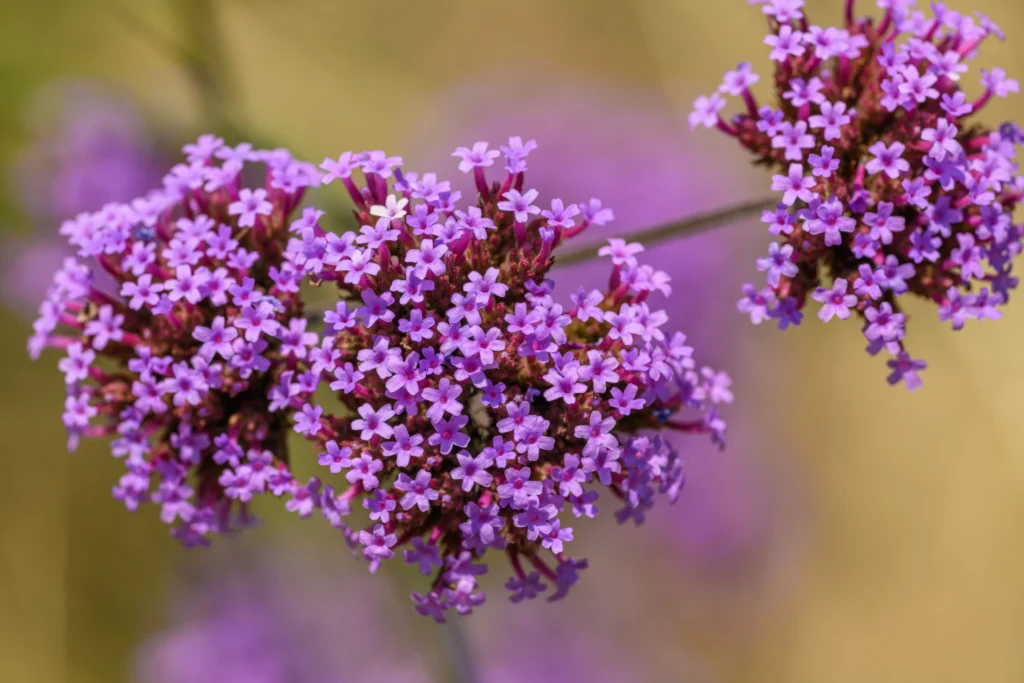
Purple Verbena forms a low, spreading mound covered in small clusters of blooms. It flowers nonstop through the growing season. The plant works well trailing over the edges of pots.
- Scientific name: Verbena x hybrida
- Flower type: Annual
- Colors: Purple, pink, red, white
- Bloom season: Spring to fall
- Sun: Full sun
- Height: 6–12 inches
- Fragrance: Slight
- Common uses: Containers, hanging baskets, ground cover
- Meaning: Enchantment, healing
36. Purple Heliotrope
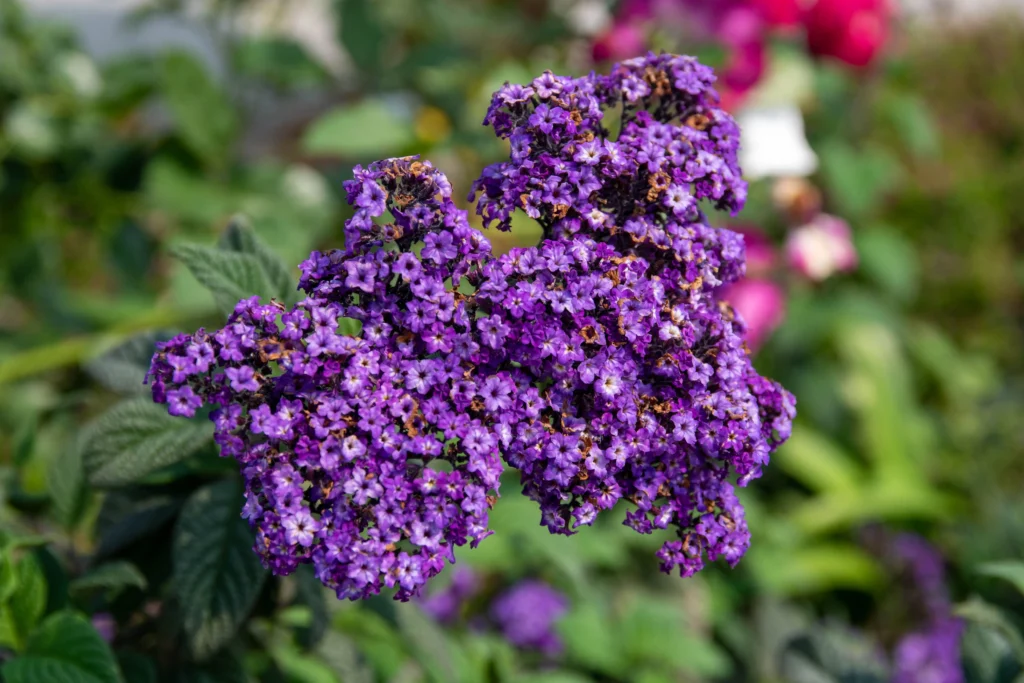
Purple Heliotrope grows tight, rounded clusters of deep purple blooms with a rich, vanilla-like scent. It was a favorite in Victorian gardens. The plant does best in containers or warm garden beds.
- Scientific name: Heliotropium arborescens
- Flower type: Annual (perennial in warm climates)
- Colors: Purple, lavender, white
- Bloom season: Summer to fall
- Sun: Full sun
- Height: 1–2 feet
- Fragrance: Strong, vanilla-like
- Common uses: Containers, borders, fragrant gardens
- Meaning: Devotion, eternal love
37. Purple Ageratum
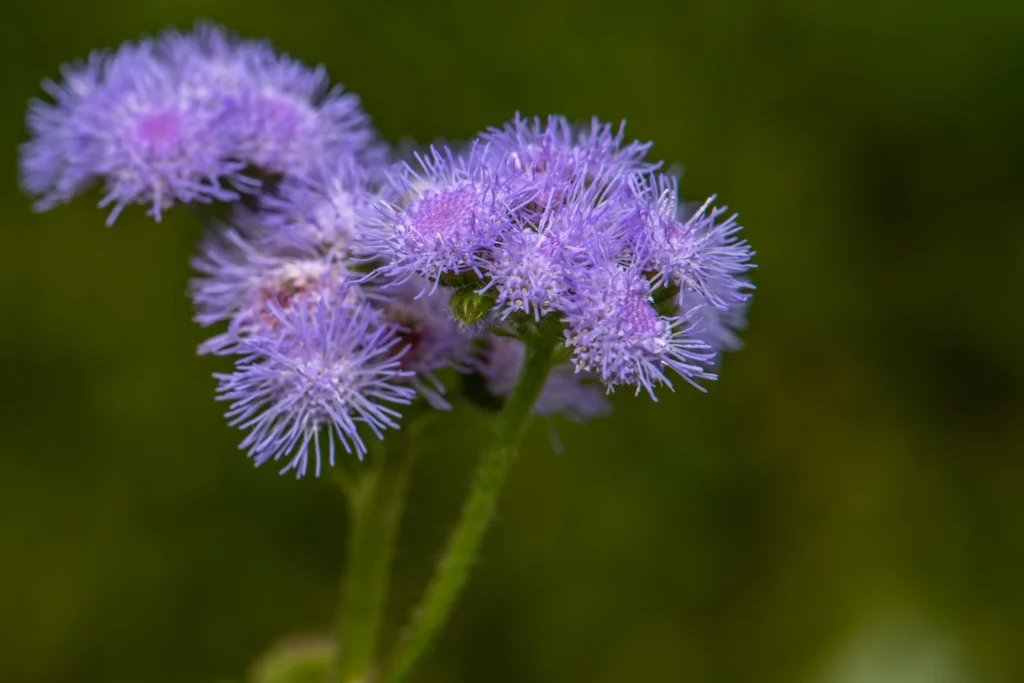
Purple Ageratum produces fluffy, powder-puff blooms in rich violet tones. The plant stays compact and neat all season. It is a favorite for edging garden beds.
- Scientific name: Ageratum houstonianum
- Flower type: Annual
- Colors: Purple, blue, pink, white
- Bloom season: Summer to fall
- Sun: Full sun to partial shade
- Height: 6–24 inches
- Fragrance: No
- Common uses: Edging, containers, borders
- Meaning: Trust, delicate love
38. Purple Torenia
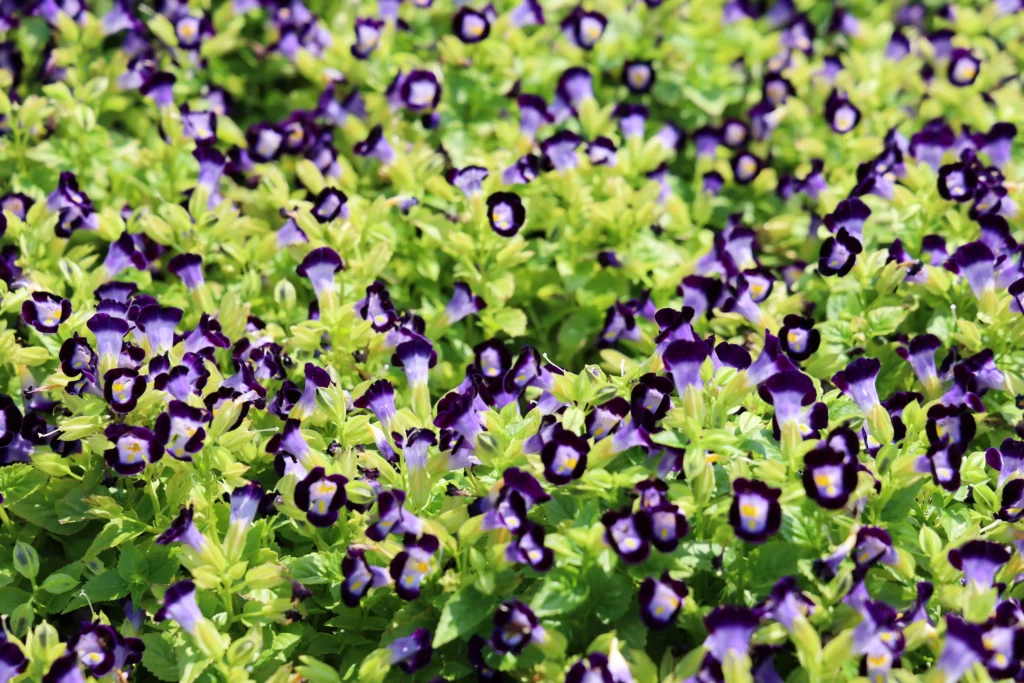
Purple Torenia produces small, trumpet-shaped blooms with a tiny wishbone-shaped part inside, giving it the nickname “Wishbone Flower.” It flowers well in shady, humid spots. The plant blooms steadily from summer into fall.
- Scientific name: Torenia fournieri
- Flower type: Annual
- Colors: Purple, blue, pink, white
- Bloom season: Summer to fall
- Sun: Partial shade
- Height: 6–12 inches
- Fragrance: No
- Common uses: Shade gardens, hanging baskets
- Meaning: Charm, playfulness
Frequently Asked Questions About Purple Flowers
1. What flowers are naturally purple?
Lavender, Purple Iris, Wisteria, and Purple Coneflower are all naturally purple. Purple is more common in flowers than true blue, since many plants can easily produce the pigments needed for purple tones.
2. What is the most popular purple flower?
Lavender and Lilac are among the most popular purple flowers. Both are widely grown for their scent, color, and long history in gardens around the world.
3. What do purple flowers symbolize?
Purple flowers often symbolize royalty, admiration, and creativity. In many cultures, they also represent spirituality, mystery, and dignity.
4. What are the best purple flowers for beginners?
Purple Petunia, Purple Salvia, and Purple Coneflower are easy choices for beginners. They need little care, tolerate different soils, and bloom each season reliably.
5. Which purple flowers bloom the longest?
Lavender, Purple Verbena, and Purple Petunia bloom for many months, often from spring through fall. They are good picks if you want steady color all season.
6. Are purple flowers good for pollinators?
Yes. Bees and butterflies are strongly drawn to purple and violet shades. Lavender, Purple Coneflower, and Wild Bergamot are especially good at attracting pollinators.
7. Can purple flowers grow in containers?
Many can. Purple Petunia, Purple Pansy, and African Violet all grow well in pots and hanging baskets, making them good choices for patios and small spaces.
8. What purple flowers work well in bouquets?
Lavender, Purple Iris, Purple Tulip, and Allium are popular choices for bouquets. They hold their color well after cutting and pair nicely with white or silver foliage.
9. Do purple flowers need special soil?
Most purple flowers grow well in average, well-draining soil. A few, like Rhododendron, prefer slightly acidic soil, so it helps to check each plant’s specific needs.
10. Can purple flowers grow indoors?
Yes. African Violet and Purple Orchid are two of the best purple flowers for growing indoors. Both do well in bright, indirect light and can bloom for much of the year.
Final Thoughts on Growing Purple Flowers
Purple flowers add a rich, elegant touch to any garden. They pair beautifully with silver foliage, soft pinks, and crisp whites. Many types of purple flowers also do well in containers, so a large yard is not required to enjoy them.
When choosing purple flowers, think about your climate first. Some, like Tibouchina, need warm weather to thrive. Others, like Purple Crocus, need a cold winter to bloom well. Match the flower to your growing zone for the best results.
Across cultures, purple flowers often stand for royalty, wisdom, and admiration. They make thoughtful gifts for a special occasion, a new home, or a moment of quiet reflection. Whatever the reason, these 35+ purple flowers offer something for every garden and every story.