

Orange sits right between the fiery energy of red and the sunny cheer of yellow, and in the flower world, it captures a little of both. Orange flowers radiate warmth, enthusiasm, and confidence. They show up at the peak of summer and the height of fall, bringing a bold, energizing glow to gardens, bouquets, and harvest displays.
- Classic Orange Garden Flowers
- 1. Orange Rose
- 2. Orange Tulip
- 3. Orange Marigold
- 4. Orange Zinnia
- 5. Orange Dahlia
- 6. Orange Gerbera Daisy
- 7. Orange Ranunculus
- 8. Orange Cosmos
- 9. Orange Chrysanthemum
- Orange Flowering Shrubs & Trees
- 10. Orange Hibiscus
- 11. Orange Azalea
- 12. Orange Bougainvillea
- 13. Firebush
- 14. Orange Honeysuckle
- 15. Cape Honeysuckle
- 16. Orange Jasmine
- 17. Orange Rhododendron
- 18. Trumpet Vine
- Orange Wildflowers
- 19. Butterfly Weed
- 20. Orange Hawkweed
- 21. Indian Paintbrush
- 22. Orange Daylily
- 23. Orange Coneflower
- 24. Wallflower
- 25. Orange Jewelweed
- 26. Fire Lily
- 27. Sneezeweed
- Orange Bulbs
- 28. Orange Crocosmia
- 29. Orange Freesia
- 30. Orange Tuberous Begonia
- 31. Orange Canna Lily
- 32. Orange Gladiolus
- 33. Orange Asiatic Lily
- 34. Tiger Lily
- 35. Orange Crown Imperial
- 36. Orange Amaryllis
- Orange Tropical & Exotic Flowers
- 37. Orange Bird of Paradise
- 38. Flame Vine
- 39. Orange Heliconia
- 40. Orange Ixora
- 41. Orange Plumeria
- 42. Orange Anthurium
- 43. Chinese Lantern
- 44. Orange Orchid
- 45. Orange Passion Flower
- Orange Annuals for Containers
- 46. Orange Petunia
- 47. Orange Nasturtium
- 48. Orange Calendula
- 49. Orange Celosia
- 50. Orange Gazania
- 51. Orange Impatiens
- 52. Orange Lantana
- 53. Orange Portulaca
- 54. Orange Geranium
- Frequently Asked Questions About Orange Flowers
- 1. What is the most popular orange flower?
- 2. What do orange flowers symbolize?
- 3. What orange flowers are best for attracting butterflies?
- 4. Which orange flowers bloom best in fall?
- 5. Are there orange flowers that grow well in containers?
- 6. What orange flowers attract hummingbirds?
- 7. Can orange flowers grow in shade?
- 8. What orange flowers work well in fall bouquets?
- Growing and Choosing Orange Flowers: Final Tips
So, what exactly are flowers? Flowers are the reproductive structures of flowering plants, or angiosperms. They exist to attract pollinators and produce seeds, and they appear in an incredible range of shapes, sizes, and colors. Botanists estimate there are more than 400,000 known species of flowering plants worldwide, and researchers continue to identify new ones.
Among this huge diversity, certain flowers stand out as universal favorites. Roses, marigolds, lilies, and daisies rank among the most popular and widely grown flowers across the globe. Flowers are typically classified by life cycle and growth habit. Annuals bloom for a single season. Perennials return year after year. Others grow as shrubs, trees, climbing vines, or bulbs, and botanists further group them into families based on shared traits.
This guide brings together 50+ orange flower varieties, complete with names, quick facts, and symbolic meanings. Whether you’re searching for orange flower pictures for inspiration, planning a bold garden bed, or simply curious about the many types of orange flowers, this list has something for everyone.
Classic Orange Garden Flowers
1. Orange Rose
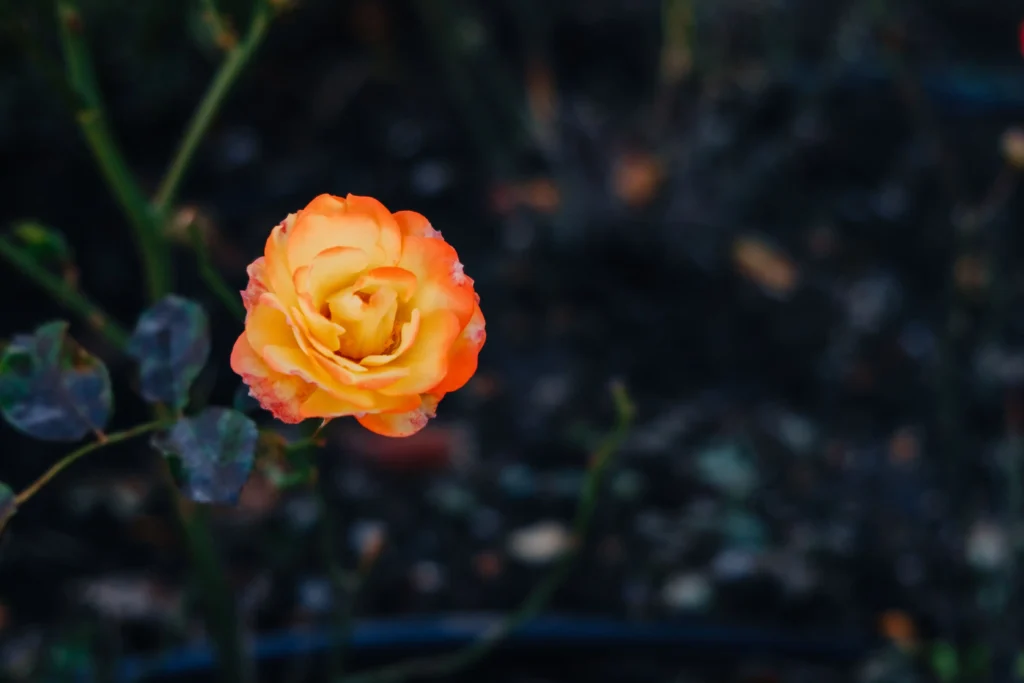
The orange rose blends the passion of red with the joy of yellow, making it a symbol of enthusiasm, desire, and fascination. Its layered, velvety petals bring bold warmth to any bouquet.
- Scientific name: Rosa
- Flower type: Perennial shrub
- Colors: Orange, red, pink, yellow, white
- Bloom season: Spring to fall
- Sun: Full sun
- Height: 2–6 feet
- Fragrance: Often fragrant
- Common uses: Bouquets, gardens, celebratory gifts
- Meaning: Enthusiasm, fascination, desire
2. Orange Tulip
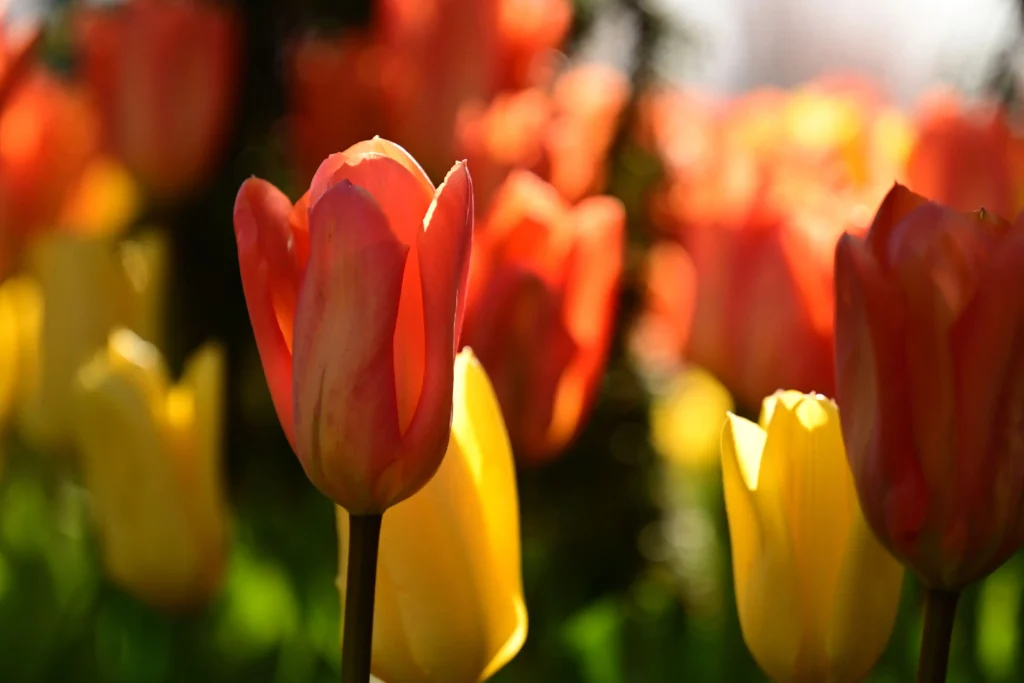
Orange tulips produce smooth, cup-shaped petals in a vivid, energetic hue. They bloom from bulbs each spring and symbolize confidence and warm affection.
- Scientific name: Tulipa
- Flower type: Bulb, perennial
- Colors: Orange, red, yellow, white, purple
- Bloom season: Early to mid-spring
- Sun: Full sun
- Height: 10–24 inches
- Fragrance: Mild or none
- Common uses: Spring gardens, bouquets
- Meaning: Confidence, warm affection
3. Orange Marigold
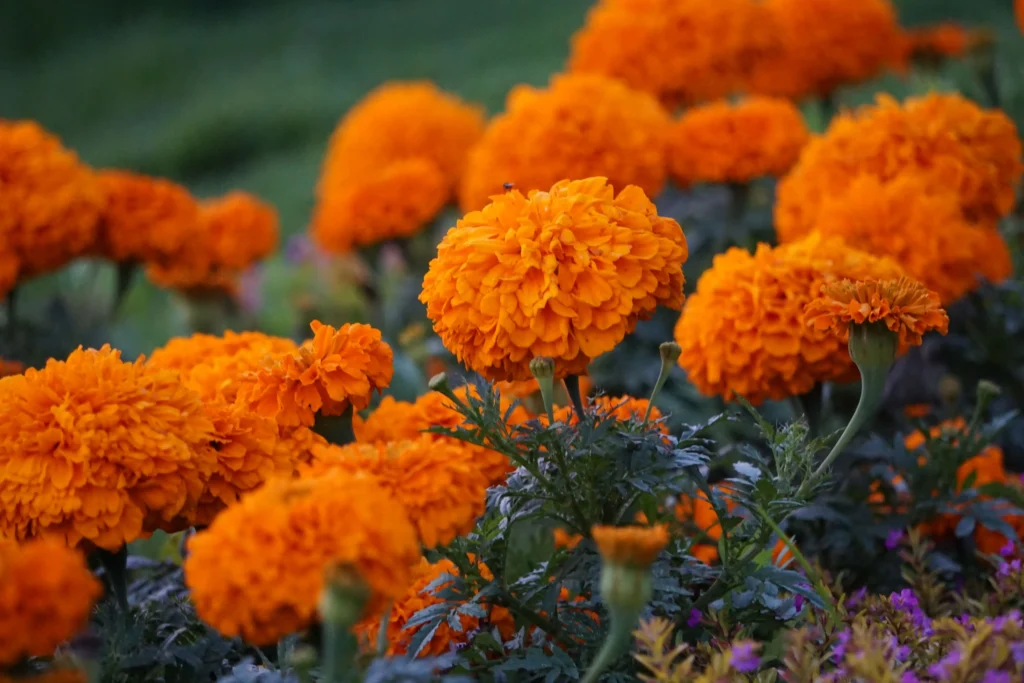
Orange marigolds produce ruffled, pom-pom-like blooms with a mild, spicy scent. They’re a garden staple, often planted alongside vegetables to deter pests.
- Scientific name: Tagetes erecta
- Flower type: Annual
- Colors: Orange, yellow, red, bicolor
- Bloom season: Summer to fall
- Sun: Full sun
- Height: 6–24 inches
- Fragrance: Yes, pungent
- Common uses: Borders, companion planting, containers
- Meaning: Passion, creativity, warmth
4. Orange Zinnia
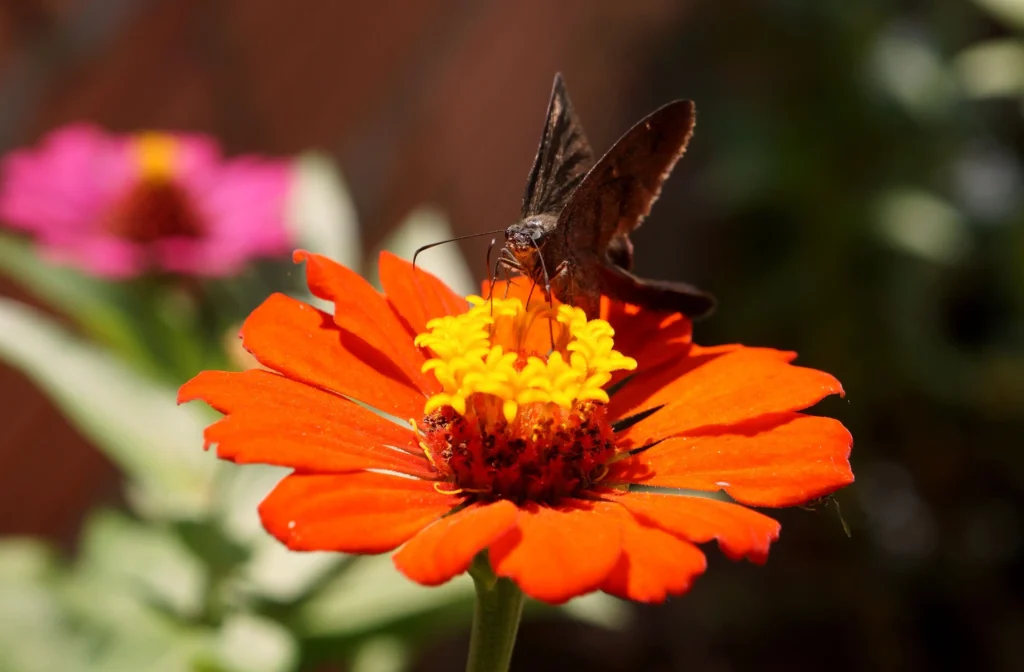
Orange zinnias produce bright, daisy-like blooms with layers of crisp petals. They bloom continuously through summer heat and attract butterflies in large numbers.
- Scientific name: Zinnia elegans
- Flower type: Annual
- Colors: Orange, red, pink, yellow, purple
- Bloom season: Summer to fall
- Sun: Full sun
- Height: 1–4 feet
- Fragrance: Minimal
- Common uses: Cutting gardens, borders, pollinator gardens
- Meaning: Endurance, lasting friendship
5. Orange Dahlia
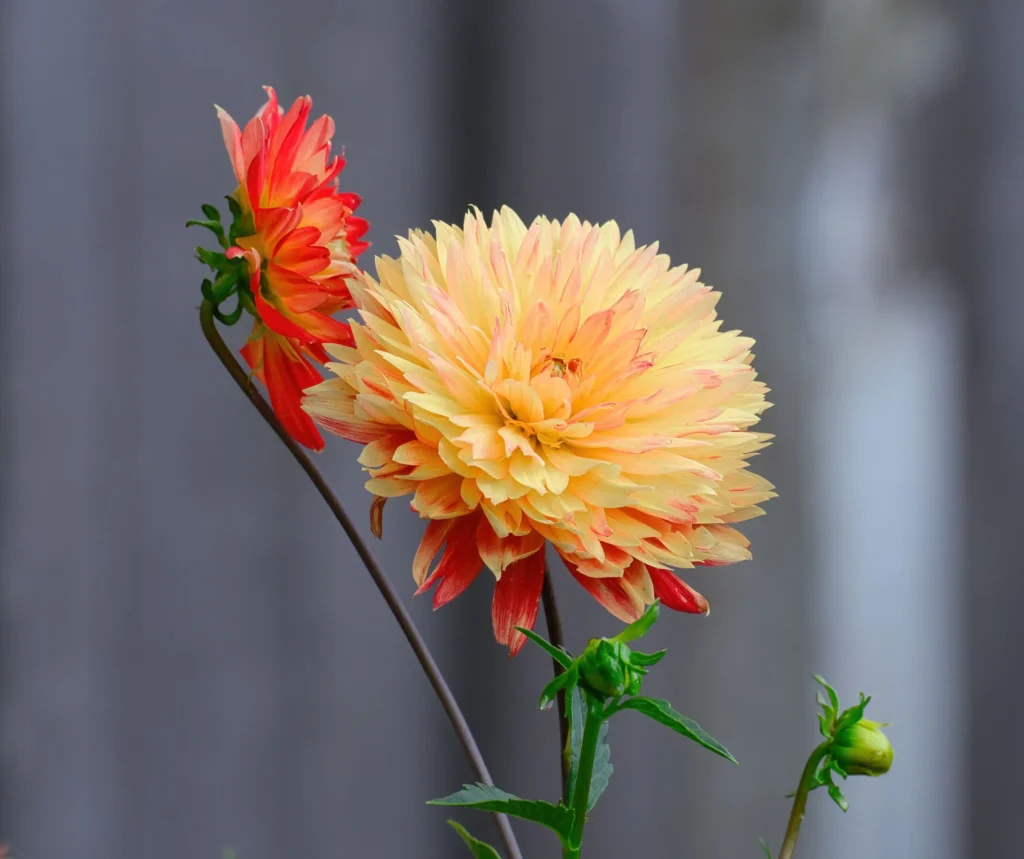
Orange dahlias grow in dazzling geometric patterns, from small pompons to large dinner-plate blooms. They add bold, sunset-toned color to late-summer gardens.
- Scientific name: Dahlia pinnata
- Flower type: Tuberous perennial
- Colors: Orange, red, pink, yellow, purple
- Bloom season: Summer to first frost
- Sun: Full sun
- Height: 1–6 feet
- Fragrance: Little to none
- Common uses: Cut flowers, garden displays, exhibitions
- Meaning: Creativity, change
6. Orange Gerbera Daisy
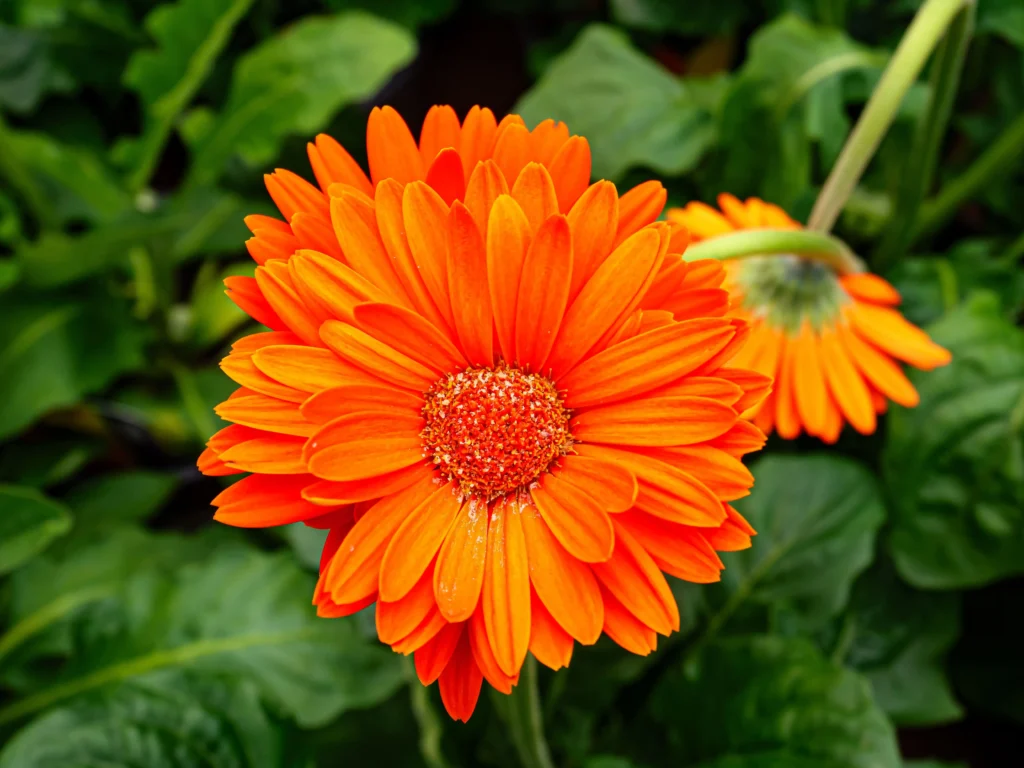
Orange gerbera daisies have large, cheerful blooms with a dark or golden center. Their bold, sunny color works beautifully in modern, energetic bouquets.
- Scientific name: Gerbera jamesonii
- Flower type: Perennial, often grown as an annual
- Colors: Orange, red, yellow, pink, white
- Bloom season: Spring to fall
- Sun: Full sun
- Height: 12–18 inches
- Fragrance: None
- Common uses: Bouquets, gifts, container gardens
- Meaning: Cheerfulness, energy
7. Orange Ranunculus
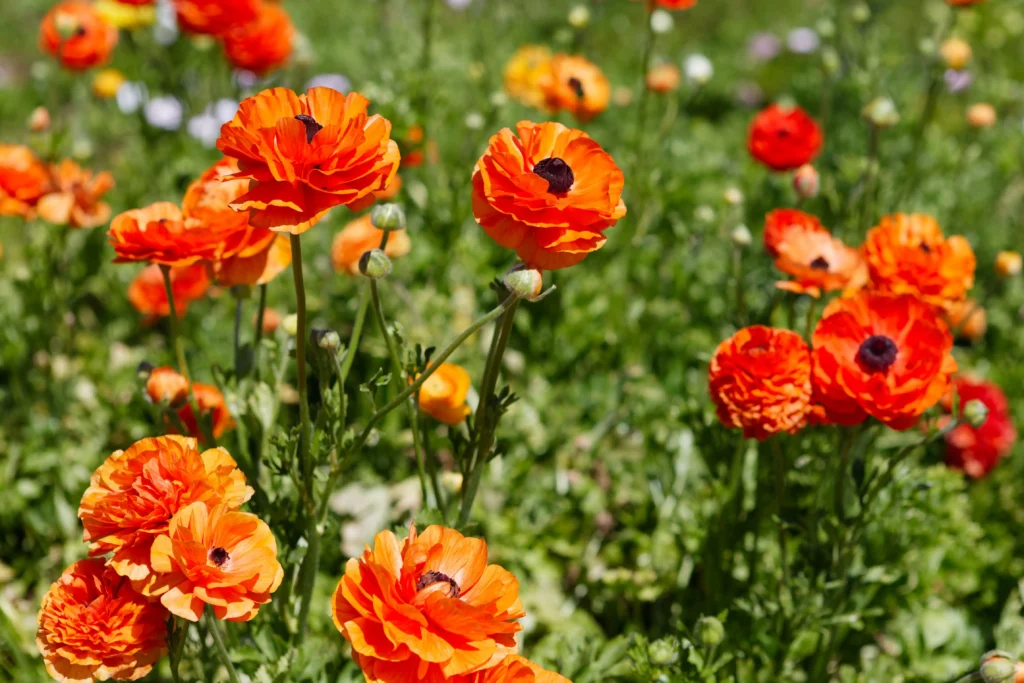
Orange ranunculus flowers have dozens of thin, tightly layered petals resembling a rose crossed with a peony. They bring warm, glowing color to spring wedding florals.
- Scientific name: Ranunculus asiaticus
- Flower type: Tuberous perennial
- Colors: Orange, red, pink, yellow, white
- Bloom season: Spring
- Sun: Full sun to partial shade
- Height: 12–18 inches
- Fragrance: Minimal
- Common uses: Weddings, bouquets, spring gardens
- Meaning: Radiant charm, attraction
8. Orange Cosmos
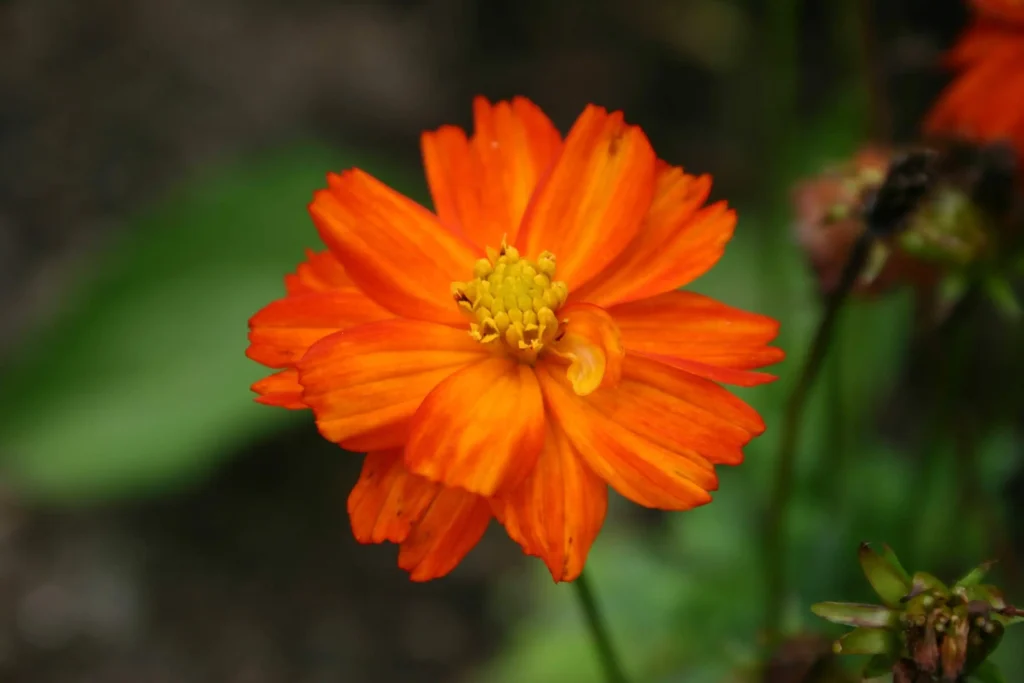
Orange cosmos flowers have feathery foliage and open, daisy-like blooms that sway gracefully in the breeze. They bring a warm, glowing look to late-summer beds.
- Scientific name: Cosmos sulphureus
- Flower type: Annual
- Colors: Orange, yellow, red
- Bloom season: Summer to fall
- Sun: Full sun
- Height: 2–4 feet
- Fragrance: Minimal
- Common uses: Cottage gardens, cut flowers, pollinator gardens
- Meaning: Joy, warmth
9. Orange Chrysanthemum
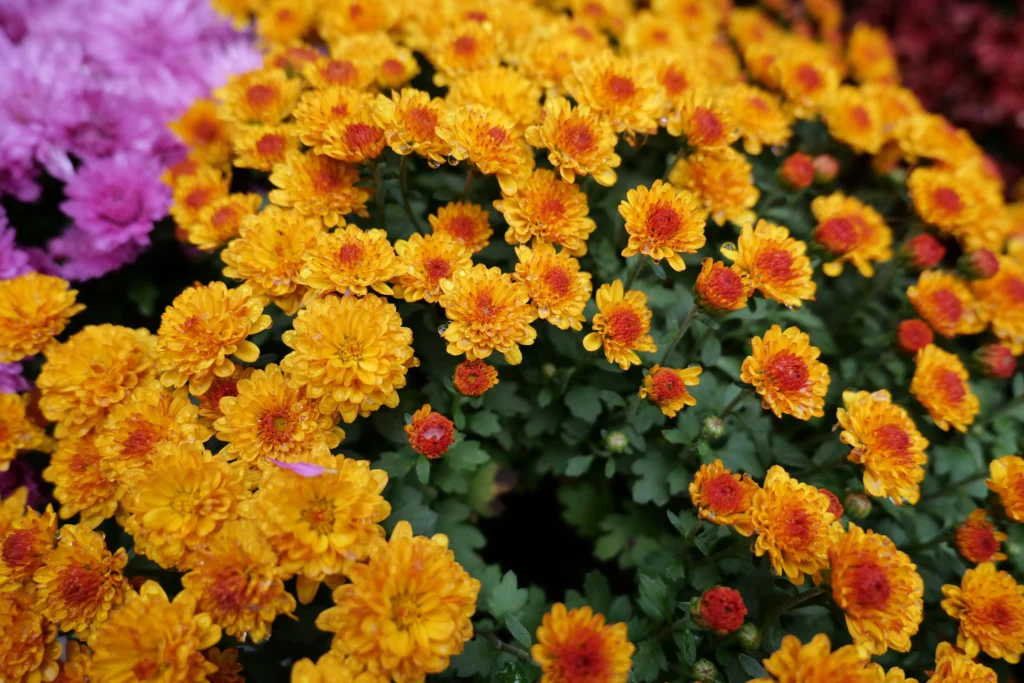
Orange chrysanthemums produce dense, rounded flower heads in autumn. Their warm, rich hue makes them a favorite for fall décor and harvest celebrations.
- Scientific name: Chrysanthemum morifolium
- Flower type: Perennial
- Colors: Orange, red, yellow, white, purple
- Bloom season: Fall
- Sun: Full sun
- Height: 1–3 feet
- Fragrance: Mild, earthy
- Common uses: Fall décor, bouquets, potted displays
- Meaning: Abundance, joy
Orange Flowering Shrubs & Trees
10. Orange Hibiscus
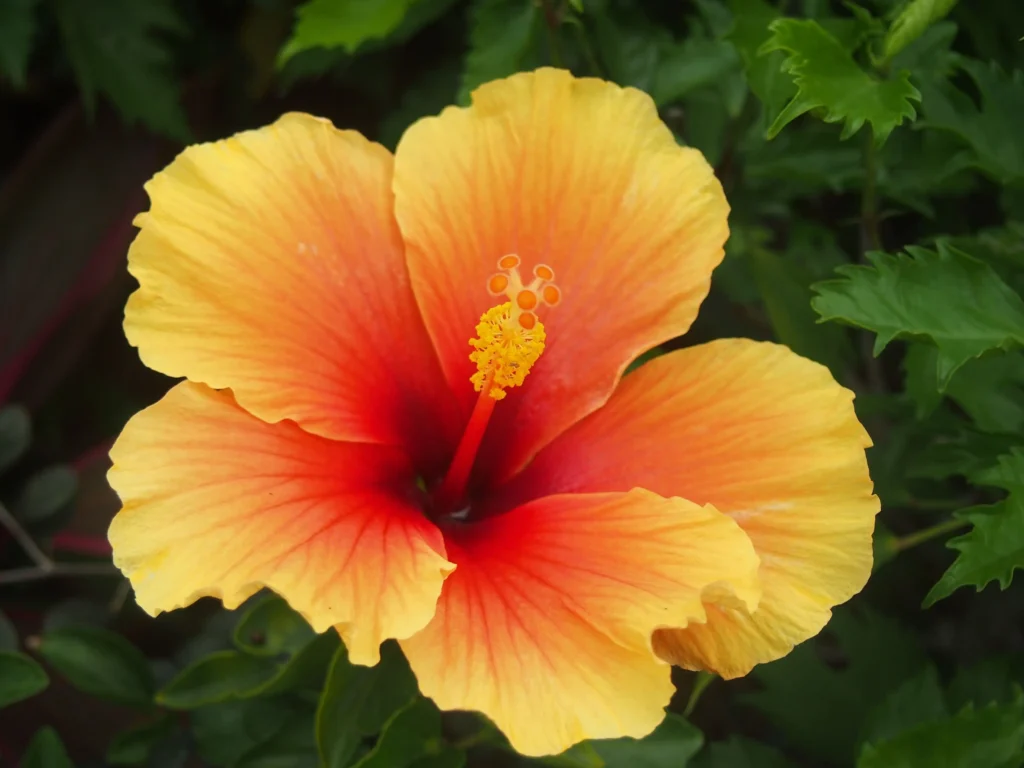
Orange hibiscus produces large, trumpet-shaped blooms with a prominent central stamen. It thrives in tropical and subtropical climates and blooms nearly all season.
- Scientific name: Hibiscus rosa-sinensis
- Flower type: Shrub
- Colors: Orange, red, pink, yellow, white
- Bloom season: Spring to fall
- Sun: Full sun
- Height: 4–10 feet
- Fragrance: None
- Common uses: Tropical gardens, hedges, potted patio plants
- Meaning: Rare beauty, delicate passion
11. Orange Azalea
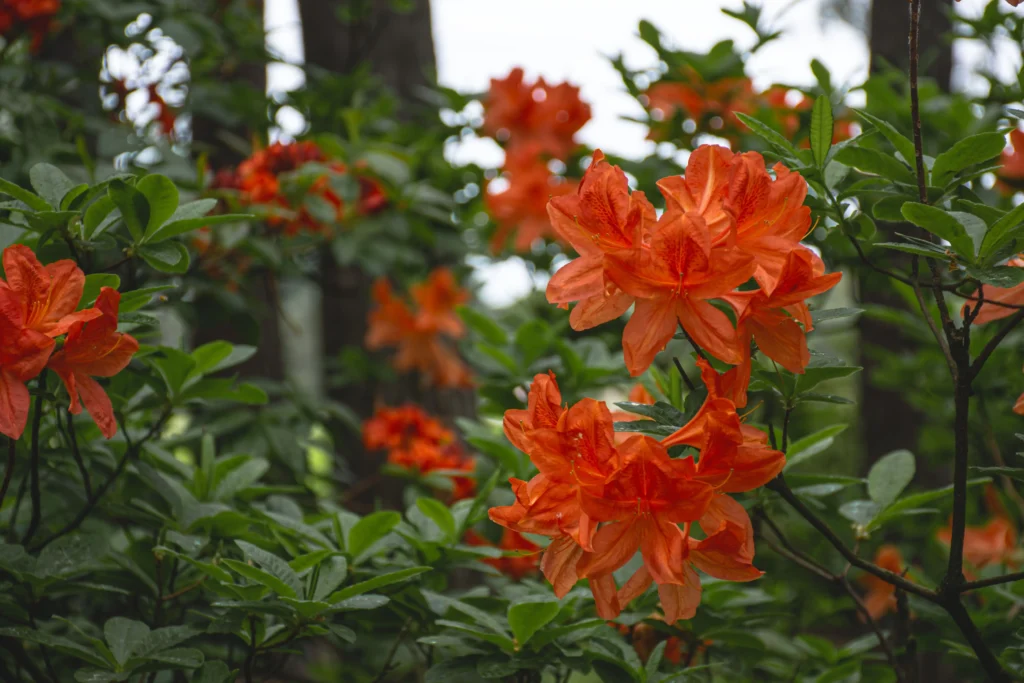
Orange azaleas erupt in dense clusters of trumpet-shaped blooms each spring. Their fiery color makes a bold statement in shaded woodland gardens.
- Scientific name: Rhododendron (Azalea group)
- Flower type: Shrub
- Colors: Orange, red, pink, white, purple
- Bloom season: Spring
- Sun: Partial shade
- Height: 2–8 feet
- Fragrance: Varies by variety
- Common uses: Woodland gardens, borders, mass planting
- Meaning: Passion, abundance
12. Orange Bougainvillea
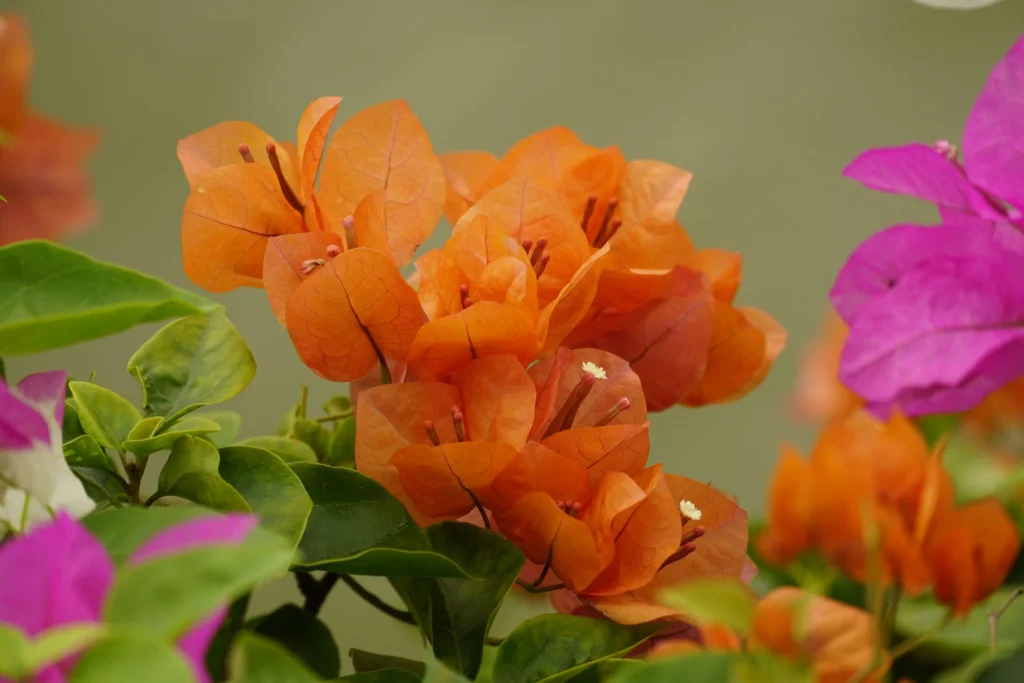
Orange bougainvillea produces vibrant, papery bracts that surround tiny true flowers. It climbs vigorously and thrives in warm, dry climates.
- Scientific name: Bougainvillea glabra
- Flower type: Woody vine/shrub
- Colors: Orange, red, pink, purple, white
- Bloom season: Nearly year-round in warm climates
- Sun: Full sun
- Height: 15–30 feet (as a vine)
- Fragrance: None
- Common uses: Trellises, fences, Mediterranean gardens
- Meaning: Passion, energy
13. Firebush
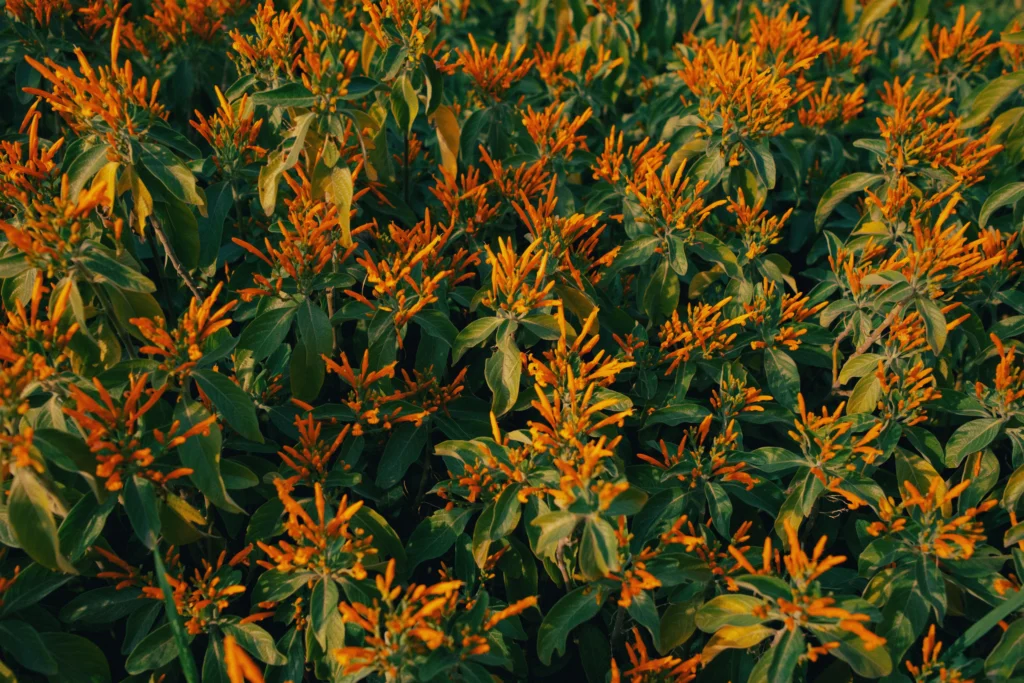
Firebush produces clusters of small, tubular orange-red flowers on a fast-growing shrub. It blooms nearly year-round in warm climates and draws hummingbirds constantly.
- Scientific name: Hamelia patens
- Flower type: Evergreen shrub
- Colors: Orange, red
- Bloom season: Nearly year-round in warm climates
- Sun: Full sun
- Height: 6–12 feet
- Fragrance: Minimal
- Common uses: Hedges, hummingbird gardens, tropical borders
- Meaning: Vitality, warmth
14. Orange Honeysuckle
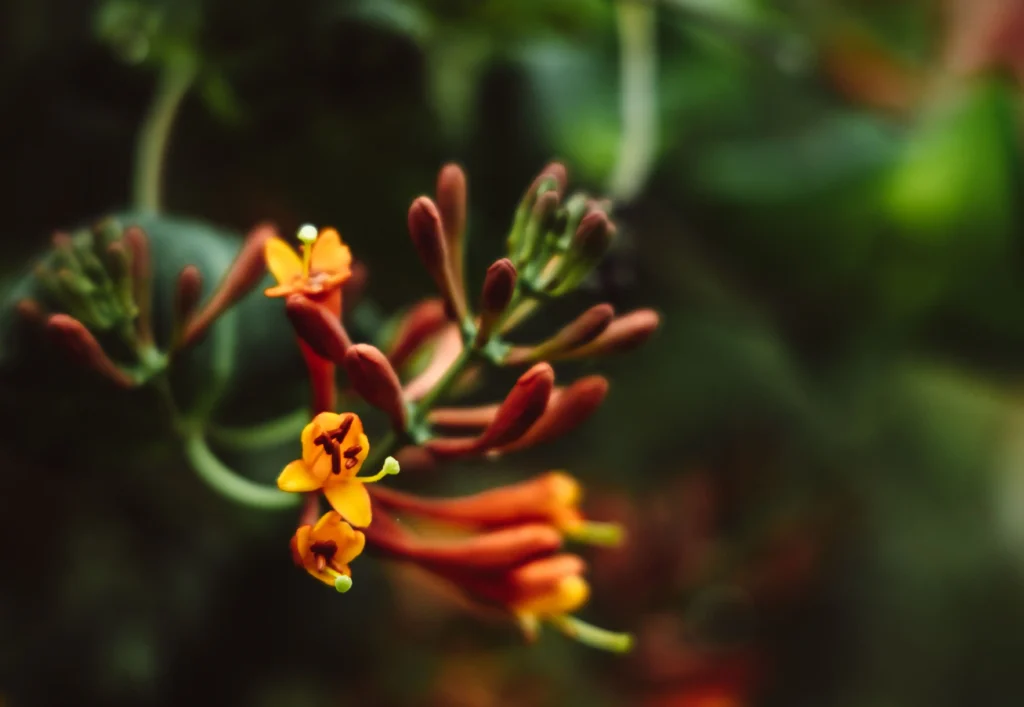
Orange honeysuckle produces clusters of slender, tubular orange flowers on a twining vine. It’s a native North American species prized by hummingbirds.
- Scientific name: Lonicera ciliosa
- Flower type: Perennial vine
- Colors: Orange
- Bloom season: Late spring to summer
- Sun: Full sun to partial shade
- Height: 10–20 feet (climbing)
- Fragrance: Mild
- Common uses: Trellises, native gardens, hummingbird gardens
- Meaning: Devoted affection
15. Cape Honeysuckle
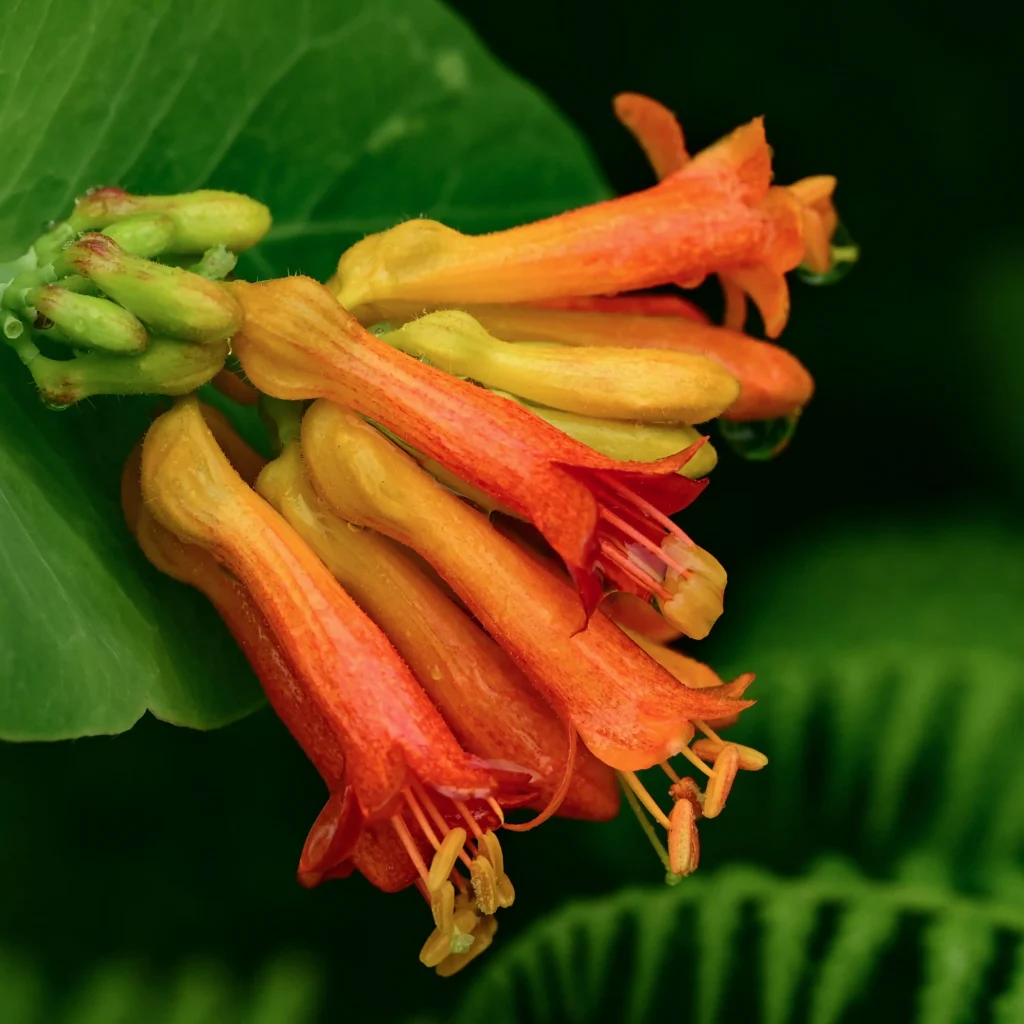
Cape honeysuckle produces clusters of curved, tubular orange flowers on a vigorous evergreen shrub. It’s a favorite hedge plant in warm coastal climates.
- Scientific name: Tecoma capensis
- Flower type: Evergreen shrub/vine
- Colors: Orange, red, yellow
- Bloom season: Nearly year-round in warm climates
- Sun: Full sun
- Height: 6–10 feet
- Fragrance: Minimal
- Common uses: Hedges, hummingbird gardens, coastal landscaping
- Meaning: Warmth, hospitalit
16. Orange Jasmine
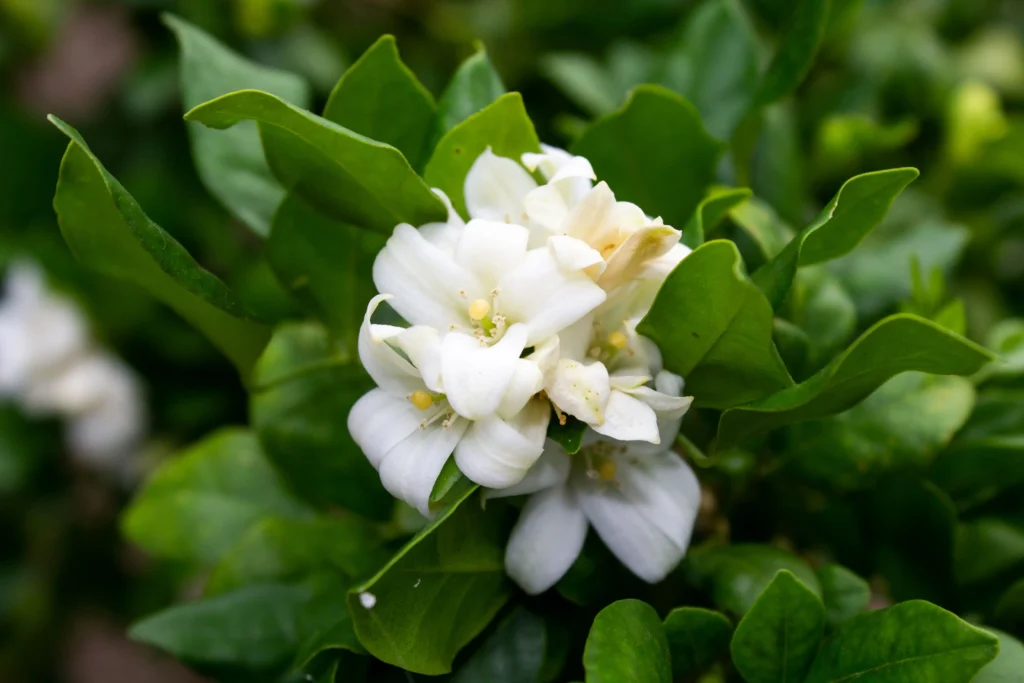
Orange jasmine, despite its name, produces small white flowers, but the shrub’s related citrus-scented blooms and orange-toned fall berries earn it a place among orange-toned landscape plants.
- Scientific name: Murraya paniculata
- Flower type: Evergreen shrub
- Colors: White flowers, orange berries
- Bloom season: Spring to summer
- Sun: Full sun to partial shade
- Height: 6–12 feet
- Fragrance: Yes, strong citrus scent
- Common uses: Hedges, screens, fragrant gardens
- Meaning: Purity, joy
17. Orange Rhododendron
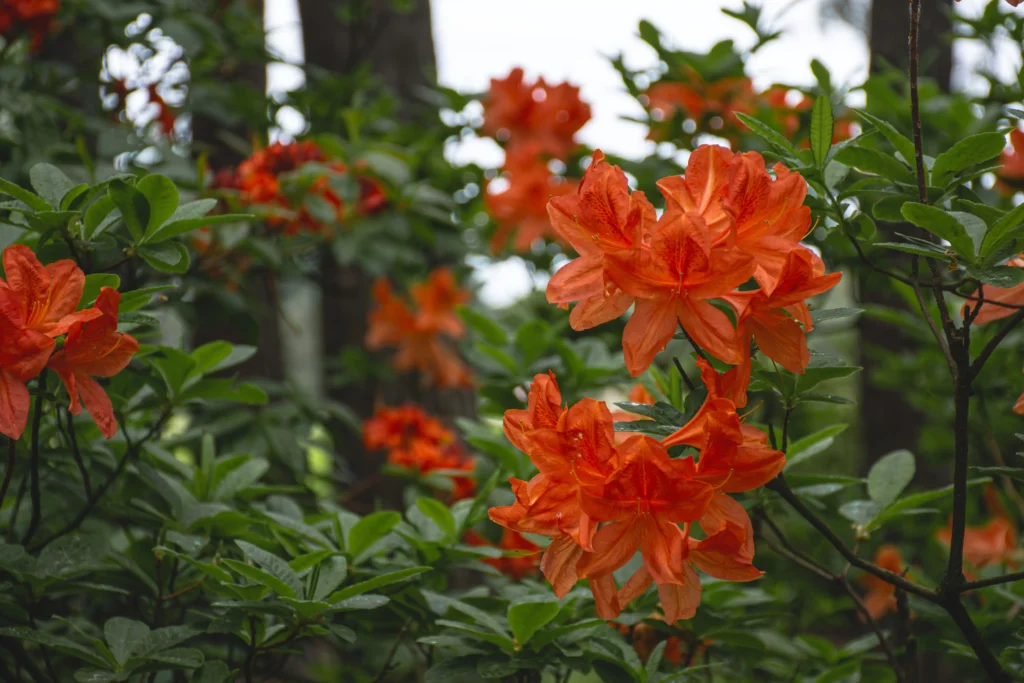
Orange rhododendron produces bold trusses of bell-shaped flowers on evergreen shrubs. Its warm color offers a striking change from the typical pinks and purples.
- Scientific name: Rhododendron ‘Gibraltar’
- Flower type: Deciduous shrub
- Colors: Orange
- Bloom season: Spring
- Sun: Partial shade
- Height: 4–6 feet
- Fragrance: Mild
- Common uses: Woodland borders, foundation planting
- Meaning: Passion, energy
18. Trumpet Vine
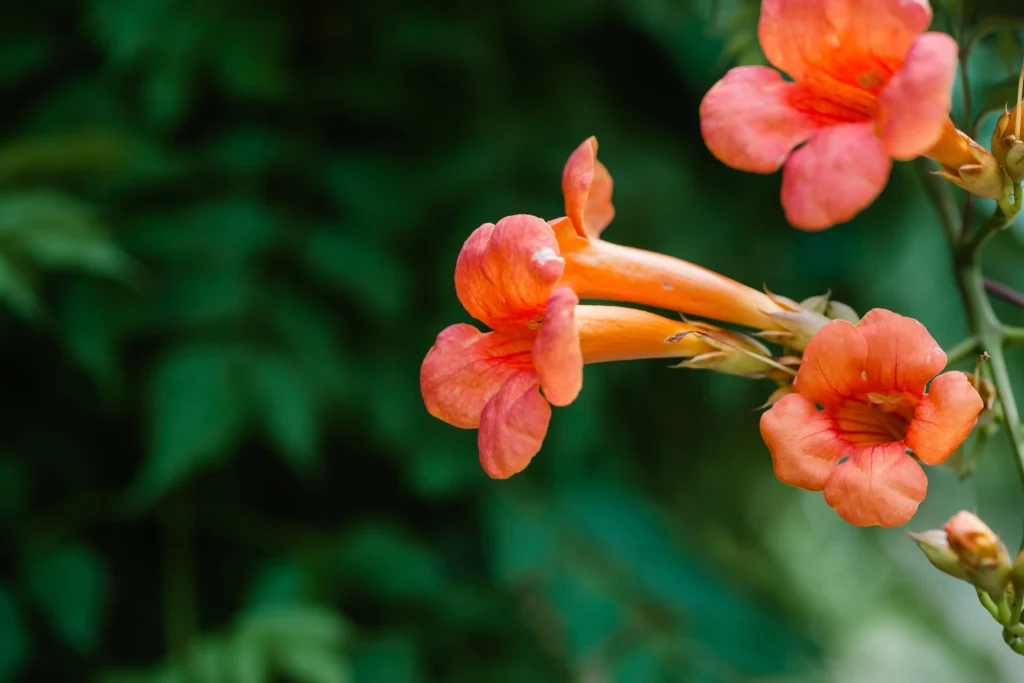
Trumpet vine is a fast-growing climber with clusters of bright orange-red, trumpet-shaped flowers. It’s beloved by hummingbirds and can spread aggressively if unmanaged.
- Scientific name: Campsis radicans
- Flower type: Perennial vine
- Colors: Orange, red
- Bloom season: Summer
- Sun: Full sun
- Height: 30–40 feet (climbing)
- Fragrance: None
- Common uses: Fences, trellises, wildlife gardens
- Meaning: Fame, separation
Orange Wildflowers
19. Butterfly Weed
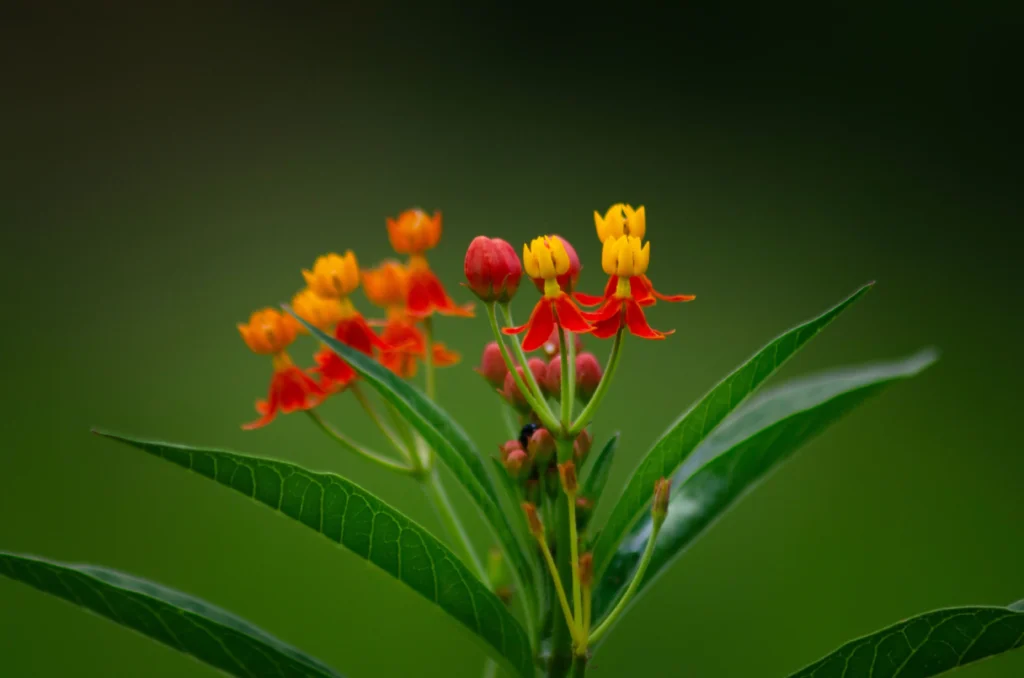
Butterfly weed produces dense, flat-topped clusters of vivid orange flowers. It’s a vital host and nectar plant for monarch butterflies and other pollinators.
- Scientific name: Asclepias tuberosa
- Flower type: Perennial
- Colors: Orange
- Bloom season: Summer
- Sun: Full sun
- Height: 1–3 feet
- Fragrance: Mild
- Common uses: Pollinator gardens, prairie plantings, native borders
- Meaning: Transformation, hope
20. Orange Hawkweed
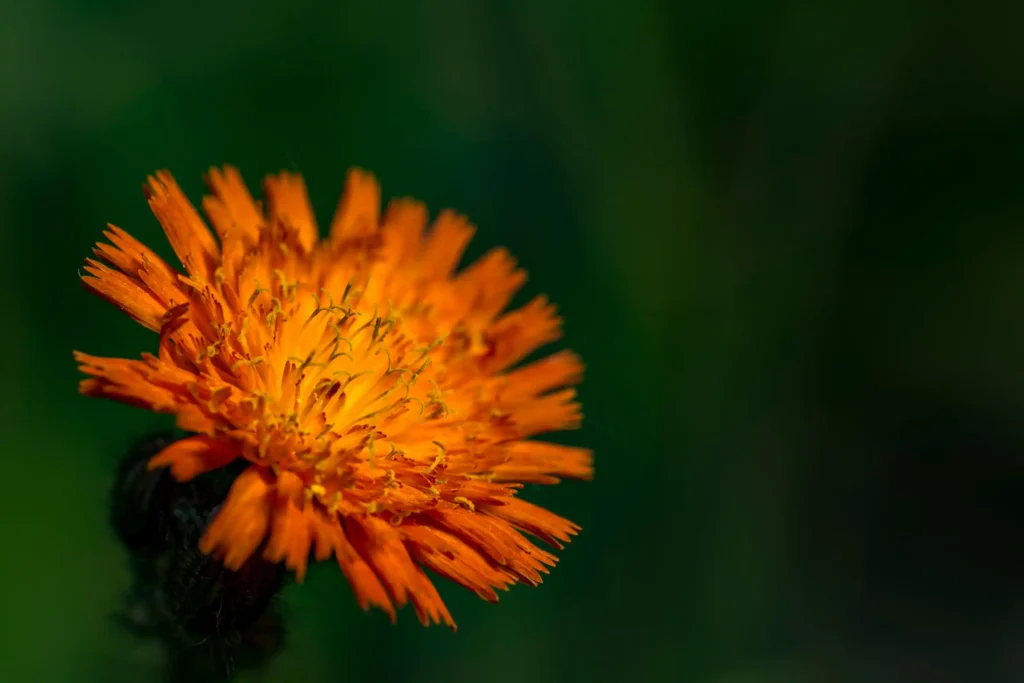
Orange hawkweed produces small, dandelion-like flowers in a striking burnt-orange shade. It spreads readily in meadows and along roadsides.
- Scientific name: Pilosella aurantiaca
- Flower type: Perennial
- Colors: Orange
- Bloom season: Summer
- Sun: Full sun
- Height: 6–12 inches
- Fragrance: Minimal
- Common uses: Wildflower meadows, naturalized areas
- Meaning: Spreading joy
21. Indian Paintbrush
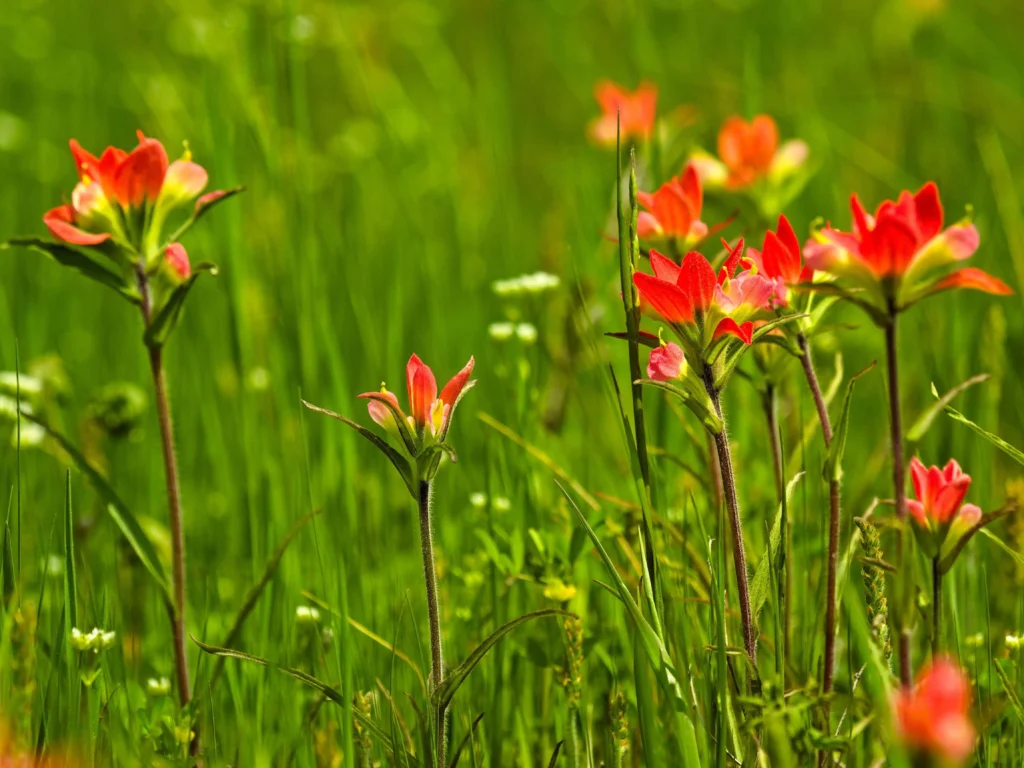
Indian paintbrush has brush-like clusters of orange-red bracts that resemble as if they’ve been dipped in paint. It grows wild across prairies and meadows in North America.
- Scientific name: Castilleja
- Flower type: Perennial wildflower
- Colors: Orange, red, yellow
- Bloom season: Spring to summer
- Sun: Full sun
- Height: 1–2 feet
- Fragrance: None
- Common uses: Native meadows, wildflower mixes
- Meaning: Beauty found in wild place
22. Orange Daylily
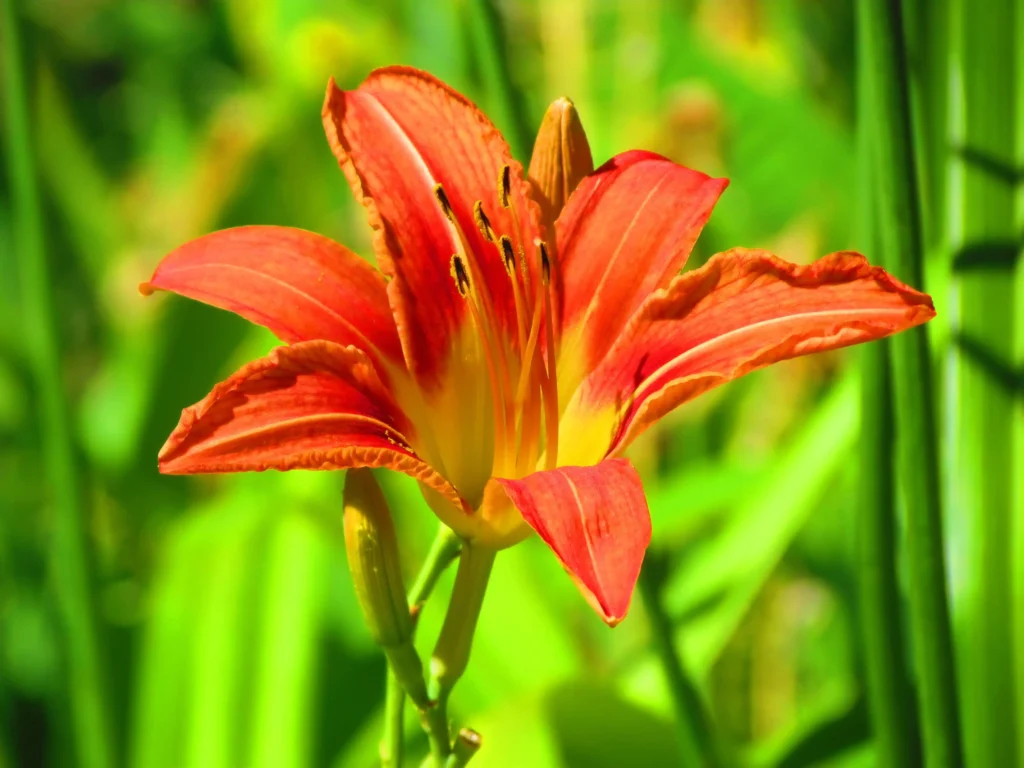
Orange daylily, often called the ditch lily, produces trumpet-shaped blooms that each last only a single day. It naturalizes easily along roadsides and old homesteads.
- Scientific name: Hemerocallis fulva
- Flower type: Perennial
- Colors: Orange
- Bloom season: Summer
- Sun: Full sun to partial shade
- Height: 2–3 feet
- Fragrance: Mild
- Common uses: Naturalized borders, roadside plantings
- Meaning: Motherhood, forgotten memories
23. Orange Coneflower
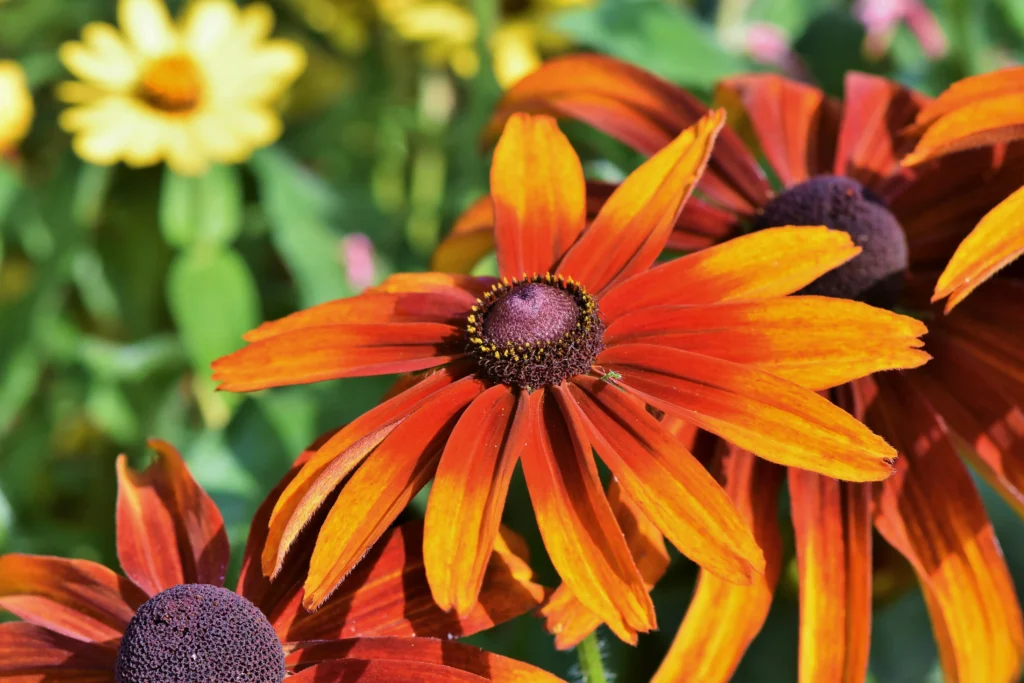
Orange coneflower produces bright, daisy-like blooms with a raised, dark center. It’s closely related to black-eyed Susan and thrives in prairie conditions.
- Scientific name: Rudbeckia fulgida
- Flower type: Perennial
- Colors: Orange, yellow
- Bloom season: Summer to fall
- Sun: Full sun
- Height: 1–3 feet
- Fragrance: Minimal
- Common uses: Prairie gardens, pollinator gardens, borders
- Meaning: Justice, encouragement
24. Wallflower
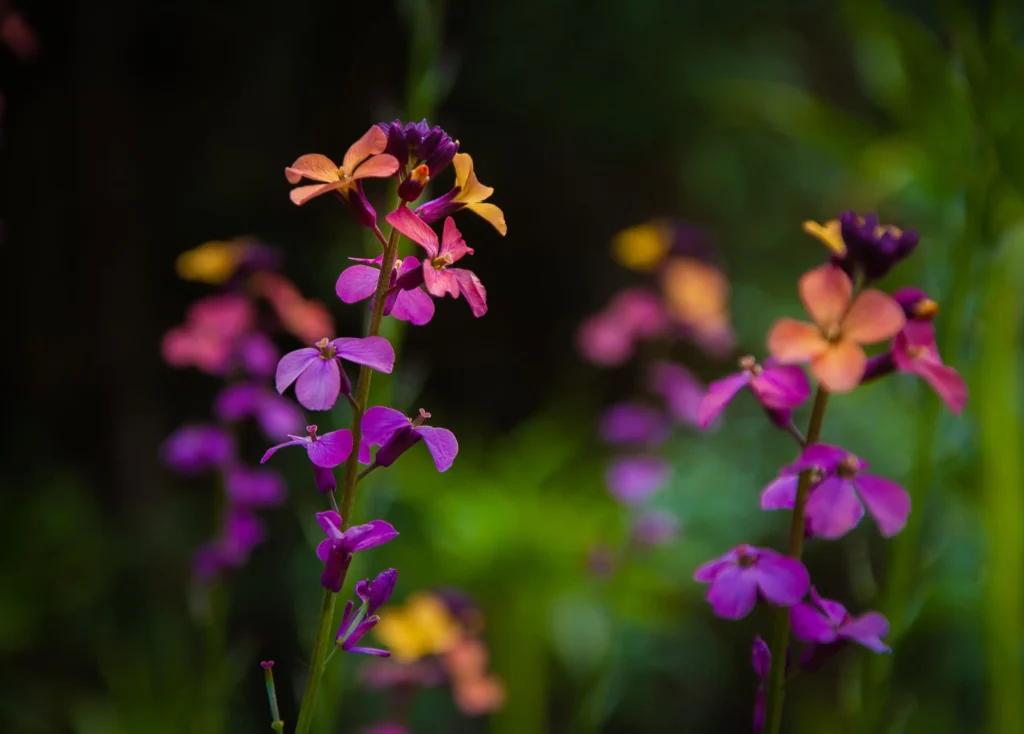
Wallflower produces clusters of small, fragrant, four-petaled flowers in warm orange tones. It grows well in rocky crevices and old stone walls.
- Scientific name: Erysimum cheiri
- Flower type: Perennial (often grown as biennial)
- Colors: Orange, yellow, red, purple
- Bloom season: Spring
- Sun: Full sun
- Height: 1–2 feet
- Fragrance: Yes, sweet and spicy
- Common uses: Rock gardens, borders, cottage gardens
- Meaning: Fidelity in adversity
25. Orange Jewelweed
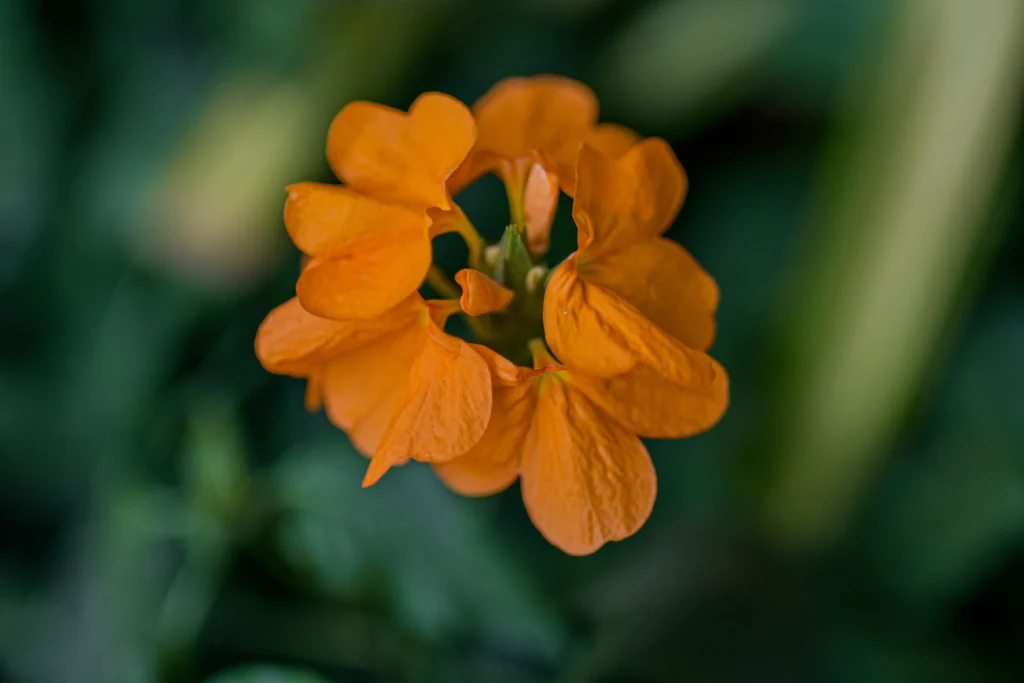
Orange jewelweed produces small, spurred, trumpet-shaped flowers that dangle like jewels along succulent stems. It grows in moist woodlands and along streambanks.
- Scientific name: Impatiens capensis
- Flower type: Annual
- Colors: Orange
- Bloom season: Summer to fall
- Sun: Partial shade
- Height: 2–5 feet
- Fragrance: None
- Common uses: Wetland gardens, native plantings
- Meaning: Impatience, healing
26. Fire Lily
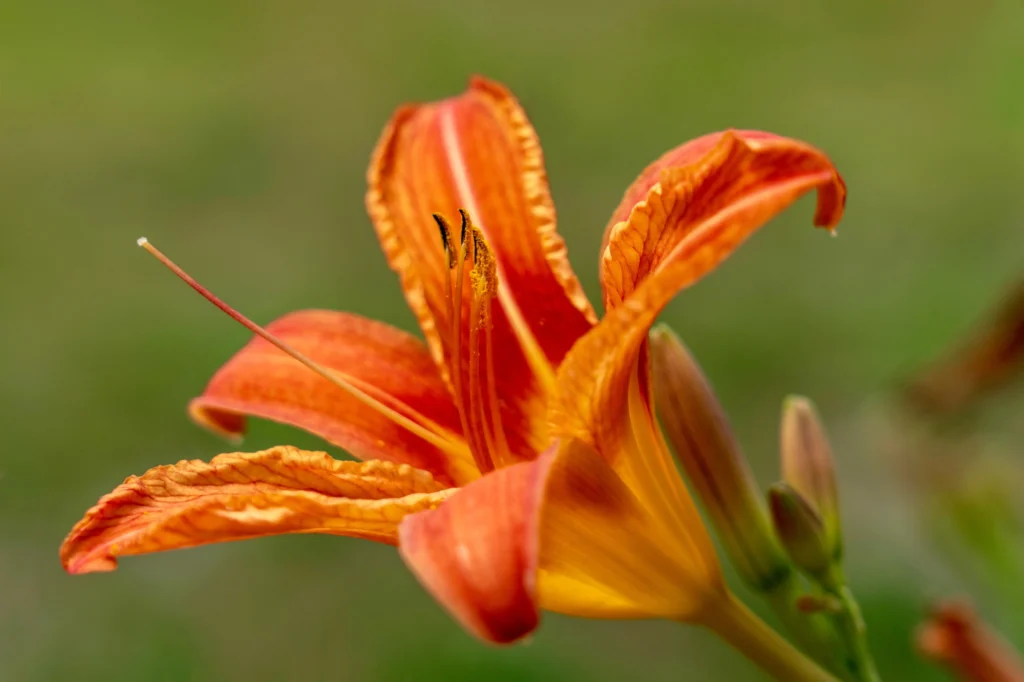
Fire lily produces upright, star-shaped orange-red flowers with recurved petals. It grows wild across meadows and mountain slopes in parts of Europe.
- Scientific name: Lilium bulbiferum
- Flower type: Bulb
- Colors: Orange, red
- Bloom season: Early summer
- Sun: Full sun
- Height: 1–3 feet
- Fragrance: Mild
- Common uses: Wildflower gardens, naturalized meadows
- Meaning: Passion, wild beauty
27. Sneezeweed
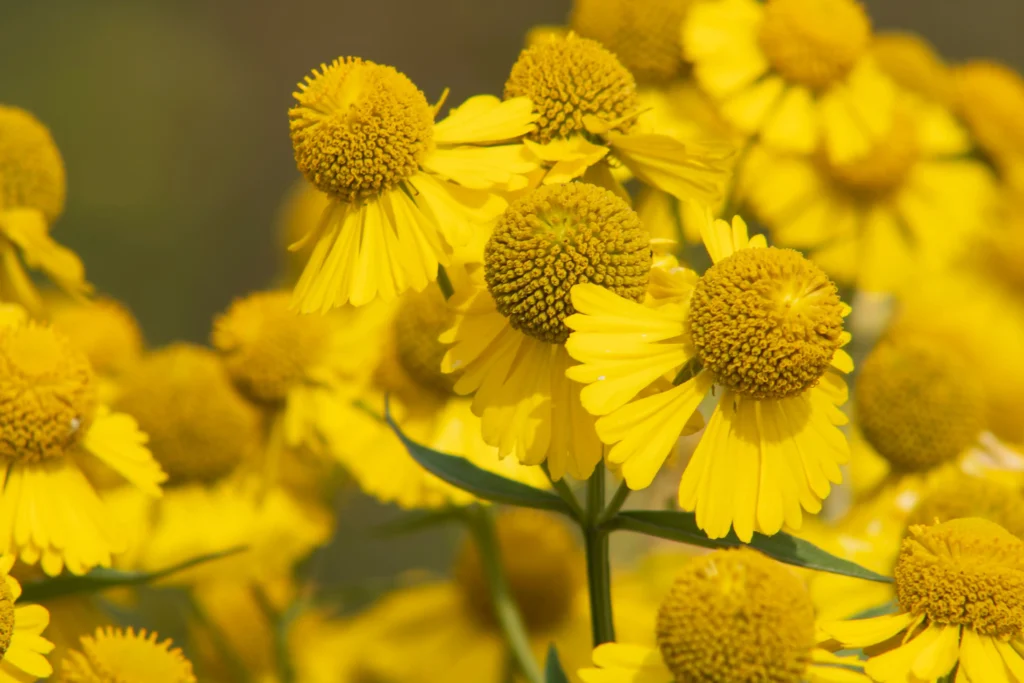
Sneezeweed produces daisy-like flowers with drooping, fan-shaped petals in warm orange and copper tones. It’s a late-season favorite for pollinator gardens.
- Scientific name: Helenium autumnale
- Flower type: Perennial
- Colors: Orange, yellow, red
- Bloom season: Late summer to fall
- Sun: Full sun
- Height: 2–5 feet
- Fragrance: Minimal
- Common uses: Pollinator gardens, prairie borders
- Meaning: Cheerfulness, tears (traditional)
[Insert photo of Sneezeweed]
Orange Bulbs
28. Orange Crocosmia
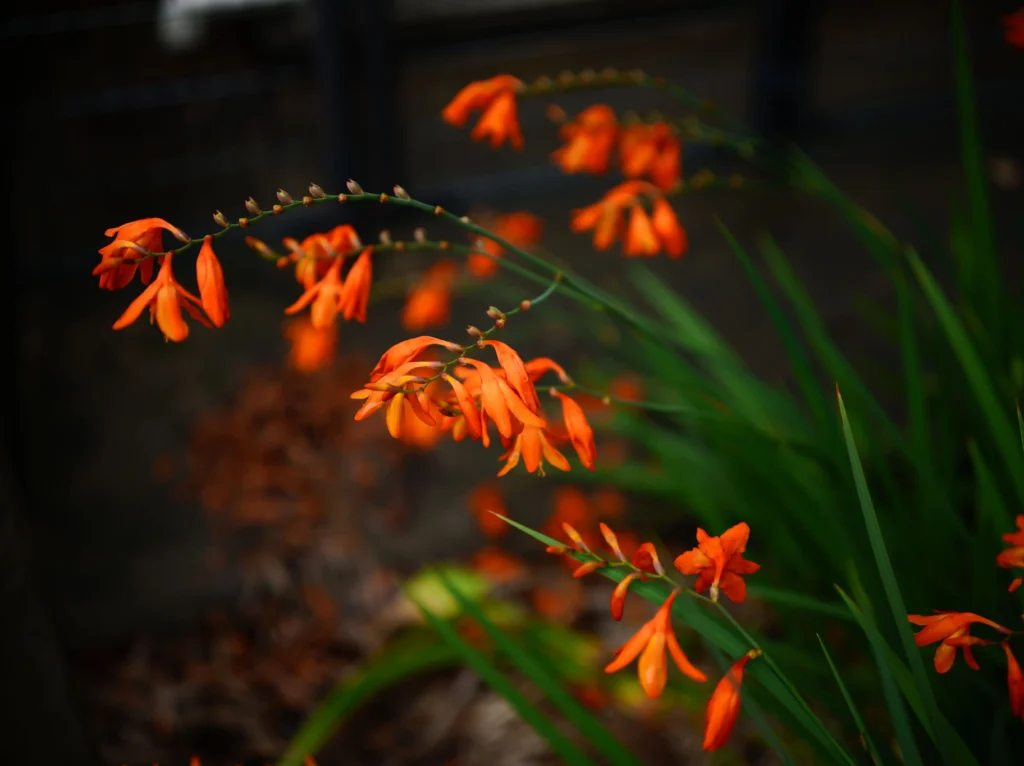
Orange crocosmia produces arching sprays of small, funnel-shaped flowers above sword-like foliage. Its fiery color makes a bold statement in late-summer borders.
- Scientific name: Crocosmia × crocosmiiflora
- Flower type: Corm (bulb-like)
- Colors: Orange, red, yellow
- Bloom season: Mid to late summer
- Sun: Full sun
- Height: 2–4 feet
- Fragrance: None
- Common uses: Borders, cut flowers, hummingbird gardens
- Meaning: Passion, intense emotion
29. Orange Freesia
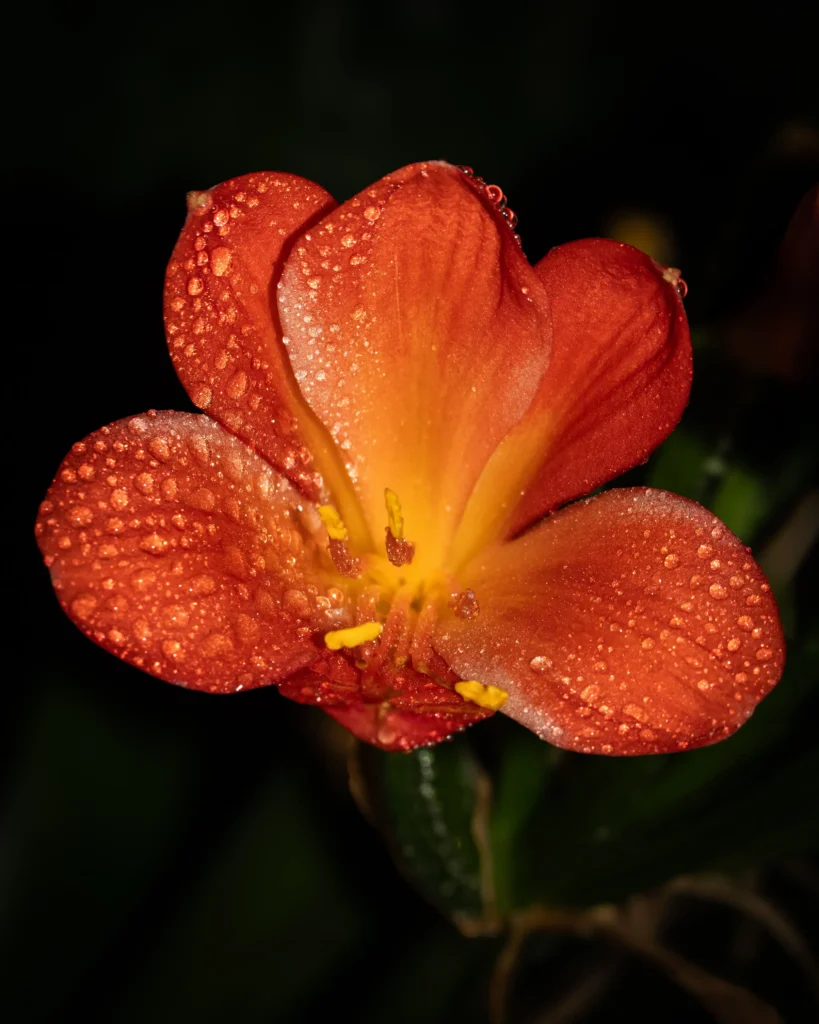
Orange freesia produces slender stems lined with fragrant, funnel-shaped flowers. It’s prized for its sweet scent as much as its warm, glowing color.
- Scientific name: Freesia hybrida
- Flower type: Corm (bulb-like)
- Colors: Orange, red, pink, yellow, white
- Bloom season: Spring
- Sun: Full sun
- Height: 12–18 inches
- Fragrance: Yes, sweet and strong
- Common uses: Bouquets, perfumery, indoor pots
- Meaning: Trust, warmth
30. Orange Tuberous Begonia
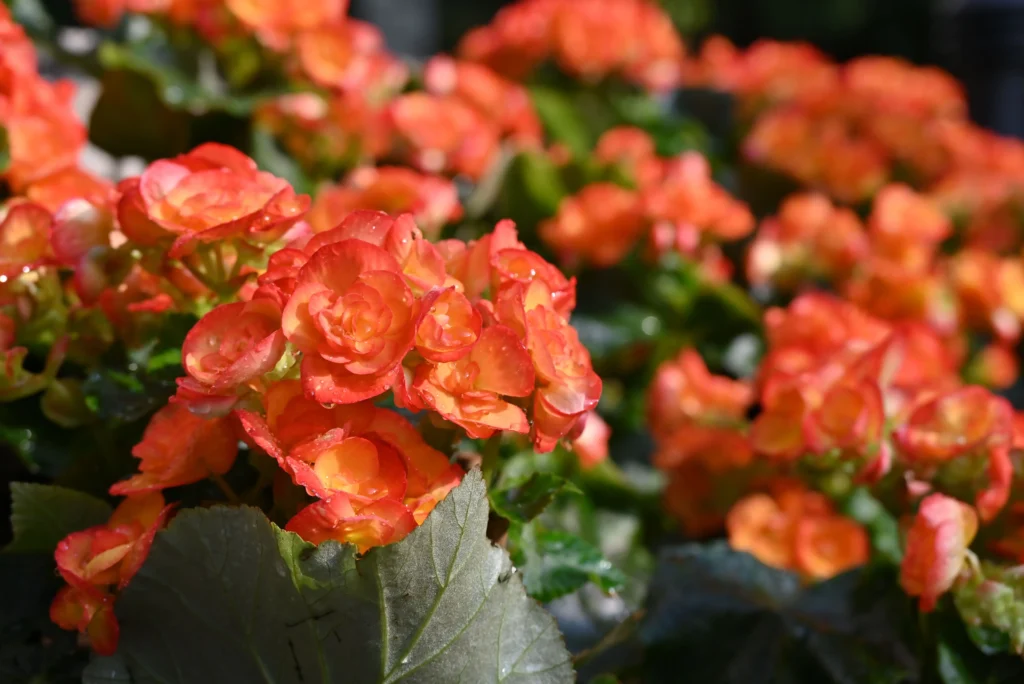
Orange tuberous begonias produce large, rose-like blooms in rich, saturated color. They’re especially popular for shaded hanging baskets and patio containers.
- Scientific name: Begonia tuberhybrida
- Flower type: Tuber
- Colors: Orange, red, pink, yellow, white
- Bloom season: Summer to fall
- Sun: Partial shade
- Height: 1–2 feet
- Fragrance: None
- Common uses: Hanging baskets, shaded containers
- Meaning: Gratitude, warmth
31. Orange Canna Lily
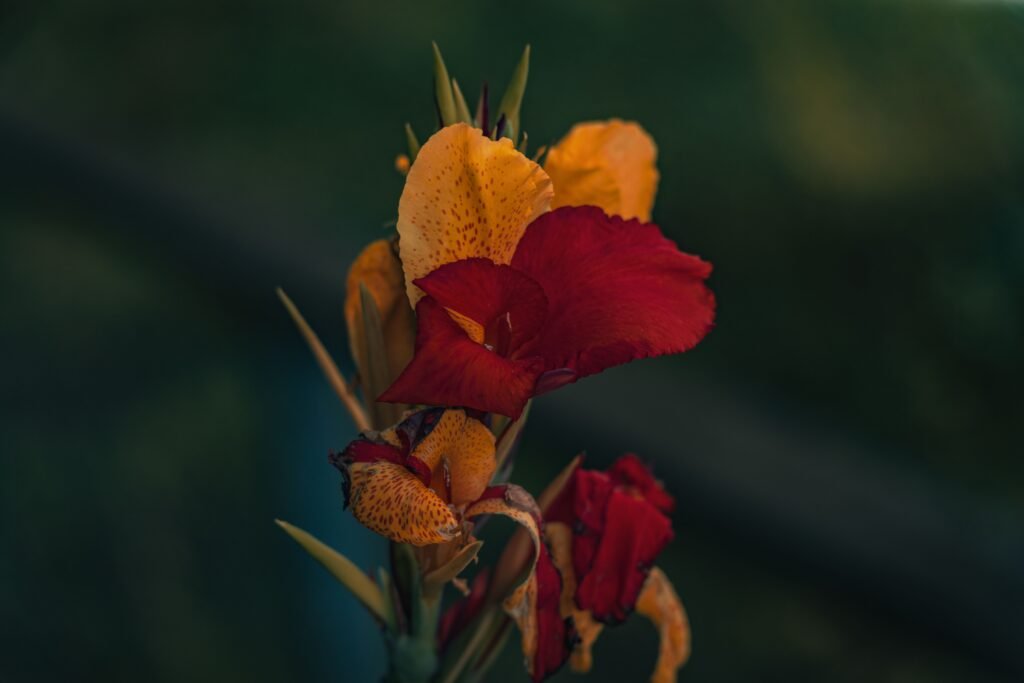
Orange canna lily produces bold, tropical-looking flowers above broad, paddle-shaped leaves. It makes a dramatic, fiery statement in summer beds.
- Scientific name: Canna indica
- Flower type: Rhizome
- Colors: Orange, red, yellow, pink
- Bloom season: Summer to fall
- Sun: Full sun
- Height: 3–6 feet
- Fragrance: None
- Common uses: Tropical borders, pond edges, containers
- Meaning: Confidence, ambition
32. Orange Gladiolus
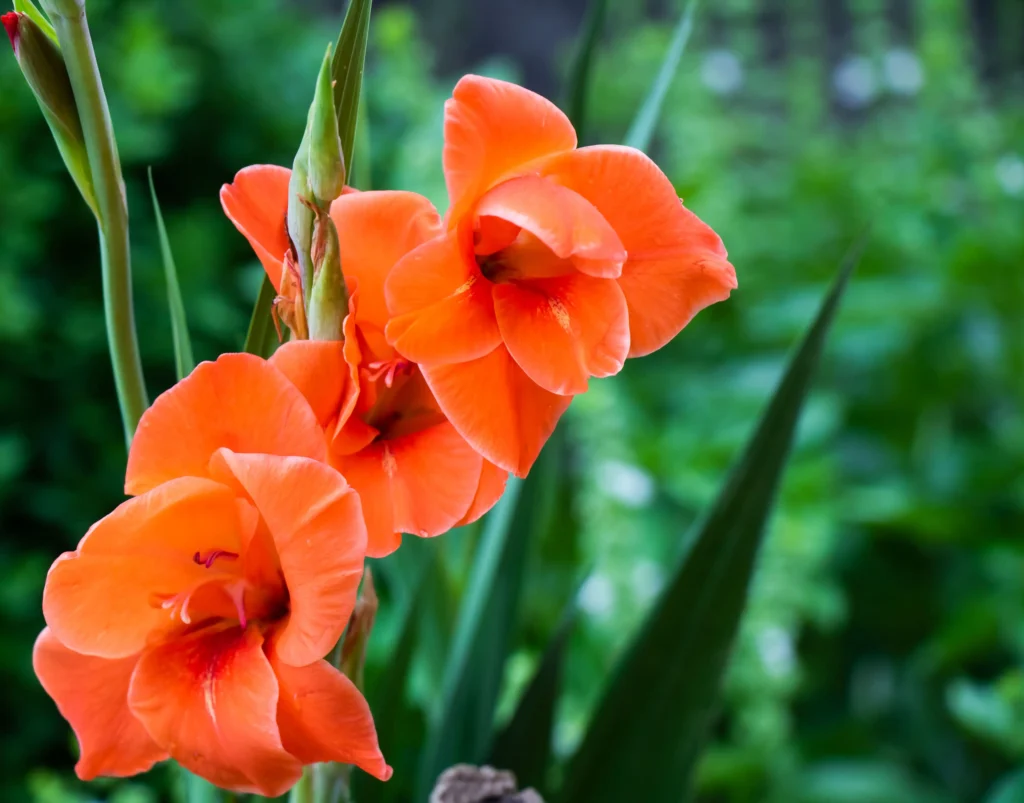
Orange gladiolus produces tall flower spikes lined with ruffled, funnel-shaped blooms. It stands out in late-summer borders and cut arrangements.
- Scientific name: Gladiolus
- Flower type: Bulb (corm)
- Colors: Orange, red, pink, yellow, purple
- Bloom season: Summer
- Sun: Full sun
- Height: 2–4 feet
- Fragrance: Mild
- Common uses: Cut flowers, back-of-border planting
- Meaning: Strength of character, sincerity
33. Orange Asiatic Lily
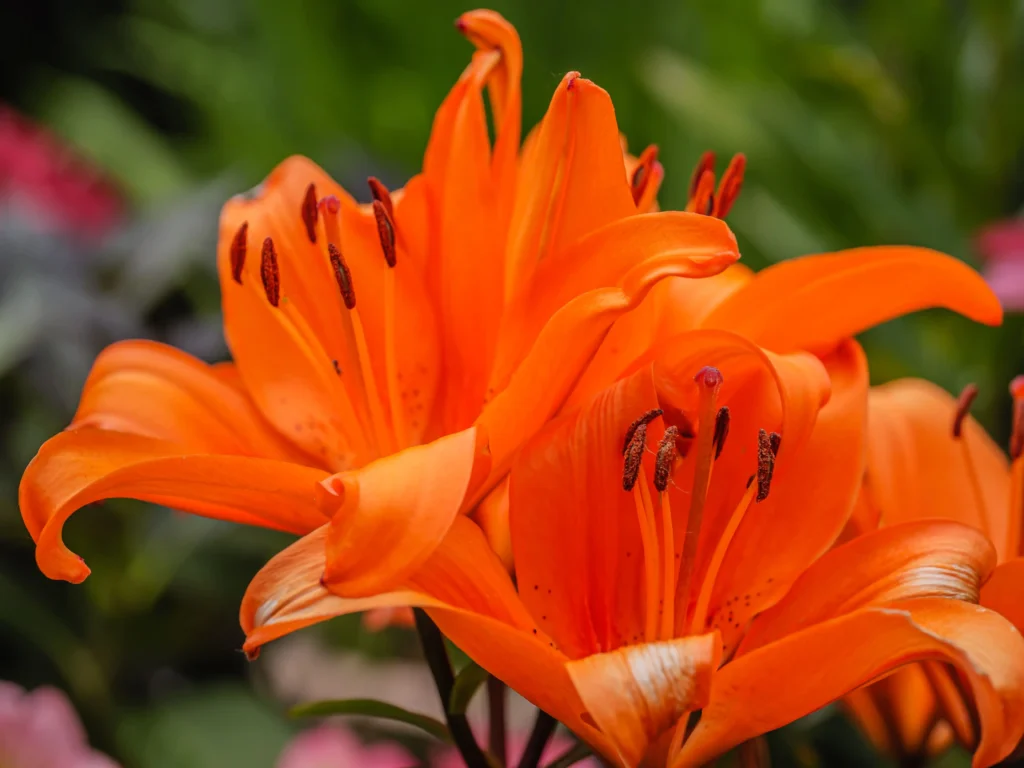
Orange Asiatic lilies produce large, upward-facing blooms in bold, unspotted color. They’re long-lasting in both the garden and the vase.
- Scientific name: Lilium (Asiatic hybrids)
- Flower type: Bulb
- Colors: Orange, red, yellow, pink, white
- Bloom season: Early to midsummer
- Sun: Full sun to partial shade
- Height: 2–4 feet
- Fragrance: Little to none
- Common uses: Cut flowers, garden borders
- Meaning: Confidence, wealth
34. Tiger Lily
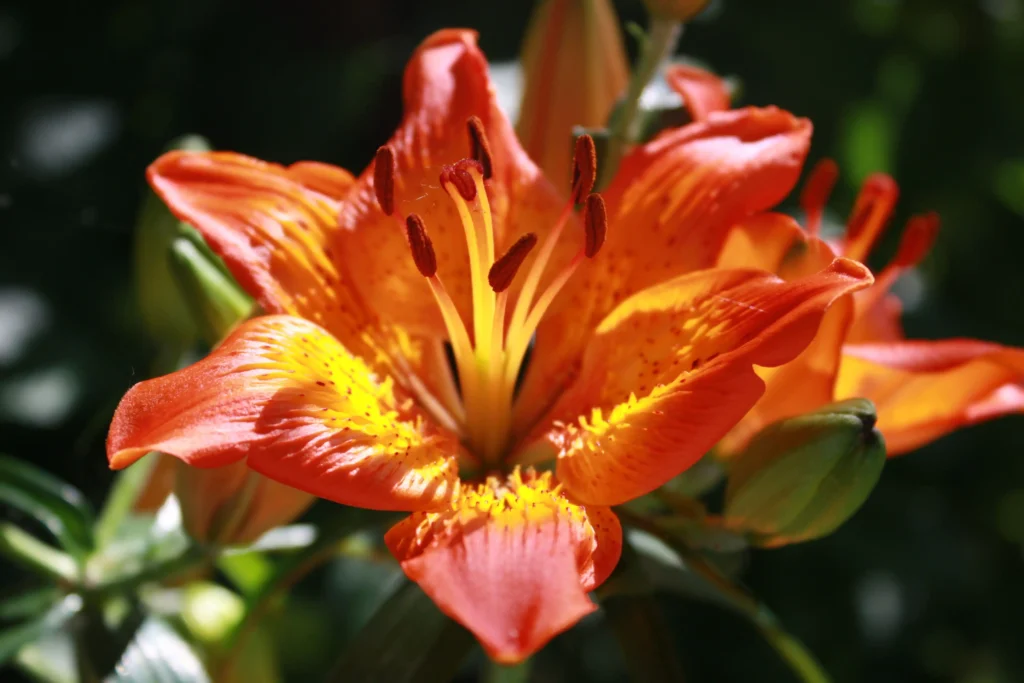
Tiger lily produces distinctive orange blooms covered in dark speckles, with strongly recurved petals. It’s one of the most recognizable lilies grown.
- Scientific name: Lilium lancifolium
- Flower type: Bulb
- Colors: Orange
- Bloom season: Mid to late summer
- Sun: Full sun to partial shade
- Height: 2–4 feet
- Fragrance: Mild
- Common uses: Cottage gardens, cut flowers, borders
- Meaning: Wealth, pride, confidence
35. Orange Crown Imperial
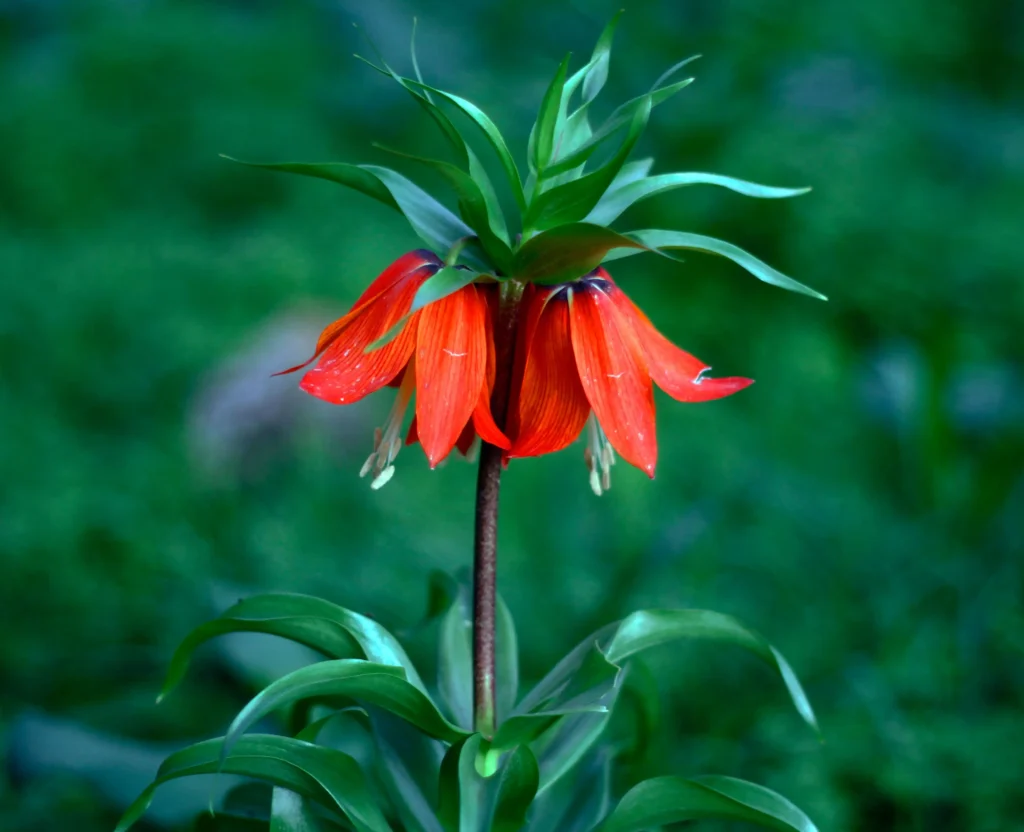
Orange Crown Imperial produces a striking crown of hanging orange bell-shaped flowers topped with a tuft of leafy bracts. It’s a dramatic, unusual bulb flower.
- Scientific name: Fritillaria imperialis
- Flower type: Bulb
- Colors: Orange, red, yellow
- Bloom season: Mid-spring
- Sun: Full sun to partial shade
- Height: 2–4 feet
- Fragrance: Yes, musky
- Common uses: Border accents, deer-resistant plantings
- Meaning: Majesty, protection
36. Orange Amaryllis
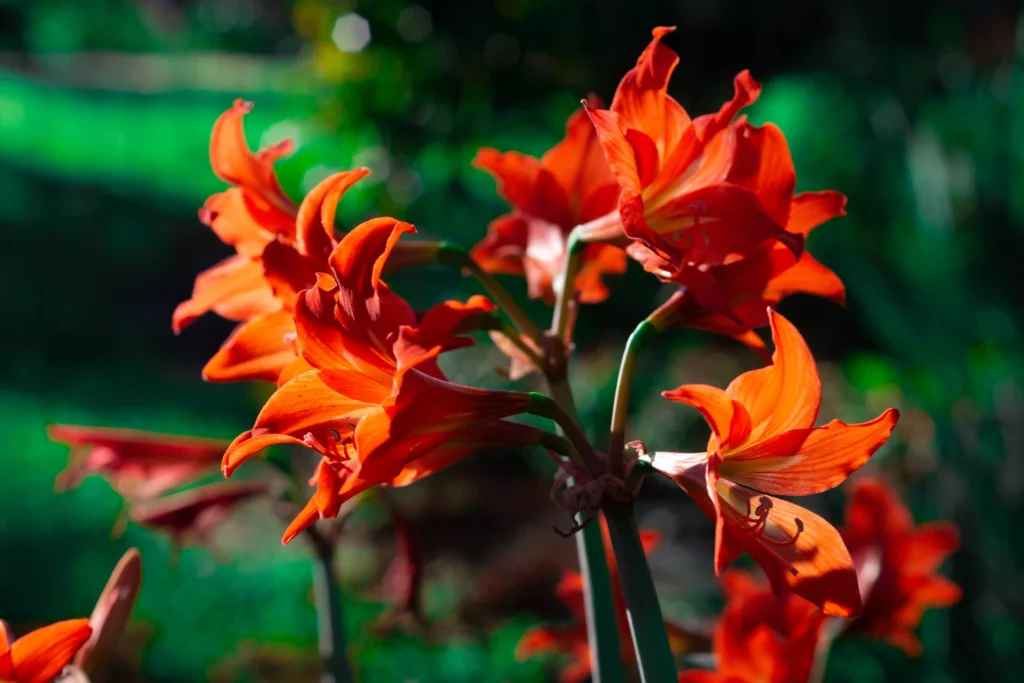
Orange amaryllis produces massive trumpet-shaped blooms atop a tall, leafless stem. It’s a bold, glowing choice for winter holiday displays.
- Scientific name: Hippeastrum
- Flower type: Bulb
- Colors: Orange, red, pink, white
- Bloom season: Winter (indoors)
- Sun: Bright indirect light
- Height: 1–2 feet
- Fragrance: Minimal
- Common uses: Holiday décor, indoor pots, gifts
- Meaning: Radiant beauty, pride
Orange Tropical & Exotic Flowers
37. Orange Bird of Paradise
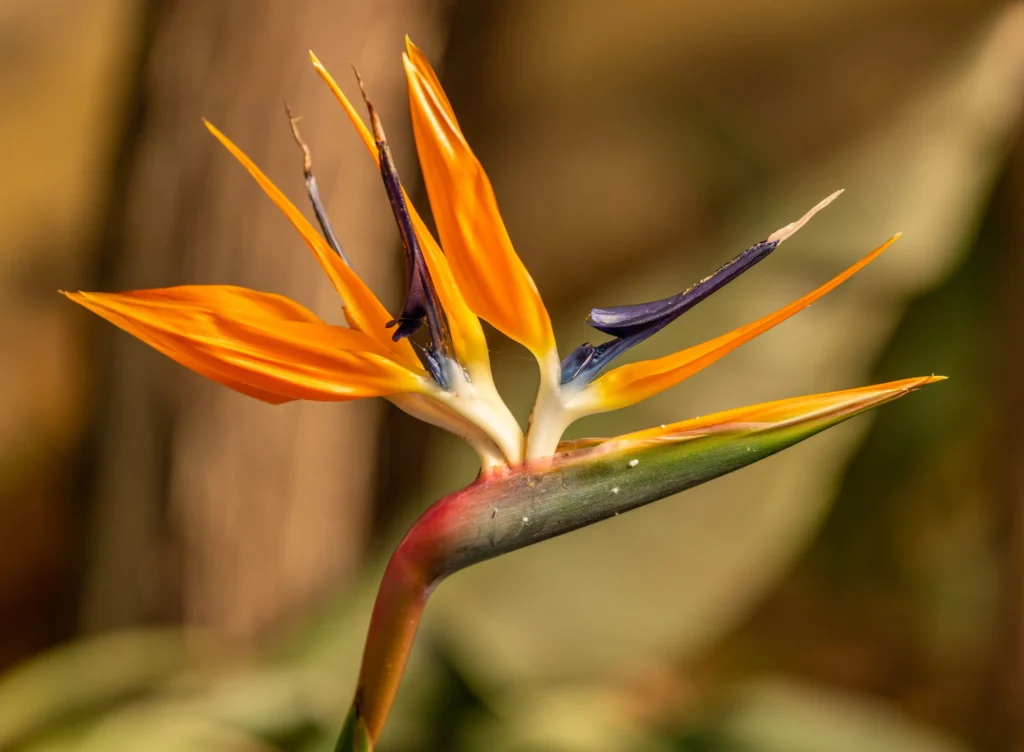
Orange bird of paradise produces dramatic, crane-like flowers with vivid orange and blue petals. It’s one of the most recognizable tropical flowers in the world.
- Scientific name: Strelitzia reginae
- Flower type: Perennial (tropical)
- Colors: Orange, blue
- Bloom season: Nearly year-round in warm climates
- Sun: Full sun to partial shade
- Height: 3–5 feet
- Fragrance: Minimal
- Common uses: Tropical landscaping, exotic bouquets
- Meaning: Freedom, joyfulness, paradise
38. Flame Vine
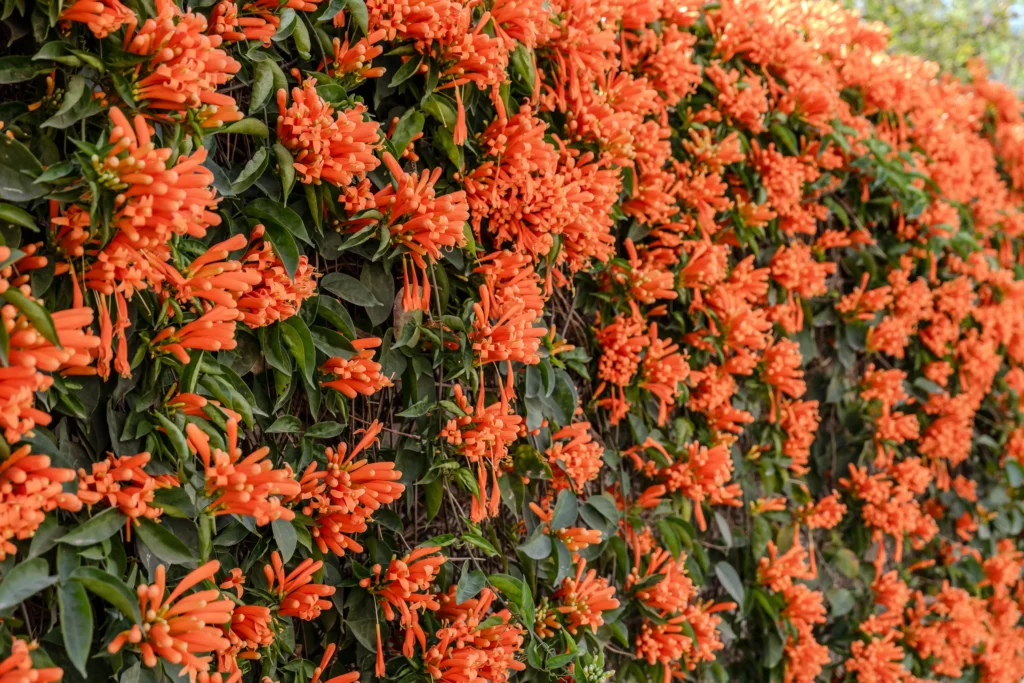
Flame vine produces dense clusters of tubular orange flowers that blanket fences and trellises in fiery color. It’s a fast-growing, dramatic climber.
- Scientific name: Pyrostegia venusta
- Flower type: Evergreen vine
- Colors: Orange
- Bloom season: Winter to spring
- Sun: Full sun
- Height: 15–30 feet (climbing)
- Fragrance: None
- Common uses: Trellises, fences, tropical landscaping
- Meaning: Passion, intensity
39. Orange Heliconia
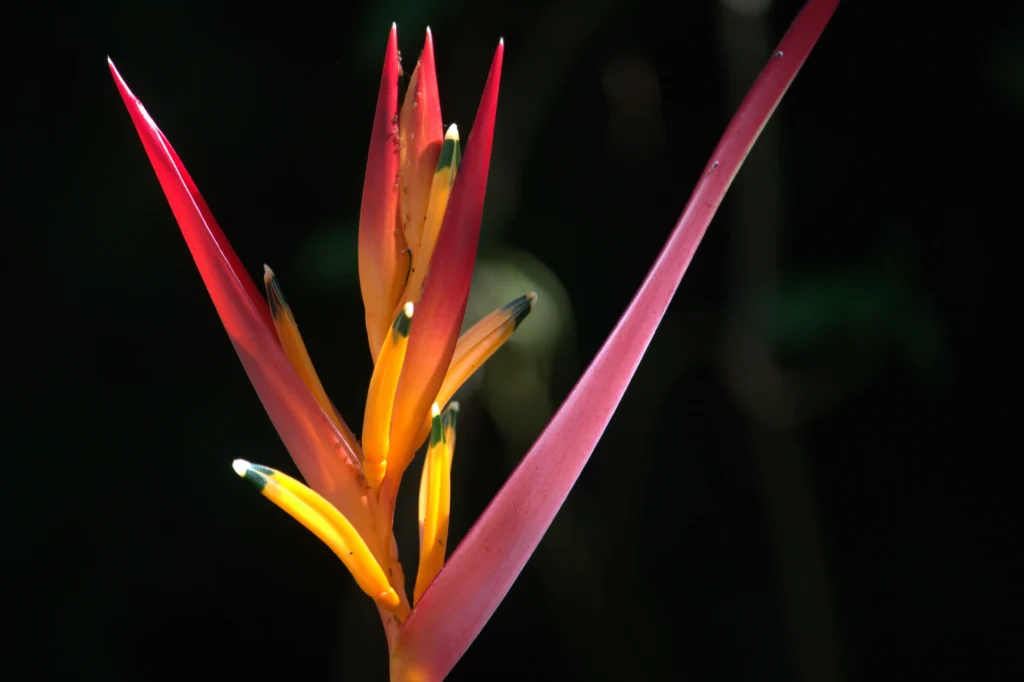
Orange heliconia produces boat-shaped, waxy bracts stacked in a zigzag pattern. It’s a dramatic tropical plant often mistaken for a bird of paradise relative.
- Scientific name: Heliconia psittacorum
- Flower type: Perennial (tropical)
- Colors: Orange, red, yellow
- Bloom season: Year-round in the tropics
- Sun: Full sun to partial shade
- Height: 3–6 feet
- Fragrance: None
- Common uses: Tropical landscaping, exotic bouquets
- Meaning: Exotic beauty, individuality
40. Orange Ixora
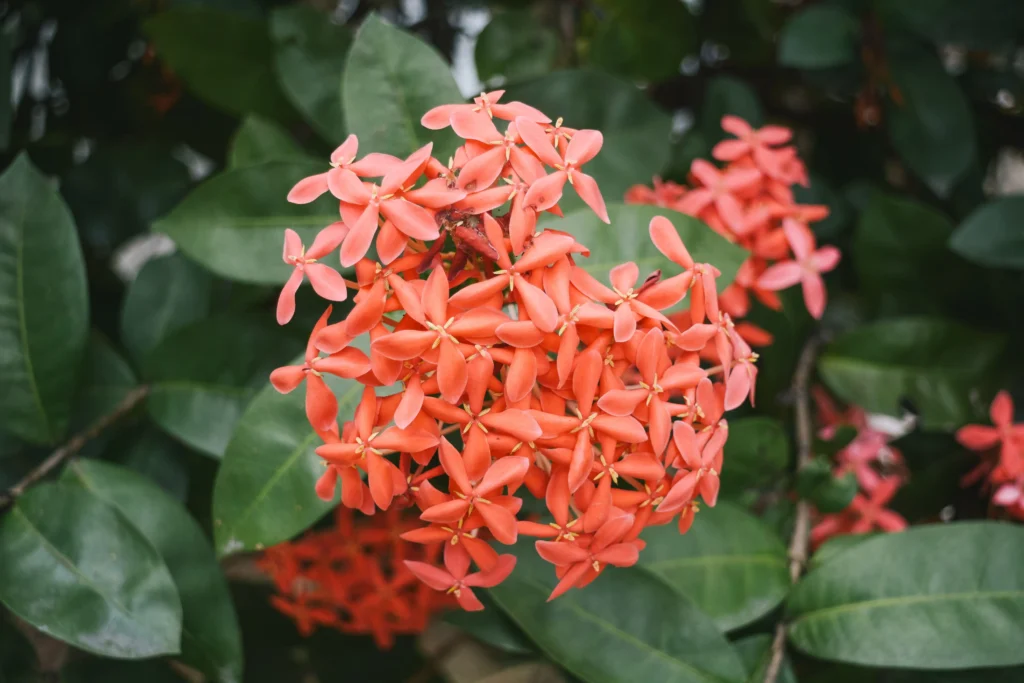
Orange ixora produces dense, rounded clusters of small, star-shaped flowers. It blooms nearly year-round in tropical climates and is a popular hedge plant.
- Scientific name: Ixora coccinea
- Flower type: Evergreen shrub
- Colors: Orange, red, pink, yellow
- Bloom season: Year-round in warm climates
- Sun: Full sun
- Height: 3–6 feet
- Fragrance: Minimal
- Common uses: Hedges, tropical borders, container plants
- Meaning: Warmth, welcoming spirit
41. Orange Plumeria
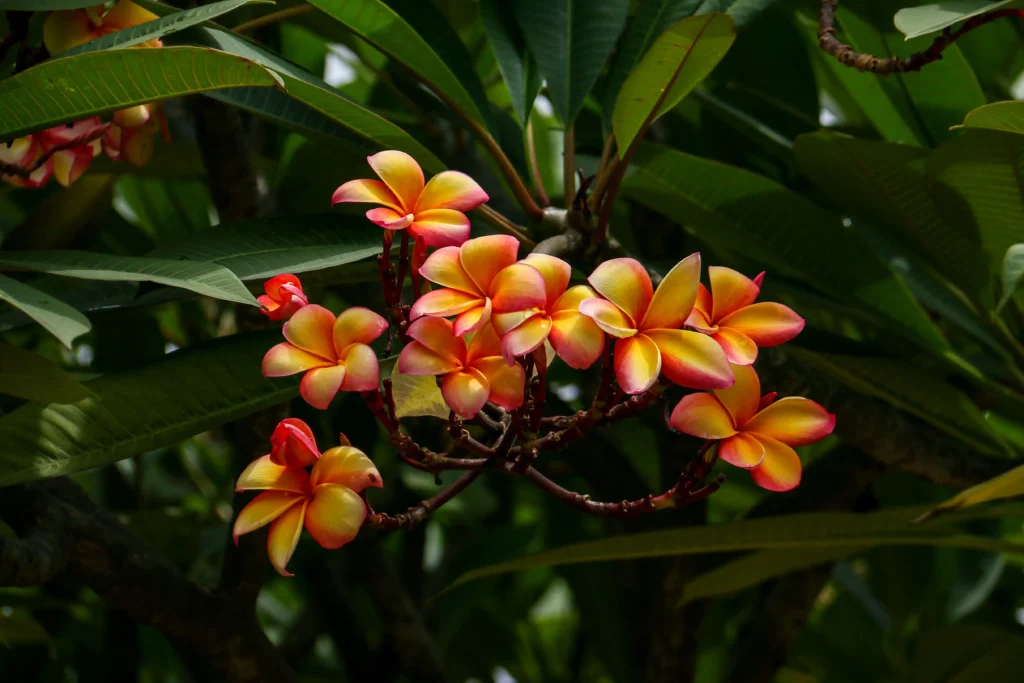
Orange plumeria produces waxy, fragrant flowers in warm sunset tones. It’s iconic in tropical landscaping and traditional lei-making.
- Scientific name: Plumeria rubra (orange cultivars)
- Flower type: Deciduous shrub/small tree
- Colors: Orange, red, pink, yellow, white
- Bloom season: Summer to fall
- Sun: Full sun
- Height: 10–25 feet
- Fragrance: Yes, sweet and strong
- Common uses: Tropical gardens, leis, perfumery
- Meaning: New life, positivity
42. Orange Anthurium
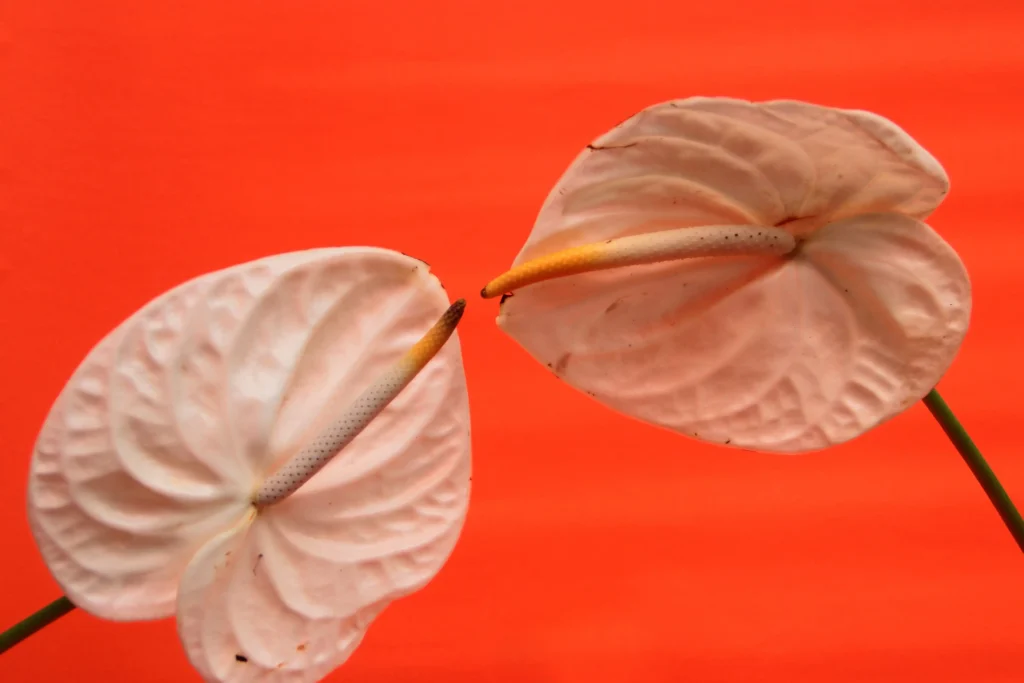
Orange anthurium features a glossy, heart-shaped orange spathe surrounding a slender central spike. It’s one of the longest-lasting cut flowers available.
- Scientific name: Anthurium andraeanum (orange hybrids)
- Flower type: Perennial (tropical)
- Colors: Orange, red, pink, white
- Bloom season: Year-round indoors
- Sun: Bright indirect light
- Height: 1–2 feet
- Fragrance: None
- Common uses: Houseplants, tropical bouquets
- Meaning: Hospitality, abundance
43. Chinese Lantern
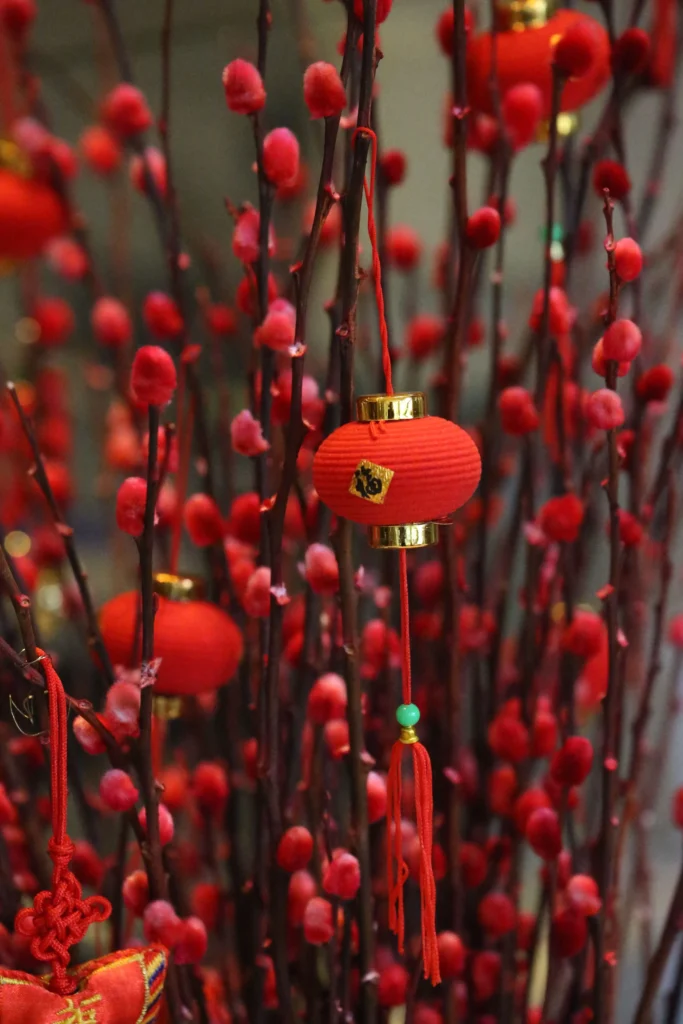
Chinese lantern produces small white flowers that develop into papery, bright orange husks resembling tiny lanterns. It’s grown mainly for its ornamental fall seed pods.
- Scientific name: Physalis alkekengi
- Flower type: Perennial
- Colors: Orange (husks)
- Bloom season: Summer (flowers); fall (orange husks)
- Sun: Full sun to partial shade
- Height: 1–2 feet
- Fragrance: None
- Common uses: Dried arrangements, fall décor
- Meaning: Protection, hidden beauty
44. Orange Orchid
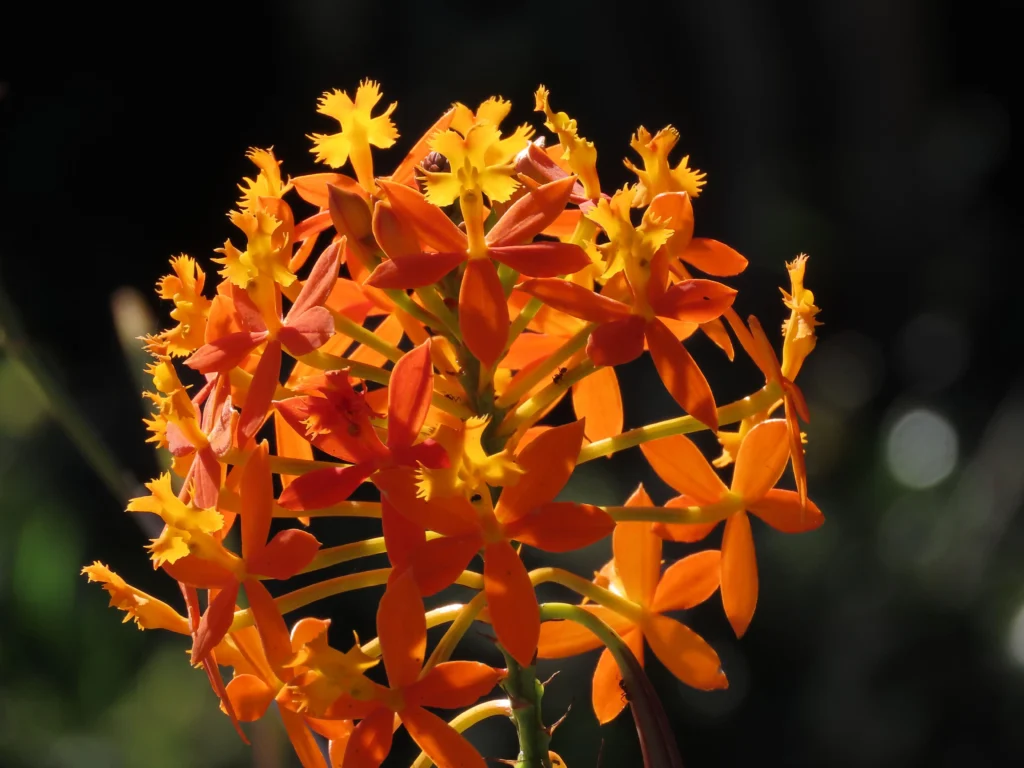
Orange orchids produce elegant, long-lasting blooms along arching stems. Their bold, sunset color makes them a striking alternative to more common orchid hues.
- Scientific name: Cattleya / Oncidium (orange hybrids)
- Flower type: Epiphytic perennial
- Colors: Orange, yellow, brown
- Bloom season: Varies by hybrid
- Sun: Bright indirect light
- Height: 1–2 feet
- Fragrance: Mild in some varieties
- Common uses: Houseplants, gifts, collector displays
- Meaning: Boldness, unique beauty
45. Orange Passion Flower
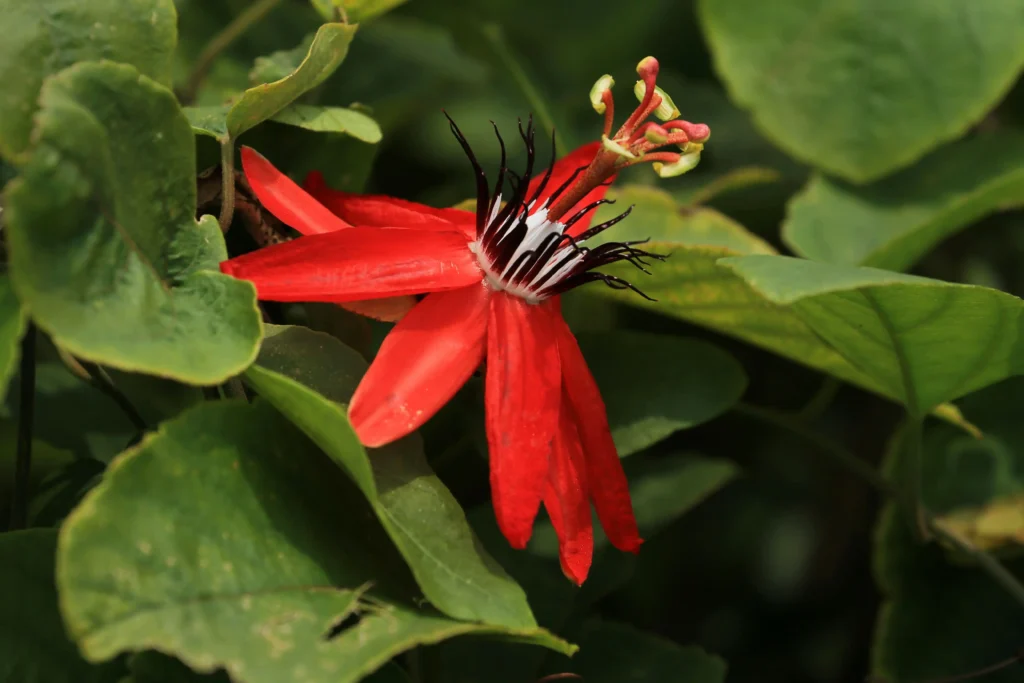
Orange passion flower produces intricate, exotic blooms with fine, thread-like filaments in warm sunset tones. Its unusual structure makes it a garden conversation piece.
- Scientific name: Passiflora ‘Sunburst’
- Flower type: Perennial vine
- Colors: Orange
- Bloom season: Summer to fall
- Sun: Full sun to partial shade
- Height: 10–20 feet (climbing)
- Fragrance: Mild
- Common uses: Trellises, tropical gardens
- Meaning: Faith, passion, mystery
Orange Annuals for Containers
46. Orange Petunia
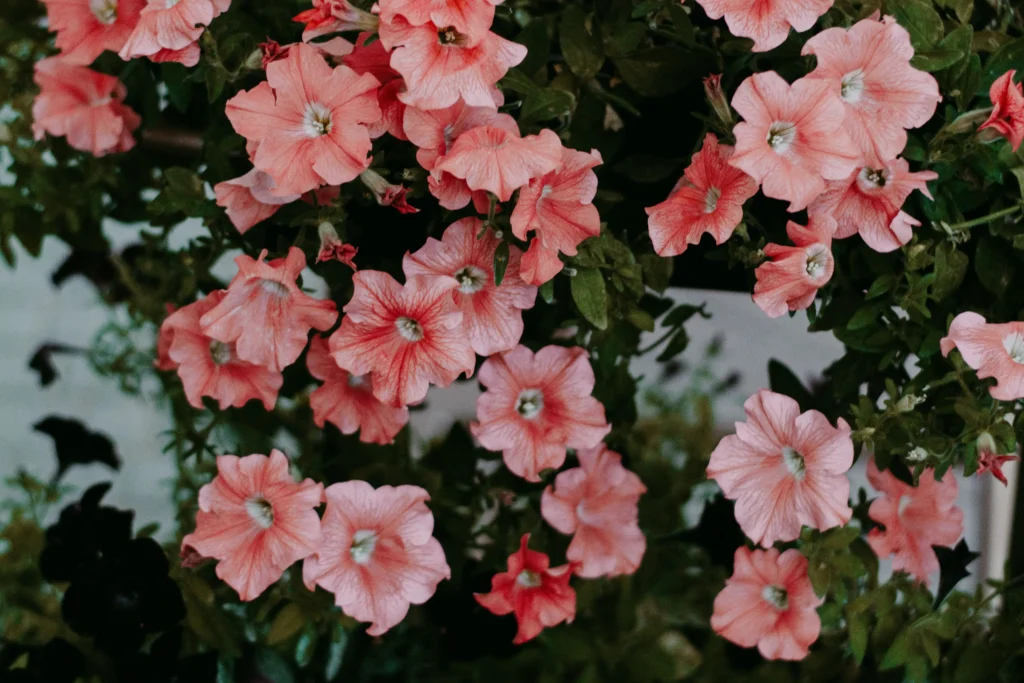
Orange petunias produce trumpet-shaped flowers that bloom prolifically all summer long. They pair beautifully with purples and blues in mixed containers.
- Scientific name: Petunia × hybrida
- Flower type: Annual
- Colors: Orange, red, pink, purple, white
- Bloom season: Spring to fall
- Sun: Full sun
- Height: 6–18 inches
- Fragrance: Mild, especially in the evening
- Common uses: Hanging baskets, window boxes, borders
- Meaning: Warmth, comfort
47. Orange Nasturtium
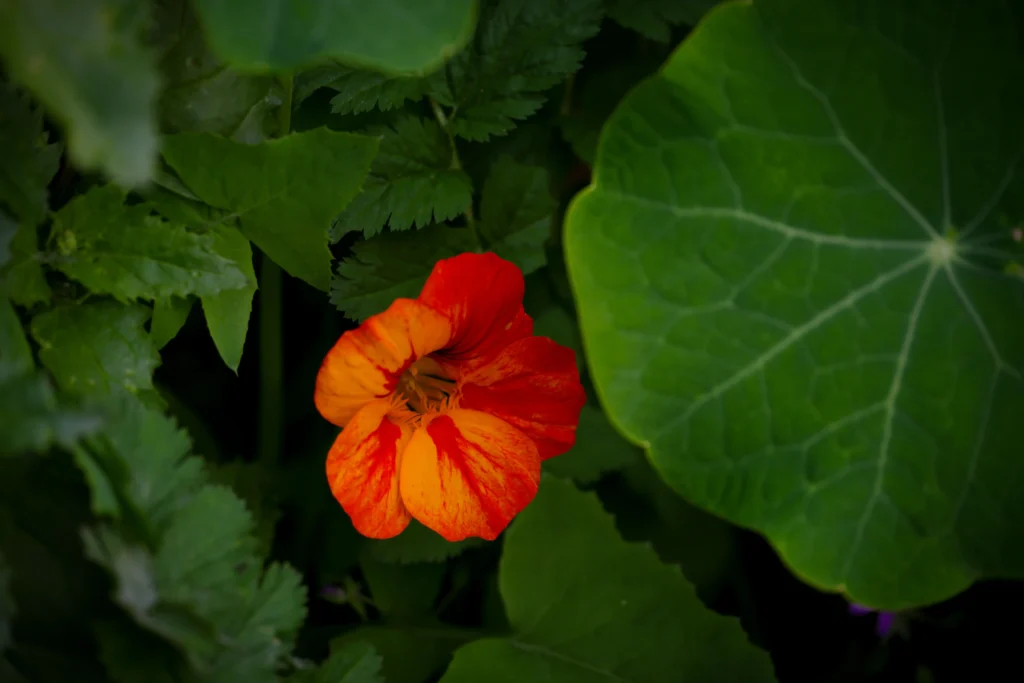
Orange nasturtium produces round leaves and bright, funnel-shaped flowers that are also edible. It adds a peppery flavor to salads and vivid color to beds.
- Scientific name: Tropaeolum majus
- Flower type: Annual
- Colors: Orange, red, yellow
- Bloom season: Summer to fall
- Sun: Full sun to partial shade
- Height: 1–10 feet (trailing varieties climb)
- Fragrance: Mild, peppery
- Common uses: Edible gardens, hanging baskets, ground cover
- Meaning: Patriotism, conquest
48. Orange Calendula
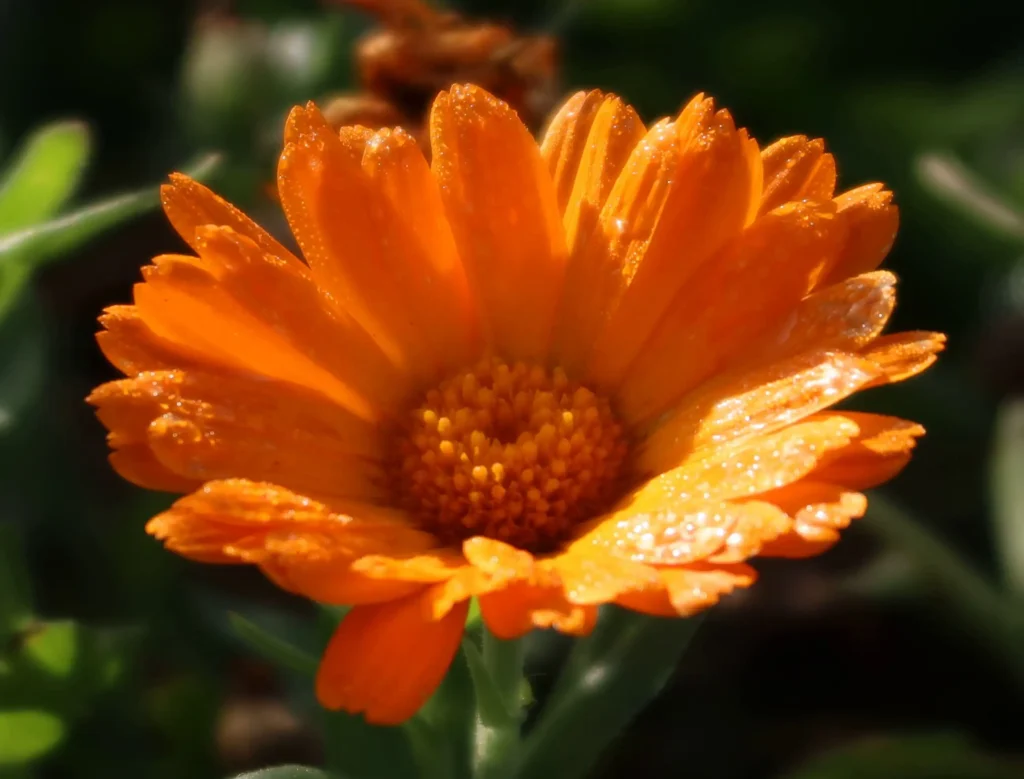
Orange calendula, or pot marigold, produces bright, daisy-like flowers with edible petals. It’s a popular addition to both ornamental and kitchen gardens.
- Scientific name: Calendula officinalis
- Flower type: Annual
- Colors: Orange, yellow
- Bloom season: Spring to fall
- Sun: Full sun
- Height: 1–2 feet
- Fragrance: Mild, herbal
- Common uses: Edible gardens, skincare, borders
- Meaning: Warmth, grief’s cure
49. Orange Celosia
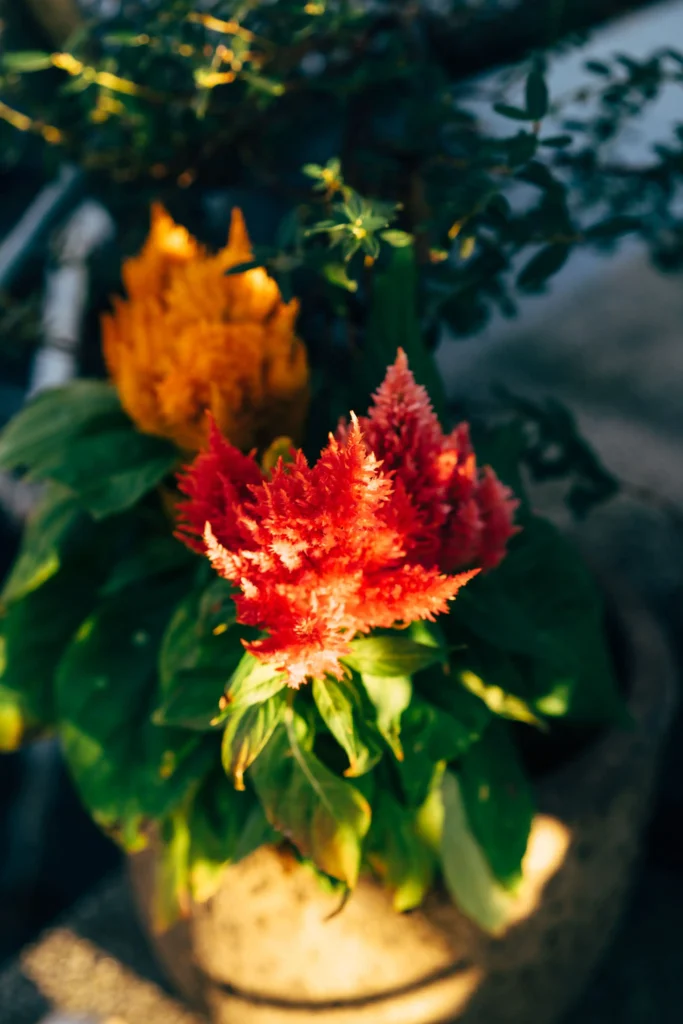
Orange celosia produces bold, textured flower heads shaped like flames or feathers. It adds a fiery, sculptural element to garden beds.
- Scientific name: Celosia argentea
- Flower type: Annual
- Colors: Orange, red, yellow, pink, purple
- Bloom season: Summer to fall
- Sun: Full sun
- Height: 1–3 feet
- Fragrance: None
- Common uses: Borders, dried flower arrangements
- Meaning: Warmth, individuality
50. Orange Gazania
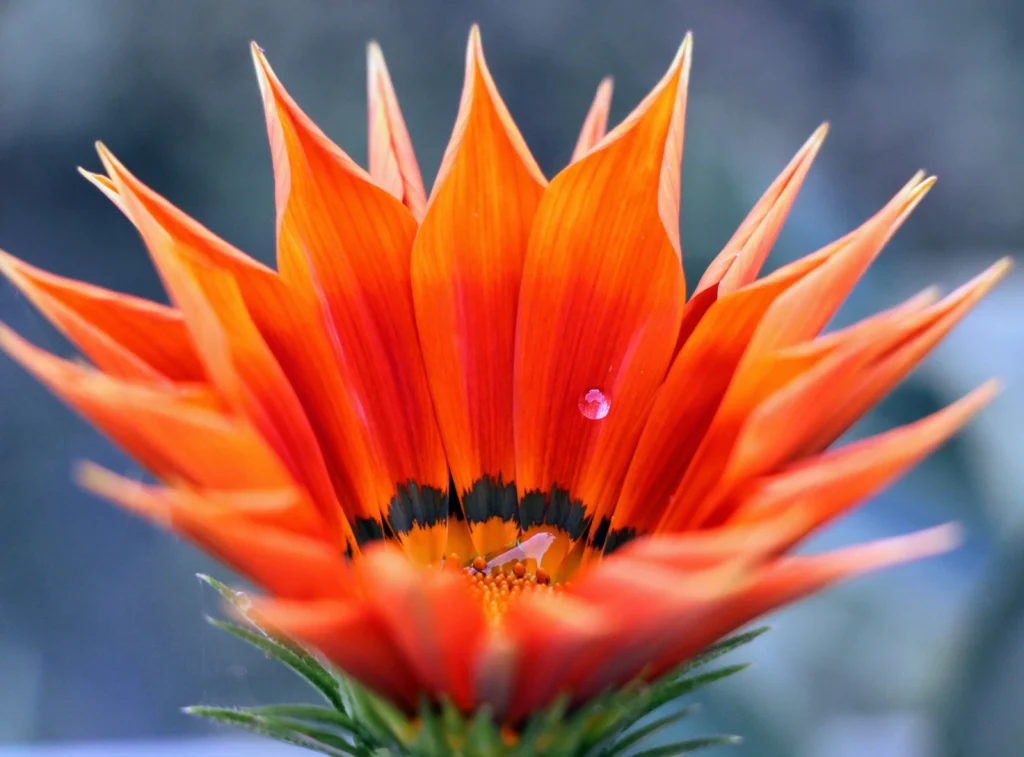
Orange gazania produces large, daisy-like flowers that close at night and on cloudy days. It’s exceptionally heat- and drought-tolerant.
- Scientific name: Gazania rigens
- Flower type: Annual (perennial in warm climates)
- Colors: Orange, yellow, red, pink, white
- Bloom season: Summer to fall
- Sun: Full sun
- Height: 6–12 inches
- Fragrance: None
- Common uses: Ground cover, borders, xeriscaping
- Meaning: Riches, brightness
51. Orange Impatiens
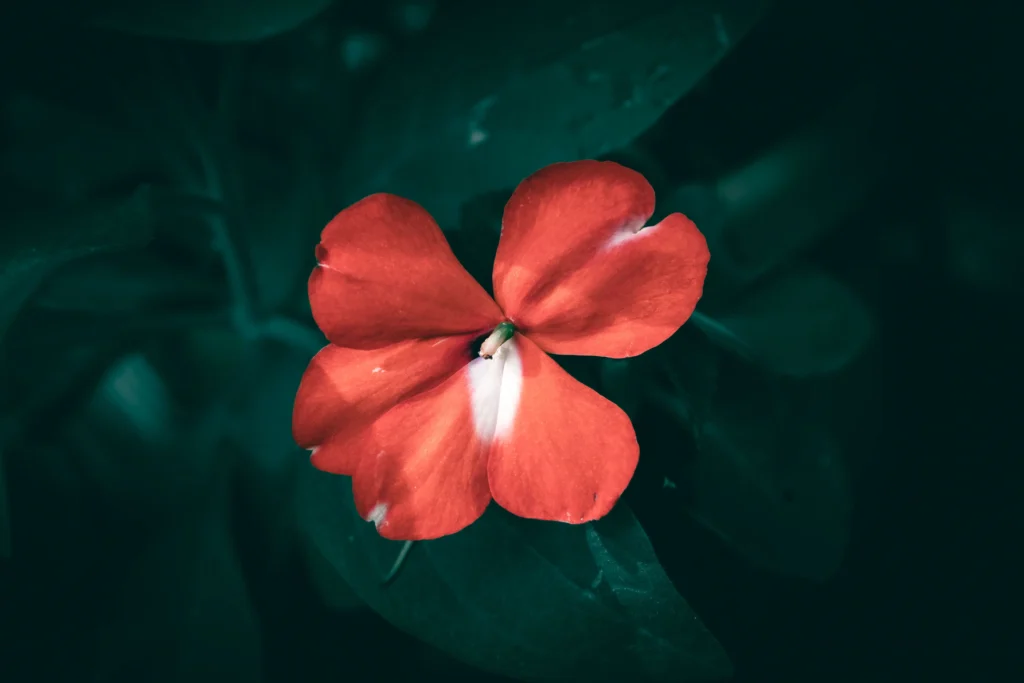
Orange impatiens produce flat, five-petaled flowers that thrive in shaded spots where few other annuals bloom well. They brighten dark garden corners.
- Scientific name: Impatiens walleriana
- Flower type: Annual
- Colors: Orange, red, pink, purple, white
- Bloom season: Spring to frost
- Sun: Partial to full shade
- Height: 6–24 inches
- Fragrance: None
- Common uses: Shaded beds, containers, hanging baskets
- Meaning: Motherly affection, patience
52. Orange Lantana
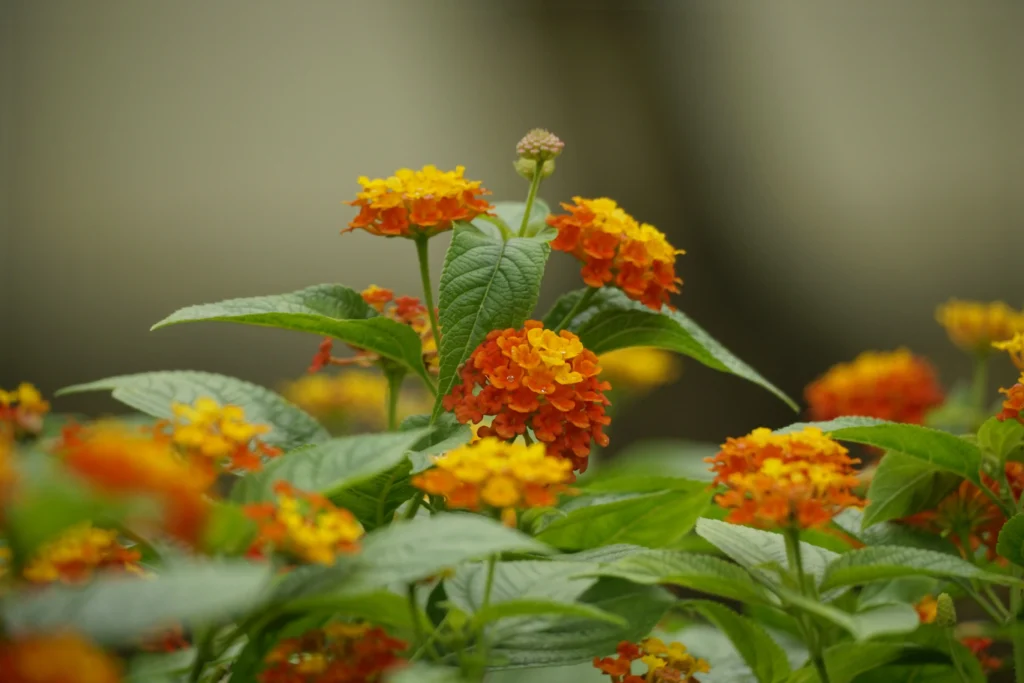
Orange lantana produces small clusters of tubular flowers that often shift color as they age. It’s heat-tolerant and attracts butterflies all summer.
- Scientific name: Lantana camara
- Flower type: Perennial shrub (grown as annual in cool climates)
- Colors: Orange, red, yellow, pink
- Bloom season: Spring to fall
- Sun: Full sun
- Height: 2–6 feet
- Fragrance: Yes, pungent
- Common uses: Borders, hanging baskets, butterfly gardens
- Meaning: Rigor, sensitivity
53. Orange Portulaca
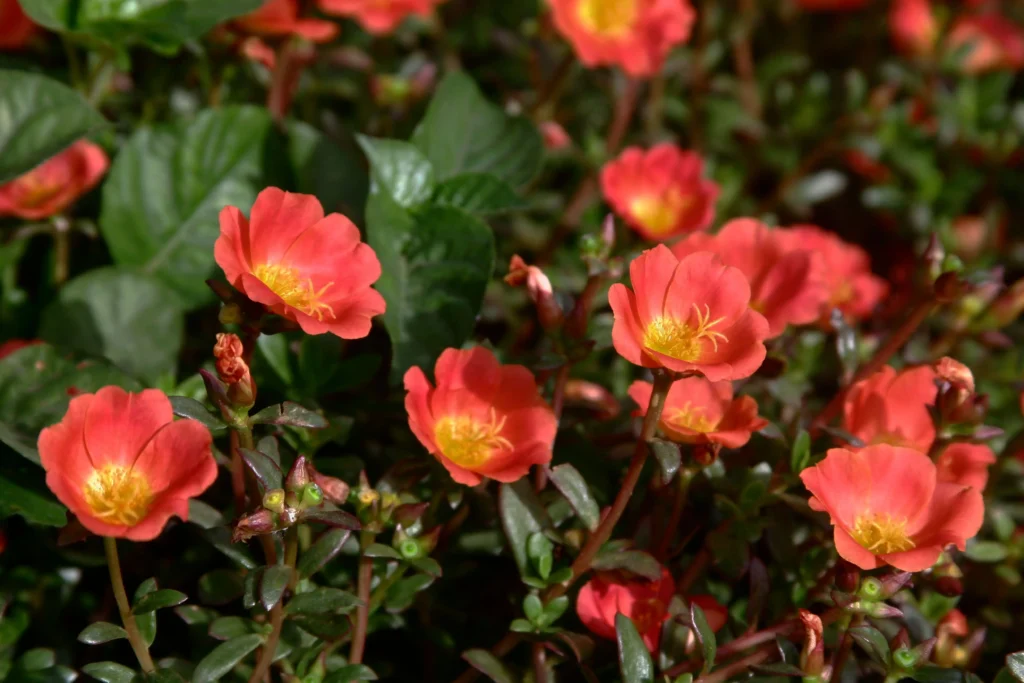
Orange portulaca, or moss rose, produces small, rose-like flowers that open in full sun and close in shade. It thrives in poor, dry soil.
- Scientific name: Portulaca grandiflora
- Flower type: Annual
- Colors: Orange, red, yellow, pink, white
- Bloom season: Summer to fall
- Sun: Full sun
- Height: 4–8 inches
- Fragrance: None
- Common uses: Rock gardens, ground cover, containers
- Meaning: Simple pleasures, cheerfulness
54. Orange Geranium
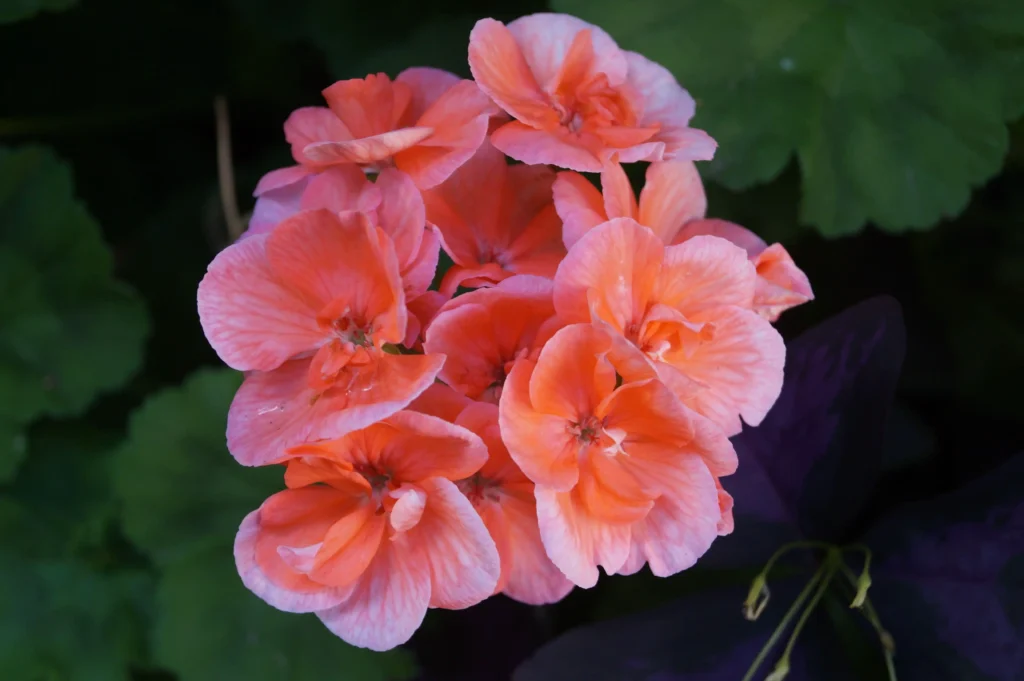
Orange geraniums produce rounded clusters of small flowers above scalloped leaves. They’re a reliable, low-maintenance choice for window boxes and porch pots.
- Scientific name: Pelargonium × hortorum
- Flower type: Perennial (grown as annual)
- Colors: Orange, red, pink, white, salmon
- Bloom season: Spring to fall
- Sun: Full sun
- Height: 1–2 feet
- Fragrance: Foliage is aromatic
- Common uses: Container gardens, window boxes
- Meaning: Comfort, true friendship
Frequently Asked Questions About Orange Flowers
1. What is the most popular orange flower?
Marigolds are among the most popular orange flowers, valued for their easy care, pest-repelling reputation, and long-lasting color from summer through fall.
2. What do orange flowers symbolize?
Orange flowers generally symbolize enthusiasm, warmth, creativity, and confidence. They blend the passion associated with red and the joy associated with yellow.
3. What orange flowers are best for attracting butterflies?
Butterfly weed, orange lantana, orange zinnia, and orange coneflower are excellent choices for attracting monarchs and other butterflies to the garden.
4. Which orange flowers bloom best in fall?
Orange chrysanthemums, sneezeweed, orange coneflower, and Chinese lantern are among the best options for reliable fall color.
5. Are there orange flowers that grow well in containers?
Yes. Orange petunias, orange gazania, orange calendula, and orange geraniums all perform well in pots, window boxes, and hanging baskets.
6. What orange flowers attract hummingbirds?
Firebush, orange honeysuckle, cape honeysuckle, and trumpet vine are all favorites of hummingbirds thanks to their tubular shape and nectar-rich blooms.
7. Can orange flowers grow in shade?
A few options, like orange impatiens and orange jewelweed, tolerate partial to full shade, though most orange flowers prefer full sun for the boldest color.
8. What orange flowers work well in fall bouquets?
Orange dahlias, orange chrysanthemums, tiger lilies, and orange roses all make striking additions to autumn-themed floral arrangements.
Growing and Choosing Orange Flowers: Final Tips
Orange flowers bring bold, confident energy to any space. They pair beautifully with deep purples and blues for striking contrast, or with reds and yellows for a warm, sunset-inspired palette. When choosing orange flowers, think about bloom timing. Mixing spring bloomers like orange tulips with summer and fall standouts like marigolds and chrysanthemums keeps color going through most of the year.
Sun requirements matter too. Most orange flowers need full sun to develop their richest color, though a few shade-tolerant options like orange impatiens exist for darker corners.
Across cultures, orange flowers carry meanings of enthusiasm, warmth, and creative energy. A bouquet of orange roses says fascination. A cluster of marigolds welcomes good fortune. With over 50 orange flowers to choose from, this guide offers a strong starting point for your next garden project, bouquet, or floral gift.